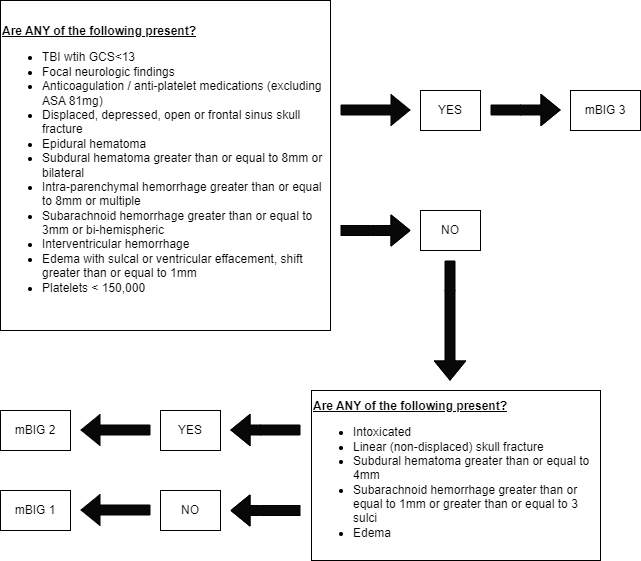
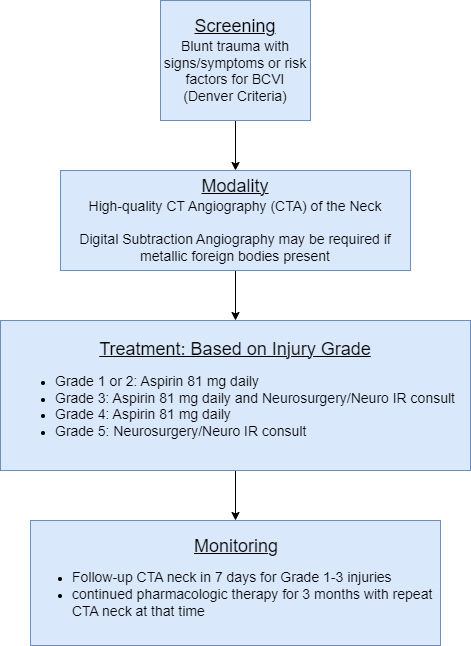
# Trauma

# 1. Trauma Service Overview

Orientation materials and additional information regarding work flow and requirements of the trauma service to help improve your experience and set expectations.

# Daily Floor Rounding Checklist for Trauma Patients

[![image.png](https://paths.trauma.ai/uploads/images/gallery/2023-06/scaled-1680-/69Gimage.png)](https://paths.trauma.ai/uploads/images/gallery/2023-06/69Gimage.png)

[![image.png](https://paths.trauma.ai/uploads/images/gallery/2023-06/scaled-1680-/AlHimage.png)](https://paths.trauma.ai/uploads/images/gallery/2023-06/AlHimage.png)

# Important Phone Numbers and Contact Information

#### Acute Care Surgery Attendings:

<table border="0" cellpadding="0" cellspacing="0" id="bkmrk-attending-pager-cell" style="border-collapse: collapse; width: 674px;" width="541"><colgroup><col style="width: 245.5px;" width="229"></col> <col style="width: 115.5px;" width="99"></col> <col style="width: 140.5px;" width="124"></col> <col style="width: 105.5px;" width="89"></col> </colgroup><tbody><tr style="height: 15.75pt;"><td class="xl67" height="21" style="height: 15.75pt; width: 172pt;" width="229">Attending</td><td class="xl67" style="border-left: none; width: 74pt;" width="99">Pager</td><td class="xl67" style="border-left: none; width: 93pt;" width="124">Cell</td><td class="xl67" style="border-left: none; width: 67pt;" width="89">Office</td></tr><tr style="mso-height-source: userset; height: 17.25pt;"><td class="xl70" height="23" style="height: 17.25pt; border-top: none;">Zachary Bauman, DO</td><td class="xl65" style="border-top: none; border-left: none;">402-888-1131</td><td class="xl65" style="border-top: none; border-left: none;">712-251-0895</td><td class="xl75" style="border-top: none; border-left: none;">402-559-4714</td></tr><tr style="height: 15.0pt;"><td class="xl71" height="20" style="height: 15.0pt;">Joseph Baus, MD</td><td class="xl69" style="border-left: none;">402-888-1800<span style="mso-spacerun: yes;"> </span></td><td class="xl69" style="border-left: none;">614-975-5466</td><td class="xl74" style="border-left: none;">N/A</td></tr><tr style="height: 15.0pt;"><td class="xl71" height="20" style="height: 15.0pt;">Christopher Barrett, MD<span style="mso-spacerun: yes;"> </span></td><td class="xl69" style="border-left: none;">402-888-6080</td><td class="xl69" style="border-left: none;">651-497-7846</td><td class="xl74" style="border-left: none;">402-559-3335</td></tr><tr style="height: 15.0pt;"><td class="xl71" height="20" style="height: 15.0pt;">Bennett Berning, MD</td><td class="xl69" style="border-left: none;">402-888-5527</td><td class="xl69" style="border-left: none;">312-208-7465</td><td class="xl68" style="border-top: none; border-left: none;">402-559-4706</td></tr><tr style="height: 15.75pt;"><td class="xl66" height="21" style="height: 15.75pt; border-top: none;">Keely Buesing, MD</td><td class="xl64" style="border-top: none; border-left: none;">402-888-0563</td><td class="xl64" style="border-top: none; border-left: none;">402-312-0984</td><td class="xl73" style="border-top: none; border-left: none;">402-559-8908</td></tr><tr style="height: 15.75pt;"><td class="xl66" height="21" style="height: 15.75pt; border-top: none;">Emily Cantrell, MD</td><td class="xl64" style="border-top: none; border-left: none;">402-888-1201</td><td class="xl64" style="border-top: none; border-left: none;">336-775-8889</td><td class="xl68" style="border-top: none; border-left: none;">402-836-9142</td></tr><tr style="height: 15.75pt;"><td class="xl66" height="21" style="height: 15.75pt; border-top: none;">Mark Carlson, MD<span style="mso-spacerun: yes;"> </span></td><td class="xl64" style="border-top: none; border-left: none;">402-888-5161</td><td class="xl64" style="border-top: none; border-left: none;">402-650-4219</td><td class="xl73" style="border-top: none; border-left: none;">402-559-4581</td></tr><tr style="height: 15.75pt;"><td class="xl66" height="21" style="height: 15.75pt; border-top: none;">Samuel Cemaj, MD</td><td class="xl64" style="border-top: none; border-left: none;">402-888-1203</td><td class="xl64" style="border-top: none; border-left: none;">402-305-5809</td><td class="xl73" style="border-top: none; border-left: none;">402-559-7166</td></tr><tr style="height: 15.75pt;"><td class="xl66" height="21" style="height: 15.75pt; border-top: none;">Charity Evans, MD</td><td class="xl64" style="border-top: none; border-left: none;">402-888-0525</td><td class="xl64" style="border-top: none; border-left: none;">312-231-0897</td><td class="xl73" style="border-top: none; border-left: none;">402-559-2101</td></tr><tr style="height: 15.75pt;"><td class="xl66" height="21" style="height: 15.75pt; border-top: none;">Matthew Goede, MD</td><td class="xl64" style="border-top: none; border-left: none;">402-888-3770</td><td class="xl64" style="border-top: none; border-left: none;">402-881-7345</td><td class="xl73" style="border-top: none; border-left: none;">402-559-8736</td></tr><tr style="height: 15.0pt;"><td class="xl66" height="20" style="height: 15.0pt; border-top: none;">Mark Hamill, MD</td><td class="xl64" style="border-top: none; border-left: none;">402-888-5484</td><td class="xl64" style="border-top: none; border-left: none;">843-324-8252</td><td class="xl73" style="border-top: none; border-left: none;">402-559-3048</td></tr><tr style="height: 15.0pt;"><td class="xl66" height="20" style="height: 15.0pt; border-top: none;">Joshua Jaramillo, MD<span style="mso-spacerun: yes;"> </span></td><td class="xl64" style="border-top: none; border-left: none;">402-888-6059</td><td class="xl64" style="border-top: none; border-left: none;">720-363-1449</td><td class="xl73" style="border-top: none; border-left: none;">N/A</td></tr><tr style="height: 15.75pt;"><td class="xl66" height="21" style="height: 15.75pt; border-top: none;">Abigail Josef, MD</td><td class="xl64" style="border-top: none; border-left: none;">402-888-5525</td><td class="xl64" style="border-top: none; border-left: none;">402-715-0029</td><td class="xl68" style="border-top: none; border-left: none;">402-559-4567</td></tr><tr style="height: 15.75pt;"><td class="xl66" height="21" style="height: 15.75pt; border-top: none;">Andrew Kamien, MD</td><td class="xl64" style="border-top: none; border-left: none;">402-888-1453</td><td class="xl64" style="border-top: none; border-left: none;">716-228-0118</td><td class="xl68" style="border-top: none; border-left: none;">402-559-7399</td></tr><tr style="height: 15.75pt;"><td class="xl66" height="21" style="height: 15.75pt; border-top: none;">Kevin Kemp, MD</td><td class="xl64" style="border-top: none; border-left: none;">402-888-2545</td><td class="xl64" style="border-top: none; border-left: none;">510-378-2215</td><td class="xl73" style="border-top: none; border-left: none;">402-559-8147</td></tr><tr style="height: 15.0pt;"><td class="xl66" height="20" style="height: 15.0pt; border-top: none;">Mike Matos, DO<span style="mso-spacerun: yes;"> </span></td><td class="xl72" style="border-top: none; border-left: none;">402-888-5655</td><td class="xl72" style="border-top: none; border-left: none;">304-482-2712</td><td class="xl76" style="border-top: none; border-left: none;">402-559-7051</td></tr><tr style="height: 15.0pt;"><td class="xl66" height="20" style="height: 15.0pt; border-top: none;">David Mercer, MD</td><td class="xl64" style="border-top: none; border-left: none;">402-888-3758</td><td class="xl64" style="border-top: none; border-left: none;">402-889-3431</td><td class="xl73" style="border-top: none; border-left: none;">402-559-8272</td></tr><tr style="height: 15.0pt;"><td class="xl66" height="20" style="height: 15.0pt; border-top: none;">Olabisi Sheppard, MD</td><td class="xl64" style="border-top: none; border-left: none;">402-888-5034</td><td class="xl64" style="border-top: none; border-left: none;">913-271-7241</td><td class="xl73" style="border-top: none; border-left: none;">402-559-2113</td></tr><tr style="height: 15.0pt;"><td class="xl66" height="20" style="height: 15.0pt; border-top: none;">John Tierney, MD<span style="mso-spacerun: yes;"> </span></td><td class="xl64" style="border-top: none; border-left: none;">402-888-6079</td><td class="xl64" style="border-top: none; border-left: none;">480-703-4556</td><td class="xl73" style="border-top: none; border-left: none;">402-559-1866</td></tr><tr style="height: 15.0pt;"><td class="xl66" height="20" style="height: 15.0pt; border-top: none;">William Terizian(Hillman), MD</td><td class="xl64" style="border-top: none; border-left: none;">402-888-5526</td><td class="xl64" style="border-top: none; border-left: none;">703-505-1058</td><td class="xl68" style="border-top: none; border-left: none;">402-559-5970</td></tr><tr style="height: 15.0pt;"><td class="xl66" height="20" style="height: 15.0pt; border-top: none;">Jessica Veatch, MD<span style="mso-spacerun: yes;"> </span></td><td class="xl64" style="border-top: none; border-left: none;">402-888-6154</td><td class="xl64" style="border-top: none; border-left: none;">303-726-0736</td><td class="xl73" style="border-top: none; border-left: none;">402-559-8979</td></tr><tr style="height: 15.75pt;"><td class="xl66" height="21" style="height: 15.75pt; border-top: none;">Brett Waibel, MD</td><td class="xl64" style="border-top: none; border-left: none;">402-888-0698</td><td class="xl64" style="border-top: none; border-left: none;">252-414-8586</td><td class="xl73" style="border-top: none; border-left: none;">402-559-6809</td></tr></tbody></table>

#### Acute Care Surgery APPs 

<table border="0" cellpadding="0" cellspacing="0" id="bkmrk-apps%C2%A0%C2%A0%C2%A0%C2%A0%C2%A0%C2%A0%C2%A0%C2%A0%C2%A0%C2%A0-402-5" style="border-collapse: collapse; width: 348pt;" width="463"><colgroup><col style="mso-width-source: userset; mso-width-alt: 8374; width: 172pt;" width="229"></col> <col style="mso-width-source: userset; mso-width-alt: 4022; width: 83pt;" width="110"></col> <col style="mso-width-source: userset; mso-width-alt: 4534; width: 93pt;" width="124"></col> </colgroup><tbody><tr style="height: 15.75pt;"><td class="xl82" colspan="3" height="21" style="border-right: 1.0pt solid black; height: 15.75pt; width: 348pt;" width="463">APPs<span class="font5"><span style="mso-spacerun: yes;"> </span>402-559-7901 / 402-559-9589 / 402-559-8142</span></td></tr><tr style="height: 15.0pt;"><td class="xl68" height="20" style="height: 15.0pt; border-top: none;">Tim Baack, NP</td><td class="xl69" style="border-top: none; border-left: none;">402-888-5843</td><td class="xl70" style="border-top: none; border-left: none;">402-640-4084</td></tr><tr style="height: 15.0pt;"><td class="xl71" height="20" style="height: 15.0pt; border-top: none;">Jessica Bachmann, NP</td><td class="xl66" style="border-top: none; border-left: none;">402-888-6252</td><td class="xl72" style="border-top: none; border-left: none;">402-660-4017</td></tr><tr style="height: 15.0pt;"><td class="xl71" height="20" style="height: 15.0pt; border-top: none;">Maggie Baumann, NP</td><td class="xl66" style="border-top: none; border-left: none;">402-888-3839</td><td class="xl72" style="border-top: none; border-left: none;">402-813-4519</td></tr><tr style="height: 15.0pt;"><td class="xl71" height="20" style="height: 15.0pt; border-top: none;">Christina Boje, NP</td><td class="xl66" style="border-top: none; border-left: none;">402-888-1871</td><td class="xl72" style="border-top: none; border-left: none;">402-578-7219</td></tr><tr style="height: 15.0pt;"><td class="xl71" height="20" style="height: 15.0pt; border-top: none;">Samantha Cunningham, NP</td><td class="xl66" style="border-top: none; border-left: none;">402-888-5101</td><td class="xl72" style="border-top: none; border-left: none;">402-250-8711</td></tr><tr style="height: 15.0pt;"><td class="xl71" height="20" style="height: 15.0pt; border-top: none;">Sam Dellinger, PA<span style="mso-spacerun: yes;"> </span></td><td class="xl66" style="border-top: none; border-left: none;">402-888-6190</td><td class="xl72" style="border-top: none; border-left: none;">402-332-8474</td></tr><tr style="height: 15.75pt;"><td class="xl71" height="21" style="height: 15.75pt; border-top: none;">Esthefany Estrada,<span style="mso-spacerun: yes;"> </span></td><td class="xl66" style="border-top: none; border-left: none;">402-888-5155</td><td class="xl72" style="border-top: none; border-left: none;">308-325-8504</td></tr><tr style="height: 15.75pt;"><td class="xl71" height="21" style="height: 15.75pt; border-top: none;">Kelly Fenn, PA</td><td class="xl66" style="border-top: none; border-left: none;">402-888-1440</td><td class="xl72" style="border-top: none; border-left: none;">563-299-5585</td></tr><tr style="height: 15.0pt;"><td class="xl71" height="20" style="height: 15.0pt; border-top: none;">Abby Hager, NP</td><td class="xl66" style="border-top: none; border-left: none;">402-888-5582</td><td class="xl72" style="border-top: none; border-left: none;">402-680-9465</td></tr><tr style="height: 15.75pt;"><td class="xl71" height="21" style="height: 15.75pt; border-top: none;">Patrick Heavey, PA<span style="mso-spacerun: yes;"> </span></td><td class="xl66" style="border-top: none; border-left: none;">402-888-5675</td><td class="xl73" style="border-top: none; border-left: none;">402-699-9119</td></tr><tr style="height: 15.75pt;"><td class="xl71" height="21" style="height: 15.75pt; border-top: none;">Kristin Johnson, NP</td><td class="xl66" style="border-top: none; border-left: none;">402-888-4584</td><td class="xl72" style="border-top: none; border-left: none;">308-530-5183</td></tr><tr style="height: 15.75pt;"><td class="xl71" height="21" style="height: 15.75pt; border-top: none;">Sophia Ketchmark, PA</td><td class="xl66" style="border-top: none; border-left: none;">402-888-6189</td><td class="xl72" style="border-top: none; border-left: none;">402-926-6229</td></tr><tr style="height: 15.0pt;"><td class="xl71" height="20" style="height: 15.0pt; border-top: none;">Shannon Landry, PA</td><td class="xl80" style="border-top: none; border-left: none;">TBD<span style="mso-spacerun: yes;"> </span></td><td class="xl81" style="border-top: none; border-left: none;">TBD<span style="mso-spacerun: yes;"> </span></td></tr><tr style="height: 15.0pt;"><td class="xl71" height="20" style="height: 15.0pt; border-top: none;">Ashley Lewis, NP</td><td class="xl66" style="border-top: none; border-left: none;">402-888-4072</td><td class="xl72" style="border-top: none; border-left: none;">402-452-7660</td></tr><tr style="height: 15.75pt;"><td class="xl71" height="21" style="height: 15.75pt; border-top: none;">Sonia Malik, PA</td><td class="xl66" style="border-top: none; border-left: none;">402-888-6008</td><td class="xl72" style="border-top: none; border-left: none;">703-994-2553</td></tr><tr style="height: 15.75pt;"><td class="xl71" height="21" style="height: 15.75pt; border-top: none;">Evan Meysenburg, NP</td><td class="xl66" style="border-top: none; border-left: none;">402-888-6083</td><td class="xl72" style="border-top: none; border-left: none;">402-741-0970</td></tr><tr style="height: 15.0pt;"><td class="xl71" height="20" style="height: 15.0pt; border-top: none;">Erin Panowicz, NP</td><td class="xl66" style="border-top: none; border-left: none;">402-888-5089</td><td class="xl72" style="border-top: none; border-left: none;">402-416-1274</td></tr><tr style="height: 15.0pt;"><td class="xl71" height="20" style="height: 15.0pt; border-top: none;">Whitney Petersen, NP</td><td class="xl66" style="border-top: none; border-left: none;">402-888-0097</td><td class="xl67" style="border-top: none; border-left: none;">402-984-3744</td></tr><tr style="height: 15.0pt;"><td class="xl71" height="20" style="height: 15.0pt; border-top: none;">Meredith Reittinger, NP</td><td class="xl66" style="border-top: none; border-left: none;">402-888-5865</td><td class="xl72" style="border-top: none; border-left: none;">336-549-2644</td></tr><tr style="height: 15.0pt;"><td class="xl71" height="20" style="height: 15.0pt; border-top: none;">Dom Samuel, NP</td><td class="xl66" style="border-top: none; border-left: none;">402-888-1698</td><td class="xl72" style="border-top: none; border-left: none;">402-541-8998</td></tr><tr style="height: 15.0pt;"><td class="xl71" height="20" style="height: 15.0pt; border-top: none;">Amber Saltsgaver, NP</td><td class="xl66" style="border-top: none; border-left: none;">402-888-5153</td><td class="xl72" style="border-top: none; border-left: none;">402-651-1250</td></tr><tr style="height: 15.75pt;"><td class="xl74" height="21" style="height: 15.75pt; border-top: none;">Megan Samland, NP</td><td class="xl75" style="border-top: none; border-left: none;">402-888-5597</td><td class="xl76" style="border-top: none; border-left: none;">402-350-3564</td></tr><tr style="height: 15.75pt;"><td class="xl74" height="21" style="height: 15.75pt;">Emily Ulmer, PA</td><td class="xl75" style="border-left: none;">402-888-6124</td><td class="xl76" style="border-left: none;">308-870-4515</td></tr><tr style="height: 15.0pt;"><td class="xl71" height="20" style="height: 15.0pt;">Theresa Vergara, NP</td><td class="xl75" style="border-left: none;">402-888-2443</td><td class="xl76" style="border-left: none;">646-498-3829</td></tr><tr style="height: 15.0pt;"><td class="xl74" height="20" style="height: 15.0pt; border-top: none;">Makaela Waddell, NP</td><td class="xl75" style="border-left: none;">402-888-0303</td><td class="xl76" style="border-left: none;">402-536-9460</td></tr><tr style="height: 15.0pt;"><td class="xl74" height="20" style="height: 15.0pt;">Becca Witt, PA</td><td class="xl75" style="border-left: none;">402-888-5846</td><td class="xl72" style="border-left: none;">402-250-2134</td></tr><tr style="height: 15.75pt;"><td class="xl77" height="21" style="height: 15.75pt;">Cassey Younghans, NP</td><td class="xl78">402-888-6084</td><td class="xl79" style="border-top: none; border-left: none;">308-870-0791</td></tr></tbody></table>

#### Acute Care Surgery Administrators

<table border="0" cellpadding="0" cellspacing="0" id="bkmrk-administrative-jeann" style="border-collapse: collapse; width: 313pt;" width="416"><colgroup><col style="mso-width-source: userset; mso-width-alt: 6363; width: 131pt;" width="174"></col> <col style="mso-width-source: userset; mso-width-alt: 8850; width: 182pt;" width="242"></col> </colgroup><tbody><tr style="height: 15.75pt;"><td class="xl74" colspan="2" height="21" style="border-right: 1.0pt solid black; height: 15.75pt; width: 313pt;" width="416">Administrative</td></tr><tr style="mso-height-source: userset; height: 17.25pt;"><td class="xl70" height="23" style="height: 17.25pt; border-top: none; width: 131pt;" width="174">Jeannie Thomas</td><td class="xl71" style="border-top: none;">402-559-9696</td></tr><tr style="height: 15.0pt;"><td class="xl68" height="20" style="height: 15.0pt;">Jessica Bruno</td><td class="xl69">402-559-8884</td></tr><tr style="height: 15.0pt;"><td class="xl68" height="20" style="height: 15.0pt;">Savannah Reyes<span style="mso-spacerun: yes;"> </span></td><td class="xl69">402-559-5248</td></tr><tr style="height: 15.0pt;"><td class="xl72" height="20" style="height: 15.0pt;">Sue Cramer</td><td class="xl69">402-559-9225</td></tr><tr style="height: 15.75pt;"><td class="xl72" height="21" style="height: 15.75pt;">Karen Kroupa<span style="mso-spacerun: yes;"> </span></td><td class="xl66">402-559-9960</td></tr><tr style="height: 15.75pt;"><td class="xl68" height="21" style="height: 15.75pt;">Copy Machine Code:</td><td class="xl69">10278</td></tr><tr style="height: 15.75pt;"><td class="xl67" height="21" style="height: 15.75pt;">Conf Room Code:</td><td class="xl73">51243</td></tr></tbody></table>

#### Acute Care Surgery Inpatient and Outpatient Team Contacts

<table border="0" cellpadding="0" cellspacing="0" id="bkmrk-inpatient-team-conta" style="border-collapse: collapse; width: 760px; height: 566.141px;" width="541"><colgroup><col style="width: 256.25px;" width="229"></col><col style="width: 126.25px;" width="99"></col><col style="width: 151.25px;" width="124"></col><col style="width: 116.25px;" width="89"></col></colgroup><tbody><tr style="height: 29.7969px;"><td class="xl98" colspan="4" height="21" style="height: 29.7969px; width: 406pt;" width="541">**Inpatient Team Contacts**</td></tr><tr style="height: 29.7969px;"><td class="xl92" height="20" style="height: 29.7969px;">Molli Kies, <span class="font5">Care Transition Nurse</span></td><td class="xl69" style="border-top: none; border-left: none; height: 29.7969px;">531-557-1135</td><td class="xl69" style="border-top: none; border-left: none; height: 29.7969px;">402-559-6145</td><td class="xl90" style="border-top: none; border-left: none; height: 29.7969px;">402-990-0874</td></tr><tr><td>Angel Erwin, Care Transition Nurse</td><td style="border-top: none; border-left: none;">531-557-0827</td><td style="border-top: none; border-left: none;">402-5522738</td><td style="border-top: none; border-left: none;">402-650-3038</td></tr><tr><td>Ginny Rogers, Peds Care Transition Nurse</td><td style="border-top: none; border-left: none;">531-5579166</td><td style="border-top: none; border-left: none;">402-552-2505</td><td style="border-top: none; border-left: none;">402-917-2593</td></tr><tr style="height: 29.7969px;"><td class="xl70" height="20" style="height: 29.7969px; border-top: none;">Barb Robertson, Nutritionist</td><td class="xl67" style="border-top: none; border-left: none; height: 29.7969px;">402-888-1848</td><td class="xl67" style="border-top: none; border-left: none; height: 29.7969px;">  
</td><td class="xl80" style="border-top: none; border-left: none; height: 29.7969px;">  
</td></tr><tr style="height: 29.7969px;"><td class="xl70" height="21" style="height: 29.7969px; border-top: none;"><span class="font0">Dennis Brown, </span><span class="font6">Care Transition nurse for EGS</span></td><td class="xl67" style="border-top: none; border-left: none; height: 29.7969px;">402-552-6588</td><td class="xl67" style="border-top: none; border-left: none; height: 29.7969px;">402-981-9431</td><td class="xl80" style="border-top: none; border-left: none; height: 29.7969px;">531-551-5031</td></tr><tr style="height: 29.7969px;"><td class="xl70" height="21" style="height: 29.7969px; border-top: none;">Social Worker</td><td class="xl67" style="border-top: none; border-left: none; height: 29.7969px;">402-888-1643</td><td class="xl67" style="border-top: none; border-left: none; height: 29.7969px;">402-559-6145<span style="mso-spacerun: yes;"> </span></td><td class="xl84" style="height: 29.7969px;">531-557-3822</td></tr><tr style="height: 29.7969px;"><td class="xl70" height="20" style="height: 29.7969px; border-top: none;">Elizabeth Hawkins, Pharmacist<span style="mso-spacerun: yes;"> </span></td><td class="xl67" style="border-top: none; border-left: none; height: 29.7969px;">531-557-7456</td><td class="xl67" style="border-top: none; border-left: none; height: 29.7969px;">402-714-2787</td><td class="xl84" style="border-top: none; height: 29.7969px;">402-552-3541</td></tr><tr style="height: 29.7969px;"><td class="xl70" height="20" style="height: 29.7969px; border-top: none;">Alli Gabriel, Pharmacist</td><td class="xl67" style="border-top: none; border-left: none; height: 29.7969px;">402-637-6454</td><td class="xl74" style="border-top: none; border-left: none; height: 29.7969px;">402-552-3965</td><td class="xl85" style="border-top: none; height: 29.7969px;">531-557-3983</td></tr><tr style="height: 29.7969px;"><td class="xl70" height="20" style="height: 29.7969px; border-top: none;">Ashley Farrens, Trauma Prog Manager</td><td class="xl67" style="border-top: none; border-left: none; height: 29.7969px;">  
</td><td class="xl67" style="border-top: none; border-left: none; height: 29.7969px;">402-612-7702</td><td class="xl72" style="border-top: none; height: 29.7969px;">402-552-3997</td></tr><tr style="height: 29.7969px;"><td class="xl70" height="20" style="height: 29.7969px; border-top: none;">Stacey Roode - PI Coordinator</td><td class="xl67" style="border-top: none; border-left: none; height: 29.7969px;">  
</td><td class="xl74" style="border-top: none; border-left: none; height: 29.7969px;">402-618-0375</td><td class="xl85" style="border-top: none; height: 29.7969px;">  
</td></tr><tr><td style="border-top: none;">Liz McIntosh - PI Coordinator</td><td style="border-top: none; border-left: none;">  
</td><td style="border-top: none; border-left: none;">714-651-7733</td><td style="border-top: none;">  
</td></tr><tr><td style="border-top: none;">Kayla Petersen - PI Coordinator</td><td style="border-top: none; border-left: none;">  
</td><td style="border-top: none; border-left: none;">515-729-9289</td><td style="border-top: none;">  
</td></tr><tr><td style="border-top: none;">Lora Hofstetter - Peds PI Coordinator</td><td style="border-top: none; border-left: none;">  
</td><td style="border-top: none; border-left: none;">913-709-0923</td><td style="border-top: none;">  
</td></tr><tr style="height: 29.7969px;"><td class="xl70" height="20" style="height: 29.7969px; border-top: none;">Brian Lake, 9N Manager</td><td class="xl67" style="border-top: none; border-left: none; height: 29.7969px;">402-552-3873</td><td class="xl67" style="border-top: none; border-left: none; height: 29.7969px;">  
</td><td class="xl80" style="border-left: none; height: 29.7969px;">  
</td></tr><tr style="height: 29.7969px;"><td class="xl73" height="21" style="height: 29.7969px;">Chad Himmelberg, SICU Manager</td><td class="xl76" style="height: 29.7969px;">402-552-7963</td><td class="xl76" style="height: 29.7969px;">  
</td><td class="xl68" style="height: 29.7969px;">  
</td></tr><tr style="height: 29.7969px;"><td class="xl97" colspan="4" height="21" style="height: 29.7969px;">**Outpatient Team**</td></tr><tr style="height: 29.7969px;"><td class="xl77" height="20" style="height: 29.7969px; border-top: none;"><span class="font0">Jenn Dickey,</span><span class="font5"> Case Manager</span></td><td class="xl78" style="border-top: none; height: 29.7969px;">402-888-3629</td><td class="xl78" style="border-top: none; height: 29.7969px;">402-672-6081</td><td class="xl86" style="border-top: none; height: 29.7969px;">402-559-6075</td></tr><tr style="height: 29.7969px;"><td class="xl70" height="20" style="height: 29.7969px; border-top: none;">Clinic Scheduling (# for pts)</td><td class="xl79" style="border-top: none; height: 29.7969px;">402-559-4075</td><td class="xl67" style="height: 29.7969px;">  
</td><td class="xl75" style="border-left: none; height: 29.7969px;">  
</td></tr><tr style="height: 29.7969px;"><td class="xl70" height="20" style="height: 29.7969px; border-top: none;">Clinic</td><td class="xl79" style="border-top: none; height: 29.7969px;">402-559-4737</td><td class="xl67" style="border-top: none; height: 29.7969px;">  
</td><td class="xl87" style="border-top: none; border-left: none; height: 29.7969px;">  
</td></tr><tr style="height: 29.7969px;"><td class="xl91" height="21" style="height: 29.7969px; border-top: none;">Clinic Workroom</td><td class="xl79" style="border-top: none; height: 29.7969px;">402-559-2028<span style="mso-spacerun: yes;"> </span></td><td class="xl67" style="border-top: none; height: 29.7969px;">  
</td><td class="xl88" style="border-left: none; height: 29.7969px;">  
</td></tr><tr style="height: 29.7969px;"><td class="xl96" height="21" style="height: 29.7969px;">**<span style="mso-spacerun: yes;"> </span>Trauma Clinic: Mon &amp; Thurs @ 1-3pm**</td><td class="xl82" style="border-top: none; height: 29.7969px;">  
</td><td class="xl66" style="border-top: none; height: 29.7969px;">  
</td><td class="xl89" style="border-top: none; border-left: none; height: 29.7969px;">  
</td></tr><tr style="height: 29.7969px;"><td class="xl81" height="20" style="height: 29.7969px; border-top: none;">**<span style="mso-spacerun: yes;"> </span>EGS Clinic:<span style="mso-spacerun: yes;"> </span>Wed @ 1-3pm**</td><td class="xl82" style="border-top: none; height: 29.7969px;">  
</td><td class="xl66" style="border-top: none; height: 29.7969px;">  
</td><td class="xl71" style="border-top: none; border-left: none; height: 29.7969px;">  
</td></tr><tr style="height: 29.7969px;"><td class="xl83" height="21" style="height: 29.7969px; border-top: none;">**<span style="mso-spacerun: yes;"> </span>Elective EGS Clinic: Thurs @ 9am**</td><td class="xl93" style="border-top: none; height: 29.7969px;">  
</td><td class="xl94" style="height: 29.7969px;">  
</td><td class="xl95" style="border-top: none; height: 29.7969px;">  
</td></tr></tbody></table>

#### Service Pager and Consultant Contacts

<table border="0" cellpadding="0" cellspacing="0" id="bkmrk-red-trauma-team-page" style="border-collapse: collapse; width: 795px;" width="823"><colgroup><col style="width: 223px;" width="229"></col> <col style="width: 124px;" width="110"></col> <col style="width: 10px;" width="124"></col> <col style="width: 17px;" width="32"></col> <col style="width: 292px;" width="229"></col> <col style="width: 130px;" width="99"></col> </colgroup><tbody><tr style="height: 15.0pt;"><td class="xl66" height="20" style="height: 15.0pt; width: 172pt;" width="229">RED TRAUMA TEAM PAGER:</td><td class="xl66" style="width: 83pt;" width="110">402-888-1938</td><td class="xl65" style="width: 93pt;" width="124">  
</td><td class="xl65" style="width: 24pt;" width="32">  
</td><td class="xl66" style="width: 172pt;" width="229">GREEN SICU Pager:</td><td class="xl66" style="width: 74pt;" width="99">402-888-0282</td></tr><tr style="height: 15.0pt;"><td class="xl66" height="20" style="height: 15.0pt;">Blue APP TRAUMA TEAM PAGER:<span style="mso-spacerun: yes;"> </span></td><td class="xl66">402-888-4774</td><td class="xl65">  
</td><td class="xl65">  
</td><td class="xl66">YELLOW CCS TEAM PAGER:</td><td class="xl66">402-888-3005</td></tr><tr style="height: 15.0pt;"><td class="xl66" height="20" style="height: 15.0pt;">EGS PAGER:</td><td class="xl66">402-888-0447</td><td class="xl65">  
</td><td class="xl65">  
</td><td class="xl66">General Surgery/Night Float Pager:<span style="mso-spacerun: yes;"> </span></td><td class="xl66">402-888-0316</td></tr></tbody></table>

<table border="0" cellpadding="0" cellspacing="0" id="bkmrk-orthopedic-surgery-p" style="border-collapse: collapse; width: 313pt;" width="416"><colgroup><col style="mso-width-source: userset; mso-width-alt: 6363; width: 131pt;" width="174"></col> <col style="mso-width-source: userset; mso-width-alt: 8850; width: 182pt;" width="242"></col> </colgroup><tbody><tr style="height: 15.0pt;"><td class="xl66" height="20" style="height: 15.0pt; width: 131pt;" width="174">Orthopedic Surgery Pager:</td><td class="xl66" style="width: 182pt;" width="242">402-888-0586</td></tr><tr style="height: 15.0pt;"><td class="xl66" height="20" style="height: 15.0pt;">Neurosurgery Pager:</td><td class="xl66">402-888-1866</td></tr></tbody></table>

<table border="0" cellpadding="0" cellspacing="0" id="bkmrk-pediatric-surgeons-p" style="border-collapse: collapse; width: 406pt;" width="541"><colgroup><col style="mso-width-source: userset; mso-width-alt: 8374; width: 172pt;" width="229"></col> <col style="mso-width-source: userset; mso-width-alt: 3620; width: 74pt;" width="99"></col> <col style="mso-width-source: userset; mso-width-alt: 4534; width: 93pt;" width="124"></col> <col style="mso-width-source: userset; mso-width-alt: 3254; width: 67pt;" width="89"></col> </colgroup><tbody><tr style="height: 15.75pt;"><td class="xl71" height="21" style="height: 15.75pt; width: 172pt;" width="229">Pediatric Surgeons</td><td class="xl67" style="width: 74pt;" width="99">Pager</td><td class="xl67" style="border-left: none; width: 93pt;" width="124">Cell</td><td class="xl67" style="border-left: none; width: 67pt;" width="89">Office<span style="mso-spacerun: yes;"> </span></td></tr><tr style="height: 15.0pt;"><td class="xl70" height="20" style="height: 15.0pt;">Angela Hanna, MD</td><td class="xl69" style="border-left: none;">N/A</td><td class="xl69" style="border-left: none;">801-550-4482</td><td class="xl73" style="border-top: none; border-left: none;">N/A</td></tr><tr style="height: 15.75pt;"><td class="xl66" height="21" style="height: 15.75pt; border-top: none;">Abdalla Zarroug, MD</td><td class="xl68" style="border-top: none; border-left: none;">N/A</td><td class="xl68" style="border-top: none; border-left: none;">507-271-5656</td><td class="xl72" style="border-top: none; border-left: none;">N/A</td></tr></tbody></table>

<table border="0" cellpadding="0" cellspacing="0" id="bkmrk-encompass-team%C2%A0-ashl" style="border-collapse: collapse; width: 541px;" width="463"><colgroup><col style="width: 260px;" width="229"></col><col style="width: 133px;" width="110"></col><col style="width: 147px;" width="124"></col></colgroup><tbody><tr style="height: 15.0pt;"><td class="xl80" colspan="3" height="20" style="border-right: 1.0pt solid black; height: 15.0pt; width: 348pt;" width="463">ENCOMPASS TEAM<span style="mso-spacerun: yes;"> </span></td></tr><tr style="height: 15.75pt;"><td class="xl70" height="21" style="height: 15.75pt;">Ashley Raposo, Program Supervisor<span style="mso-spacerun: yes;"> </span></td><td class="xl66" style="border-left: none;">402-559-9154</td><td class="xl74" style="border-left: none;">402-980-1731 (cell)</td></tr><tr style="height: 15.0pt;"><td class="xl71" height="20" style="height: 15.0pt; border-top: none;">Melissa Inzauro, Social Worker<span style="mso-spacerun: yes;"> </span></td><td class="xl72" style="border-top: none; border-left: none;">N/A<span style="mso-spacerun: yes;"> </span></td><td class="xl75" style="border-top: none; border-left: none;">402-250-6336 (cell)</td></tr><tr><td style="border-top: none;">Allie Sothan, Social Worker</td><td style="border-top: none; border-left: none;">N/A</td><td style="border-top: none; border-left: none;">531-375-8334</td></tr><tr><td style="border-top: none;">Tia Manning, Mental Health Specialist</td><td style="border-top: none; border-left: none;">N/A</td><td style="border-top: none; border-left: none;">402-250-9813</td></tr><tr style="height: 15.0pt;"><td class="xl83" colspan="3" height="20" style="border-right: 1.0pt solid black; height: 15.0pt;">Violence Intervention Specialists<span style="mso-spacerun: yes;"> </span></td></tr><tr style="height: 15.0pt;"><td class="xl69" height="20" style="height: 15.0pt;">Kam Wayne</td><td class="xl73">N/A<span style="mso-spacerun: yes;"> </span></td><td class="xl75">402-250-4324 (cell)</td></tr><tr style="height: 15.0pt;"><td class="xl77" height="21" style="height: 15.75pt;">TiShara Wardlow<span style="mso-spacerun: yes;"> </span></td><td class="xl79" style="border-top: none;">N/A<span style="mso-spacerun: yes;"> </span></td><td class="xl67">402-830-7986 (cell)</td></tr></tbody></table>

#### Departmental Contacts

<table border="0" cellpadding="0" cellspacing="0" id="bkmrk-department-contacts-" style="border-collapse: collapse; width: 629px;" width="416"><colgroup><col style="width: 227.5px;" width="174"></col> <col style="width: 295.5px;" width="242"></col> </colgroup><tbody><tr style="height: 15.75pt;"><td class="xl74" colspan="2" height="21" style="border-right: 1.0pt solid black; height: 15.75pt; width: 313pt;" width="416">Department Contacts</td></tr><tr style="height: 15.75pt;"><td class="xl70" height="21" style="height: 15.75pt;">Handheld/Battery-Powered Bronch<span style="mso-spacerun: yes;"> </span>OR RT<span style="mso-spacerun: yes;"> </span>402-559-1615</td><td class="xl72" style="border-left: none;">402-650-5748</td></tr><tr style="height: 15.0pt;"><td class="xl70" height="20" style="height: 15.0pt; border-top: none;">Anesthesia CD</td><td class="xl71" style="border-top: none; border-left: none;">402-559-4078 / 402-552-3224</td></tr><tr style="height: 15.0pt;"><td class="xl70" height="20" style="height: 15.0pt; border-top: none;">OR</td><td class="xl67" style="border-top: none; border-left: none;">402-889-0931</td></tr><tr style="height: 15.75pt;"><td class="xl70" height="21" style="height: 15.75pt; border-top: none;">OR Charge</td><td class="xl67" style="border-top: none; border-left: none;">402-559-9900 / 402-552-3224</td></tr><tr style="height: 15.75pt;"><td class="xl69" height="21" style="height: 15.75pt;">Scheduling</td><td class="xl67" style="border-top: none;">402-559-5257</td></tr><tr style="height: 15.75pt;"><td class="xl69" height="21" style="height: 15.75pt; border-top: none;">Preop</td><td class="xl67" style="border-top: none;">402-559-9087 / 402-552-3288 (CCE)</td></tr><tr style="height: 15.0pt;"><td class="xl70" height="20" style="height: 15.0pt;">PICU</td><td class="xl67" style="border-top: none; border-left: none;">402-559-1420</td></tr><tr style="height: 15.0pt;"><td class="xl70" height="20" style="height: 15.0pt; border-top: none;">Anesthesia</td><td class="xl71" style="border-top: none; border-left: none;">402-552-2090</td></tr><tr style="height: 15.0pt;"><td class="xl70" height="20" style="height: 15.0pt; border-top: none;">Micro</td><td class="xl67" style="border-top: none; border-left: none;">402-559-5031</td></tr><tr style="height: 15.0pt;"><td class="xl70" height="20" style="height: 15.0pt; border-top: none;">Psychology</td><td class="xl71" style="border-top: none; border-left: none;">402-559-1030</td></tr><tr style="height: 15.0pt;"><td class="xl70" height="20" style="height: 15.0pt; border-top: none;">Lab</td><td class="xl71" style="border-top: none; border-left: none;">531-557-3980</td></tr><tr style="height: 15.0pt;"><td class="xl70" height="20" style="height: 15.0pt; border-top: none;">ICU Pharmacist</td><td class="xl71" style="border-top: none; border-left: none;">531-557-7452</td></tr><tr style="height: 15.75pt;"><td class="xl70" height="21" style="height: 15.75pt; border-top: none;">SDCC Pharmacist</td><td class="xl71" style="border-top: none; border-left: none;">402-559-7235</td></tr><tr style="height: 15.75pt;"><td class="xl70" height="21" style="height: 15.75pt; border-top: none;">Inpatient Pharmacy</td><td class="xl71" style="border-top: none; border-left: none;">402-559-6502</td></tr><tr style="height: 15.0pt;"><td class="xl69" height="20" style="height: 15.0pt;">Trauma Bay</td><td class="xl67" style="border-top: none;">402-559-4583</td></tr><tr style="height: 15.75pt;"><td class="xl69" height="21" style="height: 15.75pt; border-top: none;">ECHO</td><td class="xl71" style="border-top: none;">402-559-6694 / 402-559-6637</td></tr><tr style="height: 15.75pt;"><td class="xl69" height="21" style="height: 15.75pt; border-top: none;">ER</td><td class="xl71" style="border-top: none;">7-3600</td></tr><tr style="height: 15.75pt;"><td class="xl69" height="21" style="height: 15.75pt; border-top: none;">ED Charge Nurse</td><td class="xl71" style="border-top: none;">402-559-1000 / 402-559-3216</td></tr><tr style="height: 15.0pt;"><td class="xl66" height="20" style="height: 15.0pt;">Radiology Dictation</td><td class="xl71" style="border-top: none; border-left: none;">402-888-1898</td></tr><tr style="height: 15.0pt;"><td class="xl66" height="20" style="height: 15.0pt; border-top: none;">Radiology Resident</td><td class="xl71" style="border-top: none; border-left: none;">402-559-8953/888-1314/888-1415(res)</td></tr><tr style="height: 15.75pt;"><td class="xl68" height="21" style="height: 15.75pt; border-top: none;">IR</td><td class="xl73" style="border-top: none; border-left: none;">402-559-8953</td></tr></tbody></table>

<table border="0" cellpadding="0" cellspacing="0" id="bkmrk-radiology-reading-ro" style="border-collapse: collapse; width: 313pt;" width="416"><colgroup><col style="mso-width-source: userset; mso-width-alt: 6363; width: 131pt;" width="174"></col> <col style="mso-width-source: userset; mso-width-alt: 8850; width: 182pt;" width="242"></col> </colgroup><tbody><tr style="height: 15.0pt;"><td class="xl71" colspan="2" height="20" style="border-right: 1.0pt solid black; height: 15.0pt; width: 313pt;" width="416">Radiology Reading Rooms</td></tr><tr style="height: 15.0pt;"><td class="xl66" height="20" style="height: 15.0pt;"><span style="mso-spacerun: yes;"> </span>Body CT:<span style="mso-spacerun: yes;"> </span></td><td class="xl70" style="border-left: none;">402-559-1005</td></tr><tr style="height: 15.0pt;"><td class="xl66" height="20" style="height: 15.0pt; border-top: none;"><span style="mso-spacerun: yes;"> </span>Neuro:</td><td class="xl69" style="border-top: none; border-left: none;">402-559-1008</td></tr><tr style="height: 15.0pt;"><td class="xl66" height="20" style="height: 15.0pt; border-top: none;"><span style="mso-spacerun: yes;"> </span>Bone:</td><td class="xl70" style="border-top: none; border-left: none;">402-559-1006</td></tr><tr style="height: 15.0pt;"><td class="xl66" height="20" style="height: 15.0pt; border-top: none;"><span style="mso-spacerun: yes;"> </span>US:<span style="mso-spacerun: yes;"> </span></td><td class="xl70" style="border-top: none; border-left: none;">402-559-1023</td></tr><tr style="height: 15.75pt;"><td class="xl67" height="21" style="height: 15.75pt; border-top: none;"><span style="mso-spacerun: yes;"> </span>Nights:</td><td class="xl68" style="border-top: none; border-left: none;">402-559-1233</td></tr></tbody></table>

# Isolated Orthopedic Transfers to Bellevue Medical Center Requiring Joint Replacement

#### <u>Purpose:</u>

<span style="font-family: Symbol; mso-fareast-font-family: Symbol; mso-bidi-font-family: Symbol;"><span style="mso-list: Ignore;">·<span style="font: 7.0pt 'Times New Roman';"> </span></span></span>To Identify which patients can appropriately be transferred to Bellevue Medical Center (BMC) who have sustained an isolated fractures requiring total or partial joint replacement

#### <u>Background/definitions</u>:

<span style="font-family: Symbol; mso-fareast-font-family: Symbol; mso-bidi-font-family: Symbol;"><span style="mso-list: Ignore;">·<span style="font: 7.0pt 'Times New Roman';"> </span></span></span>Lack of OR availability at Nebraska Medicine main campus for partial or total joint replacement in trauma patients has put a strain on the system and delayed definitive surgical treatment for these patients.<span style="mso-spacerun: yes;"> </span>

#### <u>Guideline Inclusion Criteria:</u>

- Isolated traumatic fracture patients only needing partial or total joint replacement for their injury as opposed to ORIF of the hip fracture alone.
- Deemed appropriate for transfer to Bellevue Medical Center by the Trauma Service.

#### <u>Guideline Exclusion Criteria:</u>

- Poly-trauma patients with fractures requiring total or partial joint replacement.
- Deemed inappropriate for transfer to Bellevue Medical Center by the Trauma Team or Orthopedic Surgery Team.

#### <u>Diagnostic Evaluation: </u>

- Routine trauma lab work.
- Body region<span style="mso-spacerun: yes;"> </span>X-ray and/or CT scan
- Pan scan CT as indicated by mechanism or provider discretion
- Trauma Team consultation to make sure trauma work up is complete and no other injuries are present.
- Orthopedic Surgery consultation to make sure patient needs total or partial joint replacement (as opposed to non-operative management or routine ORIF of the fracture) and is appropriate for transfer to expidite surgical repair.<span style="mso-spacerun: yes;"> </span>

#### <u>Practice Recommendations for Management:</u>

- Patients transferred in from <span style="color: black; mso-themecolor: text1;">an outside institution will be </span>directed to Nebraska Medicine ED (ER<span style="font-family: 'Arial',sans-serif;">→</span>ER). <span style="mso-spacerun: yes;"> </span>Trauma Team will do the initial trauma evaluation and work-up in the emergency department. 
    - - <span style="mso-fareast-font-family: 'Times New Roman';">If a fracture is identified along with other injuries, Orthopedic Surgery will be consulted as well as other consulting services as needed</span>
            - - <span style="mso-fareast-font-family: 'Times New Roman';">Patient will be admitted to Nebraska Medical Center (NMC) by the Trauma Service for further trauma management as deemed appropriate. </span>
        - <span style="mso-fareast-font-family: 'Times New Roman';">If an isolated fracture is identified, Orthopedic Surgery will be consulted for their recommendations</span>

1. <span style="mso-fareast-font-family: 'Times New Roman';">If patient requires fixation via a partial or total joint replacement, is deemed appropriate for transfer to Bellevue Medical Center (BMC) by the Trauma Service, and has an accepting physician, the patient will then be transferred to BMC from the NMC ED for further isolated fracture management.<span style="mso-spacerun: yes;"> </span>BMC hospitalist is the accepting primary service for BMC transfer and ensures appropriate medical resources are in place for patient to be cared for at BMC. (Example- If patient has a hip fracture but is ESRD on dialysis, patient stays at NMC)</span>
    1. - <span style="font: 7.0pt 'Times New Roman';"> </span><span style="mso-fareast-font-family: 'Times New Roman';">Transfer to BMC will be arranged by the Orthopedic Surgery resident by contacting the PPU (aka BMC bed desk, 402-559-2337) and requesting transfer to the BMC hospitalist service.</span>
        - PPU informs Ortho resident of approximate inpatient BMC bed wait time.
        - If there is an inpatient bed wait time at BMC, patient is sent to BMC Pre-Op as long as a same day BMC OR time can be assigned.<span style="mso-spacerun: yes;"> </span><span style="text-indent: -0.25in;">If BMC OR time cannot be assigned the same day, patient is prioritized to BMC inpatient bed with all BMC ED admissions, the purpose of this prioritization is to transfer patient out of NMC ED expeditiously.</span>
        - **No admission orders are placed to admit the patient to NMC.** <span style="mso-fareast-font-family: 'Times New Roman';">While the patient awaits transfer to BMC in the NMC ED, Trauma service continues to care for the patient.</span>
2. If Orthopedic Surgery resident determines patient would be more expeditiously cared for at main campus due to BMC bed wait 
    1. - Trauma service is contacted again and admits the patient.
        - Trauma or Ortho provider contacts HM surgical co-mgmt service for pre-op evaluation and medical co-mgmt.
3. If prolonged inpatient bed wait at both BMC and NMC campuses, On-Call Trauma attending and On-Call Orthopedic attending (&amp; if needed BMC hospitalists for medical needs) determine whether it is best to transfer to BMC versus admit to NMC.<span style="mso-spacerun: yes;"> </span><span style="text-indent: -0.25in;">PPU can help coordinate the conference call on the rare chance that all 3 physicians are needed to determine best location.</span><span style="mso-spacerun: yes;"> </span><span style="text-indent: -0.25in;">Once location is determined, follow steps outlined above in A. to transfer to BMC or B. if admitting to NMC.</span>

- <span style="mso-fareast-font-family: 'Times New Roman';">The trauma tertiary survey will be completed by Orthopedic resident at BMC 24 hours after initial injury and documented as preferred by Trauma Service.</span>
    - - <span style="mso-fareast-font-family: 'Times New Roman';">If injuries discovered on tertiary appropriate consultations will be initiated by BMC Orthopedics team, including BMC service consults or remote NMC consultation.</span>
- <span style="mso-fareast-font-family: 'Times New Roman';">If the patient requires fracture fixation via routine ORIF, the patient will be admitted to the Trauma Service at Nebraska Medicine and follow the standard Nebraska Medicine Enhanced Recovery after Surgery (NERAS) pathway that has been established for isolated fracture patients.</span>
    - - <span style="mso-fareast-font-family: 'Times New Roman';">If the patient does not require fixation, the patient will be admitted to the Trauma Service at Nebraska Medicine and follow the standard NERAS pathway that has been established for isolated fracture patients.</span>
- <span style="color: black; mso-themecolor: text1;">If patient primarily presents to Nebraska Medicine, </span>patient will be activated based on criteria and both the Emergency Medicine and Trauma Team will respond appropriately and the trauma work-up will be conducted as per usual. 
    - - If a fracture is identified along with other injuries, Orthopedic Surgery will be consulted as well as other consulting services as needed 
            - - Patient will be admitted to Nebraska Medicine by the Trauma Service for further trauma management as deemed appropriate. <span style="mso-spacerun: yes;"> </span>
        - If an isolated fracture is identified, Orthopedic Surgery will be consulted for their recommendations 
            - - If patient requires fixation via a partial or total joint replacement, is deemed appropriate for transfer to BMC by the Trauma Service, and has an accepting physician, the patient will then be transferred to BMC from the ED for further isolated hip fracture management. 
                    - - Transfer to BMC will be arranged by the Orthopedic resident.
                        - The trauma tertiary survey will be completed by Orthopedic resident at BMC 24 hours after initial injury. 
                            - - If injuries discovered on tertiary appropriate consultations will be initiated by BMC admitting team, including BMC service consults or remote NMC consultation.
                - If the patient requires fracture fixation via routine ORIF, the patient will be admitted to the Trauma Service at Nebraska Medicine and follow the standard NERAS pathway that has been established for isolated fracture patients.
                - If the patient does not require fracture fixation, the patient will be admitted to the Trauma Service at Nebraska Medicine and follow the standard NERAS pathway that has been established for isolated fracture patients.

- If <span style="color: black; mso-themecolor: text1;">the patient does not meet activation criteria, </span>Emergency Medicine will perform the initial evaluation. 
    - - <span style="text-decoration: underline;">\*\*\*If a fracture is identified, Trauma should be consulted for additional trauma evaluation\*\*\*</span>
        - If a fracture is identified along with other injuries, Orthopedic Surgery will be consulted as well as other consulting services as needed 
            - - Patient will be admitted to Nebraska Medicine by the Trauma Service for further trauma management as deemed appropriate.<span style="mso-spacerun: yes;"> </span>
        - If an isolated fracture is identified, Orthopedic Surgery will be consulted for their recommendations 
            - - If patient requires fracture fixation via a partial or total joint replacement, is deemed appropriate for transfer to BMC by the Trauma Service, and has an accepting physician, the patient will then be transferred to BMC from the ED for further isolated fracture management. 
                    - - Transfer to BMC will be arranged by the Orthopedic resident.
                        - The trauma tertiary survey will be completed by Orthopedic resident at BMC 24 hours after initial injury. 
                            - - If injuries discovered on tertiary appropriate consultations will be initiated by BMC admitting team, including BMC service consults or remote NMC consultation.
                - If the patient requires fracture fixation via routine ORIF, the patient will be admitted to the Trauma Service at Nebraska Medicine and follow the standard NERAS pathway that has been established for isolated fracture patients.
                - If the patient does not require fracture fixation, the patient will be admitted to the Trauma Service at Nebraska Medicine and follow the standard NERAS pathway that has been established for isolated fracture patients.

#### **<u>Follow-up Care:</u>**

- If the patient is a poly-trauma patient, discharge and follow-up recommendations will be provided by all consulting services as needed and PT/OT. 
    - - All attempts will be made to discharge patient to appropriate location based on patient/family preferences, PT/OT recommendations, and discretion of the Trauma Service
- If the patient is an isolated fracture patient admitted to Nebraska Medicine, discharge and follow-up recommendations will be provided by Orthopedic Surgery and PT/OT. 
    - - All attempts will be made to discharge patient to appropriate location based on patient/family preferences, Orthopedic Surgery and PT/OT recommendations, and discretion of the Trauma Service.
- If the patient is an isolated fracture patient transferred to BMC, discharge and follow-up recommendations will be at the discretion of the teams managing the patient at BMC

#### **<u>Outcome Measures and Guideline Adherence</u>**:<span style="mso-spacerun: yes;"> </span>

- All patients transferred to BMC will be reviewed by the PI team at Nebraska Medicine.<span style="mso-spacerun: yes;"> </span>
    - - If the patient is admitted to a non-surgical service @ BMC, and if there is no identified opportunity for improvement, the following may be closed in **<u>primary</u>** review: 
            - - ISS&lt;9
        - As part of **<u>secondary</u>** review, the Trauma Medical Director must review any that meet any of the following criteria: 
            - - ISS&gt;9
                - Cases with an opportunity for improvement identified at primary review
        - Patients that get transferred to BMC and for some reason transferred back to Nebraska Medicine, will undergo a **<u>tertiary</u>** review by the Trauma PI team and by all providers involved.
        - Emerging trends will signal a need to review this pathway and modify as necessary

#### <u>Key Contributors:</u>

<span style="font-family: Symbol; mso-fareast-font-family: Symbol; mso-bidi-font-family: Symbol;"><span style="mso-list: Ignore;">·<span style="font: 7.0pt 'Times New Roman';"> </span></span></span>Zachary Bauman, DO, MHA

#### <u>Last updated:</u>

<span style="font-family: Symbol; mso-fareast-font-family: Symbol; mso-bidi-font-family: Symbol;"><span style="mso-list: Ignore;">·<span style="font: 7.0pt 'Times New Roman';"> </span></span></span>1/16/2023

#### <u>References:</u>

<span style="font-family: Symbol; mso-fareast-font-family: Symbol; mso-bidi-font-family: Symbol;"><span style="mso-list: Ignore;">·<span style="font: 7.0pt 'Times New Roman';"> </span></span></span>American College of Surgeons 2022 Trauma Standards

# Reimplantation Triage and Transfer Pathway

**<span style="color: black;">Reimplantation Triage and Transfer Pathway</span>**

**<span style="color: black;">Purpose:</span>**<span style="color: black;"> As an American College of Surgeons, verified level I trauma center, we are responsible for thorough assessment of the traumatically injured patient. This document is to aid in the triage and transfer process of patient requiring reimplantation services. </span>

**<span style="color: black;">Background</span>**<span style="color: black;">: Nebraska Medicine has multidisciplinary coverage (orthopedics, plastics, vascular, and urology) for patients requiring reimplantation services for traumatic injury (ie: severed limb, digit, or other body part).</span>

**<u><span style="color: black;">Please reference the three identified injury types for appropriate treatment plan:</span></u>**

**<span style="color: black;">Mangled Extremity</span>**

<span style="color: black;">Treatment of a mangled extremity is a collaborative effort amongst the Trauma service, Orthopedic surgery, and Vascular surgery. When a patient is determined to have a mangled extremity or extremity requiring re-implantation, all three services are involved to determine the overall best course of action for the patient given other injuries, hemodynamic status, and the ability to salvage the extremity. We utilize a mangled extremity score (see table below) to help with this management decision. Once all three service lines have agreed to re-implantation and/or attempting to salvage the extremity, the patient is taken to the OR where Orthopedic surgery and Vascular surgery will re-attach/re-construct bones and vessels as needed. Both services are available and on-call 24/7.</span>

![](https://paths.trauma.ai/uploads/images/gallery/2024-07/embedded-image-byvqewa1.png)  
**<span style="color: black;">Upper Extremity/Hand Re-implantation</span>**

<span style="color: black;"> Nebraska Medicine has three experienced hand surgeons that are willing and skilled to perform hand/digit reimplantation when they are on call. Unfortunately, between the three of them, they cannot cover the hand service 24/7. </span>

<span style="color: black;">When these surgeons are unavailable, calls should be made to transfer to our regional implantation centers. See list of resources with contact information.</span>

<span style="color: black;">Our usual workflow for this is when we get a call from an outside hospital wanting to transfer a patient to us who potentially needs a hand/digit re-implantation, we will do a conference call with our on-call hand surgeon to see if this is something they are able to care for at our institution. If they are, we will have the patient transferred. While the patient is in route, our hand surgeon will get the OR organized and ready to go when the patient arrives. If the patient is unable to be cared for at our institution, we will help the outside hospital coordinate care to the regional hand re-implantation center by providing phones numbers and contact information. The same process applies if the patient comes to our institution directly from the field. Our on-call hand surgeon will assess to see if this patient needs to be transferred or not (not all our hand surgeons do re-implantations). </span>

<span style="color: black;"> </span>

**<u><span style="color: black;">University Hospital – University of Missouri Health Care</span></u>**

<span style="color: black;">1 Hospital Drive, Columbia, MO 65212</span>

<span style="color: black;">1-573-882-6985 - line 1</span>

<span style="color: black;">1-573-771-7860 – line 2</span>

<span style="color: black;"> </span>

**<u><span style="color: black;">University of Iowa</span></u>**

<span style="color: black;">200 Hawkins Drive, Iowa City, IA 52242</span>

<span style="color: black;">1-319-384-5000</span>

<span style="color: black;">Option – 2 (adult)</span>

<span style="color: black;">Option – 1 (trauma) or Option 2 (ED to ED)</span><span style="color: black;"> </span>

**<u><span style="color: black;">Mayo Clinic</span></u>**

<span style="color: black;">200 First Street, Rochester, MN 55905</span>

<span style="color: black;">1-507-255-2910</span><span style="color: black;"> </span>

**<u><span style="color: black;">Denver Health Medical Center</span></u>**

<span style="color: black;">777 Bannock Street, Denver, CO 80204</span>

<span style="color: black;">1-303-602-5000</span>

[Hand Trauma Center Network | About Us | ASSH](https://www.assh.org/s/hand-trauma-center-network)

<span style="color: black;">We do recognize that in some trauma scenarios it is life over limb. Any poly-trauma patient with potential life-threatening injuries will come to or remain at our Level 1 trauma center where all these issues will be addressed. If a patient is too unstable to be transferred due to other injuries, we will address these life-threatening injuries first. Furthermore, if an outside hospital has a poly-trauma patient with a potential re-implantation, those patients will be directed to our facility given the amount of travel time to nearest re-implantation center. In these situation, we do have the ability to call our hand surgeons that do re-implantations when they are not on-call to inquire for urgent consultation. </span>

**<span style="color: black;">Penile Re-implantation</span>**

<span style="color: black;"> For penile re-implantation, Urology will be consulted for reimplantation or re-creation. They will reestablish a urethra for urinary drainage. Time of reimplantation is determined by Urology and if assistance is required by Plastic surgery, they too will be involved. Both services are available and on-call 24/7.</span>

# Trauma Patient Admission Criteria

Trauma patients can be complex with multiple injuries requiring various management strategies, interventions, and care. As a result, determining the appropriate level of care for admission can be challenging. The following represents a list of criteria/conditions that may help guide level of care decision making for the trauma patient.

<span style="text-decoration: underline;">**ICU ADMISSION**</span>

- Grade IV or greater solid organ injury or Grade III injury with blush/active extravasation
- Any hemodynamic instability
- Base deficit &gt;6
- Pelvic fractures requiring blood transfusion or IR angiogram/embolization
- Any spine fracture with neurologic deficit
- Mandible fracture with edema or hematoma
- Traumatic brain injury with GCS&lt;13
- Patient &gt;55 yrs of age, on anticoagulation with abnormal CT head
- Risk of airway compromise
- High risk rib fracture patient with FRC&lt;1000mL
- Presence of pulmonary co-morbidities
- Blunt myocardial injury with new 
    - - arrythmia
        - hemodynamic instability
        - cardiac failure
- Unstable spine injury
- Frontal contusions &gt;2cm
- Solid organ/pelvis/abdominal injuries with evidence of active extravasation on CT scan
- need for q1hr vital signs/neuro-vascular checks/interventions/etc.
- Trauma attending discretion

<span style="text-decoration: underline;">**SDCC Admission**</span>

- Grade II/III solid organ injury without blush/active extravasation on CT
- presence of multiple injuries
- Rib fractures with FRC between 1000mL--1500mL
- Any patient on pre-injury anticoagulation therapy with an injury not requiring ICU
- Major soft tissue trauma in patients on anticoagulation therapy
- Need for q2hr vital signs/neuro-vascular checks/interventions/etc.
- Presence of multiple co-morbidities
- Age &gt; 70
- C-spine fractures exclusive of spinous and transverse process fractures (without neurologic injury)
- History of sleep apnea who needs narcotics
- New CPAP/BiPAP requirements
- Trauma attending discretion

<span style="text-decoration: underline;">**FLOOR Admission**</span>

- all other trauma patients who do not meet criteria for ICU or SDCC admission

# Trauma Team Activation (TTA) Criteria

[![image.png](https://paths.trauma.ai/uploads/images/gallery/2026-01/scaled-1680-/image.png)](https://paths.trauma.ai/uploads/images/gallery/2026-01/image.png)

**LEVEL 3 trauma team includes:**

- Trauma attending
- Emergency medicine (EM) attending and resident
- PGY 4 or 5 surgical resident when available in house
- Junior surgical or EM residents on trauma service
- Trauma advanced practice providers (APP)
- Anesthesia resident (with immediate backup by anesthesia attending)
- Emergency department nurses and technicians
- Pharmacy
- Radiology technician
- Lab technician
- OR RN
- Blood bank (receives page to alert-do not respond in person)
- Spiritual care
- Respiratory therapy

**LEVEL 2 trauma team includes:**

- EM attending and resident
- General surgery resident(s)
- Trauma advanced practice provider(s) (APP)
- Emergency department nurses and technicians
- Pharmacy
- Radiology technician
- Lab technician
- OR RN (receives page to alert--do not respond in person)
- Spiritual care
- Respiratory therapy
- Trauma attending must respond if PGY4 or 5 surgical resident is not available and must evaluate the patient within 30 minutes of patient arrival.
- If the trauma attending is not in attendance, the EM attending has overall responsibility.

<span style="text-decoration: underline;">**LEVEL 1 - Trauma CONSULTATION**</span>

These patients do not meet trauma activation criteria, but merit the expertise of trauma surgeon consultation and/or evaluation, i.e. isolated/single system injuries. A trauma service resident or APP will evaluate these patients within 30 minutes of consult being called and disposition of the patient will be determined within 60 minutes. If the patient requires admission, the trauma attending will evaluate these patients within 8 hours of consult regardless of patient location.

The EM physician or admitted physician will consult the trauma team for any patient requiring admission to the hospital for any traumatic injury that does not meet trauma activation criteria. This will include but is not limited to the following patients:

- Any patient with significant single system injury or multiple injuries
- Stable pelvic fractures (excludes isolated hip fractures)
- Stable chest injuries--rib fracture, sternal fracture, pneumothorax, seatbelt sign
- Minor brain injury (confirmed or suspected) with GCS 13-15
- Abdominal pain with significant mechanism of injury or seatbelt sign
- Spine fractures
- Pregnant patients who require admission to the OB floor for fetal monitoring
- Frostbite
- Any patient returning to the ED for care following treatment for a traumatic injury within the last 60 days

Patients who bypass the ED as a direct admit who are admitted for any injury meeting trauma criteria, will require a trauma consultation after notification of the admitting physician.

# Trauma Tertiary Survey

A **tertiary survey (exam**) should be performed on all patients admitted to the trauma service approximately **24 hours** following admission/initial evaluation.

The tertiary survey is a repeat head-to-toe examination of the trauma patient that is designed to identify injuries (usually more minor) that were not identified on the initial evaluation. Ideally the patient should be able to participate in the exam. EXCEPTION--intubated/sedated ICU patients should still receive a tertiary exam ~24 hrs following admission and also AGAIN, when his/her clinical status allows for them to participate in the exam.

The following is included in a trauma tertiary exam:

- complete physical exam
- review of any outstanding or follow-up imaging/labs/tests following initial examination/work-up
- review of previously diagnosed injuries and ensure injury is being addressed (i.e. consults called, treatment plans in progress, etc)
- review of patient's medical history
- ensure home medications have been reconciled and resumed as indicated
- review current status of patient (i.e. are existing lines/tubes still needed? VTE prophylaxis initiated? Activity restrictions? PT/OT/Speech consults? etc)
- update the patient's problems list in electronic medical records

**How to complete a trauma tertiary survey at UNMC/Nebraska Medicine**

Step 1: perform the tertiary survey

- thorough physical exam
- review all imaging, labs, etc.
- order additional imaging, labs, consults, etc. as indicated
- review injuries, treatment plans, etc and ensure plans are progressing appropriately

Step 2: document your tertiary survey

- New note
- Note type: Trauma Tertiary Survey

![](https://paths.trauma.ai/uploads/images/gallery/2023-06/embedded-image-purlox8x.png)

Step 3: complete tertiary survey template FULLY and ACCURATELY

- once trauma tertiary survey is selected as note type, a trauma tertiary template will autopopulate.
- fill in ALL values/categories based on your repeat assessment/examination at ~24 hours following admission 
    - - this includes the **Tertiary Trauma Quality Improvement (TQI) Section**
            - - it appears in<span style="color: rgb(224, 62, 45);"> RED <span style="color: rgb(0, 0, 0);">on the tertiary survey template</span></span>
                - <span style="color: rgb(224, 62, 45);"><span style="color: rgb(0, 0, 0);">this section includes certain pre-existing conditions that will be included in the trauma registry/TQIP database that help accurately capture the patient's status. </span></span>
                - <span style="color: rgb(224, 62, 45);"><span style="color: rgb(0, 0, 0);">to fill out this section, click on the TERTIARY TRUAMA QUALITY IMPROVEMENT (TQI) ADVANCED button at the top of the note template</span></span>
                - <span style="color: rgb(224, 62, 45);"><span style="color: rgb(0, 0, 0);">this will pull up a second screen/menu with a list of pre-existing conditions where conditions can be selected as appropriate (see pictures below)</span></span>

<span style="color: rgb(224, 62, 45);"><span style="color: rgb(0, 0, 0);">![](https://paths.trauma.ai/uploads/images/gallery/2023-06/embedded-image-ax8ij8px.png)</span></span>

![](https://paths.trauma.ai/uploads/images/gallery/2023-06/embedded-image-l4vdltvy.png)

# Trauma Quality Indicators

#### Background:

From the time a trauma patient is picked up by EMS on scene through the patient's initial assessment, hospital course, and discharge, our trauma program is carefully monitoring each patient and collecting data. Data collected includes demographic information, injury information, prehospital and hospital information, past medical history, traumatic injuries, in-hospital events and outcomes. Data is entered into our trauma registry and analyzed regularly through various performance improvement programs to ensure the trauma service is providing high quality care to each patient.

Much of the data collected for the registry is gathered by trauma registrars doing extensive chart reviews and depends greatly on complete and accurate documentation from our trauma providers. While we should be practicing complete and accurate documentation as part of being a good healthcare provider, it is also essential for our trauma program to able to monitor and analyze the care of our trauma patients to ensure that high quality care is provided and patient outcomes are optimized.

#### Pre-Existing Conditions

Several pre-existing conditions are captured in the trauma registry that help us risk stratify patients for observed and expected outcomes. These pre-existing conditions should be documented in the Trauma H&amp;P and/or the Trauma Tertiary Survey as well as added to the patient's problem list in the electronic medical record.

The pre-existing conditions captured in the trauma registry are as follows:

1. Advanced directive limiting care 
    - - the patient has a written request to limit life-sustaining treatment that restricts the scope of care for the patient during this patient care event signed/dated by patient or designee prior to arrival.
2. Alcohol use disorder 
    - - can be actual diagnosis OR factors consistent with the diagnosis based on American Psychiatric Association, DSM 5 present prior to injury.
        - only report on patients 15 yrs of age or older.
3. Anticoagulant therapy 
    - - administration of medication (including anticoagulants, antiplatelet agents, thrombin inhibitors, thrombolytic agents) that interferes with blood clotting. Exception: chronic aspirin.
4. Attention deficit disorder/attention deficit hyperactivity disorder (ADD/ADHD) 
    - - a disorder involving inattention, hyperactivity, or impulsivity requiring medication for treatment present prior to injury.
5. Bipolar I/II disorder  
    
    - - only report on patients 15 yrs of age or older.
6. Bleeding disorder 
    - - any condition that results in the blood not clotting properly (e.g. hemophilia, von Willenbrand disease, Factor V Leiden)
7. Cerebral vascular accident (CVA) 
    - - history prior to injury of stroke/CVA (embolic, ischemic, thrombotic, or hemorrhagic) with persistent residual motor, sensory or cognitive dysfunction (e.g., hemiplegia, hemiparesis, aphasia, sensory deficit, impaired memory).
8. Chronic obstructive pulmonary disease (COPD) 
    - - lung disease characterized by chronic obstruction of lung airflow that interferes with normal breathing and is not fully reversible. Includes more familiar terms such as "chronic bronchitis" and "emphysema".
        - only report on patients 15 yrs of age or older.
9. Chronic renal failure 
    - - chronic renal failure prior to injury that requires periodic peritoneal dialysis, hemodialysis, hemofiltration, or hemodiafiltration.
10. Cirrhosis 
    - - replacement of normal liver tissue with non-living scar tissue related to other liver diseases often resulting in hepatic insufficiency/dysfunction and based on diagnostic imaging studies or laparotomy/laparoscopy. May also be referred to as end-stage liver disease.
11. Congenital anomalies 
    - - documentation of a pre-existing cardiac, pulmonary, body wall, CNS/Spinal, GI, renal, orthopedic, or metabolic anomaly.
        - only report on patients less than 15 yrs of age
12. Congestive heart failure (CHF) 
    - - inability of the heart to pump a sufficient quantity of blood to meet the metabolic needs of the body or can do so only at an increased ventricular filling pressure.
        - condition must be noted in medical record as CHF, congestive heart failure or pulmonary edema with onset of increasing symptoms within 30 days prior to injury.
13. Current smoker 
    - - includes patients who report smoking cigarettes every day or some days within the last 12 months.
        - excludes patients who smoke cigars, pipes or smokeless tobacco.
14. Currently receiving chemotherapy for cancer 
    - - includes both oral and parenteral treatments
15. Dementia 
    - - includes, but not limited to, Alzheimer's, Lewy body dementia, frontotemporal dementia (Pick's disease), and vascular dementia.
16. Diabetes mellitus 
    - - diabetes mellitus that requires exogenous parenteral insulin or an oral hypoglycemic agent.
17. Disseminated cancer 
    - - cancer that has spread to one or more sites in addition to the primary site (i.e. metastatic or Stage IV cancer)
18. Functionally dependent health status 
    - - patients whom, prior to injury, and as a result of cognitive or physical limitations relating to a pre-existing medical condition, were partially or completely dependent upon equipment, devices or another person to complete some or all activities of daily living.
19. Hypertension 
    - - history of persistently elevated blood pressure requiring antihypertensive medication.
20. Major depressive disorder 
    - - only report on patients 15 yrs of age and older.
21. Myocardial infarction (MI) 
    - - history of MI in the 6 moths prior to injury
22. Other mental/personality disorders 
    - - a diagnosis of any of the following prior to injury: antisocial personality disorder, avoidant personality disorder, borderline personality disorder, dependent personality disorder, generalized anxiety disorder, histrionic personality disorder, narcissistic personality disorder, obsessive-compulsive disorder, obsessive-compulsive personality disorder, panic disorder, paranoid personality disorder, and schizotypal personality disorder.
        - only report in patients 15 yrs of age and older
23. Peripheral arterial disease (PAD) 
    - - narrowing or blockage of vessels that carry blood from the heart to the legs. It is primarily caused by the buildup of fatty plaque in the arteries, which is called atherosclerosis. PAD can occur in any blood vessel but is most commonly found in the legs vs arms.
        - only report in patients age 15 yrs of age or older.
24. Post-traumatic stress disorder (PTSD) 
    - - only report on patients 15 yrs of age or older.
25. Pregnancy 
    - - pregnancy confirmed by lab, ultrasound or other diagnostic tool OR diagnosis of pregnancy documented in the patient's medical record prior to arrival at your center.
26. Prematurity 
    - - babies born before 37 weeks of pregnancy are completed.
        - only report in patients less than 15 years of age.
27. Schizoaffective disorder 
    - - only repot on patients 15 yrs of age or older
28. Schizophrenia 
    - - only report on patients 15 yr of age or older
29. Steroid use 
    - - regular administration of oral or parenteral corticosteroid medications within 30 days prior to injury for a chronic medical condition.
        - excludes topical, inhaled, or rectally administered corticosteroids
30. Substance use disorder 
    - - diagnosis or symptoms/patient factors consistent with American Psychiatric Association, DSM 5 present prior to injury.
        - only report on patients 15 yrs of age or older.

#### Hospital Events

Events reviewed through our performance improvement program include the following:

1. Acute Kidney Injury (AKI)
2. Acute Respiratory Distress Syndrome (ARDS)
3. Alcohol withdrawal syndrome
4. Cardiac arrest with CPR
5. Catheter-associated urinary tract infection (CAUTI)
6. Central line-associated blood stream infection (CLABSI)
7. Deep surgical sight infection
8. Deep vein thrombosis (DVT)
9. Delirium
10. Myocardial infarction (MI)
11. Organ/space surgical site infection
12. Osteomyelitis
13. Pressure ulcer
14. Pulmonary embolism (PE)
15. Severe sepsis
16. Stroke/CVA
17. Superficial surgical site infection
18. Unplanned admission to the ICU
19. Unplanned intubation
20. Unplanned visit to the operating room
21. Ventilator-associated pneumonia (VAP)

If you are caring for a trauma patient that experiences one of the above stated hospital events, please notify our trauma program/performance improvement coordinators at <traumapi@nebraskamed.com>.

# 2. Initial Management and Resuscitation of the Trauma Patient

Educational materials and pathways regarding the initial approach to the evaluation, management and resuscitation of the injured patient.

# Adult Traumatic Agonal Arrest and Resuscitation

#### Purpose

<span style="mso-bidi-font-family: Calibri; mso-bidi-theme-font: minor-latin;">To outline the procedure for the treatment of the adult traumatic patient with a penetrating or blunt mechanism of injury who has no signs of life.<span style="mso-spacerun: yes;"> </span></span>

**<span style="mso-bidi-font-family: Calibri; mso-bidi-theme-font: minor-latin;">In patients without signs of life for &gt;10 minutes in blunt trauma or &gt;15 minutes in penetrating trauma, it is appropriate to terminate resuscitation efforts.<span style="mso-spacerun: yes;"> </span>Trauma surgeon discretion required as reported pre hospital CPR times may be inaccurate.</span>**

#### Definitions

1. <span style="mso-bidi-font-family: Calibri; mso-bidi-theme-font: minor-latin;">Blunt trauma –physical impact to the body by some force</span>
2. <span style="mso-bidi-font-family: Calibri; mso-bidi-theme-font: minor-latin;">Penetrating trauma - </span><span lang="EN" style="mso-bidi-font-family: Calibri; mso-bidi-theme-font: minor-latin; mso-ansi-language: EN;">occurs when a foreign object pierces the skin and enters the body creating a wound</span>
3. <span style="mso-bidi-font-family: Calibri; mso-bidi-theme-font: minor-latin;">Adult trauma patient – any patient age fifteen (15) years or older who has sustained a blunt injury</span>
4. <span style="mso-bidi-font-family: Calibri; mso-bidi-theme-font: minor-latin;">Agonal arrest </span><span style="font-family: Symbol; mso-ascii-font-family: Calibri; mso-ascii-theme-font: minor-latin; mso-hansi-font-family: Calibri; mso-hansi-theme-font: minor-latin; mso-bidi-font-family: Calibri; mso-bidi-theme-font: minor-latin; mso-char-type: symbol; mso-symbol-font-family: Symbol;"><span style="mso-char-type: symbol; mso-symbol-font-family: Symbol;">-</span></span><span style="mso-bidi-font-family: Calibri; mso-bidi-theme-font: minor-latin;"> a severely injured patient in extremis, with no signs of life (absent pulse, absent respirations, absent pupil response, GCS 3)<span style="mso-spacerun: yes;"> </span></span>

#### Background

1. <span style="mso-bidi-font-family: Calibri; mso-bidi-theme-font: minor-latin;">Resuscitation of the adult trauma patient who is agonal or arrests as a result of a penetrating or blunt mechanism consist of a rapid assessment and treatment of the various measures of PEA (profound hypovolemia, airway compromise, tension pneumothorax and pericardial tamponade).</span>
2. <span style="mso-bidi-font-family: Calibri; mso-bidi-theme-font: minor-latin;">Drowning, lightning strikes, medical causes of cardiac arrest, patients with profound hypothermia or if the patient’s age is 14 years and less are excluded from this guideline.</span>
3. <span style="mso-bidi-font-family: Calibri; mso-bidi-theme-font: minor-latin;">The utilization of Advanced Cardiac Life Support (ACLS) and Basic Life Support (BLS) measures, including use of the Lucas device, in the setting of Advance Trauma Life Support (ATLS) resuscitation is of limited, if any, benefit in the setting of blunt traumatic patient arrest.</span>
4. <span style="mso-bidi-font-family: Calibri; mso-bidi-theme-font: minor-latin;">Consider previous establishment of the patient’s DNR/DNI status, especially in patients who reside in a long term health care facility.</span>
5. <span style="mso-bidi-font-family: Calibri; mso-bidi-theme-font: minor-latin;">Procedures (including airway assessment, chest tubes, etc.) take priority over chest compressions in the **trauma** patient in agonal or arrest states.</span>

#### <span style="mso-bidi-font-family: Calibri; mso-bidi-theme-font: minor-latin;">Resuscitation Algorithm </span>

**<u><span style="font-size: 11.0pt; font-family: 'Calibri',sans-serif; mso-ascii-theme-font: minor-latin; mso-hansi-theme-font: minor-latin; mso-bidi-theme-font: minor-latin;">CONSIDER removal of Lucas device/mechanical chest compression device upon patient’s arrival in trauma bay.</span></u>**

1. <span style="font-size: 11.0pt; font-family: 'Calibri',sans-serif; mso-ascii-theme-font: minor-latin; mso-hansi-theme-font: minor-latin; mso-bidi-theme-font: minor-latin;"><span style="text-decoration: underline;">Airway</span>:</span>
    - - <span style="font-size: 11.0pt; font-family: 'Calibri',sans-serif; mso-ascii-theme-font: minor-latin; mso-hansi-theme-font: minor-latin; mso-bidi-theme-font: minor-latin;">Non-intubated patient</span>
            - - Obtain adequate airway (definitive ideal, however, if King, LMA or iGel is adequate, continue until pt stabilizes)
        - <span><span style="font: 7.0pt 'Times New Roman';"> </span></span><span style="font-size: 11.0pt; font-family: 'Calibri',sans-serif; mso-ascii-theme-font: minor-latin; mso-hansi-theme-font: minor-latin; mso-bidi-theme-font: minor-latin;">Confirmation of Airway placement</span>
            - - Visualization of ETT placement through vocal cords, if applicable
                - <span style="font-size: 11.0pt; font-family: 'Calibri',sans-serif; mso-ascii-theme-font: minor-latin; mso-hansi-theme-font: minor-latin; mso-bidi-theme-font: minor-latin;">Colorimetric CO2 detector (may<span style="mso-spacerun: yes;"> </span>not be reliable in arrest)</span>
                - <span style="font-size: 11.0pt; font-family: 'Calibri',sans-serif; mso-ascii-theme-font: minor-latin; mso-hansi-theme-font: minor-latin; mso-bidi-theme-font: minor-latin;">Auscultation of bilateral breath sounds; absence of delivered breath sounds over epigastrium</span>
                - <span style="font-size: 11.0pt; font-family: 'Calibri',sans-serif; mso-ascii-theme-font: minor-latin; mso-hansi-theme-font: minor-latin; mso-bidi-theme-font: minor-latin;">Appropriate O2 Saturation</span>
        - <span style="font-size: 11.0pt; font-family: 'Calibri',sans-serif; mso-ascii-theme-font: minor-latin; mso-hansi-theme-font: minor-latin; mso-bidi-theme-font: minor-latin;">Intubated Patient</span>
            - - <span style="font-size: 11.0pt; font-family: 'Calibri',sans-serif; mso-ascii-theme-font: minor-latin; mso-hansi-theme-font: minor-latin; mso-bidi-theme-font: minor-latin;">Clear communication of assessment to trauma leader</span>
                - <span style="font-size: 11.0pt; font-family: 'Calibri',sans-serif; mso-ascii-theme-font: minor-latin; mso-hansi-theme-font: minor-latin; mso-bidi-theme-font: minor-latin;">Confirmation of airway placement by ER faculty at head of bed</span>
                - <span style="font-size: 11.0pt; font-family: 'Calibri',sans-serif; mso-ascii-theme-font: minor-latin; mso-hansi-theme-font: minor-latin; mso-bidi-theme-font: minor-latin;">Colorimetric CO2 detector (may not be reliable in arrest)</span>
                - <span style="font-size: 11.0pt; font-family: 'Calibri',sans-serif; mso-ascii-theme-font: minor-latin; mso-hansi-theme-font: minor-latin; mso-bidi-theme-font: minor-latin;">Direct laryngoscopy may be considered in setting of any question of placement of ETT.<span style="mso-spacerun: yes;"> </span>Direct laryngoscopy in presence of ETT has a risk of dislodgement of appropriately placed ETT.</span>
                - <span style="font-size: 11.0pt; font-family: 'Calibri',sans-serif; mso-ascii-theme-font: minor-latin; mso-hansi-theme-font: minor-latin; mso-bidi-theme-font: minor-latin;">Auscultation of bilateral breath sounds; absence of delivered breath sounds over epigastrium</span>
                - <span style="font-size: 11.0pt; font-family: 'Calibri',sans-serif; mso-ascii-theme-font: minor-latin; mso-hansi-theme-font: minor-latin; mso-bidi-theme-font: minor-latin;">Appropriate O2 saturation</span>
2. <span style="text-decoration: underline;"><span style="font-size: 11.0pt; font-family: 'Calibri',sans-serif; mso-ascii-theme-font: minor-latin; mso-hansi-theme-font: minor-latin; mso-bidi-theme-font: minor-latin;">Breathing:</span></span>
    - - <span style="font-size: 11.0pt; font-family: 'Calibri',sans-serif; mso-ascii-theme-font: minor-latin; mso-hansi-theme-font: minor-latin; mso-bidi-theme-font: minor-latin;">Bilateral Chest Tube Thoracostomy</span>
        - <span style="font-size: 11.0pt; font-family: 'Calibri',sans-serif; mso-ascii-theme-font: minor-latin; mso-hansi-theme-font: minor-latin; mso-bidi-theme-font: minor-latin;">Resuscitative Thoracotomy (see Western Trauma algorithm below)</span>
3. <span style="text-decoration: underline;"><span style="font-size: 11.0pt; font-family: 'Calibri',sans-serif; mso-ascii-theme-font: minor-latin; mso-hansi-theme-font: minor-latin; mso-bidi-theme-font: minor-latin;">Circulation:</span></span>
    - - <span style="font-size: 11.0pt; font-family: 'Calibri',sans-serif; mso-ascii-theme-font: minor-latin; mso-hansi-theme-font: minor-latin; mso-bidi-theme-font: minor-latin;">Rapid assessment of central (femoral) and peripheral pulses (radial, pedal)</span>
        - <span style="font-size: 11.0pt; font-family: 'Calibri',sans-serif; mso-ascii-theme-font: minor-latin; mso-hansi-theme-font: minor-latin; mso-bidi-theme-font: minor-latin;">Clear communication of assessment to trauma leader</span>
        - <span style="font-size: 11.0pt; font-family: 'Calibri',sans-serif; mso-ascii-theme-font: minor-latin; mso-hansi-theme-font: minor-latin; mso-bidi-theme-font: minor-latin;">Control of life-threatening external hemorrhage (hold pressure, tourniquet, etc)</span>
        - <span style="font-size: 11.0pt; font-family: 'Calibri',sans-serif; mso-ascii-theme-font: minor-latin; mso-hansi-theme-font: minor-latin; mso-bidi-theme-font: minor-latin;">Obtain manual blood pressure (will not be present if no pulse)</span>
        - <span style="font-size: 11.0pt; font-family: 'Calibri',sans-serif; mso-ascii-theme-font: minor-latin; mso-hansi-theme-font: minor-latin; mso-bidi-theme-font: minor-latin;">Confirmation of<span> </span>in-place intravenous (IV) access</span>
        - <span style="font-size: 11.0pt; font-family: 'Calibri',sans-serif; mso-ascii-theme-font: minor-latin; mso-hansi-theme-font: minor-latin; mso-bidi-theme-font: minor-latin;">If no IV access:</span>
            - - <span style="font-size: 11.0pt; font-family: 'Calibri',sans-serif; mso-ascii-theme-font: minor-latin; mso-hansi-theme-font: minor-latin; mso-bidi-theme-font: minor-latin;">Establish IV, Intraosseous (IO) or central access</span>
                - <span style="font-size: 11.0pt; font-family: 'Calibri',sans-serif; mso-ascii-theme-font: minor-latin; mso-hansi-theme-font: minor-latin; mso-bidi-theme-font: minor-latin;">Rapid, early delivery of Whole blood or Packed Red Blood Cells/plasma</span>
                    - - <span style="font-size: 11.0pt; font-family: 'Calibri',sans-serif; mso-ascii-theme-font: minor-latin; mso-hansi-theme-font: minor-latin; mso-bidi-theme-font: minor-latin;">Consider initiation of Massive Blood Transfusion (MBT) protocol</span>
                        - <span style="font-size: 11.0pt; font-family: 'Calibri',sans-serif; mso-ascii-theme-font: minor-latin; mso-hansi-theme-font: minor-latin; mso-bidi-theme-font: minor-latin;">Maintain 1:1:1 ratios</span>
        - <span style="font-size: 11.0pt; font-family: 'Calibri',sans-serif; mso-ascii-theme-font: minor-latin; mso-hansi-theme-font: minor-latin; mso-bidi-theme-font: minor-latin;">Attach cardiac leads/monitor</span>
        - <span style="font-size: 11.0pt; font-family: 'Calibri',sans-serif; mso-ascii-theme-font: minor-latin; mso-hansi-theme-font: minor-latin; mso-bidi-theme-font: minor-latin;">Check Cardiac window on Focused Assessment with Sonography in Trauma (FAST)</span>
            - - <span style="font-size: 11.0pt; font-family: 'Calibri',sans-serif; mso-ascii-theme-font: minor-latin; mso-hansi-theme-font: minor-latin; mso-bidi-theme-font: minor-latin;">Assess for pericardial effusion</span>
                - <span style="font-size: 11.0pt; font-family: 'Calibri',sans-serif; mso-ascii-theme-font: minor-latin; mso-hansi-theme-font: minor-latin; mso-bidi-theme-font: minor-latin;">Assess cardiac kinetic activity</span>
4. <span style="text-decoration: underline;"><span style="font-size: 11.0pt; font-family: 'Calibri',sans-serif; mso-ascii-theme-font: minor-latin; mso-hansi-theme-font: minor-latin; mso-bidi-theme-font: minor-latin;">Disability:</span></span>
    - - <span style="font-size: 11.0pt; font-family: 'Calibri',sans-serif; mso-ascii-theme-font: minor-latin; mso-hansi-theme-font: minor-latin; mso-bidi-theme-font: minor-latin;">Glasgow Coma Scale (GCS) measurement</span>
        - <span style="font-size: 11.0pt; font-family: 'Calibri',sans-serif; mso-ascii-theme-font: minor-latin; mso-hansi-theme-font: minor-latin; mso-bidi-theme-font: minor-latin;">Pupillary response</span>
5. <span style="font-size: 11.0pt; font-family: 'Calibri',sans-serif; mso-ascii-theme-font: minor-latin; mso-hansi-theme-font: minor-latin; mso-bidi-theme-font: minor-latin;">Exposure/Environment</span>
    - - <span style="font-size: 11.0pt; font-family: 'Calibri',sans-serif; mso-ascii-theme-font: minor-latin; mso-hansi-theme-font: minor-latin; mso-bidi-theme-font: minor-latin;">Rapid and complete patient exposure</span>
        - <span style="font-size: 11.0pt; font-family: 'Calibri',sans-serif; mso-ascii-theme-font: minor-latin; mso-hansi-theme-font: minor-latin; mso-bidi-theme-font: minor-latin;">Rapidly cover the exposed patient with warmed blankets (allow above assessment and procedures)</span>
        - <span style="font-size: 11.0pt; font-family: 'Calibri',sans-serif; mso-ascii-theme-font: minor-latin; mso-hansi-theme-font: minor-latin; mso-bidi-theme-font: minor-latin;">Ensure underbody Bair Hugger functional (or provide warmth by another means)</span>

**<span style="mso-bidi-font-family: Calibri; mso-bidi-theme-font: minor-latin;">During ABCDEs in a blunt agonal arrest, determine length of time of CPR and quickly assess patient for signs of life (detectable blood pressure, respiratory or motor effort, cardiac electrical activity, or pupillary activity)</span>**

1. <span style="font-size: 11.0pt; font-family: 'Calibri',sans-serif; mso-ascii-theme-font: minor-latin; mso-hansi-theme-font: minor-latin; mso-bidi-theme-font: minor-latin;">If CPR&lt;10 min in blunt trauma or &lt;15 minutes in penetrating trauma, <span style="mso-spacerun: yes;"> </span>AND pt has signs of life, proceed with Resuscitative Thoracotomy (see Western Trauma Association algorithm below).</span>
2. <span style="font-size: 11.0pt; font-family: 'Calibri',sans-serif; mso-ascii-theme-font: minor-latin; mso-hansi-theme-font: minor-latin; mso-bidi-theme-font: minor-latin;">If CPR&gt;10 min in blunt trauma or &lt;15 minutes in penetrating trauma, <span style="mso-spacerun: yes;"> </span><span style="mso-spacerun: yes;"> </span>AND NO signs of life, pt should be pronounced dead.</span>

<span style="font-size: 11.0pt; font-family: 'Calibri',sans-serif; mso-ascii-theme-font: minor-latin; mso-hansi-theme-font: minor-latin; mso-bidi-theme-font: minor-latin;">FIGURE 1. Western Trauma Resuscitative Thoracotomy algorithm </span>

[![image.png](https://paths.trauma.ai/uploads/images/gallery/2024-02/scaled-1680-/8g3image.png)](https://paths.trauma.ai/uploads/images/gallery/2024-02/8g3image.png)

<span style="mso-bidi-font-family: Calibri; mso-bidi-theme-font: minor-latin;">[https://www.westerntrauma.org/wp-content/uploads/2020/08/Resuscitative-Thoracotomy\_FINAL.svg](https://www.westerntrauma.org/wp-content/uploads/2020/08/Resuscitative-Thoracotomy_FINAL.svg)</span>

#### <span style="mso-bidi-font-family: Calibri; mso-bidi-theme-font: minor-latin;">References</span>

1. <span style="mso-bidi-font-family: Calibri; mso-bidi-theme-font: minor-latin;">Trauma patients receiving CPR:<span style="mso-spacerun: yes;"> </span>Predictors of Survival.<span style="mso-spacerun: yes;"> </span>*J Trauma*<span style="mso-spacerun: yes;"> </span>2005 58:951-958.<span style="mso-spacerun: yes;"> </span>Pickens JJ, Copass MK, Bulger EM.</span>
2. <span style="mso-bidi-font-family: Calibri; mso-bidi-theme-font: minor-latin;">Blunt Trauma Patients with Prehospital Pulseless Electrical Activity (PEA): Poor Ending Assured. *J Trauma* 2002 53:876-881.<span style="mso-spacerun: yes;"> </span>Martin SK, Shatney CH, Sherck JP, Ho C, Homan SJ, Neff J.</span>
3. <span style="mso-bidi-font-family: Calibri; mso-bidi-theme-font: minor-latin;">Confusion Surrounding the Treatment of Traumatic Cardiac Arrest. *Journal of the American College of Surgeons.* Fulton<span style="mso-spacerun: yes;"> </span>RL, Voigt WJ, Hilakos AS.</span>
4. <span style="mso-bidi-font-family: Calibri; mso-bidi-theme-font: minor-latin;">Role of External Cardiac Compression in Truncal Trauma. *J Trauma* 1982 Vol. 22 No.11.<span style="mso-spacerun: yes;"> </span>Mattox KL, Feliciano DV.</span>
5. <span style="mso-bidi-font-family: Calibri; mso-bidi-theme-font: minor-latin;">Hemodynamic Effects of External Cardiac Massage in Trauma Shock. *J Trauma* 1989 Vol. 29 No. 10.<span style="mso-spacerun: yes;"> </span>Luna GK, Pavilin EG, Kirkman T, Copass MK, Rice CL.</span>
6. <span style="mso-bidi-font-family: Calibri; mso-bidi-theme-font: minor-latin;">Guidelines for Withholding or Termination of Resuscitation In Prehospital Traumatic Cardiopulmonary Arrest: A Joint Position Paper From the National Association of EMS Physicians Standards and Clinical Practice Committee and the American College of Surgeons Committee on Trauma. Prehospital Emergency Care January / March 2003 Vol 7 / No. 1 141-146</span>
7. <span style="mso-bidi-font-family: Calibri; mso-bidi-theme-font: minor-latin;">Withholding of Resuscitation for Adult Traumatic Cardiopulmonary Arrest: National Association of EMS Physicians and American College of Surgeons Committee on Trauma. Prehospital Emergency Care 2013 17:291</span>

#### <span style="mso-bidi-font-family: Calibri; mso-bidi-theme-font: minor-latin;">Authors</span>

<span style="mso-bidi-font-family: Calibri; mso-bidi-theme-font: minor-latin;">Charity Evans, MD<span style="font-size: 11.0pt; line-height: 107%; font-family: 'Calibri',sans-serif; mso-ascii-theme-font: minor-latin; mso-fareast-font-family: Calibri; mso-fareast-theme-font: minor-latin; mso-hansi-theme-font: minor-latin; mso-bidi-font-family: 'Times New Roman'; mso-bidi-theme-font: minor-bidi; mso-ansi-language: EN-US; mso-fareast-language: EN-US; mso-bidi-language: AR-SA;"> </span><span style="font-size: 11.0pt; line-height: 107%; font-family: 'Calibri',sans-serif; mso-ascii-theme-font: minor-latin; mso-fareast-font-family: Calibri; mso-fareast-theme-font: minor-latin; mso-hansi-theme-font: minor-latin; mso-bidi-theme-font: minor-latin; mso-ansi-language: EN-US; mso-fareast-language: EN-US; mso-bidi-language: AR-SA;">| Division of Acute Care Surgery, Faculty | Principle Author </span></span>

#### Last Updated

February, 2024

# Drowning

**Quick Guide:**

Patients should be activated per their physiology and suspected injuries, which will most often be a full trauma given that the majority of suspected injuries include airway issues, level of consciousness/brain injury, and/or spinal cord injuries.

Trauma should be the admitting service to the appropriate level of care. If ICU admission is warranted, the appropriate critical care team should also be consulted (i.e Critical Care Surgery (CCS) for patients &gt;12 yrs of age and Pediatric Critical Care Medicine (PCCM) for patients ≤12 yrs of age).

\*\*Patients who have an event where they are submerged in water but return to baseline at the scene without concern for traumatic injuries do **not** meet these criteria and do **not** need a trauma activation for the submersion event. They may be safely evaluated in the ER and observed by medical admitting services (most often pediatrics).

**Terms**

Drowning is the process of experiencing respiratory impairment from submersion or immersion in liquid.

There are no medically accepted conditions known as “near-drowning,” “dry drowning,” “secondary drowning” or delayed drowning wherein a person was submerged in the water at some point, had no immediate breathing difficulty and later developed delayed onset of respiratory symptoms after a period of being asymptomatic \[3\].

**Epidemiology**

Drowning is the leading cause of death for children ages 1-4, and the second leading cause of unintentional injury-related death for children 5-14 (second only to MVCs) \[1\]. There is another peak among children and young adults aged 15-30, most often due to recreational swimming in natural bodies of water \[2\]. Other risk factors include alcohol consumption, hypothermia, traumatic injury leading to unconsciousness, neurodevelopmental conditions, and seizure disorders.

**Pathophysiology of Injuries**

*Airway:*

Panic results in disruption of normal breathing patterns, subsequent aspiration of fluid leads to laryngospasm and hypoxemia.

*Pulmonary:*

There is no difference between salt and fresh water- both result in hypoxemia and surfactant destruction, predisposing patients to noncardiogenic pulmonary edema and acute respiratory distress syndrome (ARDS).

*Cardiac:*

Arrhythmias may occur secondary to hypoxemia and hypothermia.

*Neurologic:*

Cerebral edema and elevated intracranial pressure develop as consequences of cerebral hypoxia, which is the major contributor to morbidity and mortality.

*Later findings:*

Hypoxia and hypoperfusion can trigger systemic inflammatory response, causing isolated cardiac, renal, or hepatic dysfunction, sepsis, or multiorgan failure. Rarely, patients with normal initial chest x-rays (similar to pulmonary contusions) may develop fulminant pulmonary edema within 12 hours, potentially reflecting delayed ARDS, neurogenic edema, or airway hyperreactivity.

Death from drowning primarily results from hypoxemia caused by water aspiration, which disrupts alveolar gas exchange, destroys surfactant, and produces noncardiogenic pulmonary edema. If rescue does not occur, hypoxia rapidly leads to loss of consciousness, apnea, and hypoxic cardiac arrest, usually presenting with bradycardia or pulseless electrical activity. Later deaths mainly arise from neurologic injury due to prolonged cerebral hypoxia \[5\].

**History &amp; Physical Examination**

-focus the history on duration of submersion, length of extraction/rescue time, whether pulses were lost and/or if CPR was required. The likelihood of diving related injuries associated with the entry into the water are also important.

-additional questions regarding nonaccidental trauma can be added depending on the individual patient’s circumstances.

-obtain labs for toxicology, ethanol, metabolic derangements (most commonly lactic acidosis)

-Physical examination for signs of traumatic injuries as per standard ATLS protocol

**Early Management/Stabilization**

-Patients should be activated per their physiology and suspected injuries, which will most often be a full trauma

-Evaluate ABCs as always (primary and secondary survey per ATLS protocol)

-Immobilization of the spine is recommended for patients who sustained a dive or present with an unknown history

\- Noninvasive positive pressure ventilation or endotracheal intubation may be required to maintain oxygen saturation

-Hypothermia should be addressed by passive rewarming and removal of cold wet clothes

**-**Noncardiogenic pulmonary edema and ARDS may develop over the next 12-24 hours \[6\]

-Glucocorticoids, diuretics, and empiric antibiotics are **not** recommended for routine use. Antibiotic therapy should be initiated only if clinical evidence of infection emerges \[7\]

**Imaging**

\- Chest x-ray

\- Non-contrast CT Head

\- CT C-spine

\- CTA neck and Head

\- Can consider additional CTs (i.e. Trauma “pan scan”) if patient is unconscious, physical exams warrants, or history is concerning for additional injuries or if history is uncertain

**Disposition**

Trauma should be the admitting service to the appropriate level of care:

-Admit critically ill patients to the ICU with either CCS or PCCM consultation

-Admit patients without ICU needs to the Trauma service

-Patients with mild or no symptoms may be observed in the ER for 4-8 hours.

-ECMO may be considered as salvage therapy for refractory hypoxemia or severe hypothermia. These patients would be admitted to the CVICU under CCA for ECMO therapy, with transfer back to trauma floor or ICU as appropriate when weaned from ECMO.

**Author and last update**

Abby Josef, MD, February 2026

**References**

1. Centers for Disease Control and Prevention, National Center for Injury Prevention and Control. Web-based Injury Statistics Query and Reporting System (WISQARS). Accessed 19 January 2026.
2. Gianfrancesco, H; Sternard, BT. Drowning: Clinical Management. https://www.ncbi.nlm.nih.gov/books/NBK430833/ . Accessed 9 February 2026.
3. Spack L, Gedeit R, Splaingard M, Havens PL. Failure of aggressive therapy to alter outcomes in pediatric near-drowning. Pediatric Emergency Care 1997;13(2):98–102.
4. Suominen PK, Vähätalo R. Neurologic long term outcome after drowning in children. Scandinavian Journal of Trauma, Resuscitation and Emergency Medicine 2012;20(55):1–7.
5. Suominen PK, Sutinen N, Valle S, Olkkola KT, Lönnqvist T. Neurocognitive long term follow-up study on drowned children. Resuscitation 2014;85(8):1059–106.
6. <span style="mso-bidi-font-family: Aptos; mso-bidi-theme-font: minor-latin;"><span style="mso-list: Ignore;"><span style="font: 7.0pt 'Times New Roman';"> </span></span>Szpilman D, Morgan PJ. Management for the Drowning Patient</span>
7. Berger S, Siekmeyer M, Petzold-Quinque S, Kiess W, Merkenschlager A. Drowning and Nonfatal Drowning in Children and Adolescents: A Subsequent Retrospective Data Analysis.

# e-FAST for Trauma

#### Purpose

To standardize the application of e-FAST in the seriously injured patient, the technique employed, and the quality of standards by which they are retrospectively evaluated.

#### Background

e-FAST is a valuable diagnostic tool in the evaluation of traumatically injured patients that is able to detect life threatening inra-abdominal hemorrhage, pericardial effusion and hemo/pneumothoraces. An e-FAST exam is non-invasive, does not expose the patient to radiation, can rapidly be performed concurrently with other resuscitative measures, and is repeatable. e-FAST has a sensitivity between 73-88%, a specificity between 98-100%, and an accuracy of 96-98%.

#### Indications for an e-FAST Exam at UNMC/Nebraska Medicine

1. Hemodynamically unstable patients as defined by a systolic blood pressure &lt;90 mmHg for adults and &lt;70mmHg + (2x age in years) for pediatric patients.
2. At the discretion of the Emergency Medicine or Trauma attending.

#### Patients in whom e-FAST should strongly be considered 

1. Pregnant patients

In these special patient populations, if an e-FAST is performed:

- a repeat abdominal ultrasound should be performed 4 hours after the initial e-FAST or sooner if the patient becomes hypotensive.
- a repeat hemoglobin at the time of repeat ultrasound

#### Six views of a complete e-FAST Exam

1. pericardial or subxiphoid view
2. Right upper quadrant: Lung base and hepatorenal recess
3. Left upper quadrant: Lung base and splenorenal recess
4. Pelvic: suprapubic view of bladder/Pouch of Douglass
5. Right anterior thorax
6. left anterior thorax

[![nejmvcm2107283_f2.jpeg](https://paths.trauma.ai/uploads/images/gallery/2023-06/scaled-1680-/nejmvcm2107283-f2.jpeg)](https://paths.trauma.ai/uploads/images/gallery/2023-06/nejmvcm2107283-f2.jpeg)

#### Ordering and Documentation of e-FAST exams

For all patients undergoing an e-FAST exam for trauma:

1. Place an order in the electronic medical record (EPIC) for an e-FAST exam (POC ED US E-FAST, aka FAST)
2. A procedure note will be documented by the provider performing the exam, including indication and interpretation of images.  
    
    1. - the performance of an e-FAST, the indication for exam and results of the exam should also be documented in the trauma H&amp;P.
3. Images will be saved with the patient's MRN.

#### Internal review of e-FAST exams:

The patients in whom e-FAST exams are indicated will be queried and the percentage of those receiving e-FAST exams reported. The documentation, image views and quality, and interpretation of images will be reviewed. Findings will be compared with CT or operative findings. Data will be presented at the monthly Performance Improvement Patient Safety (PIPS) meeting.

#### References

1. AIUM Practice Parameter for the Performance of the Focused Assessment with Sonography for Trauma (FAST) Examination. American Institute of Ultrasound Medicine in collaboration with the American College of Emergency Physicians. [http://www.aium.org/resources/guidelines/fast.pdf](http://www.aium.org/resources/guidelines/fast.pdf).
2. Branney SW, Moore EE, Cantrill SV, et al. Ultrasound based key clinical pathway reduces the use of hospital resources for the evaluation of blunt abdominal trauma. *J Trauma* 42:1086-1090, 1997.
3. Healey MA, Simons RK, WInchell RJ, et al. A prospective evaluation of abdominal ultrasound in blunt trauma: Is it useful? *J Trauma* 40:875-883, 1996.
4. Glaser K, Tschmelitsch J, Klingler P, et al. Ultrasonography in the management of blunt and thoracic trauma. *Arch Surg* 129:743-747, 1994.
5. Liu M, Lee CH, P'eng FK. Prospective comparison of diagnostic peritoneal lavage, computed tomographic scanning and ultrasonography for the diagnosis of blunt abdominal trauma. *J Trauma.* 35:267-270 1993.
6. Boulanger BR, McLellan BA, Brenneman FD, et al. Emergent abdominal sonography as a screening test in a new diagnostic algorithm for blunt trauma. *J Trauma.* 40;867-874, 1996.
7. Boulanger BR, Brenneman FD, McLellan BA, et al. A prospective study of emergent abdominal sonography after blunt trauma. *J Trauma.* 39;325-330, 1995.
8. Ma OJ, Kefer MP, Mateer JR, et al. Evaluation of hemoperitoneum using single vs multiple ultrasonographic examination. *Acad Emerg Med*. 2:581-586, 1995.
9. Rozycki GS, Oshsner MG, Jaffin JH, et al. Prospective evaluation of surgeons' use of ultrasound in the evaluation of trauma patients. *J Trauma*. 34:516-527, 1993.
10. Smith SR, Kern SJ, Fry WR, et al: Institutional learning curve of surgeon-performed trauma ultrasound. *Arch Surg.* 133:530-536, 1998.
11. McKenney MG, Martin L, Lentz K, et al. 1000 consecutive ultrasounds for blunt abdominal trauma. *J Trauma*. 40:607-612, 1996.
12. Kem SJ, Smith RS, Fry WR, et. al. Sonographic examination of abdominal trauma by senior surgical residents. *Am Surg.* 63:669-674, 1997.
13. Rozycki GS, Ochsner MG, Schmidt JA, et al. A prospective study of surgeon-performed ultrasound as the primary adjuvant modality for injured patient assessment. *J Trauma.* 39;492-500, 1995.
14. Ong A, McKenney MG, McKenney KA, et al. Predicting the need for laparotomy in pediatric trauma patietns on the basis of ultrasound score. *J Trauma.* 2003;54:503-508.
15. Soudack M, Epelman M, Maor R, et al. Experience with focused abdominal sonography for trauma (FAST) in 313 pediatric patietns. *J Clin Ultrasound*. 2004;32(2):53-61.
16. McPartland SJ, Jackson C-CA, Gilchrist BF. "Pediatric Blunt Trauma". *Trauma, Critical Care and Surgical Emergencies.* Eds. Rabinovici R, Frankel HL, Kirton O. London:Informa, 2010203-226. Print.

##### UNMC/NM Policy last updated

August, 2019

May, 2025

# Early Femoral Arterial Line Placement for Trauma

#### Purpose

Identify patients who would benefit from early femoral arterial access and describe the process facilitating early femoral arterial access.

#### Background

<span style="font-size: 11.0pt; line-height: 107%; font-family: 'Calibri',sans-serif; mso-ascii-theme-font: minor-latin; mso-fareast-font-family: Calibri; mso-fareast-theme-font: minor-latin; mso-hansi-theme-font: minor-latin; mso-bidi-font-family: 'Times New Roman'; mso-bidi-theme-font: minor-bidi; mso-ansi-language: EN-US; mso-fareast-language: EN-US; mso-bidi-language: AR-SA;">Hemorrhage is the leading cause of preventable death in trauma patients. <span style="mso-spacerun: yes;"> </span>Decision making regarding optimal therapy for the patient experiencing life threatening hemorrhage can be challenging.<span style="mso-spacerun: yes;"> </span>Early femoral arterial access provides additional information by way of continuous blood pressure monitoring. In addition to improved monitoring, common femoral artery (CFA) access is an essential and rate-limiting step in performing hemorrhage control interventions such as resuscitative endovascular balloon occlusion of the aorta (REBOA) or angioembolization. As the hemorrhaging patient progresses further into hemorrhagic shock, CFA access becomes more challenging to obtain.</span>

#### Inclusion Criteria

- Trauma patients with blunt or penetrating mechanism
- <span style="mso-spacerun: yes;"> </span>Concern for life threatening hemorrhage as evidenced by any of the following 
    - - Shock index greater than 1
        - Assessment of Blood Consumption (ABC) score greater than 2
        - Revised Assessment of Bleeding and Transfusion (RABT) score greater than 2
        - Systolic blood pressure less than 90 mmHg
        - Transient or non-responder to initial resuscitation
- Difficulty obtaining non-invasive blood pressure management
- REBOA deployment is considered as an adjunct for hemorrhage control

#### Exclusion Criteria

- Concern for pericardial tamponade
- Concern for supradiaphragmatic hemorrhage
- Patient not a candidate for REBOA

#### Trauma Bay Workflow

- For full trauma activations, ensure that a functioning ultrasound machine is present in the trauma bay, is powered up and otherwise ready to be used
- Ensure either femoral arterial line kit or 5 French micropuncture kit is immediately available
- Ensure that sterile probe cover, Chloraprep and ultrasound gel are immediately available
- Communicate with nursing staff that early CFA access may be pursued giving them time to set up pressure transducer
- Using the criteria above at the discretion of the trauma surgeon or their surrogate, decision to pursue early CFA access is made
- The groin is prepped and draped sterilely
- The linear array ultrasound probe is draped in the usual fashion
- Using real time ultrasound guidance, the CFA is accessed and the catheter placed in the usual fashion. A detailed description of this technique is beyond the scope of this document. Ultrasound guidance should be standard of care, however access by landmarks can be considered on a case by case basis
- Once the catheter has been inserted into the CFA, it is connected to the pressure transducer set up
- The catheter is secured and a sterile dressing is applied
- Depending on the patient’s hemodynamics, their response to resuscitation and their injury pattern, this femoral catheter can remain for hemodynamic monitoring or can be upsized to a 7 French sheath to facilitate placement of REBOA

#### Key Contributors

Kevin Kemp, MD

#### Last Updated

April, 2023

#### References

1. Manning JE, Moore EE, Morrison JJ, Lyon RF, DuBose JJ, Ross JD. Femoral vascular access for endovascular resuscitation. J Trauma Acute Care Surg. 2021 Oct 1;91(4):e104-e113. doi: 10.1097/TA.0000000000003339. PMID: 34238862.
2. Romagnoli A, Teeter W, Pasley J, Hu P, Hoehn M, Stein D, Scalea T, Brenner M. Time to aortic occlusion: It's all about access. J Trauma Acute Care Surg. 2017 Dec;83(6):1161-1164. doi: 10.1097/TA.0000000000001665. PMID: 29190256.
3. Hadley, Jamie B. MD; Coleman, Julia R. MD, MPH; Moore, Ernest E. MD; Lawless, Ryan MD; Burlew, Clay C. MD; Platnick, Barry MD; Pieracci, Fredric M. MD; Hoehn, Melanie R. MD; Coleman, Jamie J. MD; Campion, Eric M. MD; Cohen, Mitchell J. MD; Cralley, Alexis MD; Eitel, Andrew P. MD; Bartley, Matthew MD, MS; Vigneshwar, Navin MD, MPH; Sauaia, Angela MD, PhD; Fox, Charles J. MD. Strategies for successful implementation of resuscitative endovascular balloon occlusion of the aorta in an urban Level I trauma center. Journal of Trauma and Acute Care Surgery 91(2):p 295-301, August 2021. | DOI: 10.1097/TA.0000000000003198
4. Romagnoli, A and Brenner, M. “Principles of REBOA.” Chapter 6, p 81-96. Horer, T et al (eds.). Endovascular Resuscitation and Trauma Management, Hot Topics in Trauma and Acute Care Surgery. Springer Nature 2020.

# Hanging

**Quick Guide:**

Patients should be activated per their physiology and suspected injuries, which will most often be a full trauma given that the majority of suspected injuries include airway issues, level of consciousness/brain injury, and/or spinal cord injuries.

Trauma should be the admitting service to the appropriate level of care. If ICU admission is warranted, the appropriate critical care team should also be consulted (i.e Critical Care Surgery (CCS) for patients &gt;12 yrs of age and Pediatric Critical Care Medicine (PCCM) for patients ≤12 yrs of age).

**Terms/Classification \[1\]**

-“Near-hanging” is a term for patients who have survived an attempted hanging (or at least long enough to reach the hospital).

-“Complete hanging” defines when a patient’s legs are fully suspended off the ground and the patient's bodyweight is fully suspended by the neck.

<span style="mso-spacerun: yes;"> </span>-“Incomplete hanging” defines when some part of the patient’s body is still on the ground and the body's full weight is not suspended off the ground.

<span style="mso-spacerun: yes;"> </span>-“Judicial hanging” classically refers to victims who fell at least the height of their body.

**Epidemiology**

<span style="mso-spacerun: yes;"> </span>-Hanging is the 2nd most common form of successful suicide in the US after firearms. In many areas without access to firearms, hanging is the most common form of successful suicide (England, Australia, New Zealand, also more relevant- in the US jail system)

-Highly lethal (around 70%) but also high survival in those who are rescued and reach the hospital alive (80-90% survival)

-Risk Factors: male, aged 15-44 years, history of drug or alcohol abuse, history of psychiatric illness

**Pathophysiology of Injuries**

*Spine/Spinal Cord:*

-In a judicial hanging, there will almost always be cervical spine injury. The head hyperextends, leading to fracture of the upper cervical spine ("hangman's fracture” of C2) and transection of the spinal cord.

-Cervical injuries in non-judicial hangings are rare. \[2\] One retrospective case review of near-hangings over a 10-year period found the incidence of cervical spine fracture to be as low as 5%. \[3\]

*Vascular*:

The major pathologic mechanism of death in hanging/strangulation is neck vessel occlusion, not airway obstruction. \[1,4\] Death ultimately results from cerebral hypoxia and global ischemia. The most implicated cause of death is venous obstruction. Obstruction of venous outflow from the brain leads to stagnant hypoxia and loss of consciousness in as little as 15 seconds. The risk of damage to the major arterial blood flow to the brain (such as carotid artery dissection) is rare, but should evaluated in patients. \[4\]

*Cardiac*:

Carotid body reflex-mediated cardiac dysrhythmias are reported and may account for a minor mechanism of death.

*Pulmonary*:

-Airway compromise plays less of a role in the immediate death of complete hanging/strangulation. However, it is a major cause of delayed mortality in near-hanging victims. \[1,4\] Airway edema can occur from mechanical trauma to the airway, which can make intubation difficult. Tracheal stenosis can develop later in the hospital course. The hyoid bone can fracture, and injuries to the cricoid or thyroid cartilage can also occur. \[5\]

-Significant pulmonary edema occurs through two mechanisms:

1\) Neurogenic: centrally mediated, massive sympathetic discharge; often in association with serious brain injury.

2\) Post-obstructive: strangulation causes marked negative intrapleural pressure, generated by forceful inspiratory effort against extra-thoracic obstruction; when the obstruction is removed, there is a rapid onset pulmonary edema leading to ARDS.

-Aspiration pneumonitis/pneumonia can cause later sequela of near-hanging injury.

**Physical Examination**

-"Ligature marks" or abrasions, lacerations, contusions, bruising, edema of the neck

-Tardieu spots (petechiae/ecchymoses) of skin or eyes

-Severe pain on gentle palpation of the larynx (laryngeal fracture)

-Respiratory signs: cough, stridor, dysphonia/muffled voice, aphonia

-Varying levels of respiratory distress

-Hypoxemia

-Mental status changes

**Early Management/Stabilization**

-Patients should be activated per their physiology and suspected injuries, which will most often be a full trauma

-Evaluate ABCs as always (primary and secondary survey per ATLS protocol)

-Routine immobilization of the cervical spine is recommended

-Patients who have symptoms such as odynophagia, hoarseness, neurologic changes, or dyspnea may require sudden emergent intubation

-Judicious and cautious fluid resuscitation - avoid large fluid volume resuscitation and consider early pressors, as fluids increase the risk/severity of ARDS and cerebral edema

<span style="mso-spacerun: yes;"> </span>-Monitor for cardiac arrhythmias

-Comatose patients should be assumed to have cerebral edema with elevated ICP and medically managed as such

-Non-intubated patients with pulmonary edema may benefit from noninvasive positive end-expiratory pressure ventilation

-Patients with symptoms of laryngeal or tracheal injury (e.g. dyspnea, dysphonia, aphonia, or odynophagia), should undergo laryngobronchoscopy with ENT \[4,6\]

**Imaging**

\- Chest x-ray

\- Non-contrast CT Head

\- CT C-spine

\- CTA neck and Head

\- Can consider additional CTs (i.e. Trauma “pan scan”) if patient is unconscious, physical exams warrants, or history is concerning for additional injuries or if history is uncertain

**Disposition**

Trauma should be the admitting service to the appropriate level of care:

-Admit critically ill patients to the ICU with either CCS or PCCM consultation

-Admit patients without ICU needs to the Trauma service

-Even if the initial presentation is clinically benign, all near-hanging victims should be observed for 24 hours, given the potential risk of delayed neurologic, airway, and pulmonary complications \[7, 8\]

-Psychiatry consult on all suspected intentional cases

-Emphasize strict return precautions as well as education about possible delayed respiratory and neurologic dysfunction when discharging patients

**Author and last update**

Abby Josef, MD, February 2026

**References**

1\. Walls RM, Hockberger RS, Gausche-Hill M. Rosen's emergency medicine: concepts and clinical practice. Ninth edition. ed. Philadelphia, PA: Elsevier; 2018.

2\. Aufderheide TP, Aprahamian C, Mateer JR, et al. Emergency airway management in hanging victims. Ann Emerg Med. 1994;24(5):879-884.

3\. Salim A, Martin M, Sangthong B, Brown C, Rhee P, Demetriades D. Near-hanging injuries: a 10-year experience. Injury. 2006;37(5):435-439.

4\. Tintinalli JE, Stapczynski JS, Ma OJ, Yealy DM, Meckler GD, Cline DM. Tintinalli's emergency medicine: a comprehensive study guide. 9th. ed. New York: McGraw-Hill Education; 2019.

5\. Tugaleva E, Gorassini DR, Shkrum MJ. Retrospective Analysis of Hanging Deaths in Ontario. J Forensic Sci. 2016;61(6):1498-1507.

6\. Hackett AM, Kitsko DJ. Evaluation and management of pediatric near-hanging injury. Int J Pediatr Otorhinolaryngol. 2013;77(11):1899-1901.

7\. McHugh TP, Stout M. Near-hanging injury. Ann Emerg Med. 1983;12(12):774-776.

8\. Balaji Kannamani, Neeru Sahni, Anjishnujit Bandyopadhyay, Vikas Saini, Laxmi Narayana Yaddanapudi. Insights into pathophysiology, management, and outcomes of near-hanging patients: A narrative review. J Anaesthesiol Clin Pharmacol.<span style="mso-spacerun: yes;"> </span>2024 Oct-Dec;40(4):582-587.

# Management of the Pregnant Trauma Patient

<span style="font-family: 'Arial',sans-serif;"> </span>

**<u><span style="font-family: 'Arial',sans-serif;">Purpose:</span></u><span style="font-family: 'Arial',sans-serif;"> </span>**

<span style="font-family: 'Arial',sans-serif;">Pregnancy alters baseline physiology and anatomy.<span style="mso-spacerun: yes;"> </span>These changes can influence the evaluation of a traumatically injured pregnant patient.<span style="mso-spacerun: yes;"> </span>The signs and symptoms of injury can be confusing.<span style="mso-spacerun: yes;"> </span>The pregnant patient has abnormal baseline laboratory values.<span style="mso-spacerun: yes;"> </span>There are special considerations in the approach and response to resuscitation.<span style="mso-spacerun: yes;"> </span>While there are two patients – mother and fetus, the initial treatment priorities are the same, focusing on the optimal treatment of the mother.<span style="mso-spacerun: yes;"> </span>To provide safe care to the pregnant trauma patient, a collaborative effort between Emergency Medicine, the </span><span style="font-family: 'Arial',sans-serif;">Trauma Service and the Department of Maternal Fetal Medicine should occur.<span style="mso-spacerun: yes;"> </span></span>

<span style="font-family: 'Arial',sans-serif;"> </span>**<u><span style="font-family: 'Arial',sans-serif;">Policy Statement:</span></u>**

<span style="font-family: 'Arial',sans-serif; color: black; mso-themecolor: text1;">This guideline is a supplement to and is to be used in conjunction with the policy Trauma Team Activations (TTA01).<span style="mso-spacerun: yes;"> </span><span style="mso-spacerun: yes;"> </span></span>

<span style="font-family: 'Arial',sans-serif; color: black; mso-themecolor: text1;"> </span><span style="font-family: 'Arial',sans-serif; color: black; mso-themecolor: text1;">Non-trauma activated/minor trauma patients &gt; 20 weeks seen in the Emergency Department (ED) by Emergency Medicine should have an OB consult within 1 hour of presentation to the ED even for minor trauma.</span><span style="font-family: 'Arial',sans-serif;"> </span>

<span style="font-family: 'Arial',sans-serif;">All pregnant trauma patients will be evaluated in an organized fashion whether they be evaluated in the ED, on the floor, or in Labor and Delivery.<span style="mso-spacerun: yes;"> </span>Obstetrics, including Maternal Fetal Medicine, is available to consult on any pregnant patient &lt;20 weeks at any time to discuss medication risks or risk of surgery in pregnancy.<span style="mso-spacerun: yes;"> </span>Additionally, if a pregnant trauma patient at any gestational age cannot be bedded on the trauma floor, contact Labor and Delivery. </span>

<span style="font-family: 'Arial',sans-serif;"> </span>![](https://paths.trauma.ai/uploads/images/gallery/2026-02/embedded-image-6fbjprsh.png)


#### References

1. <span style="font-size: 9.0pt; font-family: 'Arial',sans-serif; mso-fareast-font-family: Arial;"><span style="mso-list: Ignore;">1.<span style="font: 7.0pt 'Times New Roman';"> </span></span></span><span style="font-size: 9.0pt; font-family: 'Arial',sans-serif;">American College of Surgeons Committee on Trauma. (2025). *ATLS, Advanced Trauma Life Support: Student Course Manual*. 11th ed. American College of Surgeons.</span>

##### Author(s)

1. Acute Care Surgery/Trauma Leadership
2. Emergency Medicine Leadership
3. Maternal Fetal Medicine Division Leadership

##### Last Updated

February, 2026

# Massive Transfusion for Trauma Protocol

#### Purpose

<span style="font-size: 12.0pt; line-height: 107%;">Hemorrhage is the leading cause of early death following traumatic injury. Protocol-driven transfusion strategies that approach a 1:1:1 ratio in patients who require massive transfusion improve patient survival, reduce hospital and ICU length of stay, decrease ventilator days, and ultimately reduce patient care costs. </span>

<span style="font-size: 12.0pt; line-height: 107%;">These guidelines are meant to standardize the approach to resuscitation of an injured patient in hemorrhagic shock utilizing massive transfusion. </span>

<span style="font-size: 12.0pt; line-height: 107%;">This guideline is a supplement to and is to be used in conjunction with Nebraska Medicine’s organizational policies “Massive Transfusion/Severe Coagulopathy” (TX-36) and “Guidelines for Management in Patients Receiving Anticoagulation” (MP 11). </span>

#### Background/Definitions

<span style="font-size: 12.0pt; line-height: 107%;">Massive transfusion may be defined as transfusion in response to massive and uncontrolled hemorrhage resulting in any of the following:</span>

- <span style="font-size: 12.0pt; line-height: 107%;">Replacement of half of a patient’s total blood volume in a 4 hour period</span>
- <span style="font-size: 12.0pt; line-height: 107%;">Replacement of a patient’s total blood volume within 24 hours</span>
- <span style="font-size: 12.0pt; line-height: 107%;">Transfusion of &gt;10 units of PRBCs in 24 hours</span>
- <span style="font-size: 12.0pt; line-height: 107%;">Specific pediatric parameters are more challenging to define and include transfusion of &gt;40mL/kg PRBCs in a short period of time. </span>

<span style="font-size: 12.0pt; line-height: 107%;">Hemorrhage is the most common cause of death within the first hour of arrival to a trauma center. Blood product resuscitation, specifically massive transfusions, are often unplanned and require the processing and delivery of large amounts of blood products rapidly for a sustained period of time, significant preplanning and coordination between the blood bank, resuscitating unit (i.e. emergency department, operating room, intensive care unit) and pharmacy is required. The initiation of a massive transfusion protocol (MTP) outlines a standard process for the safe, rapid preparation and delivery of blood products and coagulation factors for the pediatric patient experiencing massive hemorrhage. Additionally, implementation of a standardized guideline may prevent the anticipated complications of massive transfusion including thrombocytopenia, coagulopathies, electrolyte and acid/base disturbances, hypothermia and transfusion reactions as well as utilize valuable blood components in a resourceful manner. </span>

<span style="font-size: 12.0pt; line-height: 107%;">At Nebraska Medicine, the massive transfusion protocol is divided into 3 categories based on the patient’s weight with each pack within that category containing the following blood product components.</span>

<table border="1" cellpadding="0" cellspacing="0" class="MsoTableGrid align-center" id="bkmrk-mtp-type-packed-red-" style="border-collapse: collapse; border: none; mso-border-alt: solid windowtext .5pt; mso-yfti-tbllook: 1184; mso-padding-alt: 0in 5.4pt 0in 5.4pt;"><tbody><tr style="mso-yfti-irow: 0; mso-yfti-firstrow: yes;"><td style="width: 93.5pt; border: solid windowtext 1.0pt; mso-border-alt: solid windowtext .5pt; padding: 0in 5.4pt 0in 5.4pt;" valign="top" width="125"><span style="font-size: 10.0pt;">MTP type</span>

</td><td style="width: 93.5pt; border: solid windowtext 1.0pt; border-left: none; mso-border-left-alt: solid windowtext .5pt; mso-border-alt: solid windowtext .5pt; padding: 0in 5.4pt 0in 5.4pt;" valign="top" width="125"><span style="font-size: 10.0pt;">Packed Red Blood Cells (PRBC)</span>

</td><td style="width: 93.5pt; border: solid windowtext 1.0pt; border-left: none; mso-border-left-alt: solid windowtext .5pt; mso-border-alt: solid windowtext .5pt; padding: 0in 5.4pt 0in 5.4pt;" valign="top" width="125"><span style="font-size: 10.0pt;">Thawed Plasma (FFP)</span>

</td><td style="width: 93.5pt; border: solid windowtext 1.0pt; border-left: none; mso-border-left-alt: solid windowtext .5pt; mso-border-alt: solid windowtext .5pt; padding: 0in 5.4pt 0in 5.4pt;" valign="top" width="125"><span style="font-size: 10.0pt;">Apheresis Platelets</span>

</td><td style="width: 93.5pt; border: solid windowtext 1.0pt; border-left: none; mso-border-left-alt: solid windowtext .5pt; mso-border-alt: solid windowtext .5pt; padding: 0in 5.4pt 0in 5.4pt;" valign="top" width="125"><span style="font-size: 10.0pt;">Pre-pooled cryoprecipitate (cryo)</span>

</td></tr><tr style="mso-yfti-irow: 1;"><td style="width: 93.5pt; border: solid windowtext 1.0pt; border-top: none; mso-border-top-alt: solid windowtext .5pt; mso-border-alt: solid windowtext .5pt; padding: 0in 5.4pt 0in 5.4pt;" valign="top" width="125"><span style="font-size: 10.0pt;">Adult (&gt; 40 kg)</span>

</td><td style="width: 93.5pt; border-top: none; border-left: none; border-bottom: solid windowtext 1.0pt; border-right: solid windowtext 1.0pt; mso-border-top-alt: solid windowtext .5pt; mso-border-left-alt: solid windowtext .5pt; mso-border-alt: solid windowtext .5pt; padding: 0in 5.4pt 0in 5.4pt;" valign="top" width="125"><span style="font-size: 10.0pt;">6 (O pos)</span>

</td><td style="width: 93.5pt; border-top: none; border-left: none; border-bottom: solid windowtext 1.0pt; border-right: solid windowtext 1.0pt; mso-border-top-alt: solid windowtext .5pt; mso-border-left-alt: solid windowtext .5pt; mso-border-alt: solid windowtext .5pt; padding: 0in 5.4pt 0in 5.4pt;" valign="top" width="125"><span style="font-size: 10.0pt;">6 (A)</span>

</td><td style="width: 93.5pt; border-top: none; border-left: none; border-bottom: solid windowtext 1.0pt; border-right: solid windowtext 1.0pt; mso-border-top-alt: solid windowtext .5pt; mso-border-left-alt: solid windowtext .5pt; mso-border-alt: solid windowtext .5pt; padding: 0in 5.4pt 0in 5.4pt;" valign="top" width="125"><span style="font-size: 10.0pt;">1</span>

</td><td style="width: 93.5pt; border-top: none; border-left: none; border-bottom: solid windowtext 1.0pt; border-right: solid windowtext 1.0pt; mso-border-top-alt: solid windowtext .5pt; mso-border-left-alt: solid windowtext .5pt; mso-border-alt: solid windowtext .5pt; padding: 0in 5.4pt 0in 5.4pt;" valign="top" width="125"><span style="font-size: 10.0pt;">On pack #3 and every pack thereafter</span>

</td></tr><tr style="mso-yfti-irow: 2;"><td style="width: 93.5pt; border: solid windowtext 1.0pt; border-top: none; mso-border-top-alt: solid windowtext .5pt; mso-border-alt: solid windowtext .5pt; padding: 0in 5.4pt 0in 5.4pt;" valign="top" width="125"><span style="font-size: 10.0pt;">Pediatric (10-40kg)</span>

</td><td style="width: 93.5pt; border-top: none; border-left: none; border-bottom: solid windowtext 1.0pt; border-right: solid windowtext 1.0pt; mso-border-top-alt: solid windowtext .5pt; mso-border-left-alt: solid windowtext .5pt; mso-border-alt: solid windowtext .5pt; padding: 0in 5.4pt 0in 5.4pt;" valign="top" width="125"><span style="font-size: 10.0pt;">6 (O pos)</span>

</td><td style="width: 93.5pt; border-top: none; border-left: none; border-bottom: solid windowtext 1.0pt; border-right: solid windowtext 1.0pt; mso-border-top-alt: solid windowtext .5pt; mso-border-left-alt: solid windowtext .5pt; mso-border-alt: solid windowtext .5pt; padding: 0in 5.4pt 0in 5.4pt;" valign="top" width="125"><span style="font-size: 10.0pt;">6 (a)</span>

</td><td style="width: 93.5pt; border-top: none; border-left: none; border-bottom: solid windowtext 1.0pt; border-right: solid windowtext 1.0pt; mso-border-top-alt: solid windowtext .5pt; mso-border-left-alt: solid windowtext .5pt; mso-border-alt: solid windowtext .5pt; padding: 0in 5.4pt 0in 5.4pt;" valign="top" width="125"><span style="font-size: 10.0pt;">1</span>

</td><td style="width: 93.5pt; border-top: none; border-left: none; border-bottom: solid windowtext 1.0pt; border-right: solid windowtext 1.0pt; mso-border-top-alt: solid windowtext .5pt; mso-border-left-alt: solid windowtext .5pt; mso-border-alt: solid windowtext .5pt; padding: 0in 5.4pt 0in 5.4pt;" valign="top" width="125"><span style="font-size: 10.0pt;">On pack #3 and every pack thereafter</span>

</td></tr><tr style="mso-yfti-irow: 3; mso-yfti-lastrow: yes;"><td style="width: 93.5pt; border: solid windowtext 1.0pt; border-top: none; mso-border-top-alt: solid windowtext .5pt; mso-border-alt: solid windowtext .5pt; padding: 0in 5.4pt 0in 5.4pt;" valign="top" width="125"><span style="font-size: 10.0pt;">Neonate/Infant (&lt;10 kg)</span>

</td><td style="width: 93.5pt; border-top: none; border-left: none; border-bottom: solid windowtext 1.0pt; border-right: solid windowtext 1.0pt; mso-border-top-alt: solid windowtext .5pt; mso-border-left-alt: solid windowtext .5pt; mso-border-alt: solid windowtext .5pt; padding: 0in 5.4pt 0in 5.4pt;" valign="top" width="125"><span style="font-size: 10.0pt;">1 (O neg, irradiated)</span>

</td><td style="width: 93.5pt; border-top: none; border-left: none; border-bottom: solid windowtext 1.0pt; border-right: solid windowtext 1.0pt; mso-border-top-alt: solid windowtext .5pt; mso-border-left-alt: solid windowtext .5pt; mso-border-alt: solid windowtext .5pt; padding: 0in 5.4pt 0in 5.4pt;" valign="top" width="125"><span style="font-size: 10.0pt;"> </span>

</td><td style="width: 93.5pt; border-top: none; border-left: none; border-bottom: solid windowtext 1.0pt; border-right: solid windowtext 1.0pt; mso-border-top-alt: solid windowtext .5pt; mso-border-left-alt: solid windowtext .5pt; mso-border-alt: solid windowtext .5pt; padding: 0in 5.4pt 0in 5.4pt;" valign="top" width="125"><span style="font-size: 10.0pt;">1 (irradiated)</span>

</td><td style="width: 93.5pt; border-top: none; border-left: none; border-bottom: solid windowtext 1.0pt; border-right: solid windowtext 1.0pt; mso-border-top-alt: solid windowtext .5pt; mso-border-left-alt: solid windowtext .5pt; mso-border-alt: solid windowtext .5pt; padding: 0in 5.4pt 0in 5.4pt;" valign="top" width="125"><span style="font-size: 10.0pt;"> </span>

</td></tr></tbody></table>


#### Guideline Inclusion Criteria

<span style="font-size: 12.0pt; line-height: 107%;">Injured patients with concern for massive or uncontrolled hemorrhage. </span>

#### Guideline Exclusion Criteria

<span style="font-size: 12.0pt; line-height: 107%;">This is a guideline only. Individual circumstances need to be considered, as there may be times when it is appropriate to deviate from this guideline. </span>

#### Diagnostic Evaluation

<span style="font-size: 12.0pt; line-height: 107%;">Injured patients should be assessed per ATLS guidelines paying close attention to circulation. Presence or history of hemodynamic instability, poor perfusion and external blood loss are red flags for hemorrhage. Signs of hemodynamic instability or poor perfusion may include altered mental status, pallor, delayed capillary refill, tachycardia, and hypotension. Hypotension is often a late sign of hypovolemic/hemorrhagic shock. </span>

#### Practice Recommendations for Management

<u><span style="font-size: 12.0pt; line-height: 107%;">Initiation and Activation</span></u>

- <span style="font-size: 12pt;">The decision to activate MTP is a clinical decision made by the trauma or emergency medicine attending physician and should be strongly considered with one or more of the following criteria:</span>
    - - <span style="font-size: 12.0pt; line-height: 107%;">Persistent hemodynamic instability</span>
        - <span style="font-size: 12.0pt; line-height: 107%;">Shock Index &gt;1 (SI = HR/SBP)</span>
        - <span style="font-size: 12.0pt; line-height: 107%;">Active bleeding requiring operation or angioembolization</span>
        - <span style="font-size: 12.0pt; line-height: 107%;">Blood transfusion in the Trauma Bay</span>
        - <span style="font-size: 12.0pt; line-height: 107%;">Adult patients (&gt;40 kg)--Anticipated of transfusion of &gt;10 units PRBC in 24 hrs or &gt;4 units in 1 hr.</span>
        - <span style="font-size: 12.0pt; line-height: 107%;">Pediatric patients (</span><span style="font-size: 12.0pt; line-height: 107%; mso-bidi-font-family: Calibri; mso-bidi-theme-font: minor-latin;">≤</span><span style="font-size: 12.0pt; line-height: 107%;">40kg) -- Anticipated or actual use of </span><span style="font-size: 12.0pt; line-height: 107%; mso-bidi-font-family: Calibri; mso-bidi-theme-font: minor-latin;">≥</span><span style="font-size: 12.0pt; line-height: 107%;"> 40 mL/kg PRBCs in 2 hours or replacement of total blood volume (approximately </span><span style="font-size: 12.0pt; line-height: 107%; mso-bidi-font-family: Calibri; mso-bidi-theme-font: minor-latin;">≥</span><span style="font-size: 12.0pt; line-height: 107%;"> 80 mL/kg) in 24 hrs </span>
        - <span style="font-size: 12.0pt; line-height: 107%;">Assessment of blood consumption (ABC) score is </span>**<span style="font-size: 12.0pt; line-height: 107%; mso-bidi-font-family: Calibri; mso-bidi-theme-font: minor-latin;">≥</span><span style="font-size: 12.0pt; line-height: 107%;">2</span>**<span style="font-size: 12.0pt; line-height: 107%;"> (adults only):</span>
            - - <span style="font-size: 12.0pt; line-height: 107%;">Penetrating mechanism of injury (1pt)</span>
                - <span style="font-size: 12.0pt; line-height: 107%;">Systolic blood pressure less than or equal to 90 mm Hg (1pt)</span>
                - <span style="font-size: 12.0pt; line-height: 107%;">Heart rate greater than or equal to 120 (1pt)</span>
                - <span style="font-size: 12.0pt; line-height: 107%;">Positive FAST exam (1pt) <span style="mso-spacerun: yes;"> </span></span>
- <span style="font-size: 12.0pt; line-height: 107%;">Initiation of MTP should not be delayed for lab results.</span>
    - - <span style="font-size: 12.0pt; line-height: 107%;">Universally compatible RBC (O Rh-negative) and thawed plasma may be given.</span>
- <span style="font-size: 12.0pt; line-height: 107%;">Emergency release blood should be utilized as indicated until MTP blood products are available.</span>
    - - <span style="font-size: 12.0pt; line-height: 107%;">Whole blood is preferred in the initial resuscitation of hemorrhagic shock in patients age 6 and older. </span>
            - - <span style="font-size: 12.0pt; line-height: 107%;">4 units of whole blood (O positive) are available for trauma resuscitations in the emergency department (ED) and can be found in the ED trauma bay kiosk refrigerator pending inventory availability.</span>
                - <span style="font-size: 16px;">Use of whole blood in pediatric patients age 6-12 years of age should be limited to **1 unit** due to potential risk of hemolysis. </span>
        - <span style="font-size: 12.0pt; line-height: 107%;">Emergency release blood is located in the following locations:</span>
            - - <span style="font-size: 12.0pt; line-height: 107%;">Emergency Department (ED) trauma bay kiosk refrigerators (2 kiosks located in T1 and T4) each containing 2 units O positive whole blood, 2 units O negative PRBC, 6 units O positive PRBCs, and 3 units A plasma</span>
                - <span style="font-size: 12.0pt; line-height: 107%;">Blood bank keeps 4 units O negative PRBC, 12 units O positive PRBC, 12 units A plasma, 8 units platelets, and 25 units pre-pooled cryoglobulin (frozen). <span style="mso-spacerun: yes;"> </span></span>
- <span style="font-size: 12.0pt; line-height: 107%;">To activate the MTP, the attending physician (or designee) will notify the Blood Bank via telephone (402-559-3639) that MTP is being activated and provide the following information:</span>
    - - <span style="font-size: 12.0pt; line-height: 107%;">Caller name and title</span>
        - <span style="font-size: 12.0pt; line-height: 107%;">Caller location</span>
        - <span style="font-size: 12.0pt; line-height: 107%;">Caller contact number</span>
        - <span style="font-size: 12.0pt; line-height: 107%;">Ordering provider’s name</span>
        - <span style="font-size: 12.0pt; line-height: 107%;">Patient’s name (may be the trauma name or real name)</span>
        - <span style="font-size: 12.0pt; line-height: 107%;">Patient’s MRN</span>
        - <span style="font-size: 12.0pt; line-height: 107%;">Category of MTP being activated (adult, pediatric, neonate/infant) </span>
        - <span style="font-size: 12.0pt; line-height: 107%;">Patient’s weight (kg)</span>

<u><span style="font-size: 12.0pt; line-height: 107%;">Blood Product Administration and Transfusion Goals</span></u>

- <span style="font-size: 12.0pt; line-height: 107%;">Minimize crystalloid or colloid resuscitation to prevent dilutional coagulopathy. </span>
- <span style="font-size: 12.0pt; line-height: 107%;">Utilize emergency release blood products until MTP products are available. </span>
- <span style="font-size: 12.0pt; line-height: 107%;">Blood products are released in 1:1 ratios of whole units but will be administered based on the clinical status of the patient and at the discretion of the attending physician. </span>
    - - <span style="font-size: 12.0pt; line-height: 107%;">Maintaining a 1:1:1 transfusion ration of PRBC to FFP to Platelets is recommended. (Platelets are pooled-packs thus one apheresis platelets should be transfused for every 6 units of PRBC/FFP with the exception of neonatal/infant MTP resuscitations where apheresis platelets serves as FFP and platelet components). These rations help to avoid dilutional coagulopathy and thrombocytopenia and have been associated with decreased mortality.</span>

- <span style="font-size: 12.0pt; line-height: 107%; font-family: Symbol; mso-fareast-font-family: Symbol; mso-bidi-font-family: Symbol;"><span style="mso-list: Ignore;"><span style="font: 7.0pt 'Times New Roman';"> </span></span></span>**<u><span style="font-size: 12.0pt; line-height: 107%;">Pediatric Patients</span></u>**<u><span style="font-size: 12.0pt; line-height: 107%;"> (</span></u><u><span style="font-size: 12.0pt; line-height: 107%; mso-bidi-font-family: Calibri; mso-bidi-theme-font: minor-latin;">≤</span></u><u><span style="font-size: 12.0pt; line-height: 107%;">40 kg)</span></u><span style="font-size: 12.0pt; line-height: 107%;">, recommended volumes include: </span>
    - - <span style="font-size: 12.0pt; line-height: 107%;">Whole blood -- 20 mL/kg</span>
            - - <span style="font-size: 12.0pt; line-height: 107%;">if using whole blood during pediatric MTP, utilize entire unit of whole blood with repeated boluses of 20mL/kg before moving on to blood components. </span>
        - <span style="font-size: 12.0pt; line-height: 107%;">PRBC – 20 mL/kg</span>
        - <span style="font-size: 12.0pt; line-height: 107%;">FFP – 20 mL/kg</span>
        - <span style="font-size: 12.0pt; line-height: 107%;">Apheresis Platelets – 5 mL/kg</span>
        - <span style="font-size: 12.0pt; line-height: 107%;">Cryoprecipitate – 0.1 unit/kg</span>
            - - <span style="font-size: 12.0pt; line-height: 107%;">Consider cryoprecipitate if serum fibrinogen levels remain less than 150 mg/dL following FFP.</span>

- <span style="font-size: 12.0pt; line-height: 107%;">Massive transfusion products should be administered rapidly and warmed via a rapid infuser with the exception of platelets</span>
    - - <span style="font-size: 12.0pt; line-height: 107%;">For pediatric patients requiring smaller volumes, a “push-pull” system with 60mL syringe, stop-cock, and tubing may be utilized. </span>
- <span style="font-size: 12.0pt; line-height: 107%;">Initial rate of transfusion should restore perfusion but allow permissive hypotension until bleeding has been controlled in the operating room or interventional radiology. </span>
- <span style="font-size: 12.0pt; line-height: 107%;">Blood product resuscitation should be based on clinical evidence of ongoing bleeding in addition to quantitative data, such as ROTEM when available. </span>
- <span style="font-size: 12.0pt; line-height: 107%;">Utilization of the patient’s own blood when safe (i.e. cell saver, autotransfusion from chest tube, etc) also provides readily available warm, matched blood.</span>

<u><span style="font-size: 12.0pt; line-height: 107%;">Therapeutic Adjuncts in MTP</span></u>

<span style="font-size: 12.0pt; line-height: 107%;">Tranexamic Acid (TXA)</span>

- <span style="font-size: 12.0pt; line-height: 107%;">TXA is an antifibrinolytic used to treat coagulopathy. TXA should be initiated early in the coagulopathic cascade – within the first 3 hours of bleeding, in order to be effective. </span>
- <span style="font-size: 12.0pt; line-height: 107%;">TXA should be administered based on the evidence of shutdown of fibrinolysis or hyper-fibrinolysis on ROTEM and/or provider discretion.</span>
- <span style="font-size: 12.0pt; line-height: 107%;">Recommended dosing:</span>
    - - <span style="font-size: 12.0pt; line-height: 107%;">&lt;12 years:</span>
            - - <span style="font-size: 12.0pt; line-height: 107%;">Loading dose of 15 mg/kg (max dose 1000mg) intravenous administered over 10 minutes </span>
                - <span style="font-size: 12.0pt; line-height: 107%;">Maintenance infusion of 2mg/kg/hr intravenous for 8 hours (max dose 1000mg) </span>
        - <span style="font-size: 12.0pt; line-height: 107%; mso-bidi-font-family: Calibri; mso-bidi-theme-font: minor-latin;">≥</span><span style="font-size: 12.0pt; line-height: 107%;">12 years/Adult Dosing:</span>
            - - <span style="font-size: 12.0pt; line-height: 107%;">Loading dose of 1000 mg intravenous administered over 10 minutes</span>
                - <span style="font-size: 12.0pt; line-height: 107%;">Maintenance infusion of 1000 mg intravenous over 8 hours</span>

<span style="font-size: 12.0pt; line-height: 107%;">Calcium </span>

- <span style="font-size: 12.0pt; line-height: 107%;">The rapid rate of transfusion during MTP often exceeds the liver’s capacity to metabolize citrate, leading to severe hypocalcemia. Calcium is also required by several clotting factors for activation, stabilization of thrombus formation and contractility of myocardial and smooth muscle cells. Hypocalcemia can lead to coagulopathy, myocardial depression and vasodilation—all physiologic changes that complicate the management of hemorrhagic shock. Thus, adequate calcium repletion is an important component of MTP.</span>
- <span style="font-size: 12.0pt; line-height: 107%; font-family: Symbol; mso-fareast-font-family: Symbol; mso-bidi-font-family: Symbol;"><span style="mso-list: Ignore;"><span style="font: 7.0pt 'Times New Roman';"> </span></span></span><span style="font-size: 12.0pt; line-height: 107%;">Adults (&gt;40 kg): 3g IV calcium chloride should be administered following completion of each MTP cooler. </span>
- <span style="font-size: 12.0pt; line-height: 107%;">Pediatric patients (</span><span style="font-size: 12.0pt; line-height: 107%; mso-bidi-font-family: Calibri; mso-bidi-theme-font: minor-latin;">≤</span><span style="font-size: 12.0pt; line-height: 107%;">40 kg): 20 mg/kg IV calcium chloride should be administered after every 2 rounds of PRBC/FFP</span>

<span style="font-size: 12.0pt; line-height: 107%;">Anticoagulant Reversal</span>

- <span style="font-size: 12.0pt; line-height: 107%;">Injured patients in hemorrhagic shock with pre-existing anticoagulant use should be reversed with the appropriate reversal agent. See “Guidelines for Management of Bleeding in Patients Receiving Anticoagulation” (MP 11) for additional details. </span>

<span style="font-size: 12.0pt; line-height: 107%;">\*\*\*Please utilize Pharmacy for any questions regarding dosage and use of therapeutic adjuncts.\*\*\*</span>

<u><span style="font-size: 12.0pt; line-height: 107%;">Assessment of Coagulopathy and Transfusion Targets</span></u>

- <span style="font-size: 12.0pt; line-height: 107%;">Coagulopathy </span>
    - - <span style="font-size: 12.0pt; line-height: 107%;">Recommended initial lab testing at initiation of MTP include:</span>
            - - <span style="font-size: 12.0pt; line-height: 107%;">CBC, PT/PTT, INR, fibrinogen, ROTEM</span>
        - <span style="font-size: 12.0pt; line-height: 107%;">Ongoing lab testing during MTP include: </span>
            - - <span style="font-size: 12.0pt; line-height: 107%;">CBC, PT/PTT, INR, fibrinogen, and ROTEM every 4 hrs or as clinical situation indicates. </span>
        - <span style="font-size: 12.0pt; line-height: 107%;">ROTEM parameters</span>
            - - <span style="font-size: 12.0pt; line-height: 107%;">A5<sub>EXTEM </sub>&lt;35 mm OR ML </span><span style="font-size: 12.0pt; line-height: 107%; mso-bidi-font-family: Calibri; mso-bidi-theme-font: minor-latin;">≥ 5% (within 60 min) </span><span style="font-size: 12.0pt; line-height: 107%; font-family: Wingdings; mso-ascii-font-family: Calibri; mso-ascii-theme-font: minor-latin; mso-hansi-font-family: Calibri; mso-hansi-theme-font: minor-latin; mso-bidi-font-family: Calibri; mso-bidi-theme-font: minor-latin; mso-char-type: symbol; mso-symbol-font-family: Wingdings;"><span style="mso-char-type: symbol; mso-symbol-font-family: Wingdings;">à</span></span><span style="font-size: 12.0pt; line-height: 107%; mso-bidi-font-family: Calibri; mso-bidi-theme-font: minor-latin;"> give TXA</span>
                - <span style="font-size: 12.0pt; line-height: 107%;">A5<sub>EXTEM </sub>&lt;35 mm AND A5<sub>FIBTEM</sub> &lt;9 mm </span><span style="font-size: 12.0pt; line-height: 107%; font-family: Wingdings; mso-ascii-font-family: Calibri; mso-ascii-theme-font: minor-latin; mso-hansi-font-family: Calibri; mso-hansi-theme-font: minor-latin; mso-char-type: symbol; mso-symbol-font-family: Wingdings;"><span style="mso-char-type: symbol; mso-symbol-font-family: Wingdings;">à</span></span><span style="font-size: 12.0pt; line-height: 107%;"> give cryoprecipitate </span>
                - <span style="font-size: 12.0pt; line-height: 107%;">A5<sub>EXTEM</sub> &lt;35 mm AND A5<sub>FIBTEM</sub> </span><span style="font-size: 12.0pt; line-height: 107%; mso-bidi-font-family: Calibri; mso-bidi-theme-font: minor-latin;">≥9</span><span style="font-size: 12.0pt; line-height: 107%;"> mm</span><span style="font-size: 12.0pt; line-height: 107%; mso-bidi-font-family: Calibri; mso-bidi-theme-font: minor-latin;"> </span><span style="font-size: 12.0pt; line-height: 107%; font-family: Wingdings; mso-ascii-font-family: Calibri; mso-ascii-theme-font: minor-latin; mso-hansi-font-family: Calibri; mso-hansi-theme-font: minor-latin; mso-bidi-font-family: Calibri; mso-bidi-theme-font: minor-latin; mso-char-type: symbol; mso-symbol-font-family: Wingdings;"><span style="mso-char-type: symbol; mso-symbol-font-family: Wingdings;">à</span></span><span style="font-size: 12.0pt; line-height: 107%; mso-bidi-font-family: Calibri; mso-bidi-theme-font: minor-latin;"> give platelets </span>
                - <span style="font-size: 12.0pt; line-height: 107%;">CT<sub>EXTEM</sub> &gt;80 s AND A5<sub>FIBTEM</sub> </span><span style="font-size: 12.0pt; line-height: 107%; mso-bidi-font-family: Calibri; mso-bidi-theme-font: minor-latin;">≥9</span><span style="font-size: 12.0pt; line-height: 107%;"> mm <span style="mso-spacerun: yes;"> </span></span><span style="font-size: 12.0pt; line-height: 107%; font-family: Wingdings; mso-ascii-font-family: Calibri; mso-ascii-theme-font: minor-latin; mso-hansi-font-family: Calibri; mso-hansi-theme-font: minor-latin; mso-char-type: symbol; mso-symbol-font-family: Wingdings;"><span style="mso-char-type: symbol; mso-symbol-font-family: Wingdings;">à</span></span><span style="font-size: 12.0pt; line-height: 107%;"> Give PCC or plasma </span>
                - <span style="font-size: 12.0pt; line-height: 107%;">CT<sub>INTEM </sub>&gt; 240 s AND (<sub> </sub>CT<sub>INTEM</sub>/CT<sub>HEPTEM</sub>) &gt; 1.25 </span><span style="font-size: 12.0pt; line-height: 107%; font-family: Wingdings; mso-ascii-font-family: Calibri; mso-ascii-theme-font: minor-latin; mso-hansi-font-family: Calibri; mso-hansi-theme-font: minor-latin; mso-char-type: symbol; mso-symbol-font-family: Wingdings;"><span style="mso-char-type: symbol; mso-symbol-font-family: Wingdings;">à</span></span><span style="font-size: 12.0pt; line-height: 107%;"> give protamine, if suspected heparin activity or heparin like effects <span style="mso-spacerun: yes;"> </span></span>
                - <span style="font-size: 12.0pt; line-height: 107%;">CT<sub>INTEM </sub>&gt; 240 s AND (<sub> </sub>CT<sub>INTEM</sub>/CT<sub>HEPTEM</sub>) &lt; 1.25 <span style="mso-spacerun: yes;"> </span></span><span style="font-size: 12.0pt; line-height: 107%; font-family: Wingdings; mso-ascii-font-family: Calibri; mso-ascii-theme-font: minor-latin; mso-hansi-font-family: Calibri; mso-hansi-theme-font: minor-latin; mso-char-type: symbol; mso-symbol-font-family: Wingdings;"><span style="mso-char-type: symbol; mso-symbol-font-family: Wingdings;">à</span></span><span style="font-size: 12.0pt; line-height: 107%;"> give plasma</span>

- <span style="font-size: 12.0pt; line-height: 107%; font-family: Symbol; mso-fareast-font-family: Symbol; mso-bidi-font-family: Symbol;"><span style="mso-list: Ignore;"><span style="font: 7.0pt 'Times New Roman';"> </span></span></span><span style="font-size: 12.0pt; line-height: 107%;">Acidosis </span>
    - - <span style="font-size: 12.0pt; line-height: 107%;">Goal: Lactic Acid &lt; 2</span>
        - <span style="font-size: 12.0pt; line-height: 107%;">Goal: Base Deficit &lt;4</span>
        - <span style="font-size: 12.0pt; line-height: 107%;">Ongoing lab testing: Lactic acid and arterial blood gas (ABG) to assess acid-base status every 6 hrs during MTP or as clinical situation indicates.</span>

- <span style="font-size: 12.0pt; line-height: 107%;">Hypothermia</span>
    - - <span style="font-size: 12.0pt; line-height: 107%;">Goal: 36</span><span style="font-size: 12.0pt; line-height: 107%; mso-bidi-font-family: Calibri; mso-bidi-theme-font: minor-latin;"> degrees Celsius or warmer</span>
        - <span style="font-size: 12.0pt; line-height: 107%; mso-bidi-font-family: Calibri; mso-bidi-theme-font: minor-latin;">All trauma patients should undergo passive external rewarming including warmed blankets and increased ambient room temperature</span>
        - <span style="font-size: 12.0pt; line-height: 107%; mso-bidi-font-family: Calibri; mso-bidi-theme-font: minor-latin;">Administer warm blood products</span>
        - <span style="font-size: 12.0pt; line-height: 107%; mso-bidi-font-family: Calibri; mso-bidi-theme-font: minor-latin;">Continuously monitor utilizing core temperature probe.</span>

- <span style="font-size: 12.0pt; line-height: 107%; mso-bidi-font-family: Calibri; mso-bidi-theme-font: minor-latin;">Hypocalcemia </span>
    - - <span style="font-size: 12.0pt; line-height: 107%; mso-bidi-font-family: Calibri; mso-bidi-theme-font: minor-latin;">Goal: ionized calcium (iCa) &gt;1.0 mmol/L</span>
        - <span style="font-size: 12.0pt; line-height: 107%; mso-bidi-font-family: Calibri; mso-bidi-theme-font: minor-latin;">Ongoing testing: iCa should be monitored at initiation of MTP and after completion of each MTP cooler. </span><span style="font-size: 12.0pt; line-height: 107%;"><span style="mso-spacerun: yes;"> </span></span>

- <span style="font-size: 12.0pt; line-height: 107%;">Hyperkalemia </span>
    - - <span style="font-size: 12.0pt; line-height: 107%;">Goal: potassium &lt;5</span>
        - <span style="font-size: 12.0pt; line-height: 107%;">Ongoing lab testing: Potassium every 6 hours or as clinical situation indicates. </span>

<u><span style="font-size: 12.0pt; line-height: 107%;">Discontinuation and Transition to Goal Directed Therapy</span></u>

- <span style="font-size: 12.0pt; line-height: 107%;">Ratio-driven massive transfusion may be discontinued and transitioned to goal-directed transfusion based on laboratory findings if surgical bleeding has been controlled or there is radiographic and physiologic evidence of bleeding control after embolization. </span>
- <span style="font-size: 12.0pt; line-height: 107%;">MTP may also be discontinued when there is recognition that further resuscitation is futile. </span>
- <span style="font-size: 12.0pt; line-height: 107%;">Suggested values for Goal Directed Therapy:</span>
    - - <span style="font-size: 12.0pt; line-height: 107%;">Hemoglobin </span><span style="font-size: 12.0pt; line-height: 107%; mso-bidi-font-family: Calibri; mso-bidi-theme-font: minor-latin;">≥</span><span style="font-size: 12.0pt; line-height: 107%;"> 10g/dL</span>
        - <span style="font-size: 12.0pt; line-height: 107%;">Platelets &gt;150,000/mcL</span>
        - <span style="font-size: 12.0pt; line-height: 107%;">PT &lt;18 seconds</span>
        - <span style="font-size: 12.0pt; line-height: 107%;">PTT &lt; 35 seconds</span>
        - <span style="font-size: 12.0pt; line-height: 107%;">INR &lt;1.5</span>
        - <span style="font-size: 12.0pt; line-height: 107%;">Fibrinogen &gt;180</span>
        - <span style="font-size: 12.0pt; line-height: 107%;">ROTEM</span>
            - - <span style="font-size: 12.0pt; line-height: 107%;">Clotting time (CT) – CT<sub>IN</sub>&lt;215 and CT<sub>EX</sub>&lt;75</span>
                - <span style="font-size: 12.0pt; line-height: 107%;">Amplitude 5 min after CT (A5)—A5<sub>IN,EX</sub>&gt;33</span>
                - <span style="font-size: 12.0pt; line-height: 107%;">Amplitude 10 min after CT (A10)—A10<sub>IN,EX</sub>&gt;45</span>
                - <span style="font-size: 12.0pt; line-height: 107%;">Maximum clot firmness (MCF)—MCF<sub>IN,EX</sub>&gt;56 and MCF<sub>FIB</sub>&gt;5</span>
                - <span style="font-size: 12.0pt; line-height: 107%;">Maximum Lysis (ML)—ML<sub>IN,EX,FIB</sub>&lt;7%</span>

#### Outcome Measures and Guideline Adherance

<span style="mso-bidi-font-weight: bold;">All trauma massive transfusion activations will be monitored through the trauma performance improvement (PI) process. Specific indicators that will be monitored/assessed include:</span>

1. <span style="mso-bidi-font-weight: bold;">Time from initiation of MTP to infusion of the first unit PRBCs</span>
2. <span style="mso-bidi-font-weight: bold;">Time from initiation of MTP to infusion of the first unit of plasma</span>
3. <span style="mso-bidi-font-weight: bold;">Overall ration of blood product transfusion and at 2 hours</span>
4. <span style="mso-bidi-font-weight: bold;">Total blood products used from MTP activation to 24 hours</span>
5. <span style="mso-bidi-font-weight: bold;">Notifying blood bank within 1 hour of MTP termination</span>
6. <span style="mso-bidi-font-weight: bold;">Use of therapeutic adjuncts</span>
7. <span style="mso-bidi-font-weight: bold;">Complications <span style="mso-spacerun: yes;"> </span></span>

#### Related Policies:

- TX36 Massive Transfusion/Severe Coagulopathy
- MP 11 Guidelines for Management of Bleeding in Patients Receiving Anticoagulation

#### Key Contributors

- Emily Cantrell, MD <span style="mso-bidi-font-family: Calibri; mso-bidi-theme-font: minor-latin;">| Division of Acute Care Surgery, Faculty | Principle Author </span>
- Abby Josef, MD <span style="mso-bidi-font-family: Calibri; mso-bidi-theme-font: minor-latin;">| Division of Acute Care Surgery, Faculty | Author </span>

#### References

1. **<span style="mso-bidi-font-family: Calibri; mso-bidi-theme-font: minor-latin;"><span style="mso-list: Ignore;"><span style="font: 7.0pt 'Times New Roman';"> </span></span></span>**<span style="mso-bidi-font-weight: bold;">American College of Surgeons Trauma Quality Improvement Program. (2015) *ACS TQIP Massive Transfusion in Trauma Guidelines.* Retrieved from </span>[transfusion\_guildelines.pdf (facs.org)](https://www.facs.org/media/zcjdtrd1/transfusion_guildelines.pdf)
2. American College of Surgeons Advanced Trauma Life Support, 10<sup>th</sup> Ed. 2018.
3. Callcut RA, Cotton B, Mskat P, Fox EE, Wade CE, Holcomb JB, Robinson RH. (2013) Defining when to initiate massive transfusion (MT): A validation study of individual massive transfusion triggers in PROMMTT patients. *J Trauma Acute Care Surg.*74(1), 59-67.
4. Schroll R, Swift D, Tatum D, Courch S, Heaney JB, Llado-Farulla M, Zucker S, Gill F, Brown G, Buffin N, Duchesne J. Accuracy of shock index versus ABC score to predict need for massive transfusion in trauma patients. *Injury*. 49(1), 15-19.
5. Napolitano LM, Cohen MJ, Cotton BA, Schreiber MA, Moore EE (2013). Tranexamic acid in trauma: How we should us it? *J Trauma Acute Care Surg*. 74(6), 1575-1586.
6. Nunez TC, Voskrensensky IV, Dossett LA, Shinal R, Dutton WD, Cotton BA. (2009) Early prediction of massive transfusion in trauma: Simple as ABC (assessment of blood consumption)? *J Trauma: Injury, Infection, and Critical Care.* 66, 346-352.
7. Panteli M, Pountos I, Giannoudis PV. (2016) Pharmacological adjuncts to stop bleeding: Options and effectiveness. *Eur J Trauma and Em Surg.* 42, 303-310.
8. Stettler GR, Moore EE, Nunns GR, Chandler J, Peltz E, Silliman CC, Banerjee A, Sauaia A. (2018) Rotational thromboelastometry thresholds for patients at risk for massive transfusion. *J Surg Res*. 228: 154-159.
9. Chidester SJ, Williams N, Wang W, Groner JI. (2012) A pediatric massive transfusion protocol. *J Trauma Acute Care Surg*. 73(5), 1273-1277.
10. Eckert MJ, Wertin TM, Tyner SD, Nelson DW, Martin MJ. (2014) Tranexamic acid administration to pediatric trauma patients in a combat setting: The pediatric trauma and tranexamic acid study (PED-TRAX). *J Trauma Acute Care Surg.* 77(6), 852-858.
11. Neff LP, Cannon JW, Morrison JJ, Edwards MJ, Spinella PC, Borgman MA. (2015) clearly defining pediatric massive transfusion: Cutting through the fog and friction with combat data. *J Trauma Acute Care Surg.* 78(1), 22-29.

#### Last updated:

May, 2024

# REBOA Instructions

This page is intended to serve as a quick reference for easy access to the REBOA kit instructions. The information and images are directly from the insertion instructions, and were obtained from [http://prytimemedical.com/wp-content/uploads/2017/08/ER-REBOA-Catheter-Quick-Reference-Guide-wall-poster.pdf](http://prytimemedical.com/wp-content/uploads/2017/08/ER-REBOA-Catheter-Quick-Reference-Guide-wall-poster.pdf)

[![image.png](https://paths.trauma.ai/uploads/images/gallery/2023-08/scaled-1680-/W5Cimage.png)](https://paths.trauma.ai/uploads/images/gallery/2023-08/W5Cimage.png)

[![image.png](https://paths.trauma.ai/uploads/images/gallery/2023-08/scaled-1680-/Mmdimage.png)](https://paths.trauma.ai/uploads/images/gallery/2023-08/Mmdimage.png)

[![image.png](https://paths.trauma.ai/uploads/images/gallery/2023-08/scaled-1680-/mPzimage.png)](https://paths.trauma.ai/uploads/images/gallery/2023-08/mPzimage.png)

[![image.png](https://paths.trauma.ai/uploads/images/gallery/2023-08/scaled-1680-/XxVimage.png)](https://paths.trauma.ai/uploads/images/gallery/2023-08/XxVimage.png)

[![image.png](https://paths.trauma.ai/uploads/images/gallery/2023-08/scaled-1680-/fRrimage.png)](https://paths.trauma.ai/uploads/images/gallery/2023-08/fRrimage.png)

# Whole Blood Usage in Trauma

#### **Purpose:**

The implementation of a whole blood program at Nebraska Medicine is designed to optimize our resuscitation practices for the hemorrhaging trauma patient. Whole blood, specifically Low Titer O Whole Blood (LTOWB) immediately delivers a balanced product with less preservative than individual components. It also has the advantage of being more convenient by giving one product instead of three to achieve a balanced transfusion ratio. The goal of this document is to standardize the management of resuscitation with LTOWB for hemorrhagic shock from a traumatic mechanism. <span style="mso-spacerun: yes;"> </span>

#### **Definitions:** 

<span style="text-decoration: underline;">Low Titer O Whole Blood (LTOWB):</span> a complete blood product that contains Type O red blood cells, plasma and platelets. It contains low levels of antibodies making it safe to transfuse to a patient with any blood type. Additionally, LTOWB contains less preservative than its respective components.

#### **Protocol:**

<span style="mso-bidi-font-family: Calibri; mso-bidi-theme-font: minor-latin;"><span style="mso-list: Ignore;">1.<span style="font: 7.0pt 'Times New Roman';"> </span></span></span>This protocol may be initiated in the Trauma Bay in the Emergency Department of Nebraska Medicine for trauma patients only

<span style="mso-bidi-font-family: Calibri; mso-bidi-theme-font: minor-latin;"><span style="mso-list: Ignore;">2.<span style="font: 7.0pt 'Times New Roman';"> </span></span></span>Whole Blood transfusion can only be activated by the attending physician or their surrogate

<span style="mso-bidi-font-family: Calibri; mso-bidi-theme-font: minor-latin;"><span style="mso-list: Ignore;">3.<span style="font: 7.0pt 'Times New Roman';"> </span></span></span>Patients who meet the following criteria are eligible to receive LTOWB

<span style="mso-bidi-font-family: Calibri; mso-bidi-theme-font: minor-latin;"><span style="mso-list: Ignore;">a.<span style="font: 7.0pt 'Times New Roman';"> </span></span></span>Patient is a male or female 6 years of age or older

<span style="mso-bidi-font-family: Calibri; mso-bidi-theme-font: minor-latin;"><span style="mso-list: Ignore;">b.<span style="font: 7.0pt 'Times New Roman';"> </span></span></span>Patient has significant and potentially life-threatening bleeding

<span style="mso-bidi-font-family: Calibri; mso-bidi-theme-font: minor-latin;"><span style="mso-list: Ignore;">c.<span style="font: 7.0pt 'Times New Roman';"> </span></span></span>Anticipated need for massive transfusion protocol (MTP)

<span style="mso-bidi-font-family: Calibri; mso-bidi-theme-font: minor-latin;"><span style="mso-list: Ignore;">4.<span style="font: 7.0pt 'Times New Roman';"> </span></span></span>Once a patient has been deemed eligible and the decision to transfuse LTOWB has been made, the attending physician or their surrogate will direct the ED nurse to begin the transfusion process in accordance with the established MTP/Severe Coagulopathy/Emergency Release Blood Administration Policy (TX 36)

<span style="mso-bidi-font-family: Calibri; mso-bidi-theme-font: minor-latin;"><span style="mso-list: Ignore;">5.<span style="font: 7.0pt 'Times New Roman';"> </span></span></span>After having been deemed eligible to receive LTOWB, a patient may receive a maximum of two units

<span style="mso-bidi-font-family: Calibri; mso-bidi-theme-font: minor-latin;"><span style="mso-list: Ignore;">6.<span style="font: 7.0pt 'Times New Roman';"> </span></span></span>Once a patient receives two units of LTOWB, the MTP should proceed in the usual manner, if indicated

<span style="mso-bidi-font-family: Calibri; mso-bidi-theme-font: minor-latin;"><span style="mso-list: Ignore;">7.<span style="font: 7.0pt 'Times New Roman';"> </span></span></span>Whole blood transfusion initiated in the Trauma Bay may be continued in other patient care areas such as the operating room, interventional radiology, or the intensive care unit

<span style="mso-bidi-font-family: Calibri; mso-bidi-theme-font: minor-latin;"><span style="mso-list: Ignore;">8.<span style="font: 7.0pt 'Times New Roman';"> </span></span></span>All other aspects of transfusion should proceed per established protocols

<span style="mso-bidi-font-family: Calibri; mso-bidi-theme-font: minor-latin;"><span style="mso-list: Ignore;">9.<span style="font: 7.0pt 'Times New Roman';"> </span></span></span>No additional testing is required following administration of LTOWB as the risk of transfusion reaction and hemolysis is thought to be similar to risks associated with uncrossmatched transfusions

#### **FAQ:**

Can LTOWB be used for non-traumatic patients?

- No, not at this time.<span style="mso-spacerun: yes;"> </span>Trauma pilot will run from Nov 2021 to April 2022, then will review for utilization and cost effectiveness.

<span style="mso-bidi-font-family: Calibri; mso-bidi-theme-font: minor-latin;"><span style="mso-list: Ignore;">2.<span style="font: 7.0pt 'Times New Roman';"> </span></span></span>How do I report blood transfused?

- Report LTOWB units separately.<span style="mso-spacerun: yes;"> </span>For example: 2 u LTOWB, 5 pRBCs, 5 FFP, 1 plts

<span style="mso-bidi-font-family: Calibri; mso-bidi-theme-font: minor-latin;"><span style="mso-list: Ignore;">3.<span style="font: 7.0pt 'Times New Roman';"> </span></span></span>Turn around time after utilization of the 2 u LTOWB in the trauma bay fridge?

- About 2 weeks

<span style="mso-bidi-font-family: Calibri; mso-bidi-theme-font: minor-latin;"><span style="mso-list: Ignore;">4.<span style="font: 7.0pt 'Times New Roman';"> </span></span></span>Do I need additional labs or studies before or after giving LTOWB?

- No, just a T &amp; S within 10 min of accessing the product

<span style="mso-bidi-font-family: Calibri; mso-bidi-theme-font: minor-latin;"><span style="mso-list: Ignore;">5.<span style="font: 7.0pt 'Times New Roman';"> </span></span></span>When does LTOWB expire?

- 3 week topic life after collection, so will be stored in fridge for 2 weeks, then reprocessed

<span style="mso-bidi-font-family: Calibri; mso-bidi-theme-font: minor-latin;"><span style="mso-list: Ignore;">6.<span style="font: 7.0pt 'Times New Roman';"> </span></span></span>Can I give more than 2 units LTOWB?

- No, the 2 units are a bridge to MTP.

[![embedded-image-PBRiSyhC.png](https://paths.trauma.ai/uploads/images/gallery/2023-06/scaled-1680-/embedded-image-pbrisyhc.png)](https://paths.trauma.ai/uploads/images/gallery/2023-06/embedded-image-pbrisyhc.png)

# Trauma Bay Adult Acute Agitation Management

**Purpose**:

Traumatically injured patients presenting to the emergency department (ED) experiencing acute agitation have the potential to harm themselves, hospital staff, and others. Safe and expeditious management of agitation is imperative to prevent potential further harm. However, treatment of acute agitation is challenging due to the heterogenicity of the patient population, cause or source of agitation, and the available therapeutic treatment options.

There are two critical factors that are essential to the management of agitation – early recognition and targeted intervention to the etiology driving the patient’s acutely agitated state. This treatment protocol is designed to help streamline the care of this difficult patient population.

**Background/Definitions**:

Acutely agitated and/or violent behaviors displayed by trauma patients interfere with the required medical care of the patient. Acute agitation is a medical emergency. Determining the cause or causes of agitation will allow for a more informed management strategy for the patient. However, because of constraints on time, limited information, and lack of patient engagement, one must assess and identify the underlying cause(s) expeditiously. The goal of acute agitation treatment is to calm the patient in the least invasive way, without causing oversedation.

Per policy TX-1, the philosophy of Nebraska Medicine is to reduce/limit the use of physical and chemical restraint while maintaining the safety and preserving dignity, rights, and wellbeing of patients. Nebraska Medicine respects the patient’s right to be free of restraints of any form that are not medically necessary. If a patient’s condition necessitates the use of restraints, the safety and wellbeing of the patient and medical staff caring for the patient is the primary focus of the medical team.

<span style="font-family: Symbol; mso-fareast-font-family: Symbol; mso-bidi-font-family: Symbol;"><span style="mso-list: Ignore;">·<span style="font: 7.0pt 'Times New Roman';"> </span></span></span><u><span style="mso-fareast-font-family: 'Times New Roman';">Severe Agitation</span></u><span style="mso-fareast-font-family: 'Times New Roman';">: </span>

<span style="font-family: 'Courier New'; mso-fareast-font-family: 'Courier New';"><span style="mso-list: Ignore;">o<span style="font: 7.0pt 'Times New Roman';"> </span></span></span><span style="mso-fareast-font-family: 'Times New Roman';">Currently violent or aggressive, attacking people and/or objects.</span>

<span style="font-family: Symbol; mso-fareast-font-family: Symbol; mso-bidi-font-family: Symbol;"><span style="mso-list: Ignore;">·<span style="font: 7.0pt 'Times New Roman';"> </span></span></span><u><span style="mso-fareast-font-family: 'Times New Roman';">Moderate Agitation</span></u><span style="mso-fareast-font-family: 'Times New Roman';">: </span>

<span style="font-family: 'Courier New'; mso-fareast-font-family: 'Courier New';"><span style="mso-list: Ignore;">o<span style="font: 7.0pt 'Times New Roman';"> </span></span></span><span style="mso-fareast-font-family: 'Times New Roman';">Physically or verbally threatening, difficult to redirect, extremely active, however, not violent. </span>

<span style="font-family: Symbol; mso-fareast-font-family: Symbol; mso-bidi-font-family: Symbol;"><span style="mso-list: Ignore;">·<span style="font: 7.0pt 'Times New Roman';"> </span></span></span><u><span style="mso-fareast-font-family: 'Times New Roman';">Mild Agitation</span></u><span style="mso-fareast-font-family: 'Times New Roman';">: </span>

<span style="font-family: 'Courier New'; mso-fareast-font-family: 'Courier New';"><span style="mso-list: Ignore;">o<span style="font: 7.0pt 'Times New Roman';"> </span></span></span><span style="mso-fareast-font-family: 'Times New Roman';">Signs of overt physical or verbal activity but redirectable. </span>

<span style="font-family: Symbol; mso-fareast-font-family: Symbol; mso-bidi-font-family: Symbol;"><span style="mso-list: Ignore;">·<span style="font: 7.0pt 'Times New Roman';"> </span></span></span><u><span style="mso-fareast-font-family: 'Times New Roman';">De-escalation</span></u><span style="mso-fareast-font-family: 'Times New Roman';">: </span>

<span style="font-family: 'Courier New'; mso-fareast-font-family: 'Courier New';"><span style="mso-list: Ignore;">o<span style="font: 7.0pt 'Times New Roman';"> </span></span></span><span style="mso-fareast-font-family: 'Times New Roman';">A combination of both verbal and nonverbal strategies intended to calm the patient down to cooperate with their care.</span>

<span style="font-family: Symbol; mso-fareast-font-family: Symbol; mso-bidi-font-family: Symbol;"><span style="mso-list: Ignore;">·<span style="font: 7.0pt 'Times New Roman';"> </span></span></span><u><span style="mso-fareast-font-family: 'Times New Roman';">Sedation and Analgesia</span></u><span style="mso-fareast-font-family: 'Times New Roman';">: </span>

<span style="font-family: 'Courier New'; mso-fareast-font-family: 'Courier New';"><span style="mso-list: Ignore;">o<span style="font: 7.0pt 'Times New Roman';"> </span></span></span><span style="mso-fareast-font-family: 'Times New Roman';">Use of pharmacologic agents to create a drug-induced state to reduce physiologic and psychological stress to a patient undergoing medical, surgical, or diagnostic procedures.</span>

Common Medical Causes of Acute Agitation

<div class="WordSection1" id="bkmrk-type-examples-neurol"><div class="WordSection1"><table border="0" cellpadding="0" cellspacing="0" class="MsoNormalTable" style="border-collapse: collapse; mso-yfti-tbllook: 1184; mso-padding-alt: 0in 0in 0in 0in;"><tbody><tr style="mso-yfti-irow: 0; mso-yfti-firstrow: yes;"><td style="width: 233.75pt; border: solid #999999 1.0pt; border-bottom: solid #666666 1.5pt; padding: 0in 5.4pt 0in 5.4pt;" valign="top" width="312">**Type**

</td><td style="width: 436.35pt; border-top: solid #999999 1.0pt; border-left: none; border-bottom: solid #666666 1.5pt; border-right: solid #999999 1.0pt; padding: 0in 5.4pt 0in 5.4pt;" valign="top" width="582">**Examples**

</td></tr><tr style="mso-yfti-irow: 1;"><td style="width: 233.75pt; border: solid #999999 1.0pt; border-top: none; padding: 0in 5.4pt 0in 5.4pt;" valign="top" width="312">**Neurological**

</td><td style="width: 436.35pt; border-top: none; border-left: none; border-bottom: solid #999999 1.0pt; border-right: solid #999999 1.0pt; padding: 0in 5.4pt 0in 5.4pt;" valign="top" width="582">Traumatic brain injury, intracranial hemorrhage, seizure/post-ictal, stroke, encephalopathy

</td></tr><tr style="mso-yfti-irow: 2;"><td style="width: 233.75pt; border: solid #999999 1.0pt; border-top: none; padding: 0in 5.4pt 0in 5.4pt;" valign="top" width="312">**Infectious**

</td><td style="width: 436.35pt; border-top: none; border-left: none; border-bottom: solid #999999 1.0pt; border-right: solid #999999 1.0pt; padding: 0in 5.4pt 0in 5.4pt;" valign="top" width="582">Meningitis, sepsis, urinary tract infection (elderly)

</td></tr><tr style="mso-yfti-irow: 3;"><td style="width: 233.75pt; border: solid #999999 1.0pt; border-top: none; padding: 0in 5.4pt 0in 5.4pt;" valign="top" width="312">**Metabolic**

</td><td style="width: 436.35pt; border-top: none; border-left: none; border-bottom: solid #999999 1.0pt; border-right: solid #999999 1.0pt; padding: 0in 5.4pt 0in 5.4pt;" valign="top" width="582">Electrolyte disturbance, hypoglycemia

</td></tr><tr style="mso-yfti-irow: 4;"><td style="width: 233.75pt; border: solid #999999 1.0pt; border-top: none; padding: 0in 5.4pt 0in 5.4pt;" valign="top" width="312">**Respiratory**

</td><td style="width: 436.35pt; border-top: none; border-left: none; border-bottom: solid #999999 1.0pt; border-right: solid #999999 1.0pt; padding: 0in 5.4pt 0in 5.4pt;" valign="top" width="582">Hypoxia

</td></tr><tr style="mso-yfti-irow: 5;"><td style="width: 233.75pt; border: solid #999999 1.0pt; border-top: none; padding: 0in 5.4pt 0in 5.4pt;" valign="top" width="312">**Toxicological**

</td><td style="width: 436.35pt; border-top: none; border-left: none; border-bottom: solid #999999 1.0pt; border-right: solid #999999 1.0pt; padding: 0in 5.4pt 0in 5.4pt;" valign="top" width="582">Environmental toxin, medication reaction, illicit drug use

</td></tr><tr style="mso-yfti-irow: 6;"><td style="width: 233.75pt; border: solid #999999 1.0pt; border-top: none; padding: 0in 5.4pt 0in 5.4pt;" valign="top" width="312">**Endocrine**

</td><td style="width: 436.35pt; border-top: none; border-left: none; border-bottom: solid #999999 1.0pt; border-right: solid #999999 1.0pt; padding: 0in 5.4pt 0in 5.4pt;" valign="top" width="582">Thyrotoxicosis, myxedema coma

</td></tr><tr style="mso-yfti-irow: 7; mso-yfti-lastrow: yes;"><td style="width: 233.75pt; border: solid #999999 1.0pt; border-top: none; padding: 0in 5.4pt 0in 5.4pt;" valign="top" width="312">**Other**

</td><td style="width: 436.35pt; border-top: none; border-left: none; border-bottom: solid #999999 1.0pt; border-right: solid #999999 1.0pt; padding: 0in 5.4pt 0in 5.4pt;" valign="top" width="582">Hyper- or hypothermia, acute pain

</td></tr></tbody></table>

</div></div>**Practice Recommendations for Medical Management**:

<span style="font-family: Symbol; mso-fareast-font-family: Symbol; mso-bidi-font-family: Symbol;"><span style="mso-list: Ignore;">·<span style="font: 7.0pt 'Times New Roman';"> </span></span></span><span style="mso-fareast-font-family: 'Times New Roman';">De-escalation should always be attempted prior to medication management and physical restraint.</span>

<span style="font-family: Symbol; mso-fareast-font-family: Symbol; mso-bidi-font-family: Symbol;"><span style="mso-list: Ignore;">·<span style="font: 7.0pt 'Times New Roman';"> </span></span></span><span style="mso-fareast-font-family: 'Times New Roman';">Restraint may only be imposed to ensure the immediate physical safety of the patient, staff or others and must be discontinued as soon as safely possible, regardless of the scheduled expiration of the order.</span>

<span style="font-family: Symbol; mso-fareast-font-family: Symbol; mso-bidi-font-family: Symbol;"><span style="mso-list: Ignore;">·<span style="font: 7.0pt 'Times New Roman';"> </span></span></span><span style="mso-fareast-font-family: 'Times New Roman';">TX\_01 will be followed if/when restraint use is required. </span>

<span style="font-family: Symbol; mso-fareast-font-family: Symbol; mso-bidi-font-family: Symbol;"><span style="mso-list: Ignore;">·<span style="font: 7.0pt 'Times New Roman';"> </span></span></span><span style="mso-fareast-font-family: 'Times New Roman';">Follow the management considerations, listed in the table below, using the preferred agent(s) as listed in Attachment A. Preferred agents show better clinical properties, including onset of action, efficacy, and lower incidence of adverse effects.</span>

Management Considerations for Agitation

<div class="WordSection1" id="bkmrk-severity-of-agitatio"><div class="WordSection1"><table border="0" cellpadding="0" cellspacing="0" class="MsoNormalTable" style="border-collapse: collapse; mso-yfti-tbllook: 1184; mso-padding-alt: 0in 0in 0in 0in;"><tbody><tr style="mso-yfti-irow: 0; mso-yfti-firstrow: yes;"><td style="width: 116.85pt; border: solid #999999 1.0pt; border-bottom: solid #666666 1.5pt; padding: 0in 5.4pt 0in 5.4pt;" valign="top" width="156">***Severity of Agitation***

</td><td style="width: 116.85pt; border-top: solid #999999 1.0pt; border-left: none; border-bottom: solid #666666 1.5pt; border-right: solid #999999 1.0pt; padding: 0in 5.4pt 0in 5.4pt;" valign="top" width="156">**Preferred Route of Administration**

</td><td style="width: 238.4pt; border-top: solid #999999 1.0pt; border-left: none; border-bottom: solid #666666 1.5pt; border-right: solid #999999 1.0pt; padding: 0in 5.4pt 0in 5.4pt;" valign="top" width="318">**Dosing Considerations**

</td><td style="width: 2.75in; border-top: solid #999999 1.0pt; border-left: none; border-bottom: solid #666666 1.5pt; border-right: solid #999999 1.0pt; padding: 0in 5.4pt 0in 5.4pt;" valign="top" width="264">**Special Populations**

</td></tr><tr style="mso-yfti-irow: 1;"><td style="width: 116.85pt; border: solid #999999 1.0pt; border-top: none; padding: 0in 5.4pt 0in 5.4pt;" valign="top" width="156">***Severe***

</td><td style="width: 116.85pt; border-top: none; border-left: none; border-bottom: solid #999999 1.0pt; border-right: solid #999999 1.0pt; padding: 0in 5.4pt 0in 5.4pt;" valign="top" width="156">IV, when able

IM, if IV not available

</td><td style="width: 238.4pt; border-top: none; border-left: none; border-bottom: solid #999999 1.0pt; border-right: solid #999999 1.0pt; padding: 0in 5.4pt 0in 5.4pt;" valign="top" width="318">Maximize dose of first agent used, allowing for the onset and effects of the previous dose prior to administering second dose

</td><td rowspan="3" style="width: 2.75in; border-top: none; border-left: none; border-bottom: solid #999999 1.0pt; border-right: solid #999999 1.0pt; padding: 0in 5.4pt 0in 5.4pt;" width="264">Dosing adjustments may be required for elderly, renally/hepatically impaired, and/or when given medication(s) prior to arrival.

Lower doses may be required when using concomitant sedating medications.

</td></tr><tr style="mso-yfti-irow: 2;"><td style="width: 116.85pt; border: solid #999999 1.0pt; border-top: none; padding: 0in 5.4pt 0in 5.4pt;" valign="top" width="156">***Moderate***

</td><td style="width: 116.85pt; border-top: none; border-left: none; border-bottom: solid #999999 1.0pt; border-right: solid #999999 1.0pt; padding: 0in 5.4pt 0in 5.4pt;" valign="top" width="156">IV, when able

IM, if IV not available

</td><td style="width: 238.4pt; border-top: none; border-left: none; border-bottom: solid #999999 1.0pt; border-right: solid #999999 1.0pt; padding: 0in 5.4pt 0in 5.4pt;" valign="top" width="318">Smaller doses may be sufficient (as compared to what is required for severe agitation)

If able/known, use a patient’s home regimen when patients can tolerate oral therapy.

</td></tr><tr style="mso-yfti-irow: 3; mso-yfti-lastrow: yes;"><td style="width: 116.85pt; border: solid #999999 1.0pt; border-top: none; padding: 0in 5.4pt 0in 5.4pt;" valign="top" width="156">***Mild***

</td><td style="width: 116.85pt; border-top: none; border-left: none; border-bottom: solid #999999 1.0pt; border-right: solid #999999 1.0pt; padding: 0in 5.4pt 0in 5.4pt;" valign="top" width="156">PO

</td><td style="width: 238.4pt; border-top: none; border-left: none; border-bottom: solid #999999 1.0pt; border-right: solid #999999 1.0pt; padding: 0in 5.4pt 0in 5.4pt;" valign="top" width="318">If able/known, use a patient’s home regimen when patients can tolerate oral therapy.

</td></tr></tbody></table>

</div></div>**Attachment A – Preferred Treatment Options for Acute Agitation (Trauma Bay)**

Preferred Treatment Options: \*

<div class="WordSection1" id="bkmrk-preferred-options-me"><div class="WordSection1"><table border="0" cellpadding="0" cellspacing="0" class="MsoNormalTable" style="width: 711.4pt; margin-left: -27.25pt; border-collapse: collapse; mso-yfti-tbllook: 1184; mso-padding-alt: 0in 0in 0in 0in;" width="949"><tbody><tr style="mso-yfti-irow: 0; mso-yfti-firstrow: yes;"><td rowspan="8" style="width: .75in; border-top: 2.25pt; border-left: 1.0pt; border-bottom: 2.25pt; border-right: 1.0pt; border-color: windowtext; border-style: solid; mso-border-top-alt: 2.25pt; mso-border-left-alt: .5pt; mso-border-bottom-alt: 2.25pt; mso-border-right-alt: 1.0pt; mso-border-color-alt: windowtext; mso-border-style-alt: solid; background: #E7E6E6; mso-background-themecolor: background2; padding: 0in 5.4pt 0in 5.4pt;" width="72">**<span style="font-size: 9.0pt; line-height: 105%; color: black;">Preferred</span>**

**<span style="font-size: 9.0pt; line-height: 105%; color: black;">Options</span>**

</td><td style="width: 78.65pt; border-top: solid windowtext 2.25pt; border-left: none; border-bottom: solid windowtext 2.25pt; border-right: solid windowtext 1.0pt; background: #E7E6E6; mso-background-themecolor: background2; padding: 0in 5.4pt 0in 5.4pt;" width="105">**<span style="font-size: 9.0pt; line-height: 105%; color: black; mso-color-alt: windowtext;">Medication</span>**

</td><td style="width: 65.35pt; border-top: solid windowtext 2.25pt; border-left: none; border-bottom: solid windowtext 2.25pt; border-right: solid windowtext 1.0pt; background: #E7E6E6; mso-background-themecolor: background2; padding: 0in 5.4pt 0in 5.4pt;" width="87">**<span style="font-size: 9.0pt; line-height: 105%; color: black; mso-color-alt: windowtext;">Dose</span>**

</td><td style="width: 76.5pt; border-top: solid windowtext 2.25pt; border-left: none; border-bottom: solid windowtext 2.25pt; border-right: solid windowtext 1.0pt; background: #E7E6E6; mso-background-themecolor: background2; padding: 0in 5.4pt 0in 5.4pt;" width="102">**<span style="font-size: 9.0pt; line-height: 105%; color: black; mso-color-alt: windowtext;">Soft Max</span>**

**<span style="font-size: 9.0pt; line-height: 105%; color: black; mso-color-alt: windowtext;">(Single Dose)</span>**

</td><td style="width: 1.0in; border-top: solid windowtext 2.25pt; border-left: none; border-bottom: solid windowtext 2.25pt; border-right: solid windowtext 1.0pt; background: #E7E6E6; mso-background-themecolor: background2; padding: 0in 5.4pt 0in 5.4pt;" width="96">**<span style="font-size: 9.0pt; line-height: 105%; color: black; mso-color-alt: windowtext;">Onset</span>**

</td><td style="width: 1.25in; border-top: solid windowtext 2.25pt; border-left: none; border-bottom: solid windowtext 2.25pt; border-right: solid windowtext 1.0pt; background: #E7E6E6; mso-background-themecolor: background2; padding: 0in 5.4pt 0in 5.4pt;" width="120">**<span style="font-size: 9.0pt; line-height: 105%; color: black; mso-color-alt: windowtext;">Time to Peak</span>**

</td><td style="width: 1.25in; border-top: solid windowtext 2.25pt; border-left: none; border-bottom: solid windowtext 2.25pt; border-right: solid windowtext 1.0pt; background: #E7E6E6; mso-background-themecolor: background2; padding: 0in 5.4pt 0in 5.4pt;" width="120">**<span style="font-size: 9.0pt; line-height: 105%; color: black; mso-color-alt: windowtext;">Duration</span>**

</td><td style="width: 184.9pt; border-top: solid windowtext 2.25pt; border-left: none; border-bottom: solid windowtext 2.25pt; border-right: solid windowtext 1.0pt; mso-border-top-alt: solid windowtext 2.25pt; mso-border-bottom-alt: solid windowtext 2.25pt; mso-border-right-alt: solid windowtext .5pt; background: #E7E6E6; mso-background-themecolor: background2; padding: 0in 5.4pt 0in 5.4pt;" width="247">**<span style="font-size: 9.0pt; line-height: 105%; color: black; mso-color-alt: windowtext;">Patient Considerations</span>**

</td></tr><tr style="mso-yfti-irow: 1; height: 1.15pt;"><td rowspan="2" style="width: 78.65pt; border-top: none; border-left: none; border-bottom: solid windowtext 1.0pt; border-right: solid windowtext 1.0pt; mso-border-top-alt: 2.25pt; mso-border-left-alt: 1.0pt; mso-border-bottom-alt: .5pt; mso-border-right-alt: .5pt; mso-border-color-alt: windowtext; mso-border-style-alt: solid; padding: 0in 5.4pt 0in 5.4pt; height: 1.15pt;" width="105"><span style="font-size: 9.0pt; line-height: 105%;">Midazolam</span>

</td><td style="width: 65.35pt; border-top: none; border-left: none; border-bottom: solid windowtext 1.0pt; border-right: solid windowtext 1.0pt; mso-border-top-alt: solid windowtext 2.25pt; mso-border-left-alt: solid windowtext .5pt; mso-border-alt: solid windowtext .5pt; padding: 0in 5.4pt 0in 5.4pt; height: 1.15pt;" width="87"><span style="font-size: 9.0pt; line-height: 105%;">2-5 mg IV</span>

</td><td style="width: 76.5pt; border-top: none; border-left: none; border-bottom: solid windowtext 1.0pt; border-right: solid windowtext 1.0pt; mso-border-top-alt: solid windowtext 2.25pt; mso-border-left-alt: solid windowtext .5pt; mso-border-alt: solid windowtext .5pt; padding: 0in 5.4pt 0in 5.4pt; height: 1.15pt;" width="102"><span style="font-size: 9.0pt; line-height: 105%;">5 mg IV</span>

</td><td style="width: 1.0in; border-top: none; border-left: none; border-bottom: solid windowtext 1.0pt; border-right: solid windowtext 1.0pt; mso-border-top-alt: solid windowtext 2.25pt; mso-border-left-alt: solid windowtext .5pt; mso-border-alt: solid windowtext .5pt; padding: 0in 5.4pt 0in 5.4pt; height: 1.15pt;" width="96"><span style="font-size: 9.0pt; line-height: 105%;">IV: 1-5 min</span>

</td><td style="width: 1.25in; border-top: none; border-left: none; border-bottom: solid windowtext 1.0pt; border-right: solid windowtext 1.0pt; mso-border-top-alt: solid windowtext 2.25pt; mso-border-left-alt: solid windowtext .5pt; mso-border-alt: solid windowtext .5pt; padding: 0in 5.4pt 0in 5.4pt; height: 1.15pt;" width="120"><span style="font-size: 9.0pt; line-height: 105%;">IV: 3-5 min</span>

</td><td style="width: 1.25in; border-top: none; border-left: none; border-bottom: solid windowtext 1.0pt; border-right: solid windowtext 1.0pt; mso-border-top-alt: solid windowtext 2.25pt; mso-border-left-alt: solid windowtext .5pt; mso-border-alt: solid windowtext .5pt; padding: 0in 5.4pt 0in 5.4pt; height: 1.15pt;" width="120"><span style="font-size: 9.0pt; line-height: 105%;">IV: 1-2 hours</span>

</td><td rowspan="2" style="width: 184.9pt; border-top: none; border-left: none; border-bottom: solid windowtext 1.0pt; border-right: solid windowtext 1.0pt; mso-border-top-alt: solid windowtext 2.25pt; mso-border-left-alt: solid windowtext .5pt; mso-border-alt: solid windowtext .5pt; padding: 0in 5.4pt 0in 5.4pt; height: 1.15pt;" width="247"><span style="font-size: 9.0pt; line-height: 105%;">Hypotension with larger doses (IV).</span>

<span style="font-size: 9.0pt; line-height: 105%;">Delayed onset of action (IM).</span>

</td></tr><tr style="mso-yfti-irow: 2; height: 1.1pt;"><td style="width: 65.35pt; border-top: none; border-left: none; border-bottom: solid windowtext 1.0pt; border-right: solid windowtext 1.0pt; mso-border-top-alt: solid windowtext .5pt; mso-border-left-alt: solid windowtext .5pt; mso-border-alt: solid windowtext .5pt; padding: 0in 5.4pt 0in 5.4pt; height: 1.1pt;" width="87"><span style="font-size: 9.0pt; line-height: 105%;">5-10 mg IM</span>

</td><td style="width: 76.5pt; border-top: none; border-left: none; border-bottom: solid windowtext 1.0pt; border-right: solid windowtext 1.0pt; mso-border-top-alt: solid windowtext .5pt; mso-border-left-alt: solid windowtext .5pt; mso-border-alt: solid windowtext .5pt; padding: 0in 0in 0in 0in; height: 1.1pt;" width="102"><span style="font-size: 9.0pt;">10 mg IM</span>

</td><td style="width: 1.0in; border-top: none; border-left: none; border-bottom: solid windowtext 1.0pt; border-right: solid windowtext 1.0pt; mso-border-top-alt: solid windowtext .5pt; mso-border-left-alt: solid windowtext .5pt; mso-border-alt: solid windowtext .5pt; padding: 0in 5.4pt 0in 5.4pt; height: 1.1pt;" width="96"><span style="font-size: 9.0pt; line-height: 105%;">IM: 15 min</span>

</td><td style="width: 1.25in; border-top: none; border-left: none; border-bottom: solid windowtext 1.0pt; border-right: solid windowtext 1.0pt; mso-border-top-alt: solid windowtext .5pt; mso-border-left-alt: solid windowtext .5pt; mso-border-alt: solid windowtext .5pt; padding: 0in 5.4pt 0in 5.4pt; height: 1.1pt;" width="120"><span style="font-size: 9.0pt; line-height: 105%;">IM: 30-60 min</span>

</td><td style="width: 1.25in; border-top: none; border-left: none; border-bottom: solid windowtext 1.0pt; border-right: solid windowtext 1.0pt; mso-border-top-alt: solid windowtext .5pt; mso-border-left-alt: solid windowtext .5pt; mso-border-alt: solid windowtext .5pt; padding: 0in 5.4pt 0in 5.4pt; height: 1.1pt;" width="120"><span style="font-size: 9.0pt; line-height: 105%;">IM: 1-2 hours</span>

</td></tr><tr style="mso-yfti-irow: 3; height: 42.3pt;"><td rowspan="2" style="width: 78.65pt; border-top: none; border-left: none; border-bottom: solid windowtext 1.0pt; border-right: solid windowtext 1.0pt; mso-border-top-alt: solid windowtext .5pt; mso-border-bottom-alt: solid windowtext .5pt; mso-border-right-alt: solid windowtext 1.0pt; padding: 0in 5.4pt 0in 5.4pt; height: 42.3pt;" width="105"><span style="font-size: 9.0pt; line-height: 105%;">Olanzapine</span>

</td><td style="width: 65.35pt; border-top: none; border-left: none; border-bottom: solid windowtext 1.0pt; border-right: solid windowtext 1.0pt; mso-border-top-alt: solid windowtext .5pt; padding: 0in 5.4pt 0in 5.4pt; height: 42.3pt;" width="87"><span style="font-size: 9.0pt; line-height: 105%;">2.5-5 mg IV</span>

</td><td style="width: 76.5pt; border-top: none; border-left: none; border-bottom: solid windowtext 1.0pt; border-right: solid windowtext 1.0pt; mso-border-top-alt: solid windowtext .5pt; mso-border-bottom-alt: solid windowtext .5pt; mso-border-right-alt: solid windowtext 1.0pt; padding: 0in 5.4pt 0in 5.4pt; height: 42.3pt;" width="102"><span style="font-size: 9.0pt; line-height: 105%;">5 mg IV</span>

</td><td style="width: 1.0in; border-top: none; border-left: none; border-bottom: solid windowtext 1.0pt; border-right: solid windowtext 1.0pt; mso-border-top-alt: solid windowtext .5pt; padding: 0in 5.4pt 0in 5.4pt; height: 42.3pt;" width="96"><span style="font-size: 9.0pt; line-height: 105%;">IV: 5-10 min</span>

</td><td rowspan="2" style="width: 1.25in; border-top: none; border-left: none; border-bottom: solid windowtext 1.0pt; border-right: solid windowtext 1.0pt; mso-border-top-alt: solid windowtext .5pt; mso-border-bottom-alt: solid windowtext .5pt; mso-border-right-alt: solid windowtext 1.0pt; padding: 0in 5.4pt 0in 5.4pt; height: 42.3pt;" width="120"><span style="font-size: 9.0pt; line-height: 105%;">15-45 min</span>

</td><td rowspan="2" style="width: 1.25in; border-top: none; border-left: none; border-bottom: solid windowtext 1.0pt; border-right: solid windowtext 1.0pt; mso-border-top-alt: solid windowtext .5pt; mso-border-bottom-alt: solid windowtext .5pt; mso-border-right-alt: solid windowtext 1.0pt; padding: 0in 5.4pt 0in 5.4pt; height: 42.3pt;" width="120"><span style="font-size: 9.0pt; line-height: 105%;">2 hours</span>

</td><td rowspan="2" style="width: 184.9pt; border-top: none; border-left: none; border-bottom: solid windowtext 1.0pt; border-right: solid windowtext 1.0pt; mso-border-top-alt: solid windowtext .5pt; mso-border-bottom-alt: solid windowtext .5pt; mso-border-right-alt: solid windowtext .5pt; padding: 0in 5.4pt 0in 5.4pt; height: 42.3pt;" width="247"><span style="font-size: 9.0pt; line-height: 105%;">Possible hypotension and respiratory depression with IV use.</span>

<span style="font-size: 9.0pt; line-height: 105%;">Caution when used with benzodiazepines due to risk of over-sedation.</span>

<span style="font-size: 9.0pt; line-height: 105%;">MAX 30 mg/24 hrs </span>

<span style="font-size: 9.0pt; line-height: 105%;">(Cumulative for all routes of administration)</span>

</td></tr><tr style="mso-yfti-irow: 4; height: 1.1pt;"><td style="width: 65.35pt; border-top: none; border-left: none; border-bottom: solid windowtext 1.0pt; border-right: solid windowtext 1.0pt; mso-border-bottom-alt: solid windowtext .5pt; mso-border-right-alt: solid windowtext 1.0pt; padding: 0in 5.4pt 0in 5.4pt; height: 1.1pt;" width="87"><span style="font-size: 9.0pt; line-height: 105%;">10 mg IM</span>

</td><td style="width: 76.5pt; border-top: none; border-left: none; border-bottom: solid windowtext 1.0pt; border-right: solid windowtext 1.0pt; mso-border-top-alt: solid windowtext .5pt; mso-border-bottom-alt: solid windowtext .5pt; mso-border-right-alt: solid windowtext 1.0pt; padding: 0in 0in 0in 0in; height: 1.1pt;" width="102"><span style="font-size: 9.0pt;">10 mg IM</span>

</td><td style="width: 1.0in; border-top: none; border-left: none; border-bottom: solid windowtext 1.0pt; border-right: solid windowtext 1.0pt; mso-border-bottom-alt: solid windowtext .5pt; mso-border-right-alt: solid windowtext 1.0pt; padding: 0in 5.4pt 0in 5.4pt; height: 1.1pt;" width="96"><span style="font-size: 9.0pt; line-height: 105%;">IM: 15 min</span>

</td></tr><tr style="mso-yfti-irow: 5; height: 1.15pt;"><td rowspan="2" style="width: 78.65pt; border-top: none; border-left: none; border-bottom: solid windowtext 1.0pt; border-right: solid windowtext 1.0pt; mso-border-top-alt: solid windowtext .5pt; mso-border-left-alt: solid windowtext .5pt; mso-border-alt: solid windowtext .5pt; padding: 0in 5.4pt 0in 5.4pt; height: 1.15pt;" width="105"><span style="font-size: 9.0pt; line-height: 105%;">Haloperidol</span>

</td><td rowspan="2" style="width: 65.35pt; border-top: none; border-left: none; border-bottom: solid windowtext 1.0pt; border-right: solid windowtext 1.0pt; mso-border-top-alt: solid windowtext .5pt; mso-border-left-alt: solid windowtext .5pt; mso-border-alt: solid windowtext .5pt; padding: 0in 5.4pt 0in 5.4pt; height: 1.15pt;" width="87"><span style="font-size: 9.0pt; line-height: 105%;">5 mg IV/IM</span>

</td><td rowspan="2" style="width: 76.5pt; border-top: none; border-left: none; border-bottom: solid windowtext 1.0pt; border-right: solid windowtext 1.0pt; mso-border-top-alt: solid windowtext .5pt; mso-border-left-alt: solid windowtext .5pt; mso-border-alt: solid windowtext .5pt; padding: 0in 5.4pt 0in 5.4pt; height: 1.15pt;" width="102"><span style="font-size: 9.0pt; line-height: 105%;">5 mg</span>

</td><td style="width: 1.0in; border-top: none; border-left: none; border-bottom: solid windowtext 1.0pt; border-right: solid windowtext 1.0pt; mso-border-top-alt: solid windowtext .5pt; mso-border-left-alt: solid windowtext .5pt; mso-border-alt: solid windowtext .5pt; padding: 0in 5.4pt 0in 5.4pt; height: 1.15pt;" width="96"><span style="font-size: 9.0pt; line-height: 105%;">IV: 3-20 min</span>

</td><td style="width: 1.25in; border-top: none; border-left: none; border-bottom: solid windowtext 1.0pt; border-right: solid windowtext 1.0pt; mso-border-top-alt: solid windowtext .5pt; mso-border-left-alt: solid windowtext .5pt; mso-border-alt: solid windowtext .5pt; padding: 0in 5.4pt 0in 5.4pt; height: 1.15pt;" width="120"><span style="font-size: 9.0pt; line-height: 105%;">IV: 30 min</span>

</td><td rowspan="2" style="width: 1.25in; border-top: none; border-left: none; border-bottom: solid windowtext 1.0pt; border-right: solid windowtext 1.0pt; mso-border-top-alt: solid windowtext .5pt; mso-border-left-alt: solid windowtext .5pt; mso-border-alt: solid windowtext .5pt; mso-border-right-alt: solid windowtext 1.0pt; padding: 0in 5.4pt 0in 5.4pt; height: 1.15pt;" width="120"><span style="font-size: 9.0pt; line-height: 105%;">2-4 hours</span>

</td><td rowspan="2" style="width: 184.9pt; border-top: none; border-left: none; border-bottom: solid windowtext 1.0pt; border-right: solid windowtext 1.0pt; mso-border-top-alt: solid windowtext .5pt; mso-border-bottom-alt: solid windowtext .5pt; mso-border-right-alt: solid windowtext .5pt; padding: 0in 5.4pt 0in 5.4pt; height: 1.15pt;" width="247"><span style="font-size: 9.0pt; line-height: 105%;">Risk of EKG changes</span>

<span style="font-size: 9.0pt; line-height: 105%;">Can lower seizure threshold </span>

</td></tr><tr style="mso-yfti-irow: 6; height: 1.1pt;"><td style="width: 1.0in; border-top: none; border-left: none; border-bottom: solid windowtext 1.0pt; border-right: solid windowtext 1.0pt; mso-border-top-alt: solid windowtext .5pt; mso-border-left-alt: solid windowtext .5pt; mso-border-alt: solid windowtext .5pt; padding: 0in 5.4pt 0in 5.4pt; height: 1.1pt;" width="96"><span style="font-size: 9.0pt; line-height: 105%;">IM: 15 min</span>

</td><td style="width: 1.25in; border-top: none; border-left: none; border-bottom: solid windowtext 1.0pt; border-right: solid windowtext 1.0pt; mso-border-top-alt: solid windowtext .5pt; mso-border-left-alt: solid windowtext .5pt; mso-border-alt: solid windowtext .5pt; padding: 0in 5.4pt 0in 5.4pt; height: 1.1pt;" width="120"><span style="font-size: 9.0pt; line-height: 105%;">IM: 20-30 min</span>

</td></tr><tr style="mso-yfti-irow: 7; mso-yfti-lastrow: yes; height: 1.15pt;"><td style="width: 78.65pt; border-top: none; border-left: none; border-bottom: solid windowtext 2.25pt; border-right: solid windowtext 1.0pt; mso-border-top-alt: solid windowtext .5pt; mso-border-bottom-alt: solid windowtext 2.25pt; mso-border-right-alt: solid windowtext .5pt; padding: 0in 5.4pt 0in 5.4pt; height: 1.15pt;" width="105"><span style="font-size: 9.0pt; line-height: 105%;">Dexmedetomidine</span>

</td><td style="width: 65.35pt; border-top: none; border-left: none; border-bottom: solid windowtext 2.25pt; border-right: solid windowtext 1.0pt; mso-border-top-alt: solid windowtext .5pt; mso-border-left-alt: solid windowtext .5pt; mso-border-alt: solid windowtext .5pt; mso-border-bottom-alt: solid windowtext 2.25pt; padding: 0in 5.4pt 0in 5.4pt; height: 1.15pt;" width="87"><span style="font-size: 9.0pt; line-height: 105%;">0.1-0.7 mcg/kg/hr IV, titrate to response</span>

</td><td style="width: 76.5pt; border-top: none; border-left: none; border-bottom: solid windowtext 2.25pt; border-right: solid windowtext 1.0pt; mso-border-top-alt: solid windowtext .5pt; mso-border-left-alt: solid windowtext .5pt; mso-border-alt: solid windowtext .5pt; mso-border-bottom-alt: solid windowtext 2.25pt; padding: 0in 5.4pt 0in 5.4pt; height: 1.15pt;" width="102"><span style="font-size: 9.0pt; line-height: 105%;">MAX rate </span>

<span style="font-size: 9.0pt; line-height: 105%;">0.7 mcg/kg/hr IV</span>

</td><td style="width: 1.0in; border-top: none; border-left: none; border-bottom: solid windowtext 2.25pt; border-right: solid windowtext 1.0pt; mso-border-top-alt: solid windowtext .5pt; mso-border-left-alt: solid windowtext .5pt; mso-border-alt: solid windowtext .5pt; mso-border-bottom-alt: solid windowtext 2.25pt; padding: 0in 5.4pt 0in 5.4pt; height: 1.15pt;" width="96"><span style="font-size: 9.0pt; line-height: 105%;">5-15 min</span>

</td><td style="width: 1.25in; border-top: none; border-left: none; border-bottom: solid windowtext 2.25pt; border-right: solid windowtext 1.0pt; mso-border-top-alt: solid windowtext .5pt; mso-border-left-alt: solid windowtext .5pt; mso-border-alt: solid windowtext .5pt; mso-border-bottom-alt: solid windowtext 2.25pt; padding: 0in 5.4pt 0in 5.4pt; height: 1.15pt;" width="120"><span style="font-size: 9.0pt; line-height: 105%;">60 min</span>

</td><td style="width: 1.25in; border-top: none; border-left: none; border-bottom: solid windowtext 2.25pt; border-right: solid windowtext 1.0pt; mso-border-top-alt: solid windowtext .5pt; mso-border-left-alt: solid windowtext .5pt; padding: 0in 5.4pt 0in 5.4pt; height: 1.15pt;" width="120"><span style="font-size: 9.0pt; line-height: 105%;">60-240 min </span>

<span style="font-size: 9.0pt; line-height: 105%;">(Dose dependent, after drip stopped)</span>

</td><td style="width: 184.9pt; border-top: none; border-left: none; border-bottom: solid windowtext 2.25pt; border-right: solid windowtext 1.0pt; mso-border-top-alt: solid windowtext .5pt; mso-border-bottom-alt: solid windowtext 2.25pt; mso-border-right-alt: solid windowtext .5pt; padding: 0in 5.4pt 0in 5.4pt; height: 1.15pt;" width="247">**<span style="font-size: 9.0pt; line-height: 105%;">Restricted for Use in Non-Intubated Patients.</span>**<span style="font-size: 9.0pt; line-height: 105%;"> </span>

<span style="font-size: 9.0pt; line-height: 105%;">Only approved indication is refractory agitated delirium unresponsive to other pharmacologic agents or with contraindications to other pharmacologic agents.</span>

<span style="font-size: 9.0pt; line-height: 105%;">Only available with IV access.</span>

<span style="font-size: 9.0pt; line-height: 105%;">Can cause bradycardia.</span>

<span style="font-size: 9.0pt; line-height: 105%;">Bolus dosing **not** allowed outside of OR.</span>

<span style="font-size: 9.0pt; line-height: 105%;">Restricted to ED, ICU, and OR use only.</span>

</td></tr></tbody></table>

</div></div>*\*Subject to drug availability/restrictions secondary to national drug shortage*

*<span style="font-size: 11.0pt; line-height: 105%; font-family: 'Calibri',sans-serif; mso-fareast-font-family: Calibri; mso-fareast-theme-font: minor-latin; mso-font-kerning: 0pt; mso-ansi-language: EN-US; mso-fareast-language: EN-US; mso-bidi-language: AR-SA;">  
</span>*

**Management Considerations for Ketamine**:

At Nebraska Medicine, ketamine is restricted to the following indications:

<span style="font-family: Symbol; mso-fareast-font-family: Symbol; mso-bidi-font-family: Symbol;"><span style="mso-list: Ignore;">·<span style="font: 7.0pt 'Times New Roman';"> </span></span></span>Induction for rapid sequence intubation

<span style="font-family: Symbol; mso-fareast-font-family: Symbol; mso-bidi-font-family: Symbol;"><span style="mso-list: Ignore;">·<span style="font: 7.0pt 'Times New Roman';"> </span></span></span>Ventilator management

<span style="font-family: Symbol; mso-fareast-font-family: Symbol; mso-bidi-font-family: Symbol;"><span style="mso-list: Ignore;">·<span style="font: 7.0pt 'Times New Roman';"> </span></span></span>Procedural sedation

<span style="font-family: Symbol; mso-fareast-font-family: Symbol; mso-bidi-font-family: Symbol;"><span style="mso-list: Ignore;">·<span style="font: 7.0pt 'Times New Roman';"> </span></span></span>Subanesthetic analgesia (restricted ordering to anesthesiology, pain management, emergency medicine, and pediatric critical care medicine)

If ketamine is required for the use of acute agitation, the institutional policy, MS\_15 for procedural sedation or MP\_33 for subanesthetic ketamine for pain management, will need to be followed.<span style="mso-spacerun: yes;"> </span>A provider must remain at bedside.

Dosing recommendations:

<span style="font-family: Symbol; mso-fareast-font-family: Symbol; mso-bidi-font-family: Symbol;"><span style="mso-list: Ignore;">·<span style="font: 7.0pt 'Times New Roman';"> </span></span></span>Sub-Anesthetic Ketamine for Pain

<span style="font-family: 'Courier New'; mso-fareast-font-family: 'Courier New';"><span style="mso-list: Ignore;">o<span style="font: 7.0pt 'Times New Roman';"> </span></span></span>Must be ordered by emergency medicine provider (while patient is in the ED).

<span style="font-family: 'Courier New'; mso-fareast-font-family: 'Courier New';"><span style="mso-list: Ignore;">o<span style="font: 7.0pt 'Times New Roman';"> </span></span></span>Use dosing recommendations per MP\_33

<span style="font-family: Symbol; mso-fareast-font-family: Symbol; mso-bidi-font-family: Symbol;"><span style="mso-list: Ignore;">·<span style="font: 7.0pt 'Times New Roman';"> </span></span></span>Procedural Sedation

<div align="center" id="bkmrk-dose-soft-max-%28singl"><table border="1" cellpadding="0" cellspacing="0" class="MsoTableGrid" style="border-collapse: collapse; border: none; mso-border-alt: solid windowtext .5pt; mso-yfti-tbllook: 1184; mso-padding-alt: 0in 5.4pt 0in 5.4pt;"><tbody><tr style="mso-yfti-irow: 0; mso-yfti-firstrow: yes;"><td style="width: 74.85pt; border: solid windowtext 1.0pt; mso-border-alt: solid windowtext .5pt; background: #E7E6E6; mso-background-themecolor: background2; padding: 0in 5.4pt 0in 5.4pt;" width="100">**<span style="font-size: 10.0pt; color: black; mso-color-alt: windowtext;">Dose</span>**

</td><td style="width: 75.35pt; border: solid windowtext 1.0pt; border-left: none; mso-border-left-alt: solid windowtext .5pt; mso-border-alt: solid windowtext .5pt; background: #E7E6E6; mso-background-themecolor: background2; padding: 0in 5.4pt 0in 5.4pt;" width="100">**<span style="font-size: 10.0pt; color: black; mso-color-alt: windowtext;">Soft Max (Single Dose)</span>**

</td><td style="width: 75.1pt; border: solid windowtext 1.0pt; border-left: none; mso-border-left-alt: solid windowtext .5pt; mso-border-alt: solid windowtext .5pt; background: #E7E6E6; mso-background-themecolor: background2; padding: 0in 5.4pt 0in 5.4pt;" width="100">**<span style="font-size: 10.0pt; color: black; mso-color-alt: windowtext;">Onset</span>**

</td><td style="width: 74.8pt; border: solid windowtext 1.0pt; border-left: none; mso-border-left-alt: solid windowtext .5pt; mso-border-alt: solid windowtext .5pt; background: #E7E6E6; mso-background-themecolor: background2; padding: 0in 5.4pt 0in 5.4pt;" width="100">**<span style="font-size: 10.0pt; color: black; mso-color-alt: windowtext;">Time to Peak</span>**

</td><td style="width: 76.05pt; border: solid windowtext 1.0pt; border-left: none; mso-border-left-alt: solid windowtext .5pt; mso-border-alt: solid windowtext .5pt; background: #E7E6E6; mso-background-themecolor: background2; padding: 0in 5.4pt 0in 5.4pt;" width="101">**<span style="font-size: 10.0pt; color: black; mso-color-alt: windowtext;">Duration</span>**

</td></tr><tr style="mso-yfti-irow: 1;"><td style="width: 74.85pt; border: solid windowtext 1.0pt; border-top: none; mso-border-top-alt: solid windowtext .5pt; mso-border-alt: solid windowtext .5pt; padding: 0in 5.4pt 0in 5.4pt;" width="100"><span style="font-size: 10.0pt;">0.5 mg/kg IV</span>

</td><td style="width: 75.35pt; border-top: none; border-left: none; border-bottom: solid windowtext 1.0pt; border-right: solid windowtext 1.0pt; mso-border-top-alt: solid windowtext .5pt; mso-border-left-alt: solid windowtext .5pt; mso-border-alt: solid windowtext .5pt; padding: 0in 5.4pt 0in 5.4pt;" width="100"><span style="font-size: 10.0pt;">1 mg/kg</span>

</td><td style="width: 75.1pt; border-top: none; border-left: none; border-bottom: solid windowtext 1.0pt; border-right: solid windowtext 1.0pt; mso-border-top-alt: solid windowtext .5pt; mso-border-left-alt: solid windowtext .5pt; mso-border-alt: solid windowtext .5pt; padding: 0in 5.4pt 0in 5.4pt;" width="100"><span style="font-size: 10.0pt;">30-60 sec</span>

</td><td style="width: 74.8pt; border-top: none; border-left: none; border-bottom: solid windowtext 1.0pt; border-right: solid windowtext 1.0pt; mso-border-top-alt: solid windowtext .5pt; mso-border-left-alt: solid windowtext .5pt; mso-border-alt: solid windowtext .5pt; padding: 0in 5.4pt 0in 5.4pt;" width="100"><span style="font-size: 10.0pt;">5-10 min</span>

</td><td style="width: 76.05pt; border-top: none; border-left: none; border-bottom: solid windowtext 1.0pt; border-right: solid windowtext 1.0pt; mso-border-top-alt: solid windowtext .5pt; mso-border-left-alt: solid windowtext .5pt; mso-border-alt: solid windowtext .5pt; padding: 0in 5.4pt 0in 5.4pt;" width="101"><span style="font-size: 10.0pt;">1-2 hours (recovery)</span>

</td></tr><tr style="mso-yfti-irow: 2; mso-yfti-lastrow: yes;"><td style="width: 74.85pt; border: solid windowtext 1.0pt; border-top: none; mso-border-top-alt: solid windowtext .5pt; mso-border-alt: solid windowtext .5pt; padding: 0in 5.4pt 0in 5.4pt;" width="100"><span style="font-size: 10.0pt;">2 mg/kg IM</span>

</td><td style="width: 75.35pt; border-top: none; border-left: none; border-bottom: solid windowtext 1.0pt; border-right: solid windowtext 1.0pt; mso-border-top-alt: solid windowtext .5pt; mso-border-left-alt: solid windowtext .5pt; mso-border-alt: solid windowtext .5pt; padding: 0in 5.4pt 0in 5.4pt;" width="100"><span style="font-size: 10.0pt;">3 mg/kg IM</span>

</td><td style="width: 75.1pt; border-top: none; border-left: none; border-bottom: solid windowtext 1.0pt; border-right: solid windowtext 1.0pt; mso-border-top-alt: solid windowtext .5pt; mso-border-left-alt: solid windowtext .5pt; mso-border-alt: solid windowtext .5pt; padding: 0in 5.4pt 0in 5.4pt;" width="100"><span style="font-size: 10.0pt;">3-4 min</span>

</td><td style="width: 74.8pt; border-top: none; border-left: none; border-bottom: solid windowtext 1.0pt; border-right: solid windowtext 1.0pt; mso-border-top-alt: solid windowtext .5pt; mso-border-left-alt: solid windowtext .5pt; mso-border-alt: solid windowtext .5pt; padding: 0in 5.4pt 0in 5.4pt;" width="100"><span style="font-size: 10.0pt;">5-30 min</span>

</td><td style="width: 76.05pt; border-top: none; border-left: none; border-bottom: solid windowtext 1.0pt; border-right: solid windowtext 1.0pt; mso-border-top-alt: solid windowtext .5pt; mso-border-left-alt: solid windowtext .5pt; mso-border-alt: solid windowtext .5pt; padding: 0in 5.4pt 0in 5.4pt;" width="101"><span style="font-size: 10.0pt;">3-4 hours (recovery)</span>

</td></tr></tbody></table>

</div>**Related Institutional Policies**:

<span style="font-family: Symbol; mso-fareast-font-family: Symbol; mso-bidi-font-family: Symbol;"><span style="mso-list: Ignore;">·<span style="font: 7.0pt 'Times New Roman';"> </span></span></span><span style="mso-fareast-font-family: 'Times New Roman';">(MS\_15) Medical Staff: Procedural Sedation and Analgesia Administration Guidelines (Non-Anesthesiology Providers)</span>

<span style="font-family: Symbol; mso-fareast-font-family: Symbol; mso-bidi-font-family: Symbol;"><span style="mso-list: Ignore;">·<span style="font: 7.0pt 'Times New Roman';"> </span></span></span><span style="mso-fareast-font-family: 'Times New Roman';">(TX\_01) Care of Patients: Restraint Use </span>

<span style="font-family: 'Courier New'; mso-fareast-font-family: 'Courier New';"><span style="mso-list: Ignore;">o<span style="font: 7.0pt 'Times New Roman';"> </span></span></span><span style="mso-fareast-font-family: 'Times New Roman';">Attachment A: Alternative Interventions to Restraints</span>

<span style="font-family: Symbol; mso-fareast-font-family: Symbol; mso-bidi-font-family: Symbol;"><span style="mso-list: Ignore;">·<span style="font: 7.0pt 'Times New Roman';"> </span></span></span><span style="mso-fareast-font-family: 'Times New Roman';">(TX\_24) Admission, Transfer and Discharge for Define Levels of Care</span>

<span style="font-family: Symbol; mso-fareast-font-family: Symbol; mso-bidi-font-family: Symbol;"><span style="mso-list: Ignore;">·<span style="font: 7.0pt 'Times New Roman';"> </span></span></span><span style="mso-fareast-font-family: 'Times New Roman';">(MP\_33) Medication Policy and Guidelines: Low-Dose (Sub-anesthetic) Ketamine for Pain in Non-Intubated Patients</span>

**Key Contributors**:

<span style="font-family: Symbol; mso-fareast-font-family: Symbol; mso-bidi-font-family: Symbol;"><span style="mso-list: Ignore;">·<span style="font: 7.0pt 'Times New Roman';"> </span></span></span><span style="mso-fareast-font-family: 'Times New Roman';">Krysta Baack, PharmD | Department of Pharmacy, Emergency Medicine | Principal Author</span>

<span style="font-family: Symbol; mso-fareast-font-family: Symbol; mso-bidi-font-family: Symbol;"><span style="mso-list: Ignore;">·<span style="font: 7.0pt 'Times New Roman';"> </span></span></span><span style="mso-fareast-font-family: 'Times New Roman';">Nathan Sutera, PharmD | Department of Pharmacy, Psychiatric Emergency Services | Author</span>

<span style="font-family: Symbol; mso-fareast-font-family: Symbol; mso-bidi-font-family: Symbol;"><span style="mso-list: Ignore;">·<span style="font: 7.0pt 'Times New Roman';"> </span></span></span><span style="mso-fareast-font-family: 'Times New Roman';">Zach Bauman, DO | Division of Acute Care Surgery, Faculty | Author</span>

**Last Updated**:

July 2024

**References:**

<span style="mso-fareast-font-family: Calibri;"><span style="mso-list: Ignore;">1.<span style="font: 7.0pt 'Times New Roman';"> </span></span></span><span style="mso-fareast-font-family: 'Times New Roman';">Roppolo LP, Morris DW, Khan F, *et al.* Improving the management of acutely agitated patients in the emergency department through implementation of Project BETA (Best Practices in the Evaluation and Treatment of Agitation). *JACEP Open* 2020; 1:898-907.</span>

<span style="mso-fareast-font-family: Calibri;"><span style="mso-list: Ignore;">2.<span style="font: 7.0pt 'Times New Roman';"> </span></span></span><span style="mso-fareast-font-family: 'Times New Roman';">Zareifopoulos N and Panayiotakopoulos G. Treatment options for acute agitation in psychiatric patients: theoretical and empirical evidence. *Cureus* 2019; 11(11): e6152.</span>

<span style="mso-fareast-font-family: Calibri;"><span style="mso-list: Ignore;">3.<span style="font: 7.0pt 'Times New Roman';"> </span></span></span><span style="mso-fareast-font-family: 'Times New Roman';">Curry A, Malas N, Mroczkowski M, *et al.* </span>Updates in the assessment and management of agitation. *Focus (Am Psychiatr Publ)* 2023; 21(1): 35-45.

<span style="mso-fareast-font-family: Calibri;"><span style="mso-list: Ignore;">4.<span style="font: 7.0pt 'Times New Roman';"> </span></span></span>Lexicomp. (2024). Midazolam: dosage &amp; administration. In Lexi-Drugs Online. Retrieved \[June 27, 2024.\] from https://online.lexi.com.<span style="mso-spacerun: yes;"> </span>

<span style="mso-fareast-font-family: Calibri;"><span style="mso-list: Ignore;">5.<span style="font: 7.0pt 'Times New Roman';"> </span></span></span>Lexicomp. (2024). Olanzapine: dosage &amp; administration. In Lexi-Drugs Online. Retrieved \[June 27, 2024.\] from https://online.lexi.com.<span style="mso-spacerun: yes;"> </span>

<span style="mso-fareast-font-family: Calibri;"><span style="mso-list: Ignore;">6.<span style="font: 7.0pt 'Times New Roman';"> </span></span></span>Lexicomp. (2024). Haloperidol: dosage &amp; administration. In Lexi-Drugs Online. Retrieved \[June 27, 2024.\] from https://online.lexi.com.<span style="mso-spacerun: yes;"> </span>

<span style="mso-fareast-font-family: Calibri;"><span style="mso-list: Ignore;">7.<span style="font: 7.0pt 'Times New Roman';"> </span></span></span>Lexicomp. (2024). Dexmedetomidine: dosage &amp; administration. In Lexi-Drugs Online. Retrieved \[June 27, 2024.\] from https://online.lexi.com.<span style="mso-spacerun: yes;"> </span>

<span style="mso-fareast-font-family: Calibri;"><span style="mso-list: Ignore;">8.<span style="font: 7.0pt 'Times New Roman';"> </span></span></span>Lexicomp. (2024). Droperidol: dosage &amp; administration. In Lexi-Drugs Online. Retrieved \[June 27, 2024.\] from https://online.lexi.com.<span style="mso-spacerun: yes;"> </span>

<span style="mso-fareast-font-family: Calibri;"><span style="mso-list: Ignore;">9.<span style="font: 7.0pt 'Times New Roman';"> </span></span></span>Lexicomp. (2024). Lorazepam: dosage &amp; administration. In Lexi-Drugs Online. Retrieved \[June 27, 2024.\] from https://online.lexi.com.<span style="mso-spacerun: yes;"> </span>

<span style="mso-fareast-font-family: Calibri;"><span style="mso-list: Ignore;">10.<span style="font: 7.0pt 'Times New Roman';"> </span></span></span>Lexicomp. (2024). Ketamine: dosage &amp; administration. In Lexi-Drugs Online. Retrieved \[June 27, 2024.\] from https://online.lexi.com.<span style="mso-spacerun: yes;"> </span>

<span style="mso-fareast-font-family: Calibri;"><span style="mso-list: Ignore;">11.<span style="font: 7.0pt 'Times New Roman';"> </span></span></span><span style="mso-fareast-font-family: 'Times New Roman';">Li M, Martinelli AN, Oliver WD, *et al*. Evaluation of ketamine for excited delirium syndrome in the adult emergency department. *J Emerg Med*. 2019; S0736-S4679(19)30802-9.</span>

<span style="mso-fareast-font-family: Calibri;"><span style="mso-list: Ignore;">12.<span style="font: 7.0pt 'Times New Roman';"> </span></span></span><span style="mso-fareast-font-family: 'Times New Roman';">O'Brien ME, Fuh L, Raja AS, *et al*. Reduced-dose intramuscular ketamine for severe agitation in an academic emergency department. *Clin Toxicol (Phila).* 2020;58(4):294-298.</span>

# 3. Neurological Trauma

Educational materials and pathways regarding the evaluation and management of neurological injuries.

# Cervical Spine Evaluation and Management

### **Cervical Spine Evaluation and Management**

**Purpose:** Although cervical spine injuries are relatively uncommon among all trauma patients presenting to emergency departments (approximately 1-3%), cervical spine fractures and associated spinal cord or blunt cerebrovascular injuries can be potentially devastating to an individual. These guidelines serve to provide our trauma patients with an efficient and thorough evaluation of the cervical spine with either clearance of c-spine precautions or appropriate intervention and treatment of injuries when identified.

#### **C-spine Precautions:**

<span style="mso-bidi-font-family: Calibri; mso-bidi-theme-font: minor-latin;"><span style="mso-list: Ignore;"><span style="font: 7.0pt 'Times New Roman';"> </span>I.<span style="font: 7.0pt 'Times New Roman';"> </span></span></span>Who needs C-spine precautions?

<span style="mso-bidi-font-family: Calibri; mso-bidi-theme-font: minor-latin;"><span style="mso-list: Ignore;">a.<span style="font: 7.0pt 'Times New Roman';"> </span></span></span>All blunt trauma patients should be placed in c-spine precautions until the cervical spine can be appropriately evaluated and cleared.

<span style="mso-bidi-font-family: Calibri; mso-bidi-theme-font: minor-latin;"><span style="mso-list: Ignore;">b.<span style="font: 7.0pt 'Times New Roman';"> </span></span></span>Penetrating trauma patients do not need to be placed in c-spine precautions unless there is other associated blunt trauma or they are unevaluable and blunt force trauma cannot be excluded.

<span style="mso-bidi-font-family: Calibri; mso-bidi-theme-font: minor-latin;"><span style="mso-list: Ignore;"><span style="font: 7.0pt 'Times New Roman';"> </span>II.<span style="font: 7.0pt 'Times New Roman';"> </span></span></span><span style="font-family: Times New Roman; font-size: xx-small;">“</span>C-spine precautions” includes:

<span style="mso-bidi-font-family: Calibri; mso-bidi-theme-font: minor-latin;"><span style="mso-list: Ignore;">a.<span style="font: 7.0pt 'Times New Roman';"> </span></span></span>Bedrest (until remainder of spine can be cleared/evaluated)

<span style="mso-bidi-font-family: Calibri; mso-bidi-theme-font: minor-latin;"><span style="mso-list: Ignore;">b.<span style="font: 7.0pt 'Times New Roman';"> </span></span></span>Head flat (in a neutral position)

<span style="mso-bidi-font-family: Calibri; mso-bidi-theme-font: minor-latin;"><span style="mso-list: Ignore;">c.<span style="font: 7.0pt 'Times New Roman';"> </span></span></span>C-spine immobilization in a rigid cervical collar (Philadelphia collar or Miami-J) at all times

<span style="mso-bidi-font-family: Calibri; mso-bidi-theme-font: minor-latin;"><span style="mso-list: Ignore;">d.<span style="font: 7.0pt 'Times New Roman';"> </span></span></span>Transport flat or in reverse Trendelenburg on a gurney

<span style="mso-bidi-font-family: Calibri; mso-bidi-theme-font: minor-latin;"><span style="mso-list: Ignore;"><span style="font: 7.0pt 'Times New Roman';"> </span>III.<span style="font: 7.0pt 'Times New Roman';"> </span></span></span>In low risk patients, after T&amp;L spines have been cleared, the Trauma Attending or Fellow may use his/her judgement and write the c-spine precautions order to include “HOB may be 30 degrees up.”

#### **C-Spine Evaluation and Clearance of Cervical Collar:**

<span style="mso-bidi-font-family: Calibri; mso-bidi-theme-font: minor-latin;"><span style="mso-list: Ignore;"><span style="font: 7.0pt 'Times New Roman';"> </span>I.<span style="font: 7.0pt 'Times New Roman';"> </span></span></span>Routine c-spine clearance includes imaging of the cervical spine COMBINED WITH a clinical exam of the cervical spine.

<span style="mso-bidi-font-family: Calibri; mso-bidi-theme-font: minor-latin;"><span style="mso-list: Ignore;">a.<span style="font: 7.0pt 'Times New Roman';"> </span></span></span>**A CT c-spine is the preferred imaging modality** for evaluation of the cervical spine if the patient is scheduled to undergo another type of CT examination.

<span style="mso-bidi-font-family: Calibri; mso-bidi-theme-font: minor-latin;"><span style="mso-list: Ignore;">b.<span style="font: 7.0pt 'Times New Roman';"> </span></span></span>If cervical spine x-rays are obtained, they must be considered adequate films which allow complete visualization of all cervical vertebra (from the skull base down to T1).

<span style="mso-bidi-font-family: Calibri; mso-bidi-theme-font: minor-latin;"><span style="mso-list: Ignore;">c.<span style="font: 7.0pt 'Times New Roman';"> </span></span></span><span style="color: black; mso-themecolor: text1;">NEXUS CRITERIA--In patients that are a GCS 15, examinable and no further CT scans are planned, the c-collar can be cleared clinically using the National Emergency X-Radiography Utilization Study (NEXUS) criteria without additional c-spine imaging. </span>

<span style="mso-bidi-font-family: Calibri; mso-bidi-theme-font: minor-latin;"><span style="mso-list: Ignore;"><span style="font: 7.0pt 'Times New Roman';"> </span>i.<span style="font: 7.0pt 'Times New Roman';"> </span></span></span><span style="color: black; mso-themecolor: text1;">NEXUS low-risk criteria include:</span>

<span style="mso-bidi-font-family: Calibri; mso-bidi-theme-font: minor-latin; color: black; mso-themecolor: text1;"><span style="mso-list: Ignore;">1.<span style="font: 7.0pt 'Times New Roman';"> </span></span></span><span style="color: black; mso-themecolor: text1;">No posterior midline cervical-spine tenderness</span>

<span style="mso-bidi-font-family: Calibri; mso-bidi-theme-font: minor-latin; color: black; mso-themecolor: text1;"><span style="mso-list: Ignore;">2.<span style="font: 7.0pt 'Times New Roman';"> </span></span></span><span style="color: black; mso-themecolor: text1;">No evidence of intoxication </span>

<span style="mso-bidi-font-family: Calibri; mso-bidi-theme-font: minor-latin; color: black; mso-themecolor: text1;"><span style="mso-list: Ignore;">3.<span style="font: 7.0pt 'Times New Roman';"> </span></span></span><span style="color: black; mso-themecolor: text1;">A normal level of alertness</span>

<span style="mso-bidi-font-family: Calibri; mso-bidi-theme-font: minor-latin; color: black; mso-themecolor: text1;"><span style="mso-list: Ignore;">4.<span style="font: 7.0pt 'Times New Roman';"> </span></span></span><span style="color: black; mso-themecolor: text1;">No focal neurologic deficit </span>

<span style="mso-bidi-font-family: Calibri; mso-bidi-theme-font: minor-latin; color: black; mso-themecolor: text1;"><span style="mso-list: Ignore;">5.<span style="font: 7.0pt 'Times New Roman';"> </span></span></span><span style="color: black; mso-themecolor: text1;">No painful distracting injuries </span>

<span style="color: black; mso-themecolor: text1;">If ALL of these criteria are met, no additional imaging is required and the c-collar may be cleared with clinical exam alone. If any of these criteria are not met, one should proceed with CT c-spine to further evaluate for cervical spine injury. </span>

<span style="mso-bidi-font-family: Calibri; mso-bidi-theme-font: minor-latin;"><span style="mso-list: Ignore;">d.<span style="font: 7.0pt 'Times New Roman';"> </span></span></span><span style="color: black; mso-themecolor: text1;">Special populations:</span>

<span style="mso-bidi-font-family: Calibri; mso-bidi-theme-font: minor-latin;"><span style="mso-list: Ignore;"><span style="font: 7.0pt 'Times New Roman';"> </span>i.<span style="font: 7.0pt 'Times New Roman';"> </span></span></span><span style="color: black; mso-themecolor: text1;">Pediatric patients (15 and younger)</span>

<span style="mso-bidi-font-family: Calibri; mso-bidi-theme-font: minor-latin; color: black; mso-themecolor: text1;"><span style="mso-list: Ignore;">1.<span style="font: 7.0pt 'Times New Roman';"> </span></span></span><span style="color: black; mso-themecolor: text1;">If the child is awake/alert and examinable, the cervical spine should be attempted to be cleared with NEXUS Criteria. </span>

<span style="mso-bidi-font-family: Calibri; mso-bidi-theme-font: minor-latin; color: black; mso-themecolor: text1;"><span style="mso-list: Ignore;">2.<span style="font: 7.0pt 'Times New Roman';"> </span></span></span><span style="color: black; mso-themecolor: text1;">If the child is obtaining CT scans for work-up of other injuries, obtain a CT c-spine. </span>

<span style="mso-bidi-font-family: Calibri; mso-bidi-theme-font: minor-latin;"><span style="mso-list: Ignore;"><span style="font: 7.0pt 'Times New Roman';"> </span>ii.<span style="font: 7.0pt 'Times New Roman';"> </span></span></span><span style="color: black; mso-themecolor: text1;">Elderly patients (age 65 yrs and older)</span>

<span style="mso-bidi-font-family: Calibri; mso-bidi-theme-font: minor-latin; color: black; mso-themecolor: text1;"><span style="mso-list: Ignore;">1.<span style="font: 7.0pt 'Times New Roman';"> </span></span></span><span style="color: black; mso-themecolor: text1;">Elderly patients are more likely to have cervical spine injury without associated mid-line tenderness. In patients 65 years or older, have a lower threshold to obtain CT c-spine depending on the mechanism of injury. </span>

<span style="mso-bidi-font-family: Calibri; mso-bidi-theme-font: minor-latin;"><span style="mso-list: Ignore;"><span style="font: 7.0pt 'Times New Roman';"> </span>II.<span style="font: 7.0pt 'Times New Roman';"> </span></span></span>**Patients with any spinal fracture should have a radiologic exam of the entire spine**.

<span style="mso-bidi-font-family: Calibri; mso-bidi-theme-font: minor-latin;"><span style="mso-list: Ignore;"><span style="font: 7.0pt 'Times New Roman';"> </span>III.<span style="font: 7.0pt 'Times New Roman';"> </span></span></span>C-spine clearance after negative imaging tests

<span style="mso-bidi-font-family: Calibri; mso-bidi-theme-font: minor-latin;"><span style="mso-list: Ignore;">a.<span style="font: 7.0pt 'Times New Roman';"> </span></span></span>Clinically clearing the c-spine involves performing a physical examination to rule out midline pain or tenderness with palpation and range of motion (ROM).

<span style="mso-bidi-font-family: Calibri; mso-bidi-theme-font: minor-latin;"><span style="mso-list: Ignore;"><span style="font: 7.0pt 'Times New Roman';"> </span>i.<span style="font: 7.0pt 'Times New Roman';"> </span></span></span>First, palpate the cervical spine down the midline. <span style="mso-spacerun: yes;"> </span>If the patient denies midline pain and tenderness with palpation, the anterior half of the collar may then be removed.

<span style="mso-bidi-font-family: Calibri; mso-bidi-theme-font: minor-latin;"><span style="mso-list: Ignore;"><span style="font: 7.0pt 'Times New Roman';"> </span>ii.<span style="font: 7.0pt 'Times New Roman';"> </span></span></span>Next, the patient should then be given clear instructions to slowly move his/her head from side to side (without assistance) and then back to front and to stop at any time if he/she experiences any pain/discomfort. If no midline cervical spine pain is appreciated with ROM, then the c-collar may be removed.

<span style="mso-bidi-font-family: Calibri; mso-bidi-theme-font: minor-latin;"><span style="mso-list: Ignore;">b.<span style="font: 7.0pt 'Times New Roman';"> </span></span></span>**Both an order and a progress note** (documenting that the patient’s C-spine has been both radiographically and clinically cleared) must be written in order to clarify that the patient no longer requires c-spine precautions.

<span style="mso-bidi-font-family: Calibri; mso-bidi-theme-font: minor-latin;"><span style="mso-list: Ignore;"><span style="font: 7.0pt 'Times New Roman';"> </span>IV.<span style="font: 7.0pt 'Times New Roman';"> </span></span></span>Any patient with:

<span style="mso-bidi-font-family: Calibri; mso-bidi-theme-font: minor-latin;"><span style="mso-list: Ignore;">a.<span style="font: 7.0pt 'Times New Roman';"> </span></span></span>Midline cervical pain or tenderness

<span style="mso-bidi-font-family: Calibri; mso-bidi-theme-font: minor-latin;"><span style="mso-list: Ignore;">b.<span style="font: 7.0pt 'Times New Roman';"> </span></span></span>A distracting injury or competing pain

<span style="mso-bidi-font-family: Calibri; mso-bidi-theme-font: minor-latin;"><span style="mso-list: Ignore;">c.<span style="font: 7.0pt 'Times New Roman';"> </span></span></span>Intoxication (any intoxicating substance)

<span style="mso-bidi-font-family: Calibri; mso-bidi-theme-font: minor-latin;"><span style="mso-list: Ignore;">d.<span style="font: 7.0pt 'Times New Roman';"> </span></span></span>Any head injury or impaired level of consciousness

<span style="mso-bidi-font-family: Calibri; mso-bidi-theme-font: minor-latin;"><span style="mso-list: Ignore;">e.<span style="font: 7.0pt 'Times New Roman';"> </span></span></span>Focal neurologic deficit

 **SHOULD NOT undergo attempted clinical exam/clearance** until sensorium is cleared.

<span style="mso-bidi-font-family: Calibri; mso-bidi-theme-font: minor-latin;"><span style="mso-list: Ignore;"><span style="font: 7.0pt 'Times New Roman';"> </span>V.<span style="font: 7.0pt 'Times New Roman';"> </span></span></span>Patients who are obtunded due to injury, intubated for a prolonged period of time or are unable/incapable of having his/her c-spine cleared clinically:

<span style="mso-bidi-font-family: Calibri; mso-bidi-theme-font: minor-latin;"><span style="mso-list: Ignore;">a.<span style="font: 7.0pt 'Times New Roman';"> </span></span></span>C-collar maybe cleared based on negative imaging (CT C-spine) alone at the discretion of the trauma attending

<span style="mso-bidi-font-family: Calibri; mso-bidi-theme-font: minor-latin;"><span style="mso-list: Ignore;">b.<span style="font: 7.0pt 'Times New Roman';"> </span></span></span><span style="mso-spacerun: yes;"> </span>consider MRI of the c-spine within the first 72 hours of admission (if clinically stable to do so) to rule out ligamentous injury in patients sustaining poly trauma or injury secondary to high energy mechanisms. If the MRI does not demonstrate signs of ligamentous injury, the C-collar may be removed.

#### **C-spine Injury Present or Unable to Clear C-collar:**

<span style="mso-bidi-font-family: Calibri; mso-bidi-theme-font: minor-latin;"><span style="mso-list: Ignore;"><span style="font: 7.0pt 'Times New Roman';"> </span>I.<span style="font: 7.0pt 'Times New Roman';"> </span></span></span>Any patient with complaints of midline pain or tenderness of the c-spine should be kept in a cervical collar regardless of their radiographic exam results.

<span style="mso-bidi-font-family: Calibri; mso-bidi-theme-font: minor-latin;"><span style="mso-list: Ignore;"><span style="font: 7.0pt 'Times New Roman';"> </span>II.<span style="font: 7.0pt 'Times New Roman';"> </span></span></span>**<u>Negative CT c-spine but persistent pain</u>** on clinical exam. <span style="mso-spacerun: yes;"> </span>

<span style="mso-bidi-font-family: Calibri; mso-bidi-theme-font: minor-latin;"><span style="mso-list: Ignore;">a.<span style="font: 7.0pt 'Times New Roman';"> </span></span></span>A second attempt to clear the cervical collar with exam should be made 12-24 hours following the initial attempt.

<span style="mso-bidi-font-family: Calibri; mso-bidi-theme-font: minor-latin;"><span style="mso-list: Ignore;">b.<span style="font: 7.0pt 'Times New Roman';"> </span></span></span>If still unable to clear a patient’s c-spine:

<span style="mso-bidi-font-family: Calibri; mso-bidi-theme-font: minor-latin;"><span style="mso-list: Ignore;"><span style="font: 7.0pt 'Times New Roman';"> </span>i.<span style="font: 7.0pt 'Times New Roman';"> </span></span></span>The patient should be instructed to wear the collar for 2 weeks and follow-up in Spine clinic for repeat evaluation and clearance of precautions. <span style="mso-spacerun: yes;"> </span>This has been approved by Drs. Wilson (Neurosurgery) and Vincent (Ortho Spine).

<span style="mso-bidi-font-family: Calibri; mso-bidi-theme-font: minor-latin;"><span style="mso-list: Ignore;"><span style="font: 7.0pt 'Times New Roman';"> </span>ii.<span style="font: 7.0pt 'Times New Roman';"> </span></span></span>Consider MRI c-spine in special populations such as elderly where the presence of a c-collar may result in significant dysphagia or impair balance or mobility. This should be discussed with the trauma attending prior to obtaining.

<span style="mso-bidi-font-family: Calibri; mso-bidi-theme-font: minor-latin;"><span style="mso-list: Ignore;"><span style="font: 7.0pt 'Times New Roman';"> </span>III.<span style="font: 7.0pt 'Times New Roman';"> </span></span></span>Any patient with a **<u>c-spine injury noted on imaging <span style="color: black; mso-themecolor: text1;">or has neurologic deficits present</span></u>**<span style="color: black; mso-themecolor: text1;"> on exam </span>should be maintained in c-spine precautions and receive a formal spine surgery consult (either neurosurgery or orthopedic spine service).

<span style="mso-bidi-font-family: Calibri; mso-bidi-theme-font: minor-latin;"><span style="mso-list: Ignore;">a.<span style="font: 7.0pt 'Times New Roman';"> </span></span></span>If other spine injuries are present, the consulting spine team will be responsible for clearance of the cervical spine.

<span style="mso-bidi-font-family: Calibri; mso-bidi-theme-font: minor-latin;"><span style="mso-list: Ignore;">b.<span style="font: 7.0pt 'Times New Roman';"> </span></span></span>Patients with any cervical or &gt; 3 thoracic/lumbar isolated transverse process or spinous process fractures should receive spine consultation. <span style="mso-spacerun: yes;"> </span>

<span style="mso-bidi-font-family: Calibri; mso-bidi-theme-font: minor-latin;"><span style="mso-list: Ignore;"><span style="font: 7.0pt 'Times New Roman';"> </span>IV.<span style="font: 7.0pt 'Times New Roman';"> </span></span></span>Some cervical spine fractures are associated with increased risk of blunt cerebrovascular injury (BCVI) and should be investigated with a CTA neck. Risk factors for BCVI are high energy transfer mechanisms associated with:

<span style="mso-bidi-font-family: Calibri; mso-bidi-theme-font: minor-latin;"><span style="mso-list: Ignore;">a.<span style="font: 7.0pt 'Times New Roman';"> </span></span></span>Displaced mid-face fracture (LeForte II or III)

<span style="mso-bidi-font-family: Calibri; mso-bidi-theme-font: minor-latin;"><span style="mso-list: Ignore;">b.<span style="font: 7.0pt 'Times New Roman';"> </span></span></span>Basilar skull fracture involving carotid canal

<span style="mso-bidi-font-family: Calibri; mso-bidi-theme-font: minor-latin;"><span style="mso-list: Ignore;">c.<span style="font: 7.0pt 'Times New Roman';"> </span></span></span>Closed head injury consistent with diffuse axonal injury and GCS &lt;6

<span style="mso-bidi-font-family: Calibri; mso-bidi-theme-font: minor-latin;"><span style="mso-list: Ignore;">d.<span style="font: 7.0pt 'Times New Roman';"> </span></span></span>Cervical body fracture or transverse foramen fracture, subluxation or ligamentous injury at any level

<span style="mso-bidi-font-family: Calibri; mso-bidi-theme-font: minor-latin;"><span style="mso-list: Ignore;">e.<span style="font: 7.0pt 'Times New Roman';"> </span></span></span>Cervical fractures, at any level

<span style="mso-bidi-font-family: Calibri; mso-bidi-theme-font: minor-latin;"><span style="mso-list: Ignore;">f.<span style="font: 7.0pt 'Times New Roman';"> </span></span></span>Near hanging with cerebral anoxia

<span style="mso-bidi-font-family: Calibri; mso-bidi-theme-font: minor-latin;"><span style="mso-list: Ignore;">g.<span style="font: 7.0pt 'Times New Roman';"> </span></span></span>Clothesline type injury or seatbelt abrasion (sign) with significant swelling, pain or altered mental status.<span style="color: red;"> </span>

<span style="mso-bidi-font-family: Calibri; mso-bidi-theme-font: minor-latin;"><span style="mso-list: Ignore;"><span style="font: 7.0pt 'Times New Roman';"> </span>V.<span style="font: 7.0pt 'Times New Roman';"> </span></span></span>Patients who require a c-collar for extended periods of time are at risk for skin breakdown and pressure wounds.

<span style="mso-bidi-font-family: Calibri; mso-bidi-theme-font: minor-latin;"><span style="mso-list: Ignore;">a.<span style="font: 7.0pt 'Times New Roman';"> </span></span></span>Mechanisms to prevent this include:

<span style="mso-bidi-font-family: Calibri; mso-bidi-theme-font: minor-latin;"><span style="mso-list: Ignore;"><span style="font: 7.0pt 'Times New Roman';"> </span>i.<span style="font: 7.0pt 'Times New Roman';"> </span></span></span>exchange the Philadelphia collar to a Miami-J collar

<span style="mso-bidi-font-family: Calibri; mso-bidi-theme-font: minor-latin;"><span style="mso-list: Ignore;"><span style="font: 7.0pt 'Times New Roman';"> </span>ii.<span style="font: 7.0pt 'Times New Roman';"> </span></span></span>ensure collar fits properly and has pads in appropriate locations

<span style="mso-bidi-font-family: Calibri; mso-bidi-theme-font: minor-latin;"><span style="mso-list: Ignore;"><span style="font: 7.0pt 'Times New Roman';"> </span>iii.<span style="font: 7.0pt 'Times New Roman';"> </span></span></span>consider consulting Hanger or Burton for custom fit cervical collars

<span style="mso-bidi-font-family: Calibri; mso-bidi-theme-font: minor-latin;"><span style="mso-list: Ignore;"><span style="font: 7.0pt 'Times New Roman';"> </span>iv.<span style="font: 7.0pt 'Times New Roman';"> </span></span></span><span style="color: black; mso-themecolor: text1;">nursing is performing appropriate c-collar cares daily </span>

<span style="mso-bidi-font-family: Calibri; mso-bidi-theme-font: minor-latin; color: black; mso-themecolor: text1;"><span style="mso-list: Ignore;">1.<span style="font: 7.0pt 'Times New Roman';"> </span></span></span><span style="color: black; mso-themecolor: text1;">cervical collar care performed q shift to assess skin for red/opened areas </span>

<span style="mso-bidi-font-family: Calibri; mso-bidi-theme-font: minor-latin; color: black; mso-themecolor: text1;"><span style="mso-list: Ignore;">2.<span style="font: 7.0pt 'Times New Roman';"> </span></span></span><span style="color: black; mso-themecolor: text1;">pads should be changed daily and as needed if soiled </span>

<span style="mso-bidi-font-family: Calibri; mso-bidi-theme-font: minor-latin; color: black; mso-themecolor: text1;"><span style="mso-list: Ignore;">3.<span style="font: 7.0pt 'Times New Roman';"> </span></span></span><span style="color: black; mso-themecolor: text1;">if patient is on flat bedrest, consider using ICU occipital back panel with Vista collar to reduce skin breakdown</span>

#### **REFERENCES:**

<span style="mso-bidi-font-family: Calibri; mso-bidi-theme-font: minor-latin;"><span style="mso-list: Ignore;">1.<span style="font: 7.0pt 'Times New Roman';"> </span></span></span>Grossman MD, Reilly PM, Gillett T, Gillett D. National survey of the incidence of cervical spine injury and approach to cervical spine clearance in U.S. trauma centers. *J Trauma.* 1999; 47(4):684-90.

<span style="mso-bidi-font-family: Calibri; mso-bidi-theme-font: minor-latin;"><span style="mso-list: Ignore;">2.<span style="font: 7.0pt 'Times New Roman';"> </span></span></span>Hoffman JR, Mower WR, Wolfson AB, Todd KH, Zucker MI. Validity of a set of clinical criteria to rule out injury to the cervical spine in patients with blunt trauma. National Emergency X-Radiography Utilization Group. *N Engl J Med.* 2000; 343(2):94-9.

<span style="mso-bidi-font-family: Calibri; mso-bidi-theme-font: minor-latin;"><span style="mso-list: Ignore;">3.<span style="font: 7.0pt 'Times New Roman';"> </span></span></span>Inaba K, Byerly S, Bush LD, Martin MJ, Martin DT, Peck KA, et al. Cervical Spinal Clearance: A Prospective Western Trauma Association Multi-Institutional Trial. *J Trauma Acute Care Surg.* 2016; 81(6):1122-30.

<span style="mso-bidi-font-family: Calibri; mso-bidi-theme-font: minor-latin;"><span style="mso-list: Ignore;">4.<span style="font: 7.0pt 'Times New Roman';"> </span></span></span>Ciesla DJ, Shatz DV, Moore EE, Sava J, Martin M, Brown CVR, Alam HB, Vercruysse G, Brasel K, Inaba K. Western Trauma Association critical decisions in trauma: cervical spine clearance in trauma patients. *J Trauma Acute Care Surg.* 2020;88(2):352-54.

<span style="mso-bidi-font-family: Calibri; mso-bidi-theme-font: minor-latin;"><span style="mso-list: Ignore;">5.<span style="font: 7.0pt 'Times New Roman';"> </span></span></span>Biffl WL, Cothren CC, Moore EE, Kozar R, Cocanour C, Davis JW, McIntyre RC, Jr., West MA, Moore FA. Western Trauma Association critical decisions in trauma: screening for and treatment of blunt cerebrovascular injuries. *J Trauma.*2009;67(6):1150-3.

<span style="mso-bidi-font-family: Calibri; mso-bidi-theme-font: minor-latin;"><span style="mso-list: Ignore;">6.<span style="font: 7.0pt 'Times New Roman';"> </span></span></span>Patel MB, Humble SS, Cullinane DC, Day MA, et al. Cervical spine collar clearance in the obtunded adult blunt trauma patient: a systematic review and practice management guideline from the Eastern Association for the Surgery of Trauma. *J Trauma Acute Care Surg*<span style="mso-spacerun: yes;"> </span>2015; 78(2):430-441.

# Intracranial Hypertension Management Algorithm

[![ICH mgmt algorithm.jpg](https://paths.trauma.ai/uploads/images/gallery/2023-04/scaled-1680-/ich-mgmt-algorithm.jpg)](https://paths.trauma.ai/uploads/images/gallery/2023-04/ich-mgmt-algorithm.jpg)

# Management of Traumatic Brain Injury

### Management of Traumatic Brain Injury 

This document provides an overview of considerations and guidelines that are important in the evaluation and management of patients with traumatic brain injury (TBI). It is not intended to be used a rigid set of treatment instructions. Management of TBI must be individualized based on each patient’s clinical situation and the clinical judgment of the providers responsible for directing this aspect of patient care.

#### Resuscitation and Basic Physiological Goals

The following physiological parameters should be maintained as part of goal directed TBI treatment:

- **Primary Parameters:**
    - - - - Pulse Ox <span style="mso-bidi-font-family: Calibri; mso-bidi-theme-font: minor-latin;">≥ 90%</span>
                - <span style="mso-bidi-font-family: Calibri; mso-bidi-theme-font: minor-latin;">PaO2</span> <span style="mso-bidi-font-family: Calibri; mso-bidi-theme-font: minor-latin;">≥ 100 mmHg</span>
                - <span style="mso-bidi-font-family: Calibri; mso-bidi-theme-font: minor-latin;">PaCO2</span> 35-40 mmHg
                - <span style="mso-bidi-font-family: Calibri; mso-bidi-theme-font: minor-latin;">SBP ≥ 110 mmHg and ≤ 160 mmHg </span>
                - <span style="mso-bidi-font-family: Calibri; mso-bidi-theme-font: minor-latin;">pH 7.35-7.45</span>
                - <span style="mso-bidi-font-family: Calibri; mso-bidi-theme-font: minor-latin;">ICP &lt; 20 mmHg</span>
                - <span style="mso-bidi-font-family: Calibri; mso-bidi-theme-font: minor-latin;">Temp 36.0-38.3⁰C</span>
                - <span style="mso-bidi-font-family: Calibri; mso-bidi-theme-font: minor-latin;">Glucose ≤ 160 mg/dL</span>
                - <span style="mso-bidi-font-family: Calibri; mso-bidi-theme-font: minor-latin;">INR ≤ 1.3</span>
                - <span style="mso-bidi-font-family: Calibri; mso-bidi-theme-font: minor-latin;">Sodium goal </span>
                    - <span style="mso-bidi-font-family: Calibri; mso-bidi-theme-font: minor-latin;">Normonatremia (Na 135-145 mmol/L) vs permissive hypernatremia (Na 145-155 mmol/L)</span>
- **<span style="mso-bidi-font-family: Calibri; mso-bidi-theme-font: minor-latin;">Secondary Parameters</span>**
    - - - <span style="mso-bidi-font-family: Calibri; mso-bidi-theme-font: minor-latin;">Cerebral Perfusion Pressure (CPP)</span>
                - - Avoid aggressive use of pressors or fluids to maintain CPP <u>&gt; </u>70 mm Hg
                    - Avoid CPP &lt; 60
                    - <span style="mso-bidi-font-family: Calibri; mso-bidi-theme-font: minor-latin;">Pediatrics: CPP 40-50 mmHg</span>
        - <span style="mso-bidi-font-family: Calibri; mso-bidi-theme-font: minor-latin;">PbtO2</span> <span style="mso-bidi-font-family: Calibri; mso-bidi-theme-font: minor-latin;">≥ 15 mmHg</span>
- <span style="mso-bidi-font-family: Calibri; mso-bidi-theme-font: minor-latin;">Required monitoring/measurements in patients with severe TBI requiring mechanical ventilation </span>
    - - Continuous SpO2 and EtCO2 monitors
        - Indwelling urinary catheter to monitor UOP; may consider transition to external catheter after first 24 hrs
        - Arterial catheter with continuous arterial pressure monitoring
        - Hourly neurological exams

##### <span style="mso-bidi-font-family: Calibri; mso-bidi-theme-font: minor-latin;"><span style="mso-list: Ignore;">1.<span style="font: 7.0pt 'Times New Roman';"> </span></span></span>Airway Management

- <u>Patients with a GCS &lt; 8 should be intubated for airway protection </u>
    - Patients with a GCS &lt; 10 should be considered for intubation.
    - Intubation should be performed with in-line cervical spine immobilization.
    - Rapid sequence intubation (RSI) is the preferred method.
    - If clinical scenario allows, a baseline neurological exam should be obtained prior to intubation.<span style="mso-spacerun: yes;"> </span>
- <u>Sedative and analgesic choices should favor short acting agents</u> throughout the initial resuscitation, as temporal assessment of neurological status is critical. In general, the following agents are recommended: 
    - Etomidate – sedation for induction
    - Succinylcholine – paralytic for induction
    - Propofol – maintenance of sedation and prevention of agitation. Propofol should not be used as an induction agent in the case of trauma and is to be discontinued if its use results in persistent hypotension requiring vasopressor agents.
    - Benzodiazepines – (i.e., midazolam or lorazepam) can be utilized as an initial or substitute sedative agent for propofol.
    - Dexmedetomidine (Precedex)—maintenance sedation and analgesia; can also cause hypotension and bradycardia
    - Fentanyl – can be used for PRN and maintenance analgesia as well as provide some sedation effects.

##### <span style="mso-bidi-font-family: Calibri; mso-bidi-theme-font: minor-latin;"><span style="mso-list: Ignore;">2.<span style="font: 7.0pt 'Times New Roman';"> </span></span></span>Oxygenation/Ventilation

- Avoidance of Hypoxia 
    - Efforts should be made to avoid hypoxia at all times as it has been shown in significantly worsen outcomes in TBI patients.
    - Patients with TBI should have a pulse oximetry maintained at **SpO2<span style="mso-bidi-font-family: Calibri; mso-bidi-theme-font: minor-latin;"> ≥ 90%</span>**<span style="mso-bidi-font-family: Calibri; mso-bidi-theme-font: minor-latin;"> and an attempt for **PaO2 ≥ 100 mmHg**.</span>
- <span style="mso-bidi-font-family: Calibri; mso-bidi-theme-font: minor-latin;">Ventilation</span>
    - Hyperventilation should be intensively monitored during the initial resuscitation. 
        - - Target **PaCO2 is 35-40 mmHg**.
            - Prophylactic Hyperventilation is not recommended (PaCO2 <u>&lt; </u>25 mmHg)
            - An ETCO2 monitor and serial ABGs should be used as needed to prevent profound hypocarbia or hypercarbia.
            - Therapeutic hyperventilation may be necessary for brief periods when there is acute neurological deterioration that coincides with a cerebral herniation syndrome or for refractory elevations in ICP (see section on management of intracranial hypertension).

##### <span style="mso-bidi-font-family: Calibri; mso-bidi-theme-font: minor-latin;"><span style="mso-list: Ignore;">3.<span style="font: 7.0pt 'Times New Roman';"> </span></span></span>Blood Pressure, Volume Resuscitation

- Blood Pressure 
    - Systolic blood pressure (SBP) and mean arterial pressure (MAP) readings should be recorded from a functioning arterial line, when present, or from non-invasive blood pressure (NIBP) cuff when arterial line is not present or presumed inaccurate.
    - Strict blood pressure monitoring and control is required in all TBI patients with care taken to avoid hypotension and hypertension. 
        - - Any patient with intra-cranial hypertension must have an arterial line.
            - SBP should be kept between 110 mmHg and 160 mmHg for the first 7 days following injury or until discharge if patient discharged prior to 7 days. 
                - - it should be noted that even one episode of hypotension (SBP&lt;100mmHg) can significantly worsen outcomes in TBI patients.
            - It should be recognized that lower blood pressures can represent a “relative” hypotensive state in TBI patients (especially with elevated ICP)
            - Normal saline, PRBC, and FFP (when needed) should be used as the initial method of maintaining euvolemia to achieve the target blood pressure
            - Use of vasopressors should be considered for treatment of refractory hypotension ONLY AFTER appropriate volume resuscitation has been given.
            - Vasopressors and Inotropes including phenylephrine, norepinephrine, epinephrine, dobutamine, dopamine, and vasopressin should not be used to counteract the hemodynamic effects of propofol, Precedex or other sedating medications.
            - Labetalol or hydralazine as needed should be administered to treat SBP &gt; 160 mmHg during the initial resuscitation phases.
            - If SBP &gt; 160 mmHg is sustained, consider initiation of nicardipine gtt and/or scheduled beta blocker therapy and placement of arterial line, if not already present.
            - Review home medication lists and consider resuming anti-hypertensive medications as clinically indicated.<span style="color: #00b0f0;"> </span>
- Euvolemia 
    - The primary target is euvolemia through resuscitation. In many cases, a bedside point of care ultrasound (POCUS) with evaluation of the IVC and cardiac function can give the clinician a reasonable assessment of volume status.
    - <span style="mso-bidi-font-family: Calibri; mso-bidi-theme-font: minor-latin;"><span style="mso-list: Ignore;"><span style="font: 7.0pt 'Times New Roman';"> </span></span></span>Avoid use of hypotonic fluids for volume resuscitation and maintenance fluid support.

##### <span style="mso-bidi-font-family: Calibri; mso-bidi-theme-font: minor-latin;"><span style="mso-list: Ignore;">4.<span style="font: 7.0pt 'Times New Roman';"> </span></span></span>Anemia and Coagulopathy<span style="mso-spacerun: yes;"> </span>

- Hematologic and coagulation panels (CBC, PT/INR, PTT, TEG, fibrinogen, anti-Xa levels, platelet mapping) should be followed closely, particularly in patients on anti-coagulation medications or pre-existing bleeding dyscrasias.
- Patients on anti-coagulant or anti-platelet medications or those with bleeding disorders should be reversed/corrected as clinically indicated to correct coagulopathy regardless of need for surgical intervention. Potential interventions include the following: FFP, vitamin K, prothrombin complex concentrate (PCC)/KCentra, platelets, DDAVP, and NOAC specific reversal agents. 
    - - For patients on antiplatelet medications (i.e. aspirin, Plavix, brilinta), 1 unit of platelets may be transfused if requested by Neurosurgery at the discretion of the trauma or surgical ICU attending. Decision to transfuse additional units of platelets should be based on results of TEG or platelet mapping.
- Target coagulation parameters: 
    - - Hb &gt; 7 g/dL
        - Platelet count <span style="color: black; mso-themecolor: text1;">&gt; 100 x 10<sup>3</sup>/uL<span style="mso-spacerun: yes;"> </span>(if clinically feasible) </span>
        - INR <span style="mso-bidi-font-family: Calibri; mso-bidi-theme-font: minor-latin;">≤</span> 1.5
        - Fibrinogen &gt; 150 mg/dL
- INR and platelet count should be corrected in anticipation of operative intervention or bedside procedure such as placement of ICP monitor.

##### <span style="mso-bidi-font-family: Calibri; mso-bidi-theme-font: minor-latin;"><span style="mso-list: Ignore;">5.<span style="font: 7.0pt 'Times New Roman';"> </span></span></span>Imaging

- All patients with suspected or at high risk for possible TBI (i.e., LOC, significant mechanism, amnesia to event, use of anticoagulant/antiplatelet medications) must undergo urgent CT head (CTH) during the initial resuscitation barring need for emergent operative intervention for other life-threatening injuries.
- Repeat CT head will also be obtained at a specified time interval, per neurosurgery recommendations. (within 24 hours of presentation and/or with any significant deterioration in patient’s neurologic status). Additional CT scans will be obtained as needed based on patient clinical condition.
- MRI brain scans should be utilized for assessment of ischemic CVA, DAI, tumors/masses or per certain research protocols. MRI brain can also be used to help prognosticate/determine potential for neurologic viability, particularly in patients with persistent vegetative states. Discussion between Neurosurgery, Neurology, and Trauma can help determine timing and value of the MRI.

##### <span style="mso-bidi-font-family: Calibri; mso-bidi-theme-font: minor-latin;"><span style="mso-list: Ignore;">6.<span style="font: 7.0pt 'Times New Roman';"> </span></span></span>Sedation and Analgesia for intubated TBI patients

- Sedation and analgesia agents will be chose and titrated at the discretion of the surgical ICU attending’s discretion 
    - - Propofol – maintenance of sedation and prevention of agitation. Propofol should not be used as an induction agent in the case of trauma and is to be discontinued if its use results in persistent hypotension requiring vasopressor agents.
        - Benzodiazepines – (i.e., midazolam or lorazepam) can be utilized as an initial or substitute sedative agent for propofol.
        - Dexmedetomidine (Precedex)—maintenance sedation and analgesia; can also cause hypotension and bradycardia
        - Fentanyl/Dilaudid – can be used for PRN and maintenance analgesia as well as provide some sedation effects.
- Ideally, initial agents chosen should favor shorter acting agents so that serial neurologic exams can be obtained.
- In general, sedation will be titrated to RASS goal 0 to -2 unless deeper sedation deemed medically necessary by the surgical ICU attending. <span style="mso-spacerun: yes;"> </span>(i.e. intracranial hypertension, post-traumatic seizures, etc.) 
    - - If ICP monitor in place, sedation should be titrated to maintain ICP &lt; 20 mm Hg.

#### Intracranial Pressure (ICP) Monitoring 

- Placement of ICP monitoring should be considered in the following: 
    - - In patients with a salvageable traumatic brain injury (TBI) if the GCS is &lt;/= 8 following the initial resuscitation and the admission CT scan of the brain is abnormal (i.e., hematomas, contusions, edema, herniation or compressed basal cisterns).
        - Patients undergoing emergent surgical procedures (orthopedic interventions, exploratory laparotomy, etc.) in whom a moderate to severe brain injury is suspected (GCS 3-12) to help guide appropriate intraoperative ICP management.
        - Patients with a normal admission CT scan of the brain but have two or more of the following criteria, 
            - - - Age &gt;40 y/o
                    - Unilateral or bilateral motor posturing
                    - Documented episode of hypotension (SBP&lt;90mm Hg)
- ICP monitors may include an intraventricular catheter (EVD) and/or parenchymal monitor (Bolt). 
    - - Patients with suspected increase in intracranial pressure and GCS <span style="mso-bidi-font-family: Calibri; mso-bidi-theme-font: minor-latin;">≤</span> 8 should receive an intraventricular catheter (EVD) or parenchymal monitor at the discretion of the treating Neurosurgeon as the clinical situation mandates.
- Ideally, ICP monitor should be placed within the first 12 hours following admission. ICP monitor placement may also occur later in the resuscitation if the patient’s clinical status declines/changes so that ICP monitoring is now warranted.<span style="mso-spacerun: yes;"> </span>
- Relative contraindications to ICP monitor placement: 
    - - The brain injury is not felt to be salvageable/survivable.
        - Coagulopathy (INR&gt;1.3)
        - Patient is awake/GCS <span style="mso-bidi-font-family: Calibri; mso-bidi-theme-font: minor-latin;">≥</span> 9
        - Mass lesion with mass effect at the site of the ventriculostomy site
        - Patient known to be post-ictal without obvious brain injury
        - Metabolic causes of coma including intoxication without good evidence of head injury
- Removal of the ICP monitor will be at the discretion of the treating neurosurgeon but should be considered when: 
    - - ICP within normal range
        - 48 to 72 hours after interventions for elevated ICP.
- Target parameters: 
    - - ICP &lt; 20 mmHg
        - Cerebral Perfusion Pressure (CCP) <span style="mso-bidi-font-family: Calibri; mso-bidi-theme-font: minor-latin;">≥</span> 60 mmHg.

#### Treatment of Intracranial Hypertension 

- Intracranial hypertension is defined as sustained elevation in intracranial pressure (ICP) of more than 15 to 20 mmHg sustained for greater than 5 minutes and occurs when the three intracranial components—blood, brain, and cerebrospinal fluid (CSF)—are no longer able to compensate for volume changes occurring within the cranium.
- <span style="mso-bidi-font-family: Calibri; mso-bidi-theme-font: minor-latin;"><span style="mso-list: Ignore;"><span style="font: 7.0pt 'Times New Roman';"> </span></span></span><u>Treatment for intracranial hypertension should be initiated when **ICP** </u>**<u><span style="mso-bidi-font-family: Calibri; mso-bidi-theme-font: minor-latin;">≥</span> 20 mmHg</u>** and is managed with a leveled algorithm with each level representing increasing levels of intensity. Patients should be initiated in Level 1, then staged through Level 3 as indicated. If the treatments in a given level have not sufficiently lowered the ICP within 20 minutes of implementation, then advancements to the next level should be promptly initiated. 
    - - **<span style="text-decoration: underline;">Level 1</span>**
            - **Notify Neurosurgery**
            - **Positioning--** Elevate head of patient’s bed to <span style="mso-bidi-font-family: Calibri; mso-bidi-theme-font: minor-latin;">≥</span> 30 degrees or reverse Trendelenburg position if the T/L spine has not been cleared or there is a known fracture precluding the upright position. Maintain head and neck aligned in a midline neutral position and ensure cervical collar is not restrictively tight.<span style="mso-spacerun: yes;"> </span>
            - **Optimize sedation and analgesia** using recommended agents (propofol, fentanyl and versed) in intubated patients.
            - **ICP monitor –** ensure ICP monitor is functioning properly. If EVD in place, lower and/or open to drain CSF to assess patency. If<span style="mso-spacerun: yes;"> </span>parenchymal monitor in place, consider converting to EVD if situation allows.
            - **If the above maneuvers have not resolved the elevated ICP, move to Level 2.**
        - <span style="text-decoration: underline;">**Level 2**</span>
            - **Hyperosmolar agents**
                - - **Hypertonic Saline** – intermittent boluses of 3% saline (250 mL) may be given in the setting of increased ICP and is preferred if the patient has hypotension or is hypovolemic. Serum sodium and osmolality must be assessed every 6 hours and additional doses should be held if the serum sodium exceeds 160 mEq/L or serum osmolality &gt; 360 mOsm/L
                    - **Mannitol** – intermittent boluses of mannitol (0.25-1gm/kg body weight) may also be administered Attention must be placed upon maintaining a euvolemic state as mannitol will induce an osmotic diuresis. The serum sodium and osmolality must also be assessed frequently (every 6 hrs) and additional doses should be held if the serum sodium exceeds 320 mOsm/L. Maintain a serum osm &lt; 320 mOsm/L with a targeted serum Na of &lt; 160 mEq/L.
            - **Neuromuscular paralysis**: pharmacologic paralysis with a continuous infusion of a neuromuscular blocking agent should be considered if the above measures fail to adequately lower the ICP and restore CPP. The infusions should be titrated to maintain at least two twitches (out of a train of 4) using a peripheral nerve stimulator. Adequate sedation must be utilized if pharmacologic paralysis is employed and can be confirmed with BIS monitoring.
            - <span style="mso-bidi-font-family: Calibri; mso-bidi-theme-font: minor-latin;"><span style="mso-list: Ignore;"><span style="font: 7.0pt 'Times New Roman';"> </span></span></span>**If the above maneuvers have not resolved the elevated ICP, move to Level 3.**
        - <span style="text-decoration: underline;">**Level 3**</span>
            - CTV head should be considered to evaluate for cerebral sinus thrombosis
            - **Decompressive hemi-craniectomy or bilateral craniectomy** should be discussed and performed at neurosurgery attending discretion.
            - **Barbiturate coma** – an induced coma is an option for those patients who have failed to respond to aggressive measures to control malignant ICP including decompressive craniectomy. The use of BIS monitoring or equivalent is needed for assurance of adequate sedation and coma. Side effects include sudden hemodynamic collapse and a high incidence of pneumonia. Appropriate volume resuscitation and hemodynamic monitoring is mandatory. Utilizing vasopressor therapy may be warranted.

#### Adjunctive Medications and Prevention of Complications 

- Antiseizure prophylaxis 
    - - Keppra (levetiracetam) is the preferred anti-seizure medication given its lower side-effect profile, fewer drug interactions, and less need for tight monitoring of serum levels. Phenytoin/Fosphenytoin (Dilantin) also as efficacy in preventing early post-traumatic seizures in patients with TBI. Seizure prophylaxis should be considered for discontinuation after 7 days if no seizure activity occurs. However, a longer duration should be considered with certain injury patterns or in the presences of post-traumatic seizures.

- Stress Ulcer Prophylaxis 
    - - Patients with significant TBI requiring mechanical ventilation as well as those with coagulopathies or a history of peptic ulcer disease should receive stress ulcer prophylaxis with either an H-2 block agent (famotidine) or proton pump inhibitor.

- Deep Venous Thrombosis (DVT) prophylaxis 
    - - All patients with TBI should receive DVT prophylaxis in the form of sequential compression devices upon admission. Chemoprophylaxis (subcutaneous Lovenox or heparin) should be initiated 48 hours following injury/procedure for most intracranial hemorrhages and after craniotomy OR 24 hours following last stable CT head unless specifically requested by the neurosurgical attending. (see guidelines for VTE prophylaxis in trauma patients)

- Early Tracheostomy 
    - - Tracheostomy within 7 days of admission is recommended in ventilator dependent patients to reduce total days of ET intubation. This is performed at the discretion of the trauma and neurosurgery services.

- Nutritional Support 
    - - Nutritional support should be initiated via enteral route within 48 hours post injury. Frequent assessment of residual volumes of gastric nutrition should be performed, as patients with TBI frequently do not tolerate intragastric feeding and are at risk for emesis and aspiration. Efforts should be made to obtain post-pyloric feeding access (i.e. Cortrak) when possible. Consider holding tube feeds if gastric residual volumes &gt;500 ml.

#### Surgical Management of TBI

Surgical interventions for severe TBI will ultimately be performed at the discretion of the neurosurgery attending/service. However, there are certain criteria and situations where surgery should be considered.

- Epidural hematomas 
    - - An epidural hematoma (EDH) of greater than 30 cm<sup>2</sup> should be surgically removed regardless of GCS. Patients with an acute EDH, GCS &lt;9 and anisocoria should undergo emergent EDH evacuation.
        - Continued non-operative management should be considered in posterior EDH of venous origin.
        - EDH of less than 5mm midline shift in patients with GCS &gt;8 and no focal deficit can be closely monitored in an ICU with serial CT scans. Judicious use of narcotics and sedatives is important to minimize drug related alterations in the neurologic exam. Repeat CT head should be obtained within 6 hours if patients are to be managed non-operatively.

- Acute Subdural Hematomas 
    - - Acute subdural hematomas (SDH) with a thickness of greater than 10 mm or 5mm of midline sift on CT scan should be considered for emergent evacuation regardless of GCS. (Clinical judgement should be used in patients with significant underlying atrophy)
        - A SDH less than 10mm thickness and less than 5mm midline shift should be evacuated emergently if the patient has: GCS decrease by 2 points, asymmetric or fixed pupils, or ICP &gt; 20 mmHg.
        - Repeat CT head should be obtained within 24 hours or sooner if there is deterioration in patient’s neurologic status.

- Subarachnoid Hemorrhage 
    - - In general, subarachnoid hemorrhage (SAH) is managed non-operatively. All patients with GCS <span style="mso-bidi-font-family: Calibri; mso-bidi-theme-font: minor-latin;">≤</span> 8 and SAH should have ICP monitoring with an EVD as the preferred monitoring of choice.
        - Repeat CT head should be obtained within 24 hours or sooner if there is deterioration in patient’s neurologic status.

- Parenchymal lesions 
    - - Intraparenchymal hemorrhage (IPH) causing progressive neurological deterioration, medically refractory ICP elevations, or significant mass effect should be considered for emergent evacuation.
        - Frontal or temporal contusions with IPH &gt; 3cm<sup>3</sup> and &gt;5 mm shift or cistern compression in patients with GCS &lt; 8 should be considered for surgical evacuation.
        - Normal ICP should not preclude operative.
        - Repeat CT head should be obtained within 24 hours or sooner if there is deterioration in patient’s neurologic status.

- Diffuse Medically Refractory Cerebral Edema and Intracranial Hypertension 
    - - Decompressive craniectomy (unilateral or bilateral) within 48 hours of injury should be considered for patients with elevated ICP (&gt;20) refractory to medical management.
        - Ultra-early decompressive craniectomy prior to ICP monitoring is not recommended unless surgery is performed for a mass occupying lesion (hematoma) and the bone flap is not replaced.

- Depressed Skull Fractures 
    - - <span style="mso-bidi-font-family: Calibri; mso-bidi-theme-font: minor-latin;"><span style="mso-list: Ignore;"><span style="font: 7.0pt 'Times New Roman';"> </span></span></span>Open skull fractures depressed greater than the thickness of the inner and outer table should be considered for surgical management.
        - Referable symptoms attributed to the fracture site are an indication for operative management.
        - Open depressed fractures that are less than 1cm depressed and have no dural penetration, no significant intracranial hematomas, no frontal sinus involvement, no gross cosmetic deformity, no pneumocephalus, and/or no gross wound contamination may be non-operatively.
        - All open skull fractures should be considered for treatment with prophylactic IV antibiotics with CSF penetration.

#### References

1. Brain Trauma Foundation, Guidelines for the Management of Severe TBI, 4<sup>th</sup> ed. (braintrauma.org)
2. Brain Trauma Foundation, Povlishock JT, Bullock MR.<span style="mso-spacerun: yes;"> </span>Cerebral perfusion thresholds. J Neurotrauma 2007; 24: S59-S64
3. Brain Trauma Foundation, Povlishock JT, Bullock MR.<span style="mso-spacerun: yes;"> </span>Hyperventilation. J Neurotrauma.<span style="mso-spacerun: yes;"> </span>2007; 24:S87-S90

# Modified Brain Injury Guidelines (mBIG)

mBIG guidelines apply only to adult trauma patients (18 yrs and older). Pediatric trauma patients (less than 18 yrs of age) are excluded from these guidelines and neurosurgical consultation should be obtained for any intracranial hemorrhage.

#### **Modified Brain Injury Guidelines (mBIG)**  


<div drawio-diagram="21"><img src="https://paths.trauma.ai/uploads/images/drawio/2023-05/drawing-4-1683660587.png" alt=""/></div>

##### **Treatment Plans:**

##### **<u><span style="font-size: 9.0pt; line-height: 107%;">mBIG 1:</span></u>**

- <span style="font-size: 9.0pt; line-height: 107%;">Place in observation (2OBS) if isolated head injury, otherwise admit to appropriate level of care</span>
- <span style="font-size: 9.0pt; line-height: 107%;">Neuro checks q2 hours (if in 2OBS), otherwise neuro checks q4 hours</span>
- <span style="font-size: 9.0pt; line-height: 107%;">If exam stable after 6 hours in 2OBS, discharge if GCS 15 </span>
- <span style="font-size: 9.0pt; line-height: 107%;">No Keppra, no BP goals, OK to start DVT prophylaxis if not being discharged after 6 hours</span>
- <span style="font-size: 9.0pt; line-height: 107%;">Follow-up with neurocritical care outpatient\*\* </span>

**<u><span style="font-size: 9.0pt; line-height: 107%;">mBIG 2:</span></u>**

- <span style="font-size: 9.0pt; line-height: 107%;">Admission to SDCC if isolated head injury, otherwise admit to appropriate level of care</span>
- <span style="font-size: 9.0pt; line-height: 107%;">Neuro checks q2 hours</span>
- <span style="font-size: 9.0pt; line-height: 107%;">Repeat CT-head at 6 hours, OK to start DVT prophylaxis after 24 hours from stable head CT</span>
- <span style="font-size: 9.0pt; line-height: 107%;">Neuro checks q4 hours after 24 hours observation</span>
- <span style="font-size: 9.0pt; line-height: 107%;">Keppra 7 days, no BP goals</span>
- <span style="font-size: 9.0pt; line-height: 107%;">Follow-up with neurocritical care outpatient\*\*</span>

**<u><span style="font-size: 9.0pt; line-height: 107%;">mBIG 3:</span></u>**

- <span style="font-size: 9.0pt; line-height: 107%;">Neurosurgery consultation</span>
- <span style="font-size: 9.0pt; line-height: 107%;">Follow-up with neurosurgery outpatient</span>

<div drawio-diagram="23"><img src="https://paths.trauma.ai/uploads/images/drawio/2023-05/drawing-4-1683661033.png" alt=""/></div>

# Pharmaceutical Management of Post-TBI Neuropsychiatric Symptoms

**<u>Definitions</u>**

<span style="mso-fareast-font-family: Calibri;"><span style="mso-list: Ignore;">1.<span style="font: 7.0pt 'Times New Roman';"> </span></span></span>Depression: TBI-associated depression is characterized by prolonged, persistent sadness associated with other symptoms such as anhedonia, lack of motivation, decreased self-care, variable sleep and/or appetite pattern, feelings of hopelessness, and/or suicidal thoughts. These symptoms may last for a couple of weeks to months (major depressive episode) or persist in a milder form for two or more years (dysthymia).

<span style="mso-fareast-font-family: Calibri;"><span style="mso-list: Ignore;">2.<span style="font: 7.0pt 'Times New Roman';"> </span></span></span>Mania/Agitation: Subtype of delirium unique to TBI which occurs during period of Post traumatic amnesia (PTA – period of time in which new memory formation is impaired), characterized by excess of behavior that includes some combination of aggression, disinhibition, akathisia, disinhibition, and emotional liability IN ABSENCE of other physical, medical or psychiatric causes.

<span style="mso-fareast-font-family: Calibri;"><span style="mso-list: Ignore;">3.<span style="font: 7.0pt 'Times New Roman';"> </span></span></span>Anxiety: A wide range of anxiety disorders may occur after TBI including generalized anxiety disorder, agoraphobia, social phobia, panic disorder, and obsessive-compulsive disorder.

<span style="mso-fareast-font-family: Calibri;"><span style="mso-list: Ignore;">4.<span style="font: 7.0pt 'Times New Roman';"> </span></span></span>PTSD: Symptoms may include nightmares or unwanted memories of the trauma, avoidance of situations that bring back memories of the trauma, heightened reactions, anxiety, or depressed mood.

<span style="mso-fareast-font-family: Calibri;"><span style="mso-list: Ignore;">5.<span style="font: 7.0pt 'Times New Roman';"> </span></span></span>Psychosis: There are predominantly 2 types of TBI-related psychosis: delusional disorders and schizophrenia-like psychosis.

<span style="mso-fareast-font-family: Calibri;"><span style="mso-list: Ignore;">6.<span style="font: 7.0pt 'Times New Roman';"> </span></span></span>Sleep disturbance: Sleep disturbances are common after TBI and can occur in isolation or as a symptom of a psychiatric disorder. Insomnia is the most common sleep disturbance, seen in about 50% of patients with TBI, although other disturbances such as hypersomnia, sleep apnea, and sleepwalking may also be present.

<span style="mso-fareast-font-family: Calibri;"><span style="mso-list: Ignore;">7.<span style="font: 7.0pt 'Times New Roman';"> </span></span></span>Executive function deficits: The constellation of cognitive impairments following TBI is variable and depends on the severity of the location of the injury on the brain. TBI can affect every cognitive domain, including attention, memory, visual-spatial processing, language, social cognition, and executive functioning.

**<u>Assessment and Diagnosis</u>**

<span style="mso-fareast-font-family: Calibri;"><span style="mso-list: Ignore;">1.<span style="font: 7.0pt 'Times New Roman';"> </span></span></span>Mania/Agitation- Agitated Behavior Scale where 22-28 is mild agitation, 29-35 is moderate agitation, and 36-56 is severe agitation.<span style="mso-spacerun: yes;"> </span>

<span style="mso-fareast-font-family: Calibri;"><span style="mso-list: Ignore;">2.<span style="font: 7.0pt 'Times New Roman';"> </span></span></span>Depression- PHQ 9 where 1-4 is minimal depression, 5-9 is mild depression, 10-14 is moderate depression, 15-19 is moderately severe depression and 20-27 is severe depression

<span style="mso-fareast-font-family: Calibri;"><span style="mso-list: Ignore;">3.<span style="font: 7.0pt 'Times New Roman';"> </span></span></span>Anxiety: GAD-7 where 0-4 is minimal anxiety, 5-9 is mild anxiety, 10-14 is moderate anxiety, and 15-21 is severe anxiety

<span style="mso-fareast-font-family: Calibri;"><span style="mso-list: Ignore;">4.<span style="font: 7.0pt 'Times New Roman';"> </span></span></span>PTSD: ITSS where PTSD is evaluated in items 3, 4, 7, 8, 9 and Depression is evaluated in items 1, 2, 3, 5, 6. <span style="mso-spacerun: yes;"> </span>If the sum of questions 1, 2, 3, 5, and 6 is equal to or greater than 2, the screen is positive for PTSD risk.<span style="mso-spacerun: yes;"> </span>If the sum of questions 3, 4, 7, 8 and 9 is equal to or greater than 2, the screen is positive for depression risk.

<span style="mso-fareast-font-family: Calibri;"><span style="mso-list: Ignore;">5.<span style="font: 7.0pt 'Times New Roman';"> </span></span></span>Memory deficits, executive function deficits, and inattention: consult Speech Therapy for cognitive evaluation

**<u>Pharmacologic Management</u>**

General Considerations for all patients:

Propranolol - Patients with TBI by CT and GCS &lt;12, hemodynamically stable at 24 hrs after admission (BP&gt;100, not requiring vasopressor or blood transfusion) should be started on propranolol 20 mg po q12hrs .<span style="mso-spacerun: yes;"> </span>If patient develops bradycardia (HR&lt;50 bpm) or hypotension (SBP &lt;100mmHg), then propranolol should be stopped.<span style="mso-spacerun: yes;"> </span>Increase the dose from 20 mg BID to 40 mg BID based upon SBP&gt;140s, and HRs&gt; 110-120s.<span style="mso-spacerun: yes;"> </span>(Of note, if BP remains high, consider adding another agent). Propranolol should be stopped upon discharge or after 7 days, whichever is sooner.

In patients on home beta-blockers (for hypertension, heart failure, afib rate control), switch to propranolol temporarily and stop the home beta blocker (avoid ordering 2 beta blockers on the same patient).<span style="mso-spacerun: yes;"> </span>Propranolol dose can be titrated up if needed for BP or HR) or a second antihypertensive ordered.

Clonidine – has unclear role for use in TBI patients for agitation or storming. Its use as adjunct therapy in withdrawal syndromes is longstanding. It is explored for use as a transition-off agent in patients on dexmedetomidine and as an adjunct in treating PSH.<span style="mso-spacerun: yes;"> </span>Thus, practical uses for clonidine include: treating agitation in conjunction with withdrawal syndromes, treating agitation/delirium in a patient weaning off dexmedetomidine or whom dexmedetomidine was effective, 3-4th line in PSH (after gabapentin, opiates, benzos have been tried/considered). Initial dosing should be 0.1 mg PO TID. If patient is already on dexmedetomidine, the dose can be started at 0.2-0.3 mg TID and the dexmedetomidine can be decreased. Side effects include: hypotension, rebound hypertension, withdrawal.

Antipsychotics and stimulants– Generally for short-term use, should be tapered when symptoms resolve.<span style="mso-spacerun: yes;"> </span>Use assessment tools prior to initiation of pharmacologic agents to ensure you are treating the correct symptom.

 ***All new antipsychotics and stimulants should be reviewed and weaned (if possible) at time of transfer from ICU to floor, and again, at time of discharge from hospital.***

<table border="1" cellpadding="0" cellspacing="0" class="MsoTableGrid" id="bkmrk-psychiatric-problems" style="width: 539.5pt; border-collapse: collapse; border: none; mso-border-alt: solid windowtext .5pt; mso-yfti-tbllook: 1184; mso-padding-alt: 0in 5.4pt 0in 5.4pt;" width="719"><tbody><tr style="mso-yfti-irow: 0; mso-yfti-firstrow: yes; height: 56.6pt;"><td style="width: 129px; border: 1pt solid windowtext; padding: 0in 5.4pt; height: 56.6pt;" valign="top" width="129"><span style="color: rgb(0, 0, 0);">**<a name="_Hlk155860049" style="color: rgb(0, 0, 0);"></a>Psychiatric problems**</span>

</td><td style="width: 106.467px; border-width: 1pt 1pt 1pt medium; border-style: solid solid solid none; border-color: windowtext windowtext windowtext currentcolor; padding: 0in 5.4pt; height: 56.6pt;" valign="top" width="106"><span style="mso-categorymark: _Hlk155860049;">**Assessment tool**</span>

</td><td style="width: 134.6px; border-width: 1pt 1pt 1pt medium; border-style: solid solid solid none; border-color: windowtext windowtext windowtext currentcolor; padding: 0in 5.4pt; height: 56.6pt;" valign="top" width="118"><span style="mso-categorymark: _Hlk155860049;">**First line medications**</span>

</td><td style="width: 175.6px; border-width: 1pt 1pt 1pt medium; border-style: solid solid solid none; border-color: windowtext windowtext windowtext currentcolor; padding: 0in 5.4pt; height: 56.6pt;" valign="top" width="193"><span style="mso-categorymark: _Hlk155860049;">**Standard dosage**</span>

</td><td style="width: 173.667px; border-width: 1pt 1pt 1pt medium; border-style: solid solid solid none; border-color: windowtext windowtext windowtext currentcolor; padding: 0in 5.4pt; height: 56.6pt;" valign="top" width="174"><span style="mso-categorymark: _Hlk155860049;">**Common adverse effects**</span>

</td></tr><tr style="mso-yfti-irow: 1; height: 53.45pt;"><td style="width: 129px; border-width: medium 1pt 1pt; border-style: none solid solid; border-color: currentcolor windowtext windowtext; padding: 0in 5.4pt; height: 53.45pt;" valign="top" width="129"><span style="mso-categorymark: _Hlk155860049;">Depression</span>

</td><td style="width: 106.467px; border-width: medium 1pt 1pt medium; border-style: none solid solid none; border-color: currentcolor windowtext windowtext currentcolor; padding: 0in 5.4pt; height: 53.45pt;" valign="top" width="106"><span style="mso-categorymark: _Hlk155860049;">PHQ 9</span>

</td><td style="width: 134.6px; border-width: medium 1pt 1pt medium; border-style: none solid solid none; border-color: currentcolor windowtext windowtext currentcolor; padding: 0in 5.4pt; height: 53.45pt;" valign="top" width="118"><span style="mso-categorymark: _Hlk155860049;">Sertraline</span>

</td><td style="width: 175.6px; border-width: medium 1pt 1pt medium; border-style: none solid solid none; border-color: currentcolor windowtext windowtext currentcolor; padding: 0in 5.4pt; height: 53.45pt;" valign="top" width="193"><span style="mso-categorymark: _Hlk155860049;">Start: 25 or 50 mg daily.</span>

<span style="mso-categorymark: _Hlk155860049;"> </span>

<span style="mso-categorymark: _Hlk155860049;">May double dose after 1 week, assess for effect in 4 weeks before further increasing.</span>

</td><td style="width: 173.667px; border-width: medium 1pt 1pt medium; border-style: none solid solid none; border-color: currentcolor windowtext windowtext currentcolor; padding: 0in 5.4pt; height: 53.45pt;" valign="top" width="174"><span style="mso-categorymark: _Hlk155860049;">Nausea, diarrhea, sexual dysfunction</span>

</td></tr><tr style="mso-yfti-irow: 2; height: 53.45pt;"><td style="width: 129px; border-width: medium 1pt 1pt; border-style: none solid solid; border-color: currentcolor windowtext windowtext; padding: 0in 5.4pt; height: 53.45pt;" valign="top" width="129"><span style="mso-categorymark: _Hlk155860049;">Manic: acute</span>

</td><td style="width: 106.467px; border-width: medium 1pt 1pt medium; border-style: none solid solid none; border-color: currentcolor windowtext windowtext currentcolor; padding: 0in 5.4pt; height: 53.45pt;" valign="top" width="106"><span style="mso-categorymark: _Hlk155860049;">Agitated Behavior Scale</span>

</td><td style="width: 134.6px; border-width: medium 1pt 1pt medium; border-style: none solid solid none; border-color: currentcolor windowtext windowtext currentcolor; padding: 0in 5.4pt; height: 53.45pt;" valign="top" width="118"><span style="mso-categorymark: _Hlk155860049;">Quetiapine</span>

</td><td style="width: 175.6px; border-width: medium 1pt 1pt medium; border-style: none solid solid none; border-color: currentcolor windowtext windowtext currentcolor; padding: 0in 5.4pt; height: 53.45pt;" valign="top" width="193"><span style="mso-categorymark: _Hlk155860049;">Start: 25-50 mg BID</span>

<span style="mso-categorymark: _Hlk155860049;"> </span>

<span style="mso-categorymark: _Hlk155860049;">Increase to effect to maximum of 400 mg/day</span>

</td><td style="width: 173.667px; border-width: medium 1pt 1pt medium; border-style: none solid solid none; border-color: currentcolor windowtext windowtext currentcolor; padding: 0in 5.4pt; height: 53.45pt;" valign="top" width="174"><span style="mso-categorymark: _Hlk155860049;">Sedation, Parkinsonism, weight gain, QTc prolongation</span>

</td></tr><tr style="mso-yfti-irow: 3; height: 56.6pt;"><td style="width: 129px; border-width: medium 1pt 1pt; border-style: none solid solid; border-color: currentcolor windowtext windowtext; padding: 0in 5.4pt; height: 56.6pt;" valign="top" width="129"><span style="mso-categorymark: _Hlk155860049;">Mania: maintenance</span>

</td><td style="width: 106.467px; border-width: medium 1pt 1pt medium; border-style: none solid solid none; border-color: currentcolor windowtext windowtext currentcolor; padding: 0in 5.4pt; height: 56.6pt;" valign="top" width="106"><span style="mso-categorymark: _Hlk155860049;">Agitated Behavior Scale</span>

</td><td style="width: 134.6px; border-width: medium 1pt 1pt medium; border-style: none solid solid none; border-color: currentcolor windowtext windowtext currentcolor; padding: 0in 5.4pt; height: 56.6pt;" valign="top" width="118"><span style="mso-categorymark: _Hlk155860049;">Valproate</span>

</td><td style="width: 175.6px; border-width: medium 1pt 1pt medium; border-style: none solid solid none; border-color: currentcolor windowtext windowtext currentcolor; padding: 0in 5.4pt; height: 56.6pt;" valign="top" width="193"><span style="mso-categorymark: _Hlk155860049;">Start: 250 mg TID</span>

<span style="mso-categorymark: _Hlk155860049;"> </span>

<span style="mso-categorymark: _Hlk155860049;">May load with 15 mg/kg<span style="mso-spacerun: yes;"> </span>for rapid symptom control</span>

<span style="mso-categorymark: _Hlk155860049;"> </span>

<span style="mso-categorymark: _Hlk155860049;">May increase every 2-3 days, checking level to ensure not above range</span>

</td><td style="width: 173.667px; border-width: medium 1pt 1pt medium; border-style: none solid solid none; border-color: currentcolor windowtext windowtext currentcolor; padding: 0in 5.4pt; height: 56.6pt;" valign="top" width="174"><span style="mso-categorymark: _Hlk155860049;">Hepatotoxicity, hyperammonemia, thrombocytopenia, drug interaction with carbapenems</span>

<span style="mso-categorymark: _Hlk155860049;"> </span>

<span style="mso-categorymark: _Hlk155860049;">Safe therapeutic range: 50-125 mcg/mL</span>

</td></tr><tr style="mso-yfti-irow: 4; height: 53.45pt;"><td style="width: 129px; border-width: medium 1pt 1pt; border-style: none solid solid; border-color: currentcolor windowtext windowtext; padding: 0in 5.4pt; height: 53.45pt;" valign="top" width="129"><span style="mso-categorymark: _Hlk155860049;">Anxiety</span>

</td><td style="width: 106.467px; border-width: medium 1pt 1pt medium; border-style: none solid solid none; border-color: currentcolor windowtext windowtext currentcolor; padding: 0in 5.4pt; height: 53.45pt;" valign="top" width="106"><span style="mso-categorymark: _Hlk155860049;">GAD-7</span>

</td><td style="width: 134.6px; border-width: medium 1pt 1pt medium; border-style: none solid solid none; border-color: currentcolor windowtext windowtext currentcolor; padding: 0in 5.4pt; height: 53.45pt;" valign="top" width="118"><span style="mso-categorymark: _Hlk155860049;">Sertraline</span>

</td><td style="width: 175.6px; border-width: medium 1pt 1pt medium; border-style: none solid solid none; border-color: currentcolor windowtext windowtext currentcolor; padding: 0in 5.4pt; height: 53.45pt;" valign="top" width="193"><span style="mso-categorymark: _Hlk155860049;">Start: 25 mg daily</span>

<span style="mso-categorymark: _Hlk155860049;"> </span>

<span style="mso-categorymark: _Hlk155860049;">May double dose every 2 weeks until 100 mg daily reached. Assess in 4 weeks before further increasing.</span>

</td><td style="width: 173.667px; border-width: medium 1pt 1pt medium; border-style: none solid solid none; border-color: currentcolor windowtext windowtext currentcolor; padding: 0in 5.4pt; height: 53.45pt;" valign="top" width="174"><span style="mso-categorymark: _Hlk155860049;">Nausea, diarrhea, sexual dysfunction</span>

<span style="mso-categorymark: _Hlk155860049;"> </span>

<span style="mso-categorymark: _Hlk155860049;">Low dosing to avoid worsening anxiety during initiation period</span>

</td></tr><tr style="mso-yfti-irow: 5; height: 56.6pt;"><td style="width: 129px; border-width: medium 1pt 1pt; border-style: none solid solid; border-color: currentcolor windowtext windowtext; padding: 0in 5.4pt; height: 56.6pt;" valign="top" width="129"><span style="mso-categorymark: _Hlk155860049;">PTSD</span>

</td><td style="width: 106.467px; border-width: medium 1pt 1pt medium; border-style: none solid solid none; border-color: currentcolor windowtext windowtext currentcolor; padding: 0in 5.4pt; height: 56.6pt;" valign="top" width="106"><span style="mso-categorymark: _Hlk155860049;">ITSS</span>

</td><td style="width: 134.6px; border-width: medium 1pt 1pt medium; border-style: none solid solid none; border-color: currentcolor windowtext windowtext currentcolor; padding: 0in 5.4pt; height: 56.6pt;" valign="top" width="118"><span style="mso-categorymark: _Hlk155860049;">Sertraline or paroxetine</span>

</td><td style="width: 175.6px; border-width: medium 1pt 1pt medium; border-style: none solid solid none; border-color: currentcolor windowtext windowtext currentcolor; padding: 0in 5.4pt; height: 56.6pt;" valign="top" width="193"><span style="mso-categorymark: _Hlk155860049;"><u>Sertraline</u></span>

<span style="mso-categorymark: _Hlk155860049;">Follow anxiety dosing</span>

<span style="mso-categorymark: _Hlk155860049;"> </span>

<span style="mso-categorymark: _Hlk155860049;"><u>Paroxetine</u></span>

<span style="mso-categorymark: _Hlk155860049;">Start: 20 mg daily, may increase in 10 mg increments per week up to 60 mg daily.</span>

</td><td style="width: 173.667px; border-width: medium 1pt 1pt medium; border-style: none solid solid none; border-color: currentcolor windowtext windowtext currentcolor; padding: 0in 5.4pt; height: 56.6pt;" valign="top" width="174"><span style="mso-categorymark: _Hlk155860049;">Nausea, diarrhea, sexual dysfunction </span>

<span style="mso-categorymark: _Hlk155860049;"> </span>

<span style="mso-categorymark: _Hlk155860049;">Paroxetine has higher sedating effect.</span>

</td></tr><tr style="mso-yfti-irow: 6; height: 53.45pt;"><td style="width: 129px; border-width: medium 1pt 1pt; border-style: none solid solid; border-color: currentcolor windowtext windowtext; padding: 0in 5.4pt; height: 53.45pt;" valign="top" width="129"><span style="mso-categorymark: _Hlk155860049;">Psychosis</span>

</td><td style="width: 106.467px; border-width: medium 1pt 1pt medium; border-style: none solid solid none; border-color: currentcolor windowtext windowtext currentcolor; padding: 0in 5.4pt; height: 53.45pt;" valign="top" width="106"><span style="mso-categorymark: _Hlk155860049;"> </span>

</td><td style="width: 134.6px; border-width: medium 1pt 1pt medium; border-style: none solid solid none; border-color: currentcolor windowtext windowtext currentcolor; padding: 0in 5.4pt; height: 53.45pt;" valign="top" width="118"><span style="mso-categorymark: _Hlk155860049;">Risperidone or quetiapine</span>

</td><td style="width: 175.6px; border-width: medium 1pt 1pt medium; border-style: none solid solid none; border-color: currentcolor windowtext windowtext currentcolor; padding: 0in 5.4pt; height: 53.45pt;" valign="top" width="193"><span style="mso-categorymark: _Hlk155860049;"><u>Quetiapine</u></span>

<span style="mso-categorymark: _Hlk155860049;">Acute dose: 25 mg</span>

<span style="mso-categorymark: _Hlk155860049;">If scheduled dose indicated, same as above.</span>

<span style="mso-categorymark: _Hlk155860049;"> </span>

<span style="mso-categorymark: _Hlk155860049;"><u>Risperidone </u></span>

<span style="mso-categorymark: _Hlk155860049;">Acute dose: 1-2 mg, up to 6 mg in 24 hours</span>

</td><td style="width: 173.667px; border-width: medium 1pt 1pt medium; border-style: none solid solid none; border-color: currentcolor windowtext windowtext currentcolor; padding: 0in 5.4pt; height: 53.45pt;" valign="top" width="174"><span style="mso-categorymark: _Hlk155860049;">Parkinsonism, sedation</span>

</td></tr><tr style="mso-yfti-irow: 7; height: 53.45pt;"><td style="width: 129px; border-width: medium 1pt 1pt; border-style: none solid solid; border-color: currentcolor windowtext windowtext; padding: 0in 5.4pt; height: 53.45pt;" valign="top" width="129"><span style="mso-categorymark: _Hlk155860049;">Apathy</span>

</td><td style="width: 106.467px; border-width: medium 1pt 1pt medium; border-style: none solid solid none; border-color: currentcolor windowtext windowtext currentcolor; padding: 0in 5.4pt; height: 53.45pt;" valign="top" width="106"><span style="mso-categorymark: _Hlk155860049;"> </span>

</td><td style="width: 134.6px; border-width: medium 1pt 1pt medium; border-style: none solid solid none; border-color: currentcolor windowtext windowtext currentcolor; padding: 0in 5.4pt; height: 53.45pt;" valign="top" width="118"><span style="mso-categorymark: _Hlk155860049;">Methylphenidate</span>

</td><td style="width: 175.6px; border-width: medium 1pt 1pt medium; border-style: none solid solid none; border-color: currentcolor windowtext windowtext currentcolor; padding: 0in 5.4pt; height: 53.45pt;" valign="top" width="193"><span style="mso-categorymark: _Hlk155860049;">Start: 5 mg BID</span>

<span style="mso-categorymark: _Hlk155860049;"> </span>

</td><td style="width: 173.667px; border-width: medium 1pt 1pt medium; border-style: none solid solid none; border-color: currentcolor windowtext windowtext currentcolor; padding: 0in 5.4pt; height: 53.45pt;" valign="top" width="174"><span style="mso-categorymark: _Hlk155860049;">Agitation, anxiety, insomnia, palpitations, tachycardia</span>

</td></tr><tr style="mso-yfti-irow: 8; height: 53.45pt;"><td style="width: 129px; border-width: medium 1pt 1pt; border-style: none solid solid; border-color: currentcolor windowtext windowtext; padding: 0in 5.4pt; height: 53.45pt;" valign="top" width="129"><span style="mso-categorymark: _Hlk155860049;">Sleep disturbance</span>

</td><td style="width: 106.467px; border-width: medium 1pt 1pt medium; border-style: none solid solid none; border-color: currentcolor windowtext windowtext currentcolor; padding: 0in 5.4pt; height: 53.45pt;" valign="top" width="106"><span style="mso-categorymark: _Hlk155860049;"> </span>

</td><td style="width: 134.6px; border-width: medium 1pt 1pt medium; border-style: none solid solid none; border-color: currentcolor windowtext windowtext currentcolor; padding: 0in 5.4pt; height: 53.45pt;" valign="top" width="118"><span style="mso-categorymark: _Hlk155860049;">Melatonin</span>

<span style="mso-categorymark: _Hlk155860049;"> </span>

<span style="mso-categorymark: _Hlk155860049;">2<sup>nd</sup> line: Trazodone</span>

</td><td style="width: 175.6px; border-width: medium 1pt 1pt medium; border-style: none solid solid none; border-color: currentcolor windowtext windowtext currentcolor; padding: 0in 5.4pt; height: 53.45pt;" valign="top" width="193"><span style="mso-categorymark: _Hlk155860049;"><u>Melatonin</u></span>

<span style="mso-categorymark: _Hlk155860049;">3-9 mg nightly</span>

<span style="mso-categorymark: _Hlk155860049;"> </span>

<span style="mso-categorymark: _Hlk155860049;"><u>Trazadone</u></span>

<span style="mso-categorymark: _Hlk155860049;">50 mg nightly </span>

</td><td style="width: 173.667px; border-width: medium 1pt 1pt medium; border-style: none solid solid none; border-color: currentcolor windowtext windowtext currentcolor; padding: 0in 5.4pt; height: 53.45pt;" valign="top" width="174"><span style="mso-categorymark: _Hlk155860049;">Daytime drowsiness, sensory distortion, sleep walking</span>

</td></tr><tr style="mso-yfti-irow: 9; height: 53.45pt;"><td style="width: 129px; border-width: medium 1pt 1pt; border-style: none solid solid; border-color: currentcolor windowtext windowtext; padding: 0in 5.4pt; height: 53.45pt;" valign="top" width="129"><span style="mso-categorymark: _Hlk155860049;">Executive function deficits</span>

</td><td style="width: 106.467px; border-width: medium 1pt 1pt medium; border-style: none solid solid none; border-color: currentcolor windowtext windowtext currentcolor; padding: 0in 5.4pt; height: 53.45pt;" valign="top" width="106"><span style="mso-categorymark: _Hlk155860049;">Consult Speech Therapy for cognitive evaluation</span>

</td><td style="width: 134.6px; border-width: medium 1pt 1pt medium; border-style: none solid solid none; border-color: currentcolor windowtext windowtext currentcolor; padding: 0in 5.4pt; height: 53.45pt;" valign="top" width="118"><span style="mso-categorymark: _Hlk155860049;">Amantadine</span>

</td><td style="width: 175.6px; border-width: medium 1pt 1pt medium; border-style: none solid solid none; border-color: currentcolor windowtext windowtext currentcolor; padding: 0in 5.4pt; height: 53.45pt;" valign="top" width="193"><span style="mso-categorymark: _Hlk155860049;">Start 100 mg BID</span>

<span style="mso-categorymark: _Hlk155860049;"> </span>

<span style="mso-categorymark: _Hlk155860049;">May increase in 50 mg increments weekly to max of 200 mg BID</span>

</td><td style="width: 173.667px; border-width: medium 1pt 1pt medium; border-style: none solid solid none; border-color: currentcolor windowtext windowtext currentcolor; padding: 0in 5.4pt; height: 53.45pt;" valign="top" width="174"><span style="mso-categorymark: _Hlk155860049;">Headache, nausea, diarrhea, insomnia, orthostasis, psychosis at high doses</span>

</td></tr><tr style="mso-yfti-irow: 10; mso-yfti-lastrow: yes; height: 53.45pt;"><td style="width: 129px; border-width: medium 1pt 1pt; border-style: none solid solid; border-color: currentcolor windowtext windowtext; padding: 0in 5.4pt; height: 53.45pt;" valign="top" width="129"><span style="mso-categorymark: _Hlk155860049;">Inattention</span>

</td><td style="width: 106.467px; border-width: medium 1pt 1pt medium; border-style: none solid solid none; border-color: currentcolor windowtext windowtext currentcolor; padding: 0in 5.4pt; height: 53.45pt;" valign="top" width="106"><span style="mso-categorymark: _Hlk155860049;">Consult Speech Therapy for cognitive evaluation</span>

</td><td style="width: 134.6px; border-width: medium 1pt 1pt medium; border-style: none solid solid none; border-color: currentcolor windowtext windowtext currentcolor; padding: 0in 5.4pt; height: 53.45pt;" valign="top" width="118"><span style="mso-categorymark: _Hlk155860049;">Methylphenidate</span>

</td><td style="width: 175.6px; border-width: medium 1pt 1pt medium; border-style: none solid solid none; border-color: currentcolor windowtext windowtext currentcolor; padding: 0in 5.4pt; height: 53.45pt;" valign="top" width="193"><span style="mso-categorymark: _Hlk155860049;">Start: 5 mg BID, start &gt;7-10 days post injury</span>

<span style="mso-categorymark: _Hlk155860049;"> </span>

</td><td style="width: 173.667px; border-width: medium 1pt 1pt medium; border-style: none solid solid none; border-color: currentcolor windowtext windowtext currentcolor; padding: 0in 5.4pt; height: 53.45pt;" valign="top" width="174"><span style="mso-categorymark: _Hlk155860049;">Agitation, anxiety, insomnia, palpitations, tachycardia</span>

</td></tr></tbody></table>

Appendix A: Agitated Behavior Scale where 22-28 is mild agitation, 29-35 is moderate agitation, and 36-56 is severe agitation.<span style="mso-spacerun: yes;"> </span>

<div id="bkmrk--0" style="mso-element: comment-list;"><div style="mso-element: comment;"><div class="msocomtxt" id="bkmrk--15" language="JavaScript" onmouseout="msoCommentHide('_com_8')" onmouseover="msoCommentShow('_anchor_8','_com_8')"></div></div></div>[![image.png](https://paths.trauma.ai/uploads/images/gallery/2024-01/scaled-1680-/image.png)](https://paths.trauma.ai/uploads/images/gallery/2024-01/image.png)

Appendix B: PHQ 9 where 1-4 is minimal depression, 5-9 is mild depression, 10-14 is moderate depression, 15-19 is moderately severe depression and 20-27 is severe depression

[![image.png](https://paths.trauma.ai/uploads/images/gallery/2024-01/scaled-1680-/mCYimage.png)](https://paths.trauma.ai/uploads/images/gallery/2024-01/mCYimage.png)

Appendix C: GAD-7 where 0-4 is minimal anxiety, 5-9 is mild anxiety, 10-14 is moderate anxiety, and 15-21 is severe anxiety

[![image.png](https://paths.trauma.ai/uploads/images/gallery/2024-01/scaled-1680-/Lngimage.png)](https://paths.trauma.ai/uploads/images/gallery/2024-01/Lngimage.png)

Appendix D: ITSS where PTSD is evaluated in items 3, 4, 7, 8, 9 and Depression is evaluated in items 1, 2, 3, 5, 6.<span style="mso-spacerun: yes;"> </span>If the sum of questions 1, 2, 3, 5, and 6 is equal to or greater than 2, the screen is positive for PTSD risk.<span style="mso-spacerun: yes;"> </span>If the sum of questions 3, 4, 7, 8 and 9 is equal to or greater than 2, the screen is positive for depression risk.

[![image.png](https://paths.trauma.ai/uploads/images/gallery/2024-01/scaled-1680-/Lnsimage.png)](https://paths.trauma.ai/uploads/images/gallery/2024-01/Lnsimage.png)

Authors:

Charity Evans, Abby Josef Trauma and Acute Care Surgery

Becca Sedlak, Pharmacy

Last Updated: January 2024

<div id="bkmrk--14" style="mso-element: comment-list;"><div style="mso-element: comment;"><div class="msocomtxt" id="bkmrk--16" language="JavaScript" onmouseout="msoCommentHide('_com_28')" onmouseover="msoCommentShow('_anchor_28','_com_28')">  
</div></div></div>

# Initial Assessment and Management of Spine Injury

#### Purpose

To provide an evidence-based, practical guide to the evaluation and management of an adult patient with a spinal injury, including both spinal column fracture (SCF) and spinal cord injury (SCI).

#### Background/Definitions

Although fractures of the spine represent a small proportion of all fractures from traumatic injury overall (incidence ranging from 4-23 percent), their impact on the individual and the healthcare system is significant due to the potential for long-term disability, associated health care consequences and costs. Additionally, the incidence of traumatic spinal injuries is expected to increase globally as the population ages. Optimal outcomes are closely related to rapid identification of injuries, early surgical intervention when necessary and early mobilization.

#### Guideline Inclusion Criteria 

Adult Trauma patients (15 yrs and older) with spinal column fracture (SCF) and/or spinal cord injury (SCI).

#### Guideline Exclusion Criteria 

Pediatric trauma patients (Less than 15 yrs of age)

#### Diagnostic Evaluation 

- All trauma patients should be initially evaluated per ATLS guidelines, independent of whether an SCF or SCI is suspected or confirmed.
- Cervical and thoracolumbar spinal motion restriction (SMR) should be maintained throughout this evaluation. 
    - - DO NOT use force to move the patient’s neck or thoracolumbar spine into a position that elicits pain.
        - Perform examinations of the spine by log rolling the patient when necessary.
- Examination of the cervical, thoracic, lumbar and sacral spine should include the following: 
    - - Gross inspection for abrasions, contusions, hematomas, open wounds, and obvious spinal deformities.
        - Systematically palpate the entire spine to evaluate for pain, tenderness, step offs, gaps or any other deformities.
        - When a SCI is suspected, perform a digital rectal exam (DRE) before rolling the patient back to the supine position.
    - <span style="mso-bidi-font-weight: bold;">NOTE: physical examination of the spine has low sensitivity for injury. Level of pain and/or tenderness often do not correlate with level of injury on imaging. A normal exam has low sensitivity in ruling out spinal injuries. </span>
- Imaging of the spine **should be obtained** in any patient that has new/acute pain on examination or new neurologic deficit following a traumatic event.
- Imaging of the spine **should be considered** in trauma patients who present with severe injuries at high risk for associated spinal trauma including traumatic brain injury (TBI), complex maxillofacial trauma, pelvic fractures, thoracic trauma, calcaneal fractures resulting from fall from height, and presence of seat-belt sign. Imaging the spine should also be considered with certain mechanisms of injury including high speed motor vehicle collisions (especially when associated with ejection or roll over), motorcycle/bicycle/ATV or UTV collisions, crush injuries, falls from height, or injuries leading to an axial load on the head (e.g. diving and peds vs auto).
- Age by itself, is considered a high-risk factor for spinal trauma and spinal imaging should be taken into consideration even after low-energy mechanisms such as ground level falls.
- Computed tomography (CT) of the cervical, thoracic, and lumbar spine is the preferred initial imaging modality.

#### Practice Recommendations for Management

- Once spine fracture is identified on imaging or if acute neurologic deficit present/SCI suspected, consult the appropriate spine surgery service (Orthopedic Spine or Neurosurgery Spine) based on call schedule. 
    - - **EXCEPTION**: 3 or fewer isolated and unilateral transverse or spinous process fractures located in the thoracolumbar spine DO NOT require a spine consult
- <span style="font-family: Symbol; mso-fareast-font-family: Symbol; mso-bidi-font-family: Symbol;"><span style="mso-list: Ignore;"><span style="font: 7.0pt 'Times New Roman';"> </span></span></span>Spine service will evaluate patient and address the following issues (if able) in consultation note: 
    - - Fractures present 
            - - Stable vs unstable
        - Spinal cord injury present 
            - - Level/ASIA grade
                - Blood pressure goals and length of goals
                - Other specific concerns (i.e. presence of epidural hematoma, etc)
        - Frequency of neurological exams
        - Additional imaging
        - Injury operative or non-operative
        - Need for brace/what type of brace
        - Activity restrictions (i.e. maintain full spine precautions, OK for HOB 30 deg, OK for activity in brace, etc)
        - Recommendations regarding initiation of DVT prophylaxis
        - Attending surgeon staffing consult
- Operative vs non-operative management of SCF will be at the discretion of the consulting spine service and based on patient exam and fracture pattern/stability.

- On admission: 
    - - Patient should be initiated on a multi-modality pain regimen to include the following (if not contraindicated): 
            - - Acetaminophen 1000 mg q 8 hrs
                - Calcitonin 200 IU per day intranasally
                - Lidocaine 5% patch to affected area for 12 hrs
                - Cyclobenzaprine 10 mg q 8 hrs (avoid in elderly)
                - Oxycodone (avoid in elderly)
                - Ibuprofen 800 mg q 8 hrs
                - Gabapentin 300 mg q 8 hrs
        - Activity orders
        - Appropriate bracing should be ordered.
        - Additional consults: physical therapy (PT), occupational therapy (OT) 
            - - Consider speech consult in patients with cervical fractures and complaints of dysphonia or dysphagia
                - PM&amp;R consult for patients with SCI

- Non-operative spine fractures: 
    - - Within 24 hrs of admission: 
            - - Appropriate brace delivered to bedside
                - Ambulate with nursing staff and/or physical therapy (if not on full spine precautions or limited by concomitant injuries)
                - Upright X-rays or additional imaging ordered and obtained. 
                    - - Once upright X-rays obtained, contact the appropriate spine service for interpretation and additional recommendations.
                        - Spine service will provide interpretation and additional recommendations within 6hrs of being notified x-rays are complete.<span style="mso-spacerun: yes;"> </span>
                        - If upright x-rays are unable to be obtained within 48 hrs of admission, notify spine service and discuss alternatives.
        - 24-48 hrs of admission: 
            - - PT/OT evaluations completed with disposition recommendations.
                - Social work and case management engaged in disposition and discharge planning.

- Operative spine fractures: 
    - - Surgical decompression or stabilization of SCF will ideally be performed within 72 hrs of admission in attempt to optimize outcomes and minimize morbidity related to delayed operative intervention. 
            - - If patient unable to undergo recommended operative intervention within 72 hours, document why (i.e. patient factors, OR availability, surgeon availability).
        - Within 24 hrs post-operatively: 
            - - Appropriate brace delivered to bedside (if required)
                - Ambulate with nursing staff and/or physical therapy
                - Upright X-rays or additional imaging ordered and obtained. 
                    - - Once upright X-rays obtained, contact the appropriate spine service for interpretation and additional recommendations.
                        - Spine service will provide interpretation and additional recommendations within 6hrs of being notified x-rays are complete.<span style="mso-spacerun: yes;"> </span>
        - 24-48 hrs post-operatively: 
            - - PT/OT evaluations completed with disposition recommendations.
                - Social work and case management engaged in disposition and discharge planning.

#### Follow-up Care

<span style="font-family: Symbol; mso-fareast-font-family: Symbol; mso-bidi-font-family: Symbol;"><span style="mso-list: Ignore;">·<span style="font: 7.0pt 'Times New Roman';"> </span></span></span>Patients with SCF and/or SCI will follow-up at the discretion of the consulting spine service in the post-hospital setting.

#### Outcome Measures and Guideline Adherence

- All trauma patients with SCF and/or SCI experiencing a complication will be reviewed by our Trauma PI team for compliance with spinal injury guidelines.
- 6 months following implementation of guidelines, timing to OR for operative spinal injuries and length of stay will be reviewed for compliance and opportunities for improvement.

#### Related Policies

Cervical spine clearance

#### Key Contributors

- Emily Cantrell, MD <span style="mso-bidi-font-family: Calibri; mso-bidi-theme-font: minor-latin;">| Division of Acute Care Surgery, Faculty<span style="mso-spacerun: yes;"> </span></span>
- Charity Evans, MD <span style="mso-bidi-font-family: Calibri; mso-bidi-theme-font: minor-latin;">| Division of Acute Care Surgery, Faculty </span>
- Daniel Surdell, MD <span style="mso-bidi-font-family: Calibri; mso-bidi-theme-font: minor-latin;">| Department of Neurosurgery, Faculty </span>
- Miki Katzir, MD <span style="mso-bidi-font-family: Calibri; mso-bidi-theme-font: minor-latin;">| Department of Neurosurgery, Faculty </span>
- Jamie Wilson, MD <span style="mso-bidi-font-family: Calibri; mso-bidi-theme-font: minor-latin;">| Department of Neurosurgery, Faculty </span>
- Scott Vincent, MD <span style="mso-bidi-font-family: Calibri; mso-bidi-theme-font: minor-latin;">| Department of Orthopedic Surgery, Faculty </span>

#### Last Updated

March, 2024

#### References

<span style="mso-bidi-font-family: Calibri; mso-bidi-theme-font: minor-latin;"><span style="mso-list: Ignore;">1.<span style="font: 7.0pt 'Times New Roman';"> </span></span></span>American College of Surgeons. Trauma Quality Improvement Program Spine Injury Best Practice Guidelines. [spine\_injury\_guidelines.pdf (facs.org)](https://www.facs.org/media/k45gikqv/spine_injury_guidelines.pdf)

# Transverse and Spinous Process Fractures

**<span style="font-size: 12.0pt; color: #212121;">Background:</span>**

<span style="font-size: 12.0pt; color: #212121;">The majority of transverse process (TP) and spinous process (SP) fractures are structurally and neurologically stable injuries, which do not require spine service intervention. However there are some features which can be more worrisome for associated spinal cord and/or ligamentous involvement. Transverse process fractures are defined as those involving the transverse process only, **without** extension into the pedicle, lamina, or facet complex. <span class="ILfuVd" lang="en"><span class="hgKElc">The spinous process **serves to attach muscles and ligaments,** which are therefore at risk for injury in the presence of an SP fracture. </span></span>We sought to create inclusion criteria to ensure that consistent spine consultation is obtained for the most high risk of these generally low-risk, stable fractures.  
</span>

**<span style="font-size: 12.0pt; color: #212121;">Guidelines for medical decision-making:</span>**

<span style="font-size: 12.0pt; color: #212121;">Trauma patients will receive imaging per usual protocol at the discretion of the treating team. TP and/or SP fractures may be identified on CT scan. If present, the following are indications for a spine consult:</span>

<span style="font-size: 12.0pt; font-family: Symbol; color: #212121;">·</span><span style="font-size: 12.0pt; font-family: 'Times New Roman',serif; color: #212121;"> <span class="apple-converted-space"> </span></span><span style="font-size: 12.0pt; color: #212121;">4 or more contiguous TP fractures / SP fractures<span class="apple-converted-space"> </span></span>

<span style="font-size: 12.0pt; font-family: Symbol; color: #212121;">·</span><span style="font-size: 12.0pt; font-family: 'Times New Roman',serif; color: #212121;"> <span class="apple-converted-space"> </span></span><span style="font-size: 12.0pt; color: #212121;">Bilateral TP fractures / SP fractures (regardless of the # of fractures)</span>

<span style="font-size: 12.0pt; font-family: Symbol; color: #212121;">·</span><span style="font-size: 12.0pt; font-family: 'Times New Roman',serif; color: #212121;"> <span class="apple-converted-space"> </span></span><span style="font-size: 12.0pt; color: #212121;">All C-spine TP fractures / SP fractures</span>

<span style="font-size: 12.0pt; color: #212121;"> </span>

<span style="font-size: 12.0pt; color: #212121;">Additionally, Spine consultation is required for ANY fracture (including TP and SP) when a concern for ligamentous injury exists.</span>

**<span style="font-size: 12.0pt; color: #212121;">Key contributors:</span>**

<span style="font-size: 12.0pt; color: #212121;">Abby Josef, Trauma</span>

<span style="font-size: 12.0pt; color: #212121;">Reviewed by: Jamie Wilson, Neurosurgery and Scott Vincent, Ortho Spine</span>

**<span style="font-size: 12.0pt; color: #212121;">Version Date:</span>**

<span style="font-size: 12.0pt; color: #212121;">January 2024</span>

**<span style="font-size: 12.0pt; color: #212121;">References:</span>**

A. Homnick et al. Isolated thoracolumbar transverse process fractures: call physical therapy, not spine. J Trauma. (2007)

L.H. Bradley et al. Isolated transverse process fractures: spine service management not needed. J Trauma (2008)

J. H. Boulter et al. Implications of isolated Transverse Process fractures: Is spine service consultation necessary? World Neurosurgery (2016)

# Care of Patients with Spinal Cord Injuries Practice Guideline

**<u><span style="font-family: 'Arial',sans-serif;">Purpose:</span></u>**<span style="font-family: 'Arial',sans-serif;"><span style="mso-spacerun: yes;"> </span>To optimize the care of the spinal cord injured patient and prevent secondary complications.</span>

**<u><span style="font-family: 'Arial',sans-serif;">Admission:</span></u><span style="font-size: 10.0pt; font-family: 'Arial',sans-serif; mso-fareast-font-family: Arial;"><span style="mso-list: Ignore;"><span style="font: 7.0pt 'Times New Roman';"> </span></span></span>**<span style="font-size: 10.0pt; font-family: 'Arial',sans-serif;">All traumatic SCI patients will be admitted to ICU level of care with either Neurosurgery or Ortho Spine consult.</span>

**<u><span style="font-family: 'Arial',sans-serif;">Spine Stabilization:</span></u>**

<span style="font-size: 10.0pt; font-family: 'Arial',sans-serif; mso-fareast-font-family: Arial;"><span style="mso-list: Ignore;">1.<span style="font: 7.0pt 'Times New Roman';"> </span></span></span><span style="font-size: 10.0pt; font-family: 'Arial',sans-serif;">Patients with SCI should have unstable spinal injuries stabilized as early as possible, goal is within 24-48 hours post injury.</span>

<span style="font-size: 10.0pt; font-family: 'Arial',sans-serif; mso-fareast-font-family: Arial;"><span style="mso-list: Ignore;">2.<span style="font: 7.0pt 'Times New Roman';"> </span></span></span><span style="font-size: 10.0pt; font-family: 'Arial',sans-serif;">Optimize other injuries in multisystem injured patients with SCI to facilitate early spinal surgical stabilization.</span>

<span style="font-size: 10.0pt; font-family: 'Arial',sans-serif; mso-fareast-font-family: Arial;"><span style="mso-list: Ignore;">3.<span style="font: 7.0pt 'Times New Roman';"> </span></span></span><span style="font-size: 10.0pt; font-family: 'Arial',sans-serif;">Patients with SCI should be on bedrest until cleared by Neurosurgery/Ortho Spine.<span style="mso-spacerun: yes;"> </span>Once spinal injury is stabilized, activity should be liberated.</span>

**<span style="font-family: 'Arial',sans-serif;"> </span>**

<table border="1" cellpadding="0" cellspacing="0" class="MsoTableGrid" id="bkmrk-%C2%A0-phase-1%3A-icu-phase" style="border-collapse: collapse; border: none; mso-border-alt: solid windowtext .5pt; mso-yfti-tbllook: 1184; mso-padding-alt: 0in 5.4pt 0in 5.4pt;"><tbody><tr style="mso-yfti-irow: 0; mso-yfti-firstrow: yes;"><td style="width: 115.25pt; border: solid windowtext 1.0pt; mso-border-alt: solid windowtext .5pt; padding: 0in 5.4pt 0in 5.4pt;" valign="top" width="154">**<u><span style="font-family: 'Arial',sans-serif;"><span style="text-decoration: none;"> </span></span></u>**

</td><td style="width: 274.5pt; border: solid windowtext 1.0pt; border-left: none; mso-border-left-alt: solid windowtext .5pt; mso-border-alt: solid windowtext .5pt; padding: 0in 5.4pt 0in 5.4pt;" valign="top" width="366">**<u><span style="font-family: 'Arial',sans-serif;">Phase 1: ICU</span></u>**

</td><td style="width: 156.0pt; border: solid windowtext 1.0pt; border-left: none; mso-border-left-alt: solid windowtext .5pt; mso-border-alt: solid windowtext .5pt; padding: 0in 5.4pt 0in 5.4pt;" valign="top" width="208">**<u><span style="font-family: 'Arial',sans-serif;">Phase 2: Step-down or Floor</span></u>**

</td></tr><tr style="mso-yfti-irow: 1;"><td style="width: 115.25pt; border: solid windowtext 1.0pt; border-top: none; mso-border-top-alt: solid windowtext .5pt; mso-border-alt: solid windowtext .5pt; padding: 0in 5.4pt 0in 5.4pt;" valign="top" width="154">**<span style="font-size: 11.0pt; mso-bidi-font-size: 10.0pt; font-family: 'Arial',sans-serif;">Neurological</span>**

</td><td style="width: 274.5pt; border-top: none; border-left: none; border-bottom: solid windowtext 1.0pt; border-right: solid windowtext 1.0pt; mso-border-top-alt: solid windowtext .5pt; mso-border-left-alt: solid windowtext .5pt; mso-border-alt: solid windowtext .5pt; padding: 0in 5.4pt 0in 5.4pt;" valign="top" width="366"><span style="font-size: 10.0pt; font-family: Symbol; mso-fareast-font-family: Symbol; mso-bidi-font-family: Symbol;"><span style="mso-list: Ignore;">·<span style="font: 7.0pt 'Times New Roman';"> </span></span></span><span style="font-size: 10.0pt; font-family: 'Arial',sans-serif;">Neuro assessments per unit protocol.</span>

<span style="font-size: 10.0pt; font-family: Symbol; mso-fareast-font-family: Symbol; mso-bidi-font-family: Symbol;"><span style="mso-list: Ignore;">·<span style="font: 7.0pt 'Times New Roman';"> </span></span></span><span style="font-size: 10.0pt; font-family: 'Arial',sans-serif;">Additionally, a neuro assessment should be performed and documented by nursing after any transfer (to new bed, new room, any procedure, etc).<span style="mso-spacerun: yes;"> </span></span>

<span style="font-size: 10.0pt; font-family: Symbol; mso-fareast-font-family: Symbol; mso-bidi-font-family: Symbol;"><span style="mso-list: Ignore;">·<span style="font: 7.0pt 'Times New Roman';"> </span></span></span><span style="font-size: 10.0pt; font-family: 'Arial',sans-serif;">Provider should be immediately notified of any changes in neuro exam.</span>

</td><td style="width: 156.0pt; border-top: none; border-left: none; border-bottom: solid windowtext 1.0pt; border-right: solid windowtext 1.0pt; mso-border-top-alt: solid windowtext .5pt; mso-border-left-alt: solid windowtext .5pt; mso-border-alt: solid windowtext .5pt; padding: 0in 5.4pt 0in 5.4pt;" valign="top" width="208"><span style="font-family: Symbol; mso-fareast-font-family: Symbol; mso-bidi-font-family: Symbol;"><span style="mso-list: Ignore;">·<span style="font: 7.0pt 'Times New Roman';"> </span></span></span><span style="font-size: 10.0pt; mso-bidi-font-size: 12.0pt; font-family: 'Arial',sans-serif;">Follow phase 1.</span>

</td></tr><tr style="mso-yfti-irow: 2;"><td style="width: 115.25pt; border: solid windowtext 1.0pt; border-top: none; mso-border-top-alt: solid windowtext .5pt; mso-border-alt: solid windowtext .5pt; padding: 0in 5.4pt 0in 5.4pt;" valign="top" width="154">**<span style="font-size: 11.0pt; mso-bidi-font-size: 10.0pt; font-family: 'Arial',sans-serif;">Pain/Spasticity</span>**

**<span style="font-size: 11.0pt; mso-bidi-font-size: 10.0pt; font-family: 'Arial',sans-serif;"> </span>**

</td><td style="width: 274.5pt; border-top: none; border-left: none; border-bottom: solid windowtext 1.0pt; border-right: solid windowtext 1.0pt; mso-border-top-alt: solid windowtext .5pt; mso-border-left-alt: solid windowtext .5pt; mso-border-alt: solid windowtext .5pt; padding: 0in 5.4pt 0in 5.4pt;" valign="top" width="366"><span style="font-size: 10.0pt; font-family: Symbol; mso-fareast-font-family: Symbol; mso-bidi-font-family: Symbol;"><span style="mso-list: Ignore;">·<span style="font: 7.0pt 'Times New Roman';"> </span></span></span><span style="font-size: 10.0pt; font-family: 'Arial',sans-serif;">Assess pain per unit protocol.</span>

<span style="font-size: 10.0pt; font-family: Symbol; mso-fareast-font-family: Symbol; mso-bidi-font-family: Symbol;"><span style="mso-list: Ignore;">·<span style="font: 7.0pt 'Times New Roman';"> </span></span></span><span style="font-size: 10.0pt; font-family: 'Arial',sans-serif;">Initiate multimodal pain regimen.</span>

**<u><span style="font-family: 'Arial',sans-serif;">Neuropathic Pain:</span></u>**

<span style="font-size: 10.0pt; font-family: Symbol; mso-fareast-font-family: Symbol; mso-bidi-font-family: Symbol;"><span style="mso-list: Ignore;">·<span style="font: 7.0pt 'Times New Roman';"> </span></span></span><span style="font-size: 10.0pt; font-family: 'Arial',sans-serif;">Pregabalin 75mg po q12h (can increase to 150 mg q12h at one week if needed) (reduce dosage if creatinine clearance is &lt; 60mL/min)</span>

<span style="font-family: 'Arial',sans-serif; mso-bidi-font-weight: bold;"><span style="mso-spacerun: yes;"> </span>OR</span>

<span style="font-size: 10.0pt; font-family: Symbol; mso-fareast-font-family: Symbol; mso-bidi-font-family: Symbol;"><span style="mso-list: Ignore;">·<span style="font: 7.0pt 'Times New Roman';"> </span></span></span><span style="font-size: 10.0pt; font-family: 'Arial',sans-serif;">Gabapentin 300 mg po q8h; &gt; 65 years, 100 mg q8h (max 3600mg/day)<span style="mso-spacerun: yes;"> </span></span>

<span style="font-size: 10.0pt; font-family: Symbol; mso-fareast-font-family: Symbol; mso-bidi-font-family: Symbol;"><span style="mso-list: Ignore;">·<span style="font: 7.0pt 'Times New Roman';"> </span></span></span><span style="font-size: 10.0pt; font-family: 'Arial',sans-serif;">Consult pharmacy for titration. Should be weaned off over 1-2 weeks before discontinuing. </span>

<span style="font-size: 10.0pt; font-family: Symbol; mso-fareast-font-family: Symbol; mso-bidi-font-family: Symbol;"><span style="mso-list: Ignore;">·<span style="font: 7.0pt 'Times New Roman';"> </span></span></span><span style="font-size: 10.0pt; font-family: 'Arial',sans-serif;">Initiate medication soon after injury.</span>

**<u><span style="font-family: 'Arial',sans-serif;">Spasticity:</span></u>**

<span style="font-size: 10.0pt; font-family: Symbol; mso-fareast-font-family: Symbol; mso-bidi-font-family: Symbol;"><span style="mso-list: Ignore;">·<span style="font: 7.0pt 'Times New Roman';"> </span></span></span><span style="font-size: 10.0pt; font-family: 'Arial',sans-serif;">Baclofen 10mg PO TID (max 120mg/day).</span>

<span style="font-size: 10.0pt; font-family: Symbol; mso-fareast-font-family: Symbol; mso-bidi-font-family: Symbol; mso-bidi-font-weight: bold;"><span style="mso-list: Ignore;">·<span style="font: 7.0pt 'Times New Roman';"> </span></span></span><span style="font-size: 10.0pt; font-family: 'Arial',sans-serif;">If minimal response to Baclofen, start Dantrolene 25mg PO Q 24 hrs; may titrate every 7 days to max of 400mg/day. **Monitor LFTs weekly while actively titrating Dantrolene.**</span>

**<u><span style="font-family: 'Arial',sans-serif;">Muscle Spasms:</span></u>**

<span style="font-size: 10.0pt; font-family: Symbol; mso-fareast-font-family: Symbol; mso-bidi-font-family: Symbol;"><span style="mso-list: Ignore;">·<span style="font: 7.0pt 'Times New Roman';"> </span></span></span><span style="font-size: 10.0pt; font-family: 'Arial',sans-serif;">Carisoprodol 350 mg po q6h PRN</span>

<span style="font-size: 10.0pt; font-family: 'Arial',sans-serif;">OR</span>

<span style="font-size: 10.0pt; font-family: Symbol; mso-fareast-font-family: Symbol; mso-bidi-font-family: Symbol;"><span style="mso-list: Ignore;">·<span style="font: 7.0pt 'Times New Roman';"> </span></span></span><span style="font-size: 10.0pt; font-family: 'Arial',sans-serif;">Cyclobenzaprine 10 mg po q8h PRN</span>

</td><td style="width: 156.0pt; border-top: none; border-left: none; border-bottom: solid windowtext 1.0pt; border-right: solid windowtext 1.0pt; mso-border-top-alt: solid windowtext .5pt; mso-border-left-alt: solid windowtext .5pt; mso-border-alt: solid windowtext .5pt; padding: 0in 5.4pt 0in 5.4pt;" valign="top" width="208">**<u><span style="font-family: 'Arial',sans-serif;"><span style="text-decoration: none;"> </span></span></u>**

</td></tr><tr style="mso-yfti-irow: 3;"><td style="width: 115.25pt; border: solid windowtext 1.0pt; border-top: none; mso-border-top-alt: solid windowtext .5pt; mso-border-alt: solid windowtext .5pt; padding: 0in 5.4pt 0in 5.4pt;" valign="top" width="154">**<span style="font-size: 11.0pt; mso-bidi-font-size: 10.0pt; font-family: 'Arial',sans-serif; color: black; mso-themecolor: text1;">Respiratory</span>**

**<span style="font-size: 11.0pt; mso-bidi-font-size: 10.0pt; font-family: 'Arial',sans-serif; color: red;"> </span>**

</td><td style="width: 274.5pt; border-top: none; border-left: none; border-bottom: solid windowtext 1.0pt; border-right: solid windowtext 1.0pt; mso-border-top-alt: solid windowtext .5pt; mso-border-left-alt: solid windowtext .5pt; mso-border-alt: solid windowtext .5pt; padding: 0in 5.4pt 0in 5.4pt;" valign="top" width="366">**<u><span style="font-family: 'Arial',sans-serif; color: black; mso-themecolor: text1;">All Patients:</span></u>**

<span style="font-family: Symbol; mso-fareast-font-family: Symbol; mso-bidi-font-family: Symbol; color: black; mso-themecolor: text1; mso-bidi-font-weight: bold;"><span style="mso-list: Ignore;">·<span style="font: 7.0pt 'Times New Roman';"> </span></span></span><span style="font-size: 10.0pt; font-family: 'Arial',sans-serif; color: black; mso-themecolor: text1; mso-bidi-font-weight: bold;">Monitoring: Continuous pulse oximetry &amp; EtCO2 for 7-10 days in patients with high cord injury and/or risk of respiratory compromise</span><span style="font-family: 'Arial',sans-serif; color: black; mso-themecolor: text1; mso-bidi-font-weight: bold;">.</span><span style="font-size: 10.0pt; font-family: 'Arial',sans-serif; color: black; mso-themecolor: text1; mso-bidi-font-weight: bold;"> <span style="mso-spacerun: yes;"> </span>Assess neurological level of injury daily.</span>

<span style="font-size: 10.0pt; font-family: Symbol; mso-fareast-font-family: Symbol; mso-bidi-font-family: Symbol;"><span style="mso-list: Ignore;">·<span style="font: 7.0pt 'Times New Roman';"> </span></span></span>**<span style="font-size: 10.0pt; font-family: 'Arial',sans-serif;">For high cervical spine injuries (C6 and above): <span style="mso-spacerun: yes;"> </span>Consider daily ABG for 1-2 weeks post injury, with indications for escalation of respiratory support (including intubation) if PaO2 &lt; 50 or PaCO2 &gt; 50 on room air.<span style="mso-spacerun: yes;"> </span></span>**

<span style="font-size: 10.0pt; font-family: Symbol; mso-fareast-font-family: Symbol; mso-bidi-font-family: Symbol; color: black; mso-themecolor: text1; mso-bidi-font-weight: bold;"><span style="mso-list: Ignore;">·<span style="font: 7.0pt 'Times New Roman';"> </span></span></span><span style="font-size: 10.0pt; font-family: 'Arial',sans-serif; color: black; mso-themecolor: text1; mso-bidi-font-weight: bold;">Consider monitoring with serial determination of the vital capacity, FEV1, the peak expiratory flow rate, the negative inspiratory force (NIF). If declining trend, order CXR and ABG with considerations as above.</span>

<span style="font-size: 10.0pt; font-family: Symbol; mso-fareast-font-family: Symbol; mso-bidi-font-family: Symbol; color: black; mso-themecolor: text1;"><span style="mso-list: Ignore;">·<span style="font: 7.0pt 'Times New Roman';"> </span></span></span><span style="font-size: 10.0pt; font-family: 'Arial',sans-serif; color: black; mso-themecolor: text1;">Pts with weak cough, initiate manually assisted coughing (quad cough) Q 4 hrs.</span>

<span style="font-size: 10.0pt; font-family: Symbol; mso-fareast-font-family: Symbol; mso-bidi-font-family: Symbol; color: black; mso-themecolor: text1;"><span style="mso-list: Ignore;">·<span style="font: 7.0pt 'Times New Roman';"> </span></span></span><span style="font-size: 10.0pt; font-family: 'Arial',sans-serif; color: black; mso-themecolor: text1;">Implement strict oral cares routine: every 2-4hrs and prn for intubated or unconscious patients; all other patients at minimum once per shift.</span>

**<u><span style="font-family: 'Arial',sans-serif; color: black; mso-themecolor: text1;">Non-Intubated:</span></u>**

<span style="font-size: 10.0pt; font-family: Symbol; mso-fareast-font-family: Symbol; mso-bidi-font-family: Symbol; color: black; mso-themecolor: text1;"><span style="mso-list: Ignore;">·<span style="font: 7.0pt 'Times New Roman';"> </span></span></span><span style="font-size: 10.0pt; font-family: 'Arial',sans-serif; color: black; mso-themecolor: text1;">Incentive spirometry (IS) Q 1hr while awake.<span style="mso-spacerun: yes;"> </span>Nursing to document volume achieved.</span>

<span style="font-size: 10.0pt; font-family: Symbol; mso-fareast-font-family: Symbol; mso-bidi-font-family: Symbol; color: black; mso-themecolor: text1;"><span style="mso-list: Ignore;">·<span style="font: 7.0pt 'Times New Roman';"> </span></span></span><span style="font-size: 10.0pt; font-family: 'Arial',sans-serif; color: black; mso-themecolor: text1;">If achieved IS volume &lt; 50% predicted, consult Respiratory Therapy (RT) for lung volume expansion. RT Consult in all C spine and upper thoracic injuries- Pulmonary function test + possible addition of oscillatory positive expiratory pressure (OPEP), chest percussion therapy (CPT). Assisted Cough, IPV</span>

<span style="font-size: 10.0pt; font-family: 'Arial',sans-serif; color: black; mso-themecolor: text1;"><span style="mso-spacerun: yes;"> </span></span>

**<u><span style="font-family: 'Arial',sans-serif; color: black; mso-themecolor: text1;">Intubated:</span></u>**

<span style="font-size: 10.0pt; font-family: Symbol; mso-fareast-font-family: Symbol; mso-bidi-font-family: Symbol; color: black; mso-themecolor: text1;"><span style="mso-list: Ignore;">·<span style="font: 7.0pt 'Times New Roman';"> </span></span></span><span style="font-size: 10.0pt; font-family: 'Arial',sans-serif; color: black; mso-themecolor: text1;">In adults: Implement adult ventilator management EPIC order set which includes VAP bundle and ventilator weaning protocol.</span>

<span style="font-size: 10.0pt; font-family: Symbol; mso-fareast-font-family: Symbol; mso-bidi-font-family: Symbol; color: black; mso-themecolor: text1;"><span style="mso-list: Ignore;">·<span style="font: 7.0pt 'Times New Roman';"> </span></span></span><span style="font-size: 10.0pt; font-family: 'Arial',sans-serif; color: black; mso-themecolor: text1;">Assess need for respiratory suctioning frequently to avoid mucous plugging.</span>

<span style="font-size: 10.0pt; font-family: Symbol; mso-fareast-font-family: Symbol; mso-bidi-font-family: Symbol; color: black; mso-themecolor: text1;"><span style="mso-list: Ignore;">·<span style="font: 7.0pt 'Times New Roman';"> </span></span></span><span style="font-size: 10.0pt; font-family: 'Arial',sans-serif; color: black; mso-themecolor: text1;">Consider higher tidal volumes (TV) of 10-15 cc/kg to resolve or prevent atelectasis, if no contraindications.</span>

<span style="font-size: 10.0pt; font-family: Symbol; mso-fareast-font-family: Symbol; mso-bidi-font-family: Symbol;"><span style="mso-list: Ignore;">·<span style="font: 7.0pt 'Times New Roman';"> </span></span></span><span style="font-size: 10.0pt; font-family: 'Arial',sans-serif;">Consider early tracheostomy who are likely to remain ventilator dependent or to wean slowly from mechanical ventilation. (&lt;7 days)</span>

<span style="font-size: 10.0pt; font-family: Symbol; mso-fareast-font-family: Symbol; mso-bidi-font-family: Symbol; color: black; mso-themecolor: text1;"><span style="mso-list: Ignore;">·<span style="font: 7.0pt 'Times New Roman';"> </span></span></span><span style="font-size: 10.0pt; font-family: 'Arial',sans-serif; color: black; mso-themecolor: text1;">Consult Speech Therapy (ST) to start Passy Muir Valve (PMV) trials</span>

<span style="font-size: 10.0pt; font-family: Symbol; mso-fareast-font-family: Symbol; mso-bidi-font-family: Symbol; color: black; mso-themecolor: text1;"><span style="mso-list: Ignore;">·<span style="font: 7.0pt 'Times New Roman';"> </span></span></span><span style="font-size: 10.0pt; font-family: 'Arial',sans-serif; color: black; mso-themecolor: text1;">If not unable to tolerate or inappropriate for PMV, consult ST for alternate communication methods. </span>

<span style="font-size: 10.0pt; font-family: Symbol; mso-fareast-font-family: Symbol; mso-bidi-font-family: Symbol; color: black; mso-themecolor: text1;"><span style="mso-list: Ignore;">·<span style="font: 7.0pt 'Times New Roman';"> </span></span></span><span style="font-size: 10.0pt; font-family: 'Arial',sans-serif; color: black; mso-themecolor: text1;">Consider downsizing trach as early as possible.</span>

**<u><span style="font-family: 'Arial',sans-serif; color: black; mso-themecolor: text1;">Secretions:</span></u>**

<span style="font-size: 10.0pt; font-family: Symbol; mso-fareast-font-family: Symbol; mso-bidi-font-family: Symbol; color: black; mso-themecolor: text1;"><span style="mso-list: Ignore;">·<span style="font: 7.0pt 'Times New Roman';"> </span></span></span><span style="font-size: 10.0pt; font-family: 'Arial',sans-serif; color: black; mso-themecolor: text1;">Consider bronchoscopy.</span>

<span style="font-size: 10.0pt; font-family: Symbol; mso-fareast-font-family: Symbol; mso-bidi-font-family: Symbol; color: black; mso-themecolor: text1;"><span style="mso-list: Ignore;">·<span style="font: 7.0pt 'Times New Roman';"> </span></span></span><span style="font-size: 10.0pt; font-family: 'Arial',sans-serif; color: black; mso-themecolor: text1;">3% saline nebulized Q 8 hrs.</span>

<span style="font-size: 10.0pt; font-family: Symbol; mso-fareast-font-family: Symbol; mso-bidi-font-family: Symbol; color: black; mso-themecolor: text1;"><span style="mso-list: Ignore;">·<span style="font: 7.0pt 'Times New Roman';"> </span></span></span><span style="font-size: 10.0pt; font-family: 'Arial',sans-serif; color: black; mso-themecolor: text1;">Add Guaifenesin</span>

<span style="font-size: 10.0pt; font-family: Symbol; mso-fareast-font-family: Symbol; mso-bidi-font-family: Symbol; color: black; mso-themecolor: text1;"><span style="mso-list: Ignore;">·<span style="font: 7.0pt 'Times New Roman';"> </span></span></span><span style="font-size: 10.0pt; font-family: 'Arial',sans-serif; color: black; mso-themecolor: text1;">Consult RT for possible addition of oscillatory positive expiratory pressure (OPEP), chest percussion therapy (CPT), cough assist, IPV</span>

</td><td style="width: 156.0pt; border-top: none; border-left: none; border-bottom: solid windowtext 1.0pt; border-right: solid windowtext 1.0pt; mso-border-top-alt: solid windowtext .5pt; mso-border-left-alt: solid windowtext .5pt; mso-border-alt: solid windowtext .5pt; padding: 0in 5.4pt 0in 5.4pt;" valign="top" width="208"><span style="font-size: 10.0pt; font-family: Symbol; mso-fareast-font-family: Symbol; mso-bidi-font-family: Symbol; color: black; mso-themecolor: text1;"><span style="mso-list: Ignore;">·<span style="font: 7.0pt 'Times New Roman';"> </span></span></span><span style="font-size: 10.0pt; font-family: 'Arial',sans-serif; color: black; mso-themecolor: text1;">Follow phase 1 non-intubated patient.</span>

**<u><span style="font-family: 'Arial',sans-serif; color: black; mso-themecolor: text1;">Trach:</span></u>**

<span style="font-size: 10.0pt; font-family: Symbol; mso-fareast-font-family: Symbol; mso-bidi-font-family: Symbol; color: black; mso-themecolor: text1;"><span style="mso-list: Ignore;">·<span style="font: 7.0pt 'Times New Roman';"> </span></span></span><span style="font-size: 10.0pt; font-family: 'Arial',sans-serif; color: black; mso-themecolor: text1;">Consider larger TV (see phase 1 for parameters).</span>

<span style="font-size: 10.0pt; font-family: Symbol; mso-fareast-font-family: Symbol; mso-bidi-font-family: Symbol; color: black; mso-themecolor: text1;"><span style="mso-list: Ignore;">·<span style="font: 7.0pt 'Times New Roman';"> </span></span></span><span style="font-size: 10.0pt; font-family: 'Arial',sans-serif; color: black; mso-themecolor: text1;">If remains on ventilator,**<u> </u>**continue weaning per protocol.</span>

<span style="font-size: 10.0pt; font-family: Symbol; mso-fareast-font-family: Symbol; mso-bidi-font-family: Symbol; color: black; mso-themecolor: text1;"><span style="mso-list: Ignore;">·<span style="font: 7.0pt 'Times New Roman';"> </span></span></span><span style="font-size: 10.0pt; font-family: 'Arial',sans-serif; color: black; mso-themecolor: text1;">If not completed in phase 1, consult ST for PMV and/or alternate communication methods.</span>

**<u><span style="font-family: 'Arial',sans-serif; color: black; mso-themecolor: text1;">Secretions:</span></u>**

<span style="font-size: 10.0pt; font-family: Symbol; mso-fareast-font-family: Symbol; mso-bidi-font-family: Symbol; color: black; mso-themecolor: text1;"><span style="mso-list: Ignore;">·<span style="font: 7.0pt 'Times New Roman';"> </span></span></span><span style="font-size: 10.0pt; font-family: 'Arial',sans-serif; color: black; mso-themecolor: text1;">Same as phase 1.</span>

<span style="font-size: 10.0pt; font-family: Symbol; mso-fareast-font-family: Symbol; mso-bidi-font-family: Symbol; color: black; mso-themecolor: text1;"><span style="mso-list: Ignore;">·<span style="font: 7.0pt 'Times New Roman';"> </span></span></span><span style="font-size: 10.0pt; font-family: 'Arial',sans-serif; color: black; mso-themecolor: text1;">Discontinue therapies when secretions become thin.</span>

</td></tr><tr style="mso-yfti-irow: 4; height: 83.65pt;"><td style="width: 115.25pt; border: solid windowtext 1.0pt; border-top: none; mso-border-top-alt: solid windowtext .5pt; mso-border-alt: solid windowtext .5pt; padding: 0in 5.4pt 0in 5.4pt; height: 83.65pt;" valign="top" width="154">**<span style="font-size: 11.0pt; mso-bidi-font-size: 10.0pt; font-family: 'Arial',sans-serif;">Cardiac</span>**

</td><td style="width: 274.5pt; border-top: none; border-left: none; border-bottom: solid windowtext 1.0pt; border-right: solid windowtext 1.0pt; mso-border-top-alt: solid windowtext .5pt; mso-border-left-alt: solid windowtext .5pt; mso-border-alt: solid windowtext .5pt; padding: 0in 5.4pt 0in 5.4pt; height: 83.65pt;" valign="top" width="366"><span style="font-size: 10.0pt; font-family: Symbol; mso-fareast-font-family: Symbol; mso-bidi-font-family: Symbol;"><span style="mso-list: Ignore;">·<span style="font: 7.0pt 'Times New Roman';"> </span></span></span><span style="font-size: 10.0pt; font-family: 'Arial',sans-serif;">Vital signs per unit protocol.</span>

<span style="font-size: 10.0pt; font-family: Symbol; mso-fareast-font-family: Symbol; mso-bidi-font-family: Symbol;"><span style="mso-list: Ignore;">·<span style="font: 7.0pt 'Times New Roman';"> </span></span></span><span style="font-size: 10.0pt; font-family: 'Arial',sans-serif;">Prevent and treat hypotension.</span>

**<u><span style="font-family: 'Arial',sans-serif;">Hypotension:</span></u>**

<span style="font-size: 10.0pt; font-family: Symbol; mso-fareast-font-family: Symbol; mso-bidi-font-family: Symbol;"><span style="mso-list: Ignore;">·<span style="font: 7.0pt 'Times New Roman';"> </span></span></span><span style="font-size: 10.0pt; font-family: 'Arial',sans-serif;">MAP Goal ≥ 80 x minimum 3-7 days (per Spine consult recommendations) from injury for ASIA A-D injuries.</span>

<span style="font-size: 10.0pt; font-family: Symbol; mso-fareast-font-family: Symbol; mso-bidi-font-family: Symbol;"><span style="mso-list: Ignore;">·<span style="font: 7.0pt 'Times New Roman';"> </span></span></span><span style="font-size: 10.0pt; font-family: 'Arial',sans-serif;">Utilize Norepinephrine as first line agent.</span>

<span style="font-size: 10.0pt; font-family: Symbol; mso-fareast-font-family: Symbol; mso-bidi-font-family: Symbol;"><span style="mso-list: Ignore;">·<span style="font: 7.0pt 'Times New Roman';"> </span></span></span><span style="font-size: 10.0pt; font-family: 'Arial',sans-serif;">Place arterial line for accurate hemodynamic monitoring.</span>

<span style="font-size: 10.0pt; font-family: Symbol; mso-fareast-font-family: Symbol; mso-bidi-font-family: Symbol;"><span style="mso-list: Ignore;">·<span style="font: 7.0pt 'Times New Roman';"> </span></span></span><span style="font-size: 10.0pt; font-family: 'Arial',sans-serif;">Obtain central access if utilizing vasopressors.</span>

<span style="font-size: 10.0pt; font-family: Symbol; mso-fareast-font-family: Symbol; mso-bidi-font-family: Symbol;"><span style="mso-list: Ignore;">·<span style="font: 7.0pt 'Times New Roman';"> </span></span></span><span style="font-size: 10.0pt; font-family: 'Arial',sans-serif;">If persistent vasopressor requirement &gt; 3 days: Consider Midodrine 5 mg po q8h, titrate up to 40 mg/day.</span>

<span style="font-size: 10.0pt; font-family: Symbol; mso-fareast-font-family: Symbol; mso-bidi-font-family: Symbol;"><span style="mso-list: Ignore;">·<span style="font: 7.0pt 'Times New Roman';"> </span></span></span><span style="font-size: 10.0pt; font-family: 'Arial',sans-serif;">Apply TED hose and /or ACE wraps to bilateral extremities when getting out of bed to chair, remove once back in bed.</span>

**<u><span style="font-family: 'Arial',sans-serif;">Bradycardia:</span></u>**

<span style="font-size: 10.0pt; font-family: Symbol; mso-fareast-font-family: Symbol; mso-bidi-font-family: Symbol;"><span style="mso-list: Ignore;">·<span style="font: 7.0pt 'Times New Roman';"> </span></span></span><span style="font-size: 10.0pt; font-family: 'Arial',sans-serif;">Assess for presence of mucus plugs (most common cause of acute bradycardia).</span>

<span style="font-size: 10.0pt; font-family: Symbol; mso-fareast-font-family: Symbol; mso-bidi-font-family: Symbol;"><span style="mso-list: Ignore;">·<span style="font: 7.0pt 'Times New Roman';"> </span></span></span><span style="font-size: 10.0pt; font-family: 'Arial',sans-serif;">Order Atropine 0.5mg IV q1h prn for HR &lt; 40 and have available at bedside.</span>

*<span style="font-family: 'Arial',sans-serif;">If persistent symptoms of bradycardia:</span>*

<span style="font-size: 10.0pt; font-family: Symbol; mso-fareast-font-family: Symbol; mso-bidi-font-family: Symbol;"><span style="mso-list: Ignore;">·<span style="font: 7.0pt 'Times New Roman';"> </span></span></span><span style="font-size: 10.0pt; font-family: 'Arial',sans-serif;">Start Robinul 0.1-0.2 mg IV or 1-2 mg po q8h to q12h. </span>

<span style="font-size: 10.0pt; font-family: Symbol; mso-fareast-font-family: Symbol; mso-bidi-font-family: Symbol;"><span style="mso-list: Ignore;">·<span style="font: 7.0pt 'Times New Roman';"> </span></span></span><span style="font-size: 10.0pt; font-family: 'Arial',sans-serif;">Consider external or temporary pacemaker to maintain HR &gt; 60.<span style="mso-spacerun: yes;"> </span></span>

<span style="font-size: 10.0pt; font-family: Symbol; mso-fareast-font-family: Symbol; mso-bidi-font-family: Symbol;"><span style="mso-list: Ignore;">·<span style="font: 7.0pt 'Times New Roman';"> </span></span></span><span style="font-size: 10.0pt; font-family: 'Arial',sans-serif;">If pacing required, consult cardiology.</span>

</td><td style="width: 156.0pt; border-top: none; border-left: none; border-bottom: solid windowtext 1.0pt; border-right: solid windowtext 1.0pt; mso-border-top-alt: solid windowtext .5pt; mso-border-left-alt: solid windowtext .5pt; mso-border-alt: solid windowtext .5pt; padding: 0in 5.4pt 0in 5.4pt; height: 83.65pt;" valign="top" width="208">**<u><span style="font-family: 'Arial',sans-serif;">Hypotension:</span></u>**

<span style="font-size: 10.0pt; font-family: Symbol; mso-fareast-font-family: Symbol; mso-bidi-font-family: Symbol;"><span style="mso-list: Ignore;">·<span style="font: 7.0pt 'Times New Roman';"> </span></span></span><span style="font-size: 10.0pt; font-family: 'Arial',sans-serif;">Must be weaned off vasopressors prior to transfer out of ICU.</span>

<span style="font-size: 10.0pt; font-family: Symbol; mso-fareast-font-family: Symbol; mso-bidi-font-family: Symbol;"><span style="mso-list: Ignore;">·<span style="font: 7.0pt 'Times New Roman';"> </span></span></span><span style="font-size: 10.0pt; font-family: 'Arial',sans-serif;">Continue or initiate Midodrine doses from phase 1 if needed.</span>

<span style="font-size: 10.0pt; font-family: Symbol; mso-fareast-font-family: Symbol; mso-bidi-font-family: Symbol;"><span style="mso-list: Ignore;">·<span style="font: 7.0pt 'Times New Roman';"> </span></span></span><span style="font-size: 10.0pt; font-family: 'Arial',sans-serif;">Monitor for need or wean dose as tolerates.</span>

<span style="font-size: 10.0pt; font-family: Symbol; mso-fareast-font-family: Symbol; mso-bidi-font-family: Symbol;"><span style="mso-list: Ignore;">·<span style="font: 7.0pt 'Times New Roman';"> </span></span></span><span style="font-size: 10.0pt; font-family: 'Arial',sans-serif;">Continue TED hose and/or ACE wraps from phase 1 when out of bed.</span>

**<u><span style="font-family: 'Arial',sans-serif;">Bradycardia:</span></u>**

<span style="font-size: 10.0pt; font-family: Symbol; mso-fareast-font-family: Symbol; mso-bidi-font-family: Symbol;"><span style="mso-list: Ignore;">·<span style="font: 7.0pt 'Times New Roman';"> </span></span></span><span style="font-size: 10.0pt; font-family: 'Arial',sans-serif;">Follow phase 1.</span>

</td></tr><tr style="mso-yfti-irow: 5;"><td style="width: 115.25pt; border: solid windowtext 1.0pt; border-top: none; mso-border-top-alt: solid windowtext .5pt; mso-border-alt: solid windowtext .5pt; padding: 0in 5.4pt 0in 5.4pt;" valign="top" width="154">**<span style="font-size: 11.0pt; mso-bidi-font-size: 10.0pt; font-family: 'Arial',sans-serif;">Gastrointestinal</span>**

</td><td style="width: 274.5pt; border-top: none; border-left: none; border-bottom: solid windowtext 1.0pt; border-right: solid windowtext 1.0pt; mso-border-top-alt: solid windowtext .5pt; mso-border-left-alt: solid windowtext .5pt; mso-border-alt: solid windowtext .5pt; padding: 0in 5.4pt 0in 5.4pt;" valign="top" width="366"><span style="font-size: 10.0pt; font-family: Symbol; mso-fareast-font-family: Symbol; mso-bidi-font-family: Symbol;"><span style="mso-list: Ignore;">·<span style="font: 7.0pt 'Times New Roman';"> </span></span></span><span style="font-size: 10.0pt; font-family: 'Arial',sans-serif;">Gastrointestinal assessment per unit protocol. Monitor for nausea, vomiting, signs and symptoms of an ileus. Monitor for incontinence.</span>

<span style="font-size: 10.0pt; font-family: Symbol; mso-fareast-font-family: Symbol; mso-bidi-font-family: Symbol;"><span style="mso-list: Ignore;">·<span style="font: 7.0pt 'Times New Roman';"> </span></span></span><span style="font-size: 10.0pt; font-family: 'Arial',sans-serif;">Initiate bowel regimen on admission.</span>

<span style="font-size: 10.0pt; font-family: Symbol; mso-fareast-font-family: Symbol; mso-bidi-font-family: Symbol;"><span style="mso-list: Ignore;">·<span style="font: 7.0pt 'Times New Roman';"> </span></span></span><span style="font-size: 10.0pt; font-family: 'Arial',sans-serif;">Nursing to notify provider if patient goes more than a day without BM</span>

**<u><span style="font-family: 'Arial',sans-serif;">Stress Ulcer Prophylaxis:</span></u>**

<span style="font-size: 10.0pt; font-family: Symbol; mso-fareast-font-family: Symbol; mso-bidi-font-family: Symbol;"><span style="mso-list: Ignore;">·<span style="font: 7.0pt 'Times New Roman';"> </span></span></span><span style="font-size: 10.0pt; font-family: 'Arial',sans-serif;">Initiate and continue while patient remains ventilated.</span>

<span style="font-size: 10.0pt; font-family: Symbol; mso-fareast-font-family: Symbol; mso-bidi-font-family: Symbol;"><span style="mso-list: Ignore;">·<span style="font: 7.0pt 'Times New Roman';"> </span></span></span><span style="font-size: 10.0pt; font-family: 'Arial',sans-serif;">Discontinue once patient off ventilator and tolerating goal tube feeds or regular diet x 48 hrs.</span>

**<u><span style="font-family: 'Arial',sans-serif;">Bowel Care (Prevent and Treat Constipation):</span></u>**

<span style="font-size: 10.0pt; font-family: Symbol; mso-fareast-font-family: Symbol; mso-bidi-font-family: Symbol;"><span style="mso-list: Ignore;">·<span style="font: 7.0pt 'Times New Roman';"> </span></span></span><span style="font-size: 10.0pt; font-family: 'Arial',sans-serif;">Initial upper motor neuron (UMN) regimen: Colace 100 mg po tid, Senna 17.6 mg 8-12 hours prior to digital simulation (typically given at lunch for nighttime digital stimulation) and Dulcolax 10 mg per rectum given along with digital stimulation.</span>

<span style="font-size: 10.0pt; font-family: Symbol; mso-fareast-font-family: Symbol; mso-bidi-font-family: Symbol;"><span style="mso-list: Ignore;">·<span style="font: 7.0pt 'Times New Roman';"> </span></span></span><span style="font-size: 10.0pt; font-family: 'Arial',sans-serif;">Lower motor neuron (LMN) and mixed UMN/LMN injury regimen: Metamucil and manual stool evacuation. </span>

<span style="font-size: 10.0pt; font-family: Symbol; mso-fareast-font-family: Symbol; mso-bidi-font-family: Symbol;"><span style="mso-list: Ignore;">·<span style="font: 7.0pt 'Times New Roman';"> </span></span></span><span style="font-size: 10.0pt; font-family: 'Arial',sans-serif;">No large volume enemas scheduled or routine.</span>

<span style="font-size: 10.0pt; font-family: Symbol; mso-fareast-font-family: Symbol; mso-bidi-font-family: Symbol;"><span style="mso-list: Ignore;">·<span style="font: 7.0pt 'Times New Roman';"> </span></span></span><span style="font-size: 10.0pt; font-family: 'Arial',sans-serif;">Once enteral feedings have begun, bowel care should be done consistently at the same time each day, regardless of involuntary stooling between scheduled bowel care.</span>

<span style="font-size: 10.0pt; font-family: Symbol; mso-fareast-font-family: Symbol; mso-bidi-font-family: Symbol;"><span style="mso-list: Ignore;">·<span style="font: 7.0pt 'Times New Roman';"> </span></span></span><u><span style="font-size: 10.0pt; font-family: 'Arial',sans-serif;">Schedule Bowel Routine</span></u><span style="font-size: 10.0pt; font-family: 'Arial',sans-serif;">: Dulcolax suppository at the same time daily with digital/manual stimulation.<span style="mso-spacerun: yes;"> </span>Discontinue only if excessive diarrhea.</span>

<span style="font-size: 10.0pt; font-family: Symbol; mso-fareast-font-family: Symbol; mso-bidi-font-family: Symbol;"><span style="mso-list: Ignore;">·<span style="font: 7.0pt 'Times New Roman';"> </span></span></span><u><span style="font-size: 10.0pt; font-family: 'Arial',sans-serif;">Digital/Manual stimulation</span></u><span style="font-size: 10.0pt; font-family: 'Arial',sans-serif;">: Position patient left side down. Always use lubricant for comfort and to prevent autonomic dysreflexia.<span style="mso-spacerun: yes;"> </span>Should be done with scheduled Dulcolax suppository.</span>

<span style="font-size: 10.0pt; font-family: Symbol; mso-fareast-font-family: Symbol; mso-bidi-font-family: Symbol;"><span style="mso-list: Ignore;">·<span style="font: 7.0pt 'Times New Roman';"> </span></span></span><u><span style="font-size: 10.0pt; font-family: 'Arial',sans-serif;">No BM by 72 hrs of admission</span></u><span style="font-size: 10.0pt; font-family: 'Arial',sans-serif;">: Check for impaction by positioning left side down.<span style="mso-spacerun: yes;"> </span>No impaction then increase Dulcolax to Q 12 hrs and start Lactulose 20grams PO Q 12 hrs until first BM.</span>

**<u><span style="font-family: 'Arial',sans-serif;">Diarrhea (liquid &gt;500cc every Q 8 hrs or &gt; 3 stools/day for 2 days):</span></u>**<span style="font-family: 'Arial',sans-serif;"><span style="mso-spacerun: yes;"> </span></span>

<span style="font-size: 10.0pt; font-family: Symbol; mso-fareast-font-family: Symbol; mso-bidi-font-family: Symbol;"><span style="mso-list: Ignore;">·<span style="font: 7.0pt 'Times New Roman';"> </span></span></span><span style="font-size: 10.0pt; font-family: 'Arial',sans-serif;">Hold bowel regimen.</span>

<span style="font-size: 10.0pt; font-family: Symbol; mso-fareast-font-family: Symbol; mso-bidi-font-family: Symbol;"><span style="mso-list: Ignore;">·<span style="font: 7.0pt 'Times New Roman';"> </span></span></span><span style="font-size: 10.0pt; font-family: 'Arial',sans-serif;">Start Metamucil 1 packet PO Q 12 hrs</span>

<span style="font-size: 10.0pt; font-family: Symbol; mso-fareast-font-family: Symbol; mso-bidi-font-family: Symbol;"><span style="mso-list: Ignore;">·<span style="font: 7.0pt 'Times New Roman';"> </span></span></span><span style="font-size: 10.0pt; font-family: 'Arial',sans-serif;">Start Nutrisource Fiber 1 packet TID PO prn.</span>

<span style="font-size: 10.0pt; font-family: Symbol; mso-fareast-font-family: Symbol; mso-bidi-font-family: Symbol;"><span style="mso-list: Ignore;">·<span style="font: 7.0pt 'Times New Roman';"> </span></span></span><span style="font-size: 10.0pt; font-family: 'Arial',sans-serif;">Consider checking stool for C.Difficile Toxin.</span>

</td><td style="width: 156.0pt; border-top: none; border-left: none; border-bottom: solid windowtext 1.0pt; border-right: solid windowtext 1.0pt; mso-border-top-alt: solid windowtext .5pt; mso-border-left-alt: solid windowtext .5pt; mso-border-alt: solid windowtext .5pt; padding: 0in 5.4pt 0in 5.4pt;" valign="top" width="208"><span style="font-size: 10.0pt; font-family: Symbol; mso-fareast-font-family: Symbol; mso-bidi-font-family: Symbol;"><span style="mso-list: Ignore;">·<span style="font: 7.0pt 'Times New Roman';"> </span></span></span><span style="font-size: 10.0pt; font-family: 'Arial',sans-serif;">Follow phase 1.</span>

<span style="font-size: 10.0pt; font-family: Symbol; mso-fareast-font-family: Symbol; mso-bidi-font-family: Symbol;"><span style="mso-list: Ignore;">·<span style="font: 7.0pt 'Times New Roman';"> </span></span></span><span style="font-size: 10.0pt; font-family: 'Arial',sans-serif;">Cervical level SCI requires 4 weeks of GI ppx</span>

</td></tr><tr style="mso-yfti-irow: 6;"><td style="width: 115.25pt; border: solid windowtext 1.0pt; border-top: none; mso-border-top-alt: solid windowtext .5pt; mso-border-alt: solid windowtext .5pt; padding: 0in 5.4pt 0in 5.4pt;" valign="top" width="154">**<span style="font-size: 11.0pt; mso-bidi-font-size: 10.0pt; font-family: 'Arial',sans-serif;">Nutrition</span>**

**<span style="font-size: 11.0pt; mso-bidi-font-size: 10.0pt; font-family: 'Arial',sans-serif;"> </span>**

</td><td style="width: 274.5pt; border-top: none; border-left: none; border-bottom: solid windowtext 1.0pt; border-right: solid windowtext 1.0pt; mso-border-top-alt: solid windowtext .5pt; mso-border-left-alt: solid windowtext .5pt; mso-border-alt: solid windowtext .5pt; padding: 0in 5.4pt 0in 5.4pt;" valign="top" width="366"><span style="font-size: 10.0pt; font-family: Symbol; mso-fareast-font-family: Symbol; mso-bidi-font-family: Symbol;"><span style="mso-list: Ignore;">·<span style="font: 7.0pt 'Times New Roman';"> </span></span></span><span style="font-size: 10.0pt; font-family: 'Arial',sans-serif;">Consult Speech Therapy for swallow evaluation prior to initiating any oral intake in any SCI patient with cervical spinal cord injury, prolonged intubation, tracheostomy, halo fixation, or after any cervical spine surgery.</span>

<span style="font-size: 10.0pt; font-family: Symbol; mso-fareast-font-family: Symbol; mso-bidi-font-family: Symbol;"><span style="mso-list: Ignore;">·<span style="font: 7.0pt 'Times New Roman';"> </span></span></span><span style="font-size: 10.0pt; font-family: 'Arial',sans-serif;">Obtain feeding access and initiate enteral support within 48 hrs of injury if no evidence of ongoing shock or hypoperfusion and off IV vasopressors.</span>

<span style="font-size: 10.0pt; font-family: Symbol; mso-fareast-font-family: Symbol; mso-bidi-font-family: Symbol;"><span style="mso-list: Ignore;">·<span style="font: 7.0pt 'Times New Roman';"> </span></span></span><span style="font-size: 10.0pt; font-family: 'Arial',sans-serif;">Nutrition consult for assessment of calorie and protein needs.<span style="mso-spacerun: yes;"> </span>Also to provide nutrition support recommendations.</span>

<span style="font-size: 10.0pt; font-family: Symbol; mso-fareast-font-family: Symbol; mso-bidi-font-family: Symbol;"><span style="mso-list: Ignore;">·<span style="font: 7.0pt 'Times New Roman';"> </span></span></span><span style="font-size: 10.0pt; font-family: 'Arial',sans-serif;">Once full estimated needs are being consistently provided consider ordering indirect calorimetry and/or 24 hour urine urea nitrogen to determine adequacy of nutrition.</span>

<span style="font-size: 10.0pt; font-family: Symbol; mso-fareast-font-family: Symbol; mso-bidi-font-family: Symbol;"><span style="mso-list: Ignore;">·<span style="font: 7.0pt 'Times New Roman';"> </span></span></span><span style="font-size: 10.0pt; font-family: 'Arial',sans-serif;">Order calorie count when transitioning patient off enteral nutrition to oral intake to assist with titration.</span>

<span style="font-size: 10.0pt; font-family: Symbol; mso-fareast-font-family: Symbol; mso-bidi-font-family: Symbol;"><span style="mso-list: Ignore;">·<span style="font: 7.0pt 'Times New Roman';"> </span></span></span><span style="font-size: 10.0pt; font-family: 'Arial',sans-serif;">Obtain prealbumin, CBC, CMP, folate and vitamin B12 every Sunday.</span>

<span style="font-size: 10.0pt; font-family: Symbol; mso-fareast-font-family: Symbol; mso-bidi-font-family: Symbol;"><span style="mso-list: Ignore;">·<span style="font: 7.0pt 'Times New Roman';"> </span></span></span><span style="font-size: 10.0pt; font-family: 'Arial',sans-serif;">Maintain normoglycemia.</span>

</td><td style="width: 156.0pt; border-top: none; border-left: none; border-bottom: solid windowtext 1.0pt; border-right: solid windowtext 1.0pt; mso-border-top-alt: solid windowtext .5pt; mso-border-left-alt: solid windowtext .5pt; mso-border-alt: solid windowtext .5pt; padding: 0in 5.4pt 0in 5.4pt;" valign="top" width="208"><span style="font-size: 10.0pt; font-family: Symbol; mso-fareast-font-family: Symbol; mso-bidi-font-family: Symbol;"><span style="mso-list: Ignore;">·<span style="font: 7.0pt 'Times New Roman';"> </span></span></span><span style="font-size: 10.0pt; font-family: 'Arial',sans-serif;">Follow phase 1 - continue current diet orders.</span>

<span style="font-size: 10.0pt; font-family: Symbol; mso-fareast-font-family: Symbol; mso-bidi-font-family: Symbol;"><span style="mso-list: Ignore;">·<span style="font: 7.0pt 'Times New Roman';"> </span></span></span><span style="font-size: 10.0pt; font-family: 'Arial',sans-serif;">Nutrition to continue to monitor/intervene as per consult.</span>

<span style="font-family: Symbol; mso-fareast-font-family: Symbol; mso-bidi-font-family: Symbol;"><span style="mso-list: Ignore;">·<span style="font: 7.0pt 'Times New Roman';"> </span></span></span><span style="font-size: 10.0pt; font-family: 'Arial',sans-serif;">Transition to oral diet, if not on one, once patient passes ST swallow evaluation.</span>

</td></tr><tr style="mso-yfti-irow: 7;"><td style="width: 115.25pt; border: solid windowtext 1.0pt; border-top: none; mso-border-top-alt: solid windowtext .5pt; mso-border-alt: solid windowtext .5pt; padding: 0in 5.4pt 0in 5.4pt;" valign="top" width="154">**<span style="font-size: 11.0pt; mso-bidi-font-size: 10.0pt; font-family: 'Arial',sans-serif;">Genitourinary</span>**

</td><td style="width: 274.5pt; border-top: none; border-left: none; border-bottom: solid windowtext 1.0pt; border-right: solid windowtext 1.0pt; mso-border-top-alt: solid windowtext .5pt; mso-border-left-alt: solid windowtext .5pt; mso-border-alt: solid windowtext .5pt; padding: 0in 5.4pt 0in 5.4pt;" valign="top" width="366"><span style="font-size: 10.0pt; font-family: Symbol; mso-fareast-font-family: Symbol; mso-bidi-font-family: Symbol;"><span style="mso-list: Ignore;">·<span style="font: 7.0pt 'Times New Roman';"> </span></span></span><span style="font-size: 10.0pt; font-family: 'Arial',sans-serif;">Genitourinary assessment per unit protocol.</span>

<span style="font-size: 10.0pt; font-family: Symbol; mso-fareast-font-family: Symbol; mso-bidi-font-family: Symbol;"><span style="mso-list: Ignore;">·<span style="font: 7.0pt 'Times New Roman';"> </span></span></span><span style="font-size: 10.0pt; font-family: 'Arial',sans-serif;">Place indwelling catheter unless contraindicated, catheter cares per policy.</span>

<span style="font-size: 10.0pt; font-family: Symbol; mso-fareast-font-family: Symbol; mso-bidi-font-family: Symbol;"><span style="mso-list: Ignore;">·<span style="font: 7.0pt 'Times New Roman';"> </span></span></span><span style="font-size: 10.0pt; font-family: 'Arial',sans-serif;">Remove indwelling catheter once patient is hemodynamically stable and no longer needs strict I&amp;Os – then assess for volitional bladder control.</span>

<span style="font-size: 10.0pt; font-family: 'Arial',sans-serif;"> </span>

<u><span style="font-size: 10.0pt; font-family: 'Arial',sans-serif;">For patients without volitional bladder control:</span></u>

<span style="font-size: 10.0pt; font-family: Symbol; mso-fareast-font-family: Symbol; mso-bidi-font-family: Symbol;"><span style="mso-list: Ignore;">·<span style="font: 7.0pt 'Times New Roman';"> </span></span></span><span style="font-size: 10.0pt; font-family: 'Arial',sans-serif;">Once Foley is removed: STRICT q4h straight cath &amp; 2L fluid restriction.</span>

<span style="font-size: 10.0pt; font-family: Symbol; mso-fareast-font-family: Symbol; mso-bidi-font-family: Symbol;"><span style="mso-list: Ignore;">·<span style="font: 7.0pt 'Times New Roman';"> </span></span></span><span style="font-size: 10.0pt; font-family: 'Arial',sans-serif;">If volumes are consistently less than 400 mL, can stop fluid restriction and go to q6h straight cath schedule. </span>

<span style="font-size: 10.0pt; font-family: Symbol; mso-fareast-font-family: Symbol; mso-bidi-font-family: Symbol;"><span style="mso-list: Ignore;">·<span style="font: 7.0pt 'Times New Roman';"> </span></span></span><span style="font-size: 10.0pt; font-family: 'Arial',sans-serif;">Nursing or OT to teach self-cath technique.</span>

<span style="font-size: 10.0pt; font-family: Symbol; mso-fareast-font-family: Symbol; mso-bidi-font-family: Symbol; mso-bidi-font-weight: bold;"><span style="mso-list: Ignore;">·<span style="font: 7.0pt 'Times New Roman';"> </span></span></span>**<span style="font-size: 10.0pt; font-family: 'Arial',sans-serif;">Once patient is on the floor, closely follow ins/outs to ensure cath schedule is followed.</span>**

**<span style="font-size: 10.0pt; font-family: 'Arial',sans-serif;"> </span>**

<u><span style="font-size: 10.0pt; font-family: 'Arial',sans-serif;">For patients with some volitional bladder control:</span></u>

<span style="font-size: 10.0pt; font-family: Symbol; mso-fareast-font-family: Symbol; mso-bidi-font-family: Symbol;"><span style="mso-list: Ignore;">·<span style="font: 7.0pt 'Times New Roman';"> </span></span></span><span style="font-size: 10.0pt; font-family: 'Arial',sans-serif;">Check PVR after emptying bladder to assess need for above regimen. </span>

<span style="font-size: 10.0pt; font-family: 'Arial',sans-serif;"> </span>

<u><span style="font-size: 10.0pt; font-family: 'Arial',sans-serif;">For all patients:</span></u>

<span style="font-size: 10.0pt; font-family: Symbol; mso-fareast-font-family: Symbol; mso-bidi-font-family: Symbol;"><span style="mso-list: Ignore;">·<span style="font: 7.0pt 'Times New Roman';"> </span></span></span><span style="font-size: 10.0pt; font-family: 'Arial',sans-serif;">Outpatient urodynamic evaluation with Urology to be scheduled 3 months following injury.</span>

</td><td style="width: 156.0pt; border-top: none; border-left: none; border-bottom: solid windowtext 1.0pt; border-right: solid windowtext 1.0pt; mso-border-top-alt: solid windowtext .5pt; mso-border-left-alt: solid windowtext .5pt; mso-border-alt: solid windowtext .5pt; padding: 0in 5.4pt 0in 5.4pt;" valign="top" width="208"><span style="font-size: 10.0pt; font-family: Symbol; mso-fareast-font-family: Symbol; mso-bidi-font-family: Symbol;"><span style="mso-list: Ignore;">·<span style="font: 7.0pt 'Times New Roman';"> </span></span></span><span style="font-size: 10.0pt; font-family: 'Arial',sans-serif;">Follow phase 1. Work towards schedule for time straight caths.</span>

<span style="font-size: 10.0pt; font-family: Symbol; mso-fareast-font-family: Symbol; mso-bidi-font-family: Symbol;"><span style="mso-list: Ignore;">·<span style="font: 7.0pt 'Times New Roman';"> </span></span></span><span style="font-size: 10.0pt; font-family: 'Arial',sans-serif;">Encourage moderate fluid intake spaced out throughout day to facilitate timed straight caths.</span>

<span style="font-family: 'Arial',sans-serif;"> </span>

</td></tr><tr style="mso-yfti-irow: 8;"><td style="width: 115.25pt; border: solid windowtext 1.0pt; border-top: none; mso-border-top-alt: solid windowtext .5pt; mso-border-alt: solid windowtext .5pt; padding: 0in 5.4pt 0in 5.4pt;" valign="top" width="154">**<span style="font-size: 11.0pt; mso-bidi-font-size: 10.0pt; font-family: 'Arial',sans-serif;">Integumentary</span>**

**<span style="font-size: 11.0pt; mso-bidi-font-size: 10.0pt; font-family: 'Arial',sans-serif;"> </span>**

</td><td style="width: 274.5pt; border-top: none; border-left: none; border-bottom: solid windowtext 1.0pt; border-right: solid windowtext 1.0pt; mso-border-top-alt: solid windowtext .5pt; mso-border-left-alt: solid windowtext .5pt; mso-border-alt: solid windowtext .5pt; padding: 0in 5.4pt 0in 5.4pt;" valign="top" width="366"><span style="font-size: 10.0pt; font-family: Symbol; mso-fareast-font-family: Symbol; mso-bidi-font-family: Symbol;"><span style="mso-list: Ignore;">·<span style="font: 7.0pt 'Times New Roman';"> </span></span></span><span style="font-size: 10.0pt; font-family: 'Arial',sans-serif;">Skin checks Q shift, pay close attention to bony prominences and under medical devices.</span>

<span style="font-size: 10.0pt; font-family: Symbol; mso-fareast-font-family: Symbol; mso-bidi-font-family: Symbol;"><span style="mso-list: Ignore;">·<span style="font: 7.0pt 'Times New Roman';"> </span></span></span><span style="font-size: 10.0pt; font-family: 'Arial',sans-serif;">Give extra caution when assessing darker skin complexions as early signs of pressure injuries can go unnoticed. </span>

<span style="font-size: 10.0pt; font-family: Symbol; mso-fareast-font-family: Symbol; mso-bidi-font-family: Symbol;"><span style="mso-list: Ignore;">·<span style="font: 7.0pt 'Times New Roman';"> </span></span></span><span style="font-size: 10.0pt; font-family: 'Arial',sans-serif;">If wound or skin concern identified, notify primary team and consult wound care per protocol.</span>

<span style="font-size: 10.0pt; font-family: Symbol; mso-fareast-font-family: Symbol; mso-bidi-font-family: Symbol;"><span style="mso-list: Ignore;">·<span style="font: 7.0pt 'Times New Roman';"> </span></span></span><span style="font-size: 10.0pt; font-family: 'Arial',sans-serif;">Reposition pt at least every Q 2 hrs while maintaining spinal precautions (this includes all SCI pts –pre &amp; post spine fixation, halo traction).</span>

<span style="font-size: 10.0pt; font-family: Symbol; mso-fareast-font-family: Symbol; mso-bidi-font-family: Symbol;"><span style="mso-list: Ignore;">·<span style="font: 7.0pt 'Times New Roman';"> </span></span></span><span style="font-size: 10.0pt; font-family: 'Arial',sans-serif;">Position wedges above &amp; below bony prominences to offload pressure.</span>

<span style="font-size: 10.0pt; font-family: Symbol; mso-fareast-font-family: Symbol; mso-bidi-font-family: Symbol;"><span style="mso-list: Ignore;">·<span style="font: 7.0pt 'Times New Roman';"> </span></span></span><span style="font-size: 10.0pt; font-family: 'Arial',sans-serif;">Order and utilize TAPS turning system.</span>

<span style="font-size: 10.0pt; font-family: Symbol; mso-fareast-font-family: Symbol; mso-bidi-font-family: Symbol;"><span style="mso-list: Ignore;">·<span style="font: 7.0pt 'Times New Roman';"> </span></span></span><span style="font-size: 10.0pt; font-family: 'Arial',sans-serif;">Patient with c-spine injury must be turned WITH wedges, not pillows to at 30+ degrees. Side lying preferred. </span>

<span style="font-size: 10.0pt; font-family: Symbol; mso-fareast-font-family: Symbol; mso-bidi-font-family: Symbol;"><span style="mso-list: Ignore;">·<span style="font: 7.0pt 'Times New Roman';"> </span></span></span><span style="font-size: 10.0pt; font-family: 'Arial',sans-serif;">Sand beds for c-spine patients. Consider for high T-spine injury or patients with BUE weight bearing restrictions and consult with PT/OT. </span>

<span style="font-size: 10.0pt; font-family: Symbol; mso-fareast-font-family: Symbol; mso-bidi-font-family: Symbol;"><span style="mso-list: Ignore;">·<span style="font: 7.0pt 'Times New Roman';"> </span></span></span><span style="font-size: 10.0pt; font-family: 'Arial',sans-serif;">Place on low air loss mattress.</span>

<span style="font-size: 10.0pt; font-family: Symbol; mso-fareast-font-family: Symbol; mso-bidi-font-family: Symbol;"><span style="mso-list: Ignore;">·<span style="font: 7.0pt 'Times New Roman';"> </span></span></span><span style="font-size: 10.0pt; font-family: 'Arial',sans-serif;">Avoid friction, shearing, moisture and heat. Keep areas under patient clean and dry.</span>

<span style="font-size: 10.0pt; font-family: Symbol; mso-fareast-font-family: Symbol; mso-bidi-font-family: Symbol;"><span style="mso-list: Ignore;">·<span style="font: 7.0pt 'Times New Roman';"> </span></span></span><span style="font-size: 10.0pt; font-family: 'Arial',sans-serif;">Implement pressure injury prevention skin bundle.</span>

<span style="font-size: 10.0pt; font-family: Symbol; mso-fareast-font-family: Symbol; mso-bidi-font-family: Symbol;"><span style="mso-list: Ignore;">·<span style="font: 7.0pt 'Times New Roman';"> </span></span></span><span style="font-size: 10.0pt; font-family: 'Arial',sans-serif;">Consider placing Mepilex sacral dressing to coccyx/sacrum.</span>

<span style="font-size: 10.0pt; font-family: Symbol; mso-fareast-font-family: Symbol; mso-bidi-font-family: Symbol;"><span style="mso-list: Ignore;">·<span style="font: 7.0pt 'Times New Roman';"> </span></span></span><span style="font-size: 10.0pt; font-family: 'Arial',sans-serif;">Order PRAFO and Prevalon boots.<span style="mso-spacerun: yes;"> </span>Alternating between the two Q 2 hrs.</span>

<span style="font-size: 10.0pt; font-family: Symbol; mso-fareast-font-family: Symbol; mso-bidi-font-family: Symbol;"><span style="mso-list: Ignore;">·<span style="font: 7.0pt 'Times New Roman';"> </span></span></span><span style="font-size: 10.0pt; font-family: 'Arial',sans-serif;">Incision and drain wound care per orders.</span>

<span style="font-size: 10.0pt; font-family: Symbol; mso-fareast-font-family: Symbol; mso-bidi-font-family: Symbol;"><span style="mso-list: Ignore;">·<span style="font: 7.0pt 'Times New Roman';"> </span></span></span><span style="font-size: 10.0pt; font-family: 'Arial',sans-serif;">Maintain normothermia.</span>

</td><td style="width: 156.0pt; border-top: none; border-left: none; border-bottom: solid windowtext 1.0pt; border-right: solid windowtext 1.0pt; mso-border-top-alt: solid windowtext .5pt; mso-border-left-alt: solid windowtext .5pt; mso-border-alt: solid windowtext .5pt; padding: 0in 5.4pt 0in 5.4pt;" valign="top" width="208"><span style="font-size: 10.0pt; font-family: Symbol; mso-fareast-font-family: Symbol; mso-bidi-font-family: Symbol;"><span style="mso-list: Ignore;">·<span style="font: 7.0pt 'Times New Roman';"> </span></span></span><span style="font-size: 10.0pt; font-family: 'Arial',sans-serif;">Follow phase 1.</span>

<span style="font-size: 10.0pt; font-family: Symbol; mso-fareast-font-family: Symbol; mso-bidi-font-family: Symbol;"><span style="mso-list: Ignore;">·<span style="font: 7.0pt 'Times New Roman';"> </span></span></span><span style="font-size: 10.0pt; font-family: 'Arial',sans-serif;">Consider specialty bed for floor</span>

<span style="font-size: 10.0pt; font-family: Symbol; mso-fareast-font-family: Symbol; mso-bidi-font-family: Symbol;"><span style="mso-list: Ignore;">·<span style="font: 7.0pt 'Times New Roman';"> </span></span></span><span style="font-size: 10.0pt; font-family: 'Arial',sans-serif;">Order ROHO or GeoMatt cushion for wheelchair, utilize any time pt out of bed in chair.</span>

</td></tr><tr style="mso-yfti-irow: 9;"><td style="width: 115.25pt; border: solid windowtext 1.0pt; border-top: none; mso-border-top-alt: solid windowtext .5pt; mso-border-alt: solid windowtext .5pt; padding: 0in 5.4pt 0in 5.4pt;" valign="top" width="154">**<span style="font-size: 11.0pt; mso-bidi-font-size: 10.0pt; font-family: 'Arial',sans-serif;">Mobility &amp; Rehab</span>**

</td><td style="width: 274.5pt; border-top: none; border-left: none; border-bottom: solid windowtext 1.0pt; border-right: solid windowtext 1.0pt; mso-border-top-alt: solid windowtext .5pt; mso-border-left-alt: solid windowtext .5pt; mso-border-alt: solid windowtext .5pt; padding: 0in 5.4pt 0in 5.4pt;" valign="top" width="366"><span style="font-size: 10.0pt; font-family: Symbol; mso-fareast-font-family: Symbol; mso-bidi-font-family: Symbol;"><span style="mso-list: Ignore;">·<span style="font: 7.0pt 'Times New Roman';"> </span></span></span><span style="font-size: 10.0pt; font-family: 'Arial',sans-serif;">Consult physical therapy (PT) and occupational therapy (OT) for evaluate and treat. (should be seen within the first week, even if sedated/intubated)</span>

<span style="font-size: 10.0pt; font-family: Symbol; mso-fareast-font-family: Symbol; mso-bidi-font-family: Symbol;"><span style="mso-list: Ignore;">·<span style="font: 7.0pt 'Times New Roman';"> </span></span></span><span style="font-size: 10.0pt; font-family: 'Arial',sans-serif;">Consult PM&amp;R.</span>

<span style="font-size: 10.0pt; font-family: Symbol; mso-fareast-font-family: Symbol; mso-bidi-font-family: Symbol;"><span style="mso-list: Ignore;">·<span style="font: 7.0pt 'Times New Roman';"> </span></span></span><span style="font-size: 10.0pt; font-family: 'Arial',sans-serif;">For cervical spine injuries, continue c-collar at all times.</span>

<span style="font-size: 10.0pt; font-family: Symbol; mso-fareast-font-family: Symbol; mso-bidi-font-family: Symbol;"><span style="mso-list: Ignore;">·<span style="font: 7.0pt 'Times New Roman';"> </span></span></span><span style="font-size: 10.0pt; font-family: 'Arial',sans-serif;">Utilize brace, if ordered, when HOB &gt; 30° and out of bed (confirm with neurosurgery).</span>

<span style="font-size: 10.0pt; font-family: Symbol; mso-fareast-font-family: Symbol; mso-bidi-font-family: Symbol;"><span style="mso-list: Ignore;">·<span style="font: 7.0pt 'Times New Roman';"> </span></span></span><span style="font-size: 10.0pt; font-family: 'Arial',sans-serif;">Splinting should be considered for all patients at risk of contracture. </span>

<span style="font-size: 10.0pt; font-family: Symbol; mso-fareast-font-family: Symbol; mso-bidi-font-family: Symbol;"><span style="mso-list: Ignore;">·<span style="font: 7.0pt 'Times New Roman';"> </span></span></span><span style="font-size: 10.0pt; font-family: 'Arial',sans-serif;">Let fingers flex passively and DO NOT overextend. This can cause loss stretch-induced paresis. </span>

<span style="font-size: 10.0pt; font-family: Symbol; mso-fareast-font-family: Symbol; mso-bidi-font-family: Symbol;"><span style="mso-list: Ignore;">·<span style="font: 7.0pt 'Times New Roman';"> </span></span></span><span style="font-size: 10.0pt; font-family: 'Arial',sans-serif;">Sip and puff call light if pancake call light isn’t sufficient. Can consult OT for assistance with hydration system. </span>

<span style="font-size: 10.0pt; font-family: Symbol; mso-fareast-font-family: Symbol; mso-bidi-font-family: Symbol;"><span style="mso-list: Ignore;">·<span style="font: 7.0pt 'Times New Roman';"> </span></span></span><span style="font-size: 10.0pt; font-family: 'Arial',sans-serif;">Consult SLP for communication needs (eye gaze system, etc.) </span>

<span style="font-size: 10.0pt; font-family: Symbol; mso-fareast-font-family: Symbol; mso-bidi-font-family: Symbol;"><span style="mso-list: Ignore;">·<span style="font: 7.0pt 'Times New Roman';"> </span></span></span><span style="font-size: 10.0pt; font-family: 'Arial',sans-serif;">Early and aggressive mobilization.</span>

**<u><span style="font-family: 'Arial',sans-serif;">Head of Bed:</span></u>**

<span style="font-size: 10.0pt; font-family: Symbol; mso-fareast-font-family: Symbol; mso-bidi-font-family: Symbol; mso-bidi-font-weight: bold;"><span style="mso-list: Ignore;">·<span style="font: 7.0pt 'Times New Roman';"> </span></span></span><span style="font-size: 10.0pt; font-family: 'Arial',sans-serif; mso-bidi-font-weight: bold;">A gradual increase in HOB elevation, beginning at 15–30 degrees and advancing to 45 degrees or higher as tolerated, to promote upright tolerance and reduce the risk of orthostatic hypotension. </span>

<span style="font-size: 10.0pt; font-family: Symbol; mso-fareast-font-family: Symbol; mso-bidi-font-family: Symbol;"><span style="mso-list: Ignore;">·<span style="font: 7.0pt 'Times New Roman';"> </span></span></span><u><span style="font-size: 10.0pt; font-family: 'Arial',sans-serif;">Unstable spinal injury requiring surgical fixation:</span></u><span style="font-size: 10.0pt; font-family: 'Arial',sans-serif;"> Do not elevate HOB.<span style="mso-spacerun: yes;"> </span>Keep patient in reverse Trendelenburg unless contraindicated.</span>

<span style="font-size: 10.0pt; font-family: Symbol; mso-fareast-font-family: Symbol; mso-bidi-font-family: Symbol;"><span style="mso-list: Ignore;">·<span style="font: 7.0pt 'Times New Roman';"> </span></span></span><u><span style="font-size: 10.0pt; font-family: 'Arial',sans-serif;">Stable fractures or post spinal fixation: </span></u><span style="font-size: 10.0pt; font-family: 'Arial',sans-serif;">HOB should remain elevated to at least 30° unless contraindicated. </span>

**<u><span style="font-family: 'Arial',sans-serif;">Activity:</span></u>**

<span style="font-size: 10.0pt; font-family: Symbol; mso-fareast-font-family: Symbol; mso-bidi-font-family: Symbol;"><span style="mso-list: Ignore;">·<span style="font: 7.0pt 'Times New Roman';"> </span></span></span><span style="font-size: 10.0pt; font-family: 'Arial',sans-serif;">Unstable spinal injury requiring surgical fixation, bedrest until fixation occurs.</span>

<span style="font-size: 10.0pt; font-family: Symbol; mso-fareast-font-family: Symbol; mso-bidi-font-family: Symbol;"><span style="mso-list: Ignore;">·<span style="font: 7.0pt 'Times New Roman';"> </span></span></span><span style="font-size: 10.0pt; font-family: 'Arial',sans-serif;">Once spinal stabilization has occurred, discontinue bedrest order and place activity order.</span>

<span style="font-size: 10.0pt; font-family: Symbol; mso-fareast-font-family: Symbol; mso-bidi-font-family: Symbol;"><span style="mso-list: Ignore;">·<span style="font: 7.0pt 'Times New Roman';"> </span></span></span><span style="font-size: 10.0pt; font-family: 'Arial',sans-serif;">Passive ROM should be performed daily for all major joints to prevent contractures. Active ROM when able. </span>

<span style="font-size: 10.0pt; font-family: Symbol; mso-fareast-font-family: Symbol; mso-bidi-font-family: Symbol;"><span style="mso-list: Ignore;">·<span style="font: 7.0pt 'Times New Roman';"> </span></span></span><span style="font-size: 10.0pt; font-family: 'Arial',sans-serif;">Assess patient with the Bedside Mobility Assessment Tool before initiation of out of bed mobility. </span>

<span style="font-size: 10.0pt; font-family: Symbol; mso-fareast-font-family: Symbol; mso-bidi-font-family: Symbol;"><span style="mso-list: Ignore;">·<span style="font: 7.0pt 'Times New Roman';"> </span></span></span><span style="font-size: 10.0pt; font-family: 'Arial',sans-serif;">Goal: Out of bed to chair or wheelchair Q 12 hrs once medical and spinal stability has been achieved.</span>

<span style="font-size: 10.0pt; font-family: Symbol; mso-fareast-font-family: Symbol; mso-bidi-font-family: Symbol;"><span style="mso-list: Ignore;">·<span style="font: 7.0pt 'Times New Roman';"> </span></span></span><span style="font-size: 10.0pt; font-family: 'Arial',sans-serif;">For best practice, while in chair recline pt every 30 mins for 2 minutes or every 15 mins for 1 minute to achieve pressure relief then return to full upright position.</span>

<span style="font-size: 10.0pt; font-family: Symbol; mso-fareast-font-family: Symbol; mso-bidi-font-family: Symbol;"><span style="mso-list: Ignore;">·<span style="font: 7.0pt 'Times New Roman';"> </span></span></span><span style="font-size: 10.0pt; font-family: 'Arial',sans-serif;">Consider utilizing ROHO or GeoMatt cushion when in chair or wheelchair. </span>

</td><td style="width: 156.0pt; border-top: none; border-left: none; border-bottom: solid windowtext 1.0pt; border-right: solid windowtext 1.0pt; mso-border-top-alt: solid windowtext .5pt; mso-border-left-alt: solid windowtext .5pt; mso-border-alt: solid windowtext .5pt; padding: 0in 5.4pt 0in 5.4pt;" valign="top" width="208"><span style="font-size: 10.0pt; font-family: Symbol; mso-fareast-font-family: Symbol; mso-bidi-font-family: Symbol;"><span style="mso-list: Ignore;">·<span style="font: 7.0pt 'Times New Roman';"> </span></span></span><span style="font-size: 10.0pt; font-family: 'Arial',sans-serif;">Follow phase 1, continue to increase activity as tolerates.</span>

<span style="font-size: 10.0pt; font-family: Symbol; mso-fareast-font-family: Symbol; mso-bidi-font-family: Symbol;"><span style="mso-list: Ignore;">·<span style="font: 7.0pt 'Times New Roman';"> </span></span></span><span style="font-size: 10.0pt; font-family: 'Arial',sans-serif;">PT/OT to assess need for orthotics of UE/LE.</span>

</td></tr><tr style="mso-yfti-irow: 10;"><td style="width: 115.25pt; border: solid windowtext 1.0pt; border-top: none; mso-border-top-alt: solid windowtext .5pt; mso-border-alt: solid windowtext .5pt; padding: 0in 5.4pt 0in 5.4pt;" valign="top" width="154">**<span style="font-size: 11.0pt; mso-bidi-font-size: 10.0pt; font-family: 'Arial',sans-serif;"> </span>**

**<span style="font-size: 11.0pt; mso-bidi-font-size: 10.0pt; font-family: 'Arial',sans-serif;"> </span>**

**<span style="font-size: 11.0pt; mso-bidi-font-size: 10.0pt; font-family: 'Arial',sans-serif;"> </span>**

**<span style="font-size: 11.0pt; mso-bidi-font-size: 10.0pt; font-family: 'Arial',sans-serif;"> </span>**

**<span style="font-size: 11.0pt; mso-bidi-font-size: 10.0pt; font-family: 'Arial',sans-serif;"> </span>**

**<span style="font-size: 11.0pt; mso-bidi-font-size: 10.0pt; font-family: 'Arial',sans-serif;"> </span>**

**<span style="font-size: 11.0pt; mso-bidi-font-size: 10.0pt; font-family: 'Arial',sans-serif;"> </span>**

**<span style="font-size: 11.0pt; mso-bidi-font-size: 10.0pt; font-family: 'Arial',sans-serif;"> </span>**

**<span style="font-size: 11.0pt; mso-bidi-font-size: 10.0pt; font-family: 'Arial',sans-serif;">VTE Prophylaxis</span>**

**<span style="font-size: 11.0pt; mso-bidi-font-size: 10.0pt; font-family: 'Arial',sans-serif;"> </span>**

</td><td style="width: 274.5pt; border-top: none; border-left: none; border-bottom: solid windowtext 1.0pt; border-right: solid windowtext 1.0pt; mso-border-top-alt: solid windowtext .5pt; mso-border-left-alt: solid windowtext .5pt; mso-border-alt: solid windowtext .5pt; padding: 0in 5.4pt 0in 5.4pt;" valign="top" width="366"><span style="font-size: 10.0pt; font-family: Symbol; mso-fareast-font-family: Symbol; mso-bidi-font-family: Symbol;"><span style="mso-list: Ignore;">·<span style="font: 7.0pt 'Times New Roman';"> </span></span></span><span style="font-size: 10.0pt; font-family: 'Arial',sans-serif;">Pneumatic compression +/- Graduated compression stockings- ASAP when no LE injury C/I. Order SCDs, to be worn while in bed or sitting. (Including children of all ages)</span>

<span style="font-size: 10.0pt; font-family: Symbol; mso-fareast-font-family: Symbol; mso-bidi-font-family: Symbol;"><span style="mso-list: Ignore;">·<span style="font: 7.0pt 'Times New Roman';"> </span></span></span><span style="font-size: 10.0pt; font-family: 'Arial',sans-serif;">No routine DVT screening.<span style="mso-spacerun: yes;"> </span></span>

<span style="font-size: 10.0pt; font-family: Symbol; mso-fareast-font-family: Symbol; mso-bidi-font-family: Symbol;"><span style="mso-list: Ignore;">·<span style="font: 7.0pt 'Times New Roman';"> </span></span></span><span style="font-size: 10.0pt; font-family: 'Arial',sans-serif;">Consider IVC filter if delay in starting chemical prophylaxis; otherwise no routine IVC filter placement.</span>

**<u><span style="font-family: 'Arial',sans-serif;">Chemical VTE prophylaxis</span></u>**

<span style="font-size: 10.0pt; font-family: Symbol; mso-fareast-font-family: Symbol; mso-bidi-font-family: Symbol;"><span style="mso-list: Ignore;">·<span style="font: 7.0pt 'Times New Roman';"> </span></span></span>**<u><span style="font-size: 10.0pt; font-family: 'Arial',sans-serif;">First line acute phase – Lovenox 30 mg BID. Recommendation against Heparin unless LMWH not available or contraindicated</span></u>**

<u><span style="font-family: 'Arial',sans-serif; mso-bidi-font-weight: bold;">Timing of initiation</span></u>

<span style="font-size: 10.0pt; font-family: Symbol; mso-fareast-font-family: Symbol; mso-bidi-font-family: Symbol;"><span style="mso-list: Ignore;">·<span style="font: 7.0pt 'Times New Roman';"> </span></span></span><u><span style="font-size: 10.0pt; font-family: 'Arial',sans-serif;">Stable spinal injury requiring no surgical fixation:</span></u><span style="font-size: 10.0pt; font-family: 'Arial',sans-serif;"> Initiate Lovenox 30mg BID 24 hr. after admission.<u> </u></span>

<span style="font-size: 10.0pt; font-family: Symbol; mso-fareast-font-family: Symbol; mso-bidi-font-family: Symbol;"><span style="mso-list: Ignore;">·<span style="font: 7.0pt 'Times New Roman';"> </span></span></span><u><span style="font-size: 10.0pt; font-family: 'Arial',sans-serif;">Unstable spinal injury requiring surgical fixation: </span></u><span style="font-size: 10.0pt; font-family: 'Arial',sans-serif;">Start DVT PPX <span style="mso-spacerun: yes;"> </span>24 hrs. post injury, if no other C/I and there is delay in OR for spine fixation. Hold morning dose on the day of surgery. </span>

<span style="font-size: 10.0pt; font-family: Symbol; mso-fareast-font-family: Symbol; mso-bidi-font-family: Symbol;"><span style="mso-list: Ignore;">·<span style="font: 7.0pt 'Times New Roman';"> </span></span></span><u><span style="font-size: 10.0pt; font-family: 'Arial',sans-serif;">Unstable spinal injury post spinal fixation:</span></u><span style="font-size: 10.0pt; font-family: 'Arial',sans-serif;"> &lt;48 hrs. (as early as 24 hrs. post is safe) after surgery initiate Lovenox 40mg Q daily for 5 or 7 days then can transition to Lovenox 30mg BID dosing. (Check with Surgeon)</span>

<span style="font-size: 10.0pt; font-family: Symbol; mso-fareast-font-family: Symbol; mso-bidi-font-family: Symbol;"><span style="mso-list: Ignore;">·<span style="font: 7.0pt 'Times New Roman';"> </span></span></span><span style="font-size: 10.0pt; font-family: 'Arial',sans-serif;">For patients with renal dysfunction, utilize Heparin 8000u SQ Q 8hrs.</span>

<span style="font-size: 10.0pt; font-family: Symbol; mso-fareast-font-family: Symbol; mso-bidi-font-family: Symbol;"><span style="mso-list: Ignore;">·<span style="font: 7.0pt 'Times New Roman';"> </span></span></span><span style="font-size: 10.0pt; font-family: 'Arial',sans-serif;">Continue chemical prophylaxis for at least 8 weeks post injury in patients with limited mobility. Consider longer duration in motor complete injuries, lower-extremity fractures, older age, previous VTE, cancer, and obesity</span>

<span style="font-size: 10.0pt; font-family: Symbol; mso-fareast-font-family: Symbol; mso-bidi-font-family: Symbol; mso-bidi-font-weight: bold;"><span style="mso-list: Ignore;">·<span style="font: 7.0pt 'Times New Roman';"> </span></span></span><u><span style="font-size: 10.0pt; font-family: 'Arial',sans-serif; mso-bidi-font-weight: bold;">Rehab phase – LMWH preferred, other options warfarin (INR 2-3) or DOAC. </span></u>

<span style="font-size: 10.0pt; font-family: Symbol; mso-fareast-font-family: Symbol; mso-bidi-font-family: Symbol;"><span style="mso-list: Ignore;">·<span style="font: 7.0pt 'Times New Roman';"> </span></span></span><span style="font-size: 10.0pt; font-family: 'Arial',sans-serif;">Chemical VTE prophylaxis should be held prior to drain removal post-surgical fixation.<span style="mso-spacerun: yes;"> </span>Neurosurgery or Ortho spine to place this hold order.</span>

</td><td style="width: 156.0pt; border-top: none; border-left: none; border-bottom: solid windowtext 1.0pt; border-right: solid windowtext 1.0pt; mso-border-top-alt: solid windowtext .5pt; mso-border-left-alt: solid windowtext .5pt; mso-border-alt: solid windowtext .5pt; padding: 0in 5.4pt 0in 5.4pt;" valign="top" width="208"><span style="font-size: 10.0pt; font-family: Symbol; mso-fareast-font-family: Symbol; mso-bidi-font-family: Symbol;"><span style="mso-list: Ignore;">·<span style="font: 7.0pt 'Times New Roman';"> </span></span></span><span style="font-size: 10.0pt; mso-bidi-font-size: 12.0pt; font-family: 'Arial',sans-serif;">Continue SCDs and chemical DVT prophylaxis.</span>

</td></tr><tr style="mso-yfti-irow: 11;"><td style="width: 115.25pt; border: solid windowtext 1.0pt; border-top: none; mso-border-top-alt: solid windowtext .5pt; mso-border-alt: solid windowtext .5pt; padding: 0in 5.4pt 0in 5.4pt;" valign="top" width="154">**<span style="font-size: 11.0pt; mso-bidi-font-size: 10.0pt; font-family: 'Arial',sans-serif;">Psychosocial</span>**

</td><td style="width: 274.5pt; border-top: none; border-left: none; border-bottom: solid windowtext 1.0pt; border-right: solid windowtext 1.0pt; mso-border-top-alt: solid windowtext .5pt; mso-border-left-alt: solid windowtext .5pt; mso-border-alt: solid windowtext .5pt; padding: 0in 5.4pt 0in 5.4pt;" valign="top" width="366"><span style="font-size: 10.0pt; font-family: Symbol; mso-fareast-font-family: Symbol; mso-bidi-font-family: Symbol;"><span style="mso-list: Ignore;">·<span style="font: 7.0pt 'Times New Roman';"> </span></span></span><span style="font-size: 10.0pt; font-family: 'Arial',sans-serif;">Consult psychology.</span>

<span style="font-size: 10.0pt; font-family: Symbol; mso-fareast-font-family: Symbol; mso-bidi-font-family: Symbol;"><span style="mso-list: Ignore;">·<span style="font: 7.0pt 'Times New Roman';"> </span></span></span><span style="font-size: 10.0pt; font-family: 'Arial',sans-serif;">Assess for depression.</span>

<span style="font-size: 10.0pt; font-family: Symbol; mso-fareast-font-family: Symbol; mso-bidi-font-family: Symbol;"><span style="mso-list: Ignore;">·<span style="font: 7.0pt 'Times New Roman';"> </span></span></span><span style="font-size: 10.0pt; font-family: 'Arial',sans-serif;">Foster effective coping strategies.</span>

<span style="font-size: 10.0pt; font-family: Symbol; mso-fareast-font-family: Symbol; mso-bidi-font-family: Symbol;"><span style="mso-list: Ignore;">·<span style="font: 7.0pt 'Times New Roman';"> </span></span></span><span style="font-size: 10.0pt; font-family: 'Arial',sans-serif;">Utilize assistive devices including specialty call lights and communication boards.</span>

<span style="font-size: 10.0pt; font-family: Symbol; mso-fareast-font-family: Symbol; mso-bidi-font-family: Symbol;"><span style="mso-list: Ignore;">·<span style="font: 7.0pt 'Times New Roman';"> </span></span></span><span style="font-size: 10.0pt; font-family: 'Arial',sans-serif;">Identify, educate, and support family/caregivers.</span>

<span style="font-size: 10.0pt; font-family: Symbol; mso-fareast-font-family: Symbol; mso-bidi-font-family: Symbol;"><span style="mso-list: Ignore;">·<span style="font: 7.0pt 'Times New Roman';"> </span></span></span><span style="font-size: 10.0pt; font-family: 'Arial',sans-serif;">For pediatric patients or patients with children or younger siblings consult child life.</span>

</td><td style="width: 156.0pt; border-top: none; border-left: none; border-bottom: solid windowtext 1.0pt; border-right: solid windowtext 1.0pt; mso-border-top-alt: solid windowtext .5pt; mso-border-left-alt: solid windowtext .5pt; mso-border-alt: solid windowtext .5pt; padding: 0in 5.4pt 0in 5.4pt;" valign="top" width="208"><span style="font-size: 10.0pt; font-family: Symbol; mso-fareast-font-family: Symbol; mso-bidi-font-family: Symbol;"><span style="mso-list: Ignore;">·<span style="font: 7.0pt 'Times New Roman';"> </span></span></span><span style="font-size: 10.0pt; font-family: 'Arial',sans-serif;">Follow phase 1.</span>

</td></tr><tr style="mso-yfti-irow: 12;"><td style="width: 115.25pt; border: solid windowtext 1.0pt; border-top: none; mso-border-top-alt: solid windowtext .5pt; mso-border-alt: solid windowtext .5pt; padding: 0in 5.4pt 0in 5.4pt;" valign="top" width="154">**<span style="font-size: 11.0pt; mso-bidi-font-size: 10.0pt; font-family: 'Arial',sans-serif;">Discharge Planning </span>**

</td><td style="width: 274.5pt; border-top: none; border-left: none; border-bottom: solid windowtext 1.0pt; border-right: solid windowtext 1.0pt; mso-border-top-alt: solid windowtext .5pt; mso-border-left-alt: solid windowtext .5pt; mso-border-alt: solid windowtext .5pt; padding: 0in 5.4pt 0in 5.4pt;" valign="top" width="366"><span style="font-size: 10.0pt; font-family: Symbol; mso-fareast-font-family: Symbol; mso-bidi-font-family: Symbol;"><span style="mso-list: Ignore;">·<span style="font: 7.0pt 'Times New Roman';"> </span></span></span><span style="font-size: 10.0pt; font-family: 'Arial',sans-serif;">Communicate early with care transitions to determine disposition options.</span>

<span style="font-size: 10.0pt; font-family: Symbol; mso-fareast-font-family: Symbol; mso-bidi-font-family: Symbol;"><span style="mso-list: Ignore;">·<span style="font: 7.0pt 'Times New Roman';"> </span></span></span><span style="font-size: 10.0pt; font-family: 'Arial',sans-serif;">Consult social work to facilitate placement.<span style="mso-spacerun: yes;"> </span></span>

</td><td style="width: 156.0pt; border-top: none; border-left: none; border-bottom: solid windowtext 1.0pt; border-right: solid windowtext 1.0pt; mso-border-top-alt: solid windowtext .5pt; mso-border-left-alt: solid windowtext .5pt; mso-border-alt: solid windowtext .5pt; padding: 0in 5.4pt 0in 5.4pt;" valign="top" width="208"><span style="font-size: 10.0pt; mso-bidi-font-size: 12.0pt; font-family: Symbol; mso-fareast-font-family: Symbol; mso-bidi-font-family: Symbol;"><span style="mso-list: Ignore;">·<span style="font: 7.0pt 'Times New Roman';"> </span></span></span><span style="font-size: 10.0pt; mso-bidi-font-size: 12.0pt; font-family: 'Arial',sans-serif;">Continue discharge planning.</span>

</td></tr><tr style="mso-yfti-irow: 13; mso-yfti-lastrow: yes;"><td style="width: 115.25pt; border: solid windowtext 1.0pt; border-top: none; mso-border-top-alt: solid windowtext .5pt; mso-border-alt: solid windowtext .5pt; padding: 0in 5.4pt 0in 5.4pt;" valign="top" width="154">**<span style="font-size: 11.0pt; mso-bidi-font-size: 10.0pt; font-family: 'Arial',sans-serif;">Education</span>**

</td><td style="width: 274.5pt; border-top: none; border-left: none; border-bottom: solid windowtext 1.0pt; border-right: solid windowtext 1.0pt; mso-border-top-alt: solid windowtext .5pt; mso-border-left-alt: solid windowtext .5pt; mso-border-alt: solid windowtext .5pt; padding: 0in 5.4pt 0in 5.4pt;" valign="top" width="366"><span style="font-size: 10.0pt; mso-bidi-font-size: 12.0pt; font-family: Symbol; mso-fareast-font-family: Symbol; mso-bidi-font-family: Symbol;"><span style="mso-list: Ignore;">·<span style="font: 7.0pt 'Times New Roman';"> </span></span></span><span style="font-size: 10.0pt; mso-bidi-font-size: 12.0pt; font-family: 'Arial',sans-serif;">Begin teaching family and/or family/caregiver cares early on in stay once patient medically stable.</span>

**<u><span style="font-family: 'Arial',sans-serif;">Respiratory:</span></u>**<span style="font-family: 'Arial',sans-serif;"> How to manually assist coughing. Trach – suctioning and trach cares. </span>

<span style="font-family: 'Arial',sans-serif;"> </span>

**<u><span style="font-family: 'Arial',sans-serif;">Cardiac:</span></u>**<span style="font-family: 'Arial',sans-serif;"> How to apply TED hose or ACE wraps prior to getting patient out of bed.</span>

<span style="font-family: 'Arial',sans-serif;"> </span>

**<u><span style="font-family: 'Arial',sans-serif;">GI:</span></u>**<span style="font-family: 'Arial',sans-serif;"> Importance of bowel care schedule and how to manually stimulate.</span>

<span style="font-family: 'Arial',sans-serif;"> </span>

**<u><span style="font-family: 'Arial',sans-serif;">GU: </span></u>**<span style="font-family: 'Arial',sans-serif;">How to preform clean straight caths and catheter cares.</span>

<span style="font-family: 'Arial',sans-serif;"> </span>

**<u><span style="font-family: 'Arial',sans-serif;">Integumentary:</span></u>**<span style="font-family: 'Arial',sans-serif;"> Importance of maintaining skin integrity and frequent assessments of skin.</span>

<span style="font-family: 'Arial',sans-serif;"> </span>

**<u><span style="font-family: 'Arial',sans-serif;">Autonomic Dysreflexia (typically develops a few months post-SCI):</span></u>**<span style="font-family: 'Arial',sans-serif;"> Signs and symptoms, causes, prevention and treatment.</span>

</td><td style="width: 156.0pt; border-top: none; border-left: none; border-bottom: solid windowtext 1.0pt; border-right: solid windowtext 1.0pt; mso-border-top-alt: solid windowtext .5pt; mso-border-left-alt: solid windowtext .5pt; mso-border-alt: solid windowtext .5pt; padding: 0in 5.4pt 0in 5.4pt;" valign="top" width="208"><span style="font-size: 10.0pt; font-family: Symbol; mso-fareast-font-family: Symbol; mso-bidi-font-family: Symbol;"><span style="mso-list: Ignore;">·<span style="font: 7.0pt 'Times New Roman';"> </span></span></span><span style="font-size: 10.0pt; font-family: 'Arial',sans-serif;">Continue to follow phase 1. Reinforce education and practice.</span>

</td></tr></tbody></table>

**Author and last update**

Keely Buesing, MD, Trauma &amp; Acute Care Surgery

Dan Pierce, MD, Physical Medicine &amp; Rehabilitation

January 2026

**<u><span style="font-family: 'Arial',sans-serif;">References:</span></u>**

<span style="font-size: 10.0pt; font-family: 'Arial',sans-serif; mso-fareast-font-family: Arial;"><span style="mso-list: Ignore;">1.<span style="font: 7.0pt 'Times New Roman';"> </span></span></span><span style="font-size: 10.0pt; font-family: 'Arial',sans-serif; color: black; mso-color-alt: windowtext; background: white;">Beom, J., &amp; Seo, H. (2018). The need for early tracheostomy in patients with traumatic cervical cord injury. *Clinics in Orthopedic Surgery, 10*(2), 191-196. </span><span class="doi"><span style="font-size: 10.0pt; font-family: 'Arial',sans-serif; color: black;">doi: </span></span>[<span style="font-size: 10.0pt; font-family: 'Arial',sans-serif;">10.4055/cios.2018.10.2.191</span>](https://dx.doi.org/10.4055%2Fcios.2018.10.2.191)

<span style="font-size: 10.0pt; font-family: 'Arial',sans-serif; mso-fareast-font-family: Arial;"><span style="mso-list: Ignore;">2.<span style="font: 7.0pt 'Times New Roman';"> </span></span></span><span style="font-size: 10.0pt; font-family: 'Arial',sans-serif;">Cabahug, P., Pickard, C., Edmiston, T., &amp; Lieberman, J. A. (2020). A Primary Care Provider's Guide to Spasticity Management in Spinal Cord Injury. *Topics in spinal cord injury rehabilitation*, *26*(3), 157–165. </span>[<span style="font-size: 10.0pt; font-family: 'Arial',sans-serif;">https://doi.org/10.46292/sci2603-157</span>](https://doi.org/10.46292/sci2603-157)<span style="font-size: 10.0pt; font-family: 'Arial',sans-serif;"> </span>

<span style="font-size: 10.0pt; font-family: 'Arial',sans-serif; mso-fareast-font-family: Arial;"><span style="mso-list: Ignore;">3.<span style="font: 7.0pt 'Times New Roman';"> </span></span></span><span style="font-size: 10.0pt; font-family: 'Arial',sans-serif; color: black; mso-color-alt: windowtext; background: white;">Consortium for Spinal Cord Medicine. (2008). Early acute management in adults with spinal cord injury: a clinical practice guideline for health-care professionals. *Journal of Spinal Cord Medicine, 31*(4), 403-479.<span style="mso-spacerun: yes;"> </span>doi: </span>[<span style="font-size: 10.0pt; font-family: 'Arial',sans-serif;">10.1043/1079-0268-31.4.408</span>](https://dx.doi.org/10.1043%2F1079-0268-31.4.408)

<span style="font-size: 10.0pt; font-family: 'Arial',sans-serif; mso-fareast-font-family: Arial;"><span style="mso-list: Ignore;">4.<span style="font: 7.0pt 'Times New Roman';"> </span></span></span><span style="font-size: 10.0pt; font-family: 'Arial',sans-serif;">Dhall, S, Hadley, M., Aarabi, B., Gelb, D., Hurlbert, J., Rozzelle, C., Ryken, T., Theodore, N. &amp; Walters, B. (2013). Deep venous thrombosis and thromboembolism in patients with cervical spinal cord injuries. *Neurosurgery, 72,* 244-254. <span style="color: black; mso-color-alt: windowtext; background: white;">doi: 10.1227/NEU.0b013e31827728c0</span></span>

<span style="font-size: 10.0pt; font-family: 'Arial',sans-serif; mso-fareast-font-family: Arial;"><span style="mso-list: Ignore;">5.<span style="font: 7.0pt 'Times New Roman';"> </span></span></span><span style="font-size: 10.0pt; font-family: 'Arial',sans-serif;">Fehlings, M., Tetreault, L., Wilson, J., Aarabi, B., Anderson, P., Arnold, P., Brodke, D., Burns, A., Chiba, K., Dettori, J., Furlan, J., Hawryluk, G., Holly, L., Howley, S., Jeji, T., Kalsi-Ryan, S., Kotter, M., Kurpad, S., Marino, R., …Harrop, J. (2017). A clinical practice guideline for the management of patients with acute spinal cord injury and central cord syndrome: Recommendations on the time (≤ 24 hours versus &gt; 24 hours) of decompressive surgery.<span style="mso-spacerun: yes;"> </span>*Global Spine Journal, 7,* 195S-202S. <span style="color: black; mso-color-alt: windowtext; background: white;">doi: 10.1177/2192568217706367.</span></span>

<span style="font-size: 10.0pt; font-family: 'Arial',sans-serif; mso-fareast-font-family: Arial;"><span style="mso-list: Ignore;">6.<span style="font: 7.0pt 'Times New Roman';"> </span></span></span><span style="font-size: 10.0pt; font-family: 'Arial',sans-serif; color: black; mso-color-alt: windowtext; background: white;">Groah, S., Schladen, M., Pineda, C., &amp; Hsieh, C. (2015).<span style="mso-spacerun: yes;"> </span>Prevention of pressure ulcers among people with spinal cord injury: A systematic review. *PM&amp;R: The Journal of injury, function, and rehabilitation, 7*(6), 613-636. doi: 10.1016/j.pmrj.2014.11.014</span>

<span style="font-size: 10.0pt; font-family: 'Arial',sans-serif; mso-fareast-font-family: Arial;"><span style="mso-list: Ignore;">7.<span style="font: 7.0pt 'Times New Roman';"> </span></span></span><span style="font-size: 10.0pt; font-family: 'Arial',sans-serif;">Liu, Y., Xu, H., Liu, F., Lv, Z., Kan, S., Ning, G., &amp; Feng, S. (2017). Meta-analysis of heparin therapy for preventing venous thromboembolism in acute spinal cord injury.<span style="mso-spacerun: yes;"> </span>*International Journal of Surgery, 43,* 94-100. <span style="color: black; mso-color-alt: windowtext; background: white;">doi: 10.1016/j.ijsu.2017.05.066</span></span>

<span style="font-size: 10.0pt; font-family: 'Arial',sans-serif; mso-fareast-font-family: Arial;"><span style="mso-list: Ignore;">8.<span style="font: 7.0pt 'Times New Roman';"> </span></span></span><span style="font-size: 10.0pt; font-family: 'Arial',sans-serif; color: black; mso-color-alt: windowtext; background: white;">Saadeh, Y., Smith, B., Joseph, J., Jaffer, S., Buckingham, M., Oppenlander, M., Szerlip, N., &amp; Park, P. (2017). The impact of blood pressure management after spinal cord injury: a systematic review of the literature. *Journal of Neurosurgery, 43*(5), 1-7. </span>[<span style="font-size: 10.0pt; font-family: 'Arial',sans-serif;">https://doi.org/10.3171/2017.8.FOCUS17428</span>](https://doi.org/10.3171/2017.8.FOCUS17428)

<span style="font-size: 10.0pt; font-family: 'Arial',sans-serif; mso-fareast-font-family: Arial;"><span style="mso-list: Ignore;">9.<span style="font: 7.0pt 'Times New Roman';"> </span></span></span><span style="font-size: 10.0pt; font-family: 'Arial',sans-serif;">Sabit, B., Zeiler, F., &amp; Berrington, N. (2018). The impact of mean arterial pressure on functional outcome post trauma-related acute spinal cord injury: A scoping systematic review of human literature. *Journal of Intensive Care Medicine, 33*(1), 3-15. <span style="color: black; mso-color-alt: windowtext; background: white;">doi: 10.1177/0885066616672643.</span></span>

<span class="citation-doi"><span style="font-size: 10.0pt; font-family: 'Arial',sans-serif; mso-fareast-font-family: Arial;"><span style="mso-list: Ignore;">10.<span style="font: 7.0pt 'Times New Roman';"> </span></span></span></span><span style="font-size: 10.0pt; font-family: 'Arial',sans-serif;">Stein, D., &amp; Knight, W. (2017). Emergency neurological life support: Traumatic spine injury. *Neurocritical Care, 27,* 170-180. <span class="citation-doi">doi: 10.1007/s12028-017-0462-z.</span></span>

<span style="font-size: 10.0pt; font-family: 'Arial',sans-serif; mso-fareast-font-family: Arial;"><span style="mso-list: Ignore;">11.<span style="font: 7.0pt 'Times New Roman';"> </span></span></span><span class="citation-doi"><span style="font-size: 10.0pt; font-family: 'Arial',sans-serif;">Walters, B., Hadely, M., Hurlbert, R., Aarabi, B., Dhall, S., Gelb, D., Harrigan, M., Rozelle, C., Ryken, T., &amp; Theodore, N. (2013). Guidelines for the management of acute cervical spine and spinal cord injuries: 2013 update. *Neurosurgery, 60*, 82-91. </span></span><span style="font-size: 10.0pt; font-family: 'Arial',sans-serif; color: black; mso-color-alt: windowtext; background: white;">doi: 10.1227/01.neu.0000430319.32247.7f.</span>

<span style="font-size: 10.0pt; font-family: 'Arial',sans-serif; mso-fareast-font-family: Arial;"><span style="mso-list: Ignore;">12.<span style="font: 7.0pt 'Times New Roman';"> </span></span></span><span style="font-size: 10.0pt; font-family: 'Arial',sans-serif;">Zakrasek, E., Nielson, J., Kosarchuk, J., Crew, J., Ferguson, A. &amp; McKenna, S. (2017). Pulmonary outcomes following specialized respiratory management for acute cervical spinal cord injury: a retrospective analysis. *Spinal Cord, 55*(6), 559-565. <span style="color: black; mso-color-alt: windowtext; background: white;">doi: 10.1038/sc.2017.10</span></span>

# 4. Head and Neck Trauma

Educational materials and pathways regarding the evaluation and management of head and neck injuries.

# 5. Thoracic Trauma

Educational materials and pathways regarding the evaluation and management of thoracic injuries.

# Care of Patients with Rib Fractures

#### Purpose

Rib fractures occur in approximately 10% of patients with traumatic injury. They are associated with greater injury burden especially when coupled with head, extremity, abdominal and blunt cardiac injury. Mortality rates increase with the number of fractured ribs (5.8% for a single rib to 34.4% mortality with 8 or more rib fractures). Flail chest and pulmonary contusion also increase mortality. Rib fractures are associated with multiple pulmonary complications including pneumonia, adult respiratory distress syndrome (ARDS) and pneumothorax. Rib fractures are also associated with an increased ICU length of stay (LOS), hospital LOS, and ventilator days. The purpose of this guideline is to standardize our approach to the management of traumatic rib fractures.

#### Admission Criteria:

Admit to unit based on age, injury burden, degree of pulmonary compromise, comorbidities, and trauma attending discretion.

1. Consider admission to ICU if: 
    1. - mechanical ventilation
        - age &gt; 60 yrs
        - 4 or more rib fractures
        - lung parenchymal abnormality or contusion
        - flail segment
        - volume expansion protocol needed more frequently than every 2 hours
        - incentive spirometry &lt;1000 cc.
        - COPD, home O2 use, current tobacco user, current antiplatelet use
2. Consider admission to STEP DOWN Unit if: 
    1. - &lt;3 rib fractures
        - age &gt;45 yrs with rib fractures and flail segment or sternal fracture
        - O2 requirement greater than or equal to 5L nasal canula
        - volume expansion protocol needed every 2-3 hrs
        - incentive spirometry 1000-1500 cc
3. Consider admission to FLOOR if: 
    1. - pain control is adequate
        - incentive spirometry &gt;1500 cc

#### Initial Management:

1. Consult to respiratory therapy for "Lung Volume Expansion" (if no pneumothorax)
2. Continous pulse oximetry
3. Incentive spirometry for 10 times/hr while awake
4. Supplemental oxygen as needed to maintain SpO2&gt;90% (or &gt;88% in patients with known history of COPD).
5. Chest X-ray (portable) every morning x 3 days (+/1 days based on clinical judgement)
6. Physical therapy consult for early mobilization. When cleared, patient should ambulate 3x daily at minimum.
7. Judicious use of intravenous fluids. Avoid boluses if possible and, if boluses are indicated, utilize small boluses. If unresponsive to 2 boluses, notify trauma attending.
8. Multimodality pain management: 
    1. - PCA or hourly PRN IV pain medication
        - Consult APS for epidural or paravertebral block if not contraindicated. 
            - - contraindications for an epidural include: platelets &lt;80K, infection at site of insertion, epidural or spinal cord hematoma, INR &gt;1.2, prophylactic LMWH within 12 hrs or therapeutic dose within 24 hrs, hemodynamic instability.
                - contraindications to a paravertebral block include: platelets &lt;80k, infection at site of insertion, INR &lt;1.5, transverse process fractures in proximity to level of insertion.
        - Lidocaine patch over rib fractures
        - Tylenol 1000 mg PO every 6 hrs scheduled + Flexeril 10 mg PO every 8 hrs scheduled + Oxycodone immediate release 5-15mg PO every 4 hrs as needed (PRN).
        - Add ibuprofen 800 mg PO every 8 hrs scheduled if not contraindicated due to age, renal function, or bleeding risk; strongly consider a COX-2 inhibitor if ibuprofen is contraindicated.

#### Non-invasive mechanical ventilation (BiPAP or CPAP):

Should only be used if the patient is normally on this treatment prior to injury.

1. BiPAP/CPAP is rarely appropriate for patients with chest injuries and progressive respiratory distress. Early intubation in these patients is more appropriate.
2. BiPAP should be used for reversible ventilation issues such as hypercarbia, COPD exacerbation, and/or pulmonary edema.
3. BiPAP is a bridge to all time for interventions (e.g. Lasix administration for volume overload) to be performed that may prevent intubation.
4. BiPAP should only be used as a short term option, ideally no more than 6 hours.
5. Monitor the patient closely while on BiPAP for further respiratory decline.
6. If respiratory status does not improve within 6 hours or less, consider intubation.

#### Surgical Stabilization of Rib Fractures (Rib Plating):  


Consider rib plating in the following clinical situations: (see Trauma Policy PRO06 Surgical Stabilization of Rib Fractures):

1. Non-intubated patients with respiratory insufficiency due to pain despite continuous epidural/paravertebral anesthesia and use of multi-modality pain regimen.
2. Intubated patients with flail chest who fail to wean from ventilator.
3. Patients with extensive anterolateral flail chest and progressive displacement of fractured ribs.
4. Patients who require thoracotomy due to associated intra-thoracic injury.
5. Painful nonunion
6. Patient complaints of painful movement of ribs (popping, clicking).

#### References

1. Carver T, Milia D, Somberg C, Brasel K, Paul J. Vital capacity helps predict pulmonary complications after rib fractures. *J Trauma Acute Care Surg.* 2015;79(3):413-416.
2. Chen J, Jeremitsky E, Philp R, Fry W, Smith R. A chest trauma scoring system to predict outcomes. *J Surg.* 2014;156(4): 988-994.
3. Gonzalez K, Ghneim M, Kang F, Jupiter D, Davis M, Regner J. A pilot single-institution predictive model to guide rib fracture management in elderly patients. *J Trauma Acute Care Surg.* 2015; 78(5):970-975.
4. Leininger S, Rib fracture protocol advancing the care of the elderly patient. *Crit Care Nursing.* 2017;40(1).
5. Mastroianni S. Implementing a rib fracture management pathway and PIC scoring tool to reduce ICU readmissions. San Francisco, CA: University of San Francisco Scholarship Repository; May 22, 2015, Spring.
6. Sahr S, Webb M, Hacket Renner C, Sokol R, Swegle J. Implementation of a rib fracture triage protocol in elderly trauma patients. *J Trauma Nursing.* 2013;20(4):172-175.
7. Simon B, Ebert J, Bkhari F, Capella J, Emohoff T, Hayward T, Rodriguez A, Smith L. Management of pulmonary contusion and flail chest. An Eastern Association for the Surgery of Trauma practice management guidelines. *J Trauma Acute Care Surg.* 2012;73(5):S351-S361.
8. Witt C, Bulger E. Comprehensive approach to the management of the patient with multiple rib fractures: A review and introduction of a bundled rib fracture management protocol. *Trauma Surg and Acute Care Open*. 2017;2(1): 1-7.

##### Author(s)

Trauma Leadership

##### Last Reviewed

July, 2017

# Surgical Stabilization of Rib Fractures (SSRF or Rib Plating)

#### Purpose

Surgical Stabilization of rib fractures should be considered in patients with flail chest, flail sternum, and painful rib fractures associated with movement that have been refractory to conventional pain management in order to improve morbidity and mortality.

#### Indications

1. Non-ventilated patients: 
    1. - Chest wall instability 
            - - 3 or more segmental rib fractures (flail chest)
                - 3 or more bi-cortically displaced/offset rib fractures
                - clinical findings of paradoxical motion
                - instability or "clicking" on palpation of chest wall or as reported by the patient
        - 3 or more displaced rib fractures 
            - - with displacement of &gt;50% the rib width AND 2 or more pulmonary physiological derangements.
2. Ventilated patients: 
    1. - Chest wall instability 
            - - 3 or more segmental rib fractures (flail chest)
                - 3 or more bi-cortically displaced/offset rib fractures
                - clinical findings of paradoxical motion
                - instability or "clicking" on palpation of chest wall or as reported by the patient
        - Failure to wean from ventilator

#### Contraindications 

1. Absolute 
    1. - shock/ongoing resuscitation
        - severe traumatic brain injury
        - acute myocardial infarction
        - fractures outside of ribs 3-10
2. Relative 
    1. - Age &lt;18 yrs
        - Age &gt;80 yrs
        - unstable spine injury
        - empyema
        - history of chest wall radiation
        - mild to moderate traumatic brain injury

#### Timing

1. Non-ventilated patients 
    1. - when feasible, less than 24 hrs is optimal
        - should be performed within 72 hours of injury
        - SSRF should be delayed in the face of higher priority injuries
2. Ventilated patients 
    1. - earliest feasible time for flail indication
        - should be performed within 72 hrs of injury for non-flail indications.
        - SSRF should be delayed in the face of higher priority injuries.

[![image.png](https://paths.trauma.ai/uploads/images/gallery/2023-06/scaled-1680-/0Fcimage.png)](https://paths.trauma.ai/uploads/images/gallery/2023-06/0Fcimage.png)

#### References

[![image.png](https://paths.trauma.ai/uploads/images/gallery/2023-06/scaled-1680-/rVFimage.png)](https://paths.trauma.ai/uploads/images/gallery/2023-06/rVFimage.png)

##### Author(s)

Zachary Bauman, DO

##### Last Updated

May, 2020

# 6. Abdominal Trauma

Educational materials and pathways regarding the evaluation and management of abdominal injuries.

# Blunt Abdominal Trauma

[![image.png](https://paths.trauma.ai/uploads/images/gallery/2023-01/scaled-1680-/OXYimage.png)](https://paths.trauma.ai/uploads/images/gallery/2023-01/OXYimage.png)

# Evaluation and Management of Blunt Splenic Injury

#### Purpose

Splenic injury is one of the most common injuries following blunt abdominal trauma and can result in significant bleeding given the vascular nature of this organ. Unrecognized injury can be a cause of preventable death following trauma. The following guidelines outline the approach that should be taken when evaluating and managing a trauma patient with splenic injury and the decision-making process between operative and non-operative management.

#### Background/Definitions

During the last century, management of blunt splenic injury has shifted from observation/expectant management in the early 1900s to operative intervention for all injuries, to the current practice of selective operative and non-operative management of splenic injury. The current non-operative paradigm in adults was stimulated by the success of non-operative management of solid-organ injuries in hemodynamically stable children. The potential advantages of non-operative management include lower hospital cost, earlier discharge, avoiding nontherapeutic laparotomies (as well as associated cost and morbidity), fewer intra-abdominal complications, and reduced transfusion rates associated with an overall mortality of these injuries. While the non-operative approach to blunt splenic injury has been proven to work well in hemodynamically stable patients with lower grade injuries, there is still a role for operative and/or endovascular intervention in those patients who are hemodynamically unstable or those with higher grade injuries.

Splenic injuries are classified by a grading system established by the AAST (American Association for the Surgery of Trauma). In general, the higher the grade equals more severe injury and potential for associated morbidity and mortality.<span style="mso-spacerun: yes;"> </span>

<span style="mso-spacerun: yes;"><span style="font-size: 11.0pt; line-height: 107%; font-family: 'Calibri',sans-serif; mso-ascii-theme-font: minor-latin; mso-fareast-font-family: Calibri; mso-fareast-theme-font: minor-latin; mso-hansi-theme-font: minor-latin; mso-bidi-font-family: 'Times New Roman'; mso-bidi-theme-font: minor-bidi; mso-ansi-language: EN-US; mso-fareast-language: EN-US; mso-bidi-language: AR-SA;">AAST Splenic Injury Grading Scale</span></span>

<span style="mso-spacerun: yes;"><span style="font-size: 11.0pt; line-height: 107%; font-family: 'Calibri',sans-serif; mso-ascii-theme-font: minor-latin; mso-fareast-font-family: Calibri; mso-fareast-theme-font: minor-latin; mso-hansi-theme-font: minor-latin; mso-bidi-font-family: 'Times New Roman'; mso-bidi-theme-font: minor-bidi; mso-ansi-language: EN-US; mso-fareast-language: EN-US; mso-bidi-language: AR-SA;">![](https://paths.trauma.ai/uploads/images/gallery/2023-08/embedded-image-es5rhqi5.png)</span></span>

<span style="mso-spacerun: yes;"><span style="font-size: 11.0pt; line-height: 107%; font-family: 'Calibri',sans-serif; mso-ascii-theme-font: minor-latin; mso-fareast-font-family: Calibri; mso-fareast-theme-font: minor-latin; mso-hansi-theme-font: minor-latin; mso-bidi-font-family: 'Times New Roman'; mso-bidi-theme-font: minor-bidi; mso-ansi-language: EN-US; mso-fareast-language: EN-US; mso-bidi-language: AR-SA;">[ **https://www.aast.org/resources-detail/injury-scoring-scale#spleen** ](https://paths.trauma.ai/%20https:/www.aast.org/resources-detail/injury-scoring-scale#spleen) </span></span>

#### Guideline Inclusion Criteria

- All trauma patients sustaining blunt abdominal trauma should be evaluated for potential splenic injury.

#### Guideline Exclusion Criteria

- Patients who no longer have a spleen.
- Pediatric patients &lt;15 yrs age.

#### Diagnostic Evaluation

- All trauma patients should be initially evaluated per ATLS guidelines with work-up as mechanism and clinical presentation dictate.
- Resuscitative measures should be initiated as clinical status/presentation dictates.
- Labs, imaging and additional tests should be obtained as clinical status/presentation dictates.
- If a patient is hemodynamically UNSTABLE, minimal testing/imaging should occur prior to interventions for hemorrhage control.

#### Practice Recommendations for Management 

- Once splenic injury is suspected and/or confirmed, management of that injury is dictated largely by the clinical status of the patient. 
    - - If a patient is hemodynamically **UNSTABLE**: 
            - - Initiate/continue resuscitative measures.
                - Obtain an eFAST exam.
                - If eFAST is positive, proceed to OR for surgical exploration.
        - If a patient is hemodynamically **STABLE**: 
            - - May continue with evaluation and work-up as mechanism and presentation dictate.
                - Obtain imaging as indicated, including a multi-phase CT abd/pelvis with IV contrast
                - Determine appropriate management strategy based on grade of injury, presence of blush/extravasation on imaging, and clinical status and injury burden of patient.

![](https://paths.trauma.ai/uploads/images/gallery/2023-08/embedded-image-kioquhi9.png)

[603730a847af494fa170694b778b703a.pdf (cvent.com)](https://custom.cvent.com/2A7C589629FA4A7181E1D1A892311435/files/603730a847af494fa170694b778b703a.pdf)

- <u>Operative Management</u>
    - - Should be used in all patients who are hemodynamically unstable or those with peritonitis on exam.
        - Should be considered in patients who are transient responders to resuscitation or in those with injury burden (head injury) in which hypotension secondary to hemorrhagic shock would be detrimental.
        - Operative plan should be exploratory laparotomy for trauma with splenectomy vs splenorrhaphy. 
            - - Splenic salvage/splenorrhaphy may be considered in Grade I-II injuries depending on the clinical status of the patient.
                - Splenectomy should be performed in Grade III-V injuries or in patients with ongoing bleeding.

- <u>IR Angioembolization </u>
    - - Should be considered in patients who are transient responders to resuscitation, those with evidence of active extravasation/blush on CT abd/pelvis, those with high grade injuries (Grade III-V) or those with injury burden (e.g. head injury) in which hypotension secondary to hemorrhagic shock would be detrimental.

- <u>Non-operative Management</u>
    - - Non-operative management of splenic injuries should ONLY be considered in hemodynamically stable patients.
        - Patients undergoing non-operative management should be monitored closely for deterioration in clinical status suggestive of ongoing hemorrhage (i.e. failure of non-operative management) with vitals per unit protocol, serial labs, abdominal exams and repeat imaging as indicated.
        - Bedrest is not routinely indicated for blunt splenic injuries that are managed non-operatively. In general, patients may be activity as tolerated unless bedrest is required for a concurrent injury or at trauma attending discretion.
        - Admission level of care will be at the trauma attending’s discretion. In general, higher grade injuries (III, IV, V) should be initially monitored in the ICU or Step Down Unit and lower grade injuries (I, II) be initially monitored on the floor or Step Down Unit depending on clinical status and injury burden.
        - Suggested non-operative management strategy is as follows:

![](https://paths.trauma.ai/uploads/images/gallery/2023-08/embedded-image-2limby7v.png)

[603730a847af494fa170694b778b703a.pdf (cvent.com)](https://custom.cvent.com/2A7C589629FA4A7181E1D1A892311435/files/603730a847af494fa170694b778b703a.pdf)

- - - Repeat imaging for splenic injuries managed non-operatively 
            - - A repeat multi-phase CT abd/pelvis with IV contrast should be obtained for all Grade III or higher splenic injuries between 3-5 days post injury or prior to discharge to evaluate for development of post-traumatic pseudoaneurysms.
                - If pseudoaneurysms are present, then IR should be consulted for consideration of splenic angioembolization. <span style="mso-spacerun: yes;"> </span>

- <u>Follow-up Care:</u>
    - - Post splenectomy vaccines 
            - - Patients undergoing splenectomy as management of their splenic injury should obtain the following vaccines prior to discharge or at 14 days post-op (whichever date comes first) 
                    - - <span style="mso-bidi-font-weight: bold;">Quadravalent meningococcus (Menactra or Menomune) </span>
                        - <span style="mso-bidi-font-weight: bold;">Pneumococcus (Pneumovax 23)</span>
                        - <span style="mso-bidi-font-weight: bold;">H.influenzae B (HIB, ActHIB)</span>
                        - <span style="mso-bidi-font-weight: bold;">Viral influenza vaccine (depending on time of year)</span>
                - <span style="mso-bidi-font-weight: bold;">Patients undergoing splenic angioembolization do not routinely require vaccinations. </span>
        - All patients with splenic injury should follow-up in trauma clinic 1-2 weeks following discharge pending clinical status at time of discharge and hospital length of stay following injury.

#### Outcome Measures and Guideline Adherence 

- Time to OR/IR and interventions for all hemodynamically unstable patients will be tracked through our performance improvement process/initiatives.
- Patients failing non-operative management (i.e. those requiring IR angioembolization or exploratory laparotomy in a delayed fashion) will be tracked through our performance improvement process/initiatives.
- Adherence to obtaining repeat imaging for Grade III or higher splenic injuries at post-injury day 3-5 and need for subsequent interventions will be assessed every 6 months.

#### Key Contributors

<span style="font-family: Symbol; mso-fareast-font-family: Symbol; mso-bidi-font-family: Symbol;"><span style="mso-list: Ignore;">·<span style="font: 7.0pt 'Times New Roman';"> </span></span></span>Emily Cantrell, MD <span style="mso-bidi-font-family: Calibri; mso-bidi-theme-font: minor-latin;">| Division of Acute Care Surgery, Faculty | Principle Author </span>

#### Last Updated

July, 2023

#### References

1. Stassen NA, Bhullar I, Cheng JD, et. al. Selective nonoperative management of blunt splenic injury: An Eastern Association for the Surgery of Trauma practice management guidelines. *J Trauma Acute Care Surg.* 2012;73(5): S294-300.
2. Rowell SE, Biffl WL, Brasel K, et. al. Western Trauma Association critical decisions in trauma: Management of adult blunt splenic trauma—2016 updates. *J Trauma Acute Care Surg.* 2016; 82(4): 787-93.
3. Wallen TE, Clark K, Baucom MR, et al. Delayed splenic pseudoaneurysm identification with surveillance imaging. *J Trauma Acute Care Surg.* 2022;93(1):113-117.
4. Freeman JJ, Yorkgitis BK, Haines K, et al. Vaccination after spleen embolization: A practice management guideline from the Eastern Association for the Surgery of Trauma. *Injury.* 2022;53(11):3569-3574.

# Evaluation and Management of Hepatic Injury

#### Purpose

<span style="font-family: 'Arial',sans-serif; mso-fareast-font-family: 'Times New Roman'; color: #444444; mso-font-kerning: 0pt; mso-ligatures: none;">The liver is the most frequently injured abdominal organ. Most injuries are minor and can heal spontaneously without operative management. Unrecognized injury can be a cause of preventable death following trauma. The following guidelines outline the approach that should be taken when evaluating and managing a trauma patient with hepatic injury and the decision-making process between operative and non-operative management.</span>

#### <span style="font-family: 'Arial',sans-serif; mso-fareast-font-family: 'Times New Roman'; color: #444444; mso-font-kerning: 0pt; mso-ligatures: none;">Background/Definitions </span>

<span style="font-family: 'Arial',sans-serif; color: black; background: white;">During the last century, the management of blunt force trauma to the liver has changed dramatically. A shift away from operative management has resulted in a decline in mortality. The current nonoperative paradigm in adults was encouraged by the success of nonoperative management of solid organ injuries in hemodynamically stable children. </span><span style="font-family: 'Arial',sans-serif; color: black;">As early as 1960, Shaftan advocated “observant and expectant treatment” rather than mandatory laparotomy in the management of penetrating abdominal injury</span><span style="font-family: 'Arial',sans-serif; color: black;">. This was reinforced in 1969 by Nance and Cohn for the management of abdominal stab wounds.<span style="mso-spacerun: yes;"> </span><span style="background: white;">The advantages of nonoperative management include lower hospital cost, earlier discharge, avoiding nontherapeutic laparotomies, fewer intra-abdominal complications, and reduced transfusion rates. </span>Gunshot wounds to the abdomen, however, are still commonly treated with mandatory exploration because of multiple reports emphasizing a high incidence of intra-abdominal injuries and the complications of a missed injury or an injury delayed in recognition and treatment. Multiple studies and review of National Trauma database have demonstrated that only 13.7% of hepatic injuries are now managed operatively.<span style="background: white;"> </span>Complications develop in 2.5 to 41% of all trauma patients undergoing unnecessary laparotomy, and small bowel obstruction, pneumothorax, ileus, wound infection, myocardial infarction, visceral injury, and even death have been reported secondary to unnecessary laparotomy. It is important to recognize the importance of different mechanisms of penetrating injury (stab versus gunshot versus shotgun wounds), the velocity of the agent (low versus high) as well as the different regions of the abdomen (intraperitoneal, retroperitoneal, and thoracoabdominal areas).</span>

<span style="font-family: 'Arial',sans-serif; color: black; background: white;">These issues were first addressed by the Eastern Association for the Surgery of Trauma (EAST) in the Practice Management Guidelines for Non-operative Management of Blunt Injury to the Liver and Spleen published online in 2003. The practice management guideline update was split into separate recommendations for the nonoperative management of blunt hepatic and splenic injuries in adult trauma patients, with the last set of guidelines being published in 2012 for blunt hepatic injuries and in 2010 for penetrating injuries. </span>

<span style="font-family: 'Arial',sans-serif; mso-fareast-font-family: 'Times New Roman'; color: #444444; mso-font-kerning: 0pt; mso-ligatures: none;"> </span>

<span style="font-family: 'Arial',sans-serif; color: #444444; background: white;">Hepatic injuries are classified by a grading system established by the AAST (American Association for the Surgery of Trauma). In general, the higher the grade equals more severe injury and potential for associated morbidity and mortality.<span style="border: none windowtext 1.0pt; mso-border-alt: none windowtext 0in; padding: 0in;"> </span></span>

<span style="font-family: 'Arial',sans-serif; color: #444444; background: white;"><span style="border: none windowtext 1.0pt; mso-border-alt: none windowtext 0in; padding: 0in;">![](https://paths.trauma.ai/uploads/images/gallery/2024-02/embedded-image-rok0v23c.png)</span></span>

<span style="font-family: 'Arial',sans-serif; color: #444444; background: white;"><span style="border: none windowtext 1.0pt; mso-border-alt: none windowtext 0in; padding: 0in;"><span style="font-size: 11.0pt; line-height: 107%; font-family: 'Arial',sans-serif; mso-fareast-font-family: 'Times New Roman'; color: #444444; mso-font-kerning: 0pt; mso-ligatures: none; mso-ansi-language: EN-US; mso-fareast-language: EN-US; mso-bidi-language: AR-SA;">[https://www.aast.org/resources-detail/injury-scoring-scale#liver](https://www.aast.org/resources-detail/injury-scoring-scale#liver) </span></span></span>

#### Guideline Inclusion Criteria 

- <span style="font-family: 'Arial',sans-serif; mso-fareast-font-family: 'Times New Roman'; mso-font-kerning: 0pt; mso-ligatures: none;">All trauma patients sustaining abdominal trauma should be evaluated for potential hepatic injury.</span>

#### <span style="font-family: 'Arial',sans-serif; mso-fareast-font-family: 'Times New Roman'; mso-font-kerning: 0pt; mso-ligatures: none;">Guideline Exclusion Criteria</span>

- <span style="font-family: 'Arial',sans-serif; mso-fareast-font-family: 'Times New Roman'; mso-font-kerning: 0pt; mso-ligatures: none;">Pediatric patients &lt;15 yrs of age.</span>

#### <span style="font-family: 'Arial',sans-serif; mso-fareast-font-family: 'Times New Roman'; mso-font-kerning: 0pt; mso-ligatures: none;">Diagnostic Evaluation</span>

- <span style="font-family: 'Arial',sans-serif; mso-fareast-font-family: 'Times New Roman'; mso-font-kerning: 0pt; mso-ligatures: none;">All trauma patients should be initially evaluated per ATLS guidelines with work-up as mechanism and clinical presentation dictate.</span>
- <span style="font-family: 'Arial',sans-serif; mso-fareast-font-family: 'Times New Roman'; mso-font-kerning: 0pt; mso-ligatures: none;">Resuscitative measures should be initiated as clinical status/presentation dictates.</span>
- <span style="font-family: 'Arial',sans-serif; mso-fareast-font-family: 'Times New Roman'; mso-font-kerning: 0pt; mso-ligatures: none;">Labs, imaging and additional tests should be obtained as clinical status/presentation dictates.</span>
- <span style="font-family: 'Arial',sans-serif; mso-fareast-font-family: 'Times New Roman'; mso-font-kerning: 0pt; mso-ligatures: none;">If a patient is hemodynamically UNSTABLE, minimal testing/imaging should occur prior to interventions for hemorrhage control.</span>

#### <span style="font-family: 'Arial',sans-serif; mso-fareast-font-family: 'Times New Roman'; mso-font-kerning: 0pt; mso-ligatures: none;">Practice Recommendations for Management</span>

- <span style="font-family: 'Arial',sans-serif; mso-fareast-font-family: 'Times New Roman'; mso-font-kerning: 0pt; mso-ligatures: none;">Once hepatic injury is suspected and/or confirmed, management of that injury is dictated largely by the clinical status of the patient.</span>

- - - <span style="font-family: 'Arial',sans-serif; mso-fareast-font-family: 'Times New Roman'; mso-font-kerning: 0pt; mso-ligatures: none;">If a patient is hemodynamically **<span style="border: none windowtext 1.0pt; mso-border-alt: none windowtext 0in; padding: 0in;">UNSTABLE</span>**:</span>
            - - <span style="font-family: 'Arial',sans-serif; mso-fareast-font-family: 'Times New Roman'; mso-font-kerning: 0pt; mso-ligatures: none;">Initiate/continue resuscitative measures.</span>
                - <span style="font-family: 'Arial',sans-serif; mso-fareast-font-family: 'Times New Roman'; mso-font-kerning: 0pt; mso-ligatures: none;">Obtain an eFAST exam.</span>
                - <span style="font-family: 'Arial',sans-serif; mso-fareast-font-family: 'Times New Roman'; mso-font-kerning: 0pt; mso-ligatures: none;">If eFAST is positive, proceed to OR for surgical exploration.</span>
        - <span style="font-family: 'Arial',sans-serif; mso-fareast-font-family: 'Times New Roman'; mso-font-kerning: 0pt; mso-ligatures: none;">If a patient is hemodynamically **<span style="border: none windowtext 1.0pt; mso-border-alt: none windowtext 0in; padding: 0in;">STABLE</span>**:</span>
            - - <span style="font-family: 'Arial',sans-serif; mso-fareast-font-family: 'Times New Roman'; mso-font-kerning: 0pt; mso-ligatures: none;">May continue with evaluation and work-up as mechanism and presentation dictate.</span>
                - <span style="font-family: 'Arial',sans-serif; mso-fareast-font-family: 'Times New Roman'; mso-font-kerning: 0pt; mso-ligatures: none;">Obtain imaging as indicated, including a multi-phase CT abd/pelvis with IV contrast.</span>
                - <span style="font-family: 'Arial',sans-serif; mso-fareast-font-family: 'Times New Roman'; mso-font-kerning: 0pt; mso-ligatures: none;">Determine appropriate management strategy based on grade of injury, presence of blush/extravasation on imaging, and clinical status and injury burden of patient.</span>

- <u><span style="font-family: 'Arial',sans-serif; mso-fareast-font-family: 'Times New Roman'; border: none windowtext 1.0pt; mso-border-alt: none windowtext 0in; padding: 0in; mso-font-kerning: 0pt; mso-ligatures: none;">Operative Management</span></u>
    - - - <span style="font-family: 'Arial',sans-serif; mso-fareast-font-family: 'Times New Roman'; mso-font-kerning: 0pt; mso-ligatures: none;">Should be used in all patients who are hemodynamically unstable or those with peritonitis on exam.</span>
            - <span style="font-family: 'Arial',sans-serif; mso-fareast-font-family: 'Times New Roman'; mso-font-kerning: 0pt; mso-ligatures: none;">Should be considered in patients who are transient responders to resuscitation or in those with injury burden in which hypotension secondary to hemorrhagic shock would be detrimental.</span>
            - <span style="font-family: 'Arial',sans-serif; mso-fareast-font-family: 'Times New Roman'; mso-font-kerning: 0pt; mso-ligatures: none;">Operative plan should be exploratory laparotomy for trauma with consideration of cauterization, topical hemostatic agents, hepatorrhaphy or packing +/- endovascular procedures. </span>
            - <span style="font-family: 'Arial',sans-serif; color: black; background: white;">Diagnostic laparoscopy may be considered as a tool to evaluate diaphragmatic lacerations as well as peritoneal penetration.</span>
            - <span style="font-family: 'Arial',sans-serif; color: black; background: white;">In severe/high grade liver injuries, interventional radiology for angioembolization may also be considered for hemorrhage control in conjunction with operative interventions.</span>

- <u><span style="font-family: 'Arial',sans-serif; mso-fareast-font-family: 'Times New Roman'; border: none windowtext 1.0pt; mso-border-alt: none windowtext 0in; padding: 0in; mso-font-kerning: 0pt; mso-ligatures: none;">IR Angioembolization</span></u>
    - - <span style="font-family: 'Arial',sans-serif; mso-fareast-font-family: 'Times New Roman'; mso-font-kerning: 0pt; mso-ligatures: none;">Should be considered in patients who are transient responders to resuscitation, those with evidence of active extravasation/blush on CT abd/pelvis, those with high grade injuries (Grade III-V) or those with injury burden (e.g. head injury) in which hypotension secondary to hemorrhagic shock would be detrimental.</span>

- <u><span style="font-family: 'Arial',sans-serif; mso-fareast-font-family: 'Times New Roman'; border: none windowtext 1.0pt; mso-border-alt: none windowtext 0in; padding: 0in; mso-font-kerning: 0pt; mso-ligatures: none;">Non-operative Management</span></u>
    - - <span style="font-family: 'Arial',sans-serif; mso-fareast-font-family: 'Times New Roman'; mso-font-kerning: 0pt; mso-ligatures: none;">Non-operative management of hepatic injuries should ONLY be considered in hemodynamically stable patients.</span>
        - <span style="font-family: 'Arial',sans-serif; mso-fareast-font-family: 'Times New Roman'; mso-font-kerning: 0pt; mso-ligatures: none;">Patients with penetrating injury isolated to the right upper quadrant of the abdomen may be managed without laparotomy in the presence of stable vital signs, reliable examination and minimal to no abdominal tenderness. </span>
        - <span style="font-family: 'Arial',sans-serif; mso-fareast-font-family: 'Times New Roman'; mso-font-kerning: 0pt; mso-ligatures: none;">The severity of hepatic injury (as suggested by CT grade or degree of hemoperitoneum), neurologic status, age of more than 55 years, and/or the presence of associated injuries are not absolute contraindications to a trial of nonoperative management in a hemodynamically stable patient. </span>
        - <span style="font-family: 'Arial',sans-serif; mso-fareast-font-family: 'Times New Roman'; mso-font-kerning: 0pt; mso-ligatures: none;">Patients undergoing non-operative management should be monitored closely for deterioration in clinical status suggestive of ongoing hemorrhage (i.e. failure of non-operative management) with vitals per unit protocol, serial labs, abdominal exams and repeat imaging as indicated. </span>
        - <span style="font-family: 'Arial',sans-serif; mso-fareast-font-family: 'Times New Roman'; mso-font-kerning: 0pt; mso-ligatures: none;">Interventional modalities including endoscopic retrograde cholangiopancreatography (ERCP), angiography, laparoscopy, or percutaneous drainage may be required to manage complications (bile leak, biloma, bile peritonitis, bilious ascities, and hemobilia) </span>
        - <span style="font-family: 'Arial',sans-serif; mso-fareast-font-family: 'Times New Roman'; mso-font-kerning: 0pt; mso-ligatures: none;">Bedrest is not routinely indicated for blunt hepatic injuries that are managed non-operatively. In general, patients may be activity as tolerated unless bedrest is required for a concurrent injury or at trauma attending's discretion. </span>
        - <span style="font-family: 'Arial',sans-serif; mso-fareast-font-family: 'Times New Roman'; mso-font-kerning: 0pt; mso-ligatures: none;">Admission level of care will be at the trauma attending's discretion. In general, higher grade injuries (III, IV, V) should initially be monitored in the ICU or Step Down Unit and lower grade injuries (I, II) be initially monitored on the floor or Step Down Unit depending on the clinical status and injury burden of the patient. </span>
        - <span style="font-family: 'Arial',sans-serif; mso-fareast-font-family: 'Times New Roman'; mso-font-kerning: 0pt; mso-ligatures: none;">Suggested non-operative management strategy is as follows (Table 1): </span>

<span style="font-family: 'Arial',sans-serif; mso-fareast-font-family: 'Times New Roman'; mso-font-kerning: 0pt; mso-ligatures: none;">Table1. Blunt Hepatic Injury Guidelines for Nonoperative and Postintervention Management</span>

<span style="font-family: 'Arial',sans-serif; mso-fareast-font-family: 'Times New Roman'; mso-font-kerning: 0pt; mso-ligatures: none;">![](https://paths.trauma.ai/uploads/images/gallery/2024-02/embedded-image-5vctx0t4.png)</span>

- <span style="font-size: 10.5pt; font-family: 'Arial',sans-serif; mso-fareast-font-family: 'Times New Roman'; mso-font-kerning: 0pt; mso-ligatures: none;">Repeat imaging for hepatic injuries managed non-operatively</span>
- <span style="font-family: 'Arial',sans-serif; mso-fareast-font-family: 'Times New Roman'; mso-font-kerning: 0pt; mso-ligatures: none;">Clinical factors such as a persistent systemic inflammatory response, increasing persistent abdominal pain, jaundice, or an otherwise unexplained drop in hemoglobin should prompt reevaluation by CT scan.</span>
- <span style="font-family: 'Arial',sans-serif;">A repeat multi-phase CT abd/pelvis with IV contrast should be obtained for all Grade III or higher blunt hepatic injuries between 3-5 days post injury or prior to discharge to evaluate for development of post-traumatic pseudoaneurysms, AV fistulas or biliary issues</span><span style="font-family: 'Arial',sans-serif; color: #1f1f1f;">.</span>


<span style="font-size: 10.5pt; font-family: 'Arial',sans-serif; mso-fareast-font-family: 'Times New Roman'; color: #444444; mso-font-kerning: 0pt; mso-ligatures: none;">Figure 1. Western Trauma Association algorithm for the diagnosis and management of blunt hepatic injury in adults. Circled letters correspond to lettered section in the articles text. OR, operating room; IR, interventional radiology. </span><span style="font-size: 9.0pt; font-family: 'Arial',sans-serif; mso-fareast-font-family: 'Times New Roman'; color: #444444; mso-font-kerning: 0pt; mso-ligatures: none;">(</span><span style="font-size: 9.0pt; font-family: 'Arial',sans-serif; color: black; mso-color-alt: windowtext;">Keric N, Shatz DV, Schellenberg M, et al. Adult blunt hepatic injury: A Western Trauma Association critical decisions algorithm. *J Trauma Acute Care Surg.* 2024 Jan 1;96(1):123-128. Doi:10.1097/TA</span><span style="font-size: 9.0pt; font-family: 'Arial',sans-serif; color: #212121; background: white;">.0000000000004141. Epub 2023 Sep 25. PMID: 37747241)</span>

<span style="font-size: 9.0pt; font-family: 'Arial',sans-serif; color: #212121; background: white;">![](https://paths.trauma.ai/uploads/images/gallery/2024-02/embedded-image-lntsaxem.png)</span>

<span style="font-size: 10.5pt; font-family: 'Arial',sans-serif; mso-fareast-font-family: 'Times New Roman'; color: #444444; mso-font-kerning: 0pt; mso-ligatures: none;">Figure 2. Operative management of blunt hepatic injury in adults.</span>

<span style="font-size: 10.5pt; font-family: 'Arial',sans-serif; mso-fareast-font-family: 'Times New Roman'; color: #444444; mso-font-kerning: 0pt; mso-ligatures: none;">![](https://paths.trauma.ai/uploads/images/gallery/2024-02/embedded-image-rcqqqpm3.png)</span>

- <u><span style="font-size: 11.0pt; font-family: 'Arial',sans-serif; color: #444444; border: none windowtext 1.0pt; mso-border-alt: none windowtext 0in; padding: 0in;">Follow-up Care</span></u>
    - - All patients with hepatic injury should follow-up in trauma clinic 1-2 weeks following discharge pending clinical status at time of discharge and hospital length of stay following injury.

#### Outcome Measures and Guideline Adhearance

- <span style="font-family: 'Arial',sans-serif; mso-fareast-font-family: 'Times New Roman'; mso-font-kerning: 0pt; mso-ligatures: none;">Time to OR/IR and interventions for all hemodynamically unstable patients will be tracked through our performance improvement process/initiatives.</span>
- <span style="font-family: 'Arial',sans-serif; mso-fareast-font-family: 'Times New Roman'; mso-font-kerning: 0pt; mso-ligatures: none;">Patients failing non-operative management (i.e. those requiring IR angioembolization or exploratory laparotomy in a delayed fashion) will be tracked through our performance improvement process/initiatives.</span>

#### <span style="font-family: 'Arial',sans-serif; mso-fareast-font-family: 'Times New Roman'; mso-font-kerning: 0pt; mso-ligatures: none;">Key Contributors</span>

<span style="font-size: 10.5pt; font-family: 'Arial',sans-serif; mso-fareast-font-family: 'Times New Roman'; color: #444444; border: none windowtext 1.0pt; mso-border-alt: none windowtext 0in; padding: 0in; mso-font-kerning: 0pt; mso-ligatures: none;">·</span><span style="font-size: 7.0pt; font-family: 'Arial',sans-serif; mso-fareast-font-family: 'Times New Roman'; color: #444444; border: none windowtext 1.0pt; mso-border-alt: none windowtext 0in; padding: 0in; mso-font-kerning: 0pt; mso-ligatures: none;"> </span><span style="font-family: 'Arial',sans-serif; mso-fareast-font-family: 'Times New Roman'; color: #444444; mso-font-kerning: 0pt; mso-ligatures: none;">Gina Lamb, MD <span style="border: none windowtext 1.0pt; mso-border-alt: none windowtext 0in; padding: 0in;">| Division of Acute Care Surgery, Faculty | Principle Author</span></span>

<span style="font-family: 'Arial',sans-serif; mso-fareast-font-family: 'Times New Roman'; color: #444444; border: none windowtext 1.0pt; mso-border-alt: none windowtext 0in; padding: 0in; mso-font-kerning: 0pt; mso-ligatures: none;"><span style="mso-tab-count: 1;"> </span>Emily Cantrell, MD</span><span style="font-family: 'Arial',sans-serif; mso-fareast-font-family: 'Times New Roman'; color: #444444; mso-font-kerning: 0pt; mso-ligatures: none;"> <span style="border: none windowtext 1.0pt; mso-border-alt: none windowtext 0in; padding: 0in;">| Division of Acute Care Surgery, Faculty | Author</span></span>

#### <span style="font-family: 'Arial',sans-serif; mso-fareast-font-family: 'Times New Roman'; mso-font-kerning: 0pt; mso-ligatures: none;">Last Updated</span>

<span style="font-family: 'Arial',sans-serif; mso-fareast-font-family: 'Times New Roman'; mso-font-kerning: 0pt; mso-ligatures: none;">February, 2024</span>

#### <span style="font-family: 'Arial',sans-serif; mso-fareast-font-family: 'Times New Roman'; mso-font-kerning: 0pt; mso-ligatures: none;">References</span>

1. <span style="font-size: 11.0pt; font-family: 'Arial',sans-serif;">Tinkoff G, Esposito T, Reed J, et al. American Association for the Surgery of Trauma Organ Injury Scale I: spleen, liver, and kidney, validation based on the National Trauma Data Bank. J Am Coll Surg. 2008;207:646–655</span>
2. <span style="font-size: 11.0pt; font-family: 'Arial',sans-serif;">Como J, Bokhari F,<span style="mso-spacerun: yes;"> </span>et al. Practice Management Guidelines for Selective Nonoperative Management of Penetrating Abdominal Trauma. J Trauma. 2010;68: 721–733</span>
3. <span style="font-size: 11.0pt; font-family: 'Arial',sans-serif; color: black; mso-color-alt: windowtext; background: white;">Stassen, N, Bhullar, I, et al. </span><span style="font-size: 11.0pt; font-family: 'Arial',sans-serif; color: black; mso-color-alt: windowtext;">Nonoperative management of blunt hepatic injury. An Eastern Association for the Surgery of Trauma practice management guideline. <span class="ej-journal-name">*<span style="background: white;">Journal of Trauma and Acute Care Surgery </span>*</span></span><span style="color: black; mso-color-alt: windowtext;">[<span style="font-size: 11.0pt; font-family: 'Arial',sans-serif;">73(5):p S288-S293, November 2012.</span>](https://journals.lww.com/jtrauma/toc/2012/11004)</span><span style="font-size: 11.0pt; font-family: 'Arial',sans-serif; color: black; mso-color-alt: windowtext; background: white;"> </span>
4. <span style="font-size: 11.0pt; font-family: 'Arial',sans-serif; color: black; mso-color-alt: windowtext;">Wagner ML, Streit S, Makley AT, Pritts TA, Goodman MD. Hepatic Pseudoaneurysm Incidence After Liver Trauma, Journal of Surgical Research, Volume 256, 2020, Pages 623-628</span>
5. <span style="font-size: 11.0pt; font-family: 'Arial',sans-serif; color: black; mso-color-alt: windowtext;">Keric N, Shatz DV, Schellenberg M, et al. Adult blunt hepatic injury: A Western Trauma Association critical decisions algorithm. *J Trauma Acute Care Surg.* 2024 Jan 1;96(1):123-128. Doi:10.1097/TA</span><span style="font-size: 11.0pt; font-family: 'Arial',sans-serif; color: #212121; background: white;">.0000000000004141. Epub 2023 Sep 25. PMID: 37747241</span>
6. <span style="font-family: 'Arial',sans-serif; mso-fareast-font-family: 'Times New Roman'; mso-font-kerning: 0pt; mso-ligatures: none;"><span style="font-size: 11.0pt; line-height: 107%; font-family: 'Arial',sans-serif; mso-fareast-font-family: Calibri; mso-fareast-theme-font: minor-latin; color: #212121; background: white; mso-ansi-language: EN-US; mso-fareast-language: EN-US; mso-bidi-language: AR-SA;">Coccolini F, Coimbra R, Ordonez C, Kluger Y, et al. WSES expert panel. Liver trauma: WSES 2020 guidelines. World J Emerg Surg. 2020 Mar 30;15(1):24. doi: 10.1186/s13017-020-00302-7. PMID: 32228707; PMCID: PMC7106618</span></span>

####

# 7. Orthopedic Trauma

Educational materials and pathways regarding the evaluation and management of orthopedic injuries.

# Nebraska Medicine Isolated Hip Fracture NERAS Protocol


# Antibiotic Prophylaxis in Open Fractures

BACKGROUND  
Open fractures are high energy injuries with an increased risk of infection due to potential exposure of bone and deep tissue to a variety of environmental debris. Infection can lead to serious complications including nonunion of wounds and osteomyelitis.

DEFINITIONS  
The Gustilo-Anderson classification system is the most commonly used grading system for open fractures. Fractures are designated as one of three types based on wound size, soft tissue involvement, contamination, and fracture pattern.

Table 1: Gustilo-Anderson Classification System

<table border="1" id="bkmrk-type-i-fracture-open" style="border-collapse: collapse; width: 100%;"><colgroup><col style="width: 17.963%;"></col><col style="width: 82.1606%;"></col></colgroup><tbody><tr><td>Type I fracture</td><td>Open fracture with clean wound &lt;1 cm long</td></tr><tr><td>Type II fracture</td><td>  
Open fracture with laceration &gt;1 cm long without extensive soft tissue damage</td></tr><tr><td>Type III fracture</td><td>Open segmental fracture, open fracture with extensive soft tissue damage, or traumatic amputation</td></tr></tbody></table>

BETA-LACTAM ALLERGY MANAGEMENT: Cefazolin is a safe option in patients with documented penicillin allergies due to its unique structural characteristics. Cross reactivity between PCN and advanced generation cephalosporins is also very rare. These agents (ceftriaxone) are generally considered safe for patients with distant (&gt;10 years) or non-severe reactions to PCN. Patients who report a rash only or have previously tolerated cephalosporins of any kind may safely be given the agents listed in this guideline.

USE OF METRONIDAZOLE WITH ALCOHOL: The CDC no longer recommends avoiding alcohol when taking metronidazole. Current evidence doesn’t support that metronidazole use with alcohol results in vomiting (a disulfram-like reaction). It does not inhibit liver aldehyde dehydrogenase nor does its use with alcohol increase levels of acetaldehyde. Thus, metronidazole is considered safe to use in patients who have recently used alcohol or are intoxicated.

RECOMMENDATIONS

**Type I and II Fractures**  
• Preferred: Cefazolin 2 g (3 g if &gt; 120 kg) IV q8h  
• Severe cephalosporin allergy: Clindamycin 900 mg IV q8h  
• Known MRSA colonization: Add vancomycin 15 mg/kg IV q12h  
• Duration of prophylaxis: 24 hours

**Type III Fractures**  
• No gross contamination:  
 o Preferred: Ceftriaxone 2g IV q24h  
 o Severe cephalosporin allergy: levofloxacin 500 mg IV q24h  
 o Known MRSA colonization: Add vancomycin 15 mg/kg IV q12h  
 o Duration of prophylaxis: 48 hours or 24 hours after wound closure, whichever is shorter  
• Contamination with soil or fecal material:  
 o Preferred: Ceftriaxone 2 g IV q24h + metronidazole 500 mg IV q8h  
 o Severe Cephalosporin allergy: Levofloxacin 500 mg IV q24h + metronidazole 500 mg IV q8h  
 o Known MRSA colonization: Add vancomycin 15 mg/kg IV q12h  
 o Duration: 48 hours after wound closure  
 o Consider orthopedic infectious diseases consult  
• Contamination with standing water:  
 o Preferred: Piperacillin/tazobactam 4.5 g IV q8h over 4 hours  
 o Penicillin allergy: Levofloxacin 500 mg IV q24h + metronidazole 500 mg IV q8h  
 o Known MRSA colonization: Add vancomycin 15 mg/kg IV q12h  
 o Duration: 48 hours after wound closure  
 o Consider orthopedic infectious diseases consult

Guidance Summary

<table border="1" id="bkmrk-preferred-therapy-se" style="border-collapse: collapse; width: 100%;"><colgroup><col style="width: 24.9383%;"></col><col style="width: 24.9383%;"></col><col style="width: 24.9383%;"></col><col style="width: 24.9383%;"></col></colgroup><tbody><tr><td>  
</td><td>Preferred therapy  
</td><td>Severe cephalosporin allergy  
</td><td>Duration  
</td></tr><tr><td>Type 1 and 2 Fracture  
</td><td>Cefazolin 2g q8h</td><td>Clindamycin 900mg q8h</td><td>24 hours  
</td></tr><tr><td>Type 3 Fracture  
</td><td>Ceftriaxone 2g q24h</td><td>Levofloxacin 500mg IV q24h</td><td>48 hours (or 24 hours after wound closure, whichever is shorter)  
</td></tr><tr><td>Type 3 Fracture contaminated with soil or fecal material  
</td><td>Ceftriaxone 2g q24h PLUS Metronidazole 500mg IV q8h</td><td>Levofloxacin 500mg IV q24h PLUS Metronidazole 500mg IV q8h</td><td>48 hours (or 24 hours after wound closure, whichever is shorter)</td></tr><tr><td>Type 3 Fracture with standing water exposure  
</td><td>Piperacillin/tazobactam 4.5g q8h over 4hours</td><td>Penicillin Allergy: Levofloxacin 500mg IV q24h PLUS Metronidazole 500mg IV q8h</td><td>48 hours (or 24 hours after wound closure, whichever is shorter)</td></tr><tr><td>Known MRSA colonization  
</td><td>Add Vancomycin 15 mg/kg q12h  
</td><td>  
</td><td>  
</td></tr></tbody></table>

Key Contributors

Kelley McGinnis, PharmD

REFERENCES  
• Rodriguez L, Jung HS, Goulet JA, et al. Evidence-based protocol for prophylactic antibiotics in open fractures: improved antibiotic stewardship with no increase in infection rates. J Trauma Acute Care Surg. 2013;77(3):400-8.  
• Hauser CJ, Adams CA Jr, Eachempati SR. Surgical infection society guideline: prophylactic antibiotic use in open fractures: an evidence-based guideline. Surg Infect (Larchmt). 2006;7(4):379-405.  
• Dunkel N, Pittet D, Tovmirzaeva L, et al. Short duration of antibiotic prophylaxis in open fractures does not enhance risk of subsequent infection. Bone Joint J. 2013;95-B:831-7.  
• Anderson A, Miller AD, Categoriestaver PB. Antimicrobial prophylaxis in open lower extremity fractures. Open Access Emergency Medicine. 2011:3:7-11.  
• Hoff WS, Bonadies JA, Cachecho R, Dorlac WC. East Practice Management Guidelines Work Group: update to practice management guidelines for prophylactic antibiotic use in open fractures. J Trauma. 2011;70(3):751-4  
• Mergenhagen KA, Wattengel BA, Skelly MK, et al. Fact versus Fiction: a Review of the Evidence behind Alcohol and Antibiotic Interactions. Antimicrob Agents Chemother. 2020;64:e02167-19.  
• Visapaa JP, Tillonen JS, Kaihovaara PS, et al. Annals of Pharmacother. 2002;36:971-4.  
• Workowski KA, Bachmann LH, Chan PA, et al. CDC Sexually Transmitted Infections Treatment Guidelines, 2021. https://www.cdc.gov/std/treatment-guidelines/bv.htm

# Hand/Finger Reimplantation

**<u><span style="font-family: 'Aptos',sans-serif; color: #242424;">Patients Requiring Hand/Finger Reimplantation</span></u>**

**<span style="font-family: 'Aptos',sans-serif; color: #242424; border: none windowtext 1.0pt; mso-border-alt: none windowtext 0in; padding: 0in;"> </span>**

<span style="font-family: 'Aptos',sans-serif; color: #242424;">Decision to transfer/divert a patient needing revascularization/replantation will be made based upon:</span>

<span style="font-family: Symbol; mso-fareast-font-family: Symbol; mso-bidi-font-family: Symbol; color: #242424;"><span style="mso-list: Ignore;">·<span style="font: 7.0pt 'Times New Roman';"> </span></span></span><span style="font-family: 'Aptos',sans-serif; color: #242424;">Patients with isolated, or near isolated, amputation or devascularization injuries should be transferred to nearest hand reimplantation center.</span>

<span style="font-family: Symbol; mso-fareast-font-family: Symbol; mso-bidi-font-family: Symbol; color: #242424;"><span style="mso-list: Ignore;">·<span style="font: 7.0pt 'Times New Roman';"> </span></span></span><span style="font-family: 'Aptos',sans-serif; color: #242424;">Recovery of devascularized or amputated parts with mechanism of injury reasonable for replantation</span>

<span style="font-family: Symbol; mso-fareast-font-family: Symbol; mso-bidi-font-family: Symbol; color: #242424;"><span style="mso-list: Ignore;">·<span style="font: 7.0pt 'Times New Roman';"> </span></span></span><span style="font-family: 'Aptos',sans-serif; color: #242424;">Determination of warm/cold limb ischemia time and ability to transport to appropriate replantation center prior to exceeding replantation time limits</span>

<span style="font-family: 'Courier New'; mso-fareast-font-family: 'Courier New'; color: #242424;"><span style="mso-list: Ignore;">o<span style="font: 7.0pt 'Times New Roman';"> </span></span></span><span style="font-family: 'Aptos',sans-serif; color: #242424;">Digit</span>

<span style="font-family: Wingdings; mso-fareast-font-family: Wingdings; mso-bidi-font-family: Wingdings; color: #242424;"><span style="mso-list: Ignore;">§<span style="font: 7.0pt 'Times New Roman';"> </span></span></span><span style="font-family: 'Aptos',sans-serif; color: #242424;">Warm Ischemia &lt;12hrs</span>

<span style="font-family: Wingdings; mso-fareast-font-family: Wingdings; mso-bidi-font-family: Wingdings; color: #242424;"><span style="mso-list: Ignore;">§<span style="font: 7.0pt 'Times New Roman';"> </span></span></span><span style="font-family: 'Aptos',sans-serif; color: #242424;">Cold Ischemia &lt;24hrs</span>

<span style="font-family: 'Courier New'; mso-fareast-font-family: 'Courier New'; color: #242424;"><span style="mso-list: Ignore;">o<span style="font: 7.0pt 'Times New Roman';"> </span></span></span><span style="font-family: 'Aptos',sans-serif; color: #242424;">Hand/Limb</span>

<span style="font-family: Wingdings; mso-fareast-font-family: Wingdings; mso-bidi-font-family: Wingdings; color: #242424;"><span style="mso-list: Ignore;">§<span style="font: 7.0pt 'Times New Roman';"> </span></span></span><span style="font-family: 'Aptos',sans-serif; color: #242424;">Warm Ischemia &lt;6hrs</span>

<span style="font-family: Wingdings; mso-fareast-font-family: Wingdings; mso-bidi-font-family: Wingdings; color: #242424;"><span style="mso-list: Ignore;">§<span style="font: 7.0pt 'Times New Roman';"> </span></span></span><span style="font-family: 'Aptos',sans-serif; color: #242424;">Cold Ischemia &lt;12hrs</span>

<span style="font-family: Symbol; mso-fareast-font-family: Symbol; mso-bidi-font-family: Symbol; color: #242424;"><span style="mso-list: Ignore;">·<span style="font: 7.0pt 'Times New Roman';"> </span></span></span><span style="font-family: 'Aptos',sans-serif; color: #242424;">If patient is unable to reach a replant center prior to the ischemia limit, transfer to nearest regional trauma center for additional care.</span>

<span style="font-family: 'Aptos',sans-serif; color: #242424;"> </span>

<span style="font-family: 'Aptos',sans-serif; color: #242424;">\*\*\*Important to note:<span style="mso-spacerun: yes;"> </span>Patients with multiple traumatic injuries, including hand/arm amputation/devascularization, may not be appropriate for transfer to nearest reimplantation center due to concomitant injuries.<span style="mso-spacerun: yes;"> </span>In these situations, it may be “life over limb” so transport to the nearest trauma center should take precedent.\*\*\*</span>

<span style="font-family: 'Aptos',sans-serif; color: #242424;"> </span>

<span style="font-family: 'Aptos',sans-serif; color: #242424;">Never hesitate to contact your regional trauma center for guidance on patient transport appropriateness. </span>

<span style="font-family: 'Aptos',sans-serif; color: #242424;"> </span>

**<u>Regional Hand Reimplantation Centers:</u>**

**<u><span style="font-family: 'Aptos',sans-serif; color: #242424;">Adults and Pediatrics</span></u>**

<span style="font-family: Symbol; mso-fareast-font-family: Symbol; mso-bidi-font-family: Symbol; color: #242424;"><span style="mso-list: Ignore;">·<span style="font: 7.0pt 'Times New Roman';"> </span></span></span>**<span style="font-family: 'Aptos',sans-serif; color: #242424;">Nebraska Medicine</span>**<span style="font-family: 'Aptos',sans-serif; color: #242424;">- consider for potential replantation/revascularization:</span>

**<span style="font-family: 'Aptos',sans-serif; color: #242424;">402-559-BEDS (9337)</span>**

**<u><span style="font-family: 'Aptos',sans-serif; color: #242424;"><span style="text-decoration: none;"> </span></span></u>**

<span style="font-family: Symbol; mso-fareast-font-family: Symbol; mso-bidi-font-family: Symbol; color: #242424;"><span style="mso-list: Ignore;">·<span style="font: 7.0pt 'Times New Roman';"> </span></span></span>**<span style="font-family: 'Aptos',sans-serif; color: #242424;">Denver Health Trauma:</span>**

**<span style="font-family: 'Aptos',sans-serif; color: #242424;">1-855-602-5280 OR 303-628-1550</span>**

**<u><span style="font-family: 'Aptos',sans-serif; color: #242424;"><span style="text-decoration: none;"> </span></span></u>**

<span style="font-family: Symbol; mso-fareast-font-family: Symbol; mso-bidi-font-family: Symbol; color: #242424; mso-bidi-font-weight: bold;"><span style="mso-list: Ignore;">·<span style="font: 7.0pt 'Times New Roman';"> </span></span></span>**<span style="font-family: 'Aptos',sans-serif; color: #242424;">University of Iowa</span>**

**<span style="font-family: 'Aptos',sans-serif; color: #242424;">1-866-890-5969</span>**

<span style="font-family: 'Aptos',sans-serif; color: #242424;"> </span>

<span style="font-family: Symbol; mso-fareast-font-family: Symbol; mso-bidi-font-family: Symbol; color: #242424;"><span style="mso-list: Ignore;">·<span style="font: 7.0pt 'Times New Roman';"> </span></span></span>**<span style="font-family: 'Aptos',sans-serif; color: #242424;">St. Louis (Barnes-Jewish: Adults/St. Louis Children’s: Pediatrics)</span>**

**<span style="font-family: 'Aptos',sans-serif; color: #242424;">800-678-HELP (4357)</span>**

**<span style="font-family: 'Aptos',sans-serif; color: #242424;"><span style="mso-tab-count: 1;"> </span></span>**

<span style="font-family: 'Aptos',sans-serif; color: #242424;"><span style="mso-tab-count: 2;"> </span></span>

<span style="font-family: 'Aptos',sans-serif; color: #242424;"> </span>

<span style="font-family: Symbol; mso-fareast-font-family: Symbol; mso-bidi-font-family: Symbol; color: #242424;"><span style="mso-list: Ignore;">·<span style="font: 7.0pt 'Times New Roman';"> </span></span></span>**<span style="font-family: 'Aptos',sans-serif; color: #242424;">Regions Hospital- St. Paul, MN:</span>**

**<span style="font-family: 'Aptos',sans-serif; color: #242424;">888-588-9855<span style="mso-tab-count: 1;"> </span></span>**

**<u><span style="font-family: 'Aptos',sans-serif; color: #242424;"><span style="text-decoration: none;"> </span></span></u>**

<span style="font-family: Symbol; mso-fareast-font-family: Symbol; mso-bidi-font-family: Symbol; color: #242424;"><span style="mso-list: Ignore;">·<span style="font: 7.0pt 'Times New Roman';"> </span></span></span>**<span style="font-family: 'Aptos',sans-serif; color: #242424;">Mayo Clinic</span>**

**<span style="font-family: 'Aptos',sans-serif; color: #242424;">507-255-2910</span>**

<u><span style="font-family: 'Aptos',sans-serif; color: #242424;"><span style="text-decoration: none;"> </span></span></u>

**<span style="font-family: 'Aptos',sans-serif; color: #242424;"> </span>**

**<u><span style="font-family: 'Aptos',sans-serif; color: #242424;">Adults Only:</span></u>**

<span style="font-family: Symbol; mso-fareast-font-family: Symbol; mso-bidi-font-family: Symbol; color: #242424;"><span style="mso-list: Ignore;">·<span style="font: 7.0pt 'Times New Roman';"> </span></span></span>**<span style="font-family: 'Aptos',sans-serif; color: #242424;">Faith Regional Hospital in Norfolk</span>**<span style="font-family: 'Aptos',sans-serif; color: #242424;">- Dr. Hartzell </span>

**<span style="font-family: 'Aptos',sans-serif; color: #242424;"> <span style="mso-tab-count: 1;"> </span>402-371-4880</span>**

**<span style="font-family: 'Aptos',sans-serif; color: #242424;"> </span>**

<span style="font-family: Symbol; mso-fareast-font-family: Symbol; mso-bidi-font-family: Symbol; color: #242424; mso-bidi-font-weight: bold;"><span style="mso-list: Ignore;">·<span style="font: 7.0pt 'Times New Roman';"> </span></span></span>**<span style="font-family: 'Aptos',sans-serif; color: #242424;">KU- Kansas City</span>**

**<span style="font-family: 'Aptos',sans-serif; color: #242424;">913-588-1227</span>**

**<span style="font-family: 'Aptos',sans-serif; color: #242424;"> </span>**

<span style="font-family: Symbol; mso-fareast-font-family: Symbol; mso-bidi-font-family: Symbol; color: #242424;"><span style="mso-list: Ignore;">·<span style="font: 7.0pt 'Times New Roman';"> </span></span></span>**<span style="font-family: 'Aptos',sans-serif; color: #242424;">University of Missouri</span>**

**<span style="font-family: 'Aptos',sans-serif; color: #242424;"> 573-882-4141</span>**

**<span style="font-family: 'Aptos',sans-serif; color: #242424;"> </span>**

**<u><span style="font-family: 'Aptos',sans-serif; color: #242424;">Pediatric Only:</span></u>**

<span style="font-family: 'Aptos',sans-serif; color: #242424;"> </span>

<span style="font-family: Symbol; mso-fareast-font-family: Symbol; mso-bidi-font-family: Symbol; color: #242424;"><span style="mso-list: Ignore;">·<span style="font: 7.0pt 'Times New Roman';"> </span></span></span>**<span style="font-family: 'Aptos',sans-serif; color: #242424;">Children’s Mercy Kansas City, MO</span>**

**<span style="font-family: 'Aptos',sans-serif; color: #242424;">1-800-GO-MERCY</span>**

**<span style="font-family: 'Aptos',sans-serif; color: #242424;">1-800-46-63729</span>**

**<span style="font-family: 'Aptos',sans-serif; color: #242424;"> </span>**

**<span style="font-family: 'Aptos',sans-serif; color: #242424; border: none windowtext 1.0pt; mso-border-alt: none windowtext 0in; padding: 0in;"> </span>**

# Isolated Hip Fracture Protocol

**Section One: Timing and Care Sequence:**

 1. Presentation to the Emergency Room  
 a. Assessment by the ED  
 b. Radiographs  
 i. Low AP pelvis, AP of affected hip, AP and lateral of affected femur  
 ii. MRI indicated if high suspicion but no clear fracture on x-ray, CT scan if MRI not available

  
2\. Admission and Consultation  
 a. Patient admitted to Trauma  
 After tertiary survey  
 i. Trauma remains primary and SCM signs off  
 ii. Trauma signs off, Ortho takes primary, SCM remains on case  
 Trauma provider re-assigns primary treatment team so that all teams are aware of responsibilities.  
 b. Ortho consult (called by Trauma provider)  
 c. SCM consult (called by Trauma provider)  
 d. Pain consult - Ortho confirms with patient they consent to a block; then calls APS (@ 402-650-9676) for FIB to be done within 4 hours.  
 e. DEM consult (L. Armas will be contacted by Ortho)  
 f. consider palliative care consult- can be consulted by any service  
 g. SW consult (call not needed, just order)  
 h. PT/OT consult on admission but not to begin evaluation or treatment until the morning after surgery. If arthroplasty, pt will have posterior hip precautions in place  
 i. Foley only if clinically indicated

  
3\. Orders  
 a. Preoperative labs drawn  
 i. CBC, CMP, PT/INR/PTT  
 ii. Type and Screen. If Hgb &lt; 8 Type and Cross.  
 iii. Vitamin D: 25(OH)D level \*\*Need to specify mass spect method  
 b. Chest radiograph if clinically indicated (hx of heart or lung problems or sx)  
 c. ECG if clinically indicated (hx of heart problems or new sxs)  
 d. Pain Control  
 i. Fascia Iliac block\* see protocol below (The Ortho provider should call the Anesthesia Acute Pain Service 24/7 @ 402-650-9676 to notify them of the patient). Block should be placed within 4 hrs. of APS notification. (Catheter to be removed at end of OR case)  
 ii. Tylenol 1000mg TID scheduled; 650mg po TID if history of liver disease  
 iii. Celebrex 100mg BID scheduled  
 iv. If age&gt;70, start Oxycodone 2.5mg po Q 3 hours prn, Dilaudid 0.4mg Q2hour prn severe pain  
 v. If age&lt;70, start Oxycodone 5mg po Q 3 hours prn, Dilaudid 0.6 mg Q2 hours prn severe pain  
 vi. Weight-bearing Orders – toe touch weight-bearing  
 vii. Activity as tolerated  
 e. Warfarin  
 i. Hold warfarin  
 ii. If arthroplasty planned, give Vitamin K 2.5 mg IV x1 ASAP (Do not wait for labs)  
 f. For patients admitted in the evening, keep NPO in anticipation of OR next day, for patients admitted in the morning keep NPO for possibility of OR the same day. Allow Ensure Pre- Surgery CHO drink evening before; consume before midnight  
 g. Hold ACE-Is and ARBs at admission to decrease the risk of intraoperative hypotension, restart POD #1  
 Continue ACE-Is and ARBs if systolic BP &gt; 160  
 Continue ACE-Is and ARBs if LVEF know to be &lt; 30%  
 h. Continue beta-blockers/rate control medications  
 i. Order 2000 IU Vitamin D3 daily

  
4\. Patient taken to OR: Goal is patient in the OR next day after admission (Goal: 24-48 hrs.)

5\. Postoperative Course  
 a. Standard postoperative antibiotics x 1 dose (orthopedics orders)  
 b. Postop CBC, BMP, other labs as needed or based on medical comorbidities, not routine  
 c. Evaluate pre op anticoagulation medication. Consider Lovenox 30 mg subQ q 12 hours (pharmacy consult for dosing) for VTE prophylaxis x 4 weeks to start POD#1  
 d. Calcium carbonate 1000 mg (400 mg of elemental calcium) start once daily with food  
 e. If arthroplasty - nursing communication order for arthroplasty- input full order set for mobility  
 f. If present, remove Foley on POD #1, straight cath. if retention  
 g. Goal discharge to home or facility is &lt; 48 hours  
 h. Mobility: Encourage Dangle within 6-8 hours of surgery with QID ambulation beginning on POD 1, activity as tolerated, WB as tolerated  
 i. Diet: Patient may resume normal diet post op day 0, protein supplements with each meal/snacks  
 j. Patient up in chair for all meals x 3  
 k. Multimodal pain regimen to include combination of Tylenol/NSAIDs  
 iii. Tylenol 1000mg TID scheduled; 650mg po TID if history of liver disease  
 iv. Celebrex 100mg BID scheduled  
 v. Narcotic regimen per Arthroplasty Order Set  
**Oral Opioids** - Moderate/Severe Pain (GFR 30 or less, age 79 yrs. or less)  
 oxycodone 5 mg, oral, every 2 hours PRN, moderate pain, severe pain OR  
 tramadol 50 mg, oral, every 12 hours PRN, moderate pain, severe pain  
**IV Opioids** - Breakthrough Pain (GFR 30 or less, age 79 yrs. or less)  
 hydromorphone 0.5 mg, intravenous, every 2 hours PRN, breakthrough pain OR moderate to severe pain and unable to take oral pain meds  
**Oral Opioids** - Moderate/Severe Pain (GFR 30 or less, age 80 yrs. or more)  
 oxycodone 2.5 mg, oral, every 4 hours PRN, moderate pain, severe pain OR  
 tramadol 50 mg, oral, every 12 hours PRN, moderate pain, severe pain  
**IV Opioids** - Breakthrough Pain (GFR 30 or less, age 80 yrs. or more)  
 hydromorphone 0.2 mg, intravenous, every 2 hours PRN, breakthrough pain OR moderate to severe pain and unable to take oral pain meds  
**Oral Opioids** - Moderate/Severe Pain (GFR more than 30, age 79 yrs. or less)  
 oxycodone 5 mg, oral, every 4 hours PRN, moderate pain, severe pain OR  
 morphine 7.5 mg, oral, every 4 hours PRN, moderate pain, severe pain OR  
 tramadol 50 mg, oral, every 6 hours PRN, moderate pain, severe pain  
**IV Opioids** - Moderate/Severe Pain (GFR more than 30, age 79 yrs. or less)  
 morphine 2 mg, intravenous, every 2 hours PRN, breakthrough pain OR moderate to severe pain and unable to take oral pain meds OR  
 hydromorphone 0.5 mg, intravenous, every 2 hours PRN, breakthrough pain OR moderate to severe pain and unable to take oral pain meds  
**Oral Opioids** - Moderate/Severe Pain (GFR more than 30, age 80 yrs. or more)  
 oxycodone 2.5 mg, oral, every 4 hours PRN, moderate pain, severe pain OR  
 tramadol 50 mg, oral, every 6 hours PRN, moderate pain, severe pain  
**IV Opioids** - Moderate/Severe Pain (GFR more than 30, age 80 yrs. or more)  
 morphine 1 mg, intravenous, every 2 hours PRN, breakthrough pain OR moderate to severe pain and unable to take oral pain meds OR  
 hydromorphone 0.2 mg, intravenous, every 2 hours PRN, breakthrough pain OR moderate to severe pain and unable to take oral pain meds  
 l. Vaccine reconciliation  
 m. Use of Recovery Milestone Checklist while in hospital  
 n. Develop Discharge Criteria  
 o. Gum chewing (sugar free) TID for 20 minutes  
 p. Utilize Static Meds Initiative (Early AM Meds to Beds delivery program)

  
6\. Discharge: (3 appointments need to be made: bone health, orthopedics, primary care,  
 a. BONE HEALTH: with Dr. Armas  
 b. ORTHOPEDICS FOLLOW UP: Orthopedics team resident schedules Orthopedic Surgery  
 c. PRIMARY CARE: Primary team makes appointment with PCP within 2weeks  
 d. Primary service ensures detailed post-op instructions  
 i. Wound care/dressing  
 ii. PT/Activity  
 iii. Follow up anticipatory guidance  
 iv. Specific instructions on when to call the doctor (PCP vs Orthopedic Surgeon)  
 v. Updated medication list  
 vi. Continue calcium and vitamin D if they were on admission list or started inpatient.

  
**Section Two: Specific Considerations for Anesthesia and Surgery**

  
1\. Anesthesia PreOp  
 a. Consider Neuraxial in all patients  
 b. Tranexemic Acid 1 gm IV at the beginning and end of the case  
 c. Any specific concerns for contraindications to surgery must be discussed between Attendings  
2\. Surgery  
 a. Arthroplasty: See pathway for anticoagulation  
 Case scheduled as Hip hemi-arthroplasty possible total hip.  
 b. CRPP/ORIF: See pathway for anticoagulation  
 Case scheduled as CRPP Hip, IMN Hip Fracture, Antegrade Femur Nail  
 c. Tranexemic Acid 1 gm IV at time of incision- same as spine  
 d. Standard preop antibiotics.

  
**Section Three: Anticoagulation, Co-Morbidities and Specific Conditions**

  
<span style="text-decoration: underline;">A. Anticoagulation</span>  
1\. Anticoagulation for Arthroplasty (determined by Ortho upon eval in ED)  
 a. Antiplatelet agents  
 i. Continue Aspirin if history of CAD, stroke, TIA, or PAD. Irreversible antiplatelet effect persists for at least 5 days. If taking &gt; 81 mg daily, reduce to 81 mg daily  
 ii. Discontinue P2Y12 inhibitors (clopidogrel, ticagrelor, or prasugrel) unless the patient is in the high risk window following coronary stent placement (policy MS54): Acute coronary syndrome within the past 12 months, bare metal stent in the past 1 month, or drug-eluting stent in the past 6 months  
 b. Warfarin (policy MP11)  
 i. If initial INR &gt; 3, give additional Vitamin K 2.5 mg IV  
 ii. If initial INR &gt; 1.5, type and cross for 2-4 units FFP  
 iii. Re-check INR 12 hours after vitamin K dose  
 iv. Goal INR for OR is 1.5 or less  
 v. Can proceed with surgery if INR 1.8 or less and patient can get FFP on the way to the OR (patient will receive GETA)  
 vi. Consider K Centra  
 d. DOACs (dibigatran, rivaroxaban, apixiban, edoxaban) (policy MS55)  
 i. Hold, clearly document time of last dose.  
 ii. Timing of surgery following last dose of DOAC  
 a. Factor Xa inhibitor (apixaban, edoxaban, rivaroxaban)  
 1. eGFR ≥ 30 = 24 hours  
 2. eGFR &lt; 30 = 48 hours  
 b. Dabigatran  
 1. eGFR ≥ 80 = 24 hours  
 2. eGFR 30-80 = 48 hours  
 3. eGFR &lt; 30 = 72 hours  
 c. Risks and benefits should be weighed by teams (ortho, medicine, geriatrics, and anesthesia) if delay &gt; 24 hours is being considered.

2\. Anticoagulation for ORIF/CRPP/IMN (Not arthroplasty)  
 a. Antiplatelet agents  
 i. Continue Aspirin if history of CAD, stroke, TIA, or PAD. Irreversible antiplatelet effect persists for at least 5 days. If taking &gt; 81 mg daily, reduce to 81 mg daily  
 ii. Continue P2Y12 inhibitors (clopidogrel, ticagrelor, or prasugrel) if any of the following. Irreversible antiplatelet effect persists for at least 5 days. Acute coronary syndrome within the past 12 months, any cardiac stent, any peripheral artery stent, history of stroke or TIA  
 b. Warfarin  
 i. If initial INR &gt; 3.0, administer Vitamin K 2.5 mg IV x 1  
 ii. If initial INR &gt; 3.0, type and cross for 2-4 units FFP  
 iii. Goal INR for OR is 3.0 or less  
 iv. Can proceed with surgery if INR 3.0 or less  
 c. DOACs (dibigatran, rivaroxaban, apixiban, edoxaban)  
 i. Hold  
 ii. Do not delay surgery

  
3\. Bridging Anticoagulation  
 a. Bridging therapy applies only to patients taking warfarin  
 b. Bridging therapy with heparin indicated if any of the very high risk conditions below (policy MS55):

[![image.png](https://paths.trauma.ai/uploads/images/gallery/2024-08/scaled-1680-/image.png)](https://paths.trauma.ai/uploads/images/gallery/2024-08/image.png)

<span style="text-decoration: underline;">B. Comorbidity</span>

Only unstable conditions should delay surgery. Evaluation of stable conditions must be completed within 24 hours of admission. If delay greater than 24 hours is anticipated, discussion between anesthesiology, Trauma, and hospital medicine is required within 8 hours of admission.

  
Statement of surgical readiness: One of these statements must be included in the SCM consultation report. If statement c is chosen, a discussion with anesthesiology, Trauma, and orthopedic surgery is required.  
 a. The patient is medically appropriate to proceed to surgery without further evaluation or management.  
 b. The patient will be medically appropriate to proceed to surgery when …  
 c. The patient is not medically appropriate to proceed to surgery. Delay or cancellation recommended.

  
Indications for surgical delay  
 a. Active Acute Coronary Syndrome (EKG changes or elevated troponin)  
 i. Cardiology consult  
 ii. Delay OR until optimized  
 b. Unstable Arrhythmia (hypotension or significantly uncontrolled)  
 i. Cardiology consult  
 ii. Delay OR until optimized  
 c. Decompensated CHF with new symptoms: see “Patients requiring an echo”  
 i. Obtain TTE,  
 ii. Cardiology consult  
 iii. delay OR until optimized  
 d. Acute respiratory failure  
 i. Obtain ABG for diagnosis of acute respiratory failure  
 a. SaO2 &lt; 89  
 b. PO2 &lt; 55  
 c. PCO2 &gt; 55 with pH &lt; 7.35  
 ii. Obtain pa/lat CXR, procalcitonin, b-natriuretic peptide  
 iii. Delay OR until optimized  
 e. Sepsis  
 i. Follow sepsis bundle for evaluation and treatment  
 ii. Delay OR until optimized

Other Comorbidity (not a reason to delay surgery)  
 a. Cardiac  
 i. Revised Cardiac Risk Index (RCRI) score: {NUMBERS 0 TO 6)

[![image.png](https://paths.trauma.ai/uploads/images/gallery/2024-08/scaled-1680-/BwXimage.png)](https://paths.trauma.ai/uploads/images/gallery/2024-08/BwXimage.png)

 ii. Based on RCRI score and exercise tolerance:  
 a. Beta blockade indicated: continue if currently taking  
 b. Statin therapy indicated: continue if currently taking, start if indicated based on 10-year ASCVD risk  
 c. Inpatient telemetry monitoring recommendation: indicated if significant arrhythmia or RCRI score &gt; 2  
 iii. Echocardiogram indications

[![image.png](https://paths.trauma.ai/uploads/images/gallery/2024-08/scaled-1680-/K5cimage.png)](https://paths.trauma.ai/uploads/images/gallery/2024-08/K5cimage.png)

 b. Pulmonary  
 i. STOP-BANG score, OSA risk: (high risk if STOP-BANG &gt; 5 or if known OSA not treated with CPAP)  
 ii. Management of high risk patients  
 a. Continuous oximetry   
 b. Continuous elevation of the head of the patient's bed  
 c. Complete avoidance of benzodiazepines and sedatives  
 iii. Management of home CPAP while inpatient  
 a. Begin CPAP therapy at home settings in the PACU and don't remove it for 48 hours unless the patient is eating or is out of bed.  
 b. After 48 hours, CPAP with sleep only  
 c. Diabetes or hyperglycemia (glucose &gt; 180)  
 i. Avoid dextrose-containing IV fluid  
 ii. Hold oral diabetes medications while inpatient  
 iii. Institute basal-bolus insulin therapy  
 iv. Goal glucose 100-180  
 d. Hypertension  
 i. See above for ACEI and ARB management  
 ii. Continue other antihypertensive medication without interruption  
 iii. Goal BP &lt; 180/105  
 e. Delirium  
 i. High risk for delirium if any of the following  
 a. Diagnosis of dementia or mild cognitive impairment  
 b. History of delirium  
 c. Age ≥ 80 years  
 e. Transfer from a facility  
 ii. Prevention of delirium in high risk patients  
 a. Avoid sedatives (including benzodiazepines and sleep aids) and anticholinergics (including scopolamine patch)  
 b. Minimize opioids as able.  
 c. Frequent re-orientation and opening of window shades during the day recommended.  
 d. Allow sleep  
 f. Stress dose steroids  
 i. Continue the patient's home oral steroid regimen without interruption perioperatively  
 ii. If the patient takes &gt; 7.5 mg prednisone (or equivalent dose of another steroid) daily, administer stress dose steroids. Hydrocortisone 100 mg IV in pre-op followed by 50 mg IV every 8 hours for 3 total doses.  
 g. Alcohol Use- see CIWA and Phenobarbital protocols

Key Contributors

Zach Bauman,

<span style="font-size: 10.0pt; mso-bidi-font-family: Calibri; mso-bidi-theme-font: minor-latin;">UNMC Division of Acute Care Surgery, 2024</span>

# Isolated Orthopedic Injury Admission Guidelines

#### Purpose

<span style="font-family: Symbol; mso-fareast-font-family: Symbol; mso-bidi-font-family: Symbol;"><span style="mso-list: Ignore;">·<span style="font: 7.0pt 'Times New Roman';"> </span></span></span>To identify which isolated traumatically injured patients can appropriately be admitted to the Orthopedic Service

#### Background/Definitions 

<span style="font-size: 11.0pt; line-height: 107%; font-family: 'Calibri',sans-serif; mso-ascii-theme-font: minor-latin; mso-fareast-font-family: Calibri; mso-fareast-theme-font: minor-latin; mso-hansi-theme-font: minor-latin; mso-bidi-font-family: 'Times New Roman'; mso-bidi-theme-font: minor-bidi; mso-ansi-language: EN-US; mso-fareast-language: EN-US; mso-bidi-language: AR-SA;">Quality of care and length of stay continue to be areas for improvement at Nebraska Medicine.<span style="mso-spacerun: yes;"> </span>Given Orthopedic Surgery’s expertise and current workflow/resources, certain trauma patients with isolated Orthopedic issues, may be better served on the Orthopedic Service to improve quality of care and expedite disposition.</span>

#### Guideline Inclusion Criteria

- Isolated traumatic fracture patients.
- M<span style="mso-ascii-font-family: Calibri; mso-hansi-font-family: Calibri; mso-bidi-font-family: Calibri; color: black; background: white;">inimal medical problems or past medical issues which are currently stable and not exacerbated by the injury</span>
- Deemed appropriate for admission to the Orthopedic Service by both the Trauma and Orthopedic Service.<span style="mso-spacerun: yes;"> </span>
- “Full” or “Limited” activations with isolated injuries.

#### Guideline Exclusion Criteria 

- Poly-trauma patients with fractures.
- <span style="font-size: 11.0pt; line-height: 107%; font-family: 'Calibri',sans-serif; mso-ascii-theme-font: minor-latin; mso-fareast-font-family: Calibri; mso-fareast-theme-font: minor-latin; mso-hansi-theme-font: minor-latin; mso-bidi-font-family: 'Times New Roman'; mso-bidi-theme-font: minor-bidi; mso-ansi-language: EN-US; mso-fareast-language: EN-US; mso-bidi-language: AR-SA;">Deemed inappropriate for admission to the Orthopedic Service based on medical complexity.<span style="mso-spacerun: yes;"> </span>If the patient has </span><span style="font-size: 11.0pt; line-height: 107%; font-family: 'Calibri',sans-serif; mso-fareast-font-family: Calibri; mso-fareast-theme-font: minor-latin; color: black; background: white; mso-ansi-language: EN-US; mso-fareast-language: EN-US; mso-bidi-language: AR-SA;">minimal medical problems or past medical issues which are currently stable and not exacerbated by the injury, then the patient should be admitted to the Orthopedic service.<span style="mso-spacerun: yes;"> </span>It is highly encouraged for a Trauma/Orthopedic staff conversation in these situations</span>

#### Diagnostic Evaluation

- Standard trauma work-up per ATLS standards.
- Routine trauma lab work.
- Body region<span style="mso-spacerun: yes;"> </span>X-ray and/or CT scan
- Pan scan CT as indicated by mechanism or provider discretion
- Trauma Team consultation to make sure trauma work up is complete and no other injuries are present.<span style="mso-spacerun: yes;"> </span>Also to evaluate appropriateness of Orthopedic Surgery admission.
- Orthopedic Surgery consultation to evaluate patient’s isolated traumatic injury and determine disposition (admission to hospital versus outpatient follow-up) as well as to evaluate appropriateness of Orthopedic Surgery admission. <span style="mso-spacerun: yes;"> </span>

#### Practice Recommendations for Management

**Patient Entrance into Nebraska Medical Center**

- Patients transferred in from <span style="color: black; mso-themecolor: text1;">an outside institution will be </span>directed to Nebraska Medicine ED (ER<span style="font-family: 'Arial',sans-serif;">→</span>ER). <span style="mso-spacerun: yes;"> </span>Trauma Team will do the initial trauma evaluation and work-up in the emergency department.
- <span style="color: black; mso-themecolor: text1;">Patient primarily presents to NMC and meets criteria for an</span> activation (Full or Limited), both the Emergency Medicine and Trauma Team will respond appropriately and the trauma work-up will be conducted as per usual.
- If <span style="color: black; mso-themecolor: text1;">the patient does not meet activation criteria, </span>Emergency Medicine will perform the initial evaluation.

**\*\*If a fracture is identified, Trauma Surgery should be consulted for additional trauma evaluation to make sure the trauma work-up is complete.<span style="mso-spacerun: yes;"> </span>In all instances, they will be responsible for completion of the tertiary exam.\*\***

**Admitting Service and Consultant Involvement**

- <span style="mso-fareast-font-family: 'Times New Roman';">If a fracture is identified along with other injuries, Orthopedic Surgery will be consulted as well as other consulting services as needed</span>
    - - - <span style="mso-fareast-font-family: 'Times New Roman';">Patient will be admitted to Nebraska Medical Center (NMC) by the Trauma Service for further trauma management as deemed appropriate. </span>
- <span style="mso-fareast-font-family: 'Times New Roman';">If an isolated fracture is identified, Orthopedic Surgery will be consulted for their recommendations.</span>
    - - - <span style="mso-fareast-font-family: 'Times New Roman';">If the decision to admit the patient is made in order to repair the isolated fracture, Orthopedic Surgery will admit the patient to their service based on ACS requirements that trauma patients need to be admitted by a surgeon.</span>
                - - - <span style="mso-fareast-font-family: 'Times New Roman';">If there is concern from the Trauma Service or Orthopedic Service that Orthopedics should not admit the patient, a staff-to-staff conversation should be held between the two services to decide which service the patient should be admitted to.</span>
                        - <span style="mso-fareast-font-family: 'Times New Roman';">Whether the patient needs surgery or not, the standard Nebraska Medicine Enhanced Recovery after Surgery (NERAS) pathway that has been established for isolated fracture patients will be followed.</span>

- - - <span style="mso-fareast-font-family: 'Times New Roman';">If the decision to discharge the patient is made, the discharge paperwork should be completed by the accepting/managing team with outpatient follow-up orders to be placed by the Orthopedic Surgery service.<span style="mso-spacerun: yes;"> </span></span>

**<span style="mso-ascii-font-family: Calibri; mso-hansi-font-family: Calibri; mso-bidi-font-family: Calibri; color: #212121;">\*\* Regardless of the admitting service, the Surgical Co-Management Service should be consulted for all fragility fractures (e.g. resulting from ground level fall) and in any other cases for which preoperative risk stratification is desired. \*\*</span>**

#### Follow-up Care

- If the patient is a poly-trauma patient and admitted to NMC per the Trauma Service, discharge and follow-up recommendations will be provided by all consulting services as needed and PT/OT. 
    - - All attempts will be made to discharge patient to appropriate location based on patient/family preferences, PT/OT recommendations, and discretion of the Trauma Service
- If the patient is an isolated fracture patient admitted to NMC per the Orthopedic Service, discharge and follow-up recommendations will be provided by Orthopedic Surgery and PT/OT. 
    - - All attempts will be made to discharge patient to appropriate location based on patient/family preferences, PT/OT recommendations, and discretion of the Orthopedic Service.

#### Outcome Measures and Guideline Adherence

- All traumatically injured patients, whether poly-trauma or isolated Orthopedic injured patients, will be tracked and entered into the NMC and National Trauma Database.
- <span style="font-family: Symbol; mso-fareast-font-family: Symbol; mso-bidi-font-family: Symbol;"><span style="mso-list: Ignore;"><span style="font: 7.0pt 'Times New Roman';"> </span></span></span>Performance improvement opportunities will be review by the appropriate service when needed based on the ACS pre-defined hospital complications (see ACS 2022 Trauma Standards Grey Category).
- Non-surgeon admissions of trauma patients will be tracked and updated monthly to the individual services as well as at the monthly PIPS meeting.<span style="mso-spacerun: yes;"> </span>Each non-surgeon admission will be reviewed per the PI process based on ACS Trauma Standards to determine appropriateness.<span style="mso-spacerun: yes;"> </span><span style="mso-spacerun: yes;"> </span>

#### Key Contributors

- Zachary Bauman, DO, MHA
- Justin Siebler, MD
- Sara Putnam, MD
- Jason Schiffermiller, MD

#### Last Updated

February, 2024

#### References

1. <span style="font-family: Symbol; mso-fareast-font-family: Symbol; mso-bidi-font-family: Symbol;"><span style="mso-list: Ignore;"><span style="font: 7.0pt 'Times New Roman';"> </span></span></span>American College of Surgeons 2022 Trauma Standards

# Orthopedic Trauma Discharge VTE Prophylaxis

#### Not Indicated:

- In general, VTE prophylaxis at discharge is not indicated for the following injuries: 
    - - isolated upper extremity fractures (i.e. clavicle, humerus, elbow, forearm)
        - non-operative isolated pelvic fractures (i.e. pubic rami, sacral ala)

#### Indicated:

- In general, if a patient has a lower extremity fracture and is NWB or TTWB for 6 weeks or greater, he/she will require VTE prophylaxis on discharge. 
    - - Length of recommended VTE prophylaxis begins from the time of surgery for that particular orthopedic injury.
        - If the patient has multiple orthopedic injuries undergoing operative fixation and requiring post-op VTE prophylaxis, pick the longest of the recommended therapies.
- While inpatient, a patient should remain on standard VTE prophylaxis for the trauma patient (typically Lovenox BID) and be continued on VTE prophylaxis upon discharge with the recommended therapy and remaining length of treatment as noted for each specific injury.

#### Recommendations:

- Operative Pelvis Fracture (i.e. pelvic ring, SI joint, pubic symphysis, acetabulum) 
    - - VTE Prophylaxis: Lovenox 40 mg subcutaneous daily x 3 weeks followed by Aspirin 81mg PO BID x 3 weeks.

- Hip or Femur Fracture 
    - - VTE prophylaxis: Lovenox 40mg subcutaneous daily x 3 weeks followed by Aspirin 81mg PO BID x 3 weeks

- Patella Fracture 
    - - VTE prophylaxis: Aspirin 81 mg BID x 6 weeks

- Tibial Fracture 
    - - VTE prophylaxis: Lovenox 40 mg subcutaneous daily x 3 weeks, followed by Aspirin 81 mg BID x 3 weeks.
        - \*\*\*Unless stated otherwise in Dr. Putnam op-note: Aspirin 81 mg BID x 6 weeks

- Ankle Fracture 
    - - Typical VTE prophylaxis: Aspirin 81 mg BID x 6 weeks
        - Pilon fracture/Ex-fixed ankle: Lovenox 40 mg subcutaneous daily x 3 weeks followed by Aspirin 81 mg PO BID x 3 weeks.
        - Low risk (no-comorbidities): Aspirin 81 mg BID x 30 days.

- Operative food fracture (i.e. calcaneous/tallus/navicular/cuboid) 
    - - VTE prophylaxis: Aspirin 81 mg BID x 30 days

- Operative Lisfranc injuries (typically ex-fixed initially) 
    - - VTE prophylaxis: Lovenox 40 mg subcutaneous daily x 3 weeks followed by Aspirin 81mg PO BID x 3 weeks.

- Lower extremity amputation 
    - - VTE prophylaxis: none unless considered high risk (co-morbidities, other fractures, etc)

- Toe amputation 
    - - Antibiotics: oral antibiotics until 1st follow-up appointment
        - VTE prophylaxis: none

# Management of Open Fractures

#### Purpose

Open fractures are high energy injuries that have increased risk of infection due to potential exposure of bone and deep tissue to a variety of environmental debris. Infection can lead to serious complications including nonunion of wounds and osteomyelitis.

#### Definitions 

Gustilo-Anderson Classifications for open fractures

<table border="1" id="bkmrk-type-i-fracture-open" style="border-collapse: collapse; width: 100%;"><colgroup><col style="width: 50%;"></col><col style="width: 50%;"></col></colgroup><tbody><tr><td>Type I fracture</td><td>open fracture with clean wound &lt;1cm long

</td></tr><tr><td>Type II fracture</td><td>open fracture with laceration &gt;1cm long without extensive soft tissue damage</td></tr><tr><td>Type III (A-D) fracture </td><td>open segmental fracture, open fracture with extensive soft tissue damage, or traumatic amputation. </td></tr></tbody></table>

[![image.png](https://paths.trauma.ai/uploads/images/gallery/2023-06/scaled-1680-/tb3image.png)](https://paths.trauma.ai/uploads/images/gallery/2023-06/tb3image.png)

 [![image.png](https://paths.trauma.ai/uploads/images/gallery/2023-06/scaled-1680-/kCbimage.png)](https://paths.trauma.ai/uploads/images/gallery/2023-06/kCbimage.png)

#### Antibiotic Prophylaxis:

1. Intravenous antibiotic prophylaxis should be given to patients with open fractures **<span style="text-decoration: underline;">within 60 minutes</span>** of presentation to reduce the risk of infection.
2. Antibiotic prophylaxis and duration is based upon the risk of infection utilizing the Gustilo-Anderson Classification System (listed above), with increasing rates of infection associated with higher grades.
3. Please refer to: Antimicrobial Stewardship Program Open Fracture Prophylaxis Protocol on the Nebraska Medicine intranet ([https://www.unmc.edu/intmed/divisions/id/asp/surgical-prophylaxis/index.html](https://www.unmc.edu/intmed/divisions/id/asp/surgical-prophylaxis/index.html)), or the EPIC order set entitled Antibiotic Prophylaxis for Open Fractures (304010005108) for specific antibiotics, dosing, and frequency.

#### Operative Treatment:

1. Open fractures should be taken to the operating room on an urgent basis for irrigation and debridement within 24 hours of initial presentation or sooner whenever possible.
2. When possible, skin defects overlying open fractures should be closed at the time of initial debridement.

#### Performance Improvement:

1. All long bone open fractures will be monitored through the Trauma Performance Improvement Process. Specific indicators include: 
    1. - Time from arrival to first antibiotic dose.
        - Time from arrival to initial irrigation and debridement.

#### References

1. American College of Surgeons Trauma Quality Improvement Program. ACS TQIP Best Practices in the Management of Orthopedic Trauma. 2015. Retrieved from *[https://www.facs.org/~/media/files/quality-programs/trauma/tquip/ortho\_guidelines.ashx](https://www.facs.org/~/media/files/quality-programs/trauma/tquip/ortho_guidelines.ashx).*
2. Anderson A, Miller AD, Bookstaver PB. Antimicrobial prophylaxis in open lower extremity fractures. *Open Access Emergency Medicine.* 2011;3:7-11. doi:10.2147/OAEM.S11862.
3. Drunkel N, Pittet D, Tovmirzaeva L, Suva D, Bernard L, Lew D, Hoffmeyer P, Uckay I. Short duration of antibiotic prophylaxis in open fractures does not enhance risk of subsequent infection. *The Bone and Joint Journal*. 2013;95-B(6):831-837.
4. Hauser CJ, Adams CA Jr., Eachempati SE. Surgical infection society guideline: Prophylactic antibiotic use in open fractures: An evidence-based guideline. *Surgical Infections.* 2006:74(4)379-405.
5. Hoff WS, Bonadies JA, Cachecho R, Dorlac WC. EAST practice management guidelines work group: Update to practice management guidelines for prophylactic antibiotic use in open fractures.  *J Trauma Acute Care Surg.* 2011;70(3):751-754.
6. Rodriguez L, Jung HS, Goulet JA, Cicalo A, Machado-Aranda DA, Napalitano LM. Evidence-based protocol for prophylactic antibiotics in open fractures: Improved antibiotic stewardship with no increase in infection rates. *J Trauma Acute Care Surg.* 2014;77(3):400-408.

##### Author(s)

Justin Siebler, MD, Chief of Orthopedic Trauma

##### Last Updated

May, 2021

# Mangled Extremity Management

Purpose: To aid in the rapid evaluation of a trauma patient presenting with a severely injured limb, providing a decision-making tool for limb salvage vs. amputation in a multidisciplinary fashion.

Background: Patients with a mangled extremity, defined as an extremity with an injury to at least three out of four systems (soft tissue, bone, nerves, and vessels) represent a high-risk patient population requiring expedient care to salvage life and limb. These patients frequently have multi-system and life-threatening injuries and balancing these issues is extremely important. Prompt re-establishment of vascular integrity and fracture stabilization is imperative for limb salvage, when possible. The coordination of multiple surgical services (Trauma, Orthopedics, Vascular, and Plastics) is essential.

**Limb salvage versus amputation**

Current injury severity scoring systems, specifically the Predictive Salvage Index (PSI) and Mangled Extremity Severity Score (MESS), for mangled extremities do not predict functional recovery of patients who undergo successful limb reconstruction. Limb salvage should be attempted if the other injuries are minimal, the patient is hemodynamically stable and the extremity injuries are amendable to salvage. The involved faculty should have a brief but focused discussion in the OR regarding priorities of care.

**Questions for the teams involved:**

Orthopedics: can the bone ultimately be saved/reconstructed and/or temporarily stabilized?

Vascular: can the acute arterial injury (if present) be repaired or bypassed in a timely fashion?

Trauma surgery: is the patient stable enough hemodynamically and metabolically to undergo acute revascularization and a prolonged reconstruction?

Plastic surgery: can the wound ultimately be covered or managed? (may be difficult to tell at initial presentation, but should weigh in)

If there is consensus among the involved teams, i.e. all the answers are affirmative to the above questions, then proceed with limb salvage (revascularization/reconstruction procedures). If one or many of the answers to the above questions are are in the negative then proceed with acute amputation.

<u>All services must document their agreement of findings accordingly.</u>

*Indications for early amputation:*

<span style="font-family: Symbol; mso-fareast-font-family: Symbol; mso-bidi-font-family: Symbol;"><span style="mso-list: Ignore;">·<span style="font: 7.0pt 'Times New Roman';"> </span></span></span>Hemodynamic and physiologic instability secondary to complex injured extremity as determined by Trauma surgery faculty, i.e. “life over limb”

<span style="font-family: Symbol; mso-fareast-font-family: Symbol; mso-bidi-font-family: Symbol;"><span style="mso-list: Ignore;">·<span style="font: 7.0pt 'Times New Roman';"> </span></span></span>unreconstructible osseous injuries as determined by Orthopedic surgery faculty

<span style="font-family: Symbol; mso-fareast-font-family: Symbol; mso-bidi-font-family: Symbol;"><span style="mso-list: Ignore;">·<span style="font: 7.0pt 'Times New Roman';"> </span></span></span>unreconstructible soft tissue injuries as determined by Plastic Surgery faculty

<span style="font-family: Symbol; mso-fareast-font-family: Symbol; mso-bidi-font-family: Symbol;"><span style="mso-list: Ignore;">·<span style="font: 7.0pt 'Times New Roman';"> </span></span></span>irreparable vascular injuries as determined by Vascular or Trauma Surgery faculty

<span style="font-family: Symbol; mso-fareast-font-family: Symbol; mso-bidi-font-family: Symbol;"><span style="mso-list: Ignore;">·<span style="font: 7.0pt 'Times New Roman';"> </span></span></span>severe loss of soft tissue

*Indications for limb salvage:*

<span style="font-family: Symbol; mso-fareast-font-family: Symbol; mso-bidi-font-family: Symbol;"><span style="mso-list: Ignore;">·<span style="font: 7.0pt 'Times New Roman';"> </span></span></span>all other patients not meeting above criteria

Updated:

<span style="font-family: Symbol; mso-fareast-font-family: Symbol; mso-bidi-font-family: Symbol;"><span style="mso-list: Ignore;">·<span style="font: 7.0pt 'Times New Roman';"> </span></span></span>September 2023

Authors

Abby Josef, MD

References:

Ly TV, Travison TG, Castillo RC, Bosse MJ, MacKenzie EJ, LEAP Study Group. Ability of lower-extremity injury severity scores to predict functional outcome after limb salvage. J Bone Joint Surg Am. 2008;90: 1738-1743.

Prasarn ML, Helfet DL, Kloen P. Management of the mangled extremity. Strat Traum Limb Recon. 2012;7: 57-66.

Bonanni F, Rhodes M, Lucke JF. The futility of predictive scoring of mangled lower extremities. J Trauma.1993;34:99-104.

<span style="font-size: 11.0pt; line-height: 107%; font-family: 'Calibri',sans-serif; mso-ascii-theme-font: minor-latin; mso-fareast-font-family: Calibri; mso-fareast-theme-font: minor-latin; mso-hansi-theme-font: minor-latin; mso-bidi-font-family: 'Times New Roman'; mso-bidi-theme-font: minor-bidi; mso-ansi-language: EN-US; mso-fareast-language: EN-US; mso-bidi-language: AR-SA;">Potter BK, Bosse MJ. American Academny of Orthopaedic Surgeons Clinical Practice Guideline Summary for Limb Salvage or Early Amputation. J Am Acad </span>

# 8. Vascular Trauma

Educational materials and pathways regarding the evaluation and management of vascular injuries.

# Management of Blunt Cerebrovascular Injuries (BCVI)

### **<span style="font-family: 'Calibri',sans-serif;">Management of Blunt Extra – Cranial Carotid and Vertebral Artery Injury in Adults (BCVI)</span>**

<span style="font-size: 11.0pt; font-family: 'Calibri',sans-serif;"> </span>

#### **<span style="font-size: 11.0pt; font-family: 'Calibri',sans-serif;">PURPOSE: </span>**

<span style="font-size: 11.0pt; font-family: 'Calibri',sans-serif;">To define guidelines in caring for the trauma patient with diagnosis of blunt extra – cranial carotid and vertebral artery injuries (BCVI) </span>

**<span style="font-size: 11.0pt; font-family: 'Calibri',sans-serif;"> </span>**

#### **<span style="font-size: 11.0pt; font-family: 'Calibri',sans-serif;">GUIDELINE: </span>**

<u><span style="font-size: 11.0pt; font-family: 'Calibri',sans-serif;">Screening (Denver Criteria)</span></u>

<span style="font-size: 11.0pt; font-family: 'Calibri',sans-serif;">Signs/Symptoms</span>

<span style="font-size: 11.0pt; font-family: Symbol; mso-fareast-font-family: Symbol; mso-bidi-font-family: Symbol;"><span style="mso-list: Ignore;">·<span style="font: 7.0pt 'Times New Roman';"> </span></span></span><span style="font-size: 11.0pt; font-family: 'Calibri',sans-serif;">Potential arterial hemorrhage from neck/nose/mouth</span>

<span style="font-size: 11.0pt; font-family: Symbol; mso-fareast-font-family: Symbol; mso-bidi-font-family: Symbol;"><span style="mso-list: Ignore;">·<span style="font: 7.0pt 'Times New Roman';"> </span></span></span><span style="font-size: 11.0pt; font-family: 'Calibri',sans-serif;">Cervical bruit (&lt;50 years old)</span>

<span style="font-size: 11.0pt; font-family: Symbol; mso-fareast-font-family: Symbol; mso-bidi-font-family: Symbol;"><span style="mso-list: Ignore;">·<span style="font: 7.0pt 'Times New Roman';"> </span></span></span><span style="font-size: 11.0pt; font-family: 'Calibri',sans-serif;">Expanding cervical hematoma</span>

<span style="font-size: 11.0pt; font-family: Symbol; mso-fareast-font-family: Symbol; mso-bidi-font-family: Symbol;"><span style="mso-list: Ignore;">·<span style="font: 7.0pt 'Times New Roman';"> </span></span></span><span style="font-size: 11.0pt; font-family: 'Calibri',sans-serif;">Focal neurologic defect: TIA, hemiparesis, vertebrobasilar symptoms, Horner’s syndrome</span>

<span style="font-size: 11.0pt; font-family: Symbol; mso-fareast-font-family: Symbol; mso-bidi-font-family: Symbol;"><span style="mso-list: Ignore;">·<span style="font: 7.0pt 'Times New Roman';"> </span></span></span><span style="font-size: 11.0pt; font-family: 'Calibri',sans-serif;">Neurologic deficit inconsistent with head CT</span>

<span style="font-size: 11.0pt; font-family: Symbol; mso-fareast-font-family: Symbol; mso-bidi-font-family: Symbol;"><span style="mso-list: Ignore;">·<span style="font: 7.0pt 'Times New Roman';"> </span></span></span><span style="font-size: 11.0pt; font-family: 'Calibri',sans-serif;">Stroke on CT or MRI</span>

<span style="font-size: 11.0pt; font-family: 'Calibri',sans-serif;"> </span>

<span style="font-size: 11.0pt; font-family: 'Calibri',sans-serif;">Risk Factors for BCVI</span>

<span style="font-size: 11.0pt; font-family: Symbol; mso-fareast-font-family: Symbol; mso-bidi-font-family: Symbol;"><span style="mso-list: Ignore;">·<span style="font: 7.0pt 'Times New Roman';"> </span></span></span><span style="font-size: 11.0pt; font-family: 'Calibri',sans-serif;">High-energy transfer mechanism</span>

<span style="font-size: 11.0pt; font-family: Symbol; mso-fareast-font-family: Symbol; mso-bidi-font-family: Symbol;"><span style="mso-list: Ignore;">·<span style="font: 7.0pt 'Times New Roman';"> </span></span></span><span style="font-size: 11.0pt; font-family: 'Calibri',sans-serif;">Displaced midface fracture (Lefort II or III)</span>

<span style="font-size: 11.0pt; font-family: Symbol; mso-fareast-font-family: Symbol; mso-bidi-font-family: Symbol;"><span style="mso-list: Ignore;">·<span style="font: 7.0pt 'Times New Roman';"> </span></span></span><span style="font-size: 11.0pt; font-family: 'Calibri',sans-serif;">Mandible Fracture</span>

<span style="font-size: 11.0pt; font-family: Symbol; mso-fareast-font-family: Symbol; mso-bidi-font-family: Symbol;"><span style="mso-list: Ignore;">·<span style="font: 7.0pt 'Times New Roman';"> </span></span></span><span style="font-size: 11.0pt; font-family: 'Calibri',sans-serif;">Complex skull fracture/basilar skull fracture/occipital condyle fracture</span>

<span style="font-size: 11.0pt; font-family: Symbol; mso-fareast-font-family: Symbol; mso-bidi-font-family: Symbol;"><span style="mso-list: Ignore;">·<span style="font: 7.0pt 'Times New Roman';"> </span></span></span><span style="font-size: 11.0pt; font-family: 'Calibri',sans-serif;">Severe TBI with GCS &lt;6</span>

<span style="font-size: 11.0pt; font-family: Symbol; mso-fareast-font-family: Symbol; mso-bidi-font-family: Symbol;"><span style="mso-list: Ignore;">·<span style="font: 7.0pt 'Times New Roman';"> </span></span></span><span style="font-size: 11.0pt; font-family: 'Calibri',sans-serif;">Cervical spine fracture, subluxation, or ligamentous injury at any level</span>

<span style="font-size: 11.0pt; font-family: Symbol; mso-fareast-font-family: Symbol; mso-bidi-font-family: Symbol;"><span style="mso-list: Ignore;">·<span style="font: 7.0pt 'Times New Roman';"> </span></span></span><span style="font-size: 11.0pt; font-family: 'Calibri',sans-serif;">Near hanging with anoxic brain injury</span>

<span style="font-size: 11.0pt; font-family: Symbol; mso-fareast-font-family: Symbol; mso-bidi-font-family: Symbol;"><span style="mso-list: Ignore;">·<span style="font: 7.0pt 'Times New Roman';"> </span></span></span><span style="font-size: 11.0pt; font-family: 'Calibri',sans-serif;">Clothesline type injury or seat belt abrasion with significant swelling, pain, or altered mental status</span>

<span style="font-size: 11.0pt; font-family: Symbol; mso-fareast-font-family: Symbol; mso-bidi-font-family: Symbol;"><span style="mso-list: Ignore;">·<span style="font: 7.0pt 'Times New Roman';"> </span></span></span><span style="font-size: 11.0pt; font-family: 'Calibri',sans-serif;">TBI with thoracic injuries</span>

<span style="font-size: 11.0pt; font-family: Symbol; mso-fareast-font-family: Symbol; mso-bidi-font-family: Symbol;"><span style="mso-list: Ignore;">·<span style="font: 7.0pt 'Times New Roman';"> </span></span></span><span style="font-size: 11.0pt; font-family: 'Calibri',sans-serif;">Scalp degloving</span>

<span style="font-size: 11.0pt; font-family: Symbol; mso-fareast-font-family: Symbol; mso-bidi-font-family: Symbol;"><span style="mso-list: Ignore;">·<span style="font: 7.0pt 'Times New Roman';"> </span></span></span><span style="font-size: 11.0pt; font-family: 'Calibri',sans-serif;">Thoracic vascular injuries</span>

<span style="font-size: 11.0pt; font-family: Symbol; mso-fareast-font-family: Symbol; mso-bidi-font-family: Symbol;"><span style="mso-list: Ignore;">·<span style="font: 7.0pt 'Times New Roman';"> </span></span></span><span style="font-size: 11.0pt; font-family: 'Calibri',sans-serif;">Blunt cardiac rupture</span>

<span style="font-size: 11.0pt; font-family: Symbol; mso-fareast-font-family: Symbol; mso-bidi-font-family: Symbol;"><span style="mso-list: Ignore;">·<span style="font: 7.0pt 'Times New Roman';"> </span></span></span><span style="font-size: 11.0pt; font-family: 'Calibri',sans-serif;">Upper rib fracture</span>

<u><span style="font-size: 5.0pt; font-family: 'Calibri',sans-serif;"><span style="text-decoration: none;"> </span></span></u>

<u><span style="font-size: 11.0pt; font-family: 'Calibri',sans-serif;">Screening Modality</span></u>

<span style="font-size: 11.0pt; font-family: 'Calibri',sans-serif;">High quality CT Angiography of the neck is an acceptable modality. </span>

<span style="font-size: 11.0pt; font-family: 'Calibri',sans-serif;">Digital subtraction 4-vessel angiography may be required if metallic foreign bodies prevent adequate visualization on CTA </span>

<span style="font-size: 11.0pt; font-family: 'Calibri',sans-serif;">Duplex Ultrasound is *not* adequate for screening for BCVI. </span>

<span style="font-size: 11.0pt; font-family: 'Calibri',sans-serif;"> </span>

<span style="font-size: 11.0pt; font-family: 'Calibri',sans-serif;">\*\*\* If CTA is ordered to screen for BCVI, a TEG needs to be drawn\*\*\*</span>

<span style="font-size: 5.0pt; font-family: 'Calibri',sans-serif;"> </span>

<span style="text-decoration: underline;"><span style="font-size: 11.0pt; font-family: 'Calibri',sans-serif;">Grading Scale </span></span>

<span style="font-size: 11.0pt; font-family: 'Calibri',sans-serif;">Grade 1 – Intimal irregularity with &lt; 25% narrowing. </span>

<span style="font-size: 11.0pt; font-family: 'Calibri',sans-serif;">Grade 2 – Dissection or intramural hematoma with &gt; 25% narrowing </span>

<span style="font-size: 11.0pt; font-family: 'Calibri',sans-serif;">Grade 3 – Pseudoaneurysm </span>

<span style="font-size: 11.0pt; font-family: 'Calibri',sans-serif;">Grade 4 – Occlusion </span>

<span style="font-size: 11.0pt; font-family: 'Calibri',sans-serif;">Grade 5 – Transection with extravasation</span>

<u><span style="font-size: 11.0pt; font-family: 'Calibri',sans-serif;">Treatment </span></u>

<span style="font-size: 11.0pt; font-family: 'Calibri',sans-serif;">Patients with extracranial carotid and vertebral artery injuries should be treated as outlined below unless: Arterial transection with active hemorrhage is present and/or risk of bleeding from other traumatic injuries prohibits the use of anticoagulation. </span>

<span style="font-size: 11.0pt; font-family: 'Calibri',sans-serif;"> </span>

<span style="font-size: 11.0pt; font-family: 'Calibri',sans-serif;">Recommendation based on injury grade</span>

<span style="font-size: 11.0pt; font-family: 'Calibri',sans-serif;"> </span>

<span style="font-size: 11.0pt; font-family: 'Calibri',sans-serif;">Grade 1 and 2 </span>

<span style="font-family: Symbol; mso-fareast-font-family: Symbol; mso-bidi-font-family: Symbol;"><span style="mso-list: Ignore;">·<span style="font: 7.0pt 'Times New Roman';"> </span></span></span><span style="font-size: 11.0pt; font-family: 'Calibri',sans-serif;">81 mg Aspirin </span>

<span style="font-size: 11.0pt; font-family: 'Calibri',sans-serif;"> </span>

<span style="font-size: 11.0pt; font-family: 'Calibri',sans-serif;">Grade 3</span>

<span style="font-size: 11.0pt; font-family: Symbol; mso-fareast-font-family: Symbol; mso-bidi-font-family: Symbol;"><span style="mso-list: Ignore;">·<span style="font: 7.0pt 'Times New Roman';"> </span></span></span><span style="font-size: 11.0pt; font-family: 'Calibri',sans-serif;">81 mg Aspirin </span>

<span style="font-size: 11.0pt; font-family: Symbol; mso-fareast-font-family: Symbol; mso-bidi-font-family: Symbol;"><span style="mso-list: Ignore;">·<span style="font: 7.0pt 'Times New Roman';"> </span></span></span><span style="font-size: 11.0pt; font-family: 'Calibri',sans-serif;">Neurosurgeon and/or Neuro Interventionalist consultation</span>

<span style="font-size: 11.0pt; font-family: Symbol; mso-fareast-font-family: Symbol; mso-bidi-font-family: Symbol;"><span style="mso-list: Ignore;">·<span style="font: 7.0pt 'Times New Roman';"> </span></span></span><span style="font-size: 11.0pt; font-family: 'Calibri',sans-serif;">Unlikely to resolve spontaneously with antithrombotic therapy alone.<span style="mso-spacerun: yes;"> </span>Close follow-up needed.</span>

<span style="font-size: 11.0pt; font-family: Symbol; mso-fareast-font-family: Symbol; mso-bidi-font-family: Symbol;"><span style="mso-list: Ignore;">·<span style="font: 7.0pt 'Times New Roman';"> </span></span></span><span style="font-size: 11.0pt; font-family: 'Calibri',sans-serif;">Stenting should be avoided due to increased risk for stent thrombosis.</span>

<span style="font-size: 11.0pt; font-family: 'Calibri',sans-serif;"> </span>

<span style="font-size: 11.0pt; font-family: 'Calibri',sans-serif;">Grade 4</span>

<span style="font-size: 11.0pt; font-family: Symbol; mso-fareast-font-family: Symbol; mso-bidi-font-family: Symbol;"><span style="mso-list: Ignore;">·<span style="font: 7.0pt 'Times New Roman';"> </span></span></span><span style="font-size: 11.0pt; font-family: 'Calibri',sans-serif;">81 mg Aspirin</span>

<span style="font-size: 11.0pt; font-family: Symbol; mso-fareast-font-family: Symbol; mso-bidi-font-family: Symbol;"><span style="mso-list: Ignore;">·<span style="font: 7.0pt 'Times New Roman';"> </span></span></span><span style="font-size: 11.0pt; font-family: 'Calibri',sans-serif;">Neurosurgeon and/or Neuro Interventionalist consultation</span>

<span style="font-size: 11.0pt; font-family: Symbol; mso-fareast-font-family: Symbol; mso-bidi-font-family: Symbol;"><span style="mso-list: Ignore;">·<span style="font: 7.0pt 'Times New Roman';"> </span></span></span><span style="font-size: 11.0pt; font-family: 'Calibri',sans-serif;">Goal to prevent propagation of thrombus</span>

<span style="font-size: 11.0pt; font-family: 'Calibri',sans-serif;"> </span>

<span style="font-size: 11.0pt; font-family: 'Calibri',sans-serif;">Grade 5 </span>

<span style="font-size: 11.0pt; font-family: Symbol; mso-fareast-font-family: Symbol; mso-bidi-font-family: Symbol;"><span style="mso-list: Ignore;">·<span style="font: 7.0pt 'Times New Roman';"> </span></span></span><span style="font-size: 11.0pt; font-family: 'Calibri',sans-serif;">Neurosurgeon and/or Neuro Interventionalist consultation</span>

<span style="font-size: 11.0pt; font-family: Symbol; mso-fareast-font-family: Symbol; mso-bidi-font-family: Symbol;"><span style="mso-list: Ignore;">·<span style="font: 7.0pt 'Times New Roman';"> </span></span></span><span style="font-size: 11.0pt; font-family: 'Calibri',sans-serif;">Endovascular intervention depending on clinical picture:</span>

- - - - <span style="font-size: 11.0pt; font-family: 'Calibri',sans-serif;">Cerebral ischemic events despite the use of anticoagulation or antiplatelet therapy. </span>
            - <span style="font-size: 11.0pt; font-family: 'Calibri',sans-serif;">Progressing luminal stenosis despite adequate antithrombotic therapy</span>
            - <span style="font-size: 11.0pt; font-family: 'Calibri',sans-serif;">Clinical or radiographic evidence of cerebral perfusion failure due to inadequate collateral blood flow.</span>
            - <span style="font-size: 11.0pt; font-family: 'Calibri',sans-serif;">Vertebral artery pseudoaneurysms, as they can rupture into the spinal canal producing epidural and subarachnoid hemorrhage</span>
            - <span style="font-size: 11.0pt; font-family: 'Calibri',sans-serif;">Carotid pseudoaneurysms do not require *urgent* endovascular therapy, as they pose no </span><span style="font-size: 11.0pt; font-family: 'Calibri',sans-serif;">significant risk of bleeding. </span>

\*\*\*Should results of TEG reveal a hypercoagulable state in the setting of BCVI (MA &gt;63 or angle &gt; 77), strong consideration for early initiation of antithrombotic therapy should be made despite competing risk factors due to increased risk for CVA\*\*\*

<u><span style="font-size: 11.0pt; font-family: 'Calibri',sans-serif;">Monitoring</span></u>

<span style="font-family: Symbol; mso-fareast-font-family: Symbol; mso-bidi-font-family: Symbol;"><span style="mso-list: Ignore;">·<span style="font: 7.0pt 'Times New Roman';"> </span></span></span><span style="font-size: 11.0pt; font-family: 'Calibri',sans-serif;">Repeat CTA at 7-days post injury for injury grades 1-3 to assess for resolution of injury and monitor for any progression of luminal stenosis despite antithrombotic therapy, which may benefit from endovascular intervention</span>

<span style="font-family: Symbol; mso-fareast-font-family: Symbol; mso-bidi-font-family: Symbol;"><span style="mso-list: Ignore;">·<span style="font: 7.0pt 'Times New Roman';"> </span></span></span><span style="font-size: 11.0pt; font-family: 'Calibri',sans-serif;">Continued aspirin for 3 months </span>

<span style="font-family: Symbol; mso-fareast-font-family: Symbol; mso-bidi-font-family: Symbol;"><span style="mso-list: Ignore;">·<span style="font: 7.0pt 'Times New Roman';"> </span></span></span><span style="font-size: 11.0pt; font-family: 'Calibri',sans-serif;">CTA is recommended at 3 months to determine the status of the BCVI and the need for further medical or endovascular therapy.</span>

<div drawio-diagram="16"><img src="https://paths.trauma.ai/uploads/images/drawio/2023-04/drawing-4-1682101263.png" alt=""/></div>

**<span style="font-size: 11.0pt; font-family: 'Calibri',sans-serif;">APPROVAL: </span>**

<span style="font-size: 11.0pt; font-family: 'Calibri',sans-serif;">Author: Bennett J. Berning, MD  
</span>

<span style="font-size: 11.0pt; font-family: 'Calibri',sans-serif;">Reviewer: Division of Acute Care Surgery, University of Nebraska Medical Center</span>

<span style="font-size: 11.0pt; font-family: 'Calibri',sans-serif;">Approval Date: 1/12/2022</span>

**References:**

1. <span style="font-size: 11.0pt; font-family: 'Calibri',sans-serif; mso-ascii-theme-font: minor-latin; mso-fareast-font-family: +mn-ea; mso-hansi-theme-font: minor-latin; mso-bidi-theme-font: minor-latin; color: #212121; mso-font-kerning: 12.0pt;">Cogbill TH, Moore EE, Meissner M, et al. The spectrum of blunt injury to the carotid artery: a multicenter perspective. *J Trauma*. 1994;37(3):473-479. doi:10.1097/00005373-199409000-00024</span>
2. <span style="font-size: 11.0pt; font-family: 'Calibri',sans-serif; mso-ascii-theme-font: minor-latin; mso-fareast-font-family: +mn-ea; mso-hansi-theme-font: minor-latin; mso-bidi-theme-font: minor-latin; color: #212121; mso-font-kerning: 12.0pt;">Biffl WL, Moore EE, Ryu RK, et al. The unrecognized epidemic of blunt carotid arterial injuries: early diagnosis improves neurologic outcome. *Ann Surg*. 1998;228(4):462-470. doi:10.1097/00000658-199810000-00003</span>
3. <span style="font-size: 11.0pt; font-family: 'Calibri',sans-serif; mso-ascii-theme-font: minor-latin; mso-fareast-font-family: +mn-ea; mso-hansi-theme-font: minor-latin; mso-bidi-theme-font: minor-latin; color: #212121; mso-font-kerning: 12.0pt;">Mutze S, Rademacher G, Matthes G, Hosten N, Stengel D. Blunt cerebrovascular injury in patients with blunt multiple trauma: diagnostic accuracy of duplex Doppler US and early CT angiography. *Radiology*. 2005;237(3):884-892. doi:10.1148/radiol.2373042189</span>
4. <span style="font-size: 11.0pt; font-family: 'Calibri',sans-serif; mso-ascii-theme-font: minor-latin; mso-fareast-font-family: +mn-ea; mso-hansi-theme-font: minor-latin; mso-bidi-theme-font: minor-latin; color: #212121; mso-font-kerning: 12.0pt;">Miller PR, Fabian TC, Croce MA, et al. Prospective screening for blunt cerebrovascular injuries: analysis of diagnostic modalities and outcomes. *Ann Surg*. 2002;236(3):386-395. doi:10.1097/01.SLA.0000027174.01008.</span>
5. <span style="font-size: 11.0pt; font-family: 'Calibri',sans-serif; mso-ascii-theme-font: minor-latin; mso-fareast-font-family: +mn-ea; mso-hansi-theme-font: minor-latin; mso-bidi-theme-font: minor-latin; color: #212121; mso-font-kerning: 12.0pt;">Burlew CC, Sumislawski JJ, Behnfield CD, et al. Time to stroke: A Western Trauma Association multicenter study of blunt cerebrovascular injuries. *J Trauma Acute Care Surg*. 2018;85(5):858-866. doi:10.1097/TA.0000000000001989</span>
6. <span style="font-size: 11.0pt; font-family: 'Calibri',sans-serif; mso-ascii-theme-font: minor-latin; mso-fareast-font-family: +mn-ea; mso-hansi-theme-font: minor-latin; mso-bidi-theme-font: minor-latin; color: #212121; mso-font-kerning: 12.0pt;">Biffl WL, Moore EE, Offner PJ, Brega KE, Franciose RJ, Burch JM. Blunt carotid arterial injuries: implications of a new grading scale. *J Trauma*. 1999;47(5):845-853. doi:10.1097/00005373-199911000-00004</span>
7. <span style="font-size: 11.0pt; font-family: 'Calibri',sans-serif; mso-ascii-theme-font: minor-latin; mso-fareast-font-family: +mn-ea; mso-hansi-theme-font: minor-latin; mso-bidi-theme-font: minor-latin; color: #212121; mso-font-kerning: 12.0pt;">Russo RM, Davidson AJ, Alam HB, et al. Blunt cerebrovascular injuries: Outcomes from the American Association for the Surgery of Trauma PROspective Observational Vascular Injury Treatment (PROOVIT) multicenter registry. *J Trauma Acute Care Surg*. 2021;90(6):987-995. doi:10.1097/TA.0000000000003127</span>
8. <span style="font-size: 11.0pt; font-family: 'Calibri',sans-serif; mso-ascii-theme-font: minor-latin; mso-fareast-font-family: +mn-ea; mso-hansi-theme-font: minor-latin; mso-bidi-theme-font: minor-latin; color: #212121; mso-font-kerning: 12.0pt;">Bromberg WJ, Collier BC, Diebel LN, et al. Blunt cerebrovascular injury practice management guidelines: the Eastern Association for the Surgery of Trauma. *J Trauma*. 2010;68(2):471-477. doi:10.1097/TA.0b013e3181cb43da</span>
9. <span style="font-size: 11.0pt; font-family: 'Calibri',sans-serif; mso-ascii-theme-font: minor-latin; mso-fareast-font-family: +mn-ea; mso-hansi-theme-font: minor-latin; mso-bidi-theme-font: minor-latin; color: #212121; mso-font-kerning: 12.0pt;">Kim DY, Biffl W, Bokhari F, et al. Evaluation and management of blunt cerebrovascular injury: A practice management guideline from the Eastern Association for the Surgery of Trauma \[published correction appears in J Trauma Acute Care Surg. 2020 Aug;89(2):420\]. *J Trauma Acute Care Surg*. 2020;88(6):875-887. doi:10.1097/TA.0000000000002668</span>
10. <span style="font-size: 11.0pt; font-family: 'Calibri',sans-serif; mso-ascii-theme-font: minor-latin; mso-fareast-font-family: +mn-ea; mso-hansi-theme-font: minor-latin; mso-bidi-theme-font: minor-latin; color: #212121; mso-font-kerning: 12.0pt;">Biffl WL, Moore EE, Offner PJ, et al. Optimizing screening for blunt cerebrovascular injuries. *Am J Surg*. 1999;178(6):517-522. doi:10.1016/s0002-9610(99)00245-7</span>
11. <span style="font-size: 11.0pt; font-family: 'Calibri',sans-serif; mso-ascii-theme-font: minor-latin; mso-hansi-theme-font: minor-latin; mso-bidi-theme-font: minor-latin; color: #212121; background: white;">Sumislawski JJ, Moore HB, Moore EE, Swope ML, Pieracci FM, Fox CJ, Campion EM, Lawless RA, Platnick KB, Sauaia A, Cohen MJ, Burlew CC. Not all in your head (and neck): Stroke after blunt cerebrovascular injury is associated with systemic hypercoagulability. J Trauma Acute Care Surg. 2019 Nov;87(5):1082-1087. doi: 10.1097/TA.0000000000002443. PMID: 31453984.</span>

# Mangled Extremity Management

Please see full page under orthopedic trauma section

# 9. Thermal Injury

Educational material and pathways regarding the management of thermal injury.

# Care of Trauma Patient with Accidental Hypothermia Practice Guidelines

#### **<span style="font-size: 11.0pt; font-family: 'Arial',sans-serif;">Purpose:</span>**<span style="font-size: 11.0pt; font-family: 'Arial',sans-serif;"> </span>

<span style="font-size: 11.0pt; font-family: 'Arial',sans-serif;">The purpose of this practice guideline is to provide guidance and standardize the approach to the management of trauma patients with accidental hypothermia.</span>

**<span style="font-size: 11.0pt; font-family: 'Arial',sans-serif;">Definition:</span>**<span style="font-size: 11.0pt; font-family: 'Arial',sans-serif;"> </span>

<span style="font-size: 11.0pt; font-family: 'Arial',sans-serif;">Hypothermia is defined as the involuntary drop of core temperature below 36°C (95°F).<span style="mso-spacerun: yes;"> </span>Symptoms vary based on severity of hypothermia (see section A. Clinical Signs). </span><span style="font-size: 11.0pt; font-family: 'Arial',sans-serif; color: black;"> </span>

**<span style="font-size: 11.0pt; line-height: 115%; font-family: 'Arial',sans-serif; mso-fareast-font-family: Arial; color: black;"><span style="mso-list: Ignore;">A.<span style="font: 7.0pt 'Times New Roman';"> </span></span></span>****<u><span style="font-size: 11.0pt; line-height: 115%; font-family: 'Arial',sans-serif; color: black;">Clinical Signs</span></u>**

<table border="1" cellpadding="0" cellspacing="0" class="MsoTable15Grid1Light" id="bkmrk-hypothermia%C2%A0%C2%A0%C2%A0%C2%A0-%C2%A0%C2%A0%C2%A0-" style="border-collapse: collapse; border: none; mso-border-alt: solid #999999 .5pt; mso-border-themecolor: text1; mso-border-themetint: 102; mso-yfti-tbllook: 1184; mso-padding-alt: 0in 5.4pt 0in 5.4pt;"><tbody><tr style="mso-yfti-irow: -1; mso-yfti-firstrow: yes; mso-yfti-lastfirstrow: yes;"><td style="border: solid #999999 1.0pt; mso-border-themecolor: text1; mso-border-themetint: 102; border-bottom: solid #666666 1.5pt; mso-border-bottom-themecolor: text1; mso-border-bottom-themetint: 153; mso-border-alt: solid #999999 .5pt; mso-border-bottom-alt: solid #666666 1.5pt; padding: 0in 5.4pt 0in 5.4pt;" valign="top">***<span style="font-size: 11.0pt; font-family: 'Arial',sans-serif; color: black;">Hypothermia<span style="mso-spacerun: yes;"> </span></span>***

</td><td style="border-top: solid #999999 1.0pt; mso-border-top-themecolor: text1; mso-border-top-themetint: 102; border-left: none; border-bottom: solid #666666 1.5pt; mso-border-bottom-themecolor: text1; mso-border-bottom-themetint: 153; border-right: solid #999999 1.0pt; mso-border-right-themecolor: text1; mso-border-right-themetint: 102; mso-border-left-alt: solid #999999 .5pt; mso-border-left-themecolor: text1; mso-border-left-themetint: 102; mso-border-alt: solid #999999 .5pt; mso-border-themecolor: text1; mso-border-themetint: 102; mso-border-bottom-alt: solid #666666 1.5pt; padding: 0in 5.4pt 0in 5.4pt;" valign="top">***<span style="font-size: 11.0pt; font-family: 'Arial',sans-serif; color: black;"><span style="mso-spacerun: yes;"> </span>Body temperature</span>***

</td><td colspan="2" style="border-top: solid #999999 1.0pt; mso-border-top-themecolor: text1; mso-border-top-themetint: 102; border-left: none; border-bottom: solid #666666 1.5pt; mso-border-bottom-themecolor: text1; mso-border-bottom-themetint: 153; border-right: solid #999999 1.0pt; mso-border-right-themecolor: text1; mso-border-right-themetint: 102; mso-border-left-alt: solid #999999 .5pt; mso-border-left-themecolor: text1; mso-border-left-themetint: 102; mso-border-alt: solid #999999 .5pt; mso-border-themecolor: text1; mso-border-themetint: 102; mso-border-bottom-alt: solid #666666 1.5pt; padding: 0in 5.4pt 0in 5.4pt;" valign="top">***<span style="font-size: 11.0pt; font-family: 'Arial',sans-serif; color: black;"><span style="mso-spacerun: yes;"> </span>Clinical features</span>***

</td></tr><tr style="mso-yfti-irow: 0;"><td rowspan="12" style="border: solid #999999 1.0pt; mso-border-themecolor: text1; mso-border-themetint: 102; border-top: none; mso-border-top-alt: solid #999999 .5pt; mso-border-top-themecolor: text1; mso-border-top-themetint: 102; mso-border-alt: solid #999999 .5pt; padding: 0in 5.4pt 0in 5.4pt;" valign="top">**<span style="font-size: 11.0pt; font-family: 'Arial',sans-serif; color: black;">Mild</span>**

</td><td rowspan="12" style="border-top: none; border-left: none; border-bottom: solid #999999 1.0pt; mso-border-bottom-themecolor: text1; mso-border-bottom-themetint: 102; border-right: solid #999999 1.0pt; mso-border-right-themecolor: text1; mso-border-right-themetint: 102; mso-border-top-alt: solid #999999 .5pt; mso-border-top-themecolor: text1; mso-border-top-themetint: 102; mso-border-left-alt: solid #999999 .5pt; mso-border-left-themecolor: text1; mso-border-left-themetint: 102; mso-border-alt: solid #999999 .5pt; mso-border-themecolor: text1; mso-border-themetint: 102; padding: 0in 5.4pt 0in 5.4pt;" valign="top"><span style="font-size: 11.0pt; font-family: 'Arial',sans-serif; color: black;">32.2°C to 36°C (90°F to 96.8°F)</span>

</td><td colspan="2" style="border-top: none; border-left: none; border-bottom: solid #999999 1.0pt; mso-border-bottom-themecolor: text1; mso-border-bottom-themetint: 102; border-right: solid #999999 1.0pt; mso-border-right-themecolor: text1; mso-border-right-themetint: 102; mso-border-top-alt: solid #999999 .5pt; mso-border-top-themecolor: text1; mso-border-top-themetint: 102; mso-border-left-alt: solid #999999 .5pt; mso-border-left-themecolor: text1; mso-border-left-themetint: 102; mso-border-alt: solid #999999 .5pt; mso-border-themecolor: text1; mso-border-themetint: 102; padding: 0in 5.4pt 0in 5.4pt;" valign="top">  
</td></tr><tr style="mso-yfti-irow: 1;"><td style="border-top: none; border-left: none; border-bottom: solid #999999 1.0pt; mso-border-bottom-themecolor: text1; mso-border-bottom-themetint: 102; border-right: solid #999999 1.0pt; mso-border-right-themecolor: text1; mso-border-right-themetint: 102; mso-border-top-alt: solid #999999 .5pt; mso-border-top-themecolor: text1; mso-border-top-themetint: 102; mso-border-left-alt: solid #999999 .5pt; mso-border-left-themecolor: text1; mso-border-left-themetint: 102; mso-border-alt: solid #999999 .5pt; mso-border-themecolor: text1; mso-border-themetint: 102; padding: 0in 5.4pt 0in 5.4pt;" valign="top">  
</td><td style="border-top: none; border-left: none; border-bottom: solid #999999 1.0pt; mso-border-bottom-themecolor: text1; mso-border-bottom-themetint: 102; border-right: solid #999999 1.0pt; mso-border-right-themecolor: text1; mso-border-right-themetint: 102; mso-border-top-alt: solid #999999 .5pt; mso-border-top-themecolor: text1; mso-border-top-themetint: 102; mso-border-left-alt: solid #999999 .5pt; mso-border-left-themecolor: text1; mso-border-left-themetint: 102; mso-border-alt: solid #999999 .5pt; mso-border-themecolor: text1; mso-border-themetint: 102; padding: 0in 5.4pt 0in 5.4pt;" valign="top"><span style="font-size: 11.0pt; font-family: 'Arial',sans-serif; color: black;"> Hypertension</span>

</td></tr><tr style="mso-yfti-irow: 2;"><td style="border-top: none; border-left: none; border-bottom: solid #999999 1.0pt; mso-border-bottom-themecolor: text1; mso-border-bottom-themetint: 102; border-right: solid #999999 1.0pt; mso-border-right-themecolor: text1; mso-border-right-themetint: 102; mso-border-top-alt: solid #999999 .5pt; mso-border-top-themecolor: text1; mso-border-top-themetint: 102; mso-border-left-alt: solid #999999 .5pt; mso-border-left-themecolor: text1; mso-border-left-themetint: 102; mso-border-alt: solid #999999 .5pt; mso-border-themecolor: text1; mso-border-themetint: 102; padding: 0in 5.4pt 0in 5.4pt;" valign="top">  
</td><td style="border-top: none; border-left: none; border-bottom: solid #999999 1.0pt; mso-border-bottom-themecolor: text1; mso-border-bottom-themetint: 102; border-right: solid #999999 1.0pt; mso-border-right-themecolor: text1; mso-border-right-themetint: 102; mso-border-top-alt: solid #999999 .5pt; mso-border-top-themecolor: text1; mso-border-top-themetint: 102; mso-border-left-alt: solid #999999 .5pt; mso-border-left-themecolor: text1; mso-border-left-themetint: 102; mso-border-alt: solid #999999 .5pt; mso-border-themecolor: text1; mso-border-themetint: 102; padding: 0in 5.4pt 0in 5.4pt;" valign="top"><span style="font-size: 11.0pt; font-family: 'Arial',sans-serif; color: black;"> Shivering</span>

</td></tr><tr style="mso-yfti-irow: 3;"><td style="border-top: none; border-left: none; border-bottom: solid #999999 1.0pt; mso-border-bottom-themecolor: text1; mso-border-bottom-themetint: 102; border-right: solid #999999 1.0pt; mso-border-right-themecolor: text1; mso-border-right-themetint: 102; mso-border-top-alt: solid #999999 .5pt; mso-border-top-themecolor: text1; mso-border-top-themetint: 102; mso-border-left-alt: solid #999999 .5pt; mso-border-left-themecolor: text1; mso-border-left-themetint: 102; mso-border-alt: solid #999999 .5pt; mso-border-themecolor: text1; mso-border-themetint: 102; padding: 0in 5.4pt 0in 5.4pt;" valign="top">  
</td><td style="border-top: none; border-left: none; border-bottom: solid #999999 1.0pt; mso-border-bottom-themecolor: text1; mso-border-bottom-themetint: 102; border-right: solid #999999 1.0pt; mso-border-right-themecolor: text1; mso-border-right-themetint: 102; mso-border-top-alt: solid #999999 .5pt; mso-border-top-themecolor: text1; mso-border-top-themetint: 102; mso-border-left-alt: solid #999999 .5pt; mso-border-left-themecolor: text1; mso-border-left-themetint: 102; mso-border-alt: solid #999999 .5pt; mso-border-themecolor: text1; mso-border-themetint: 102; padding: 0in 5.4pt 0in 5.4pt;" valign="top"><span style="font-size: 11.0pt; font-family: 'Arial',sans-serif; color: black;"> Tachycardia</span>

</td></tr><tr style="mso-yfti-irow: 4;"><td style="border-top: none; border-left: none; border-bottom: solid #999999 1.0pt; mso-border-bottom-themecolor: text1; mso-border-bottom-themetint: 102; border-right: solid #999999 1.0pt; mso-border-right-themecolor: text1; mso-border-right-themetint: 102; mso-border-top-alt: solid #999999 .5pt; mso-border-top-themecolor: text1; mso-border-top-themetint: 102; mso-border-left-alt: solid #999999 .5pt; mso-border-left-themecolor: text1; mso-border-left-themetint: 102; mso-border-alt: solid #999999 .5pt; mso-border-themecolor: text1; mso-border-themetint: 102; padding: 0in 5.4pt 0in 5.4pt;" valign="top">  
</td><td style="border-top: none; border-left: none; border-bottom: solid #999999 1.0pt; mso-border-bottom-themecolor: text1; mso-border-bottom-themetint: 102; border-right: solid #999999 1.0pt; mso-border-right-themecolor: text1; mso-border-right-themetint: 102; mso-border-top-alt: solid #999999 .5pt; mso-border-top-themecolor: text1; mso-border-top-themetint: 102; mso-border-left-alt: solid #999999 .5pt; mso-border-left-themecolor: text1; mso-border-left-themetint: 102; mso-border-alt: solid #999999 .5pt; mso-border-themecolor: text1; mso-border-themetint: 102; padding: 0in 5.4pt 0in 5.4pt;" valign="top"><span style="font-size: 11.0pt; font-family: 'Arial',sans-serif; color: black;"> Tachypnea</span>

</td></tr><tr style="mso-yfti-irow: 5;"><td style="border-top: none; border-left: none; border-bottom: solid #999999 1.0pt; mso-border-bottom-themecolor: text1; mso-border-bottom-themetint: 102; border-right: solid #999999 1.0pt; mso-border-right-themecolor: text1; mso-border-right-themetint: 102; mso-border-top-alt: solid #999999 .5pt; mso-border-top-themecolor: text1; mso-border-top-themetint: 102; mso-border-left-alt: solid #999999 .5pt; mso-border-left-themecolor: text1; mso-border-left-themetint: 102; mso-border-alt: solid #999999 .5pt; mso-border-themecolor: text1; mso-border-themetint: 102; padding: 0in 5.4pt 0in 5.4pt;" valign="top">  
</td><td style="border-top: none; border-left: none; border-bottom: solid #999999 1.0pt; mso-border-bottom-themecolor: text1; mso-border-bottom-themetint: 102; border-right: solid #999999 1.0pt; mso-border-right-themecolor: text1; mso-border-right-themetint: 102; mso-border-top-alt: solid #999999 .5pt; mso-border-top-themecolor: text1; mso-border-top-themetint: 102; mso-border-left-alt: solid #999999 .5pt; mso-border-left-themecolor: text1; mso-border-left-themetint: 102; mso-border-alt: solid #999999 .5pt; mso-border-themecolor: text1; mso-border-themetint: 102; padding: 0in 5.4pt 0in 5.4pt;" valign="top"><span style="font-size: 11.0pt; font-family: 'Arial',sans-serif; color: black;"> Vasoconstriction</span>

</td></tr><tr style="mso-yfti-irow: 6;"><td colspan="2" style="border-top: none; border-left: none; border-bottom: solid #999999 1.0pt; mso-border-bottom-themecolor: text1; mso-border-bottom-themetint: 102; border-right: solid #999999 1.0pt; mso-border-right-themecolor: text1; mso-border-right-themetint: 102; mso-border-top-alt: solid #999999 .5pt; mso-border-top-themecolor: text1; mso-border-top-themetint: 102; mso-border-left-alt: solid #999999 .5pt; mso-border-left-themecolor: text1; mso-border-left-themetint: 102; mso-border-alt: solid #999999 .5pt; mso-border-themecolor: text1; mso-border-themetint: 102; padding: 0in 5.4pt 0in 5.4pt;" valign="top">  
</td></tr><tr style="mso-yfti-irow: 7;"><td style="border-top: none; border-left: none; border-bottom: solid #999999 1.0pt; mso-border-bottom-themecolor: text1; mso-border-bottom-themetint: 102; border-right: solid #999999 1.0pt; mso-border-right-themecolor: text1; mso-border-right-themetint: 102; mso-border-top-alt: solid #999999 .5pt; mso-border-top-themecolor: text1; mso-border-top-themetint: 102; mso-border-left-alt: solid #999999 .5pt; mso-border-left-themecolor: text1; mso-border-left-themetint: 102; mso-border-alt: solid #999999 .5pt; mso-border-themecolor: text1; mso-border-themetint: 102; padding: 0in 5.4pt 0in 5.4pt;" valign="top">  
</td><td style="border-top: none; border-left: none; border-bottom: solid #999999 1.0pt; mso-border-bottom-themecolor: text1; mso-border-bottom-themetint: 102; border-right: solid #999999 1.0pt; mso-border-right-themecolor: text1; mso-border-right-themetint: 102; mso-border-top-alt: solid #999999 .5pt; mso-border-top-themecolor: text1; mso-border-top-themetint: 102; mso-border-left-alt: solid #999999 .5pt; mso-border-left-themecolor: text1; mso-border-left-themetint: 102; mso-border-alt: solid #999999 .5pt; mso-border-themecolor: text1; mso-border-themetint: 102; padding: 0in 5.4pt 0in 5.4pt;" valign="top"><span style="font-size: 11.0pt; font-family: 'Arial',sans-serif; color: black;"> Apathy</span>

</td></tr><tr style="mso-yfti-irow: 8;"><td style="border-top: none; border-left: none; border-bottom: solid #999999 1.0pt; mso-border-bottom-themecolor: text1; mso-border-bottom-themetint: 102; border-right: solid #999999 1.0pt; mso-border-right-themecolor: text1; mso-border-right-themetint: 102; mso-border-top-alt: solid #999999 .5pt; mso-border-top-themecolor: text1; mso-border-top-themetint: 102; mso-border-left-alt: solid #999999 .5pt; mso-border-left-themecolor: text1; mso-border-left-themetint: 102; mso-border-alt: solid #999999 .5pt; mso-border-themecolor: text1; mso-border-themetint: 102; padding: 0in 5.4pt 0in 5.4pt;" valign="top">  
</td><td style="border-top: none; border-left: none; border-bottom: solid #999999 1.0pt; mso-border-bottom-themecolor: text1; mso-border-bottom-themetint: 102; border-right: solid #999999 1.0pt; mso-border-right-themecolor: text1; mso-border-right-themetint: 102; mso-border-top-alt: solid #999999 .5pt; mso-border-top-themecolor: text1; mso-border-top-themetint: 102; mso-border-left-alt: solid #999999 .5pt; mso-border-left-themecolor: text1; mso-border-left-themetint: 102; mso-border-alt: solid #999999 .5pt; mso-border-themecolor: text1; mso-border-themetint: 102; padding: 0in 5.4pt 0in 5.4pt;" valign="top"><span style="font-size: 11.0pt; font-family: 'Arial',sans-serif; color: black;"> Ataxia</span>

</td></tr><tr style="mso-yfti-irow: 9;"><td style="border-top: none; border-left: none; border-bottom: solid #999999 1.0pt; mso-border-bottom-themecolor: text1; mso-border-bottom-themetint: 102; border-right: solid #999999 1.0pt; mso-border-right-themecolor: text1; mso-border-right-themetint: 102; mso-border-top-alt: solid #999999 .5pt; mso-border-top-themecolor: text1; mso-border-top-themetint: 102; mso-border-left-alt: solid #999999 .5pt; mso-border-left-themecolor: text1; mso-border-left-themetint: 102; mso-border-alt: solid #999999 .5pt; mso-border-themecolor: text1; mso-border-themetint: 102; padding: 0in 5.4pt 0in 5.4pt;" valign="top">  
</td><td style="border-top: none; border-left: none; border-bottom: solid #999999 1.0pt; mso-border-bottom-themecolor: text1; mso-border-bottom-themetint: 102; border-right: solid #999999 1.0pt; mso-border-right-themecolor: text1; mso-border-right-themetint: 102; mso-border-top-alt: solid #999999 .5pt; mso-border-top-themecolor: text1; mso-border-top-themetint: 102; mso-border-left-alt: solid #999999 .5pt; mso-border-left-themecolor: text1; mso-border-left-themetint: 102; mso-border-alt: solid #999999 .5pt; mso-border-themecolor: text1; mso-border-themetint: 102; padding: 0in 5.4pt 0in 5.4pt;" valign="top"><span style="font-size: 11.0pt; font-family: 'Arial',sans-serif; color: black;"> Cold diuresis—kidneys lose concentrating ability</span>

</td></tr><tr style="mso-yfti-irow: 10;"><td style="border-top: none; border-left: none; border-bottom: solid #999999 1.0pt; mso-border-bottom-themecolor: text1; mso-border-bottom-themetint: 102; border-right: solid #999999 1.0pt; mso-border-right-themecolor: text1; mso-border-right-themetint: 102; mso-border-top-alt: solid #999999 .5pt; mso-border-top-themecolor: text1; mso-border-top-themetint: 102; mso-border-left-alt: solid #999999 .5pt; mso-border-left-themecolor: text1; mso-border-left-themetint: 102; mso-border-alt: solid #999999 .5pt; mso-border-themecolor: text1; mso-border-themetint: 102; padding: 0in 5.4pt 0in 5.4pt;" valign="top">  
</td><td style="border-top: none; border-left: none; border-bottom: solid #999999 1.0pt; mso-border-bottom-themecolor: text1; mso-border-bottom-themetint: 102; border-right: solid #999999 1.0pt; mso-border-right-themecolor: text1; mso-border-right-themetint: 102; mso-border-top-alt: solid #999999 .5pt; mso-border-top-themecolor: text1; mso-border-top-themetint: 102; mso-border-left-alt: solid #999999 .5pt; mso-border-left-themecolor: text1; mso-border-left-themetint: 102; mso-border-alt: solid #999999 .5pt; mso-border-themecolor: text1; mso-border-themetint: 102; padding: 0in 5.4pt 0in 5.4pt;" valign="top"><span style="font-size: 11.0pt; font-family: 'Arial',sans-serif; color: black;"> Hypovolemia</span>

</td></tr><tr style="mso-yfti-irow: 11;"><td style="border-top: none; border-left: none; border-bottom: solid #999999 1.0pt; mso-border-bottom-themecolor: text1; mso-border-bottom-themetint: 102; border-right: solid #999999 1.0pt; mso-border-right-themecolor: text1; mso-border-right-themetint: 102; mso-border-top-alt: solid #999999 .5pt; mso-border-top-themecolor: text1; mso-border-top-themetint: 102; mso-border-left-alt: solid #999999 .5pt; mso-border-left-themecolor: text1; mso-border-left-themetint: 102; mso-border-alt: solid #999999 .5pt; mso-border-themecolor: text1; mso-border-themetint: 102; padding: 0in 5.4pt 0in 5.4pt;" valign="top">  
</td><td style="border-top: none; border-left: none; border-bottom: solid #999999 1.0pt; mso-border-bottom-themecolor: text1; mso-border-bottom-themetint: 102; border-right: solid #999999 1.0pt; mso-border-right-themecolor: text1; mso-border-right-themetint: 102; mso-border-top-alt: solid #999999 .5pt; mso-border-top-themecolor: text1; mso-border-top-themetint: 102; mso-border-left-alt: solid #999999 .5pt; mso-border-left-themecolor: text1; mso-border-left-themetint: 102; mso-border-alt: solid #999999 .5pt; mso-border-themecolor: text1; mso-border-themetint: 102; padding: 0in 5.4pt 0in 5.4pt;" valign="top"><span style="font-size: 11.0pt; font-family: 'Arial',sans-serif; color: black;"> Impaired judgment</span>

</td></tr><tr style="mso-yfti-irow: 12;"><td rowspan="10" style="border: solid #999999 1.0pt; mso-border-themecolor: text1; mso-border-themetint: 102; border-top: none; mso-border-top-alt: solid #999999 .5pt; mso-border-top-themecolor: text1; mso-border-top-themetint: 102; mso-border-alt: solid #999999 .5pt; padding: 0in 5.4pt 0in 5.4pt;" valign="top">**<span style="font-size: 11.0pt; font-family: 'Arial',sans-serif; color: black;">Moderate</span>**

</td><td rowspan="10" style="border-top: none; border-left: none; border-bottom: solid #999999 1.0pt; mso-border-bottom-themecolor: text1; mso-border-bottom-themetint: 102; border-right: solid #999999 1.0pt; mso-border-right-themecolor: text1; mso-border-right-themetint: 102; mso-border-top-alt: solid #999999 .5pt; mso-border-top-themecolor: text1; mso-border-top-themetint: 102; mso-border-left-alt: solid #999999 .5pt; mso-border-left-themecolor: text1; mso-border-left-themetint: 102; mso-border-alt: solid #999999 .5pt; mso-border-themecolor: text1; mso-border-themetint: 102; padding: 0in 5.4pt 0in 5.4pt;" valign="top"><span style="font-size: 11.0pt; font-family: 'Arial',sans-serif; color: black;">28°C (82.4°F) to 32.2°C (90°F)</span>

</td><td colspan="2" style="border-top: none; border-left: none; border-bottom: solid #999999 1.0pt; mso-border-bottom-themecolor: text1; mso-border-bottom-themetint: 102; border-right: solid #999999 1.0pt; mso-border-right-themecolor: text1; mso-border-right-themetint: 102; mso-border-top-alt: solid #999999 .5pt; mso-border-top-themecolor: text1; mso-border-top-themetint: 102; mso-border-left-alt: solid #999999 .5pt; mso-border-left-themecolor: text1; mso-border-left-themetint: 102; mso-border-alt: solid #999999 .5pt; mso-border-themecolor: text1; mso-border-themetint: 102; padding: 0in 5.4pt 0in 5.4pt;" valign="top"><span style="font-size: 11.0pt; font-family: 'Arial',sans-serif; color: black;">Atrial dysrhythmias</span>

</td></tr><tr style="mso-yfti-irow: 13;"><td colspan="2" style="border-top: none; border-left: none; border-bottom: solid #999999 1.0pt; mso-border-bottom-themecolor: text1; mso-border-bottom-themetint: 102; border-right: solid #999999 1.0pt; mso-border-right-themecolor: text1; mso-border-right-themetint: 102; mso-border-top-alt: solid #999999 .5pt; mso-border-top-themecolor: text1; mso-border-top-themetint: 102; mso-border-left-alt: solid #999999 .5pt; mso-border-left-themecolor: text1; mso-border-left-themetint: 102; mso-border-alt: solid #999999 .5pt; mso-border-themecolor: text1; mso-border-themetint: 102; padding: 0in 5.4pt 0in 5.4pt;" valign="top"><span style="font-size: 11.0pt; font-family: 'Arial',sans-serif; color: black;">Decreased heart rate</span>

</td></tr><tr style="mso-yfti-irow: 14;"><td colspan="2" style="border-top: none; border-left: none; border-bottom: solid #999999 1.0pt; mso-border-bottom-themecolor: text1; mso-border-bottom-themetint: 102; border-right: solid #999999 1.0pt; mso-border-right-themecolor: text1; mso-border-right-themetint: 102; mso-border-top-alt: solid #999999 .5pt; mso-border-top-themecolor: text1; mso-border-top-themetint: 102; mso-border-left-alt: solid #999999 .5pt; mso-border-left-themecolor: text1; mso-border-left-themetint: 102; mso-border-alt: solid #999999 .5pt; mso-border-themecolor: text1; mso-border-themetint: 102; padding: 0in 5.4pt 0in 5.4pt;" valign="top"><span style="font-size: 11.0pt; font-family: 'Arial',sans-serif; color: black;">Decreased level of consciousness</span>

</td></tr><tr style="mso-yfti-irow: 15;"><td colspan="2" style="border-top: none; border-left: none; border-bottom: solid #999999 1.0pt; mso-border-bottom-themecolor: text1; mso-border-bottom-themetint: 102; border-right: solid #999999 1.0pt; mso-border-right-themecolor: text1; mso-border-right-themetint: 102; mso-border-top-alt: solid #999999 .5pt; mso-border-top-themecolor: text1; mso-border-top-themetint: 102; mso-border-left-alt: solid #999999 .5pt; mso-border-left-themecolor: text1; mso-border-left-themetint: 102; mso-border-alt: solid #999999 .5pt; mso-border-themecolor: text1; mso-border-themetint: 102; padding: 0in 5.4pt 0in 5.4pt;" valign="top"><span style="font-size: 11.0pt; font-family: 'Arial',sans-serif; color: black;">Decreased respiratory rate</span>

</td></tr><tr style="mso-yfti-irow: 16;"><td colspan="2" style="border-top: none; border-left: none; border-bottom: solid #999999 1.0pt; mso-border-bottom-themecolor: text1; mso-border-bottom-themetint: 102; border-right: solid #999999 1.0pt; mso-border-right-themecolor: text1; mso-border-right-themetint: 102; mso-border-top-alt: solid #999999 .5pt; mso-border-top-themecolor: text1; mso-border-top-themetint: 102; mso-border-left-alt: solid #999999 .5pt; mso-border-left-themecolor: text1; mso-border-left-themetint: 102; mso-border-alt: solid #999999 .5pt; mso-border-themecolor: text1; mso-border-themetint: 102; padding: 0in 5.4pt 0in 5.4pt;" valign="top"><span style="font-size: 11.0pt; font-family: 'Arial',sans-serif; color: black;">Dilated pupils</span>

</td></tr><tr style="mso-yfti-irow: 17;"><td colspan="2" style="border-top: none; border-left: none; border-bottom: solid #999999 1.0pt; mso-border-bottom-themecolor: text1; mso-border-bottom-themetint: 102; border-right: solid #999999 1.0pt; mso-border-right-themecolor: text1; mso-border-right-themetint: 102; mso-border-top-alt: solid #999999 .5pt; mso-border-top-themecolor: text1; mso-border-top-themetint: 102; mso-border-left-alt: solid #999999 .5pt; mso-border-left-themecolor: text1; mso-border-left-themetint: 102; mso-border-alt: solid #999999 .5pt; mso-border-themecolor: text1; mso-border-themetint: 102; padding: 0in 5.4pt 0in 5.4pt;" valign="top"><span style="font-size: 11.0pt; font-family: 'Arial',sans-serif; color: black;">Diminished gag reflex</span>

</td></tr><tr style="mso-yfti-irow: 18;"><td colspan="2" style="border-top: none; border-left: none; border-bottom: solid #999999 1.0pt; mso-border-bottom-themecolor: text1; mso-border-bottom-themetint: 102; border-right: solid #999999 1.0pt; mso-border-right-themecolor: text1; mso-border-right-themetint: 102; mso-border-top-alt: solid #999999 .5pt; mso-border-top-themecolor: text1; mso-border-top-themetint: 102; mso-border-left-alt: solid #999999 .5pt; mso-border-left-themecolor: text1; mso-border-left-themetint: 102; mso-border-alt: solid #999999 .5pt; mso-border-themecolor: text1; mso-border-themetint: 102; padding: 0in 5.4pt 0in 5.4pt;" valign="top"><span style="font-size: 11.0pt; font-family: 'Arial',sans-serif; color: black;">Extinction on shivering</span>

</td></tr><tr style="mso-yfti-irow: 19;"><td colspan="2" style="border-top: none; border-left: none; border-bottom: solid #999999 1.0pt; mso-border-bottom-themecolor: text1; mso-border-bottom-themetint: 102; border-right: solid #999999 1.0pt; mso-border-right-themecolor: text1; mso-border-right-themetint: 102; mso-border-top-alt: solid #999999 .5pt; mso-border-top-themecolor: text1; mso-border-top-themetint: 102; mso-border-left-alt: solid #999999 .5pt; mso-border-left-themecolor: text1; mso-border-left-themetint: 102; mso-border-alt: solid #999999 .5pt; mso-border-themecolor: text1; mso-border-themetint: 102; padding: 0in 5.4pt 0in 5.4pt;" valign="top"><span style="font-size: 11.0pt; font-family: 'Arial',sans-serif; color: black;">Hyporeflexia</span>

</td></tr><tr style="mso-yfti-irow: 20;"><td colspan="2" style="border-top: none; border-left: none; border-bottom: solid #999999 1.0pt; mso-border-bottom-themecolor: text1; mso-border-bottom-themetint: 102; border-right: solid #999999 1.0pt; mso-border-right-themecolor: text1; mso-border-right-themetint: 102; mso-border-top-alt: solid #999999 .5pt; mso-border-top-themecolor: text1; mso-border-top-themetint: 102; mso-border-left-alt: solid #999999 .5pt; mso-border-left-themecolor: text1; mso-border-left-themetint: 102; mso-border-alt: solid #999999 .5pt; mso-border-themecolor: text1; mso-border-themetint: 102; padding: 0in 5.4pt 0in 5.4pt;" valign="top"><span style="font-size: 11.0pt; font-family: 'Arial',sans-serif; color: black;">Hypotension</span>

</td></tr><tr style="mso-yfti-irow: 21;"><td colspan="2" style="border-top: none; border-left: none; border-bottom: solid #999999 1.0pt; mso-border-bottom-themecolor: text1; mso-border-bottom-themetint: 102; border-right: solid #999999 1.0pt; mso-border-right-themecolor: text1; mso-border-right-themetint: 102; mso-border-top-alt: solid #999999 .5pt; mso-border-top-themecolor: text1; mso-border-top-themetint: 102; mso-border-left-alt: solid #999999 .5pt; mso-border-left-themecolor: text1; mso-border-left-themetint: 102; mso-border-alt: solid #999999 .5pt; mso-border-themecolor: text1; mso-border-themetint: 102; padding: 0in 5.4pt 0in 5.4pt;" valign="top"><span style="font-size: 11.0pt; font-family: 'Arial',sans-serif; color: black;">J wave </span>

</td></tr><tr style="mso-yfti-irow: 22;"><td rowspan="7" style="border: solid #999999 1.0pt; mso-border-themecolor: text1; mso-border-themetint: 102; border-top: none; mso-border-top-alt: solid #999999 .5pt; mso-border-top-themecolor: text1; mso-border-top-themetint: 102; mso-border-alt: solid #999999 .5pt; padding: 0in 5.4pt 0in 5.4pt;" valign="top">**<span style="font-size: 11.0pt; font-family: 'Arial',sans-serif; color: black;">Severe</span>**

</td><td rowspan="7" style="border-top: none; border-left: none; border-bottom: solid #999999 1.0pt; mso-border-bottom-themecolor: text1; mso-border-bottom-themetint: 102; border-right: solid #999999 1.0pt; mso-border-right-themecolor: text1; mso-border-right-themetint: 102; mso-border-top-alt: solid #999999 .5pt; mso-border-top-themecolor: text1; mso-border-top-themetint: 102; mso-border-left-alt: solid #999999 .5pt; mso-border-left-themecolor: text1; mso-border-left-themetint: 102; mso-border-alt: solid #999999 .5pt; mso-border-themecolor: text1; mso-border-themetint: 102; padding: 0in 5.4pt 0in 5.4pt;" valign="top"><span style="font-size: 11.0pt; font-family: 'Arial',sans-serif; color: black;">&lt; 28°C (82.4°F)</span>

</td><td colspan="2" style="border-top: none; border-left: none; border-bottom: solid #999999 1.0pt; mso-border-bottom-themecolor: text1; mso-border-bottom-themetint: 102; border-right: solid #999999 1.0pt; mso-border-right-themecolor: text1; mso-border-right-themetint: 102; mso-border-top-alt: solid #999999 .5pt; mso-border-top-themecolor: text1; mso-border-top-themetint: 102; mso-border-left-alt: solid #999999 .5pt; mso-border-left-themecolor: text1; mso-border-left-themetint: 102; mso-border-alt: solid #999999 .5pt; mso-border-themecolor: text1; mso-border-themetint: 102; padding: 0in 5.4pt 0in 5.4pt;" valign="top">  
</td></tr><tr style="mso-yfti-irow: 23;"><td colspan="2" style="border-top: none; border-left: none; border-bottom: solid #999999 1.0pt; mso-border-bottom-themecolor: text1; mso-border-bottom-themetint: 102; border-right: solid #999999 1.0pt; mso-border-right-themecolor: text1; mso-border-right-themetint: 102; mso-border-top-alt: solid #999999 .5pt; mso-border-top-themecolor: text1; mso-border-top-themetint: 102; mso-border-left-alt: solid #999999 .5pt; mso-border-left-themecolor: text1; mso-border-left-themetint: 102; mso-border-alt: solid #999999 .5pt; mso-border-themecolor: text1; mso-border-themetint: 102; padding: 0in 5.4pt 0in 5.4pt;" valign="top"><span style="font-size: 11.0pt; font-family: 'Arial',sans-serif; color: black;">Coma</span>

</td></tr><tr style="mso-yfti-irow: 24;"><td colspan="2" style="border-top: none; border-left: none; border-bottom: solid #999999 1.0pt; mso-border-bottom-themecolor: text1; mso-border-bottom-themetint: 102; border-right: solid #999999 1.0pt; mso-border-right-themecolor: text1; mso-border-right-themetint: 102; mso-border-top-alt: solid #999999 .5pt; mso-border-top-themecolor: text1; mso-border-top-themetint: 102; mso-border-left-alt: solid #999999 .5pt; mso-border-left-themecolor: text1; mso-border-left-themetint: 102; mso-border-alt: solid #999999 .5pt; mso-border-themecolor: text1; mso-border-themetint: 102; padding: 0in 5.4pt 0in 5.4pt;" valign="top"><span style="font-size: 11.0pt; font-family: 'Arial',sans-serif; color: black;">Decreased or no activity on electroencephalography</span>

</td></tr><tr style="mso-yfti-irow: 25;"><td colspan="2" style="border-top: none; border-left: none; border-bottom: solid #999999 1.0pt; mso-border-bottom-themecolor: text1; mso-border-bottom-themetint: 102; border-right: solid #999999 1.0pt; mso-border-right-themecolor: text1; mso-border-right-themetint: 102; mso-border-top-alt: solid #999999 .5pt; mso-border-top-themecolor: text1; mso-border-top-themetint: 102; mso-border-left-alt: solid #999999 .5pt; mso-border-left-themecolor: text1; mso-border-left-themetint: 102; mso-border-alt: solid #999999 .5pt; mso-border-themecolor: text1; mso-border-themetint: 102; padding: 0in 5.4pt 0in 5.4pt;" valign="top"><span style="font-size: 11.0pt; font-family: 'Arial',sans-serif; color: black;">Nonreactive pupils</span>

</td></tr><tr style="mso-yfti-irow: 26;"><td colspan="2" style="border-top: none; border-left: none; border-bottom: solid #999999 1.0pt; mso-border-bottom-themecolor: text1; mso-border-bottom-themetint: 102; border-right: solid #999999 1.0pt; mso-border-right-themecolor: text1; mso-border-right-themetint: 102; mso-border-top-alt: solid #999999 .5pt; mso-border-top-themecolor: text1; mso-border-top-themetint: 102; mso-border-left-alt: solid #999999 .5pt; mso-border-left-themecolor: text1; mso-border-left-themetint: 102; mso-border-alt: solid #999999 .5pt; mso-border-themecolor: text1; mso-border-themetint: 102; padding: 0in 5.4pt 0in 5.4pt;" valign="top"><span style="font-size: 11.0pt; font-family: 'Arial',sans-serif; color: black;">Oliguria</span>

</td></tr><tr style="mso-yfti-irow: 27;"><td colspan="2" style="border-top: none; border-left: none; border-bottom: solid #999999 1.0pt; mso-border-bottom-themecolor: text1; mso-border-bottom-themetint: 102; border-right: solid #999999 1.0pt; mso-border-right-themecolor: text1; mso-border-right-themetint: 102; mso-border-top-alt: solid #999999 .5pt; mso-border-top-themecolor: text1; mso-border-top-themetint: 102; mso-border-left-alt: solid #999999 .5pt; mso-border-left-themecolor: text1; mso-border-left-themetint: 102; mso-border-alt: solid #999999 .5pt; mso-border-themecolor: text1; mso-border-themetint: 102; padding: 0in 5.4pt 0in 5.4pt;" valign="top"><span style="font-size: 11.0pt; font-family: 'Arial',sans-serif; color: black;">Pulmonary edema</span>

</td></tr><tr style="mso-yfti-irow: 28; mso-yfti-lastrow: yes;"><td colspan="2" style="border-top: none; border-left: none; border-bottom: solid #999999 1.0pt; mso-border-bottom-themecolor: text1; mso-border-bottom-themetint: 102; border-right: solid #999999 1.0pt; mso-border-right-themecolor: text1; mso-border-right-themetint: 102; mso-border-top-alt: solid #999999 .5pt; mso-border-top-themecolor: text1; mso-border-top-themetint: 102; mso-border-left-alt: solid #999999 .5pt; mso-border-left-themecolor: text1; mso-border-left-themetint: 102; mso-border-alt: solid #999999 .5pt; mso-border-themecolor: text1; mso-border-themetint: 102; padding: 0in 5.4pt 0in 5.4pt;" valign="top"><span style="font-size: 11.0pt; font-family: 'Arial',sans-serif; color: black;">Ventricular dysrhythmias/asystole</span>

</td></tr></tbody></table>

**<u><span style="font-size: 11.0pt; line-height: 115%; font-family: 'Arial',sans-serif; color: black;"><span style="text-decoration: none;"> </span></span></u>**

**<span style="font-size: 11.0pt; line-height: 115%; font-family: 'Arial',sans-serif; mso-fareast-font-family: Arial; color: black;"><span style="mso-list: Ignore;">B.<span style="font: 7.0pt 'Times New Roman';"> </span></span></span>****<u><span style="font-size: 11.0pt; line-height: 115%; font-family: 'Arial',sans-serif; color: black;">General Principles</span></u>**

1. <span style="font-size: 11.0pt; line-height: 115%; font-family: 'Arial',sans-serif;">Room temperature should be maintained at approximately 85ºC (29.4ºF).<span style="mso-spacerun: yes;"> </span>Use of overhead heating lamps should be considered in the trauma bay.</span>
2. <span style="font-size: 11.0pt; line-height: 115%; font-family: 'Arial',sans-serif;">Rewarming of the trunk should be undertaken BEFORE the extremities to minimize hypotension and acidemia due to arterial vasodilation and core temperature drop.</span>
3. <span style="font-size: 11.0pt; line-height: 115%; font-family: 'Arial',sans-serif; color: black; mso-bidi-font-weight: bold;">Initiate or maintain CPR if required – Palpate pulse for full minute – </span><span style="font-size: 11.0pt; line-height: 115%; font-family: 'Arial',sans-serif;">An initial attempt at defibrillation can be made but if unsuccessful, further attempts at defibrillation and antiarrhythmic intravenous medications should be held until the patient is warmed to above 30°C.</span>
4. <span style="font-size: 11.0pt; line-height: 115%; font-family: 'Arial',sans-serif;">Gingerly handle patients to reduce risk of inducing malignant dysrhythmia.</span>

**<span style="font-size: 11.0pt; line-height: 115%; font-family: 'Arial',sans-serif; mso-fareast-font-family: Arial; color: black;"><span style="mso-list: Ignore;">C.<span style="font: 7.0pt 'Times New Roman';"> </span></span></span>****<u><span style="font-size: 11.0pt; line-height: 115%; font-family: 'Arial',sans-serif; color: black;">Re-Warming</span></u>**

1. <u><span style="font-size: 11.0pt; line-height: 115%; font-family: 'Arial',sans-serif; mso-bidi-font-weight: bold;">Mild Hypothermia</span></u><span style="font-size: 11.0pt; line-height: 115%; font-family: 'Arial',sans-serif; mso-bidi-font-weight: bold;"> </span><span style="font-size: 11.0pt; line-height: 115%; font-family: 'Arial',sans-serif;">32.2°C to 36°C (90°F to 96.8°F)</span>
    1. - <span style="font-size: 11.0pt; line-height: 115%; font-family: 'Arial',sans-serif;">Room temperature should be maintained at approximately<span style="background-color: rgb(255, 255, 255);"> <span style="background-image: initial; background-position: initial; background-size: initial; background-repeat: initial; background-attachment: initial; background-origin: initial; background-clip: initial;">85ºC (29.4ºF).</span></span><span style="mso-spacerun: yes;"><span style="background-color: rgb(255, 255, 255);"> </span> </span></span>
            - - <span style="font-size: 11.0pt; line-height: 115%; font-family: 'Arial',sans-serif; color: black; mso-bidi-font-weight: bold;">Remove all wet clothing.</span>
                - <span style="font-size: 11.0pt; line-height: 115%; font-family: 'Arial',sans-serif; color: black; mso-bidi-font-weight: bold;">Obtain rectal temperature.<span style="mso-spacerun: yes;"> </span>If temperature will not register, insert a temperature sensing foley catheter or rectal probe thermometer.</span>
        - <span style="font-size: 11.0pt; line-height: 115%; font-family: 'Arial',sans-serif; color: black; mso-bidi-font-weight: bold;">Rewarm patient using passive and active external rewarming:</span>
            - - <span style="font-size: 11.0pt; line-height: 115%; font-family: 'Arial',sans-serif; color: black; mso-bidi-font-weight: bold;">Heated blankets in neck, groin, axilla, torso</span>
                - <span style="font-size: 11.0pt; line-height: 115%; font-family: 'Arial',sans-serif; color: black; mso-bidi-font-weight: bold;">Bair Hugger</span>
        - <span style="font-size: 11.0pt; line-height: 115%; font-family: 'Arial',sans-serif; color: black; mso-bidi-font-weight: bold;">RT to place on warmed, humidified O2.</span>
        - <span style="font-size: 11.0pt; line-height: 115%; font-family: 'Arial',sans-serif; color: black; mso-bidi-font-weight: bold;">Infuse Warm intravenous (IV) Fluids:</span>
            - - <span style="font-size: 11.0pt; line-height: 115%; font-family: 'Arial',sans-serif; color: black; mso-bidi-font-weight: bold;">Warmed isotonic crystalloids <u>or</u></span>
                - <span style="font-size: 11.0pt; line-height: 115%; font-family: 'Arial',sans-serif; color: black; mso-bidi-font-weight: bold;">Place IV fluids on rapid infuser to utilize warming mechanism. Adjust flow rate so fluids are not delivered at rapid rate unless there is an indication for rapid fluid resuscitation.</span>
2. <u><span style="font-size: 11.0pt; line-height: 115%; font-family: 'Arial',sans-serif; mso-bidi-font-weight: bold;">Moderate to Severe Hypothermia </span></u><u><span style="font-size: 11.0pt; line-height: 115%; font-family: 'Arial',sans-serif; color: black;">28°C to 32.2°C</span></u><u><span style="font-size: 11.0pt; line-height: 115%; font-family: 'Arial',sans-serif; mso-bidi-font-weight: bold;"> (</span></u><u><span style="font-size: 11.0pt; line-height: 115%; font-family: 'Arial',sans-serif; color: black;">82.4°F - 90°F) to &lt; 28°C (&lt;82.4°F)</span></u>
    1. - <span style="font-size: 11.0pt; line-height: 115%; font-family: 'Arial',sans-serif; mso-bidi-font-weight: bold;">Obtain temperature using either temperature sensing foley, esophageal temperature sensing probe or rectal temperature sensing probe (if utilizing gastric and/or bladder lavage, use the rectal temperature sensing probe).</span>
        - <span style="font-size: 11.0pt; line-height: 115%; font-family: 'Arial',sans-serif; mso-bidi-font-weight: bold;">Employ all interventions listed under mild hypothermia.</span>
        - <span style="font-size: 11.0pt; line-height: 115%; font-family: 'Arial',sans-serif; mso-bidi-font-weight: bold;">Consider use of Artic Sun device. </span>
        - <span style="font-size: 11.0pt; line-height: 115%; font-family: 'Arial',sans-serif; mso-bidi-font-weight: bold;">Consider use of body bag to maintain the warm air around the patient.</span>
        - <span style="font-size: 11.0pt; line-height: 115%; font-family: 'Arial',sans-serif; color: black; mso-bidi-font-weight: bold;">Per MD order, assist with active internal rewarming via:</span>
            - - <span style="font-size: 11.0pt; line-height: 115%; font-family: 'Arial',sans-serif; color: black; mso-bidi-font-weight: bold;">Gastric lavage</span>
                - <span style="font-size: 11.0pt; line-height: 115%; font-family: 'Arial',sans-serif; color: black; mso-bidi-font-weight: bold;">Bladder lavage</span>
                - <span style="font-size: 11.0pt; line-height: 115%; font-family: 'Arial',sans-serif; color: black; mso-bidi-font-weight: bold;">Peritoneal lavage</span>
                - <span style="font-size: 11.0pt; line-height: 115%; font-family: 'Arial',sans-serif; color: black; mso-bidi-font-weight: bold;">Thoracic lavage</span>
        - <span style="font-size: 11.0pt; font-family: 'Arial',sans-serif; color: black; mso-color-alt: windowtext;">Continuous Veno-Venous Hemodialysis (CVVHD) – Consider consulting nephrology for initiation of CVVHD.</span>
        - <span style="font-size: 11.0pt; font-family: 'Arial',sans-serif; color: black; mso-color-alt: windowtext;">Extracorporeal Membrane Oxygenation (ECMO) – Consider consulting ECMO team and Cardiothoracic Surgery for initiation of ECMO.</span>

<span style="font-size: 11.0pt; font-family: 'Arial',sans-serif;"> </span>

**<span style="font-size: 11.0pt; line-height: 115%; font-family: 'Arial',sans-serif; mso-fareast-font-family: Arial;"><span style="mso-list: Ignore;">D.<span style="font: 7.0pt 'Times New Roman';"> </span></span></span>****<u><span style="font-size: 11.0pt; line-height: 115%; font-family: 'Arial',sans-serif;">Rate of Rewarming</span></u>**

1. <span style="font-size: 11.0pt; line-height: 115%; font-family: 'Arial',sans-serif;">Slow rewarming - increases temperature by approximately 0.3-1.2°C/h. </span>
    1. 1. <span style="font-size: 11.0pt; font-family: 'Arial',sans-serif; color: black; mso-color-alt: windowtext;">Warmed IV solutions.</span>
        2. <span style="font-size: 11.0pt; font-family: 'Arial',sans-serif; color: black; mso-color-alt: windowtext;">Heated, humidified oxygen by mask/endotracheal tube.</span>
        3. <span style="font-size: 11.0pt; font-family: 'Arial',sans-serif; color: black; mso-color-alt: windowtext;">Warmed blankets and/or Bair Hugger</span>
2. <span style="font-size: 11.0pt; font-family: 'Arial',sans-serif; color: black; mso-color-alt: windowtext;">Moderate rewarming – increases temperature by approximately 3°C/h. </span>
    1. 1. <span style="font-size: 11.0pt; font-family: 'Arial',sans-serif; color: black; mso-color-alt: windowtext;">Artic sun</span>
        2. <span style="font-size: 11.0pt; font-family: 'Arial',sans-serif; color: black; mso-color-alt: windowtext;">Warmed gastric lavage </span>
        3. <span style="font-size: 11.0pt; font-family: 'Arial',sans-serif; color: black; mso-color-alt: windowtext;">Warmed bladder lavage</span>
        4. <span style="font-size: 11.0pt; font-family: 'Arial',sans-serif; color: black; mso-color-alt: windowtext;">Warmed peritoneal lavage </span>
3. <span style="font-size: 11.0pt; font-family: 'Arial',sans-serif; color: black; mso-color-alt: windowtext;">Rapid rewarming – increases temperature by approximately 6°C – 19°C/h.</span>
    1. 1. <span style="font-size: 11.0pt; font-family: 'Arial',sans-serif; color: black; mso-color-alt: windowtext;">Warmed thoracic lavage</span>
        2. <span style="font-size: 11.0pt; font-family: 'Arial',sans-serif; color: black; mso-color-alt: windowtext;">CVVHD</span>
        3. <span style="font-size: 11.0pt; font-family: 'Arial',sans-serif; color: black; mso-color-alt: windowtext;">ECMO</span>

<span style="font-size: 11.0pt; font-family: 'Arial',sans-serif; mso-fareast-font-family: Arial; mso-bidi-font-weight: bold;"><span style="mso-list: Ignore;">E.<span style="font: 7.0pt 'Times New Roman';"> </span></span></span>**<u><span style="font-size: 11.0pt; font-family: 'Arial',sans-serif; color: black; mso-color-alt: windowtext;">Traumatic hypothermic cardiac arrest</span></u>**

<span style="font-size: 11.0pt; font-family: 'Arial',sans-serif; mso-fareast-font-family: Arial; mso-bidi-font-weight: bold;"><span style="mso-list: Ignore;">1.<span style="font: 7.0pt 'Times New Roman';"> </span></span></span><span style="font-size: 11.0pt; font-family: 'Arial',sans-serif; color: black; mso-color-alt: windowtext; mso-bidi-font-weight: bold;">Continuation of resuscitation in traumatic hypothermic cardiac arrest will be at the discretion of the trauma surgeon and/or emergency medicine physician in accordance with previously established guidelines for traumatic cardiac arrest resuscitation </span>*<span style="font-size: 10.0pt; font-family: 'Arial',sans-serif; color: black; mso-color-alt: windowtext; mso-bidi-font-weight: bold;">(Reference 1,2,7).</span>*

**<span style="font-size: 11.0pt; mso-bidi-font-size: 10.0pt; font-family: 'Arial',sans-serif;">References:</span>**

1. <span style="font-size: 11.0pt; font-family: 'Arial',sans-serif; color: black; background: white;">American College of Surgeons. (2018). *Advanced trauma life support: Student course manual*.</span>
2. <span style="font-size: 11.0pt; font-family: 'Arial',sans-serif; color: black; mso-color-alt: windowtext; border: none windowtext 1.0pt; mso-border-alt: none windowtext 0in; padding: 0in; background: white;">Burlew, C., Moore, E., Moore, F., Coimbra, R., McIntyre Jr., R., Davis, J, Sperry, J., &amp; Biffl, W. (2012).<span style="mso-spacerun: yes;"> </span>Western Trauma Association critical decisions in trauma: Resuscitative thoracotomy. *Journal of Trauma and Acute Care Surgery, 73*(6),1359-1363.</span>
3. <span style="font-size: 11.0pt; font-family: 'Arial',sans-serif; color: #222222; background: white;">Duong H, Patel G. Hypothermia. \[Updated 2021 Jan 27\]. In: StatPearls \[Internet\]. Treasure Island (FL): StatPearls Publishing; 2021 Jan-. </span><span class="bkciteavail"><span style="font-size: 11.0pt; font-family: 'Arial',sans-serif; color: #222222;">Available from: </span></span>[<span style="font-size: 11.0pt; font-family: 'Arial',sans-serif;">https://www.ncbi.nlm.nih.gov/books/NBK545239/</span>](https://www.ncbi.nlm.nih.gov/books/NBK545239/)
4. <span style="font-size: 11.0pt; mso-bidi-font-size: 12.0pt; font-family: 'Arial',sans-serif;">Essentials of Emergency Medicine, Chapter 6, Temperature Related Disorders, 2006</span>
5. <span style="font-size: 11.0pt; font-family: 'Arial',sans-serif;">Paal, P., Brugger, H., &amp; Strapazzon, G. (2018). Accidental hypothermia. In Romanovsky, A. (Ed), *Thermoregulation: From basic neuroscience to clinical neurology* (pp.547-561). Elsevier Science Inc. </span>[<span style="font-size: 11.0pt; font-family: 'Arial',sans-serif;">https://doi.org/10.1016/B978-0-444-64074-1.00033-1</span>](https://doi.org/10.1016/B978-0-444-64074-1.00033-1)
6. <span style="font-size: 11.0pt; font-family: 'Arial',sans-serif;">Paal, P., Gordon, L., Strapazzon, G., Brodman Maeder, M., Putzer, Walporth, B., Wansher, M., Brown, D., Holzer, M., Broessner., &amp; Brugger, H. (2016). Accidental hypothermia-an update. *Scandinavia Journal of Trauma, Resuscitation and Emergency Medicine, 24*, 111. doi: 10.1186/s13049-016-0303-</span>
7. <span style="font-size: 11.0pt; font-family: 'Arial',sans-serif; color: #222222;">Seamon, M., Haut, E., Van Arendonk, K., Barbosa, R., Chiu, W., Dente, C., Fox, N., Jawa, R., Khwaja, K., Lee, J., Magnotti, L., Mayglothling, J., McDonald, A., Rowell, S., To, K., Falck-Ytter, Y., &amp; Rhee, P. (2015). An evidence-based approach to patient selection for emergency department thoracotomy: A practice management guideline from the Eastern Association for the Surgery of Trauma. *Journal of Trauma and Acute Care Surgery, 79*(1), 159-173.</span>
8. <span style="font-size: 11.0pt; font-family: 'Arial',sans-serif;">StatPearls \[Internet\]. Treasure Island (FL): StatPearls Publishing; 2020 Jan.<span style="mso-spacerun: yes;"> </span>Available fro</span>
9. <span style="font-size: 11.0pt; font-family: 'Arial',sans-serif;">Zafren, K., &amp; Giesbrecht, G. (2014, July). State of Alaska: Cold injuries guidelines. </span>[<span style="font-size: 11.0pt; font-family: 'Arial',sans-serif;">http://dhss.alaska.gov/dph/emergency/documents/ems/documents/alaska%20dhss%20ems%20cold%</span>](http://dhss.alaska.gov/dph/emergency/documents/ems/documents/alaska%20dhss%20ems%20cold%25)<span style="font-size: 11.0pt; font-family: 'Arial',sans-serif;">20injuries%20guidelines%20june%202014.pdf </span>

**Author(s)**

<span style="font-family: 'Arial',sans-serif;">Developed by:<span style="mso-spacerun: yes;"> </span><span style="mso-spacerun: yes;"> </span>Trauma Program Coordinator </span>

<span style="font-family: 'Arial',sans-serif;">Reviewed by:<span style="mso-spacerun: yes;"> </span>Trauma Operations Committee and </span><span style="font-family: 'Arial',sans-serif;">Trauma Performance Improvement and Patient Safety (PIPS) Committee</span>

**<span style="font-family: 'Arial',sans-serif;">Last Updated</span>**

<span style="font-family: 'Arial',sans-serif;">February, 2022</span>

# Guidelines for the Initial Management of Frostbite

#### <u>Purpose:</u>

- Provide guidance on the initial evaluation and management of patients sustaining frostbite injuries as well as recommendations regarding wound care and soft tissue management.

#### <u>Background/definitions</u>:

- Frostbite is the tissue damage resulting from exposure to cold temperatures, usually from freezing of tissues, which results in cellular damage and tissue necrosis. The extent of frostbite depends on the temperature and duration of exposure.

#### <u>Guideline Inclusion Criteria:</u>

- Patients with history of recent cold exposure with evidence of soft tissue injury (frostbite) presenting to UNMC/NM emergency department

#### <u>Guideline Exclusion Criteria:</u>

- Patients without history of recent cold exposure
- Patients with history of cold exposure but without evidence of soft tissue injury 72 hrs after exposure.
- Referrals/transfers from outside hospitals—These patients should be referred to closest regional burn center.

#### <u>Diagnostic Evaluation: </u>

- Diagnosis of frostbite is based on history and clinical exam.
- History: 
    - Patients should have clinical history consistent with diagnosis of frostbite (i.e. exposure to cold or wet environment)
- Physical exam: 
    - Frostbite most commonly occurs on hands, feet, ears, and nose. However, can be present on any part of the body exposed to cold or wet conditions for a period of time.
    - Findings consistent with frostbite include: 
        - - Initially reddish (lighter skin), grayish (darker skin), pale/white or bluish/cyanotic discoloration in involved tissues. <span style="mso-spacerun: yes;"> </span>
            - Tingling, stinging sensations or decreased/loss of sensation
            - Involved tissues feel cold, stiff, or woody to palpation
            - Blisters may or may not be present on initial examination but often develop over first 24-48 hours
- Additional labs and imaging should be obtained at physician discretion based on clinical status of patient, length of cold exposure, associated trauma, need for resuscitation, etc.

#### <u>Practice Recommendations for Management:</u>

- Initial frostbite management: 
    - Remove any wet clothing.
    - Assess and resuscitate hypothermic patients as indicated (see hypothermia guidelines)
    - Avoid re-freezing.
    - Rapid re-warming of injured parts 
        - - Water baths at temperatures of 37<span style="mso-bidi-font-family: Calibri; mso-bidi-theme-font: minor-latin;">⁰-39⁰ C (98.6⁰-102.2⁰F) over 30 minute intervals is recommended. </span>
            - <span style="mso-bidi-font-family: Calibri; mso-bidi-theme-font: minor-latin;">Other methods for active re-warming include: warm IV fluids, warm blankets, Bair hugger, etc.<span style="color: red;"> </span></span>
            - <span style="mso-bidi-font-family: Calibri; mso-bidi-theme-font: minor-latin;">Clinical findings, such as the return of sensation, presence of flushing in involved tissues, and involved tissues are pliable or soft (i.e. not hard and frozen), will determine the length of time of rewarming. </span>
    - <span style="mso-bidi-font-family: Calibri; mso-bidi-theme-font: minor-latin;">Determine grade and depth of frostbite</span>

<span style="mso-no-proof: yes;">[![Frostbite grades.jpg](https://paths.trauma.ai/uploads/images/gallery/2023-05/scaled-1680-/frostbite-grades.jpg)](https://paths.trauma.ai/uploads/images/gallery/2023-05/frostbite-grades.jpg)  
</span>

- - - - - <span style="mso-bidi-font-family: Calibri; mso-bidi-theme-font: minor-latin;">Depth</span>
                    - - <span style="mso-bidi-font-family: Calibri; mso-bidi-theme-font: minor-latin;">Superficial – no blisters present</span>
                        - <span style="mso-bidi-font-family: Calibri; mso-bidi-theme-font: minor-latin;">Partial thickness – serous blisters present</span>
                        - <span style="mso-bidi-font-family: Calibri; mso-bidi-theme-font: minor-latin;">Full thickness – hemorrhagic blisters present</span>

- - - - - <span style="mso-bidi-font-family: Calibri; mso-bidi-theme-font: minor-latin;">**patients with grade 3 or 4 frostbite** (cyanosis persisting proximal to the distal phalanx after rewarming) and/or demonstrated loss of perfusion at or proximal to the proximal interphalangeal joint of a finger or toe, or the interphalangeal joint of the great toe or thumb immediately after rewarming, consider thrombolytic therapy. (see Guidelines for Thrombolytic Therapy for Frostbite)</span>
    - Pain control: 
        - - The re-warming process is often painful and analgesics (including narcotics) should be provided on an as needed basis.
    - Tetanus prophylaxis should be provided if not up to date/given in the last 5 years.
    - Patients should be kept NPO until initial evaluation is complete and need for thrombolytic therapy ruled out.
    - Determine need for admission. 
        - - If admission required, patients should be admitted to the trauma service.

- Photos: 
    - Photo documentation of wounds should be obtained on admission, 24 hours following admission and then serially every 2 days thereafter until discharge.

- Initial Wound care of frostbite 
    - Wound Care consult should be placed on admission.
    - Wound care should be performed twice daily with nursing orders for wound care as indicated.
    - Suggested soft tissue management: 
        - - Recommendations regarding wound care and activity are based on depth of injury.
            - Of note, frostbite may take up to 72 hrs before the depth of frostbite becomes apparent. (i.e. blisters form)
            - Superficial thickness: 
                - - No blisters present
                    - Wound care: consider aloe vera, place dry dressings, keep warm
                    - Activity: limited/gentle weight bearing of affected extremity for the first 48 hrs until soft tissue has fully declared. Following this, may weight bear as tolerated. Keep affected extremity elevated as able.
            - Partial thickness: 
                - - Serous blisters present
                    - Wound care: 
                        - - may debride or drain blisters at discretion of trauma attending, particularly if blisters are inhibiting mobility of digit, extremity, etc.
                            - <a name="_Hlk124254970"></a>Dress blisters and open areas in bacitracin followed by xeroform and gently secured with gauze. Avoid tight dressings.
                    - Activity: Avoid ambulation if on plantar aspects of feet. Otherwise, limited/gentle weight bearing and active range of motion of affected extremity for the first 48 hrs until soft tissue has fully declared. Following this, may weight bear as tolerated. Keep affected extremity elevated as able.
            - Full thickness 
                - - Hemorrhagic blisters present
                    - Wound care: 
                        - - blisters do not generally require debridement.
                            - Dress blisters and open areas in bacitracin followed by xeroform and gently secured with gauze. Avoid tight dressings.
                    - Activity: No weight bearing on the affected extremity for 72 hours. Active range of motion only. Keep affected extremity elevated.
            - Additional topical agents: 
                - - Choice of topical agents may vary between providers and can include (but are not limited to) the following: 
                        - - Aloe vera – topical thromboxane inhibitor
                            - Bacitracin – topical antibiotic
                            - Silver sulfadiazine – topical antibiotic

- - - - Cotton, web roll, or lambs wool should be placed between digits/toes for extra protection and warmth.
            - Affected extremities should be elevated with splinting/padding (i.e. Rooke boots) as needed
            - For those patient’s with frostbite of the feet, ambulation should occur in protective footwear (i.e. off-loading shoe)
            - PT/OT consults should be placed on admission to assist in mobility, range of motion and splinting of the affected extremity as indicated.
            - In general, similar to burns, frostbite injuries will evolve over the first 72 hours and can take an extended period of time to demarcate. Waiting until the full extent of necrosis is apparent is recommended prior to surgical amputation (if needed) to allow for as much tissue salvage as possible.
            - For patients with Grade 2, 3, and 4 frostbite where amputations may be required, inpatient consultation of orthopedic or plastic surgery may be obtained as needed at the discretion of the trauma attending.
- Medications for frostbite injury: 
    - Anti-platelet plus analgesia therapies 
        - - The following regimen should be initiated on admission for any frostbite patient NOT undergoing thrombolytic therapy or AFTER completion of thrombolytic therapy/therapeutic anticoagulation in grade 3 or 4 frostbite patients unless contraindicated by medical history (i.e. renal insufficiency, h/o PUD/GI bleed, recent intracranial hemorrhage, etc.) 
                - - Aspirin 81mg PO daily x 30 days
                    - Gabapentin 300 mg q8 hrs x 30 days
                    - <span style="font-family: Symbol; mso-fareast-font-family: Symbol; mso-bidi-font-family: Symbol;"><span style="mso-list: Ignore;"><span style="font: 7.0pt 'Times New Roman';"> </span></span></span>Ibuprofen 600 mg q6 hrs x 14 days
    - Additional multi-modal pain control should be provided as needed.
    - In general, prophylactic antibiotics are not indicated.

#### <u>Admission Guidance:</u>

- <span style="text-indent: -0.25in;">Acute frostbite (&lt;72 hours since cold exposure):</span>
    - Admit to trauma 
        - - Consult orthopedics for management and outpatient follow-up
            - Consult hand for upper extremity frostbite and outpatient follow-up

- Chronic wounds secondary to frostbite (<u>&gt;</u>72 hours since cold exposure): 
    - If no other injuries or hypothermia, admit to primary home admitting service (Hospital Medicine, UNMC family medicine, or Clarkson Family Medicine 
        - - Consult orthopedics for management and outpatient follow-up
            - Consult hand for upper extremity frostbite and outpatient follow-up
- <span style="mso-ascii-font-family: Aptos; mso-hansi-font-family: Aptos;">Frostbite re-admissions </span>
    - Admit to primary home admitting service (Hospital Medicine, UNMC family medicine, or Clarkson Family Medicine), NOT trauma 
        - - Consult orthopedics for management and outpatient follow-up
            - Consult hand for upper extremity frostbite and outpatient follow-up

#### <u>Follow-up Care:</u>

- Patients with frostbite injuries will follow-up in trauma surgery clinic for ongoing wound care with referrals to orthopedic or plastic surgery clinics as needed.

#### <u>Outcome Measures and Guideline Adherence:<span style="mso-spacerun: yes;"> </span></u>

- Track patients with Grade 2 and higher frostbite every 6 months for adherence to guidelines
- Measures: status of wounds, need for amputation, need for thrombolytic therapies, involvement of consulting services (orthopedics, plastic surgery, wound care clinic, etc)

#### <u>Related Policies:</u>

- Hypothermia Guidelines
- Thrombolytic Therapy for the Management of Severe Frostbite

#### <u>Key Contributors:</u>

<span style="font-family: Symbol; mso-fareast-font-family: Symbol; mso-bidi-font-family: Symbol;"><span style="mso-list: Ignore;">·<span style="font: 7.0pt 'Times New Roman';"> </span></span></span>Emily Cantrell, MD <span style="mso-bidi-font-family: Calibri; mso-bidi-theme-font: minor-latin;">| Division of Acute Care Surgery, Faculty | Principle Author </span>

<span style="font-family: Symbol; mso-fareast-font-family: Symbol; mso-bidi-font-family: Symbol;"><span style="mso-list: Ignore;">·<span style="font: 7.0pt 'Times New Roman';"> </span></span></span><span style="mso-bidi-font-family: Calibri; mso-bidi-theme-font: minor-latin;">Abby Josef, MD | Division of Acute Care Surgery, Faculty | Author</span>

<span style="font-family: Symbol; mso-fareast-font-family: Symbol; mso-bidi-font-family: Symbol;"><span style="mso-list: Ignore;">·<span style="font: 7.0pt 'Times New Roman';"> </span></span></span><span style="mso-bidi-font-family: Calibri; mso-bidi-theme-font: minor-latin;">Zach Bauman, MD | Division of Acute Care Surgery, Faculty | Author</span>

<span style="font-family: Symbol; mso-fareast-font-family: Symbol; mso-bidi-font-family: Symbol;"><span style="mso-list: Ignore;">·<span style="font: 7.0pt 'Times New Roman';"> </span></span></span><span style="mso-bidi-font-family: Calibri; mso-bidi-theme-font: minor-latin;">Ashley Farrens | Division of Acute Care Surgery, Trauma Program Manager | Reviewer</span>

<span style="font-family: Symbol; mso-fareast-font-family: Symbol; mso-bidi-font-family: Symbol;"><span style="mso-list: Ignore;">·<span style="font: 7.0pt 'Times New Roman';"> </span></span></span><span style="mso-bidi-font-family: Calibri; mso-bidi-theme-font: minor-latin;">Meghan Blais, PharmD | Clinical Pharmacist, Nebraska Medicine | Reviewer</span>

#### <u>Last updated:</u>

<span style="font-family: Symbol; mso-fareast-font-family: Symbol; mso-bidi-font-family: Symbol;"><span style="mso-list: Ignore;">·<span style="font: 7.0pt 'Times New Roman';"> </span></span></span>11/19/2025

#### <u>References:</u>

1. Zaramo TZ, Green JK, Janis JE. Practical review of the current management of frostbite injuries. *Plast Reconstr Surg Glob Open.* 2022 Oct 24;10(10):e4618
2. Murphy JV, Banwell PE, Roberts AH, McGrouther DA. Frostbite: Pathogenesis and treatment. *J Trauma.* 2000 Jan;48(1):171-8.
3. Hickey S, et. al. Guidelines for thrombolytic therapy for frostbite. *<span style="mso-spacerun: yes;"> </span>J Burn Care Res.* 2020 Jan 30;41(1):176-183.
4. Lacey AM, et al. An institutional protocol for the treatment of severe frostbite injury—A 6-year retrospective analysis. *J Burn Care Res.* 2021 Aug 4;42(4):817-820.

[![frostbite diagram.png](https://paths.trauma.ai/uploads/images/gallery/2024-02/scaled-1680-/frostbite-diagram.png)](https://paths.trauma.ai/uploads/images/gallery/2024-02/frostbite-diagram.png)

# Initial Management of Burns

#### Purpose:

Provide a brief overview of the classification of burns, initial resuscitation and management, as well as guidelines on triage.

#### Classification of Burn Injuries:

1. <span style="text-decoration: underline;">First Degree Burn (superficial) </span>
    - Involves only the epidermis (no penetration into the dermis)
    - Skin appearance: warm, erythematous, no blistering or eschar present
    - Painful
    - Management: supportive cares (i.e. pain management, aloe vera or soothing lotions); these burns are typically self-limiting, do not scar and will heal without intervention.
2. <span style="text-decoration: underline;">Second Degree Burns (partial thickness)</span>
    - Superficial Partial Thickness 
        - - Involves the epidermis and papillary dermis
            - Skin appearance: blistering, red or pink, moist, blanches with pressure
            - Extremely painful
            - Management: will usually heal with local wound care; low potential for scarring
    - Deep Partial Thickness 
        - - Involves epidermis, papillary dermis and reticular dermis
            - Skin appearance: blistered, waxy, variable in color from red/pink to white, non-blanching
            - Less painful
            - Management: few smaller burns will heal with good wound care but most will require surgical excision and grafting; high risk for scarring and pigment changes
3. <span style="text-decoration: underline;">Third Degree Burn (full thickness)</span>
    - Penetration through epidermis/dermis and into subcutaneous tissues
    - Skin appearance: dry, inelastic, waxy or leathery, non-blanching, white/yellow/brown in color with eschar.
    - Insensate, not painful
    - Management: will not heal without intervention, often requires surgical excision and grafting; high risk for scarring and contractures
4. Fourth Degree Burn 
    - Extends down into the muscle, tendon, or bone
    - Skin appearance: charred, black, skeletonized
    - Insensate
    - Management: will not heal without intervention; often requires surgery/amputation.

[![burns.png](https://paths.trauma.ai/uploads/images/gallery/2023-05/scaled-1680-/burns.png)](https://paths.trauma.ai/uploads/images/gallery/2023-05/burns.png)

#### Extent of Burn Injuries

- <span style="mso-bidi-font-family: Calibri; mso-bidi-theme-font: minor-latin; color: black; mso-themecolor: text1;">Accurate determination of burn size ensures proper treatment and resuscitation</span>
- <span style="mso-bidi-font-family: Calibri; mso-bidi-theme-font: minor-latin; color: black; mso-themecolor: text1;">The total body surface area (TBSA) of burns in adults can be estimated using the “Rule of Nines” or by using the patient’s open palm to equal approximately 1% TBSA.</span><span style="mso-bidi-font-family: Calibri; mso-bidi-theme-font: minor-latin; color: black; mso-themecolor: text1;">[![Rule of Nines.png](https://paths.trauma.ai/uploads/images/gallery/2023-05/scaled-1680-/rule-of-nines.png)](https://paths.trauma.ai/uploads/images/gallery/2023-05/rule-of-nines.png)\\</span>
- <span style="mso-bidi-font-family: Calibri; mso-bidi-theme-font: minor-latin; color: black; mso-themecolor: text1;">Since body proportions in children differ with age, TBSA in children should be estimated using a Lund-Browder chart (see below) or by using the patient’s open palm to equal approximately 1% TBSA.<span style="mso-spacerun: yes;"> </span></span>

<span style="mso-bidi-font-family: Calibri; mso-bidi-theme-font: minor-latin; color: black; mso-themecolor: text1;"><span style="mso-spacerun: yes;">[![Lund Browder.png](https://paths.trauma.ai/uploads/images/gallery/2023-05/scaled-1680-/lund-browder.png)](https://paths.trauma.ai/uploads/images/gallery/2023-05/lund-browder.png)</span></span>

#### <span style="mso-bidi-font-family: Calibri; mso-bidi-theme-font: minor-latin; color: black; mso-themecolor: text1;"><span style="mso-spacerun: yes;">Burn Resuscitation</span></span>

- <span style="mso-bidi-font-family: Calibri; mso-bidi-theme-font: minor-latin; color: black; mso-themecolor: text1;">The initial approach to a burn resuscitation is similar to standard ATLS</span>
- <span style="mso-bidi-font-family: Calibri; mso-bidi-theme-font: minor-latin; color: black; mso-themecolor: text1;">Please see Special Considerations regarding Inhalational Injury and Escharotomies</span>
- <span style="mso-bidi-font-family: Calibri; mso-bidi-theme-font: minor-latin; color: black; mso-themecolor: text1;">Volume Resuscitation is based upon the % TBSA, age, and weight of the patient</span>
    - - <span style="mso-bidi-font-family: Calibri; mso-bidi-theme-font: minor-latin; color: black; mso-themecolor: text1;">TBSA &gt; 20% require formal resuscitation in all ages</span>
        - <span style="mso-bidi-font-family: Calibri; mso-bidi-theme-font: minor-latin; color: black; mso-themecolor: text1;">TBSA &gt; 10% require resuscitation in children and elderly patients</span>
- **<span style="mso-bidi-font-family: Calibri; mso-bidi-theme-font: minor-latin; color: black; mso-themecolor: text1;">American Burn Association Consensus Formula</span>**
    - - <span style="mso-bidi-font-family: Calibri; mso-bidi-theme-font: minor-latin; color: black; mso-themecolor: text1;">2-4 ml/kg/% TBSA (using LR) in the first 24 hours</span>
        - <span style="mso-bidi-font-family: Calibri; mso-bidi-theme-font: minor-latin; color: black; mso-themecolor: text1;">Give 1/2 in the first 8 hours</span>
        - <span style="mso-bidi-font-family: Calibri; mso-bidi-theme-font: minor-latin; color: black; mso-themecolor: text1;">Give 1/2 in the subsequent 16 hours</span>
- <span style="mso-bidi-font-family: Calibri; mso-bidi-theme-font: minor-latin; color: black; mso-themecolor: text1;">Adults: 2 mL/kg/% TBSA</span>
- <span style="mso-bidi-font-family: Calibri; mso-bidi-theme-font: minor-latin; color: black; mso-themecolor: text1;">Children: 3 mL/kg/% TBSA</span>
    - - <span style="mso-bidi-font-family: Calibri; mso-bidi-theme-font: minor-latin; color: black; mso-themecolor: text1;">Adjust fluid rate for goal urine output 1 cc/kg/hr if child &lt; 14 yr</span>
        - <span style="mso-bidi-font-family: Calibri; mso-bidi-theme-font: minor-latin; color: black; mso-themecolor: text1;">If child is &lt; 30 kg, add maintenance fluids that include dextrose (D5LR or D5 1/2 NS) in addition to the consensus formula</span>
- <span style="mso-bidi-font-family: Calibri; mso-bidi-theme-font: minor-latin; color: black; mso-themecolor: text1;">Electrical: 4 mL/kg/% TBSA</span>

- <span style="mso-bidi-font-family: Calibri; mso-bidi-theme-font: minor-latin; color: black; mso-themecolor: text1;">Initial Wound Care</span>
    - - <span style="mso-bidi-font-family: Calibri; mso-bidi-theme-font: minor-latin; color: black; mso-themecolor: text1;">Wrap wounds with clean, dry gauze, wrapped in Kerlix</span>
            - - <span style="mso-bidi-font-family: Calibri; mso-bidi-theme-font: minor-latin; color: black; mso-themecolor: text1;">Please note that any dressings or wound care performed will be quickly removed upon transfer to the referring hospital</span>

- <span style="mso-bidi-font-family: Calibri; mso-bidi-theme-font: minor-latin; color: black; mso-themecolor: text1;">Other caveats</span>
    - - <span style="mso-bidi-font-family: Calibri; mso-bidi-theme-font: minor-latin; color: black; mso-themecolor: text1;">Pain Control </span>
        - <span style="mso-bidi-font-family: Calibri; mso-bidi-theme-font: minor-latin; color: black; mso-themecolor: text1;">Clarify time of burn and crystalloid received prior to arrival into calculations for initial burn resuscitation</span>
        - <span style="mso-bidi-font-family: Calibri; mso-bidi-theme-font: minor-latin; color: black; mso-themecolor: text1;">Update Tetanus</span>
        - <span style="mso-bidi-font-family: Calibri; mso-bidi-theme-font: minor-latin; color: black; mso-themecolor: text1;">Consider Cyanokit with appropriate mechanism/circumstances of burn and/or markedly high lactic acidosis</span>

#### <span style="mso-bidi-font-family: Calibri; mso-bidi-theme-font: minor-latin; color: black; mso-themecolor: text1;">Special Considerations</span>

- <span style="mso-bidi-font-family: Calibri; mso-bidi-theme-font: minor-latin; color: black; mso-themecolor: text1;">Inhalational Injury</span>
    - - <span style="mso-bidi-font-family: Calibri; mso-bidi-theme-font: minor-latin; color: black; mso-themecolor: text1;">Significantly increases morbidity and mortality of burn patients</span>
        - <span style="mso-bidi-font-family: Calibri; mso-bidi-theme-font: minor-latin; color: black; mso-themecolor: text1;">Present in approximately 1/3 of burn patients</span>
        - <span style="mso-bidi-font-family: Calibri; mso-bidi-theme-font: minor-latin; color: black; mso-themecolor: text1;">Injury due to 1. direct injury, 2. edema leading to airway obstruction, and 3. massive inflammatory response </span>
        - <span style="mso-bidi-font-family: Calibri; mso-bidi-theme-font: minor-latin; color: black; mso-themecolor: text1;">Diagnosis is subjective and objective</span>
            - - <span style="mso-bidi-font-family: Calibri; mso-bidi-theme-font: minor-latin; color: black; mso-themecolor: text1;">History: mechanism, duration of exposure, location </span>
                - <span style="mso-bidi-font-family: Calibri; mso-bidi-theme-font: minor-latin; color: black; mso-themecolor: text1;">Exam: facial burns, singed facial/nasal hair, carbonaceous sputum, soot in oropharynx, voice hoarseness, stridor, erythema and/or edema of the oropharynx</span>
                - <span style="mso-bidi-font-family: Calibri; mso-bidi-theme-font: minor-latin; color: black; mso-themecolor: text1;">Work-up: carboxyhemoglobin, chest x-ray, ABG, oxygen saturations </span>
                - <span style="mso-bidi-font-family: Calibri; mso-bidi-theme-font: minor-latin; color: black; mso-themecolor: text1;">Flexible bronchoscopy is the gold standard for diagnosis. </span>
        - <span style="mso-bidi-font-family: Calibri; mso-bidi-theme-font: minor-latin; color: black; mso-themecolor: text1;">Treatment</span>
            - - <span style="mso-bidi-font-family: Calibri; mso-bidi-theme-font: minor-latin; color: black; mso-themecolor: text1;">Supplemental oxygen and pulmonary toilet </span>
                - <span style="mso-bidi-font-family: Calibri; mso-bidi-theme-font: minor-latin; color: black; mso-themecolor: text1;">Need for intubation/mechanical ventilation at discretion of the Trauma and ED providers</span>
                - <span style="mso-bidi-font-family: Calibri; mso-bidi-theme-font: minor-latin; color: black; mso-themecolor: text1;">Adjuncts: beta-agonists, nebulized acetylcysteine (NAC) and/or heparin, nebulized racemic epinephrine </span>
- <span style="mso-bidi-font-family: Calibri; mso-bidi-theme-font: minor-latin; color: black; mso-themecolor: text1;">Electrical Burns</span>
    - - <span style="mso-bidi-font-family: Calibri; mso-bidi-theme-font: minor-latin; color: black; mso-themecolor: text1;">Arc burn</span>
            - - <span style="mso-bidi-font-family: Calibri; mso-bidi-theme-font: minor-latin; color: black; mso-themecolor: text1;">Generated by heat from an electrical arc</span>
                - <span style="mso-bidi-font-family: Calibri; mso-bidi-theme-font: minor-latin; color: black; mso-themecolor: text1;">Similar treatment to thermal burns</span>
        - <span style="mso-bidi-font-family: Calibri; mso-bidi-theme-font: minor-latin; color: black; mso-themecolor: text1;">Current burn</span>
            - - <span style="mso-bidi-font-family: Calibri; mso-bidi-theme-font: minor-latin; color: black; mso-themecolor: text1;">Electrical current passes through the body </span>
                - <span style="mso-bidi-font-family: Calibri; mso-bidi-theme-font: minor-latin; color: black; mso-themecolor: text1;">Entrance and exit marks are common, as is history of tetany</span>
                - <span style="mso-bidi-font-family: Calibri; mso-bidi-theme-font: minor-latin; color: black; mso-themecolor: text1;">Risk for compartment syndrome; evaluation of compartments in an obtunded patient should be performed</span>

- <span style="mso-bidi-font-family: Calibri; mso-bidi-theme-font: minor-latin; color: black; mso-themecolor: text1;">Chemical Burn</span>
    - - <span style="mso-bidi-font-family: Calibri; mso-bidi-theme-font: minor-latin; color: black; mso-themecolor: text1;">Identify the chemical, mechanism of exposure, and duration of exposure </span>
        - <span style="mso-bidi-font-family: Calibri; mso-bidi-theme-font: minor-latin; color: black; mso-themecolor: text1;">Remove contaminated clothing and follow decontamination protocol per hospital/facility policy </span>
        - <span style="mso-bidi-font-family: Calibri; mso-bidi-theme-font: minor-latin; color: black; mso-themecolor: text1;">Affected areas should be copiously irrigated with water</span>
            - - <span style="mso-bidi-font-family: Calibri; mso-bidi-theme-font: minor-latin; color: black; mso-themecolor: text1;">Do not attempt to neutralize the solution as this can result in heat production and worsen injury </span>

- <span style="mso-bidi-font-family: Calibri; mso-bidi-theme-font: minor-latin; color: black; mso-themecolor: text1;">Escharotomy</span>
    - - <span style="mso-bidi-font-family: Calibri; mso-bidi-theme-font: minor-latin; color: black; mso-themecolor: text1;">Surgical division of nonviable eschar is sometimes required in deep partial and full thickness burns </span>
        - <span style="mso-bidi-font-family: Calibri; mso-bidi-theme-font: minor-latin; color: black; mso-themecolor: text1;">The inelastic tissue of the eschar can cause a tourniquet effect over inflamed extremities/compartments and body cavities </span>
        - <span style="mso-bidi-font-family: Calibri; mso-bidi-theme-font: minor-latin; color: black; mso-themecolor: text1;">Most commonly performed in extremities with circumferential deep partial or full thickness burns; but may also be required in the neck (airway compromise), chest (diminished chest wall compliance resulting in inadequate ventilation/oxygenation) and abdomen (abdominal compartment syndrome) </span>
        - <span style="mso-bidi-font-family: Calibri; mso-bidi-theme-font: minor-latin; color: black; mso-themecolor: text1;">Procedure:</span>
            - <span style="mso-bidi-font-family: Calibri; mso-bidi-theme-font: minor-latin; color: black; mso-themecolor: text1;">division through the epidermal and dermal layers (eschar) into the subcutaneous fat following the LAID pneumonic (Longitudinal incisions, axial planes, into normal skin, down into subcutaneous fat)</span>
            - <span style="mso-bidi-font-family: Calibri; mso-bidi-theme-font: minor-latin; color: black; mso-themecolor: text1;">usually performed at bedside with sterile drapping</span>
            - <span style="mso-bidi-font-family: Calibri; mso-bidi-theme-font: minor-latin; color: black; mso-themecolor: text1;">utilize electrocautery device </span>
            - <span style="mso-bidi-font-family: Calibri; mso-bidi-theme-font: minor-latin; color: black; mso-themecolor: text1;">have adequate analgesia and sedation available [![escahrotomy.jpg](https://paths.trauma.ai/uploads/images/gallery/2023-05/scaled-1680-/escahrotomy.jpg)](https://paths.trauma.ai/uploads/images/gallery/2023-05/escahrotomy.jpg)</span>

- <span style="mso-bidi-font-family: Calibri; mso-bidi-theme-font: minor-latin; color: black; mso-themecolor: text1;">Non-Accidental Trauma </span>
    - - <span style="mso-bidi-font-family: Calibri; mso-bidi-theme-font: minor-latin; color: black; mso-themecolor: text1;">Burns in children can be the result of child abuse or neglect</span>
        - <span style="mso-bidi-font-family: Calibri; mso-bidi-theme-font: minor-latin; color: black; mso-themecolor: text1;">Maintain a high index of suspicion for burns presenting with inconsistent stories for how burn occurred or those presenting in "stocking patterns" suggestive for water immersion burns that are uniform in nature and have a well demarcated line indicated depth of immersion </span>

#### Burn Referral Criteria 

- <span style="mso-bidi-font-family: Calibri; mso-bidi-theme-font: minor-latin;">A burn center may treat adults, children, or both. Burn injuries that should be referred to a burn center include the following:</span>
    - - <span style="mso-bidi-font-family: Calibri; mso-bidi-theme-font: minor-latin;">Partial-thickness burns of &gt; 10 % of the TBSA.</span>
        - <span style="mso-bidi-font-family: Calibri; mso-bidi-theme-font: minor-latin;">Burns that involve the face, hands, feet, genitalia, perineum, or major joints.</span>
        - <span style="mso-bidi-font-family: Calibri; mso-bidi-theme-font: minor-latin;">Third-degree burns in any age group.</span>
        - <span style="mso-bidi-font-family: Calibri; mso-bidi-theme-font: minor-latin;">Electrical burns, including lightning injury.</span>
        - <span style="mso-bidi-font-family: Calibri; mso-bidi-theme-font: minor-latin;">Chemical burns.</span>
        - <span style="mso-bidi-font-family: Calibri; mso-bidi-theme-font: minor-latin;">Inhalation injury.</span>
        - <span style="mso-bidi-font-family: Calibri; mso-bidi-theme-font: minor-latin;">Burn injury in patients with preexisting medical disorders that could complicate management, prolong recovery, or affect mortality.</span>
        - <span style="mso-bidi-font-family: Calibri; mso-bidi-theme-font: minor-latin;">Burns and concomitant trauma (such as fractures) when the burn injury poses the greatest risk of morbidity or mortality. If the trauma poses the greater immediate risk, the patient’s condition may be stabilized initially in a trauma center before transfer to a burn center. Physician judgment will be necessary in such situations and should be in concert with the regional medical control plan and triage protocols.</span>
        - <span style="mso-bidi-font-family: Calibri; mso-bidi-theme-font: minor-latin;">Burns in children; children with burns should be transferred to a burn center verified to treat children. In the absence of a regional pediatric burn center, an adult burn center may serve as a second option for the management of pediatric burns.</span>
        - <span style="mso-bidi-font-family: Calibri; mso-bidi-theme-font: minor-latin;">Burn injury in patients who will require special social, emotional, or rehabilitative intervention.</span>
        - <span style="mso-bidi-font-family: Calibri; mso-bidi-theme-font: minor-latin;">Trauma Surgeon Discretion</span>

#### <span style="mso-bidi-font-family: Calibri; mso-bidi-theme-font: minor-latin; color: black; mso-themecolor: text1;">Regional Burn Centers Contact Information</span>

- <span style="mso-bidi-font-family: Calibri; mso-bidi-theme-font: minor-latin;">Isolated Burn</span>
    - <span style="mso-bidi-font-family: Calibri; mso-bidi-theme-font: minor-latin;">St. Elizabeth’s Burn Center, Lincoln, NE</span>
        - - <span style="mso-bidi-font-family: Calibri; mso-bidi-theme-font: minor-latin;">Transfer Line 1<sup>st</sup>: (800) 877-2876</span>
            - <span style="mso-bidi-font-family: Calibri; mso-bidi-theme-font: minor-latin;">Burn RN Station: (402) 219-7680</span>
            - <span style="mso-bidi-font-family: Calibri; mso-bidi-theme-font: minor-latin;">Fax: (402) 219-8773</span>
            - <span style="mso-bidi-font-family: Calibri; mso-bidi-theme-font: minor-latin;">Outpatient Burn Clinic: (402) 219-8770</span>

- <span style="mso-bidi-font-family: Calibri; mso-bidi-theme-font: minor-latin;">Burn with Traumatic Injuries</span>
    - - <span style="mso-bidi-font-family: Calibri; mso-bidi-theme-font: minor-latin;">University of Kansas (KU) Medical Center, Kansas City, KS: 1-877-738-7286</span>
        - <span style="mso-bidi-font-family: Calibri; mso-bidi-theme-font: minor-latin;">University of Iowa Medical Center, Iowa City, IA: 1-866-890-5969</span>

*<span style="mso-bidi-font-family: Calibri; mso-bidi-theme-font: minor-latin;">Note: Requests for photographic evidence of burns sent over SMS/Text are not HIPAA protected and therefore not permitted</span>*

##### <span style="mso-bidi-font-family: Calibri; mso-bidi-theme-font: minor-latin;">Contributors</span>

<span style="font-size: 11.0pt; font-family: 'Calibri',sans-serif; mso-ascii-theme-font: minor-latin; mso-hansi-theme-font: minor-latin; mso-bidi-theme-font: minor-latin;">Author: Andrew Kamien, MD</span>

<span style="mso-bidi-font-family: Calibri; mso-bidi-theme-font: minor-latin;">Last Updated: Feb 14, 2023</span>

##### <span style="mso-bidi-font-family: Calibri; mso-bidi-theme-font: minor-latin;">References: </span>

<span style="mso-bidi-font-family: Calibri; mso-bidi-theme-font: minor-latin;">1.<span style="mso-spacerun: yes;"> </span>Levi, Benjamin; Vercruysse, Gary.<span style="mso-spacerun: yes;"> </span>2021.<span style="mso-spacerun: yes;"> </span>Chapter 51: Burns and Radiation.<span style="mso-spacerun: yes;"> </span>Trauma, 9e.<span style="mso-spacerun: yes;"> </span>Feliciano DV, Mattox KL, Moore EE.<span style="mso-spacerun: yes;"> </span>McGraw Hill.</span>

<span style="mso-bidi-font-family: Calibri; mso-bidi-theme-font: minor-latin;">2.<span style="mso-spacerun: yes;"> </span>Resources for Optimal Care of the Injured Patient.<span style="mso-spacerun: yes;"> </span>Guidelines for Trauma Centers Caring for Burn Patients.<span style="mso-spacerun: yes;"> </span>American College of Surgeons, Committee on Trauma, Chicago, Ill. 2014</span>

<span style="mso-bidi-font-family: Calibri; mso-bidi-theme-font: minor-latin;">3.<span style="mso-spacerun: yes;"> </span>Chapter 9: Thermal Injuries.<span style="mso-spacerun: yes;"> </span>Advanced Trauma Life Support (ATLS®): The Tenth Edition. 2018. ATLS Subcommittee. American College of Surgeons’ Committee on Trauma; International ATLS working group.<span style="mso-spacerun: yes;"> </span>Chicago, IL.<span style="mso-spacerun: yes;"> </span>American College of Surgeons</span>

# Thrombolytic Therapy for the Management of Severe Frostbite

#### Purpose

- Provide guidance on the administration of thrombolytic therapy (t-PA) for the purpose of improving tissue perfusion in the management of severe frostbite injuries.

#### Background/Definitions

- Frostbite is the tissue damage resulting from exposure to cold temperatures, usually from the freezing of tissues, which results in cellular damage and tissue necrosis. The extent of frostbite depends on the temperature and duration of exposure.
- In more severe forms, frostbite can impair perfusion to digits and extremities.

#### Inclusion Criteria

- Patients with severe frostbite (grades 3 or 4) in the distal limbs and digits with: 
    1. Absent or weak doppler signals in limbs and/or digits, and no improvement after rewarming OR no perfusion on bone scan.
    2. Less than 24 hrs of warm ischemia time (defined as time from passive or active rewarming)

#### Exclusion Criteria

- Contraindications to thrombolytic agents in frostbite include: 
    - - Repeated freeze-thaw cycles
        - Concurrent or recent (within 30 days) intracranial hemorrhage or traumatic injury with active bleeding
        - Recent (within 3 months) intracranial or intraspinal surgery
        - Recent (within 3 months) serious head trauma or stroke
        - History of gastrointestinal bleeding
        - Current severe and uncontrolled hypertension (SBP&gt;180 mm Hg and/or DBP&gt;105 mm Hg)
        - Pregnancy
        - Uncorrected coagulopathies (INR&gt;1.7, PT&gt;50, PTT&gt;40)
        - Thrombocytopenia (Platelets &lt;50)
        - Recent hemorrhage or bleeding diasthesis
        - Drug or alcohol intoxication

(*Healthcare provider discretion may override some contraindications as patient's condition warrants)*

#### Diagnostic Evaluation

- The healthcare provider should follow the "Guidelines for the Initial Management of Frostbite".
- In addition to those guidelines, the healthcare provider should also obtain the following: 
    - - a thorough history to identify indications and contraindications to t-PA use
        - a thorough physical exam should also be performed to include: 
            - - an extended neurologic examination
                - a detailed description of frostbite, grade of frostbite injury and vascular exam of the involved digit(s) or extremity, and photos of the involved areas.
- Order baseline labs: CBC, BMP + Mg/Phos, PT/INR, PTT, CK, TEG, and type and screen
- Obtain baseline vital signs
- Obtain CT head if there is any history of associated trauma or if patient is altered and unable to provide a reliable history.
- Obtain Tech-99 bone scan, if possible, to document perfusion status of involved extremity.

#### Practice Recommendations for Management

- Based on history, physical exam findings, and additional imaging/lab results--the TRAUMA ATTENDING will make the decision to initiate t-PA for frostbite.
- if t-PA is indicated, 
    - - Insert 2-3 large bore peripheral IVs (if not already present) with one line dedicated to t-PA administration.
        - Ensure blood pressure is controlled prior to initiation of t-PA (SBP&lt;180 and DBP&lt;105)
        - Insert/perform any invasive tubes, lines or procedures (if possible) prior to initiating t-PA. Otherwise, wait until t-PA infusion is complete.
        - Order TDAP vaccination, if indicated, to be given prior to initiation of t-PA.
        - Admit patient to the surgical ICU.
        - Notify the ICU charge nurse and pharmacist that thrombolytic therapy is being ordered.
- The decision for systemic vs catheter directed intra-arterial thrombolytic therapy will be made at the discretion of the trauma attending. 
    - - Catheter directed intra-arterial thrombolytic therapy 
            - - Consult interventional radiology
                - Orders and infusion rates of thrombolytics to be placed by interventional radiology
        - Systemic t-PA 
            - - Order using the "t-PA for frostbite" order set in EPIC *(\*\*\*currently awaiting build, so in meantime discuss with pharmacy for assistance in ordering\*\*\*)*
                - t-PA dose: 
                    - - Bolus: 0.15 mg/kg IV bolus x 1
                        - Infusion: 0.15 mg/kg/hr over 6 hours (total dose not to exceed 100mg)
- Patient care considerations during thrombolytic therapy: 
    - - Patients must undergo q1hr vitals and neurologic checks during infusion of t-PA and or 24 hours following completion of infusion.
        - Blood pressure should remain less than 180 mm Hg systolic and 105 mm Hg diastolic during t-PA infusion
        - Neurovascular checks of the affected extremity should occur q1hr while t-PA is infusion followed by q4-24 hr checks after infusion is completed.
        - CBC, PT/INR, and TEG should be performed q6 hrs while thrombolytics are infusing and for 24 hrs following completion of infusion.
        - Limit invasive procedures or punctures while thrombolytics infusing.
        - Patients should remain on bedrest while thrombolytics are infusion but should be encouraged to continue with active and functional range of motion while in bed to improve circulation.
- Once thrombolytic therapy is complete, the patient should be initiated on therapeutic anticoagulation with either Lovenox or Heparin infusion for 7 days. (If patient is to be discharged prior to 7 days, can consider DOAC for completion of therapy.)
- Additional frostbite wound care and management should follow those listed in the Guidelines for the Initial Management of Frostbite.

#### Follow-up Care

- Patients with frostbite injuries will follow-up in trauma surgery clinic for ongoing wound care as needed with referrals to orthopedic and plastic surgery clinic as indicated.

#### Outcome Measure and Guideline Adherence

- All frostbite patients receiving thrombolytic therapy will be reviewed yearly for adherance to guidelines, bleeding complications, status of wounds, need for amputations, and involvement of consulting services.

#### Related Policies:

- Guidelines for the Initial Management of Frostbite

#### Key Contributors

Emily Cantrell, MD <span style="mso-bidi-font-family: Calibri; mso-bidi-theme-font: minor-latin;">| Division of Acute Care Surgery, Faculty | Principle Author </span>

<span style="mso-bidi-font-family: Calibri; mso-bidi-theme-font: minor-latin;">Meghan Blais, PharmD | Clinical Pharmacist, Nebraska Medicine | Author</span>

#### <span style="mso-bidi-font-family: Calibri; mso-bidi-theme-font: minor-latin;">Last Updated</span>

<span style="mso-bidi-font-family: Calibri; mso-bidi-theme-font: minor-latin;">February, 2023 </span>

#### <span style="mso-bidi-font-family: Calibri; mso-bidi-theme-font: minor-latin;">References</span>

1. Hickey S, et. al. Guidelines for thrombolytic therapy for frostbite. *<span style="mso-spacerun: yes;"> </span>J Burn Care Res.* 2020 Jan 30;41(1):176-183.
2. Lacey AM, et al. An institutional protocol for the treatment of severe frostbite injury—A 6-year retrospective analysis. *J Burn Care Res.* 2021 Aug 4;42(4):817-820.
3. Drinane J, Kotamarti VS, O'Connor C, et al. Thrombolytic salvage of threatened frostbitten extremeties and digits: A systematic review. J Burn Care Res. 2019; 40 (5): 541-549.
4. Jones LM, Coffey RA, Natwa MP, et al. The use of intravenous tPA for the treatment of severe frostbite. Burns. 2017; 43(5): 1088-1096.

# 10. Critical Care for Trauma

Educational materials and pathways regarding the evaluation and management of the critically ill.

# Adult ICU Electrolyte Replacement

#### Purpose

To define patients eligible for the electrolyte replacement protocol; to define the process for a provider to order the electrolyte replacement protocol; for a nurse to order and administer electrolyte replacement using this protocol; for a pharmacist to ensure safe dosing of electrolyte replacement; and for when the provider should be contacted when a patient has the electrolyte replacement protocol order set placed.

#### Policy

Standardized electrolyte replacement will be available for eligible adult ICU patient using an interdisciplinary approach. This includes but is not limited to medication management and monitoring.

Exclusion criteria are as follows:

- Pediatric patients (less than 19 yrs of age)
- Weight &lt; 40 kg
- Renal dysfunction (serum creatinine 1.5 mg/dL or greater <span style="text-decoration: underline;">**or**</span> increase in serum creatinine by 50% <span style="text-decoration: underline;">**or**</span> renal replacement therapy) within the past 3 days
- pH &lt;7.2 or pH &gt;7.5 within the past 24 hours
- Diabetic ketoacidosis

#### Procedure

1. The ICU Electrolyte Replacement Order Set will be initiated by the ordering provider. The provider will select which electrolytes (magnesium, potassium) they would like to have replaced via protocol, as well as the goal electrolyte level and preferred route of replacement. 
    - - **NOTE:** if exclusion criteria has been met, the provider will be unable to place the order.
2. The ICU Electrolyte Replacement Order Set will be continued perpetuity and should be evaluated daily to ensure appropriateness of continuation. If a patient develops exclusion criteria and the electrolyte protocol is still ordered, the nurse will be notified of the exclusion criteria that the patient has met and will be instructed to contact the provider regarding replacement.
3. With the provider initiating and signing the ICU Electrolyte Replacement order, this allows the nurse to enter appropriate replacement and laboratory monitoring orders.
4. When entering subsequent orders the nurse will enter those orders using the appropriate provider name and "Per protocol: cosign required".

<span style="text-decoration: underline;">**Magnesium Replacement**</span>

- - - The ICU Magnesium Replacement Order Set will be initiated by the ordering provider. They will be required to select the preferred route of replacement (enteral/parenteral or IV only) as well as the magnesium goal level.
        - With the provider initiating and signing the ICU Electrolyte Replacement Order Set, this allows the nurse to enter the appropriate replacement and laboratory monitoring orders per Table A or B.
        - when entering subsequent orders, the nurse will enter those orders using the appropriate provider name and "Per protocol: cosign required".
        - If the Magnesium Replacement Order Set is initiated and the patient has sub-therapeutic magnesium levels within the previous 3 hours, a task will be added to the nursing work list.
        - To address the magnesium electrolyte replacement, the nurse will access the ICU Electrolyte Replacement Order Sets within the manage orders tab. The order set will be listed under suggestions. Upon opening the order set, appropriate replacement and lab orders will be presented to the nurse per Table A or B, to enter and sign.
        - During verification, the pharmacist will confirm that the order is appropriate per Table A or B. 
            - - Duplicate replacement orders will flag on the verification screen.
                - "Off protocol" oral replacement will be allowed in certain instances (i.e., continuation of home scheduled magnesium regimen).
        - After pharmacist verification and acknowledgement of the order, the nurse will administer the ordered dose orally or via the infusion pump.
        - The following situations describe when the ordering provider or designee MUST be contracted: 
            - - The patient meets exclusion criteria and is ineligible to receive ongoing electrolyte replacement via this protocol.
                - The magnesium level is below threshold specified by Table A or B.

[![image.png](https://paths.trauma.ai/uploads/images/gallery/2023-08/scaled-1680-/2PCimage.png)](https://paths.trauma.ai/uploads/images/gallery/2023-08/2PCimage.png)

[![image.png](https://paths.trauma.ai/uploads/images/gallery/2023-08/scaled-1680-/qmfimage.png)](https://paths.trauma.ai/uploads/images/gallery/2023-08/qmfimage.png)

<span style="text-decoration: underline;">**Potassium Replacement**</span>

- - - The Potassium Replacement Order Set will be initiated by the ordering provider. They will be required to select the preferred route (enteral/parenteral or IV only) as well as the potassium goal level.
        - With the provider initiated and signing the ICU Electrolyte Replacement Order Set, this allows the nurse to enter appropriate replacement and laboratory monitoring orders per Table C or D.
        - When entering subsequent orders, the nurse will enter those orders using the appropriate provider name and "Per protocol: cosign required".
        - If the Potassium Replacement Order Set is initiated and the patient has sub-therapeutic potassium levels within the previous 3 hours, a task will be added to the nursing work list.
        - To address the potassium electrolyte replacement, the nurse will access the ICU Electrolyte Replacement Order Sets within the manage orders tab. The order set will be listed under suggestions. Upon opening the order set, appropriate replacement and lab orders will be presented to the nurse per Table C or D, to enter and sign. 
            - - **NOTE:** if the RN has central line access, but is unable to administer using the central line due to concomitant infusions, they will contact the pharmacist to request a change in concentration.
        - During verification the pharmacist will confirm that the order is appropriate per Table C or D. 
            - - Duplicate replacement orders will flag on the verification screen.
                - "Off protocol" oral replacement will be allowed in certain instances (i.e., continuation of home scheduled potassium regimen or intermittent loop diuretic doses).
        - After pharmacist verification and acknowledgement of the order, the nurse will administer the ordered dose orally or via the infusion pump.
        - The following situations describe when the ordering provider or designee MUST be contacted: 
            - - The patient meets exclusion criteria and is ineligible to receive ongoing electrolyte replacement via this protocol.
                - The potassium level is below threshold specified by Table C or D.

[![image.png](https://paths.trauma.ai/uploads/images/gallery/2023-08/scaled-1680-/Cf9image.png)](https://paths.trauma.ai/uploads/images/gallery/2023-08/Cf9image.png)

[![image.png](https://paths.trauma.ai/uploads/images/gallery/2023-08/scaled-1680-/p9eimage.png)](https://paths.trauma.ai/uploads/images/gallery/2023-08/p9eimage.png)

[![image.png](https://paths.trauma.ai/uploads/images/gallery/2023-08/scaled-1680-/9vtimage.png)](https://paths.trauma.ai/uploads/images/gallery/2023-08/9vtimage.png)

#### Authors

- Medication Management Committee (06/2022)
- P&amp;T Formulary Committee (06/2022)
- Clinical Governance (07/2022)

#### Last Updated

7/2022

# Evaluation and Management of Atrial Fibrillation

#### Purpose

- Establish a unified guideline for the diagnosis and treatment of new-onset atrial fibrillation (AF) in Acute Care Surgery patients.

#### Background/Definitions

- Primary AF: AF with no precipitating cause
- Secondary AF: AF precipitated by a secondary or reversible condition (e.g., surgery, sepsis, acute MI, etc. --most of our ICU patients)

#### Inclusion Criteria

- Patients with new onset atrial fibrillation.

#### Exclusion Criteria

- Patients with chronic atrial fibrillation.

#### Diagnostic Evaluation

- History: 
    - previous history of arrhythmia?
    - currently on anticoagulation?
- Physical: 
    - irregular heart rhythm
- Imaging/Labs/Tests: 
    - ECG
    - BMP+Mg+Phos
    - Other labs at discretion of provider (CBC, blood cultures/infectious work-up, cardiac enzymes, etc)

#### Practice Recommendations for Management 

- New-onset, secondary AF is an organ dysfunction that signals something is wrong--need to address <span style="text-decoration: underline;">*underlying*</span> *cause* while seeking to control rate/rhythm.
- Helpful questions to guide initial approach of patient with AF: 
    - 1) is the AF causing an immediate problem?
    - 2)why is AF happening now (is this primary or secondary AF)?
    - 3) should I worry about longer-term problems from the AF?

- <span style="text-decoration: underline;">Is the AF causing an immediate problem?</span>
    - When to consider rhythm control first: 
        - - Emergent AF with severe decompensation: 
                - - hypotension (SBP&lt;100 or &lt;110 for patients 65 and older), acute heart failure, altered mental status, cardiac ischemia
                    - if yes --&gt; DCCV (direct current cardioversion)
                    - consider pairing DCCV with anti-arrhythmic such as amiodarone to increase probability of longer-term success.
            - Non-emergent AF: 
                - - consider a rhythm control strategy first if you think the patient needs atrial kick (i.e. severe mitral stenosis, aortic stenosis) or cannot tolerate nodal blocker (Wolf Parkinson White Syndrome)
    - When to consider rate control first: 
        - - *Note: in most instances you can use rate control FIRST.*
            - Heart rate is higher than it would be with acute illness, but not immediately life threatening to require DCCV.
            - Patient has contraindications to anticoagulation.
            - Evidence to support a rate control strategy first during secondary AF: success of DCCV is low in secondary AF (as in ICU) --43% at 1 hr, 23% at 24 hrs remain in NSR.

- <span style="text-decoration: underline;">Why is AF happening now?</span>  
    
    - Fix electrolytes (magnesium is an effective rhythm control treatment).
    - Fix volume status.
    - Look for untreated infection.
    - Remove beta-agonists.

- <span style="text-decoration: underline;">Should I worry about long-term problems from the AF?</span>
    - Arterial thromboembolism and AF recurrence are long-term concerns after new-onset AF in critically ill patients
    - 44% af AF recurrence in 1 year after new-onset AF in sepsis.
    - Cardiology follow-up (either inpatient or outpatient) for long-term rhythm monitoring and treatment plan should be considered.

#### Outcome Measures and Guideline Adherence

- AF (arrhythmia) is a PI filters for Trauma and Critical Care Surgery that is actively tracked/monitored.

#### Related Policies

#### Key Contributors

- Keely Buesing ,MD, FACS, Acute Care Surgery Division

#### Last Updated

February, 2023

#### References

1. 2019 AHA/ACC/HRS Update
2. 2014 AHA/ACC/HRS Guideline
3. Um K et al. Pre- and post-treatment with amiodarone for elective electrical cardioversion of atrial fibrillation: a systematic review and meta-analysis. Europace. 2019;21(6):856-863.
4. Arrigo M et al. Disappointing success of electrical cardioversion for new-onset atrial fibrillation in cardiosurgical ICU patients. Crit Care Med. 2015;43(11):2354-2359.
5. Walkey AJ et al. Practice patterns and outcomes of treatments for atrial fibrillation during sepsis: a propensity-matched cohort study. Chest. 2016;149:74-83.
6. Bosch NA et al. Comparative effectiveness of heart rate control medications for the treatment of sepsis-associated atrial fibrillation. Chest. 2021;159(4):1452-1459.
7. Davey MJ et al. A randomized controlled trial of magnesium sulfate, in addition to usual care, for rate control in atrial fibrillation. Ann Emerg Med. 2005;45(4):347-353.
8. Onalan O et al. Meta-analysis of magnesium therapy for the acute management of rapid atrial fibrillation. Am J Cardiol. 2007;99(12):1726-1732.
9. Bosch NA et al. Atrial fibrillation in the ICU. Chest. 2018;154:1424-1434.

#### Supplemental Materials

- <span style="font-size: 11.0pt; line-height: 107%; font-family: 'Calibri',sans-serif; mso-ascii-theme-font: minor-latin; mso-fareast-font-family: Calibri; mso-fareast-theme-font: minor-latin; mso-hansi-theme-font: minor-latin; mso-bidi-font-family: 'Times New Roman'; mso-bidi-theme-font: minor-bidi; mso-ansi-language: EN-US; mso-fareast-language: EN-US; mso-bidi-language: AR-SA;">“Etiology of Atrial Fibrillation” schematic.</span>

[![image.png](https://paths.trauma.ai/uploads/images/gallery/2023-06/scaled-1680-/image.png)](https://paths.trauma.ai/uploads/images/gallery/2023-06/image.png)

# Nebraska Medicine Brain Death Criteria

**Nebraska Medicine Policy Number: MS 29**

#### Purpose

To give an accurate and complete description required to establish a diagnosis of breath death/Death by Neurological Criteria (BD/DNC), and to describe the roles and responsibilities of various clinicians and staff members in the process.

#### Scope

This policy applies to all patients at least 37 weeks corrected gestational age or older at Nebraska Medicine for whom a diagnosis of BD/DNC is considered.

#### Background

Nebraska Medicine follows the definition of BD/DNC as established by the State of Nebraska in statute 71-7202 and utilizes the accepted medical standards for determining BD/DNC.

A diagnosis of breath death is a clinical diagnosis that can only be established by a staff physician with privileges in neurology or critical/intensive care medicine. The staff physician will document the results of the brain death evaluation in the medical record. The time of death is determined at the time the evaluation is complete. Physicians in training, who are at an advanced level of training and deemed appropriate by the staff physician and working under the staff physician's *direct* supervision, can perform parts of the examination. The staff physician is fully responsible for the diagnosis, declaration, and documentation of brain death.

#### Brain Death Evaluation

A complete brain death evaluation consists of three components. All three components must be completed to establish a diagnosis of brain death:

1. Establish permanent and proximate cause of coma
2. Establish absence of cortical function and brain stem reflexes by neurologic examination
3. Establish absence of spontaneous respirations by performing an apnea test

Completion of the three components of the brain death evaluation is sufficient to establish a diagnosis of brain death.

#### Ancillary Testing

Ancillary testing is not required if all three of the above components are completed. Ancillary tests may be used to support the diagnosis of brain death when uncertainty exists about the reliability of parts of the neurologic exam, when parts of the exam cannot be performed, or to shorten the interval between exams. the current acceptable ancillary tests are: Cerebral angiography, cerebral scintigraphy, and transcranial doppler (if age appropriate).

The interpretation of these tests must be interpreted by a staff physician with the required level of expertise.

Special circumstances:

1. Physicians with recognized or potential conflicts of interest in relation to the outcome of the patient's care must remove themselves from the BD/DNC evaluation. For instance, a transplant service physician whose patient expires and has the potential for organ donation should excuse himself/herself from declaring the patient brain dead.

#### References

1. Nebraska State Statute 71-7202. Determination of death. Source: Laws 1992, LB 906, 2.
2. Pediatric and Adult Brain Death/Death by Neurologic Criteria Consensus Guideline. Neurology. Dec 12, 2023 issue: 101(24):1112-1132. Greer DM, Kirschen MP, Lewis A, Gronseth GS, Rae-Grant A, Ashwal S, Babu MA, Bauer DF, Billinghurst L, Corey A, Partap S, Rubin MA, Shutter L, Takahashi C, Tasker RC, Varelas PN, Wijdicks E, Bennett A, Wessels SR, Halperin JJ.
3. The 2023 AAN/AAP/CNS/SCCM Pediatric and Adult Brain Death/Death by Neurologic Criteria Consensus Practice Guideline. A Comparison with the 2010 and 2011 Guidelines. Ariane Lewis, MD [https://orcid.org/0000-0002-075807320](https://orcid.org/0000-0002-075807320), Matthew P. Kirschen MD, PhD [https://orcid.org/0000-0003-358502687](https://orcid.org/0000-0003-358502687), and David Greer, MD [https://orcid.org/0000-0002-2026-8333](https://orcid.org/0000-0002-2026-8333) AUTHORS INFO &amp; AFFILIATIONS. December 2023 issue.

#### Related Policies and Procedures

Acute Bereavement Care -- TX02

#### Staff Accountability:

- Critical Care Medicine (09/2024)
- Medical Ethics Committee (09/2024)
- Pediatric Quality Committee (11/2024)
- Medical Staff Bylaws Committee NMC (11/2024)
- Medical Staff Medical Executive Committee NMC (11/2024)
- Board of Directors (11/2024)

[![image.png](https://paths.trauma.ai/uploads/images/gallery/2025-10/scaled-1680-/PQuimage.png)](https://paths.trauma.ai/uploads/images/gallery/2025-10/PQuimage.png)

[![image.png](https://paths.trauma.ai/uploads/images/gallery/2025-10/scaled-1680-/fGdimage.png)](https://paths.trauma.ai/uploads/images/gallery/2025-10/fGdimage.png)

[![image.png](https://paths.trauma.ai/uploads/images/gallery/2025-10/scaled-1680-/mx4image.png)](https://paths.trauma.ai/uploads/images/gallery/2025-10/mx4image.png)

# Percutaneous Tracheostomy Protocol

#### Purpose

To provide guidance on safe practices to perform percutaneous tracheostomy in the operating room and ICU settings.

#### Preprocedural Planning

- Indications for tracheostomy at the discretion of the attending surgical intensivist.
- The procedure should be scheduled through the operating room by calling OR Charge Nurse.
- Two Attending Physicians must present at bedside to safely perform the procedure.<span style="mso-spacerun: yes;"> </span>One provider with perform the tracheostomy and one will be managing sedation. A procedure note and a sedation note need to be completed upon completion of the tracheostomy.
- Bronchoscopic guidance is required
- <span style="color: black; mso-themecolor: text1;">Medications for the procedure consist of an anxiolytic, a narcotic pain medication, and a neuromuscular paralytic.<span style="mso-spacerun: yes;"> </span>Additionally, local anesthetic may be requested.</span>
- An intubation/airway cart with associated equipment is required at the bedside should reintubation or emergent airway be needed.

#### Equipment

- <span style="color: black; mso-themecolor: text1;">Blue Rhino Percutaneous Tracheostomy Kit </span>
- <span style="color: black; mso-themecolor: text1;">Cuffed Tracheostomy (Size 6 and/or Size 8) </span>
- <span style="color: black; mso-themecolor: text1;">Sterile Drapes and Chlorohexidine Prep </span>
- <span style="color: black; mso-themecolor: text1;">Sterile Gowns and Gloves </span>
- <span style="color: black; mso-themecolor: text1;">Eye protection and Head Coverings </span>
- <span style="color: black; mso-themecolor: text1;">Bronchoscope </span>
- <span style="color: black; mso-themecolor: text1;">Sterile water and Lubrication </span>
- <span style="color: black; mso-themecolor: text1;">Airway cart (associated supplies needed for reintubation if needed)</span>

<span style="color: black; mso-themecolor: text1;">[![trach 1.png](https://paths.trauma.ai/uploads/images/gallery/2023-05/scaled-1680-/trach-1.png)](https://paths.trauma.ai/uploads/images/gallery/2023-05/trach-1.png)[ ![trach 2.png](https://paths.trauma.ai/uploads/images/gallery/2023-05/scaled-1680-/trach-2.png)](https://paths.trauma.ai/uploads/images/gallery/2023-05/trach-2.png)[ ![trach 3.png](https://paths.trauma.ai/uploads/images/gallery/2023-05/scaled-1680-/trach-3.png)](https://paths.trauma.ai/uploads/images/gallery/2023-05/trach-3.png)</span>

#### <span style="color: black; mso-themecolor: text1;">Team</span>

- <span style="color: black; mso-themecolor: text1;">Attending Intensivist to perform the tracheostomy</span>
- <span style="font-family: Wingdings; mso-fareast-font-family: Wingdings; mso-bidi-font-family: Wingdings; color: black; mso-themecolor: text1;"><span style="mso-list: Ignore;"><span style="font: 7.0pt 'Times New Roman';"> </span></span></span><span style="color: black; mso-themecolor: text1;">Attending Intensivist to manage sedation</span>
- <span style="color: black; mso-themecolor: text1;">Trainees (ICU Fellows, Surgical Residents, Medical Students)</span>
- <span style="color: black; mso-themecolor: text1;">Critical care Nurse</span>
- <span style="color: black; mso-themecolor: text1;">Respiratory Therapist</span>
- <span style="color: black; mso-themecolor: text1;">OR Nursing Staff</span>

#### <span style="color: black; mso-themecolor: text1;">Room Set-up and Patient Positioning</span>

- The patient should be positioned supine with the neck slightly hyperextended with a shoulder roll if possible.<span style="mso-spacerun: yes;"> </span>If there is concern for or confirmed cervical spine injury, inline stabilization with the neck in a neutral position must be maintained with securely placed tape.

 [![trach 4.png](https://paths.trauma.ai/uploads/images/gallery/2023-05/scaled-1680-/trach-4.png)](https://paths.trauma.ai/uploads/images/gallery/2023-05/trach-4.png)

- The patient’s arms should be placed at patient’s side to ensure access to the neck bilaterally. <span style="color: black; mso-themecolor: text1;">The bed needs to be positioned to allow for access to the head of the bed so that orotracheal reintubation can be performed if needed. </span><span style="color: black; mso-themecolor: text1;"> </span>
- <span style="color: black; mso-themecolor: text1;">For right-handed surgeons, the bronchoscopy cart is generally placed on the patient’s left with the person performing the tracheostomy on the patient’s right.<span style="mso-spacerun: yes;"> </span>The respiratory therapist should be at the head of the bed with easy access to the patient’s airway.<span style="mso-spacerun: yes;"> </span>A second provider will be at the head of the bed performing the bronchoscopy. The patient’s nurse needs to have easy access to the patients IV in order to administer medications in a timely manner and the monitor with vital signs and pulse oximetry with audio easily visible to all.<span style="mso-spacerun: yes;"> </span></span>

<span style="color: black; mso-themecolor: text1;"><span style="mso-spacerun: yes;">[ ![trach 5.png](https://paths.trauma.ai/uploads/images/gallery/2023-05/scaled-1680-/trach-5.png)](https://paths.trauma.ai/uploads/images/gallery/2023-05/trach-5.png)</span></span>

- Set the ventilator to deliver a set volume and rate with 100% FiO2 to preoxygenate the patient.<span style="mso-spacerun: yes;"> </span>The ICU monitor should set so the pulse oximeter is audible. Continuous hemodynamic monitoring should be achieved with ekg and arterial line or frequent BP cuff monitoring (every 3 minutes).

#### Technical Steps

1. Prior to the start of the procedure, a through “timeout” should be performed.<span style="mso-spacerun: yes;"> </span>All members of the team should be present and attentive.<span style="mso-spacerun: yes;"> </span>
2. Adequate sedation should be achieved with anxiolytic and narcotic pain medications. This is followed by paralysis.
3. Palpate the neck to identify relevant anatomy.<span style="mso-spacerun: yes;"> </span>Ideal location for placement of the tracheostomy is between the 2<sup>nd</sup> and 3<sup>rd</sup> tracheal ring. [![Trach 6.png](https://paths.trauma.ai/uploads/images/gallery/2023-05/scaled-1680-/trach-6.png)](https://paths.trauma.ai/uploads/images/gallery/2023-05/trach-6.png)
4. Don all appropriate PPE. Standard sterile surgical technique should be implemented.
5. Surgically prepare neck and upper chest with chlorohexidine skin prep. Standard sterile technique and draping should be performed.<span style="mso-spacerun: yes;"> </span>Consideration for easy access to the endotracheal tube to allow for easy airway exchange after trach is placed.<span style="mso-spacerun: yes;"> </span>
6. Anesthetize the skin and subcutaneous tissue with local anesthetic. <span style="mso-spacerun: yes;"> [![Trach 7.png](https://paths.trauma.ai/uploads/images/gallery/2023-05/scaled-1680-/trach-7.png)](https://paths.trauma.ai/uploads/images/gallery/2023-05/trach-7.png)</span>
7. Using a #15 scalpel, make a 2-3 cm vertical, midline incision approximately 40 mm cephalad (1-2 finger breaths) to the sternal notch and just below the cricoid cartilage. If an anterior jugular vein is encountered in the incision (even if no injury is suspected), consider ligation proximally and distally as this is easiest to perform before the tracheostomy tube has been placed. [![trach 8.png](https://paths.trauma.ai/uploads/images/gallery/2023-05/scaled-1680-/trach-8.png)](https://paths.trauma.ai/uploads/images/gallery/2023-05/trach-8.png)
8. Using a hemostat, bluntly dissect the subcutaneous tissue and muscle in midline to the pretracheal tissue along the length of the incision to better palpate the trachea to determine the point of entry.
9. With the bronchoscope adaptor in place, advance the bronchoscope into the airway.<span style="mso-spacerun: yes;"> </span>Inspect the trachea and bronchial trees and clear any secretions.<span style="mso-spacerun: yes;"> </span>
10. With the assistance of the respiratory therapist, while keeping the bronchoscope at the end of the endotracheal tube, retract both the endotracheal tube and bronchoscope simultaneously until the subglottic structures are visualized and one can see the anterior wall of trachea being palpated by the surgeon.<span style="mso-spacerun: yes;"> </span>The bronchoscope should be always kept within the endotracheal tube during this portion of the procedure in order to maintain control of the airway and ensure that the bronchoscope is not damaged.
11. \*\*\*Although usually unnecessary, cautery may be used prior to entering the trachea with the introducer needle.<span style="mso-spacerun: yes;"> </span>After entry into the trachea, cautery <u>should not be used</u> do to the risk of fire with open oxygen source.\*\*\*
12. An introducer needle is used the enter the anterior portion of the trachea between the 2<sup>nd</sup> and 3<sup>rd</sup> tracheal ring (approximately 1 finger breadth below the cricoid cartilage). With the bevel of the needle facing downward, the guidewire is passed into the trachea. Visualization of the guide wire going in the direction of the carina is required. Advance the guidewire slightly passed the carina into the right or left mainstem bronchus. [![trach 9.png](https://paths.trauma.ai/uploads/images/gallery/2023-05/scaled-1680-/trach-9.png)](https://paths.trauma.ai/uploads/images/gallery/2023-05/trach-9.png)[ ![trach 10.png](https://paths.trauma.ai/uploads/images/gallery/2023-05/scaled-1680-/trach-10.png) ](https://paths.trauma.ai/uploads/images/gallery/2023-05/trach-10.png)[![trach 11.png](https://paths.trauma.ai/uploads/images/gallery/2023-05/scaled-1680-/trach-11.png)](https://paths.trauma.ai/uploads/images/gallery/2023-05/trach-11.png)
13. Using the Seldinger technique, with constant Bronchoscopic visualization and control of the wire within the trachea, the trachea is sequentially dilated. The dilator handle is hydrophobic which makes it less likely to slip in a wet environment while the actual dilating portion is hydrophilic which only requires water/liquid to be lubricated.<span style="mso-spacerun: yes;"> </span>First the small tracheal dilator is advanced over the wire to dilate the pretracheal tract. Next the single-stage tapered dilator and the guiding catheter are advanced as a unit over the wire to dilate the trachea. Markings on the side of the progressive dilators guide the depth to which they are inserted.<span style="mso-spacerun: yes;"> </span>All catheters (pretracheal dilator, tapered dilator, and guiding catheter) should enter perpendicular to the trachea as to prevent pretracheal dissection or false passage.<span style="mso-spacerun: yes;"> </span>If the patient has limited ventilatory reserve prior to the procedure, the bronchoscope can be removed prior to the dilation portion of the procedure. [ ![trach 12.png](https://paths.trauma.ai/uploads/images/gallery/2023-05/scaled-1680-/trach-12.png)](https://paths.trauma.ai/uploads/images/gallery/2023-05/trach-12.png) [![trach 13.png](https://paths.trauma.ai/uploads/images/gallery/2023-05/scaled-1680-/trach-13.png)](https://paths.trauma.ai/uploads/images/gallery/2023-05/trach-13.png) [![trach 14.png](https://paths.trauma.ai/uploads/images/gallery/2023-05/scaled-1680-/trach-14.png)](https://paths.trauma.ai/uploads/images/gallery/2023-05/trach-14.png) [![trach 15.png](https://paths.trauma.ai/uploads/images/gallery/2023-05/scaled-1680-/trach-15.png)](https://paths.trauma.ai/uploads/images/gallery/2023-05/trach-15.png)
14. The tapered dilator is removed from the guiding catheter and the guidewire, leaving the guiding catheter and the guidewire in place.<span style="mso-spacerun: yes;"> </span>If there is a longer distance between the tracheal surface and the skin surface, a finger can be used to dilatate the tract to help facilitate placement of the tracheostomy during the next step.
15. Next, an appropriately sized and well lubricated tracheostomy tube with introducer is advanced over the wire and guiding catheter into the trachea. The wire, guiding catheter and loading trocar is then removed, keeping the tracheostomy in place. [![trach 16.png](https://paths.trauma.ai/uploads/images/gallery/2023-05/scaled-1680-/trach-16.png)](https://paths.trauma.ai/uploads/images/gallery/2023-05/trach-16.png) [![trach 17.png](https://paths.trauma.ai/uploads/images/gallery/2023-05/scaled-1680-/trach-17.png)](https://paths.trauma.ai/uploads/images/gallery/2023-05/trach-17.png)
16. Inflate the tracheostomy cuff, insert the inner canula and connect tracheostomy to ventilator circuit. The presence of end-tidal carbon dioxide after ventilation resumes confirms placement in the airway.
17. A bronchoscopy should be performed through the newly placed tracheostomy to visually confirm that it is within the trachea in proper position. Only remove ET tube after placement of tracheostomy tube within the trachea is confirmed.
18. The tracheostomy is secured with a tracheostomy collar or ties to help prevent accidental dislodgement and provide time for adequate to tract formation.<span style="mso-spacerun: yes;"> </span>
19. Obtain a chest x-ray to confirm appropriate positioning of the tracheostomy tube, rule out pneumothorax, and evaluate for bronchial obstruction.

#### Tracheostomy Care

- Following tracheostomy placement, standardized tracheostomy care bundles should be implemented. These protocols include steps to ensure the tracheostomy is secure, suctioning techniques, daily stoma hygiene and knowledge of emergency protocols should the newly placed airway be compromised. Special attention should be given to prevent pressure ulceration, particularly along the inferior aspect of the tracheostomy faceplate, especially if the flange is sutured to the skin.
- The tracheostomy tube should be exchanged no sooner than post-operative day 7.
- Once the patient is liberated from the ventilator and secretions are reasonably managed the process of tracheostomy tube downsizing can occur. The downsizing if the tracheostomy tube allows for improved patient comfort and the ability to participate in speech therapy.<span style="mso-spacerun: yes;"> </span>
- After the tracheostomy is no longer necessary, the patient can be decannulated.<span> </span>The stoma is covered with sterile occlusive dressing generally closes within two to four days.

#### Key Contributors

Bennett Berning, MD

#### Last Updated

March, 2023

#### References

1. Cheung NH, Napolitano LM. Tracheostomy: epidemiology, indications, timing, technique, and outcomes. Respir Care. 2014 Jun;59(6):895-915; discussion 916-9.
2. Young D, Harrison DA, Cuthbertson BH, Rowan K, TracMan Col- laborators. Effect of early vs late tracheostomy placement on survival in patients receiving mechanical ventilation: the TracMan randomized trial. JAMA 2013;309(20):2121-2129.
3. Holevar M, Dunham JC, Brautigan R, Clancy TV, Como JJ, Ebert JB, Griffen MM, Hoff WS, Kurek SJ Jr, Talbert SM, Tisherman SA. Practice management guidelines for timing of tracheostomy: the EAST Practice Management Guidelines Work Group. J Trauma. 2009 Oct;67(4):870-4.
4. Delaney A, Bagshaw SM, Nalos M. Percutaneous dilatational tracheostomy versus surgical tracheostomy in critically ill patients: a systematic review and meta-analysis. Crit Care 2006;10(2):R55.
5. Hashimoto DA, Axtell AL, Auchincloss HG. Percutaneous Tracheostomy. N Engl J Med. 2020 Nov 12;383(20):e112.
6. <span style="font-family: 'Calibri',sans-serif; mso-ascii-theme-font: minor-latin; mso-hansi-theme-font: minor-latin; mso-bidi-theme-font: minor-latin; color: black;">Hawn, M. T., Berning, B. J., &amp; de Moya, M. A. (2023). Tracheostomy: Open and Percutaneous. In<span class="apple-converted-space"> </span>Operative techniques in surgery<span class="apple-converted-space"> </span>(2nd Edition, Vol. Volume Two, pp. 2506–2512). Wolters Kluwer.<span class="apple-converted-space"> </span></span>

# 11. Geriatric Trauma

Educational materials and pathways regarding the evaluation and management of geriatric trauma patients.

# Advanced Care Planning and Palliative Care Consultation in Acute Care Surgery

#### Purpose

<span style="font-family: Symbol; mso-fareast-font-family: Symbol; mso-bidi-font-family: Symbol;"><span style="mso-list: Ignore;">·<span style="font: 7.0pt 'Times New Roman';"> </span></span></span>To engage injured or ill patient’s and/or families in discussions regarding goals of care and advanced care planning early and provide guidelines for Palliative Care consultation to assist in facilitating discussions surrounding goals of care and expectations of recovery following injury.

#### Background/Definitions

<span style="font-family: Symbol; mso-fareast-font-family: Symbol; mso-bidi-font-family: Symbol;"><span style="mso-list: Ignore;">·<span style="font: 7.0pt 'Times New Roman';"> </span></span></span>Injury and illness is sudden, unpredictable and often life-altering. Patients and families display a variety of reactions after trauma and understanding the patient’s pre-existing psychosocial functioning is imperative to providing complete holistic care. Palliative care consultation can be a helpful service to patients by providing in depth discussion on goals of care related to prognosis and patient preferences, transitional planning, family support and symptom relief management.

#### Inclusion Criteria

- <span style="mso-fareast-font-family: 'Times New Roman';">Age 55 years old or older</span>
- <span style="mso-fareast-font-family: 'Times New Roman';">ICU or SDCC admission (all ages)</span>
- <span style="mso-fareast-font-family: 'Times New Roman';">Multisystem injuries, specifically an upper and lower extremity injury</span>
- <span style="mso-fareast-font-family: 'Times New Roman';">&gt;5 comorbidities</span>
- <span style="mso-fareast-font-family: 'Times New Roman';">Or provider discretion (consider things like homelessness, mental health, low social support, challenging injury) </span>
- <span style="mso-fareast-font-family: 'Times New Roman';">Should be done once in the inpatient setting- ie. Should not be done upon injury/in ER</span>

#### Exclusion Criteria

- No absolutes

#### Diagnostic Evaluation

<span style="font-family: Symbol; mso-fareast-font-family: Symbol; mso-bidi-font-family: Symbol;"><span style="mso-list: Ignore;">·<span style="font: 7.0pt 'Times New Roman';"> </span></span></span>Patients should be assessed per ATLS guidelines with labs, imaging, consults, and interventions as deemed necessary by trauma team to determine extent of injuries, co-morbid conditions, and general prognosis.

 Similarly, emergency general surgery patients should be evaluated and managed as deemed appropriate for the current clinical status/diagnosis.

#### Practice Recommendations for Management

**All acute care surgery patients: WITHIN 24 HRS OF ADMISSION**

- An advanced care planning discussion should be held with patients (and/or the patient’s decision-making proxy) admitted to the trauma or emergency general surgery services within 24 hours of admission. 
    - - For patient’s less than 19 years of age, discussions should occur with the patient’s legal guardian/parent.
- This initial advanced care planning discussion should be led by an acute care surgery service provider (physician or APP).
- The initial advanced care planning discussion should address the following: 
    - - Code status
        - Identification of health care proxy and decision maker in event patient is unable to make decisions.
        - Identification of any advanced directives
        - Prognostication based on patient’s injuries, co-morbid conditions, and clinical status.
        - Goals and expectations throughout hospitalization and upon discharge.
        - Frailty assessment in all patients &gt;60 years of age (see Table 1) or in younger patients who have more than 5 pre-existing chronic medical conditions
        - Palliative care consultation screening (see Table 2)
        - Palliative care consultation indicated/not indicated
- All advanced care planning discussions should be documented in the electronic medical record under the note type “advanced care planning”. 
    - - Note template: .ACSACPINITIALACPDISCUSSION <span style="mso-spacerun: yes;"> </span>
- <span style="mso-spacerun: yes;"><span style="font-size: 11.0pt; font-family: 'Calibri',sans-serif; mso-fareast-font-family: Calibri; mso-fareast-theme-font: minor-latin; mso-ligatures: standardcontextual; mso-ansi-language: EN-US; mso-fareast-language: EN-US; mso-bidi-language: AR-SA;">Please use the ACP as an opportunity for a therapeutic discussion about the patient’s injuries and prognosis, and likely need for additional support. The goal should be to help explain the patient’s injuries, and guide expectations. If they are likely to need a facility, you can set the expectation that they may not go home, but give them encouragement to return home.   
    </span></span>

**<span style="mso-spacerun: yes;">Triggers for Palliative Care Consultation based on initial advanced care planning discussion: </span>**

- Palliative care consultation should be considered if any of the following are present: 
    - - Positive palliative care screen (Category 1 or 2)
        - Frailty score greater than 3 (based on Frail Questionnaire, Table 1)
        - Pre-existing end-stage or terminal condition
        - A diagnosis with median survival less than 6 months
        - Death expected during same ICU/hospital stay
        - GCS&lt;8 for greater than 1 week in patients &gt;55 yrs.
        - Multi-system organ failure
        - Family disagreement with team, advanced directive or each other (lasting &gt;2 days)
        - Futility considered or declared by the medical team.
        - Family request
        - Acute Care Surgery attending discretion
- Palliative Care consultation ideally should occur early in patient's hospital course with a goal of assessing and managing the patient via "palliative care bundle" (see Table 3) within 72 hours of admission.

**Triggers for Geriatrics Consultation for <span style="text-decoration: underline;">trauma patients</span> based on initial advanced care planning discussion:**

- All patients &gt;75 years of age at admission
- Age 65-75, consider geriatric consultation if conditions listed below are present: 
    - - dementia
        - 10 or more home prescription medications
        - 2 or more ED visits or inpatient admission in past 6 months
        - not living independently or residents of nursing homes or assisted living facilities
        - provider discretion
- in cases where patient's meet criteria for both Geriatrics and Palliative Care consultation: 
    - - Request consultation of both services. Geriatrics will primarily assist with geriatric medical conditions, whereas Palliative Care will primarily assist with advance care planning/goals of care.
        - This should occur with ongoing communication between Geriatric Medicine, Palliative Care and Trauma teams.

**Triggers for Family Meeting WITHIN 72 HRS OF ADMISSION**

- All Category II patients require a family meeting within 72 hrs of admission.<span style="mso-spacerun: yes;"> </span>
- Any patient lacking an advanced directive or healthcare proxy AND potential for challenging hospitalization or disposition.
- Family meeting may be led by Palliative Care, Geriatric Medicine or Trauma. 
    - - An acute care surgery provider should be present for this discussion regardless of who leads the meeting.
- This advanced care planning discussion should be documented in the electronic medical record under the note type “advanced care planning”. 
    - - Note template: .ACSACPFOLLOWUP
- The 72hr family meeting/follow-up discussion should address the following: 
    - - Update on patient’s current clinical status with prognostication based on patient’s injuries, co-morbid conditions, and clinical status.
        - The patient and/or family’s insight into the current problem(s).
        - Hopes and fears for current hospitalization.
        - Focused care plans based on patient’s injuries, co-morbid conditions, and clinical status (i.e. best case scenario, more-likely scenario, worst case scenario) with a set time-frame for when we will re-evaluate the situation. 
            - - This should also include potential “what if’s” (e.g. trachs, PEGs/Feeding tubes, etc) <span style="mso-spacerun: yes;"> </span>

#### <span style="mso-spacerun: yes;">Follow-up Care</span>

- Significant changes in a patient’s clinical status, should prompt additional advanced care planning discussions as needed.
- If consulted, palliative care will continue to follow the patient throughout his/her hospital course as indicated.

#### <span style="mso-spacerun: yes;">Outcome Measures and Guideline Adherence </span>

- Timing and documentation of initial advanced care planning discussions will be monitored on 80% of all trauma patients
- Timing and utilization of palliative care services will be monitored on all trauma mortalities and hospice/CMO discharges.
- Pathway will be re-assessed following a 3 month pilot study.

#### Key Contributors 

- Emily Cantrell, MD <span style="mso-bidi-font-family: Calibri; mso-bidi-theme-font: minor-latin;">| Division of Acute Care Surgery | Author </span>
- Charity Evans, MD <span style="mso-bidi-font-family: Calibri; mso-bidi-theme-font: minor-latin;">| Division of Acute Care Surgery | Author</span>
- Elizabeth Mahal, MD <span style="mso-bidi-font-family: Calibri; mso-bidi-theme-font: minor-latin;">| Department of Emergency Medicine | Author</span>
- Carrie Siedlik, APRN-NP <span style="mso-bidi-font-family: Calibri; mso-bidi-theme-font: minor-latin;">| Palliative Care Medicine | Author</span>
- Remy Kaslon, APRN-NP <span style="mso-bidi-font-family: Calibri; mso-bidi-theme-font: minor-latin;">| Palliative Care Medicine | Author</span>
- Katie Circo, RN <span style="mso-bidi-font-family: Calibri; mso-bidi-theme-font: minor-latin;">| Nursing Professional Development Specialist MICU and SICU, Nebraska Medicine | Author</span>
- Katherine Maliszewski, MD <span style="mso-bidi-font-family: Calibri; mso-bidi-theme-font: minor-latin;">| Internal Medicine/Geriatric Medicine | Author</span>
- <span style="mso-bidi-font-family: Calibri; mso-bidi-theme-font: minor-latin;">Abby Josef, MD | Division of Acute Care Surgery | Updates Author</span>

#### Last Updated

October, 2024

#### References

1. American College of Surgeons. Trauma Quality Improvement Program Palliative Care Best Practice Guidelines. [https://www.facs.org/media/g3rfegcn/palliative\_guidelines.pdf](https://www.facs.org/media/g3rfegcn/palliative_guidelines.pdf)
2. American College of Surgeons. Trauma Quality Improvement Program Geriatric Trauma Management Guidelines. [https://www.facs.org/media/314or1oq/geriatric\_guidelines.pdf](https://www.facs.org/media/314or1oq/geriatric_guidelines.pdf)
3. Fiorentino M, et al. Palliative care in trauma: Not just for the dying. *J Trauma and Acute Care Surg.* 2019:87(5):1156-1163.

#### Appendix and Supplemental Materials

Figure 1. Model for advanced care planning discussions and consultation of palliative care in trauma.

![](https://paths.trauma.ai/uploads/images/gallery/2023-08/embedded-image-7qozzjtq.png)

Table 1. 5 item FRAIL Questionnaire

![](https://paths.trauma.ai/uploads/images/gallery/2023-08/embedded-image-ty5o1qft.png)

Table 2. Palliative Care Screening in Trauma

![](https://paths.trauma.ai/uploads/images/gallery/2023-08/embedded-image-ylue90q5.png)

\*Surprise question example: “Would you be surprised if the patient died in the next 12 months?”

Table 3. Palliative Care Bundle

![](https://paths.trauma.ai/uploads/images/gallery/2023-08/embedded-image-eqlidv5l.png)

#### Guideline Algorithm 

[![image.png](https://paths.trauma.ai/uploads/images/gallery/2023-08/scaled-1680-/sspimage.png)](https://paths.trauma.ai/uploads/images/gallery/2023-08/sspimage.png)

[![image.png](https://paths.trauma.ai/uploads/images/gallery/2023-08/scaled-1680-/pzKimage.png)](https://paths.trauma.ai/uploads/images/gallery/2023-08/pzKimage.png)

# Indications for Geriatric Consultation In Trauma Patients

#### Purpose

Identify criteria for early geriatric consultation and geriatric expertise on the multidisciplinary trauma care team at the time of admission in order to optimize care of geriatric trauma patients throughout his/her hospital stay.

#### Criteria for Consultation

1. All patients &gt;75 years of age at the time of admission.
2. For patients age 65-75 years of age, consider geriatric consultation if any of the following conditions are present on admission: 
    1. 1. Dementia
        2. Greater than or equal to 10 home prescription medications
        3. greater than or equal to 2 ED or inpatient hospital admissions in the last 6 months
        4. Not living independently at the time of admission (i.e. residents of nursing facilities or assisted living facilities)
        5. Provider discretion

##### Author(s)

Trauma Operations Committee

Katherine Maliszewski, MD PhD, Geriatrics Trauma Liaison

##### Last Updated

June, 2023

# Isolated Hip Fracture Protocol

**Section One: Timing and Care Sequence:**

 1. Presentation to the Emergency Room  
 a. Assessment by the ED  
 b. Radiographs  
 i. Low AP pelvis, AP of affected hip, AP and lateral of affected femur  
 ii. MRI indicated if high suspicion but no clear fracture on x-ray, CT scan if MRI not available

  
2\. Admission and Consultation  
 a. Patient admitted to Trauma  
 After tertiary survey  
 i. Trauma remains primary and SCM signs off  
 ii. Trauma signs off, Ortho takes primary, SCM remains on case  
 Trauma provider re-assigns primary treatment team so that all teams are aware of responsibilities.  
 b. Ortho consult (called by Trauma provider)  
 c. SCM consult (called by Trauma provider)  
 d. Pain consult - Ortho confirms with patient they consent to a block; then calls APS (@ 402-650-9676) for FIB to be done within 4 hours.  
 e. DEM consult (L. Armas will be contacted by Ortho)  
 f. consider palliative care consult- can be consulted by any service  
 g. SW consult (call not needed, just order)  
 h. PT/OT consult on admission but not to begin evaluation or treatment until the morning after surgery. If arthroplasty, pt will have posterior hip precautions in place  
 i. Foley only if clinically indicated

  
3\. Orders  
 a. Preoperative labs drawn  
 i. CBC, CMP, PT/INR/PTT  
 ii. Type and Screen. If Hgb &lt; 8 Type and Cross.  
 iii. Vitamin D: 25(OH)D level \*\*Need to specify mass spect method  
 b. Chest radiograph if clinically indicated (hx of heart or lung problems or sx)  
 c. ECG if clinically indicated (hx of heart problems or new sxs)  
 d. Pain Control  
 i. Fascia Iliac block\* see protocol below (The Ortho provider should call the Anesthesia Acute Pain Service 24/7 @ 402-650-9676 to notify them of the patient). Block should be placed within 4 hrs. of APS notification. (Catheter to be removed at end of OR case)  
 ii. Tylenol 1000mg TID scheduled; 650mg po TID if history of liver disease  
 iii. Celebrex 100mg BID scheduled  
 iv. If age&gt;70, start Oxycodone 2.5mg po Q 3 hours prn, Dilaudid 0.4mg Q2hour prn severe pain  
 v. If age&lt;70, start Oxycodone 5mg po Q 3 hours prn, Dilaudid 0.6 mg Q2 hours prn severe pain  
 vi. Weight-bearing Orders – toe touch weight-bearing  
 vii. Activity as tolerated  
 e. Warfarin  
 i. Hold warfarin  
 ii. If arthroplasty planned, give Vitamin K 2.5 mg IV x1 ASAP (Do not wait for labs)  
 f. For patients admitted in the evening, keep NPO in anticipation of OR next day, for patients admitted in the morning keep NPO for possibility of OR the same day. Allow Ensure Pre- Surgery CHO drink evening before; consume before midnight  
 g. Hold ACE-Is and ARBs at admission to decrease the risk of intraoperative hypotension, restart POD #1  
 Continue ACE-Is and ARBs if systolic BP &gt; 160  
 Continue ACE-Is and ARBs if LVEF know to be &lt; 30%  
 h. Continue beta-blockers/rate control medications  
 i. Order 2000 IU Vitamin D3 daily

  
4\. Patient taken to OR: Goal is patient in the OR next day after admission (Goal: 24-48 hrs.)

5\. Postoperative Course  
 a. Standard postoperative antibiotics x 1 dose (orthopedics orders)  
 b. Postop CBC, BMP, other labs as needed or based on medical comorbidities, not routine  
 c. Evaluate pre op anticoagulation medication. Consider Lovenox 30 mg subQ q 12 hours (pharmacy consult for dosing) for VTE prophylaxis x 4 weeks to start POD#1  
 d. Calcium carbonate 1000 mg (400 mg of elemental calcium) start once daily with food  
 e. If arthroplasty - nursing communication order for arthroplasty- input full order set for mobility  
 f. If present, remove Foley on POD #1, straight cath. if retention  
 g. Goal discharge to home or facility is &lt; 48 hours  
 h. Mobility: Encourage Dangle within 6-8 hours of surgery with QID ambulation beginning on POD 1, activity as tolerated, WB as tolerated  
 i. Diet: Patient may resume normal diet post op day 0, protein supplements with each meal/snacks  
 j. Patient up in chair for all meals x 3  
 k. Multimodal pain regimen to include combination of Tylenol/NSAIDs  
 iii. Tylenol 1000mg TID scheduled; 650mg po TID if history of liver disease  
 iv. Celebrex 100mg BID scheduled  
 v. Narcotic regimen per Arthroplasty Order Set  
**Oral Opioids** - Moderate/Severe Pain (GFR 30 or less, age 79 yrs. or less)  
 oxycodone 5 mg, oral, every 2 hours PRN, moderate pain, severe pain OR  
 tramadol 50 mg, oral, every 12 hours PRN, moderate pain, severe pain  
**IV Opioids** - Breakthrough Pain (GFR 30 or less, age 79 yrs. or less)  
 hydromorphone 0.5 mg, intravenous, every 2 hours PRN, breakthrough pain OR moderate to severe pain and unable to take oral pain meds  
**Oral Opioids** - Moderate/Severe Pain (GFR 30 or less, age 80 yrs. or more)  
 oxycodone 2.5 mg, oral, every 4 hours PRN, moderate pain, severe pain OR  
 tramadol 50 mg, oral, every 12 hours PRN, moderate pain, severe pain  
**IV Opioids** - Breakthrough Pain (GFR 30 or less, age 80 yrs. or more)  
 hydromorphone 0.2 mg, intravenous, every 2 hours PRN, breakthrough pain OR moderate to severe pain and unable to take oral pain meds  
**Oral Opioids** - Moderate/Severe Pain (GFR more than 30, age 79 yrs. or less)  
 oxycodone 5 mg, oral, every 4 hours PRN, moderate pain, severe pain OR  
 morphine 7.5 mg, oral, every 4 hours PRN, moderate pain, severe pain OR  
 tramadol 50 mg, oral, every 6 hours PRN, moderate pain, severe pain  
**IV Opioids** - Moderate/Severe Pain (GFR more than 30, age 79 yrs. or less)  
 morphine 2 mg, intravenous, every 2 hours PRN, breakthrough pain OR moderate to severe pain and unable to take oral pain meds OR  
 hydromorphone 0.5 mg, intravenous, every 2 hours PRN, breakthrough pain OR moderate to severe pain and unable to take oral pain meds  
**Oral Opioids** - Moderate/Severe Pain (GFR more than 30, age 80 yrs. or more)  
 oxycodone 2.5 mg, oral, every 4 hours PRN, moderate pain, severe pain OR  
 tramadol 50 mg, oral, every 6 hours PRN, moderate pain, severe pain  
**IV Opioids** - Moderate/Severe Pain (GFR more than 30, age 80 yrs. or more)  
 morphine 1 mg, intravenous, every 2 hours PRN, breakthrough pain OR moderate to severe pain and unable to take oral pain meds OR  
 hydromorphone 0.2 mg, intravenous, every 2 hours PRN, breakthrough pain OR moderate to severe pain and unable to take oral pain meds  
 l. Vaccine reconciliation  
 m. Use of Recovery Milestone Checklist while in hospital  
 n. Develop Discharge Criteria  
 o. Gum chewing (sugar free) TID for 20 minutes  
 p. Utilize Static Meds Initiative (Early AM Meds to Beds delivery program)

  
6\. Discharge: (3 appointments need to be made: bone health, orthopedics, primary care,  
 a. BONE HEALTH: with Dr. Armas  
 b. ORTHOPEDICS FOLLOW UP: Orthopedics team resident schedules Orthopedic Surgery  
 c. PRIMARY CARE: Primary team makes appointment with PCP within 2weeks  
 d. Primary service ensures detailed post-op instructions  
 i. Wound care/dressing  
 ii. PT/Activity  
 iii. Follow up anticipatory guidance  
 iv. Specific instructions on when to call the doctor (PCP vs Orthopedic Surgeon)  
 v. Updated medication list  
 vi. Continue calcium and vitamin D if they were on admission list or started inpatient.

  
**Section Two: Specific Considerations for Anesthesia and Surgery**

  
1\. Anesthesia PreOp  
 a. Consider Neuraxial in all patients  
 b. Tranexemic Acid 1 gm IV at the beginning and end of the case  
 c. Any specific concerns for contraindications to surgery must be discussed between Attendings  
2\. Surgery  
 a. Arthroplasty: See pathway for anticoagulation  
 Case scheduled as Hip hemi-arthroplasty possible total hip.  
 b. CRPP/ORIF: See pathway for anticoagulation  
 Case scheduled as CRPP Hip, IMN Hip Fracture, Antegrade Femur Nail  
 c. Tranexemic Acid 1 gm IV at time of incision- same as spine  
 d. Standard preop antibiotics.

  
**Section Three: Anticoagulation, Co-Morbidities and Specific Conditions**

  
<span style="text-decoration: underline;">A. Anticoagulation</span>  
1\. Anticoagulation for Arthroplasty (determined by Ortho upon eval in ED)  
 a. Antiplatelet agents  
 i. Continue Aspirin if history of CAD, stroke, TIA, or PAD. Irreversible antiplatelet effect persists for at least 5 days. If taking &gt; 81 mg daily, reduce to 81 mg daily  
 ii. Discontinue P2Y12 inhibitors (clopidogrel, ticagrelor, or prasugrel) unless the patient is in the high risk window following coronary stent placement (policy MS54): Acute coronary syndrome within the past 12 months, bare metal stent in the past 1 month, or drug-eluting stent in the past 6 months  
 b. Warfarin (policy MP11)  
 i. If initial INR &gt; 3, give additional Vitamin K 2.5 mg IV  
 ii. If initial INR &gt; 1.5, type and cross for 2-4 units FFP  
 iii. Re-check INR 12 hours after vitamin K dose  
 iv. Goal INR for OR is 1.5 or less  
 v. Can proceed with surgery if INR 1.8 or less and patient can get FFP on the way to the OR (patient will receive GETA)  
 vi. Consider K Centra  
 d. DOACs (dibigatran, rivaroxaban, apixiban, edoxaban) (policy MS55)  
 i. Hold, clearly document time of last dose.  
 ii. Timing of surgery following last dose of DOAC  
 a. Factor Xa inhibitor (apixaban, edoxaban, rivaroxaban)  
 1. eGFR ≥ 30 = 24 hours  
 2. eGFR &lt; 30 = 48 hours  
 b. Dabigatran  
 1. eGFR ≥ 80 = 24 hours  
 2. eGFR 30-80 = 48 hours  
 3. eGFR &lt; 30 = 72 hours  
 c. Risks and benefits should be weighed by teams (ortho, medicine, geriatrics, and anesthesia) if delay &gt; 24 hours is being considered.

2\. Anticoagulation for ORIF/CRPP/IMN (Not arthroplasty)  
 a. Antiplatelet agents  
 i. Continue Aspirin if history of CAD, stroke, TIA, or PAD. Irreversible antiplatelet effect persists for at least 5 days. If taking &gt; 81 mg daily, reduce to 81 mg daily  
 ii. Continue P2Y12 inhibitors (clopidogrel, ticagrelor, or prasugrel) if any of the following. Irreversible antiplatelet effect persists for at least 5 days. Acute coronary syndrome within the past 12 months, any cardiac stent, any peripheral artery stent, history of stroke or TIA  
 b. Warfarin  
 i. If initial INR &gt; 3.0, administer Vitamin K 2.5 mg IV x 1  
 ii. If initial INR &gt; 3.0, type and cross for 2-4 units FFP  
 iii. Goal INR for OR is 3.0 or less  
 iv. Can proceed with surgery if INR 3.0 or less  
 c. DOACs (dibigatran, rivaroxaban, apixiban, edoxaban)  
 i. Hold  
 ii. Do not delay surgery

  
3\. Bridging Anticoagulation  
 a. Bridging therapy applies only to patients taking warfarin  
 b. Bridging therapy with heparin indicated if any of the very high risk conditions below (policy MS55):

[![image.png](https://paths.trauma.ai/uploads/images/gallery/2024-08/scaled-1680-/image.png)](https://paths.trauma.ai/uploads/images/gallery/2024-08/image.png)

<span style="text-decoration: underline;">B. Comorbidity</span>

Only unstable conditions should delay surgery. Evaluation of stable conditions must be completed within 24 hours of admission. If delay greater than 24 hours is anticipated, discussion between anesthesiology, Trauma, and hospital medicine is required within 8 hours of admission.

  
Statement of surgical readiness: One of these statements must be included in the SCM consultation report. If statement c is chosen, a discussion with anesthesiology, Trauma, and orthopedic surgery is required.  
 a. The patient is medically appropriate to proceed to surgery without further evaluation or management.  
 b. The patient will be medically appropriate to proceed to surgery when …  
 c. The patient is not medically appropriate to proceed to surgery. Delay or cancellation recommended.

  
Indications for surgical delay  
 a. Active Acute Coronary Syndrome (EKG changes or elevated troponin)  
 i. Cardiology consult  
 ii. Delay OR until optimized  
 b. Unstable Arrhythmia (hypotension or significantly uncontrolled)  
 i. Cardiology consult  
 ii. Delay OR until optimized  
 c. Decompensated CHF with new symptoms: see “Patients requiring an echo”  
 i. Obtain TTE,  
 ii. Cardiology consult  
 iii. delay OR until optimized  
 d. Acute respiratory failure  
 i. Obtain ABG for diagnosis of acute respiratory failure  
 a. SaO2 &lt; 89  
 b. PO2 &lt; 55  
 c. PCO2 &gt; 55 with pH &lt; 7.35  
 ii. Obtain pa/lat CXR, procalcitonin, b-natriuretic peptide  
 iii. Delay OR until optimized  
 e. Sepsis  
 i. Follow sepsis bundle for evaluation and treatment  
 ii. Delay OR until optimized

Other Comorbidity (not a reason to delay surgery)  
 a. Cardiac  
 i. Revised Cardiac Risk Index (RCRI) score: {NUMBERS 0 TO 6)

[![image.png](https://paths.trauma.ai/uploads/images/gallery/2024-08/scaled-1680-/BwXimage.png)](https://paths.trauma.ai/uploads/images/gallery/2024-08/BwXimage.png)

 ii. Based on RCRI score and exercise tolerance:  
 a. Beta blockade indicated: continue if currently taking  
 b. Statin therapy indicated: continue if currently taking, start if indicated based on 10-year ASCVD risk  
 c. Inpatient telemetry monitoring recommendation: indicated if significant arrhythmia or RCRI score &gt; 2  
 iii. Echocardiogram indications

[![image.png](https://paths.trauma.ai/uploads/images/gallery/2024-08/scaled-1680-/K5cimage.png)](https://paths.trauma.ai/uploads/images/gallery/2024-08/K5cimage.png)

 b. Pulmonary  
 i. STOP-BANG score, OSA risk: (high risk if STOP-BANG &gt; 5 or if known OSA not treated with CPAP)  
 ii. Management of high risk patients  
 a. Continuous oximetry   
 b. Continuous elevation of the head of the patient's bed  
 c. Complete avoidance of benzodiazepines and sedatives  
 iii. Management of home CPAP while inpatient  
 a. Begin CPAP therapy at home settings in the PACU and don't remove it for 48 hours unless the patient is eating or is out of bed.  
 b. After 48 hours, CPAP with sleep only  
 c. Diabetes or hyperglycemia (glucose &gt; 180)  
 i. Avoid dextrose-containing IV fluid  
 ii. Hold oral diabetes medications while inpatient  
 iii. Institute basal-bolus insulin therapy  
 iv. Goal glucose 100-180  
 d. Hypertension  
 i. See above for ACEI and ARB management  
 ii. Continue other antihypertensive medication without interruption  
 iii. Goal BP &lt; 180/105  
 e. Delirium  
 i. High risk for delirium if any of the following  
 a. Diagnosis of dementia or mild cognitive impairment  
 b. History of delirium  
 c. Age ≥ 80 years  
 e. Transfer from a facility  
 ii. Prevention of delirium in high risk patients  
 a. Avoid sedatives (including benzodiazepines and sleep aids) and anticholinergics (including scopolamine patch)  
 b. Minimize opioids as able.  
 c. Frequent re-orientation and opening of window shades during the day recommended.  
 d. Allow sleep  
 f. Stress dose steroids  
 i. Continue the patient's home oral steroid regimen without interruption perioperatively  
 ii. If the patient takes &gt; 7.5 mg prednisone (or equivalent dose of another steroid) daily, administer stress dose steroids. Hydrocortisone 100 mg IV in pre-op followed by 50 mg IV every 8 hours for 3 total doses.  
 g. Alcohol Use- see CIWA and Phenobarbital protocols

Key Contributors

Zach Bauman,

<span style="font-size: 10.0pt; mso-bidi-font-family: Calibri; mso-bidi-theme-font: minor-latin;">UNMC Division of Acute Care Surgery, 2024</span>

# 12. Pediatric Trauma

Information dedicated to the care of injured children

# Alcohol and Substance Misuse Screening, Brief Intervention and Referral for Treatment (SBIRT) Guidelines for Pediatric Trauma Patients at Nebraska Medicine

<u>Policy and Procedure Statement</u>

The pediatric co-management team will be consulted on all pediatric trauma patients (18 years and younger) admitted to Nebraska Medicine following injury.

As part of their role in the patient’s care, pediatric co-management will assist the trauma team in performing alcohol and substance misuse screening, brief intervention and treatment (SBIRT) as indicated on pediatric trauma patients age 11 years and older.

Screening:

1. Pediatric trauma patients age 12 years and older will be routinely screened for alcohol and substance use on admission by laboratory screening using blood alcohol level and/or urine drug screen (UDS). Pediatric trauma patients less than 12 years of age will undergo laboratory screening as needed based on history or suspicion of alcohol or substance misuse.
2. A HEADSS assessment will be performed on all admitted pediatric trauma patients age 11 years and older by the pediatric co-management team once the patient reaches floor status.
3. If HEADSS assessment is positive for the questions pertaining to drug/alcohol use and exposure AND/OR if blood alcohol (ETOH) or urine drug screen (UDS) testing is positive on admission labs, a CRAFFT screening questionnaire will also be administered. 
    1. - If the patient is unable to be screened due to the medical condition or refuses, this will be documented in the medical record.

Intervention and Referral for Treatment:

1. A CRAFFT score of 2 or higher indicates a positive screen. Patients with a positive screen will receive a brief intervention conducted and documented by the pediatric co-management provider, social worker or member of child psychiatry team with referrals for outpatient treatment as indicated. 
    1. - All pediatric patients who screen positive will receive a social work consult for information on area alcohol/substance misuse programs and assistance with referrals as indicated.<span style="mso-spacerun: yes;"> </span>
        - Child psychiatry may be consulted at the discretion of the trauma or pediatric co-management providers for either inpatient or outpatient assessment of alcohol/substance misuse.

<u>Documentation: </u>

The HEADDS assessment, results of alcohol and urine drug screen and CRAFFT assessment (if performed) will be documented in a pediatric co-management team progress note in the patient’s electronic medical record when consulted. For those patients remaining in the ICU for entire hospital course, alcohol and substance misuse screening and interventions will be performed and documented as indicated by the trauma service.

<u>Performance Improvement</u>:

Per American College of Surgeons (ACS) Standards, a minimum of 80% of trauma patients with a hospital stay of &gt;24 hours must be screened for alcohol misuse and a minimum of 80% of patients screening positive must receive an intervention.

Documentation of SBIRT will be done in the trauma registry database.

Any patients that had missed screenings or interventions will be reviewed in the trauma performance improvement process.

<u>References: </u>

1. Cohen E, MacKenzie RG, Yates GL. HEADSS, psychosocial risk assessment instrument: Implications for designing effective intervention programs for runaway youth. *J Adolesc Health* (1991); 12(7):539-544.
2. Katzenellenbogen R, HEADSS: The “Review of systems” for adolescents. *Virtual Mentor* (2005) Mar 1; 7(3): virtualmentor.2005.7.3.cprl1-0503.
3. Knight JR, Sherritt L, Shrier LA, Harris SK, Chang G. Validity of CRAFFT substance abuse screening test among adolescent clinic patients. *Arch Pediatr Adolesc Med*. (2002) Jun;156(6):607-614.
4. American College of Surgeons, Resources for the Optimal Care of the Injured Patient, 2022 Standards.

![](https://paths.trauma.ai/uploads/images/gallery/2024-07/embedded-image-amlbstz7.png)

![](https://paths.trauma.ai/uploads/images/gallery/2024-07/embedded-image-1xnluvm9.png)

# Behavioral Consultation Team Contact Information

![](https://paths.trauma.ai/uploads/images/gallery/2025-01/embedded-image-ooayiewa.png)

# Child Life in Trauma Resuscitations

[Child Life ED Presentation.pdf](https://paths.trauma.ai/attachments/7)

[![image.png](https://paths.trauma.ai/uploads/images/gallery/2026-01/scaled-1680-/3NGimage.png)](https://paths.trauma.ai/uploads/images/gallery/2026-01/3NGimage.png)

[![image.png](https://paths.trauma.ai/uploads/images/gallery/2026-01/scaled-1680-/0YGimage.png)](https://paths.trauma.ai/uploads/images/gallery/2026-01/0YGimage.png)

[![image.png](https://paths.trauma.ai/uploads/images/gallery/2026-01/scaled-1680-/Zd1image.png)](https://paths.trauma.ai/uploads/images/gallery/2026-01/Zd1image.png)

[![image.png](https://paths.trauma.ai/uploads/images/gallery/2026-01/scaled-1680-/NNfimage.png)](https://paths.trauma.ai/uploads/images/gallery/2026-01/NNfimage.png)

[![image.png](https://paths.trauma.ai/uploads/images/gallery/2026-01/scaled-1680-/l2Jimage.png)](https://paths.trauma.ai/uploads/images/gallery/2026-01/l2Jimage.png)

[![image.png](https://paths.trauma.ai/uploads/images/gallery/2026-01/scaled-1680-/4igimage.png)](https://paths.trauma.ai/uploads/images/gallery/2026-01/4igimage.png)

[![image.png](https://paths.trauma.ai/uploads/images/gallery/2026-01/scaled-1680-/zvvimage.png)](https://paths.trauma.ai/uploads/images/gallery/2026-01/zvvimage.png)

[![image.png](https://paths.trauma.ai/uploads/images/gallery/2026-01/scaled-1680-/Aicimage.png)](https://paths.trauma.ai/uploads/images/gallery/2026-01/Aicimage.png)

[![image.png](https://paths.trauma.ai/uploads/images/gallery/2026-01/scaled-1680-/UDoimage.png)](https://paths.trauma.ai/uploads/images/gallery/2026-01/UDoimage.png)

[![image.png](https://paths.trauma.ai/uploads/images/gallery/2026-01/scaled-1680-/LfIimage.png)](https://paths.trauma.ai/uploads/images/gallery/2026-01/LfIimage.png)

[![image.png](https://paths.trauma.ai/uploads/images/gallery/2026-01/scaled-1680-/cbrimage.png)](https://paths.trauma.ai/uploads/images/gallery/2026-01/cbrimage.png)

[![image.png](https://paths.trauma.ai/uploads/images/gallery/2026-01/scaled-1680-/JMHimage.png)](https://paths.trauma.ai/uploads/images/gallery/2026-01/JMHimage.png)

[![image.png](https://paths.trauma.ai/uploads/images/gallery/2026-01/scaled-1680-/hzzimage.png)](https://paths.trauma.ai/uploads/images/gallery/2026-01/hzzimage.png)

# Discharging a Pediatric Trauma Patient Against Medical Advice (AMA)

#### PURPOSE:

To establish guidelines for addressing situations when minor/pediatric trauma patients depart prior to dismissal by provider (discharge against medical advice) and recognize the right of the patient’s legally recognized representative to make that determination, unless otherwise limited by law.

When any patient leaves prior to dismissal or elopes, it is the policy of Nebraska Medicine to act in accordance with the welfare of the patient and the public while respecting the patient’s rights and complying with applicable laws.

These guidelines are created specifically for the pediatric trauma patient and may not be applicable to adult trauma patients or other service lines. For more information regarding Nebraska Medicine hospital policy, please refer to LD21—Patient Departure Prior to Dismissal (AMA).

#### DEFINITIONS:

- <span style="text-decoration: underline;">**Departure Prior to Dismissal**</span> (also known as departure against medical advice – AMA): departure of a patient who is admitted to the hospital as an inpatient, outpatient or observation status, or who is in a dedicated Emergency Department but has had a medical screening examination completed; patient may or may not make their intention known to staff.
- <span style="text-decoration: underline;">**Elopement:**</span> unauthorized departure of a patient from a staffed, around the clock care setting, including the Emergency Department.
- <span style="text-decoration: underline;">**Imminent Risk for Harm**</span>: immediate and impending threat of physical harm to self or others, as assessed by provider.
- <span style="text-decoration: underline;">**Minor (pediatric) patient**</span>: any individual receiving care under the age of 19 (as defined by Nebraska state laws)
- <span style="text-decoration: underline;">**Legally** **recognized representative**</span>: A parent, guardian, or other person with legal authority to make healthcare decisions on behalf of the minor child.

#### POLICY

1. The legally recognized representative (i.e. parent, legal guardian) of a minor patient has the right to terminate the care encounter and remove the patient from the premise at any time, except when prohibited by law. 
    1. - Patients who are under a legal hold may not have the right to leave the premises at a time of their choose (see policy LD 12-Legal Status Holds).
        - Questions about restrictions related to specific legal holds should be referred to Legal or Risk Management.
2. If staff believe that the minor patient may be at risk for serious or imminent harm (i.e medical neglect) if removed from the care environment, it may be appropriate to consider reporting the concern an appropriate authority, such as Child Protective Services or law enforcement. 
    1. - If there are questions or further discussion regarding the specific situation is warranted, providers are encouraged to call Risk Management at 402-559-0060 (24/7 hotline).
3. Nebraska Medicine will make reasonable efforts to ensure that the minor patient and the legally recognized representative for the minor is informed of the risks of leaving against the advice of the provider.
4. Nebraska Medicine respects the minor patient’s/legally recognized representative’s right to choose to accept or decline care. A patient’s or representative’s decision to leave against medical advice of the provider will not negative influence the patient’s ability to receive future care with Nebraska Medicine.

#### PROCEDURE

- If a minor patient or a patient’s legally recognized representative expresses the desire to leave the premises prior to dismissal against medical advice: 
    1. - <span style="mso-bidi-font-family: Aptos; mso-bidi-theme-font: minor-latin;"><span style="mso-list: Ignore;"><span style="font: 7.0pt 'Times New Roman';"> </span></span></span>**AND** the patient’s legally recognized representative has **the capacity** to make healthcare decisions AND **is not under a legal hold**: 
            1. 1. <span style="mso-bidi-font-family: Aptos; mso-bidi-theme-font: minor-latin;"><span style="mso-list: Ignore;"><span style="font: 7.0pt 'Times New Roman';"> </span></span></span>Staff will attempt to request that the patient and legally recognized representative stay to speak with the trauma provider.
                2. <span style="mso-bidi-font-family: Aptos; mso-bidi-theme-font: minor-latin;"><span style="mso-list: Ignore;"><span style="font: 7.0pt 'Times New Roman';"> </span></span></span>Staff will notify the trauma provider of the plan to leave against medical advice and may initiate a care discussion, to the extent that the patient and legally recognized representative is willing to participate. 
                    1. - The trauma provider will subsequently notify the trauma attending immediately following notification of a minor patient/representative expressing desire to leave premises against medical advice.
                3. The trauma attending will discuss and inform patient and/or legally recognized representative of the risks and benefits of leaving against medical advice, to the extent that the patient is willing to participate. 
                    1. - If staff or providers believe the patient may be at imminent risk for harm if removed from the current care environment, contact Child Protective Services (CPS) or law enforcement as indicated.
                        - If there are questions regarding case or presence of imminent risk for harm/medical neglect, contact Risk Management at 402-559-0060.
                4. The trauma attending/trauma providers, with appropriate assistance from staff, will provide plan for care outside the hospital and instructions appropriate to the patient’s specific needs (i.e. prescriptions, follow-up appointments, DME, etc), to the extent that the patient/representative are willing to participate.
                5. Encounter will be documented in the electronic medical record by the trauma attending or designee using the AMA note template (.AMA) and should include the following information: 
                    1. - Patient/representative’s intent to leave and reasons for leaving, if known.
                        - Specifics of case/injuries known
                        - Decision making capacity of the patient’s legally recognized representative
                        - Description of attempts to inform the patient/representative of risks of leaving against medical advice and their response.<span style="mso-comment-continuation: 2;"><span class="MsoCommentReference"><span style="font-size: 8.0pt; line-height: 107%;"></span></span></span>
                        - Parent or legal guardian sign the *<span style="text-decoration: underline;">Informed Refusal of Healthcare Services Form.</span>* This document will be included in the patient's electronic health record (EHR) as a part of the permanent medical record. If the patient or legal guardian refuses to sign the form, ED personnel (or trauma attending if the patient is already admitted) will complete the form noting patient/legal guardian's refusal to sign. When a patient/legal guardian refuses to sing, two witnesses should sign the form.
                        - Time of departure and condition of the patient as assessed by provider.
                        - If CPS report filed or law enforcement contact.
                        - Mode of departure and plans for care outside the hospital and instructions given to patient/representative, as applicable.

#### RELATED POLICIES/PROCEDURES

- Patient Departure Prior to Dismissal (AMA) – LD21
- Legal Status Hold – LD12
- Patients Leaving Against Medical Advice -- OPS17

KEY CONTRIBUTORS

- <span style="font-family: 'Times New Roman',serif;">Emily Cantrell, MD | Division of Acute Care Surgery, Faculty | Principle Author </span>
- <span style="font-family: 'Times New Roman',serif;">Lora Hofstetter, MSN, RN, CCRN, C-NPT | Pediatric Trauma Program Manager | Co-Author</span>

<div id="bkmrk--0" style="mso-element: comment-list;"><div style="mso-element: comment-list;">---

<div style="mso-element: comment;"></div></div></div><div id="bkmrk--1" style="mso-element: comment-list;"><div style="mso-element: comment;"><div class="msocomtxt" id="bkmrk--2" language="JavaScript" onmouseout="msoCommentHide('_com_4')" onmouseover="msoCommentShow('_anchor_4','_com_4')"></div></div></div>

# Evaluation and Management of Blunt Solid Organ Injuries in Pediatric Trauma Patients

**<u>Purpose:</u>**

These guidelines are meant to help guide the provider through the initial evaluation and management of pediatric trauma patients sustaining blunt solid organ injuries to the liver, spleen, or kidney at Nebraska Medicine.

**<u>Background/definitions</u>:**

Solid organ injuries may occur to the liver, spleen or kidney. Non-operative management of solid organ injuries in the setting of blunt trauma is preferred when possible and is considered the standard of care in hemodynamically stable pediatric patients, irrespective of the grade of injury. Literature reveals that non-operative management of pediatric blunt solid organ injuries is associated with a low overall morbidity and mortality and does not result in increased length of stay, need for blood transfusions, bleeding complications or associated hollow viscous injuries as compared with operative management.<span style="mso-spacerun: yes;"> </span><span style="mso-spacerun: yes;"> </span>

**<u>Guideline Inclusion Criteria:</u>**

- Pediatric trauma patients less than 15 years of age with a radiographically identified blunt liver, splenic or kidney injury at Nebraska Medicine.

**<u>Guideline Exclusion Criteria:</u>**

- Penetrating mechanism of injury
- Trauma patients 15 years of age and older (See separate adult guidelines for management of blunt solid organ injuries).

**<u>Diagnostic Evaluation: </u>**

- All trauma patients should be initially evaluated per ATLS guidelines with work-up as mechanism and clinical presentation dictate.
- Resuscitative measures should be initiated as clinical status/presentation dictates.
- Labs, imaging and additional tests should be obtained as clinical status/presentation dictates. (See “Guidelines For
- Imaging the Pediatric Trauma Patient”)
- If a patient is hemodynamically UNSTABLE, minimal testing/imaging should occur prior to interventions for hemorrhage control.

**<u>Practice Recommendations for Management:</u>**

- Once solid organ injury is suspected and/or confirmed, management of that injury is dictated largely by the clinical status of the patient.

- <u style="text-indent: -0.25in;">Initial Evaluation/Resuscitation:</u>
    - - <span style="font-family: 'Courier New'; mso-fareast-font-family: 'Courier New';"><span style="mso-list: Ignore;">o<span style="font: 7.0pt 'Times New Roman';"> </span></span></span>Management of the hemodynamically **<u>UNSTABLE</u>** patient as evidence by moderate to severe tachycardia and/or hypotension 
            - - Initial resuscitative measures should include the following: 
                    - - Placement of 2 large bore peripheral IVs (or equivalent central venous access as able)
                        - Bolus 20 ml/kg NS or LR (if blood not immediately available)
                        - Type and Cross 2-4 units PRBC (age and weight dependent)
                        - Transfuse uncrossed PRBC (or whole blood if age≥13 and available) 20mL/kg if hypotension unresponsive to crystalloid bolus.
                        - Obtain labs (VBG, CBC, PT/INR, etc.)
                        - Obtain eFAST.
                        - If eFAST is positive and/or patient remains UNSTABLE (i.e. tachycardia and hypotension persist) despite appropriate resuscitative measures: 
                            - - Activate the Massive Transfusion Protocol (MTP; see policy TX-36 “Massive Transfusion/Severe Coagulopathy/Emergency Release Blood” and PRO09 “Massive Transfusion in Trauma Guidelines”)
                                - Consider proceeding to OR for emergent laparotomy or IR for angioembolization.
    - - Management of the hemodynamically **<u>STABLE</u>** patient as evidenced by mild tachycardia without hypotension OR patients that **<u>become STABLE</u>** with initial resuscitative measures listed above (responders) 
            - - Initial resuscitative measures as listed above should be performed as indicated based on clinical status of child. At minimum, 
                    - - Ensure and maintain IV access
                        - If fluid resuscitation not indicated, initiate maintenance IV fluids at weight-based rate, typically with NS or LR
                        - Send type and screen on all patients and consider type and cross 2 units PRBC depending on any patient with history of hemodynamic instability or those with higher grade injuries.
                - Obtain multi-phase CT abdomen/pelvis with IV contrast as indicated by Imaging guidelines for pediatric trauma patients to diagnose/confirm presence of solid organ injury. 
                    - - If renal injury identified, also obtain a delayed imaging phase to assess for involvement of the collecting system.
                - Determine appropriate management strategy based on grade of injury, presence of blush/contrast extravasation on imaging, and clinical status/injury burden of the patient.
                - Consult urology for renal injuries with disruption/involvement of the collecting system

- <u>Disposition and cares following initial resuscitation:</u>
    - - Admission Level of Care 
            - - Decision for level of care should be based on clinical status of patient, not grade of injury, and is ultimately at the discretion of the trauma attending.
                - ICU admission is indicated for the following patients 
                    - - Patients with current hemodynamic instability
                        - Patients with transient response to initial volume resuscitation
                        - Patients requiring intervention for hemorrhage control (i.e. IR angioembolization or operative intervention)
                - Floor or Progressive Care should be considered for hemodynamically stable patients or those who become stable with sustained response to initial volume resuscitation.
        - Activity 
            - - Bedrest until vitals normal
                - Once hemodynamically stable, activity as tolerated with no restrictions.
        - Labs 
            - - CBC on admission and Q6hr until vitals normal and Hb/HCT stable x 2
                - Renal function should be monitored with BUN/CRT in setting of kidney injury.
        - Diet and IV fluids 
            - - NPO until vitals normal and Hb/HCT stable
                - Once hemodynamically stable, regular diet as tolerated
                - Continue maintenance IV fluids until meeting oral hydration goals
        - Vital Signs <span style="mso-spacerun: yes;"> </span>
            - - Per unit protocol (ICU-q1hr, Progressive Care-q2hr, Floor-q4hr)
        - Transfusion 
            - - Unstable vitals after 20 mL/kg bolus of isotonic IVF
                - Hemoglobin &lt;7
                - Signs of ongoing or recent bleeding
        - Other Orders 
            - - Strict Intake and Output (I&amp;O)
                - Pain control: Tylenol PRN, additional medications at discretion of trauma provider.
                - Be mindful of using aspirin or ibuprofen/NSAIDs and limit use when able.
                - VTE prophylaxis per “VTE prophylaxis in Trauma Patients” (PRO 10) guidelines
        - Angioembolization or Operative Exploration 
            - - Should be considered in patients with signs of ongoing bleeding despite blood product transfusion
                - Angioembolization is NOT indicated for contrast blush on admission CT without unstable vitals
                - Operative exploration may be indicated when additional procedures or information are needed
                - Patients presenting with or who develop peritonitis should undergo operative exploration.
        - Discharge Criteria 
            - - Hb/HCT stable x 2
                - Acceptable pain control with oral pain medications
                - Tolerating diet
                - Vital signs within normal limits

- <u>Late Presentation</u>
    - - Management of stable patients presenting 24-48 hours post injury is at the discretion of the trauma surgeon and may be based on the reason for finally seeking care (pain, ileus, etc.)
        - Consider observation for serial exams vs discharge home with follow up and ground level activity.
        - Hemoglobin rechecks are optional and based on clinical status
        - Diet and activity restrictions are based on clinical status

- <u>Repeat Imaging</u>
    - - Routine follow-up imaging is not required. Decision to obtain repeat imaging should be based on clinical status of patient and at discretion of trauma attending.

- <u>Post splenectomy vaccines</u>
    - - Patients undergoing splenectomy as management of their splenic injury should obtain the following vaccines prior to discharge or at 14 days post-op (whichever date comes first) 
            - - <span style="mso-bidi-font-weight: bold;">Quadravalent meningococcus (Menactra or Menomune) </span>
                - <span style="mso-bidi-font-weight: bold;">Pneumococcus (Pneumovax 23)</span>
                - <span style="mso-bidi-font-weight: bold;">H.influenzae B (HIB, ActHIB)</span>
                - <span style="mso-bidi-font-weight: bold;">Viral influenza vaccine (depending on time of year)</span>

**<u>Follow-up Care:</u>**

- Upon discharge from hospital, patient may return to school and resume ground level activities with restrictions as noted below: 
    - - Grade of Injury + 2 weeks = # weeks of activity restrictions (for example: Grade 2 injury + 2 weeks = 4 weeks of activity restrictions)
        - Activity restrictions include: no gym/PE, recess, playground play, sports, no wheeled equipment, manual labor, farm labor, large animal care, or other activities where one could fall/sustain blow to abdomen.
- Patient should be instructed to call trauma surgery with any increasing pain, pallor, dizziness, vomiting, worsening shoulder pain, GI bleeding or black tarry stools, or jaundice.
- Follow-up in trauma surgery clinic: 
    - - Grade 1 and 2 injuries = 2 weeks or with a follow up phone call
        - Grade 3, 4, or 5 injuries or those undergoing operative/IR intervention = 2 weeks.
- Routine follow-up imaging is not required. Repeat imaging should be based on clinician determination and clinical situation. <span style="mso-spacerun: yes;"> </span>
- For kidney injuries, refer to primary care provider/pediatrician for ongoing blood pressure monitoring.

**<u>Outcome Measures and Guideline Adherence</u>:<span style="mso-spacerun: yes;"> </span>**

- Time to OR/IR and interventions for all hemodynamically unstable patients and patients failing non-operative management will be tracked through our performance improvement process.

**<u>Related Policies:</u>**

- Adult guidelines for management of blunt solid organ injuries
- Guidelines For Imaging the Pediatric Trauma Patient
- Massive Transfusion for Trauma Guidelines (PRO 10)

**<u>Key Contributors:</u>**

- Emily Cantrell, MD <span style="mso-bidi-font-family: Aptos; mso-bidi-theme-font: minor-latin;">| Division of Acute Care Surgery, Faculty | Principle Author</span>
- <span style="mso-bidi-font-family: Aptos; mso-bidi-theme-font: minor-latin;">Abby Josef, MD | Division of Acute Care Surgery, Faculty | Reviewer </span>
- <span style="mso-bidi-font-family: 'Times New Roman';">Lora Hofstetter, MSN, RN, CCRN, C-NPT | Pediatric Trauma Program Coordinator | Reviewer</span>

**<u>Last updated:</u>**

<span style="font-family: Symbol; mso-fareast-font-family: Symbol; mso-bidi-font-family: Symbol;"><span style="mso-list: Ignore;">·<span style="font: 7.0pt 'Times New Roman';"> </span></span></span>August, 2024

**<u>References:</u>**

1. Williams RF, Grewal H, Jamshidi R et al. Updated APSA guidelines for the management of blunt liver and spleen injuries. *J Pediatr Surg.* 2023; 58:1411-1418.
2. Gates RL, Price M, Cameron DB, et al. Non-operative management of solid organ injuries in children: an American pediatric surgical association outcomes and evidence based practice committee systemic review. *J Pediatr Surg.*2019 Aug: 54(8):1519-1526.
3. Linnaus MR, Langlais ME, Garcia NM, et al. Failure of nonoperative management of pediatric blunt liver and spleen injuries: A prospective Arizona-Texas-Oklahoma-Memphis-Arkansas Consortium Study. *J Trauma and Acute Care.* 2017; 82(4):672-679.

**<u>Appendix/supplemental materials:</u>**

1. **<span style="mso-bidi-font-family: Aptos; mso-bidi-theme-font: minor-latin;"><span style="mso-list: Ignore;"><span style="font: 7.0pt 'Times New Roman';"> </span></span></span>****Updated American Pediatric Surgical Association (APSA) Blunt Liver/Spleen Injury Guidelines**

[![embedded-image-ZLw6W91c.png](https://paths.trauma.ai/uploads/images/gallery/2024-09/scaled-1680-/embedded-image-zlw6w91c.png)](https://paths.trauma.ai/uploads/images/gallery/2024-09/embedded-image-zlw6w91c.png)

**<span style="mso-bidi-font-family: Aptos; mso-bidi-theme-font: minor-latin;"><span style="mso-list: Ignore;">2.<span style="font: 7.0pt 'Times New Roman';"> </span></span></span>****AAST Injury Grading Scales**

![](https://paths.trauma.ai/uploads/images/gallery/2024-09/embedded-image-ipzyabml.png)

![](https://paths.trauma.ai/uploads/images/gallery/2024-09/embedded-image-pltxy7ld.png)

![](https://paths.trauma.ai/uploads/images/gallery/2024-09/embedded-image-kb4anieu.png)

# Evaluation and Management of Non-Accidental Trauma (NAT) in Children at Nebraska Medicine

#### **<span style="font-family: 'Times New Roman',serif;">Purpose:</span>**

<span style="font-family: 'Times New Roman',serif;">To provide guidance and a standardized approach for the initial evaluation, management and reporting of children with injuries concerning for abuse. </span>

#### **<span style="font-family: 'Times New Roman',serif;">Background/Definitions:</span>**

<span style="font-family: 'Times New Roman',serif;">Annually, nearly 1 million children are victims of child maltreatment in the United States. It is estimated that 1:4 children will experience some form of child abuse or neglect in their lifetime (1:7 in the past year) accounting for a total lifetime economic cost upward of $124 billion. </span>

<span style="font-family: 'Times New Roman',serif;">The Centers for Disease Control (CDC) defines child maltreatment as “any act or series of acts of commission or omission by a parent or other caregiver that results in harm, potential for harm, or threat of harm to a child.”</span>

- <span style="font-family: 'Times New Roman',serif;">Physical abuse, sexual abuse, and psychological abuse are types of abuse resulting from acts of commission. </span>
- <span style="font-family: 'Times New Roman',serif;">Acts of omission or neglect (e.g. delays in seeking treatment/care, inappropriate supervision, not using vehicle restraints) can worsen outcomes when the child is abused. </span>

<span style="font-family: 'Times New Roman',serif;">The Child Abuse Prevention and Treatment Act (CAPTA) establishes that standard legal definition of<span style="mso-spacerun: yes;"> </span>child abuse and neglect as “any recent act or failure to act on the part of the parent or caretaker which results in death, serious physical or emotional harm, sexual abuse or exploitation; or an act or failure to act, which presents an imminent risk of serious harm.” </span>

<span style="font-family: 'Times New Roman',serif;">In 2019, there were approximately 656,000 victims of child abuse and/or neglect in the United States as confirmed by state child protective service agencies. </span>

- <span style="font-family: 'Times New Roman',serif;">This equates to a national rate of 8.9 victims per 1,000 children in the population. </span>
- <span style="font-family: 'Times New Roman',serif;">Approximately 28% of victims were in the range of birth through 2 years old. 14.9% of all victims were younger than 1 year. The rate is highest for children younger than 1 year old at 25.7 per 1,000 children in the population of the same age.</span>

<span style="font-family: 'Times New Roman',serif;">Nationally, there were an estimated 1,840 children who died from abuse and neglect in 2019. </span>

- <span style="font-family: 'Times New Roman',serif;">This is a rate of 2.5 deaths per 100,000 children in the population. This is an approximate 10.8% increase from the 2015 estimation. </span>
- <span style="font-family: 'Times New Roman',serif;">Approximately 70% of all child fatalities were younger than 3 years old and close to half (45.4%) of all child fatalities were younger than 1 year old. </span>
- <span style="font-family: 'Times New Roman',serif;">The child fatality rates mostly decrease with age. Younger children are the most vulnerable to death as the result of child abuse and neglect. </span>
- <span style="font-family: 'Times New Roman',serif;">Nearly 80% of all fatalities involved one or both of the parents. </span>

<span style="font-family: 'Times New Roman',serif;">Sentinel injuries are injuries suspicious for physical abuse with rates of abuse high enough to warrant routine evaluation of abuse if the injury is present. Sentinel injuries can seem minor, and high level of suspicion and familiarity with high-risk injuries is critical for identification. </span>

<span style="font-family: 'Times New Roman',serif;">For the purposes of this guidelines, a <u>non-ambulatory</u> child is a child who cannot take two independent steps without the assistance of a person or inanimate object for support. Cruising is not considered ambulatory. </span>

#### **<span style="font-family: 'Times New Roman',serif;">Guideline Inclusion Criteria:</span>**

<span style="font-family: Symbol; mso-fareast-font-family: Symbol; mso-bidi-font-family: Symbol;"><span style="mso-list: Ignore;">·<span style="font: 7.0pt 'Times New Roman';"> </span></span></span><span style="font-family: 'Times New Roman',serif;">Children from newborn through adolescence (18 years and younger) with an injury concerning for physical abuse. </span>

#### **<span style="font-family: 'Times New Roman',serif;">Guideline Exclusion Criteria</span>**<u><span style="font-family: 'Times New Roman',serif;">:</span></u>

<span style="font-family: Symbol; mso-fareast-font-family: Symbol; mso-bidi-font-family: Symbol;"><span style="mso-list: Ignore;">·<span style="font: 7.0pt 'Times New Roman';"> </span></span></span><span style="font-family: 'Times New Roman',serif;">Injured patients age &gt;18 years. </span>

<span style="font-family: Symbol; mso-fareast-font-family: Symbol; mso-bidi-font-family: Symbol;"><span style="mso-list: Ignore;">·<span style="font: 7.0pt 'Times New Roman';"> </span></span></span><span style="font-family: 'Times New Roman',serif;">Children involved in a motor-vehicle collision, regardless of age or ambulatory status, are excluded from this guideline. </span>

#### **<span style="font-family: 'Times New Roman',serif;">Diagnostic Evaluation: </span>**

<span style="font-family: 'Times New Roman',serif;">While any injury can be the result of physical abuse, there are NO injuries that are pathognomonic. The following are reasons to be concerned that injuries could be related to physical abuse (this list is not exhaustive):</span>

<u><span style="font-family: 'Times New Roman',serif;">History:</span></u>

- <span style="font-family: 'Times New Roman',serif;">No explanation or vague explanation of injury. </span>
- <span style="font-family: 'Times New Roman',serif;">An important detail of the explanation changes significantly. </span>
- <span style="font-family: 'Times New Roman',serif;">An explanation that is inconsistent with the pattern, age or severity of the injury or injuries. </span>
- <span style="font-family: 'Times New Roman',serif;">An explanation that is inconsistent with the child’s physical and/or developmental capabilities. </span>
- <span style="font-family: 'Times New Roman',serif;">Different caregivers provide different explanations for the injury or injuries, or a single caregiver provides history that changes over time. </span>
- <span style="font-family: 'Times New Roman',serif;">Unwitnessed injury</span>
- <span style="font-family: 'Times New Roman',serif;">Delay in seeking care for an injury. </span>
- <span style="font-family: 'Times New Roman',serif;">Prior ED visits for injury </span>
- <span style="font-family: 'Times New Roman',serif;">Domestic violence in home</span>
- <span style="font-family: 'Times New Roman',serif;">Premature infant (&lt;37 weeks)</span>
- <span style="font-family: 'Times New Roman',serif;">Low birth weight/IUGR</span>
- <span style="font-family: 'Times New Roman',serif;">Presence of chronic medical conditions</span>

<u><span style="font-family: 'Times New Roman',serif;">Physical Exam:</span></u>

- <span style="font-family: 'Times New Roman',serif;">Age:</span>
    - - <span style="font-family: 'Times New Roman',serif;">All ages</span>
            - <span style="font-family: 'Times New Roman',serif;">Non-ambulatory and non-verbal children are particularly vulnerable.</span>
- <span style="font-family: 'Times New Roman',serif;">Bruising:</span>
    - - <span style="font-family: 'Times New Roman',serif;">Bruising in children &lt;9 months of age</span>
        - <span style="font-family: 'Times New Roman',serif;">Any bruise in non-ambulatory children</span>
        - <span style="font-family: 'Times New Roman',serif;">Patterned bruising</span>
        - <span style="font-family: 'Times New Roman',serif;">Extensive or clustered bruising</span>
        - <span style="font-family: 'Times New Roman',serif;">Intraoral injuries (i.e. frenulum tears, pharyngeal injury) &lt;9 months or non-ambulatory</span>
        - <span style="font-family: 'Times New Roman',serif;">The **TEN-4-FACESp** Bruising Clinical Decision Rule is a highly sensitive and specific tool in identifying bruising that is concerning for abuse.</span>
            - - <span style="font-family: 'Times New Roman',serif;">“**TEN**”: bruising on **T**orso (chest, abdomen, back buttocks, GU region, hips), **E**ars or **N**eck.</span>
                - <span style="font-family: 'Times New Roman',serif;">“**FACES**”: bruising on **F**renulum, **A**ngle of jaw, **C**heek (fatty portion), **E**yelids, **S**ubconjunctivae <span style="mso-spacerun: yes;"> </span></span>
                - <span style="font-family: 'Times New Roman',serif;">“**4**”: “TEN-FACES” bruising on a child younger than **4 years** old or any bruising in an infant **4 months** or younger.</span>
                - <span style="font-family: 'Times New Roman',serif;">“**p**”: **P**atterned bruising</span>
- <span style="font-family: 'Times New Roman',serif;">Burns</span>
    - - <span style="font-family: 'Times New Roman',serif;">Patterned burns (i.e. suspected cigarette burns or other burns with a particular shape)</span>
        - <span style="font-family: 'Times New Roman',serif;">Stocking or glove immersion burns</span>
        - <span style="font-family: 'Times New Roman',serif;">Burns in non-ambulatory patients.</span>
- <span style="font-family: 'Times New Roman',serif;">Fractures (Highly specific for physical abuse)</span>
    - - <span style="font-family: 'Times New Roman',serif;">Classic metaphyseal lesions (i.e. long bone fractures at the infant growth plate)</span>
        - <span style="font-family: 'Times New Roman',serif;">Rib fractures (particularly posteromedial)</span>
        - <span style="font-family: 'Times New Roman',serif;">Scapular or sternal fractures</span>
        - <span style="font-family: 'Times New Roman',serif;">Spinous process fractures</span>
- <span style="font-family: 'Times New Roman',serif;">Fractures (moderately specific for physical abuse)</span>
    - - <span style="font-family: 'Times New Roman',serif;">Non-ambulatory child</span>
        - <span style="font-family: 'Times New Roman',serif;">Digit fractures</span>
        - <span style="font-family: 'Times New Roman',serif;">Complex skull fractures</span>
        - <span style="font-family: 'Times New Roman',serif;">Vertebral body fractures/subluxations</span>
        - <span style="font-family: 'Times New Roman',serif;">Epiphyseal separations</span>
        - <span style="font-family: 'Times New Roman',serif;">Fractures of varying ages</span>
        - <span style="font-family: 'Times New Roman',serif;">Multiple fractures, especially bilateral</span>
        - <span style="font-family: 'Times New Roman',serif;">Pelvic fractures</span>
- <span style="font-family: 'Times New Roman',serif;">Abusive head trauma (AHT)</span>
    - - <span style="font-family: 'Times New Roman',serif;">Vague presenting signs and symptoms may be associated with AHT. AHT should be considered in the differential diagnoses of young children with non-specific history of/findings such as:</span>
            - - <span style="font-family: 'Times New Roman',serif;">Altered mental status (lethargy, fussiness)</span>
                - <span style="font-family: 'Times New Roman',serif;">Seizures/seizure-like activity</span>
                - <span style="font-family: 'Times New Roman',serif;">Vomiting</span>
                - <span style="font-family: 'Times New Roman',serif;">Cyanosis</span>
                - <span style="font-family: 'Times New Roman',serif;">Marked change in muscular tone</span>
                - <span style="font-family: 'Times New Roman',serif;">Apnea/reported apnea</span>
                - <span style="font-family: 'Times New Roman',serif;">Decreased or irregular breathing</span>
                - <span style="font-family: 'Times New Roman',serif;">Enlarging head circumference</span>
                - <span style="font-family: 'Times New Roman',serif;">Diffuse intracranial hemorrhage</span>
                - <span style="font-family: 'Times New Roman',serif;">Mixed density intracranial hemorrhage</span>
                - <span style="font-family: 'Times New Roman',serif;">Bilateral intracranial hemorrhage</span>
                - <span style="font-family: 'Times New Roman',serif;">Intracranial hemorrhage with altered mental status</span>
                - <span style="font-family: 'Times New Roman',serif;">Intracranial hemorrhage with no history of trauma</span>
                - <span style="font-family: 'Times New Roman',serif;">Intracranial hemorrhage with ischemic parenchymal injury</span>
                - <span style="font-family: 'Times New Roman',serif;">Intracranial hemorrhage with spinal/paraspinal hemorrhage and/or spinal ligamentous injury</span>
                - <span style="font-family: 'Times New Roman',serif;">Intracranial hemorrhage with other evidence of injury (cutaneous, skeletal, intraabdominal)</span>
                - <span style="font-family: 'Times New Roman',serif;">Parenchymal injury (contusion, tear, diffuse axonal injury)</span>
                - <span style="font-family: 'Times New Roman',serif;">Diffuse cerebral edema without identifiable intracranial hemorrhage on head CT.</span>
                - <span style="font-family: Symbol; mso-fareast-font-family: Symbol; mso-bidi-font-family: Symbol;"><span style="mso-list: Ignore;"><span style="font: 7.0pt 'Times New Roman';"><span style="font-family: 'Times New Roman',serif;">Retinal hemorrhages (those that are too numerous to count/diffuse in one or both eyes, present in multiple layers of retina, and extending into the retinal periphery are most concerning)</span> </span></span></span>

#### **<span style="font-family: 'Times New Roman',serif;">Practice Recommendations for Management:</span>**

<span style="font-family: 'Times New Roman',serif;">Injured children presenting to Nebraska Medicine should be initially evaluated and managed in accordance with ATLS guidelines. Clinicians should first ensure the child is medically stable. If during the assessment concerns for physical abuse/non-accidental trauma are raised, the following additional work-up should ensue as early as practical based on the severity of injuries and clinical status of the child. </span>

<u><span style="font-family: 'Times New Roman',serif;">Initial Management:</span></u>

**<span style="font-family: 'Times New Roman',serif;">Children 0 to 24 months meeting at least one of the following criteria:</span>**

1. <span style="font-family: 'Times New Roman',serif;">Less than 24 months with an injury concerning for abuse</span>
2. <span style="font-family: 'Times New Roman',serif;">Non-ambulatory with a skeletal fracture</span>
3. <span style="font-family: 'Times New Roman',serif;">Less than 12 months with a skeletal fracture</span>

- <span style="font-family: Symbol; mso-fareast-font-family: Symbol; mso-bidi-font-family: Symbol;"><span style="mso-list: Ignore;"><span style="font: 7.0pt 'Times New Roman';"> </span></span></span><span style="font-family: 'Times New Roman',serif;">Thorough history</span>
    - - <span style="font-family: 'Times New Roman',serif;">Detailed description of illness/injury from the time the child was last well. Include any history of trauma as well as circumstances leading to the discovery of the injury. </span>
        - <span style="font-family: 'Times New Roman',serif;">It is important to document the history as early as practical in the process.</span>
        - <span style="font-family: 'Times New Roman',serif;">Note inconsistencies and changing histories as well as delays in care.</span>
        - <span style="font-family: 'Times New Roman',serif;">Full medical history of the child (birth history, prior hospitalizations/ED visits/injuries/wellness visits), development (normal vs abnormal) and social history (all caregivers and other who live in household, domestic violence prior CPS/police contact)</span>
- <span style="font-family: Symbol; mso-fareast-font-family: Symbol; mso-bidi-font-family: Symbol;"><span style="mso-list: Ignore;"><span style="font: 7.0pt 'Times New Roman';"> </span></span></span><span style="font-family: 'Times New Roman',serif;">Head to toe physical assessment</span>
    - - <span style="font-family: 'Times New Roman',serif;">Review vital signs, neurologic exam, thorough skin assessment including ears and frenula.</span>
        - <span style="font-family: 'Times New Roman',serif;">Detailed documentation of all the abnormal findings.</span>
- <span style="font-family: 'Times New Roman',serif;">Social work consultation.</span>
    - - <span style="font-family: 'Times New Roman',serif;">Social worker can assist in obtaining a detailed psychosocial history and assessment from family/caregivers, assist in communication with law enforcement and CPS as indicated, and communication with the Children’s Advocacy Team.</span>
- <span style="font-family: 'Times New Roman',serif;">Children’s Advocacy Team (CAT) consultation (Most consults can be called during regular business hours, M-F, 8am-5pm).</span>
- <span style="font-family: 'Times New Roman',serif;">Make report to Child Protective Services (CPS). </span>
    - - <span style="font-family: 'Times New Roman',serif;">Report may be made by any provider/person involved in child’s care who has reasonable cause to believe that the child subjected to abuse or neglect. It is a criminal offense to NOT report if abuse/neglect is suspected. </span>
            - - <span style="font-family: 'Times New Roman',serif;">CPS report number should be documented in a progress note in the patient’s electronic medical record. </span>
        - <span style="font-family: 'Times New Roman',serif;">Trauma attending must be notified that a CPS report has been filed. </span>
        - <span style="font-family: 'Times New Roman',serif;">Inform parents/caregivers of child if a CPS referral has been filed and should ideally be done by trauma attending or next most senior provider or social worker involved in child’s care.</span>
- <span style="font-family: 'Times New Roman',serif;">If child is felt to be in imminent danger, involve law enforcement/police (based on location of where the alleged abuse/neglect occurred)</span>
- <span style="font-family: 'Times New Roman',serif;">Skeletal survey</span>
- <span style="font-family: 'Times New Roman',serif;">Transaminase levels (AST/ALT) and serum lipase</span>
- <span style="font-family: 'Times New Roman',serif;">Head CT without contrast</span>
    - - <span style="font-family: 'Times New Roman',serif;">All children less than 6 months</span>
        - <span style="font-family: 'Times New Roman',serif;">Children 6-12 months with neurologic abnormality and/or external evidence of head injury. </span>
        - <span style="font-family: 'Times New Roman',serif;">See “abusive head trauma” (AHT) section</span>
- <span style="font-family: 'Times New Roman',serif;">Photo documentation in the electronic medical record of all external injuries, including burns, if the injury is concerning for abuse. </span>

**<span style="font-family: 'Times New Roman',serif;">Children &gt;24 months with an injury concerning for abuse will receive the following: </span>**

- <span style="font-family: 'Times New Roman',serif;">Thorough history</span>
    - - <span style="font-family: 'Times New Roman',serif;">Detailed description of illness/injury from the time the child was last well. Include any history of trauma as well as circumstances leading to the discovery of the injury </span>
        - <span style="font-family: 'Times New Roman',serif;">It is important to document the history as early as practical in the process.</span>
        - <span style="font-family: 'Times New Roman',serif;">Note inconsistencies and changing histories as well as delays in care.</span>
        - <span style="font-family: 'Times New Roman',serif;">Full medical history of the child (birth history, prior hospitalizations/ED visits/injuries/wellness visits), development (normal vs abnormal) and social history (all caregivers and other who live in household, domestic violence prior CPS/police contact)</span>
- <span style="font-family: 'Times New Roman',serif;">Head to toe physical assessment</span>
    - - <span style="font-family: 'Times New Roman',serif;">Review vital signs, neurologic exam, thorough skin assessment including ears and frenula.</span>
        - <span style="font-family: 'Times New Roman',serif;">Detailed documentation of all the abnormal findings. </span>
- <span style="font-family: 'Times New Roman',serif;">Social work consultation.</span>
    - - <span style="font-family: 'Times New Roman',serif;">Social worker can assist in obtaining a detailed psychosocial history and assessment from family/caregivers, assist in communication with law enforcement and CPS as indicated, and communication with the Children’s Advocacy Team. </span>
- <span style="font-family: 'Times New Roman',serif;">Children’s Advocacy Team (CAT) consultation (Most consults can be called during regular business hours, M-F, 8am-5pm). </span>
- <span style="font-family: 'Times New Roman',serif;">Make report to Child Protective Services (CPS). </span>
    - - <span style="font-family: 'Times New Roman',serif;">Report may be made by any provider/person involved in child’s care who has reasonable cause to believe that the child subjected to abuse or neglect. It is a criminal offense to NOT report if abuse/neglect is suspected. </span>
            - - <span style="font-family: 'Times New Roman',serif;">CPS report number should be documented in a progress note in the patient’s electronic medical record.</span>
        - <span style="font-family: 'Times New Roman',serif;">Trauma attending must be notified that a CPS referral has been filed.</span>
        - <span style="font-family: 'Times New Roman',serif;">Inform parents/caregivers of child if a CPS referral has been filed and should ideally be done by trauma attending or next most senior provider or social worker involved in child’s care. <span style="mso-spacerun: yes;"> </span><span style="mso-spacerun: yes;"> </span></span>
- <span style="font-family: 'Times New Roman',serif;">If child is felt to be in imminent danger, involve law enforcement/police (based on location of where the alleged abuse/neglect occurred).</span>
- <span style="font-family: 'Times New Roman',serif;">Skeletal survey—recommended only in children up to 5 years on a case by case basis:</span>
    - - <span style="font-family: 'Times New Roman',serif;">i.e. unconscious patient, non-verbal patient, non-ambulatory patient, or inadequate exam. </span>
- <span style="font-family: 'Times New Roman',serif;">Transaminase levels (AST/ALT) and serum lipase </span>
    - - <span style="font-family: 'Times New Roman',serif;">Recommended with multiple or severe injuries or with concern for abdominal or pelvic trauma</span>
- <span style="font-family: 'Times New Roman',serif;">Head CT without contrast</span>
    - - <span style="font-family: 'Times New Roman',serif;">Children with neurologic abnormality and/or external evidence of head injury. </span>
        - <span style="font-family: 'Times New Roman',serif;">See “abusive head trauma” (AHT) section</span>
- <span style="font-family: 'Times New Roman',serif;">Photo documentation in the electronic medical record of all external injuries, including burns, if the injury is concerning for abuse. </span>

<u><span style="font-family: 'Times New Roman',serif;">Additional Laboratory and Diagnostic Evaluation </span></u>

<span style="font-family: 'Times New Roman',serif;">Additional labs, imaging and testing may be obtained as indicated specific to the injury or individual circumstances. If there are questions regarding what additional testing is needed, please discuss with the CAT. </span>

- <span style="font-family: 'Times New Roman',serif;">Laboratory:</span>
    - - <span style="font-family: 'Times New Roman',serif;">Urine and serum toxicology </span>
            - - <span style="font-family: 'Times New Roman',serif;">Concern for ingestion</span>
                - <span style="font-family: 'Times New Roman',serif;">Evidence of neurologic abnormality </span>
                    - - - <span style="font-family: 'Times New Roman',serif;">If CT head is obtained due to concerns for abusive head trauma (fussiness, vomiting, seizures, brief resolved unexplained event (BRUE), etc.), urine and serum toxicology is also indicated. </span>
                - <span style="font-family: 'Times New Roman',serif;">Report or suspicion of substance abuse in caregiver, either by history or presentation. </span>
        - <span style="font-family: 'Times New Roman',serif;">CBC, PT/INR, PTT, vW panel, Factor VIII and IX levels</span>
            - - <span style="font-family: 'Times New Roman',serif;">Intracranial hemorrhage (ICH) concerning for abusive head trauma</span>
                - <span style="font-family: 'Times New Roman',serif;">Consider in patient with diffuse cerebral edema without identifiable ICH on CT head. </span>
                - <span style="font-family: 'Times New Roman',serif;">Bruising concerning for inflicted injury</span>
                    - - - <span style="font-family: 'Times New Roman',serif;">Factors which increase the likelihood of abusive bruising include:</span>
                                - - <span style="font-family: 'Times New Roman',serif;">&lt;9 months of age</span>
                                    - <span style="font-family: 'Times New Roman',serif;">Non-ambulatory child</span>
                                    - <span style="font-family: 'Times New Roman',serif;">Bruising which meets the TEN-4-FACESp Bruising Clinical Decision Rule Criteria. </span>
                - <span style="font-family: 'Times New Roman',serif;">Other injuries associated with bleeding</span>
                    - - <span style="font-family: 'Times New Roman',serif;">Solid organ injury concerning for inflicted trauma </span>
                - <span style="font-family: 'Times New Roman',serif;">Children with clinically significant bleeding </span>
        - <span style="font-family: 'Times New Roman',serif;">Bone abnormality evaluation (25-hydroxy-Vit D, bioactive PTH, Alkaline Phosphatase, Calcium, Phosphorus levels)</span>
            - - <span style="font-family: 'Times New Roman',serif;">Recommended in children with &gt;1 skeletal fracture concerning for abuse</span>
                - <span style="font-family: 'Times New Roman',serif;">Recommended in children with a skeletal fracture(s) with radiographic concern for osteopenia or metabolic bone disease</span>
                - <span style="font-family: 'Times New Roman',serif;">Special consideration (after discussion with CAT team)</span>
                    - - <span style="font-family: 'Times New Roman',serif;">Ionized calcium </span>
                            - - <span style="font-family: 'Times New Roman',serif;">Children with hypoalbuminemia or who appear malnourished or concern for failure to thrive</span>
                        - <span style="font-family: 'Times New Roman',serif;">Serum copper, ceruloplasmin, and vitamin C</span>
                            - - <span style="font-family: 'Times New Roman',serif;">Consider in children at risk for scurvy or copper deficiencies in the setting of metaphyseal irregularities</span>
- <span style="font-family: 'Times New Roman',serif;">Imaging:</span>
    - - <span style="font-family: 'Times New Roman',serif;">CT Abdomen/Pelvis with IV contrast</span>
            - - <span style="font-family: 'Times New Roman',serif;">Abnormal abdominal exam such as bruising, distention, tenderness, vomiting</span>
                - <span style="font-family: 'Times New Roman',serif;">Consider with &gt;10 RBCs per HPF on urinalysis </span>
                - <span style="font-family: 'Courier New'; mso-fareast-font-family: 'Courier New';"><span style="mso-list: Ignore;"><span style="font: 7.0pt 'Times New Roman';"> </span></span></span><span style="font-family: 'Times New Roman',serif;">ALT or AST &gt;80 mg/dL or Lipase &gt;100</span>
                    - - <span style="font-family: 'Times New Roman',serif;">Or admit to trauma service for observation and serial abdominal exams. </span>
                - <span style="font-family: 'Times New Roman',serif;">May be indicated as per CAT. </span>
        - <span style="font-family: 'Times New Roman',serif;">MRI/MRV brain with and without contrast</span>
            - - <span style="font-family: 'Times New Roman',serif;">May be indicated with ICU to further delineate injury, per Trauma, Neurosurgery, or CAT. </span>
        - <span style="font-family: 'Times New Roman',serif;">MRI cervical, thoracic, lumbar spine without contrast</span>
            - - <span style="font-family: 'Times New Roman',serif;">May be indicated with ICU to further delineate injury, per Trauma, Spine (neurosurgery or orthopedic surgery), or CAT. </span>

<u><span style="font-family: 'Times New Roman',serif;">Consultation</span></u>

- <span style="font-family: 'Times New Roman',serif;">Social Work Consult</span>
    - - <span style="font-family: 'Times New Roman',serif;">All patients with history or exam/diagnostic findings that may be concerning for abuse warrant a comprehensive psychosocial social work evaluation, preferably performed in the ED on initial evaluation or as soon as practical following admission. </span>
- <span style="font-family: 'Times New Roman',serif;">Child Protective Services (CPS)</span>
    - - <span style="font-family: 'Times New Roman',serif;">In accordance with federal and state laws, any person with concerns about the safety of a minor must initiate a referral to CPS. If made, the trauma attending provider must be made aware of this referral. </span>
- <span style="font-family: 'Times New Roman',serif;">Children’s Advocacy Team (CAT) </span>
    - - <span style="font-family: 'Times New Roman',serif;">Consultation indicated when there are concerns of abuse identified by social work or trauma team provider. Most consults can be placed during regular business hours, M-F, 8am-5pm. </span>
- <span style="font-family: 'Times New Roman',serif;">Orthopedic surgery</span>
    - - <span style="font-family: 'Times New Roman',serif;">All children with bony fracture identified must have orthopedic consultation prior to disposition from the emergency department. </span>
- <span style="font-family: 'Times New Roman',serif;">Neurosurgery</span>
    - - <span style="font-family: 'Times New Roman',serif;">Children with skull fractures or intracranial hemorrhage must have neurosurgical consultation prior to disposition from the emergency department. </span>
- <span style="font-family: 'Times New Roman',serif;">Ophthalmology</span>
    - - <span style="font-family: 'Times New Roman',serif;">Indicated in children with intracranial hemorrhage and injuries to the face/neck/eyes that are felt to be secondary to or concerning for abuse OR for eye findings concerning for genetic disorders. </span>
- <span style="font-family: 'Times New Roman',serif;">Hematology consultation</span>
    - - <span style="font-family: 'Times New Roman',serif;">Consult for cases where lab or other clinical findings are concerning for bleeding disorders. </span>
- <span style="font-family: 'Times New Roman',serif;">Pediatric Co-management </span>
    - - <span style="font-family: 'Times New Roman',serif;">Consulted on all admitted pediatric trauma patients (18 years and younger) and can assist in the work up of NAT as well as communication with CAT. </span>

<u><span style="font-family: 'Times New Roman',serif;">Admission/Disposition</span></u>

- **<span style="font-family: 'Times New Roman',serif;">For children with injuries requiring admission</span>**<span style="font-family: 'Times New Roman',serif;"> for medical or surgical management, the TRAUMA SERVICE will be the primary admitting service with CAT, Pediatrics (either pediatric critical care or pediatric co-management team depending on level of care), and subspecialty consultation as indicated.</span>
    - - - - The family should be informed of the plan to involve CAT if applicable.
        - <span style="font-family: 'Times New Roman',serif;">Isolated injuries with no ongoing concerns for abuse may be admitted to the appropriate surgical subspecialty as appropriate (i.e. orthopedics, neurosurgery, etc.). </span>
        - <span style="font-family: 'Times New Roman',serif;">Other considerations:</span>
            - - <span style="font-family: 'Times New Roman',serif;">Non-surgical admissions </span>
                    - - - - <span style="font-family: 'Times New Roman',serif;">In general, children with traumatic injury felt to be secondary to abuse should NOT be admitted to a non-surgical service unless it is felt to be in the best interest of the patient (i.e. medically complex with minor traumatic injury not requiring intervention). If the child is being admitted to a non-surgical service, the attending trauma surgeon must explicitly document why he/she feels the child would be better served by a non-surgical service. </span>
                - <span style="font-family: 'Times New Roman',serif;">Children admitted for a medical/non-traumatic diagnosis (i.e. seizures, failure to thrive, etc.) and are later suspected or discovered to have a traumatic injury should have a trauma consultation as soon as the injury is discovered. Trauma team consultation should not be delayed for a sub-specialty surgical consult.</span>

- **<span style="font-family: 'Times New Roman',serif;">For children with injuries that do NOT require admission</span>**<span style="font-family: 'Times New Roman',serif;"> for medical/surgical management but have **reasonable concern for abuse**, </span>
    - - <span style="font-family: 'Times New Roman',serif;">Consult the ED social worker who will email CAT (</span>[<span style="mso-ascii-font-family: Aptos; mso-hansi-font-family: Aptos; background: white;">CATRN@childrensnebraska.org</span>](mailto:CATRN@childrensnebraska.org)<span style="mso-ascii-font-family: Aptos; mso-hansi-font-family: Aptos; color: black; background: white;">) </span><span style="font-family: 'Times New Roman',serif;">with details of the case for review. </span>
            - - <span style="font-family: 'Times New Roman',serif;">CAT will contact the family if follow-up is indicated.</span>
                - <span style="font-family: 'Times New Roman',serif;">Do not instruct the family to call CAT.</span>
        - CPS report is made. 
            - - <span style="font-family: 'Times New Roman',serif;">Request CPS involvement for discharge. If/when a safe disposition has been established by CPS and agreed upon by ED/Trauma/SW providers, the patient may be discharged from the ED. </span>
                - <span style="font-family: 'Times New Roman',serif;">If a safe disposition cannot be developed by CPS in the ED in a timely fashion, the patient will be admitted to the Trauma Service for observation until a plan is in place.</span>

- **<span style="font-family: 'Times New Roman',serif;">For children with injuries that do NOT require admission</span>**<span style="font-family: 'Times New Roman',serif;"> for medical/surgical management, but provider is **unsure** if there is reasonable concern for abuse, </span>
    - - - - <span style="font-family: 'Times New Roman',serif;">During normal business hours (M-F, 8a-5p), provider to call CAT at 402-955-6250 or by calling the Children’s Physician Priority line at 855-850-KIDS (5437) and asking for provider on call for CAT.</span>
                - <span style="font-family: 'Times New Roman',serif;">If after hours/weekends, provider to call the on-call CAT provider by calling the Children’s Physician Priority line at 855-850-KIDS (5437)</span>
                - <span style="font-family: 'Times New Roman',serif;">ED social worker emails CAT (</span>[<span style="mso-ascii-font-family: Aptos; mso-hansi-font-family: Aptos; background: white;">CATRN@childrensnebraska.org</span>](mailto:CATRN@childrensnebraska.org)<span style="mso-ascii-font-family: Aptos; mso-hansi-font-family: Aptos; color: black; background: white;">) </span><span style="font-family: 'Times New Roman',serif;">with details of case for review. </span>
                - <span style="font-family: 'Times New Roman',serif;">Provider is to call the on-call CAT provider to discuss and develop a plan. </span>
                    - - <span style="font-family: 'Times New Roman',serif;">CAT will contact the family if follow-up is indicated.</span>
                        - <span style="font-family: 'Times New Roman',serif;">Do not instruct the family to call CAT.</span>
                - <span style="font-family: 'Times New Roman',serif;">CPS report at discretion of providers/SW/CAT</span>
                    - - <span style="font-family: 'Times New Roman',serif;">If CPS is notified, request CPS involvement for discharge. Once a safe disposition has been established by CPS and agreed upon by ED/Trauma/SW providers, the patient may be discharged from the ED. </span>
                        - <span style="font-family: 'Times New Roman',serif;">If a safe disposition cannot be developed by CPS in the ED in a timely fashion, the patient will be admitted to the Trauma Service for observation until a plan is in place. </span>

**<span style="font-family: 'Times New Roman',serif;">\*\*\*Please see algorithm from Pediatric Trauma Society and Western Trauma Association below as an additional guide to what is stated above\*\*\*</span>**

<u><span style="font-family: 'Times New Roman',serif;">Reminders:</span></u>

- <span style="font-family: 'Times New Roman',serif;">Do not accuse or treat families/caregivers any differently than others. Keep the discussion neutral and patient centered/focused. </span>
- <span style="font-family: 'Times New Roman',serif;">Discuss suspected abuse reporting requirements with family/caregivers. </span>
- <span style="font-family: 'Times New Roman',serif;">Consider having the senior staff (APP or attending) or senior resident as the primary providers for these cases.</span>

<u><span style="font-family: 'Times New Roman',serif;">Important phone numbers:</span></u>

- <span style="font-family: 'Times New Roman',serif;">Nebraska Child Protective Services Hotline: 800-652-1999</span>
- <span style="font-family: 'Times New Roman',serif;">Iowa Department of Human Services Hotline: 800-362-2178</span>
- <span style="font-family: 'Times New Roman',serif;">Children’s Advocacy Team: 402-955-6250</span>
- <span style="font-family: 'Times New Roman',serif;">Children’s Social Work Department: 402-955-5418</span>
- <span style="font-family: 'Times New Roman',serif;">Children’s Physician Priority Line: 855-850-KIDS (5437)</span>
- <span style="font-family: 'Times New Roman',serif;">Omaha Police Department, Child Victim/Sexual Assault Unit: 402-222-5636 or 402-444-4135</span>
- <span style="font-family: 'Times New Roman',serif;">Bellevue Police Department: 402-293-3100</span>
- <span style="font-family: 'Times New Roman',serif;">Children’s Advocacy Team (CAT) email: </span>[<span style="mso-ascii-font-family: Aptos; mso-hansi-font-family: Aptos; background: white;">CATRN@childrensnebraska.org</span>](mailto:CATRN@childrensnebraska.org)

**<span style="font-family: 'Times New Roman',serif;">Follow-up Care:</span>**

- <span style="font-family: 'Times New Roman',serif;">Injured children may follow-up with trauma and consulted subspecialty teams as indicated for injuries. </span>
- <span style="font-family: 'Times New Roman',serif;">Children’s Advocacy Team as indicated for all aspects of care related to and sequela of abuse/neglect. </span>

**<span style="font-family: 'Times New Roman',serif;">Outcome Measures and Guideline Adherence:<span style="mso-spacerun: yes;"> </span></span>**

- <span style="font-family: 'Times New Roman',serif;">All cases of traumatic injury secondary to non-accidental trauma will be reviewed by the pediatric trauma medical director and pediatric trauma program manager at a primary level. Additional levels of review will be performed on a case-by-case basis and involve consultant teams and Child Advocacy Team as needed. </span>

**<span style="font-family: 'Times New Roman',serif;">Related Policies:</span>**

- <span style="font-family: 'Times New Roman',serif;">Nebraska Medicine Policy PE02, “Identification of Abuse or Neglect”</span>
- <span style="font-family: 'Times New Roman',serif;">Nebraska Medicine Policy PE 03, “Reporting of Abuse, Neglect, or Injury” </span>

**<span style="font-family: 'Times New Roman',serif;">Key Contributors:</span>**

- <span style="font-family: 'Times New Roman',serif;">Emily Cantrell, MD | Division of Acute Care Surgery, Faculty | Principal Author </span>
- <span style="font-family: 'Times New Roman',serif;">Lora Hofstetter, MSN, RN, CCRN, C-NPT | Pediatric Trauma Program Coordinator | Co-Author</span>
- <span style="font-family: 'Times New Roman',serif;">Suzanne Haney, MD, MS, FAAP | Division Chief, Child Abuse Pediatrics | Reviewer</span>

<u><span style="font-family: 'Times New Roman',serif;">Last updated:</span></u>

<span style="font-family: Symbol; mso-fareast-font-family: Symbol; mso-bidi-font-family: Symbol;"><span style="mso-list: Ignore;">·<span style="font: 7.0pt 'Times New Roman';"> </span></span></span><span style="font-family: 'Times New Roman',serif;">June 2024</span>

**<span style="font-family: 'Times New Roman',serif;">References</span>**<span style="font-family: 'Times New Roman',serif;">:</span>

1. <span style="font-family: 'Times New Roman',serif;">Prevention CDCa. *Child Maltreatment: Fact-Sheet.* Atlanta, GA: Centers for Disease Control and Prevention, National Center for Injury Prevention and Control, Division of Violence Prevention; 2014. </span>[<span style="font-family: 'Times New Roman',serif;">http://www.cdc.gov/ncipc/factsheets/cmfacts.htm</span>](http://www.cdc.gov/ncipc/factsheets/cmfacts.htm)<span style="font-family: 'Times New Roman',serif;">. </span>
2. <span style="font-family: 'Times New Roman',serif;">Prevention CDCa. *Child Abuse and Neglect Prevention.* Atlanta, GA: Centers for Disease Control and Prevention, National Center for Injury Prevention and Control, Division of Violence Prevention; 2017. </span>[<span style="font-family: 'Times New Roman',serif;">http://www.cdc.gov/violenceprevention/childmaltreatment/</span>](http://www.cdc.gov/violenceprevention/childmaltreatment/)<span style="font-family: 'Times New Roman',serif;">. </span>
3. <span style="font-family: 'Times New Roman',serif;">Finkelhor D, Turner HA, Shattuck A, Hamby SL. Violence, crime, and abuse exposure in a national sample of children and youth: an update. *JAMA Pediatr.* 2013;167(7):614-21.</span>
4. <span style="font-family: 'Times New Roman',serif;">Leeb RT, Paulozzi L, Melanson C, et al. *Chile Maltreatment Surveillance: Uniform Definitions for Public Health and Recommended Data Elements,* Version 1.0. In: Center for Disease Control and Prevention NCflPaC, editor. Atlanta, GA. 2008. </span>
5. <span style="font-family: 'Times New Roman',serif;">U.S. Department of Health and Human Services ACYF, Administration on Children, Youth and Families, Children’s Bureau. *Child Maltreatment 2016.* Washington, D.C.: Children’s Bureau (Administration for Children, Youth, and Families, Administration for Children and Families) of the U.S. Department of Health and Human Services, 2018. </span>
6. <span style="font-family: 'Times New Roman',serif;">Berger RP, Lindberg DM. Early recognition of physical abuse: Bridging the gap between knowledge and practice. *J Pediatr*. 2018; 204:16-23. </span>
7. <span style="font-family: 'Times New Roman',serif;">Pierce MC, Kaczor K, Aldridge S, O’Flynn J, Lorenz DJ. Bruising characteristics discriminated physical child abuse from accidental trauma. *Pediatrics,* 2010: 125(1); 67-74. </span>
8. <span style="font-family: 'Times New Roman',serif;">Pierce MC, Kaczor K, Lorenz DJ, Bertocci G, Fingarson AK, Makoroff K, Berger RP. Validation of a clinical decision rule to predict abuse in young children based on bruising characteristics. *JAMA Netw Open.* 2021; 4(4):e215832. </span>
9. <span style="font-family: 'Times New Roman',serif;">Kleinman PK, ed. Diagnostic Imaging of Child Abuse. 3<sup>rd</sup> ed. Cambridge University Press, 2015. </span>
10. <span style="font-family: 'Times New Roman',serif;">ACS Trauma Quality Programs Best Practice Guidelines for Trauma Center Recognition of Child Abuse, Elder Abuse, and Intimate Partner Violence. </span>[<span style="font-family: 'Times New Roman',serif;">abuse\_guidelines.pdf (facs.org)</span>](https://www.facs.org/media/o0wdimys/abuse_guidelines.pdf)<span style="font-family: 'Times New Roman',serif;"> November, 2019. </span>
11. <span style="font-family: 'Times New Roman',serif;">Burg B, Dougherty M, Snyder K, Shanghvi D, Naiditch J, et al. Dell Children’s Medical Center, Evidence-based Outcome Center, “Evaluation for Occult Injury Guideline”. February, 2022. </span>
12. <span style="font-family: 'Times New Roman',serif;">Rosen NG, Escobar MA, Brown CV, et al. Child physical abuse trauma evaluation and management: A Western Trauma Association and Pediatric Trauma Society critical decisions algorithm. *J Trauma Acute Care Surg*.2021; 90(4): 641-651.</span>

<span style="font-family: 'Times New Roman',serif;">Western Trauma Association and Pediatric Trauma Society complete algorithm for the evaluation and management of children with Child Physical Abuse (CPA) trauma.</span>

<span style="font-family: 'Times New Roman',serif;">![](https://paths.trauma.ai/uploads/images/gallery/2024-07/embedded-image-4rpukewp.png)</span>

<span style="font-family: 'Times New Roman',serif;">![](https://paths.trauma.ai/uploads/images/gallery/2024-07/embedded-image-lcoifu3l.png)</span>

<span style="font-family: 'Times New Roman',serif;">![](https://paths.trauma.ai/uploads/images/gallery/2024-07/embedded-image-d8obyjkm.png)</span>

# Guidelines for Imaging the Pediatric Trauma Patient

**<u>Purpose:</u>**

These guidelines are meant to help guide the provider’s decision-making regarding imaging of the pediatric trauma patient during the initial trauma evaluation.

**<u>Background/Definitions:</u>**

<span style="mso-fareast-font-family: Calibri; mso-bidi-font-family: 'Times New Roman'; color: black;">There is considerable agreement that diagnostic imaging, particularly with computed tomography (CT), results in significant radiation exposure in children. In addition, while the precise implications of this radiation exposure have not been defined, there is consensus that it is associated with a low, but real, increase in the long-term development of fatal malignancy. Children are particularly sensitive to the effects of radiation given their small size (increase dose per unit area) and the long latent times between exposure and the resultant cancer. Exposure to diagnostic radiation in children has increased dramatically in recent years with increasing use of CT. The primary indication for these scans is for the evaluation of trauma and appendicitis. Both the American Academy of Pediatrics and the American Pediatric Surgical Association have recently published statements encouraging their members to adhere to the ALARA principle, “As Low as Reasonably Achievable,” when obtaining imaging in pediatric patients (1, 2).</span>

<span style="mso-fareast-font-family: Calibri; mso-bidi-font-family: 'Times New Roman'; color: black;">While the use of CT to diagnosis injuries in children has been increasing, there is a growing body of literature to suggest that CT is not required for routine evaluation resulting in the creation of several prediction rules to help guide the physician on what type and when imaging might be indicated to adequately assess the pediatric trauma patient. </span>

<span style="mso-fareast-font-family: Calibri; mso-bidi-font-family: 'Times New Roman'; color: black;">In light of this evidence, we recommend adherence to the ALARA principle when imaging pediatric trauma patients. Specifically, we recommend:</span>

1. <span style="mso-fareast-font-family: Calibri; mso-bidi-font-family: 'Times New Roman'; color: black;">Avoidance of the use of protocols which automatically result in the performance of multiple CT scans (i.e. head, cervical spine, chest, and abdomen and pelvis) in pediatric patients.</span>
2. <span style="mso-fareast-font-family: Calibri; mso-bidi-font-family: 'Times New Roman'; color: black;">Avoid further CT imaging once the decision to transfer to definitive care is made, unless the accepting institution specifically requests a scan prior to transfer.</span>
3. <span style="mso-fareast-font-family: Calibri; mso-bidi-font-family: 'Times New Roman'; color: black;">All CT scans on children should be performed using “pediatric” weight-based dose-reduction protocols per Nebraska Medicine radiology procedures.</span>
4. <span style="mso-fareast-font-family: Calibri; mso-bidi-font-family: 'Times New Roman'; color: black;">Accepting institution should avoid repeating scans unnecessarily and when possible utilize alternative imaging strategies.</span>

**<u>Guideline Inclusion Criteria:</u>**

- Pediatric trauma patients less than 19 years of age.

**<u>Guideline Exclusion Criteria:</u>**

- Patients 19 years of age and older.

**<u>Practice Recommendations for Management:</u>**

**Initial Assessment:**

- Pediatric trauma patients should be assessed per ATLS guidelines on arrival to ED. 
    - - Chest x-ray and pelvis x-ray should be used as adjuncts to the primary survey as indicated by patient’s clinical status and mechanism of injury. 
            - - Can consider not obtaining chest x-ray in low-grade mechanisms of injury if patient is able to be observed following injury.
                - Chest x-ray should be obtained in setting of high-grade mechanism of injury, abnormal physiology and/or intubation.
        - Routine use of eFAST in pediatric trauma patients is not supported by literature due to decreased sensitivity and specificity in pediatric patients when compared to adults. eFAST, however, may still be beneficial in decision making for certain clinical scenarios (i.e. hypotensive, blunt trauma patient) and should be utilized at the discretion of the trauma provider.
- The use of a skilled child life specialist to help minimize the injured child’s fear and anxiety can markedly reduce the amount of sedation required during the initial assessment and subsequent imaging. Their liberal use is recommended when available.
- If the child requires sedation to complete the trauma assessment or imaging, experienced pediatric personnel with credentials to administer sedation are recommended.

**Additional Imaging:**

- **<u>Pediatric Head Imaging</u>**
    - - Decision to obtain CT imaging of the head in pediatric trauma patients should be based on PECARN (Pediatric Emergency Care Applied Research Network) criteria which are as follows:

![](https://paths.trauma.ai/uploads/images/gallery/2026-02/embedded-image-tdpv3hrm.png)

![](https://paths.trauma.ai/uploads/images/gallery/2026-02/embedded-image-utpl1uae.png)

- - - Routine repeat CT head is not recommended but should be considered if there is a decline in GCS/worsening neurological exam, in sedated patients who cannot be evaluated, or at discretion of neurosurgical team. <span style="mso-tab-count: 1;"> </span>

- **<u>Pediatric Cervical Spine Imaging:</u>**
    - - The asymptomatic child with a reliable normal exam does not require imaging to clear the cervical spine, regardless of mechanism.
        - The overall incidence of c-spine injury in children is low (&lt;1%). However, may be seen in up to 30% of pediatric TBI patients and overall incidence of approximately 15% in non-accidental trauma.
        - Injury is most difficult to assess in the 2-5 year age group.
        - The risk for a higher anatomical injury is greater the younger the child. 
            - - Younger children are more likely to suffer ligamentous injury than fracture.
        - Canadian C-spine Rule (CCR) and NEXUS criteria are standard for adults but are not sensitive or specific enough to be used for children &lt;10 years of age.
        - Decision to obtain c-spine imaging in pediatric patients following blunt trauma should be based on PECARN criteria or the AAST scoring system for patients less than 3 years of age. 
            - - <u>PECARN Criteria: </u>
                    - - Consider CT c-spine in the following: 
                            - - GCS 3-8 or AVPU =U
                                - Abnormal airway, breathing, or circulation
                                - Focal neurologic deficits
                        - Consider c-spine x-rays in the following: 
                            - - GCS 9-14, AVPU=V or P, or other signs of altered mental status
                                - Self-reported neck pain or neck tenderness on examination
                                - “substantial” head or torso injury (“substantial” injuries defined as warranting inpatient observation or surgical intervention such as skull fracture, pneumothorax, solid organ injury, spine fracture, pelvic fracture)
                        - If none of the above listed risk factors are present, then consider clinical clearance.

[![](https://paths.trauma.ai/uploads/images/gallery/2026-02/embedded-image-gssdgwle.png)](https://paths.trauma.ai/uploads/images/gallery/2024-09/image.png)

- - - - - <span style="font-family: Symbol; mso-fareast-font-family: Symbol; mso-bidi-font-family: Symbol;"><span style="mso-list: Ignore;"><span style="font: 7.0pt 'Times New Roman';"> </span></span></span><u>AAST scoring system for patients less than 3 years</u>: 
                    - - Criteria examined: 
                            - - GCS&lt;14 = 3 points
                                - GCS (eye criterion) =1 = 2 points
                                - Motor vehicle crash (MVC), fall from height&gt;10ft, intentional injury as mechanism of injury = 2 points
                                - Age 24-36 months = 1 point
                        - Scoring: 
                            - - 0-1 = no imaging
                                - 2-4 = imaging a clinician discretion
                                - 5-8 = imaging (CT c-spine) recommended
                - Non-contrast CT c-spine is generally the recommended study of choice for evaluating the cervical spine, as the sensitivity and specificity of c-spine x-rays is inconsistent.
                - Consider MRI c-spine if neck pain is out of proportion to CT results or concerned for spinal cord injury or ligamentous injury.
                - <u>SCIWORA</u>—(spinal cord injury without radiographic abnormality) term used to descript neurologic deficit in the absence of findings on plain radiographs or CT scan. MRI is recommended next, but up to 40% of affected patients do not have an injury detected by MRI.

- **<u>Screening for Blunt Cerebrovascular Injury (BCVI) in pediatric trauma patients</u>**
    - - Routine use of CTA neck for BCVI screening in pediatric trauma patients should be avoided due to the associated radiation exposure and low incidence of BCVI in the population.
        - The McGovern Score should be utilized to help determine if a patient should undergo CTA neck for screening of BCVI. 
            - - A score of <span style="font-size: 11.0pt; line-height: 107%; font-family: 'Aptos',sans-serif; mso-ascii-theme-font: minor-latin; mso-fareast-font-family: Aptos; mso-fareast-theme-font: minor-latin; mso-hansi-theme-font: minor-latin; mso-bidi-font-family: 'Times New Roman'; mso-bidi-theme-font: minor-bidi; mso-ansi-language: EN-US; mso-fareast-language: EN-US; mso-bidi-language: AR-SA;">≥3 points is high-risk for BCVI and CTA neck should be performed. </span>

<span style="font-size: 11.0pt; line-height: 107%; font-family: 'Aptos',sans-serif; mso-ascii-theme-font: minor-latin; mso-fareast-font-family: Aptos; mso-fareast-theme-font: minor-latin; mso-hansi-theme-font: minor-latin; mso-bidi-font-family: 'Times New Roman'; mso-bidi-theme-font: minor-bidi; mso-ansi-language: EN-US; mso-fareast-language: EN-US; mso-bidi-language: AR-SA;">![](https://paths.trauma.ai/uploads/images/gallery/2026-02/embedded-image-ruehqjlm.png)</span>

- **<u>Pediatric Chest Imaging</u>**
    - - X-ray 
            - - Chest x-ray is recommended in the initial evaluation of all pediatric trauma patients, regardless of age, in the presence of abnormal physiology, high-grade mechanism of injury, or intubation.
        - Ultrasound 
            - - a pericardial US should be considered if the chest x-ray reveals a normal mediastinum, but other injuries (e.g. rib fractures, sternal fracture, scapula fracture, pneumothorax or contusion) are present.
        - CT scan 
            - - CT chest should be used selectively in the evaluation of pediatric trauma patients to reduce unnecessary imaging. 
                    - - A CT chest is reported to have no impact on management of the pediatric trauma patient with absent or minor abnormalities on chest x-ray (ex. simple pneumothorax, simple hemothorax, pulmonary contusion, or isolated rib fractures).
                        - if indicated, a CT chest should be obtained with IV contrast.
                - A CT chest is recommended for children with abnormal mediastinal contour of an age-appropriate shaped chest, more significant abnormalities on chest x-ray or an abnormal pericardial US.

![](https://paths.trauma.ai/uploads/images/gallery/2026-02/embedded-image-pzf3smd6.png)

- **<u>Pediatric Abdominal Imaging</u>**
    - - Ultrasound 
            - - Routine use of eFAST in pediatric trauma patients is not supported by literature due to decreased sensitivity and specificity in pediatric patients when compared to adults.
                - eFAST, however, may still be beneficial in decision making for certain clinical scenarios and IS RECOMMENDED for the assessment of pediatric trauma patients presenting in shock (i.e. hypotensive), when CT is not available or feasible or at the discretion of the trauma provider.
        - CT scan 
            - - The PECARN Prediction Rule or the Streck Criteria should be applied to pediatric patients presenting after high-energy blunt mechanism or with blunt abdominal trauma to help determine when CT scans are indicated
                - CT abdomen/pelvis should be used selectively in the evaluation of pediatric trauma patients to reduce unnecessary imaging.
                - If indicated, a CT abdomen/pelvis should be obtained with IV contrast in at least 2 phases (typically arterial and venous) to help identify and distinguish active hemorrhage. 
                    - - The portal venous phase is optimal for evaluation of visceral parenchyma.
                        - delayed excretory phase images are essential for the evaluation of genitourinary trauma (e.g. renal collecting system or bladder injuries) and should be considered in the setting of gross hematuria or microscopic hematuria with hypotension.
                        - oral contrast is typically not indicated unless there is concern for duodenal injury.

![](https://paths.trauma.ai/uploads/images/gallery/2026-02/embedded-image-0qncfebg.png)

- **<u>Pediatric Thoracic and Lumbar Spine imaging</u>**
    - - Routine imaging of the spine based on mechanism of injury alone is generally not recommended.
        - AP and lateral x-rays are indicated for physical examination findings or symptoms. 
            - - Obesity/body habitus and other factors may affect the quality of the x-rays.
        - If a patient is undergoing CT chest, abdomen or pelvis, obtain thoracic and lumbar spine reconstructions.
        - If patient has a neurologic deficit/abnormality, consider obtaining MRI for evaluation of the spine.

- **<u>Pediatric Orthopedic Injury Imaging</u>**
    - - Plain x-rays of the injured area are the standard for initial assessment of possible orthopedic injury. 
            - - Use “rule of twos” when ordering x-rays: 
                    - - Two views – at least obtain an AP and lateral view of the injured limb/area
                        - Two joints—consider obtaining x-rays of the joints above and below the site of injury to rule out an potential associated fracture or dislocation.
                        - Two limbs—after consultation with orthopedic surgery, a request for x-rays of the injured and non-injured limb is made to aid in evaluation/diagnosis of certain injuries.
                        - Two times—pre- and post- reduction x-rays are needed to assess the adequacy of any fracture or dislocation manipulation or reduction.
        - CT is not indicated for the routine evaluation of many orthopedic injuries and should only be ordered following consultation with orthopedic surgery when needed for pre-operative planning of complicated fractures.
        - MRI of affected area can be helpful in identifying occult injuries or further evaluating certain injuries. MRI is rarely indicated in the acute setting and should be considered following consultation with orthopedic surgery.

- **<u>Imaging for pediatric extremity vascular injury</u>**
    - - Extremity vascular imaging in the pediatric population is similar to that of adults.
        - CTA of affected extremity remains the gold standard to evaluate for vascular injury in extremity trauma in the hemodynamically stable patient without hard signs of vascular injury. 
            - - Vasospasm cannot be reliably diagnosed by CTA and may require catheter angiography.
        - Hard signs of vascular injury 
            - - Bruit/thrill
                - Active/pulsatile hemorrhage
                - Pulsatile/expanding hematoma
                - Signs of limb ischemia and/or compartment syndrome including the 5 “P’s” (pallor, paresthesia, pulse deficit, paralysis, and pain on passive extension)
                - Diminished or absent pulses
        - Soft signs of vascular injury 
            - - Hypotension or shock
                - Neurologic deficit
                - Nonexpanding/nonpulsatile hematoma
                - Proximity of wound to major vascular structures![](https://paths.trauma.ai/uploads/images/gallery/2024-09/embedded-image-qapbda2k.png)

**<u>Outcome Measures and Guideline Adherence</u>:<span style="mso-spacerun: yes;"> </span>**

- All pediatric trauma patients will be reviewed for imaging obtained and adherence to above stated imaging guidelines. Deviations from guidelines will be investigated further for with intervention and education as needed when trends or opportunities for improvement are identified.
- Adherence to guidelines will be reported in the Pediatric Performance Improvement Process (PIPs) meeting.

![](https://paths.trauma.ai/uploads/images/gallery/2026-02/embedded-image-pvzwa9qy.png)

**<u>Key Contributors:</u>**

- Emily Cantrell, MD <span style="mso-bidi-font-family: Aptos; mso-bidi-theme-font: minor-latin;">| Division of Acute Care Surgery, Faculty | Principle Author </span>
- <span style="mso-bidi-font-family: Aptos; mso-bidi-theme-font: minor-latin;">Abby Josef, MD | Division of Acute Care Surgery, Faculty | Reviewer</span>
- <span style="mso-bidi-font-family: 'Times New Roman';">Lora Hofstetter, MSN, RN, CCRN, C-NPT | Pediatric Trauma Program Coordinator | Co-Author</span>
- <span style="font-family: Symbol; mso-fareast-font-family: Symbol; mso-bidi-font-family: Symbol;"><span style="mso-list: Ignore;"><span style="font: 7.0pt 'Times New Roman';"> </span></span></span><span style="mso-bidi-font-family: 'Times New Roman';">Megan Samland, DNP, APRN-NP, AGACNP-BC, FNP-BC | Division of Acute Care Surgery, APP | Co-Author</span>

**<u>Last updated:</u>**

<span style="font-family: Symbol; mso-fareast-font-family: Symbol; mso-bidi-font-family: Symbol;"><span style="mso-list: Ignore;">·<span style="font: 7.0pt 'Times New Roman';"> </span></span></span>February, 2026

**<u>References:</u>**

1. <span style="mso-fareast-font-family: 'Times New Roman'; mso-bidi-font-family: 'Times New Roman'; color: black;">Brody, Frush, Huda, Brent, and the Section of Radiology, “Radiation Risk to Children from Computed Tomography,” Pediatrics 120: 677-682, 2007.</span>
2. <span style="mso-fareast-font-family: 'Times New Roman'; mso-bidi-font-family: 'Times New Roman'; color: black;">Rice, Frush, Farmer, Waldhausen, and the APSA Education Committee, “Review of radiation risks from computed tomography: essential for the pediatric surgeon. J Pediatr Surg 42: 603-7, 2007.</span>
3. <span style="mso-fareast-font-family: 'Times New Roman'; mso-bidi-font-family: 'Times New Roman'; color: black;">Kupperman N, Holmes JF, Dayan PS, et al. Pediatric Emergency Care Applied Research Network (PECARN). Identification of children at very low risk of clinically-important brain injuries after head trauma: a prospective cohort study. Lancet. 2009; 374(9696): 1160-70.</span>
4. <span style="mso-fareast-font-family: 'Times New Roman'; mso-bidi-font-family: 'Times New Roman'; color: black;">Pieretti-Vanmarcke R, Velmahos GC, Nance ML, et al Clinical clearance of the cervical spine in blunt trauma patients younger than 3 years: A multi-center study of the American Association for the Surgery of Trauma. *J Trauma* 2009; 67(3):543-550.</span>
5. <span style="mso-fareast-font-family: 'Times New Roman'; mso-bidi-font-family: 'Times New Roman'; color: black;">Markel, Kumar, Koontz, et al. The utility of computed tomography as a screening tool for the evaluation of pediatric blunt chest trauma. J Trauma 67:23-28, 2009.</span>
6. <span style="mso-fareast-font-family: 'Times New Roman'; mso-bidi-font-family: 'Times New Roman'; color: black;">Singh, Kalra, Moore, et al. Dose reduction and compliance with pediatric CT protocols adapted to patient size, clinical indication, and number of prior studies. Radiology 252: 200-208, 2009.</span>
7. <span style="mso-fareast-font-family: 'Times New Roman'; mso-bidi-font-family: 'Times New Roman'; color: black;">Chwals, Robinson, Sivit, et al. Computed tomography before transfer to a level I pediatric trauma center risks duplication with associated increased radiation exposure. J Pediatr Surg 43 2268-2272, 2008.</span>
8. <span style="mso-fareast-font-family: 'Times New Roman'; mso-bidi-font-family: 'Times New Roman'; color: black;">ACS </span><span style="mso-bidi-font-family: 'Times New Roman';">Trauma Quality Programs Best Practice Guidelines in Imaging. </span>[<span style="mso-bidi-font-family: 'Times New Roman';">imaging\_guidelines.pdf (facs.org)</span>](https://www.facs.org/media/oxdjw5zj/imaging_guidelines.pdf)<span style="mso-bidi-font-family: 'Times New Roman';"> October, 2018. </span>
9. <span style="mso-bidi-font-family: 'Times New Roman';">Holmes JF, Yen K, Ugaldge IT, et al. PECARN prediction rules for CT imaging of children presenting to the emergency department with blunt abdominal or minor head trauma: a multicentre prospective validation study. *Lancet Child Adolesc Health.* 2024 May; 8(5):339-347. </span>
10. <span style="mso-bidi-font-family: 'Times New Roman';">Leonard JC, Harding M, Cook LJ, et a.l PECARN prediction rule for cervical spine imaging of children presenting to the emergency department with blunt trauma: a multicentre prospective observational study. *Lancet Child Adolesc Health.* 2024 Jul; 8(7):482-490. </span>
11. <span style="mso-bidi-font-family: 'Times New Roman';">Chung S, Mikrogianakis A, Wales PW, et al. Trauma Association of Canada Pediatric Subcommittee National Pediatric Cervical Spine Evaluation Pathway: Consensus guidelines. *J Trauma*. 2011; 70(4):873-884. </span>
12. <span style="mso-bidi-font-family: 'Times New Roman';">Nigrovic LE, Rogers AJ, Adelgais KM, et al. Pediatric Emergency Care Applied Research Network (PECARN) Cervical Spine Study Group. Utility of plain radiographs in detecting traumatic injuries of the cervical spine in children. *Pediatr Emerg Care*. 2012; 28(5):426-432. </span>
13. <span style="mso-bidi-font-family: 'Times New Roman';">Herbert JP, Venkataraman SS, Turkmani AH, Zhu L, et al. Pediatric blunt cerebrovascular injury: The McGovern screening score. *J Neurosurg Pediatr.* 2018; 21(6):639-649. </span>
14. <span style="mso-bidi-font-family: 'Times New Roman';">Venkataraman SS, Herbert JP, Ravindra VM, et al. Multi-center validation of the McGovern Pediatric Blunt Cerebrovascular Injury Screening Score. *J Neurotrauma*. 2023; 40(13-14):1451-1458.</span>
15. <span style="mso-ascii-font-family: Aptos; mso-fareast-font-family: Aptos; mso-hansi-font-family: Aptos; mso-bidi-font-family: Aptos;">Emergency Medical Services for Children Innovation and Improvement Center (EIIC) (2025). *EIIC: Best Practices in Pediatric Trauma Imaging*.<span style="mso-spacerun: yes;"> </span>https://emscimprovement.center/education-and-resources/peak/multisystem-trauma/imaging/</span>

# Indications to Consult Pediatric Critical Care

#### Purpose

The trauma service frequently encounters critically injured pediatric patients (aged 18 years or less) that require admission to the pediatric ICU for resuscitation and management of injuries. To optimize outcomes, assistance in resuscitation and care of these critically injured pediatric trauma patients is often enhanced by the involvement of pediatric critical care medicine (PCCM). As a result, collaboration between the trauma and pediatric critical care services is essential and the following guidelines are meant to outline when pediatric critical care should be consulted to assist in the management and care of injured children requiring admission to the pediatric ICU.

#### Indications to Consult Pediatric Critical Care Medicine (PCCM)

1. All injured children requiring ICU or progressive care level admission, age 12 years and younger.
2. Injured children with pre-existing or congenital conditions that would benefit from the expertise of a pediatric intensivist, age 18 and under.
3. At the admitting trauma attending’s discretion.

#### Consulting Pediatric Critical Care Medicine (PCCM)

1. The trauma service will contact the PCCM provider listed “on call” on PerfectServe for consultation/handoff if the patient is being admitted/transferred to the PICU.
2. The trauma service will need to place an “Inpatient consult to pediatric critical care” consult order. Reason for consultation can be “medical co-management.” 
    1. - Use the **PEDATRIC TRAUMA ADMISSION – 12 years old and younger** order set. Select **“Inpatient consult to Pediatric Critical Care Medicine”** order under Physician Consults-Academic section followed by also selecting the associated order **“Notify physician/provider—Please contact Pediatric Critical Care Medicine regarding invasive/non-invasive respiratory support, sedation, CRRT settings, and adjustment of existing pressors. For ALL OTHER CONCERNS, contact the TRAUMA TEAM”** located in the Vital Signs/Notify Physician section. <span style="mso-spacerun: yes;"> </span><span style="mso-spacerun: yes;"> </span>
3. Direct verbal communication should occur between the trauma and PCCM providers caring for the patient on admission/transfer to the pediatric ICU and with any change in patient status/condition.

#### General Requirements

1. <span style="mso-fareast-font-family: 'Times New Roman'; color: black; border: none windowtext 1.0pt; mso-border-alt: none windowtext 0in; padding: 0in; mso-font-kerning: 0pt; mso-ligatures: none;">When consulted, PCCM will assist with management until the patient is transferred out “critical care” status. At which time, a pediatric co-management consult should be considered.</span>
2. **<u><span style="mso-fareast-font-family: 'Times New Roman'; color: black; border: none windowtext 1.0pt; mso-border-alt: none windowtext 0in; padding: 0in; background: white; mso-font-kerning: 0pt; mso-ligatures: none;">The trauma service will serve as the patient’s PRIMARY team</span></u>**<span style="mso-fareast-font-family: 'Times New Roman'; color: black; border: none windowtext 1.0pt; mso-border-alt: none windowtext 0in; padding: 0in; background: white; mso-font-kerning: 0pt; mso-ligatures: none;">. As a result, the trauma surgeon/team must be kept informed of and concur with all major therapeutic and management decisions when care is being provided by the PCCM team. ￼</span>
    1. 1. - <span style="mso-fareast-font-family: 'Times New Roman'; mso-bidi-font-family: Calibri; mso-bidi-theme-font: minor-latin; color: black; border: none windowtext 1.0pt; mso-border-alt: none windowtext 0in; padding: 0in; mso-font-kerning: 0pt; mso-ligatures: none;">A <u>minimum</u> of daily communication between the trauma and PCCM teams should occur to discuss patient care plans.</span>
            - <span style="mso-fareast-font-family: 'Times New Roman'; color: black; border: none windowtext 1.0pt; mso-border-alt: none windowtext 0in; padding: 0in; mso-font-kerning: 0pt; mso-ligatures: none;">The trauma and PCCM teams will round daily on patients and write daily progress notes. </span>
            - <span style="mso-fareast-font-family: 'Times New Roman'; color: black; border: none windowtext 1.0pt; mso-border-alt: none windowtext 0in; padding: 0in; mso-font-kerning: 0pt; mso-ligatures: none;">If it is determined that the trauma team should no longer be the primary team on a patient (i.e. transferring to another pediatric service), the trauma service will be responsible for finding an accepting primary service, placing the necessary orders for transfer, communicating plans for transfer with PCCM team, and documentation of transfer to include patient’s current status/injury management/follow-up/transfer details/etc. (“sign off” note) </span>
3. <span style="mso-fareast-font-family: 'Times New Roman'; color: black; border: none windowtext 1.0pt; mso-border-alt: none windowtext 0in; padding: 0in; mso-font-kerning: 0pt; mso-ligatures: none;">If PCCM is consulted, adult critical care surgery (CCS) services will **<u>not</u>** be involved in the care of the pediatric trauma patient unless specifically requested by the trauma service.</span>

#### <span style="mso-fareast-font-family: 'Times New Roman'; color: black; border: none windowtext 1.0pt; mso-border-alt: none windowtext 0in; padding: 0in; mso-font-kerning: 0pt; mso-ligatures: none;">Responsibilities of Pediatric Critical Care Medicine (PCCM) Team</span>

1. Management of vasopressors and other continuous infusions (i.e. sedation, analgesia, etc.).
2. Management of ventilator.
3. Placement and management of central venous catheters, PICC line, and arterial lines (in collaboration with trauma team).
4. Medication management, review, and reconciliation. 
    - - Including guidance for dosing by weight and age (in collaboration with pediatric pharmacy).
        - including electrolyte replacement, glucose management, seizure management, and antibiotics (in collaboration with the trauma team).
5. Ensuring adjunctive modalities are used for delirium prevention, pain control, and refusal of PO/medications by child or parent.
6. Discrepancies between orders (in collaboration with the trauma team).
7. Management of pre-existing/chronic medical conditions.
8. Responding to all acute decline and decompensation events. 
    - - <span style="mso-fareast-font-family: 'Times New Roman'; mso-fareast-theme-font: minor-fareast; color: black; mso-themecolor: text1;">In addition, will contact the trauma team to provide updates on significant events or status changes.</span>
9. Screening and interventions for non-accidental trauma, as deemed necessary (in collaboration with the trauma team).
10. <span style="mso-fareast-font-family: 'Times New Roman'; mso-fareast-theme-font: minor-fareast; color: black; mso-themecolor: text1;">Counseling and guidance of injury prevention, including causative injury and other preventative measures, to patient and family.</span>
11. Communication with primary pediatrician/PCP.
12. <span style="mso-fareast-font-family: 'Times New Roman'; mso-fareast-theme-font: minor-fareast; color: black; mso-themecolor: text1;">Facilitate pediatric specialist consults and follow-up (in collaboration with the trauma team).</span>
13. <span style="mso-fareast-font-family: 'Times New Roman'; mso-fareast-theme-font: minor-fareast; color: black; mso-themecolor: text1;">Assist the trauma team with facilitating discharge to inpatient rehabilitation.</span>

#### <span style="mso-fareast-font-family: 'Times New Roman'; mso-fareast-theme-font: minor-fareast; color: black; mso-themecolor: text1;">Responsibilities of the Trauma Service</span>

1. Contacting all consult services based on patient injuries and clinical findings.
2. Coordinating and managing all procedural and operative interventions.
3. Admission and discharge orders and notes.
4. Diet/nutrition management and associated orders.
5. Activity orders.
6. Wound care management and associated orders.
7. Imaging and lab orders.
8. Determination of need, orders, and management of DVT prophylaxis (in collaboration with PCCM and pharmacy).
9. Blood product transfusions (in collaboration with PCCM).
10. Management of new medical issues (in collaboration with PCCM).
11. Chest tube placement and management (in collaboration with PCCM).

#### <span style="mso-fareast-font-family: 'Times New Roman'; mso-fareast-theme-font: minor-fareast; color: black; mso-themecolor: text1;">References</span>

1. <span style="background: white; mso-highlight: white;">Rosen, N. G., Escobar Jr, M. A., Brown, C. V., Moore, E. E., Sava, J. A., Peck, K., ... &amp; Martin, M. J. (2021). Child physical abuse trauma evaluation and management: a Western Trauma Association and Pediatric Trauma Society critical decisions algorithm. </span>*Journal of Trauma and Acute Care Surgery*<span style="background: white; mso-highlight: white;">, </span>*90*<span style="background: white; mso-highlight: white;">(4), 641-651.</span>
2. <span style="color: #222222; background: white; mso-highlight: white;">American College of Surgeons Trauma Quality Improvement Program (2019). ACS Trauma Quality Program Best Practices Guidelines for Trauma Center Recognition of Child Abuse, Elder Abuse, and Intimate Parner Violence. Release November 2019. Available at </span>[<span style="color: #1155cc; background: white; mso-highlight: white;">https://www.facs.org/media/o0wdimys/abuse\_guidelines.pdf</span>](https://www.facs.org/media/o0wdimys/abuse_guidelines.pdf)<span style="color: #222222; background: white; mso-highlight: white;">. Accessed March 20, 2024. </span>

#### <span style="color: #222222; background: white; mso-highlight: white;">Authors</span>

1. Emily Cantrell, MD | Division of Acute Care Surgery, Faculty | Principal Author
2. Megan Samland, DNP | Division of Acute Care Surgery, Advanced Practice Provider | Principal Author
3. Eleanor Gradidge, MD | Department of Pediatrics, Division of Pediatric Critical Care, Faculty | Principal Author

Last Updated: June, 2024

# Indications to Consult Pediatric Co-Management Team for Pediatric Trauma Patients

#### **Purpose:**

The trauma service frequently admits and cares for injured children (aged 18 years or less). To optimize outcomes and inpatient care, assistance in the management and care of these injured pediatric trauma patients is enhanced by involvement of the pediatric co-management team. As a result, collaboration between the trauma and pediatric co-management team is essential. These guidelines outline when pediatric co-management team should be consulted to assist in the management and care of pediatric trauma patients.

#### **Indications to Consult Pediatric Co-Management**

1. injured children age 18 and under upon admission or transfer to a pediatric floor

#### **Consulting Pediatric Co-Management**

1. The trauma service will contact the Pediatric Co-Management provider listed “on call” on PerfectServe under “General Pediatric and Neonatology Academic Service TNMC” (choose general pediatric inpatient) for consultation/handoff if the patient is being admitted/transferred to the pediatric floor.
2. The trauma service will need to place an “Inpatient consult to pediatrics academic” consult order in EPIC. Reason for consultation can be “medical co-management.”
3. Direct verbal communication should occur between the trauma and pediatric co-management providers caring for the patient on admission/transfer to the pediatric floor and with any change in patient status/condition. The pediatric resident may be reached at 402-619-9157.

#### **<span style="mso-fareast-font-family: 'Times New Roman'; mso-bidi-font-family: Calibri; mso-bidi-theme-font: minor-latin; color: black; border: none windowtext 1.0pt; mso-border-alt: none windowtext 0in; padding: 0in; mso-font-kerning: 0pt; mso-ligatures: none;">General requirements:</span>**

1. <span style="mso-fareast-font-family: 'Times New Roman'; color: black; border: none windowtext 1.0pt; mso-border-alt: none windowtext 0in; padding: 0in; mso-font-kerning: 0pt; mso-ligatures: none;">When consulted, Pediatric Co-Management will assist with management of pediatric trauma patients once they are considered floor status. </span>
2. **<u><span style="mso-fareast-font-family: 'Times New Roman'; color: black; border: none windowtext 1.0pt; mso-border-alt: none windowtext 0in; padding: 0in; background: white; mso-font-kerning: 0pt; mso-ligatures: none;">The trauma service will serve as the patient’s PRIMARY team</span></u>**<span style="mso-fareast-font-family: 'Times New Roman'; color: black; border: none windowtext 1.0pt; mso-border-alt: none windowtext 0in; padding: 0in; background: white; mso-font-kerning: 0pt; mso-ligatures: none;">. As a result, the trauma surgeon/team must be kept informed of and concur with all major therapeutic and management recommendations by the pediatric co-management team. ￼</span>
    - - - <span style="mso-bidi-font-family: Calibri; mso-bidi-theme-font: minor-latin; color: black; border: none windowtext 1.0pt; mso-border-alt: none windowtext 0in; padding: 0in; mso-font-kerning: 0pt; mso-ligatures: none;"><span style="mso-list: Ignore;"><span style="font: 7.0pt 'Times New Roman';"> </span></span></span><span style="mso-fareast-font-family: 'Times New Roman'; mso-bidi-font-family: Calibri; mso-bidi-theme-font: minor-latin; color: black; border: none windowtext 1.0pt; mso-border-alt: none windowtext 0in; padding: 0in; mso-font-kerning: 0pt; mso-ligatures: none;">A <u>minimum</u> of daily communication between the trauma and pediatric co-management teams should occur to discuss patient care plans.</span>
                - - - <span style="mso-fareast-font-family: 'Times New Roman'; color: black; border: none windowtext 1.0pt; mso-border-alt: none windowtext 0in; padding: 0in; mso-font-kerning: 0pt; mso-ligatures: none;">The pediatric co-management provider will contact the trauma team daily and as needed via PerfectServe (“Trauma Academic Service) with recommendations after seeing the patient.</span>
            - <span style="mso-fareast-font-family: 'Times New Roman'; color: black; border: none windowtext 1.0pt; mso-border-alt: none windowtext 0in; padding: 0in; mso-font-kerning: 0pt; mso-ligatures: none;">The trauma team will round daily on patients and write daily progress notes. Following the initial consultation and screenings, the pediatric co-management team will evaluate pediatric patients daily and write progress notes as needed to reflect any updates or changes in recommendations. </span>
            - <span style="mso-fareast-font-family: 'Times New Roman'; color: black; border: none windowtext 1.0pt; mso-border-alt: none windowtext 0in; padding: 0in; mso-font-kerning: 0pt; mso-ligatures: none;">If it is determined that the trauma team should no longer be the primary team on a patient (i.e. transferring to another pediatric service), the trauma service will be responsible for finding an accepting primary service, placing the necessary orders for transfer, communicating plans for transfer with the pediatric co-management team, and documentation of transfer to include patient’s current status/injury management/follow-up/transfer details/etc. (“sign off” note) </span>

#### **Responsibilities of pediatric co-management team** 

1. Medication management, review, and reconciliation. 
    - - Including guidance for dosing by weight and age (in collaboration with pediatric pharmacy).
2. management of pre-existing/chronic medical conditions
3. Responding to all acute decline and decompensation events. 
    1. - <span style="mso-fareast-font-family: 'Times New Roman'; mso-fareast-theme-font: minor-fareast; color: black; mso-themecolor: text1;">In addition, will contact the trauma team to provide updates on significant events or status changes.</span>
4. discrepancies between orders (in collaboration with the trauma team)
5. communication with primary pediatrician/PCP
6. substance and alcohol misuse screening with interventions as needed
7. screening and interventions as determined necessary for non-accidental trauma (in conjunction with the trauma team)
8. <span style="mso-fareast-font-family: 'Times New Roman'; mso-fareast-theme-font: minor-fareast; color: black; mso-themecolor: text1;">Counseling and guidance of injury prevention, including causative injury and other preventative measures, to patient and family.</span>
9. <span style="mso-fareast-font-family: 'Times New Roman'; mso-fareast-theme-font: minor-fareast; color: black; mso-themecolor: text1;">Facilitate pediatric specialist consults and follow-up (in collaboration with the trauma team).</span>
10. <span style="mso-fareast-font-family: 'Times New Roman'; mso-fareast-theme-font: minor-fareast; color: black; mso-themecolor: text1;">Assist the trauma team with facilitating discharge to inpatient rehabilitation.</span>
11. Mental health screening

#### **Responsibilities of Trauma Service**

1. Contacting all consult services based on patient injuries and clinical findings.
2. Coordinating and managing procedural/operative interventions
3. Admission and discharge orders and notes
4. Diet/nutrition management and associated orders
5. Blood product transfusions
6. Electrolyte replacement, glucose management, bowel regimen orders and other routine daily cares (in collaboration with pediatric co-management and pharmacy)
7. Activity orders
8. Pain Management (in collaboration with pediatric co-management)
9. Wound care management and associated orders.
10. Imaging and lab orders
11. Determination of need, orders, and management of DVT prophylaxis (in collaboration with Pediatric co-management and pharmacy)
12. Management of new medical issues (in collaboration with Pediatric co-management)
13. Line and tube placement and management (central lines, chest tubes, etc.)

**Authors:**

- Emily Cantrell, MD | Division of Acute Care Surgery, Faculty | Principal Author
- Katherine MacKrell, MD | Department of Pediatrics, Division of Hospital Medicine, Faculty | Principal Author

**Last Revised**

July, 2024

# Managment of Open Pediatric Orthopedic Fractures

**<u>Purpose:</u>**

To provide guidance on the management of open orthopedic fractures in pediatric trauma patients.

**<u>Background/definitions</u>:**

An open fracture is a fracture in which there is an open wound or break in the skin near the site of the broken bone. Most often, this wound is caused by a fragment of bone breaking through the skin at the time of injury. The fractured bone is exposed to contamination from the external environment and is susceptible to infection.

**<u>Guideline Inclusion Criteria:</u>**

- Injured children and adolescents 18 years and younger with confirmed or suspected open fractures. <span style="mso-tab-count: 1;"> </span>

**<u>Guideline Exclusion Criteria:</u>**

- Injured patients &gt;18 years old.

**<u>Practice Recommendations for Management:</u>**

1. Orthopedic surgery should be consulted on all open pediatric orthopedic fractures.
2. Classification is made according to the Gustillo classification of open fractures. This classification is made at the time of operative debridement. 
    - - Type I: open fracture with wound &lt;1cm long; clean
        - Type II: open fracture with wound &gt;1cm long; soft tissue damage, avulsions, tissue flap, minimal to moderate contamination
        - Type III: extensive soft tissue damage, open segmental fracture; significant contamination<span style="mso-bidi-font-family: Aptos; mso-bidi-theme-font: minor-latin;"><span style="mso-list: Ignore;">.</span></span>
            - - Type IIIA: soft tissue coverage is adequate (primary closure/delayed primary closure or skin graft)
                - Type IIIB: periosteal stripping, bone exposure, massive contamination; will require either rotational flap or free flap for coverage
                - Type IIIC: open fracture with arterial injury requiring repair to salvage limb
3. Antibiotics should be initiated within 60 minutes of patient arrival: 
    - - Type I and II: 
            - - <span style="mso-bidi-font-family: Aptos; mso-bidi-theme-font: minor-latin;"><span style="mso-list: Ignore;"><span style="font: 7.0pt 'Times New Roman';"> </span></span></span>Preferred: Cefazolin 30 mg/kg IV now and q8hr x 3 total doses (not to exceed 2000mg/dose)
                - <span style="mso-bidi-font-family: Aptos; mso-bidi-theme-font: minor-latin;"><span style="mso-list: Ignore;"><span style="font: 7.0pt 'Times New Roman';"> </span></span></span>Severe cephalosporin allergy: Clindamycin 10mg/kg IV now and q8hr x 3 doses (not to exceed 900 mg/dose)
                - Known MRSA colonization: add vancomycin 15mg/kg IV q12hr
                - <span style="mso-bidi-font-family: Aptos; mso-bidi-theme-font: minor-latin;"><span style="mso-list: Ignore;"><span style="font: 7.0pt 'Times New Roman';"> </span></span></span>Duration of prophylaxis: 24 hours
        - Type III 
            - - No gross contamination: 
                    - - Preferred: Cefazolin 30 mg/kg IV now and q8hr x 3 total doses (not to exceed 2000mg/dose)
                        - Severe cephalosporin allergy: Clindamycin 10mg/kg IV now and q8hr x 3 doses (not to exceed 900 mg/dose)
                        - Known MRSA colonization: add vancomycin 15mg/kg IV q12hr
                        - Duration of prophylaxis: 48 hours or 24 hours after wound closure, whichever is shorter
                - Contamination with soil or fecal material 
                    - - Preferred: ceftriaxone 75mg/kg IV now and q24hr <span style="mso-spacerun: yes;"> </span>(not to exceed 2000mg/dose) **AND** metronidazole 15mg/kg IV now and q8hr (not to exceed 500 mg/dose)
                        - Severe cephalosporin allergy: Clindamycin 10mg/kg IV now and q8hr (not to exceed 900 mg/dose)
                        - Known MRSA colonization: add vancomycin 15mg/kg IV q12hr
                        - Duration of prophylaxis: 48 hours after wound closure
                        - Consider orthopedic infectious disease consult
                - Contamination with standing water: 
                    - - <span style="mso-bidi-font-family: Aptos; mso-bidi-theme-font: minor-latin;"><span style="mso-list: Ignore;">a.<span style="font: 7.0pt 'Times New Roman';"> </span></span></span>Preferred: Piperacillin/tazobactam 100mg/kg IV q8hr over 4 hours (not to exceed 4.5g IV)
                        - <span style="mso-bidi-font-family: Aptos; mso-bidi-theme-font: minor-latin;"><span style="mso-list: Ignore;">b.<span style="font: 7.0pt 'Times New Roman';"> </span></span></span>Penicillin allergy: Clindamycin 10mg/kg IV now and q8hr (not to exceed 900 mg/dose)<span style="mso-spacerun: yes;"> </span>**AND** metronidazole 15mg/kg IV now and q8hr (not to exceed 500 mg/dose)
                        - <span style="mso-bidi-font-family: Aptos; mso-bidi-theme-font: minor-latin;"><span style="mso-list: Ignore;">c.<span style="font: 7.0pt 'Times New Roman';"> </span></span></span>Known MRSA colonization: add vancomycin 15mg/kg IV q12hr
                        - <span style="mso-bidi-font-family: Aptos; mso-bidi-theme-font: minor-latin;"><span style="mso-list: Ignore;">d.<span style="font: 7.0pt 'Times New Roman';"> </span></span></span>Duration of prophylaxis: 48 hours after wound closure
                        - <span style="mso-bidi-font-family: Aptos; mso-bidi-theme-font: minor-latin;"><span style="mso-list: Ignore;">e.<span style="font: 7.0pt 'Times New Roman';"> </span></span></span>Consider orthopedic infectious disease consult
            - Variances in dosing within 5mg/kg are acceptable based upon dosage rounding in Pharmacy.
            - If there are any drug-related questions (drug choice, dosing, allergies, alternative options), discuss with pharmacy.
4. Tetanus toxoid should be administered if the patient had an incomplete immunization, if it has been &gt;1- years since the last booster, or if immunization history is unknown or unclear. Tetanus immunoglobulin should be administered if patient has never been immunized and present with wound that is felt to be tetanus prone.
5. Patients with open fractures should be taken to the operating room for irrigation and debridement within 24 hours of initial presentation whenever possible. Patients with severe fractures associated with gross wound contamination should be brought to the operating room as soon as clinically feasible based on the patient’s condition and resources available. All patients will receive an initial bedside irrigation with removal of obvious foreign contamination and application of clean dressings to wounds in the emergency department.
6. Whenever possible, skin defects overlying open fractures should be closed at the time of in initial debridement in the operating room.
7. Soft tissue coverage should be completed within seven days of injury whenever possible for open fractures associated with wounds requiring skin grafting or soft tissue transfers.
8. Skeletally mature patients between 14 and 18 years of age may follow the adult open fracture protocol (PRO 12 Management of Open Fractures).

**<u>Outcome Measures and Guideline Adherence</u>:<span style="mso-spacerun: yes;"> </span>**

- Orthopedic response times for urgent consults, time to antibiotic administration, time to OR for debridement and time to wound coverage for open fractures will be monitored through the pediatric trauma performance improvement process.

**<u>Related Policies:</u>**

- PRO 12 Management of Open Fractures
- Antibiotic Prophylaxis in Open Fractures

**<u>Key Contributors:</u>**

- <span style="font-family: 'Times New Roman',serif;">Emily Cantrell, MD | Division of Acute Care Surgery, Faculty | Principle Author </span>
- <span style="font-family: 'Times New Roman',serif;">Lora Hofstetter, MSN, RN, CCRN, C-NPT | Pediatric Trauma Program Manager | Co-Author</span>
- <span style="font-family: 'Times New Roman',serif;">Sara Putnam, MD, ABOS MD| Department of Orthopedic Surgery, Faculty | Reviewer</span>

**<u>Last updated:</u>**

<span style="font-family: Symbol; mso-fareast-font-family: Symbol; mso-bidi-font-family: Symbol;"><span style="mso-list: Ignore;">·<span style="font: 7.0pt 'Times New Roman';"> </span></span></span>July, 2024

**<u>References:</u>**

1. Davis M, Della Rocca G, Brenner M, et al. (2022) ACS TQIP Best Practices in the Management of Orthopedic Trauma. [Best Practices in the Management of Orthopedic Trauma | ACS TQIP (facs.org)](https://www.facs.org/media/mkbnhqtw/ortho_guidelines.pdf)

# Management of Pediatric Long Bone Fractures

**<u>Purpose:</u>**

To provide guidance on the management of long bone fractures in pediatric trauma patients.

**<u>Background/definitions</u>:**

A long bone is defined as any bone of the extremity that has a length greater than the width to include:

- Femur
- Tibia/fibula
- Humerus
- Radius/Ulna

Management of pediatric long-bone injuries is highly dependent upon skeletal maturity. In general, the pediatric orthopedic surgery attendings manage long bone injuries in patients with immature skeletons (i.e. open growth plates), while adult orthopedic surgery attendings manage injuries in patients with mature skeletons (i.e. closed growth plates). The general cutoff is 16 years of age, although the final decision for management of an individual patient is at the discretion of the orthopedic surgery attending on-call, and can involve a discussion between the on-call attending surgeons for pediatric and adult orthopedic surgery. Discretion of casting versus operative care of these injuries is at the discretion of the orthopedic attending on call.

**<u>Guideline Inclusion Criteria:</u>**

- Injured children and adolescents 18 years and younger with a long bone fracture

**<u>Guideline Exclusion Criteria:</u>**

- Injured patients &gt;18 years old.

**<u>Practice Recommendations for Management:</u>**

1. Long bone fractures should be stabilized as early as possible.
2. Orthopedic surgery will be consulted on all pediatric long bone fractures.
3. In the absence of polytrauma, definitive long bone stabilization of femoral shaft fractures should occur within 24 hours of arrival. 
    - - Other long bone fractures should undergo early fixation as deemed appropriate by the orthopedic team.
4. For the polytrauma patient, medical stability and concomitant injuries should be assessed prior to internal fixation. A damage control approach should be taken and the internal fixation of long bone fractures should be delayed until the patient is adequately resuscitated. 
    1. - Internal fixation should occur within 48 hours of arrival in the polytrauma patient and after initial stabilization.
        - External fixation devices should be utilized until internal fixation is appropriate.
5. Children younger than thirty-six months with a diaphyseal femur fracture should be evaluated for child abuse. 
    1. - For children younger than one year of age, the Child Advocacy Team (CAT) should be consulted for evaluation.
        - For children above one year of age, consultation of the Child Advocacy Team (CAT) will be at the discretion of the pediatric orthopedic and trauma surgery attendings on call.
6. Management of pediatric diaphyseal femur fractures will be at the discretion of the pediatric orthopedic attending on call, with reference to the 2020 AAOS Clinical Practice Guideline ([pdffcpg.pdf (aaos.org)](https://www.aaos.org/globalassets/quality-and-practice-resources/pdff/pdffcpg.pdf)) on this injury.
7. Transfer of pediatric long bone fractures to Children’s Nebraska for definitive management may be considered in the absence of polytrauma and requires approval from the trauma surgery attending on call.

**<u>Outcome Measures and Guideline Adherence</u>:<span style="mso-spacerun: yes;"> </span>**

1. Orthopedic response times for urgent consults as well as time to OR for definitive management of long bone fractures will be monitored through the pediatric trauma performance improvement process.
2. All transfers to Children’s Nebraska will be reviewed through the pediatric trauma performance improvement process.

**<u>Key Contributors:</u>**

- <span style="font-family: 'Times New Roman',serif;">Emily Cantrell, MD | Division of Acute Care Surgery, Faculty | Principle Author </span>
- <span style="font-family: 'Times New Roman',serif;">Lora Hofstetter, MSN, RN, CCRN, C-NPT | Pediatric Trauma Program Manager | Co-Author</span>
- <span style="font-family: 'Times New Roman',serif;">Sara Putnam, MD, ABOS MD| Department of Orthopedic Surgery, Faculty | Reviewer</span>

**<u>Last updated:</u>**

<span style="font-family: Symbol; mso-fareast-font-family: Symbol; mso-bidi-font-family: Symbol;"><span style="mso-list: Ignore;">·<span style="font: 7.0pt 'Times New Roman';"> </span></span></span>July, 2024

**<u>References:</u>**

1. Davis M, Della Rocca G, Brenner M, et al. (2022) ACS TQIP Best Practices in the Management of Orthopedic Trauma. [Best Practices in the Management of Orthopedic Trauma | ACS TQIP (facs.org)](https://www.facs.org/media/mkbnhqtw/ortho_guidelines.pdf)
2. American Academy of Orthopedic Surgeons. (2022). Treatment of Pediatric Diaphyseal Femur Fractures. [https://www.aaos.org/globalassets/quality-and-practice-resources/pdff/pdffcpg.pdf](https://www.aaos.org/globalassets/quality-and-practice-resources/pdff/pdffcpg.pdf) <span style="mso-spacerun: yes;"> </span>

# Management of Pediatric Pelvic Fractures

**<u>Purpose:</u>**

Provide guidance on the initial evaluation and management of pediatric trauma patients with pelvic fractures.

**<u>Background</u>:**

Injures to the pelvis range from benign to life threatening. They include pelvic ring fractures, acetabular fractures, avulsion, and iliac wing fractures. The pelvis in children consists of high cartilaginous volume with greater elasticity at the sacroiliac joints and symphysis. Therefore, the pediatric pelvis is less prone to fracture and more able to dissipate a relatively large amount of energy. Most pediatric pelvic injuries are due to high-energy blunt trauma, which increases the likelihood of concomitant injuries to the head, chest, abdomen, and extremities.

**<u>Guideline Inclusion Criteria:</u>**

- Pediatric trauma patients age 18 years and younger with confirmed or suspected pelvic fractures

**<u>Guideline Exclusion Criteria:</u>**

- Trauma patients &gt;18 years of age

**<u>Practice Management Guidelines:</u>**

1. Orthopedic surgery will evaluate the patient within 30 minutes of consultation request; interventional radiology (IR) should be notified if there is any consideration for embolization.
2. Initial evaluation 
    - - Patient should be assessed and managed per ATLS guidelines. Physical examination should be performed by the trauma team in conjunction with the orthopedic team to specifically include: 
            - - <span style="mso-bidi-font-family: Aptos; mso-bidi-theme-font: minor-latin;"><span style="mso-list: Ignore;"><span style="font: 7.0pt 'Times New Roman';"> </span></span></span>Urologic/vaginal exam
                - Perineum exam
                - Rectal exam
        - An AP pelvis x-ray will be obtained in the trauma bay. The decision to forego AP pelvis x-ray and proceed directly to CT imaging is at the discretion of the trauma surgery attending.
        - Pediatric trauma patients that require pelvic stabilization via binder or sheet are limited to: unstable pelvic fracture and hemodynamically unstable patient 
            - - This includes patients who arrived hemodynamically unstable and have since stabilized.
                - The pelvic binder or sheet should be placed at the level of the greater trochanters
                - Patients who arrive to the trauma bay with a pelvic binder or stabilization sheet already in place should not have it removed until either AP pelvis x-ray is obtained to determine necessity, or unless directed by Orthopedic Surgery. 
                    - - It is acceptable to briefly remove the binder or stabilization sheet for adequate patient assessment.
        - CT scan of the pelvis, including reconstructions, are obtained to evaluate for associated injuries.
        - Initial evaluation should include determination if a urinary catheter is necessary. 
            - - The Orthopedic Surgery team will include any recommendations for urinary catheterization in the consult note, and either Orthopedic Surgery or Trauma Surgery will place the order for urinary catheter in the electronic medical record.
                - <span style="mso-bidi-font-family: Aptos; mso-bidi-theme-font: minor-latin;"><span style="mso-list: Ignore;"><span style="font: 7.0pt 'Times New Roman';"> </span></span></span>Timely urinary catheter insertion is essential. Any barriers to insertion should be promptly escalated to Orthopedic Surgery or Trauma Surgery.
                - Questions related to permissible patient positioning during urinary catheter insertion should be directed to Orthopedic Surgery. If there are difficulties in obtaining proper positioning or if there is concern related to fractures as it relates to positioning, Orthopedic Surgery may be contacted for bedside assistance.
                - Consider urology consult if there are concerns related to urethral injury or if urinary catheterization attempts are unsuccessful.
                - External catheters, such as Pure Wick, are not an acceptable substitution and should not be utilized in acute pelvic fracture management.
                - Mobile patients without activity restrictions may utilize a bedpan.
3. Management is based upon hemodynamic stability 
    1. - Ultimate decision for fracture treatment is determined by the Orthopedic Surgeon
        - Volume resuscitation with appropriate blood products and maintenance of core temperature must be continued during all phases of resuscitation. Activation of Massive Transfusion Protocol (MTP) will be utilized as indicated per policy (PRO 09- Massive Transfusion in Trauma Guidelines). Blood products will be administered via rapid transfuser.
        - For patients in a pelvic binder: 
            - - Repeat AP pelvic x-ray should be obtained to assess reduction
                - <span style="mso-bidi-font-family: Aptos; mso-bidi-theme-font: minor-latin;"><span style="mso-list: Ignore;"><span style="font: 7.0pt 'Times New Roman';"> </span></span></span>Binder should not remain in placed for longer than 48 hours unless there are extenuating circumstances that prevent operative intervention.
                - Skin checks should be performed by the orthopedic surgery service ever 12 hours while the binder is in place, with removal of the binder ever 24 hours for more thorough skin check (maintaining precautions to prevent movement of the pelvis).
                - Skeletal traction may be placed at the discretion of the orthopedic surgery attending.
        - For hemodynamically unstable patients despite adequate resuscitation and/or patients with evidence of contrast extravasation on CT imaging related to pelvic fractures, consider consultation of IR for possible angioembolization.

**Pediatric Pelvic Fracture Pathway**

![](https://paths.trauma.ai/uploads/images/gallery/2024-08/embedded-image-sdcy82yp.png)

**<u>Key Contributors:</u>**

- <span style="font-family: 'Times New Roman',serif;">Emily Cantrell, MD | Division of Acute Care Surgery, Faculty | Principle Author </span>
- <span style="font-family: 'Times New Roman',serif;">Lora Hofstetter, MSN, RN, CCRN, C-NPT | Pediatric Trauma Program Manager | Co-Author</span>
- <span style="font-family: 'Times New Roman',serif;">Sara Putnam, MD, ABOS MD| Department of Orthopedic Surgery, Faculty | Reviewer</span>

**<u>Last updated:</u>**

<span style="font-family: Symbol; mso-fareast-font-family: Symbol; mso-bidi-font-family: Symbol;"><span style="mso-list: Ignore;">·<span style="font: 7.0pt 'Times New Roman';"> </span></span></span>July, 2024

**<u>References:</u>**

1. Coccolini, F. (2017) Pelvic Trauma: WSES classification and guidelines, *World Journal of Emergency Surgery*, 12(5), 1-18.
2. DeFrancesco CJ, Sankar, WN. (2017). Traumatic pelvic fractures in children and adolescents. *Seminars in Pediatric Surgery*, 26(1), 27-35.
3. Hermans E, Cornelisse ST, Biert J, et al. (2017) Paediatric pelvic fractures, how do they differ from adults? *Journal of Children’s Orthopeadics,* 11, 49-56.
4. Swaid F, Peleg K, Alfici R, et al. (2017). A comparison study of pelvic fractures and associated abdominal injuries between pediatric and adult trauma patients. *Journal of Pediatric Surgery*, 52, 386-389.
5. Swenson SJ, Otsuka NY. (2022) *Pelvic Fractures*. Pediatric Orthopedic Society of North America. [Pelvic Fractures | Pediatric Orthopaedic Society of North America (POSNA)](https://posna.org/physician-education/study-guide/pelvic-fractures).
6. Tosounidis TH, Sheikh H, Giannoudis PV. (2015). Pelvic fractures in paediatric polytrauma patients: Classification, concomitant injuries and early mortality. *The Open Orthopedics Journal*. 9(1), 303-312. *<span style="mso-spacerun: yes;"> </span>*

# Mental Health Screening and Intervention Guidelines for Pediatric Trauma Patients at Nebraska Medicine

Childhood traumatic stress happens when unexpected, violent, life-threatening, or devastating events overwhelm the ability to cope. The ACS reports that 20-30% of pediatric trauma patients report mental health symptoms and/or decreased quality of life following a traumatic event.

The purpose of this guideline is to identify pediatric trauma patients at high risk for post-trauma mental health adjustment disorder post-injury and facilitate brief interventions and appropriate referrals for longer term management and care.

<span style="mso-bidi-font-family: Aptos; mso-bidi-theme-font: minor-latin;"><span style="mso-list: Ignore;">1.<span style="font: 7.0pt 'Times New Roman';"> </span></span></span>A HEADSS assessment will be performed on all admitted pediatric trauma patients age 11 years and older by the pediatric co-management team once the patient reaches floor status.

<span style="mso-bidi-font-family: Aptos; mso-bidi-theme-font: minor-latin;"><span style="mso-list: Ignore;">2.<span style="font: 7.0pt 'Times New Roman';"> </span></span></span>Patients with a positive HEADSS assessment in the mental health categories AND/OR any pediatric patient experiencing the following traumatic events:

<span style="mso-bidi-font-family: Aptos; mso-bidi-theme-font: minor-latin;"><span style="mso-list: Ignore;">a.<span style="font: 7.0pt 'Times New Roman';"> </span></span></span>Neglect and psychological, physical, or sexual abuse.

<span style="mso-bidi-font-family: Aptos; mso-bidi-theme-font: minor-latin;"><span style="mso-list: Ignore;">b.<span style="font: 7.0pt 'Times New Roman';"> </span></span></span>Victim of community and school violence.

<span style="mso-bidi-font-family: Aptos; mso-bidi-theme-font: minor-latin;"><span style="mso-list: Ignore;">c.<span style="font: 7.0pt 'Times New Roman';"> </span></span></span>Victim of gun-related violence (intentional self-inflicted GSW or suicidal attempt will prompt child psychiatry consult)

<span style="mso-bidi-font-family: Aptos; mso-bidi-theme-font: minor-latin;"><span style="mso-list: Ignore;">d.<span style="font: 7.0pt 'Times New Roman';"> </span></span></span>Serious traumatic event causing life-threatening and devastating injuries (traumatic brain injury, spinal cord injury, loss of limb, mutilating/deforming injuries, etc)

<span style="mso-bidi-font-family: Aptos; mso-bidi-theme-font: minor-latin;"><span style="mso-list: Ignore;">e.<span style="font: 7.0pt 'Times New Roman';"> </span></span></span>Prolonged hospital stay (longer than 1 week)

<span style="mso-bidi-font-family: Aptos; mso-bidi-theme-font: minor-latin;"><span style="mso-list: Ignore;">f.<span style="font: 7.0pt 'Times New Roman';"> </span></span></span>Death of friend/family member in traumatic event

<span style="mso-bidi-font-family: Aptos; mso-bidi-theme-font: minor-latin;"><span style="mso-list: Ignore;">g.<span style="font: 7.0pt 'Times New Roman';"> </span></span></span>Care provider discretion.

These patients are identified as high risk for post-injury mental health disorder(s) will undergo additional screening using the ASC6/ASC3 screening tool derived from the Acute Stress Checklist (ASC-Kids) or consultation with behavioral health/child psychiatry.

[https://www.healthcaretoolbox.org/sites/default/files/2021-03/ASC-Kids%20English%20and%20Spanish%20with%20scoring%20info%20-%20all%20versions%20SAMPLE.pdf](https://www.healthcaretoolbox.org/sites/default/files/2021-03/ASC-Kids%20English%20and%20Spanish%20with%20scoring%20info%20-%20all%20versions%20SAMPLE.pdf)

<span style="mso-bidi-font-family: Aptos; mso-bidi-theme-font: minor-latin;"><span style="mso-list: Ignore;">3.<span style="font: 7.0pt 'Times New Roman';"> </span></span></span>Patients admitted following self-inflicted injury or suicide attempt as well as patients with suicidal or homicidal ideation will receive inpatient consultation with child psychiatry.

<span style="mso-bidi-font-family: Aptos; mso-bidi-theme-font: minor-latin;"><span style="mso-list: Ignore;">4.<span style="font: 7.0pt 'Times New Roman';"> </span></span></span>Patients who screen positive on the ASC6/ASC3 will receive one or more of the following intervention(s):

<span style="mso-bidi-font-family: Aptos; mso-bidi-theme-font: minor-latin;"><span style="mso-list: Ignore;">a.<span style="font: 7.0pt 'Times New Roman';"> </span></span></span>Consultation of child psychiatry for inpatient assessment of mental health concerns<span style="mso-spacerun: yes;"> </span>

<span style="mso-bidi-font-family: Aptos; mso-bidi-theme-font: minor-latin;"><span style="mso-list: Ignore;">b.<span style="font: 7.0pt 'Times New Roman';"> </span></span></span>Referral to child psychiatry or psychology for outpatient assessment and management of mental health concerns

<span style="mso-bidi-font-family: Aptos; mso-bidi-theme-font: minor-latin;"><span style="mso-list: Ignore;">c.<span style="font: 7.0pt 'Times New Roman';"> </span></span></span>Notification of primary pediatrician of mental health concerns for assistance in longer term follow-up and/or outpatient mental health referrals as indicated

<span style="mso-bidi-font-family: Aptos; mso-bidi-theme-font: minor-latin;"><span style="mso-list: Ignore;">5.<span style="font: 7.0pt 'Times New Roman';"> </span></span></span>For patients who do not screen positive but have experienced one of the above traumatic events, the patient’s primary pediatrician should be notified with the recommendation to perform a repeat assessment of the patient’s mental health in 4-6 weeks time.

Documentation

The HEADDS, ASC6/ASC3 assessment (if performed), and interventions provided will be documented in a progress note by the pediatric co-management teams in the patient’s electronic medical record when consulted. For those patients remaining in the ICU for entire hospital course, mental health screening will be performed as indicated by the trauma service.

References:

<span style="font-size: 11.0pt; font-family: 'Aptos',sans-serif; mso-ascii-theme-font: minor-latin; mso-fareast-font-family: Aptos; mso-fareast-theme-font: minor-latin; mso-hansi-theme-font: minor-latin; mso-bidi-font-family: Aptos; mso-bidi-theme-font: minor-latin; color: #212529;"><span style="mso-list: Ignore;">1.<span style="font: 7.0pt 'Times New Roman';"> </span></span></span><span style="font-size: 11.0pt; font-family: 'Aptos',sans-serif; mso-ascii-theme-font: minor-latin; mso-hansi-theme-font: minor-latin; mso-bidi-font-family: Arial; color: #212529;">American College of Surgeons. (2022, December). Best Practices Guidelines: Screening and Intervention for mental health disorders and substance use and misuse. </span><span style="color: black; mso-color-alt: windowtext;">[**<span style="font-size: 11.0pt; font-family: 'Aptos',sans-serif; mso-ascii-theme-font: minor-latin; mso-fareast-font-family: 'Times New Roman'; mso-fareast-theme-font: major-fareast; mso-hansi-theme-font: minor-latin; mso-bidi-font-family: Arial; color: #337ab7;">https://www.facs.org/media/nrcj31ku/mental-health-guidelines.pdf</span>**](https://www.facs.org/media/nrcj31ku/mental-health-guidelines.pdf)</span>

<span style="font-size: 11.0pt; font-family: 'Aptos',sans-serif; mso-ascii-theme-font: minor-latin; mso-fareast-font-family: Aptos; mso-fareast-theme-font: minor-latin; mso-hansi-theme-font: minor-latin; mso-bidi-font-family: Aptos; mso-bidi-theme-font: minor-latin; color: #212529;"><span style="mso-list: Ignore;">2.<span style="font: 7.0pt 'Times New Roman';"> </span></span></span><span style="font-size: 11.0pt; font-family: 'Aptos',sans-serif; mso-ascii-theme-font: minor-latin; mso-hansi-theme-font: minor-latin; mso-bidi-font-family: Arial; color: #212529;">The Acute Stress Checklist (ASC-kids) (2016), </span><span style="color: black; mso-color-alt: windowtext;">[**<span style="font-size: 11.0pt; font-family: 'Aptos',sans-serif; mso-ascii-theme-font: minor-latin; mso-fareast-font-family: 'Times New Roman'; mso-fareast-theme-font: major-fareast; mso-hansi-theme-font: minor-latin; mso-bidi-font-family: Arial; color: #337ab7;">https://www.healthcaretoolbox.org/acute-stress-checklist</span>**](https://www.healthcaretoolbox.org/acute-stress-checklist)</span>

<span style="color: black; mso-color-alt: windowtext;">![](https://paths.trauma.ai/uploads/images/gallery/2024-07/embedded-image-v2y2vh5v.png)</span>

<span style="color: black; mso-color-alt: windowtext;">![](https://paths.trauma.ai/uploads/images/gallery/2024-07/embedded-image-cpftbo3f.png)</span>

# Non-Surgical Service Admissions of Pediatric Trauma Patients at Nebraska Medicine

**SCOPE AND PURPOSE**

The document is applicable to pediatric patients (age &lt;19) assessed and cared for at Nebraska Medicine.

**POLICY AND PROCEDURE STATEMENTS**

The pediatric trauma accreditation standards, as set forth by the American College of Surgeons, encourage all injured patients to be admitted to a surgical service. Children may be admitted to a pediatric general or subspecialty service when a medical diagnosis was initially made based on history and physical exam or for care of a pre-existing medical condition. In those rare instances, the following policy has been formulated to guide the management of an injured patient admitted to a non-surgical service.

1. When it is known that a physical injury has occurred, a Trauma Surgery consult must be obtained. Assessment and recommendations for care will be documented in the electronic medical record.
2. In conjunction with the admitting pediatrician, the trauma surgery attending will determine a plan of care that includes transfer to a surgical service when injury is the primary reason for admission. Concurrent care with pediatric critical care medicine (PCCM), pediatric co-management team or other pediatric specialists will continue during the child’s hospitalization. (See “Indications to consult Pediatric Critical Care Medicine for pediatric trauma patients” and “Indications to consult Pediatric Co-Management for pediatric trauma patients”)
3. All patients who are found to have physical injuries must be evaluated for rehabilitative and social work needs.
4. If suspicion of child abuse or neglect is identified, a referral to the Child Advocacy Team (CAT) and social work must occur promptly with subsequent additional work-up as indicated. (See “<span style="mso-bidi-font-family: 'Times New Roman';">Evaluation and Management of Non-Accidental Trauma (NAT) in Children at Nebraska Medicine”) </span>
5. <span style="mso-bidi-font-family: 'Times New Roman';">All non-surgical service admissions (NSA) of injured patients will be reviewed through the pediatric trauma performance improvement process. </span>
    1. - <span style="mso-bidi-font-family: 'Times New Roman';">NSA with trauma or other surgical consultations, with ISS≤9, or without other identified opportunities for improvement may be closed in primary review. </span>
        - <span style="mso-bidi-font-family: 'Times New Roman';">NSA without trauma or other surgical consultation, with ISS&gt;9, or with identified opportunities for improvement must at a minimum be reviewed by the Pediatric Trauma Medical Director in secondary review.</span>

<span style="mso-bidi-font-family: 'Times New Roman';"><span style="mso-spacerun: yes;"> </span>**APPROVALS:**</span>

<table border="1" cellpadding="0" cellspacing="0" class="MsoTableGrid" id="bkmrk-authorized%3A-emily-ca" style="border-collapse: collapse; border: none; mso-border-alt: solid windowtext .5pt; mso-yfti-tbllook: 1184; mso-padding-alt: 0in 5.4pt 0in 5.4pt;"><tbody><tr style="mso-yfti-irow: 0; mso-yfti-firstrow: yes;"><td style="width: 85.25pt; border: solid windowtext 1.0pt; mso-border-alt: solid windowtext .5pt; padding: 0in 5.4pt 0in 5.4pt;" valign="top" width="114">Authorized:

</td><td style="width: 382.25pt; border: solid windowtext 1.0pt; border-left: none; mso-border-left-alt: solid windowtext .5pt; mso-border-alt: solid windowtext .5pt; padding: 0in 5.4pt 0in 5.4pt;" valign="top" width="510">Emily Cantrell, MD

Pediatric Trauma Program Medical Director

</td></tr><tr style="mso-yfti-irow: 1; mso-yfti-lastrow: yes;"><td style="width: 85.25pt; border: solid windowtext 1.0pt; border-top: none; mso-border-top-alt: solid windowtext .5pt; mso-border-alt: solid windowtext .5pt; padding: 0in 5.4pt 0in 5.4pt;" valign="top" width="114">Approved:

</td><td style="width: 382.25pt; border-top: none; border-left: none; border-bottom: solid windowtext 1.0pt; border-right: solid windowtext 1.0pt; mso-border-top-alt: solid windowtext .5pt; mso-border-left-alt: solid windowtext .5pt; mso-border-alt: solid windowtext .5pt; padding: 0in 5.4pt 0in 5.4pt;" valign="top" width="510">Lora Hofstetter, <span style="mso-bidi-font-family: 'Times New Roman';">MSN, RN, CCRN, C-NPT</span>

<span style="mso-bidi-font-family: 'Times New Roman';">Pediatric Trauma Program Manager </span>

</td></tr></tbody></table>

**DATE OF ORIGIN AND REVIEWS**

Date of Origin: 8/2024

Date of Reviews:

**CONTENT REVIEWERS AND CONTRIBUTORS**

Pediatric Trauma Program Liaisons, Pediatrics

# Pediatric Needle Cricothyroidotomy

**<span style="font-size: 20.0pt; mso-bidi-font-family: Calibri; mso-bidi-theme-font: minor-latin; color: #c00000;">Pediatric Needle Cricothyroidotomy</span><span style="font-size: 20.0pt; mso-bidi-font-family: Calibri; mso-bidi-theme-font: minor-latin; color: #c00000;"> </span>**

**<u><span style="font-size: 14.0pt; mso-bidi-font-family: Calibri; mso-bidi-theme-font: minor-latin;">Supplies</span></u>**

- <span style="font-size: 14.0pt; mso-bidi-font-family: Calibri; mso-bidi-theme-font: minor-latin;">(Kit located in 2<sup>nd</sup> Drawer of Pediatric Grey Trauma Cart—Trauma Bay 2)</span>
- <span style="font-size: 14.0pt; mso-bidi-font-family: Calibri; mso-bidi-theme-font: minor-latin;">16G Angiocath (IV catheter)</span>
- <span style="font-size: 14.0pt; mso-bidi-font-family: Calibri; mso-bidi-theme-font: minor-latin;">Macrobore IV Extension Tubing</span>
- <span style="font-size: 14.0pt; mso-bidi-font-family: Calibri; mso-bidi-theme-font: minor-latin;">End of a 3.0 ETT</span>
- <span style="font-size: 14.0pt; mso-bidi-font-family: Calibri; mso-bidi-theme-font: minor-latin;">10 ml Syringe with 5ml saline (for air placement confirmation)</span>

**<u><span style="font-size: 14.0pt; mso-bidi-font-family: Calibri; mso-bidi-theme-font: minor-latin;">Process for Cannot Intubate and Cannot Ventilate (CICV) Emergency</span></u>**

<span style="font-size: 11.0pt; mso-bidi-font-family: Calibri; mso-bidi-theme-font: minor-latin;">Video available here: </span>[<span style="font-size: 11.0pt; mso-bidi-font-family: Calibri; mso-bidi-theme-font: minor-latin;">https://youtu.be/EEqXqiOyKr4?si=iF8VRp-n3FwuVeIB</span>](https://youtu.be/EEqXqiOyKr4?si=iF8VRp-n3FwuVeIB)

1. <span style="font-size: 14.0pt; mso-bidi-font-family: Calibri; mso-bidi-theme-font: minor-latin;">Identify landmarks and stabilize the larynx with non-dominant hand</span>
2. <span style="font-size: 14.0pt; mso-bidi-font-family: Calibri; mso-bidi-theme-font: minor-latin;">Access the cricothyroidotomy membrane with a 16G angiocath, aim in the caudad direction</span>
3. <span style="font-size: 14.0pt; mso-bidi-font-family: Calibri; mso-bidi-theme-font: minor-latin;">Connect syringe with saline and pull-back to confirm placement by air aspiration</span>
4. <span style="font-size: 14.0pt; mso-bidi-font-family: Calibri; mso-bidi-theme-font: minor-latin;">If placement is confirmed, connect macrobore tubing to catheter and then place 3.0 ETT end on tubing </span><span style="font-size: 14.0pt; mso-bidi-font-family: Calibri; mso-bidi-theme-font: minor-latin;">(See picture).</span>
5. <span style="font-size: 14.0pt; mso-bidi-font-family: Calibri; mso-bidi-theme-font: minor-latin;">Connect to a pressure limiting bag or a jet ventilation device</span>
6. <span style="font-size: 14.0pt; mso-bidi-font-family: Calibri; mso-bidi-theme-font: minor-latin;">Breaths should be delivered over 1 second and allowing for 2 second exhalation</span>
7. <span style="font-size: 14.0pt; mso-bidi-font-family: Calibri; mso-bidi-theme-font: minor-latin;">Observe for complications such as: subcutaneous emphysema, hemorrhage, hypoventilation, equipment failure, catheter kink, &amp; false placement.</span>

![](https://paths.trauma.ai/uploads/images/gallery/2024-12/embedded-image-ejlbdgdb.png)

**<u><span style="font-size: 14.0pt; mso-bidi-font-family: Calibri; mso-bidi-theme-font: minor-latin;">Additional Resources:</span></u>**

- <span style="font-size: 14.0pt; mso-bidi-font-family: Calibri; mso-bidi-theme-font: minor-latin;"><span style="mso-tab-count: 1;"> </span></span>[<span style="font-size: 11.0pt; mso-bidi-font-family: Calibri; mso-bidi-theme-font: minor-latin;">https://www.paediatricemergencies.com/intubationcourse/course-manual/cricothyroidotomy/</span>](https://www.paediatricemergencies.com/intubationcourse/course-manual/cricothyroidotomy/)
- [<span style="font-size: 11.0pt; mso-bidi-font-family: Calibri; mso-bidi-theme-font: minor-latin;">https://medicine.uiowa.edu/iowaprotocols/needle-cricothyroidotomy</span>](https://medicine.uiowa.edu/iowaprotocols/needle-cricothyroidotomy)

*<span style="mso-bidi-font-family: Calibri; mso-bidi-theme-font: minor-latin;">Please contact Dr. Emily Cantrell, Pediatric Trauma Medical Director, or Lora Hofstetter, Pediatric Trauma Program Coordinator for questions and additional training.</span>*

# Pediatric Transport Contact Information

#### <span style="color: rgb(224, 62, 45);">Critical Pediatric Trauma Patient Transfer Requests</span>

##### **<span style="color: rgb(0, 0, 0);">Please be prepared with the following information:</span>**

- <span style="color: rgb(0, 0, 0);">Provider's name requesting transport and call back number</span>
- <span style="color: rgb(0, 0, 0);">Patient's name, age, DOB, and weight</span>
- <span style="color: #000000;">Chief complaint/diagnosis and present conditions</span>
- <span style="color: #000000;">Medical history and allergies, if known</span>
- <span style="color: #000000;">Current vitals and ABCs</span>
- <span style="color: #000000;">Treatment, medications started, and IV access</span>

**<span style="font-size: 14.0pt; mso-bidi-font-family: Calibri; mso-bidi-theme-font: minor-latin; color: black; mso-themecolor: text1;">If requesting transport to Children’s Nebraska:</span>**

<span style="font-size: 14.0pt; font-family: Symbol; mso-fareast-font-family: Symbol; mso-bidi-font-family: Symbol; color: black; mso-themecolor: text1; mso-bidi-font-weight: bold; mso-bidi-font-style: italic;"><span style="mso-list: Ignore;">·<span style="font: 7.0pt 'Times New Roman';"> </span></span></span>*<span style="font-size: 14.0pt; mso-bidi-font-family: Calibri; mso-bidi-theme-font: minor-latin; color: black; mso-themecolor: text1;">Children’s Nebraska Transport <span style="mso-tab-count: 1;"> </span>**855-850-5437**</span>*

<span style="font-size: 14.0pt; font-family: 'Courier New'; mso-fareast-font-family: 'Courier New'; color: black; mso-themecolor: text1;"><span style="mso-list: Ignore;">o<span style="font: 7.0pt 'Times New Roman';"> </span></span></span><span style="font-size: 14.0pt; mso-bidi-font-family: Calibri; mso-bidi-theme-font: minor-latin; color: black; mso-themecolor: text1;">Ask for assistance in coordinating a transport to Children’s Nebraska for (state the need) i.e. Trauma, PICU, Orthopedics, Neurology, etc.</span>

<span style="font-size: 14.0pt; mso-bidi-font-family: Calibri; mso-bidi-theme-font: minor-latin; color: black; mso-themecolor: text1;"><span style="mso-tab-count: 1;"> </span>**If Children’s Nebraska Transport team is unavailable:**</span>

<span style="font-size: 14.0pt; font-family: Symbol; mso-fareast-font-family: Symbol; mso-bidi-font-family: Symbol; color: black; mso-themecolor: text1; mso-bidi-font-style: italic;"><span style="mso-list: Ignore;">·<span style="font: 7.0pt 'Times New Roman';"> </span></span></span>*<span style="font-size: 14.0pt; mso-bidi-font-family: Calibri; mso-bidi-theme-font: minor-latin; color: black; mso-themecolor: text1;">LifeNet or StarCare (AirMethods programs)<span style="mso-tab-count: 1;"> </span>**844-359-9111**</span>*

<span style="font-size: 14.0pt; font-family: 'Courier New'; mso-fareast-font-family: 'Courier New'; color: black; mso-themecolor: text1;"><span style="mso-list: Ignore;">o<span style="font: 7.0pt 'Times New Roman';"> </span></span></span><span style="font-size: 14.0pt; mso-bidi-font-family: Calibri; mso-bidi-theme-font: minor-latin; color: black; mso-themecolor: text1;">Ask for assistance in coordinating transport of a patient to Children’s Nebraska</span>

<span style="font-size: 14.0pt; font-family: 'Courier New'; mso-fareast-font-family: 'Courier New'; color: black; mso-themecolor: text1;"><span style="mso-list: Ignore;">o<span style="font: 7.0pt 'Times New Roman';"> </span></span></span><span style="font-size: 14.0pt; mso-bidi-font-family: Calibri; mso-bidi-theme-font: minor-latin; color: black; mso-themecolor: text1;">This will get you to an AirMethods Team that is closest.</span>

**<span style="font-size: 14.0pt; mso-bidi-font-family: Calibri; mso-bidi-theme-font: minor-latin; color: black; mso-themecolor: text1;">If requesting transport of a patient to outside Omaha:</span>**

<span style="font-size: 14.0pt; font-family: Symbol; mso-fareast-font-family: Symbol; mso-bidi-font-family: Symbol; color: black; mso-themecolor: text1; mso-bidi-font-style: italic;"><span style="mso-list: Ignore;">·<span style="font: 7.0pt 'Times New Roman';"> </span></span></span>*<span style="font-size: 14.0pt; mso-bidi-font-family: Calibri; mso-bidi-theme-font: minor-latin; color: black; mso-themecolor: text1;">Children’s Nebraska Transport <span style="mso-tab-count: 1;"> </span>**855-850-5437**</span>*

<span style="font-size: 14.0pt; font-family: 'Courier New'; mso-fareast-font-family: 'Courier New'; color: black; mso-themecolor: text1;"><span style="mso-list: Ignore;">o<span style="font: 7.0pt 'Times New Roman';"> </span></span></span><span style="font-size: 14.0pt; mso-bidi-font-family: Calibri; mso-bidi-theme-font: minor-latin; color: black; mso-themecolor: text1;">Ask for assistance in coordinating transport of a patient from Nebraska Medicine to \[Destination\]</span>

<span style="font-size: 14.0pt; font-family: 'Courier New'; mso-fareast-font-family: 'Courier New'; color: black; mso-themecolor: text1;"><span style="mso-list: Ignore;">o<span style="font: 7.0pt 'Times New Roman';"> </span></span></span><span style="font-size: 14.0pt; mso-bidi-font-family: Calibri; mso-bidi-theme-font: minor-latin; color: black; mso-themecolor: text1;">You will be connected to a team member to triage call.</span>

<span style="font-size: 14.0pt; font-family: Symbol; mso-fareast-font-family: Symbol; mso-bidi-font-family: Symbol; color: black; mso-themecolor: text1; mso-bidi-font-weight: bold; mso-bidi-font-style: italic;"><span style="mso-list: Ignore;">·<span style="font: 7.0pt 'Times New Roman';"> </span></span></span>*<span style="font-size: 14.0pt; mso-bidi-font-family: Calibri; mso-bidi-theme-font: minor-latin; color: black; mso-themecolor: text1;">Children’s Mercy<span style="mso-tab-count: 1;"> </span>**800-466-3729**</span>*

<span style="font-size: 14.0pt; font-family: 'Courier New'; mso-fareast-font-family: 'Courier New'; color: black; mso-themecolor: text1;"><span style="mso-list: Ignore;">o<span style="font: 7.0pt 'Times New Roman';"> </span></span></span><span style="font-size: 14.0pt; mso-bidi-font-family: Calibri; mso-bidi-theme-font: minor-latin; color: black; mso-themecolor: text1;">Ask for assistance in coordinating transport of a patient from Nebraska Medicine to \[Destination\]</span>

<span style="font-size: 14.0pt; font-family: 'Courier New'; mso-fareast-font-family: 'Courier New'; color: black; mso-themecolor: text1;"><span style="mso-list: Ignore;">o<span style="font: 7.0pt 'Times New Roman';"> </span></span></span><span style="font-size: 14.0pt; mso-bidi-font-family: Calibri; mso-bidi-theme-font: minor-latin; color: black; mso-themecolor: text1;">Communication specialists will connect you to the appropriate physician or team to coordinate transport.</span>

**<span style="font-size: 14.0pt; mso-bidi-font-family: Calibri; mso-bidi-theme-font: minor-latin; color: black; mso-themecolor: text1;"><span style="mso-tab-count: 1;"> </span>If Specialized Pediatric Transport teams are unavailable:</span>**

<span style="font-size: 14.0pt; font-family: Symbol; mso-fareast-font-family: Symbol; mso-bidi-font-family: Symbol; color: black; mso-themecolor: text1; mso-bidi-font-style: italic;"><span style="mso-list: Ignore;">·<span style="font: 7.0pt 'Times New Roman';"> </span></span></span>*<span style="font-size: 14.0pt; mso-bidi-font-family: Calibri; mso-bidi-theme-font: minor-latin; color: black; mso-themecolor: text1;">LifeNet or StarCare (AirMethods)<span style="mso-tab-count: 1;"> </span>**844-359-9111**</span>*

<span style="font-size: 14.0pt; font-family: 'Courier New'; mso-fareast-font-family: 'Courier New'; color: black; mso-themecolor: text1;"><span style="mso-list: Ignore;">o<span style="font: 7.0pt 'Times New Roman';"> </span></span></span><span style="font-size: 14.0pt; mso-bidi-font-family: Calibri; mso-bidi-theme-font: minor-latin; color: black; mso-themecolor: text1;">Ask for assistance in coordinating transport of a patient from Nebraska Medicine to \[Destination\]</span>

<span style="font-size: 14.0pt; font-family: 'Courier New'; mso-fareast-font-family: 'Courier New'; color: black; mso-themecolor: text1;"><span style="mso-list: Ignore;">o<span style="font: 7.0pt 'Times New Roman';"> </span></span></span><span style="font-size: 14.0pt; mso-bidi-font-family: Calibri; mso-bidi-theme-font: minor-latin; color: black; mso-themecolor: text1;">This will get you to an AirMethods Team that is closet with the appropriate asset.</span>

**<span style="font-size: 14.0pt; mso-bidi-font-family: Calibri; mso-bidi-theme-font: minor-latin; color: black; mso-themecolor: text1;">Alternate Resource:</span>**

<span style="font-size: 14.0pt; font-family: Symbol; mso-fareast-font-family: Symbol; mso-bidi-font-family: Symbol; color: black; mso-themecolor: text1; mso-bidi-font-style: italic;"><span style="mso-list: Ignore;">·<span style="font: 7.0pt 'Times New Roman';"> </span></span></span>*<span style="font-size: 14.0pt; mso-bidi-font-family: Calibri; mso-bidi-theme-font: minor-latin; color: black; mso-themecolor: text1;">MercyOne (Sioux City, IA)<span style="mso-tab-count: 1;"> </span>**800-247-1911**</span>*

<span style="font-size: 14.0pt; font-family: 'Courier New'; mso-fareast-font-family: 'Courier New'; color: black; mso-themecolor: text1;"><span style="mso-list: Ignore;">o<span style="font: 7.0pt 'Times New Roman';"> </span></span></span><span style="font-size: 14.0pt; mso-bidi-font-family: Calibri; mso-bidi-theme-font: minor-latin; color: black; mso-themecolor: text1;">Same process as LifeNet</span>

<span style="mso-bidi-font-family: Calibri; mso-bidi-theme-font: minor-latin; color: black; mso-themecolor: text1;">\*\*Air/Ground transport may be dependent on program regulations, weather, &amp; team availability. For the safety of the team &amp; patient, never pressure a team to change a decision based on decline for weather or comfort.</span>

# Contact Information for Pediatric Trauma Patients

**<span style="font-size: 14.0pt; line-height: 107%;">Common Consults for Traumatic Injuries: </span>**

- Cardiothoracic Surgery 
    - - - - PerfectServe: Cardiac Surgery Academic Service TNMC
- FACE (ENT, OMFS, Plastics) 
    - - - - PerfectServe: Facial Trauma Unassigned TNMC
- HAND (Plastics, Ortho) 
    - - - - PerfectServe: Hand—TNMC (Hand Trauma and Consults – Ortho, Plastics)
- Neurosurgery 
    - - - - PerfectServe: Neurosurgery Academic Service TNMC
- OB-GYN 
    - - - - PerfectServe: Obstetrics and Gynecology Academic Service TNMC
- Ophthalmology 
    - - - - PerfectServe: Ophthalmology Academic Service TNMC
- Orthopedic surgery 
    - - - - PerfectServe: Orthopedic Academic Service TNMC
- Pediatric Surgery 
    - - - - Call Children’s Nebraska Access Center at 1-855-850-KIDS (5437) and request to be put in contact with provider on call for specific service.
                - Please utilize as first to call in pediatric trauma patients &lt;15 years of age for assistance in general surgical injuries with the exception of emergent complex hepatobiliary injuries.
- Transplant/Hepatobiliary Surgery 
    - - - - PerfectServe: Transplant – Liver &amp; Bowel TNMC
- Spine (Ortho, NSGY) 
    - - - - M/W/F/Sun— 
                    - - PerfectServe: Neurosurgery Academic Service TNMC
                - T/Th/Sat—Orthopedic Spine Service 
                    - - PerfectServe: Orthopedic Academic Service TNMC
- Urology 
    - - - - PerfectServe: Urology Academic Service (Genitourinary-GU)
- Vascular Surgery 
    - - - - PerfectServe: Vascular Surgery Academic Service TNMC

\*\*\*In general, pediatric specialists will manage injuries in pediatric trauma patients &lt;15 years of age with some variability between service lines and attendings. Pediatric surgery should be utilized for patients &lt;15 years of age for general traumatic injuries. In patients 15 years and older, adult general surgery subspecialties (MIS, CRS, surgical oncology) may be consulted for second opinions/area expertise if needed but may defer consultation to pediatric surgery in certain circumstances (i.e. congenital issues, complex/prior pediatric surgery history, etc). Transplant/Hepatobiliary Surgery should be considered for the first call in the setting of emergent complex traumatic hepatobiliary injuries.\*\*\*

\*\*\*Pediatric attendings will be contacted by his/her respective resident. If there are questions or uncertainty involving the case, the trauma attending should reach out and discuss case with the on-call attending for that specific specialty\*\*\*

\*\*\*Decision to engage pediatric orthopedic specialists will be based on injury, skeletal maturity and discretion of orthopedic attending on call. If orthopedic injury is isolated and transfer to Children’s hospital for management is requested, the trauma attending should be notified and agree to transfer. The pediatric TMD should also be notified of the plan to transfer a patient\*\*\*

**<span style="font-size: 14.0pt; line-height: 107%;">General Pediatric and Pediatric Subspecialties:</span>**

- Pediatric Floor and ICU (main desk): 402-559-7400
- PICU/Pediatric Lead Nurse (Volte): 531-557-3201
- Melanie Anderson (nurse manager, PICU/general pediatrics): 402-885-0156
- Pediatric Anesthesia 
    - - - - Call anesthesia attending phone at (402)-650-5748 to discuss specific needs. 
                    - - In house anesthesia (preferentially pediatric anesthesia when available) will handle emergent issues (intubations, starting emergent cases, etc.).
                        - Overnight, pediatric anesthesia is on home call and can be mobilized if needs arise.
- Pediatric Cardiology 
    - - - - PerfectServe: Children’s Hospital Cardiology
                - PREFERRED: Call Children’s Nebraska Access Center at 1-855-850-KIDS (5437) and specify if you need consult, echo, EP, etc.
- Pediatric Co-Management 
    - - - - PerfectServe: General Pediatric and Neonatology Academic Service TNMC OR Pediatrics Nebraska Medicine <span style="font-family: Wingdings; mso-ascii-font-family: Aptos; mso-ascii-theme-font: minor-latin; mso-hansi-font-family: Aptos; mso-hansi-theme-font: minor-latin; mso-char-type: symbol; mso-symbol-font-family: Wingdings;"><span style="mso-char-type: symbol; mso-symbol-font-family: Wingdings;">à</span></span> General Pediatric Inpatient
                - Pediatric resident pager: 402-619-9157
- Pediatric Critical Care Medicine 
    - - - - PerfectServe: Pediatric Critical Care Medicine Academic Service TNMC
                - PICU APP pager number: 402-888-7226; office located in pediatric unit
- Pediatric Endocrine 
    - - - - Not currently available. Hired new staff and working to find out when they will provide consult support again.
- Pediatric Gastroenterology 
    - - - - PerfectServe: Pediatric Gastroenterology Academic Service TNMC (Pedi GI)
                - Physically present on the pediatric unit daily, M-F at 10:30am and Sat-Sun at 9am.
- Pediatric Hematology-Oncology 
    - - - - PerfectServe: Pediatric Hematology Oncology Academic Service TNMC
- Pediatric Infectious Disease 
    - - - - PerfectServe: Pediatric Infectious Disease Academic Service TNMC (Pedi ID)
- Pediatric Nephrology 
    - - - - PerfectServe: Pediatric Nephrology Academic Service TNMC
- Pediatric Neurology 
    - - - - PerfectServe: Pediatric Neurology Academic Service TNMC
- Pediatric Palliative Care 
    - - - - Call Children’s Nebraska Access Center at 1-855-850-KIDS (5437) and request to be put in contact with provider on call for specific service.
- Pediatric PM&amp;R 
    - - - - PerfectServe: PM&amp;R – Physical Medicine and Rehabilitation TNMC
                - Dr. Pierce and Dr. D’Angelo staff the pediatric patients at NM.
- Pediatric Pulmonology 
    - - - - Call Children's Nebraska Access Center at 1-855-850-KIDS (5437) and request to be put in contact with provider on call for specific service.
- Pediatric Psychiatry 
    - - - - PerfectServe: Psychiatry Academic Service TNMC <span style="font-family: Wingdings; mso-ascii-font-family: Aptos; mso-ascii-theme-font: minor-latin; mso-hansi-font-family: Aptos; mso-hansi-theme-font: minor-latin; mso-char-type: symbol; mso-symbol-font-family: Wingdings;"><span style="mso-char-type: symbol; mso-symbol-font-family: Wingdings;">à</span></span> Is this regarding a child? <span style="font-family: Wingdings; mso-ascii-font-family: Aptos; mso-ascii-theme-font: minor-latin; mso-hansi-font-family: Aptos; mso-hansi-theme-font: minor-latin; mso-char-type: symbol; mso-symbol-font-family: Wingdings;"><span style="mso-char-type: symbol; mso-symbol-font-family: Wingdings;">à</span></span> Inpatient Child Psychiatry
- Pediatric Surgery 
    - - - - Call Children’s Nebraska Access Center at 1-855-850-KIDS (5437) and request to be put in contact with provider on call for specific service.

\*\*\*\*\*If there is difficulty in contacting specific pediatric subspecialties or find that any of these numbers are incorrect/out of date, please contact Dr. Emily Cantrell (pediatric TMD) of Lora Hofstetter (pediatric trauma program coordinator) for additional assistance\*\*\*\*\*

Last updated: March, 2025

# Recommendations for Acute Pain Treatment and Procedural Pain and Sedation Management for Pediatric Patients

Common medical procedures used to assess and treat children can cause significant pain and distress. Before initiating any non-emergent procedure in pediatric trauma patients, please take a moment to try and optimize pain and sedation management. Below are two links with recommendations and suggestions on how to approach pain and sedation management in pediatric patients before procedures. Of note, NM does not have all of the recommended drugs/products available on formulary. Please discuss with pharmacy if there are any questions regarding drug choice and dosage prior to use.

1. [Pediatric Education and Advocacy (PEAK): Bottom Line Recommendations: Pain Treatment](https://media.emscimprovement.center/documents/EMS230601_PainBLRUpdate_230621v2.pdf)
2. [Pediatric Education and Advocacy Kit (PEAK): Bottom Line Recommendations: Procedural Pain ](https://emscimprovement.center/education-and-resources/peak/peak-pediatric-pain/bottom-line-recommendations-pediatric-procedural-pain/)
3. [Pediatric Education and Advocacy Kit (PEAK): Bottom Line Recommendations: Procedural Sedation](https://emscimprovement.center/education-and-resources/peak/procedural-sedation/sedation-recommendations/)

Date Created: March, 2025

# Pediatric Presence at Pediatric Trauma Activations

##### **Purpose:**

The trauma service frequently encounters critically injured pediatric patients that require pediatric specific resuscitation measures. To optimize patient outcomes and experiences, assistance in the initial resuscitation and care of these critically injured pediatric trauma patients is often enhanced by the presence and involvement of pediatric nursing and/or pediatric critical care provider. The following guidelines outline when pediatric nursing and providers will be present at pediatric trauma activations.

##### **Criteria for Pediatric Presence at Pediatric Trauma Activations:**

- When available, the pediatric critical care provider (APP and/or attending)<span style="color: red;"> </span>will present to all <span style="text-decoration: underline;">FULL</span> trauma activations in patients age 12 years and younger.
- For <span style="text-decoration: underline;">LIMITED</span> activations or other pediatric trauma encounters in the ED, the presence of the pediatric critical care provider (APP and/or attending) may be requested on an as needed basis. 
    - - - - The pediatric ICU APP may be contacted via PerfectServe (Pediatric Critical Care Medicine Academic Service TNMC) or by paging 402-888-7226.

- The presence of the pediatric ICU (PICU)/pediatric lead nurse (or designee) may be requested for any pediatric trauma activation/encounter in the ED when pediatric specific skill set felt to be beneficial to case. 
    - - - - The <span style="font-size: 10.5pt; line-height: 107%; font-family: 'Segoe UI',sans-serif; color: #444444;">PICU/Pediatric Lead Nurse may be contacted via Volte phone at 531-557-3201.</span>

**\*\*\*Due to staffing and responsibilities in the pediatric ICU, the pediatric critical care provider and pediatric ICU lead nurse (or designee) may not always be immediately available to respond in person to activations. If the pediatric critical care provider and/or nurse are not present at a pediatric trauma activation and presence is needed, please contact at above listed numbers.\*\*\***

##### **Responsibilities:**

Responsibilities and involvement of pediatric nursing and pediatric critical care provider during the initial trauma resuscitation will be in collaboration with the trauma team and at the discretion of the trauma attending. Responsibilities include, but are not limited to, the following:

- Pediatric Nurse: 
    - - - - Assist in obtaining IV access
                - Assist in nursing procedures (NG, OG, foley placement, etc)
                - Assist in administration and titration of medications or IV fluids
                - Assist in transfusion of blood products

- Pediatric Critical Care Provider: 
    - - - - Assistance with procedures (central lines, arterial lines, chest tubes, etc)
                - Assistance with medication selection and dosage (in collaboration with pharmacy)
                - Coordination and assistance with fluid and blood product resuscitation (in conjunction with trauma team)
                - Assistance with ventilator management
                - assistance in consultation of pediatric subspecialties

# Transferring Pediatric Trauma Patients to Children's Nebraska Emergency Department

**Process for Transferring Pediatric Trauma Patients to Children’s Nebraska Emergency Department**

As a level II pediatric trauma center, every effort should be made to care for pediatric trauma patients at Nebraska Medicine (NM). However, based on allocation of resources and specialty services, certain pediatric traumatic injuries may benefit from transfer to Children’s Nebraska. In general, these injuries include but are not limited to the following:

- Isolated orthopedic injury in skeletally immature children
- Orthopedic injury in skeletally immature children with minor additional injuries that do not require admission/monitoring
- Need for cardiopulmonary bypass or ECMO in children &lt;15 yrs of age

Patients with multiple injuries, particularly those requiring active monitoring for risk of hemodynamic decompensation or need for rapid intervention, should stay at NM and be primarily admitted and managed by the trauma service with appropriate consulting services as indicated by injury/clinical status.

If transfer to Children’s Nebraska is deemed necessary, the following steps should be taken:

[![image.png](https://paths.trauma.ai/uploads/images/gallery/2026-02/scaled-1680-/image.png)](https://paths.trauma.ai/uploads/images/gallery/2026-02/image.png)

# 13. VTE Prophylaxis in Trauma


# Orthopedic Trauma Discharge VTE Prophylaxis

#### Not Indicated:

- In general, VTE prophylaxis at discharge is not indicated for the following injuries: 
    - - isolated upper extremity fractures (i.e. clavicle, humerus, elbow, forearm)
        - non-operative isolated pelvic fractures (i.e. pubic rami, sacral ala)

#### Indicated:

- In general, if a patient has a lower extremity fracture and is NWB or TTWB for 6 weeks or greater, he/she will require VTE prophylaxis on discharge. 
    - - Length of recommended VTE prophylaxis begins from the time of surgery for that particular orthopedic injury.
        - If the patient has multiple orthopedic injuries undergoing operative fixation and requiring post-op VTE prophylaxis, pick the longest of the recommended therapies.
- While inpatient, a patient should remain on standard VTE prophylaxis for the trauma patient (typically Lovenox BID) and be continued on VTE prophylaxis upon discharge with the recommended therapy and remaining length of treatment as noted for each specific injury.

#### Recommendations:

- Operative Pelvis Fracture (i.e. pelvic ring, SI joint, pubic symphysis, acetabulum) 
    - - VTE Prophylaxis: Lovenox 40 mg subcutaneous daily x 3 weeks followed by Aspirin 81mg PO BID x 3 weeks.

- Hip or Femur Fracture 
    - - VTE prophylaxis: Lovenox 40mg subcutaneous daily x 3 weeks followed by Aspirin 81mg PO BID x 3 weeks

- Patella Fracture 
    - - VTE prophylaxis: Aspirin 81 mg BID x 6 weeks

- Tibial Fracture 
    - - VTE prophylaxis: Lovenox 40 mg subcutaneous daily x 3 weeks, followed by Aspirin 81 mg BID x 3 weeks.
        - \*\*\*Unless stated otherwise in Dr. Putnam op-note: Aspirin 81 mg BID x 6 weeks

- Ankle Fracture 
    - - Typical VTE prophylaxis: Aspirin 81 mg BID x 6 weeks
        - Pilon fracture/Ex-fixed ankle: Lovenox 40 mg subcutaneous daily x 3 weeks followed by Aspirin 81 mg PO BID x 3 weeks.
        - Low risk (no-comorbidities): Aspirin 81 mg BID x 30 days.

- Operative food fracture (i.e. calcaneous/tallus/navicular/cuboid) 
    - - VTE prophylaxis: Aspirin 81 mg BID x 30 days

- Operative Lisfranc injuries (typically ex-fixed initially) 
    - - VTE prophylaxis: Lovenox 40 mg subcutaneous daily x 3 weeks followed by Aspirin 81mg PO BID x 3 weeks.

- Lower extremity amputation 
    - - VTE prophylaxis: none unless considered high risk (co-morbidities, other fractures, etc)

- Toe amputation 
    - - Antibiotics: oral antibiotics until 1st follow-up appointment
        - VTE prophylaxis: none

# VTE Prophylaxis in Trauma Patients

#### Purpose

<span style="font-family: 'Arial',sans-serif;">Venous thromboembolism (VTE), in the form of either deep vein thrombosis (DVT) or pulmonary embolism (PE), can result in significantly increased morbidity and mortality for patients. Trauma patients, in particular, are at increased risk for development of VTE due to a prothrombotic state created by the traumatic event, injuries sustained, and resulting impaired mobility. This practice guideline is to provide guidance on preventing VTE in the trauma patient population.</span>

#### <span style="font-family: 'Arial',sans-serif;">Risk Stratification</span>

<table border="1" cellpadding="0" cellspacing="0" class="MsoTableGrid" id="bkmrk-low-risk-%C2%B7%C2%A0%C2%A0%C2%A0%C2%A0%C2%A0%C2%A0%C2%A0%C2%A0-e" style="border-collapse: collapse; border: none; mso-border-alt: solid windowtext .5pt; mso-yfti-tbllook: 1184; mso-padding-alt: 0in 5.4pt 0in 5.4pt;"><tbody><tr style="mso-yfti-irow: 0; mso-yfti-firstrow: yes;"><td style="width: 89.75pt; border: solid windowtext 1.0pt; mso-border-alt: solid windowtext .5pt; padding: 0in 5.4pt 0in 5.4pt;" valign="top" width="120"><span style="font-family: 'Arial',sans-serif;">Low Risk</span>

</td><td style="width: 377.75pt; border: solid windowtext 1.0pt; border-left: none; mso-border-left-alt: solid windowtext .5pt; mso-border-alt: solid windowtext .5pt; padding: 0in 5.4pt 0in 5.4pt;" valign="top" width="504"><span style="font-size: 10.0pt; font-family: Symbol; mso-fareast-font-family: Symbol; mso-bidi-font-family: Symbol;"><span style="mso-list: Ignore;">·<span style="font: 7.0pt 'Times New Roman';"> </span></span></span><span style="font-size: 10.0pt; font-family: 'Arial',sans-serif;">Expected length of stay less than 48 hours</span>

<span style="font-size: 10.0pt; font-family: Symbol; mso-fareast-font-family: Symbol; mso-bidi-font-family: Symbol;"><span style="mso-list: Ignore;">·<span style="font: 7.0pt 'Times New Roman';"> </span></span></span><span style="font-size: 10.0pt; font-family: 'Arial',sans-serif;">Patients in observation status</span>

<span style="font-size: 10.0pt; font-family: Symbol; mso-fareast-font-family: Symbol; mso-bidi-font-family: Symbol;"><span style="mso-list: Ignore;">·<span style="font: 7.0pt 'Times New Roman';"> </span></span></span><span style="font-size: 10.0pt; font-family: 'Arial',sans-serif;">Patients no longer (or never) ill who are awaiting disposition</span>

<span style="font-size: 10.0pt; font-family: Symbol; mso-fareast-font-family: Symbol; mso-bidi-font-family: Symbol;"><span style="mso-list: Ignore;">·<span style="font: 7.0pt 'Times New Roman';"> </span></span></span><span style="font-size: 10.0pt; font-family: 'Arial',sans-serif;">Ambulating cancer patient admitted for short stay chemo infusion</span>

<span style="font-size: 10.0pt; font-family: Symbol; mso-fareast-font-family: Symbol; mso-bidi-font-family: Symbol;"><span style="mso-list: Ignore;">·<span style="font: 7.0pt 'Times New Roman';"> </span></span></span><span style="font-size: 10.0pt; font-family: 'Arial',sans-serif;">Ambulating patients not meeting criteria for **moderate or high risk**</span>

<span style="font-family: 'Arial',sans-serif;"><span style="mso-spacerun: yes;"> </span>(trauma patients very rarely are in this group)</span>

</td></tr><tr style="mso-yfti-irow: 1;"><td style="width: 89.75pt; border: solid windowtext 1.0pt; border-top: none; mso-border-top-alt: solid windowtext .5pt; mso-border-alt: solid windowtext .5pt; padding: 0in 5.4pt 0in 5.4pt;" valign="top" width="120"><span style="font-family: 'Arial',sans-serif;">Moderate Risk</span>

</td><td style="width: 377.75pt; border-top: none; border-left: none; border-bottom: solid windowtext 1.0pt; border-right: solid windowtext 1.0pt; mso-border-top-alt: solid windowtext .5pt; mso-border-left-alt: solid windowtext .5pt; mso-border-alt: solid windowtext .5pt; padding: 0in 5.4pt 0in 5.4pt;" valign="top" width="504"><span style="font-size: 10.0pt; font-family: Symbol; mso-fareast-font-family: Symbol; mso-bidi-font-family: Symbol;"><span style="mso-list: Ignore;">·<span style="font: 7.0pt 'Times New Roman';"> </span></span></span><span style="font-size: 10.0pt; font-family: 'Arial',sans-serif;">Moderate/major surgery with impaired mobility</span>

<span style="font-size: 10.0pt; font-family: Symbol; mso-fareast-font-family: Symbol; mso-bidi-font-family: Symbol;"><span style="mso-list: Ignore;">·<span style="font: 7.0pt 'Times New Roman';"> </span></span></span><span style="font-size: 10.0pt; font-family: 'Arial',sans-serif;">Moderate/major surgery with any VTE risk factor\*</span>

<span style="font-size: 10.0pt; font-family: Symbol; mso-fareast-font-family: Symbol; mso-bidi-font-family: Symbol;"><span style="mso-list: Ignore;">·<span style="font: 7.0pt 'Times New Roman';"> </span></span></span><span style="font-size: 10.0pt; font-family: 'Arial',sans-serif;">Active cancer with acute medical illness, reduced mobility, or other VTE risk factors</span>

<span style="font-size: 10.0pt; font-family: Symbol; mso-fareast-font-family: Symbol; mso-bidi-font-family: Symbol;"><span style="mso-list: Ignore;">·<span style="font: 7.0pt 'Times New Roman';"> </span></span></span><span style="font-size: 10.0pt; font-family: 'Arial',sans-serif;">Medical/surgical patient with reduce mobility and acute illness</span>

<span style="font-size: 10.0pt; font-family: Symbol; mso-fareast-font-family: Symbol; mso-bidi-font-family: Symbol;"><span style="mso-list: Ignore;">·<span style="font: 7.0pt 'Times New Roman';"> </span></span></span><span style="font-size: 10.0pt; font-family: 'Arial',sans-serif;">Medical/surgical patient with prior history of VTE </span>

</td></tr><tr style="mso-yfti-irow: 2; mso-yfti-lastrow: yes;"><td style="width: 89.75pt; border: solid windowtext 1.0pt; border-top: none; mso-border-top-alt: solid windowtext .5pt; mso-border-alt: solid windowtext .5pt; padding: 0in 5.4pt 0in 5.4pt;" valign="top" width="120"><span style="font-family: 'Arial',sans-serif;">High Risk</span>

</td><td style="width: 377.75pt; border-top: none; border-left: none; border-bottom: solid windowtext 1.0pt; border-right: solid windowtext 1.0pt; mso-border-top-alt: solid windowtext .5pt; mso-border-left-alt: solid windowtext .5pt; mso-border-alt: solid windowtext .5pt; padding: 0in 5.4pt 0in 5.4pt;" valign="top" width="504"><span style="font-size: 10.0pt; font-family: Symbol; mso-fareast-font-family: Symbol; mso-bidi-font-family: Symbol;"><span style="mso-list: Ignore;">·<span style="font: 7.0pt 'Times New Roman';"> </span></span></span><span style="font-size: 10.0pt; font-family: 'Arial',sans-serif;">Orthopedic joint/bone surgery in pelvis or lower extremity</span>

<span style="font-size: 10.0pt; font-family: Symbol; mso-fareast-font-family: Symbol; mso-bidi-font-family: Symbol;"><span style="mso-list: Ignore;">·<span style="font: 7.0pt 'Times New Roman';"> </span></span></span><span style="font-size: 10.0pt; font-family: 'Arial',sans-serif;">Major orthopedic trauma</span>

<span style="font-size: 10.0pt; font-family: Symbol; mso-fareast-font-family: Symbol; mso-bidi-font-family: Symbol;"><span style="mso-list: Ignore;">·<span style="font: 7.0pt 'Times New Roman';"> </span></span></span><span style="font-size: 10.0pt; font-family: 'Arial',sans-serif;">Surgery of abdominal or pelvic cancers</span>

<span style="font-size: 10.0pt; font-family: Symbol; mso-fareast-font-family: Symbol; mso-bidi-font-family: Symbol;"><span style="mso-list: Ignore;">·<span style="font: 7.0pt 'Times New Roman';"> </span></span></span><span style="font-size: 10.0pt; font-family: 'Arial',sans-serif;">Critically ill patients in the ICU</span>

<span style="font-size: 10.0pt; font-family: Symbol; mso-fareast-font-family: Symbol; mso-bidi-font-family: Symbol;"><span style="mso-list: Ignore;">·<span style="font: 7.0pt 'Times New Roman';"> </span></span></span><span style="font-size: 10.0pt; font-family: 'Arial',sans-serif;">Acute spinal cord injury with paresis</span>

<span style="font-size: 10.0pt; font-family: Symbol; mso-fareast-font-family: Symbol; mso-bidi-font-family: Symbol;"><span style="mso-list: Ignore;">·<span style="font: 7.0pt 'Times New Roman';"> </span></span></span><span style="font-size: 10.0pt; font-family: 'Arial',sans-serif;">Craniotomy surgery</span>

<span style="font-size: 10.0pt; font-family: Symbol; mso-fareast-font-family: Symbol; mso-bidi-font-family: Symbol;"><span style="mso-list: Ignore;">·<span style="font: 7.0pt 'Times New Roman';"> </span></span></span><span style="font-size: 10.0pt; font-family: 'Arial',sans-serif;">Spinal surgery for cancer or spinal fusion </span>

<span style="font-size: 10.0pt; font-family: Symbol; mso-fareast-font-family: Symbol; mso-bidi-font-family: Symbol;"><span style="mso-list: Ignore;">·<span style="font: 7.0pt 'Times New Roman';"> </span></span></span><span style="font-size: 10.0pt; font-family: 'Arial',sans-serif;">Major Trauma victims (presence of &gt;1 of following):</span>

<span style="font-size: 10.0pt; font-family: 'Courier New'; mso-fareast-font-family: 'Courier New';"><span style="mso-list: Ignore;">o<span style="font: 7.0pt 'Times New Roman';"> </span></span></span><span style="font-size: 10.0pt; font-family: 'Arial',sans-serif;">ISS&gt;15</span>

<span style="font-size: 10.0pt; font-family: 'Courier New'; mso-fareast-font-family: 'Courier New';"><span style="mso-list: Ignore;">o<span style="font: 7.0pt 'Times New Roman';"> </span></span></span><span style="font-size: 10.0pt; font-family: 'Arial',sans-serif;">GCS&lt;9 for more than 4 hours</span>

<span style="font-size: 10.0pt; font-family: 'Courier New'; mso-fareast-font-family: 'Courier New';"><span style="mso-list: Ignore;">o<span style="font: 7.0pt 'Times New Roman';"> </span></span></span><span style="font-size: 10.0pt; font-family: 'Arial',sans-serif;">Lower extremity fractures</span>

<span style="font-size: 10.0pt; font-family: 'Courier New'; mso-fareast-font-family: 'Courier New';"><span style="mso-list: Ignore;">o<span style="font: 7.0pt 'Times New Roman';"> </span></span></span><span style="font-size: 10.0pt; font-family: 'Arial',sans-serif;">Multiple spine fractures</span>

<span style="font-size: 10.0pt; font-family: 'Courier New'; mso-fareast-font-family: 'Courier New';"><span style="mso-list: Ignore;">o<span style="font: 7.0pt 'Times New Roman';"> </span></span></span><span style="font-size: 10.0pt; font-family: 'Arial',sans-serif;">Major pelvic fracture</span>

<span style="font-size: 10.0pt; font-family: 'Courier New'; mso-fareast-font-family: 'Courier New';"><span style="mso-list: Ignore;">o<span style="font: 7.0pt 'Times New Roman';"> </span></span></span><span style="font-size: 10.0pt; font-family: 'Arial',sans-serif;">Multiple (&gt;3) long bond fractures (&gt;/= 1 in the lower extremity)</span>

<span style="font-size: 10.0pt; font-family: 'Courier New'; mso-fareast-font-family: 'Courier New';"><span style="mso-list: Ignore;">o<span style="font: 7.0pt 'Times New Roman';"> </span></span></span><span style="font-size: 10.0pt; font-family: 'Arial',sans-serif;">Spinal cord injury with paraplegia or quadriplegia</span>

<span style="font-size: 10.0pt; font-family: 'Courier New'; mso-fareast-font-family: 'Courier New';"><span style="mso-list: Ignore;">o<span style="font: 7.0pt 'Times New Roman';"> </span></span></span><span style="font-size: 10.0pt; font-family: 'Arial',sans-serif;">Laparotomy, thoracotomy, or laparoscopy</span>

<span style="font-size: 10.0pt; font-family: 'Courier New'; mso-fareast-font-family: 'Courier New';"><span style="mso-list: Ignore;">o<span style="font: 7.0pt 'Times New Roman';"> </span></span></span><span style="font-size: 10.0pt; font-family: 'Arial',sans-serif;">Co-morbid risk factors\* including prior history of DVT/PE, obesity, known sepsis, malignancy, hypercoagulable state, and pregnancy. </span>

</td></tr></tbody></table>

VTE Risk Factors:

1. <span style="font-size: 10.0pt; line-height: 107%; font-family: 'Arial',sans-serif;">Age greater than 50</span>
2. <span style="font-size: 10.0pt; line-height: 107%; font-family: 'Arial',sans-serif;">History of prior VTE</span>
3. <span style="font-size: 10.0pt; line-height: 107%; font-family: 'Arial',sans-serif;">History of myocardial infarction</span>
4. <span style="font-size: 10.0pt; line-height: 107%; font-family: 'Arial',sans-serif;">History of cancer</span>
5. <span style="font-size: 10.0pt; line-height: 107%; font-family: 'Arial',sans-serif;">History of atrial fibrillation</span>
6. <span style="font-size: 10.0pt; line-height: 107%; font-family: 'Arial',sans-serif;">History of ischemic stroke</span>
7. <span style="font-size: 10.0pt; line-height: 107%; font-family: 'Arial',sans-serif;">History of diabetes mellitus</span>
8. <span style="font-size: 10.0pt; line-height: 107%; font-family: 'Arial',sans-serif;">History of congestive heart failure</span>
9. <span style="font-size: 10.0pt; line-height: 107%; font-family: 'Arial',sans-serif;">History of obesity</span>
10. <span style="font-size: 10.0pt; line-height: 107%; font-family: 'Arial',sans-serif;">History of paralysis</span>
11. <span style="font-size: 10.0pt; line-height: 107%; font-family: 'Arial',sans-serif;">History of varicose veins</span>
12. <span style="font-size: 10.0pt; line-height: 107%; font-family: 'Arial',sans-serif;">Use of hormone replacement therapy</span>
13. <span style="font-size: 10.0pt; line-height: 107%; font-family: 'Arial',sans-serif;">History of inhibitor deficiency state:</span>
    1. - <span style="font-size: 10.0pt; line-height: 107%; font-family: 'Arial',sans-serif;">Factor V leiden</span>
        - <span style="font-size: 10.0pt; line-height: 107%; font-family: 'Arial',sans-serif;">Prothrombin gene mutation</span>
        - <span style="font-size: 10.0pt; line-height: 107%; font-family: 'Arial',sans-serif;">Protein S deficiency</span>
        - <span style="font-size: 10.0pt; line-height: 107%; font-family: 'Arial',sans-serif;">Protein C deficiency</span>
        - <span style="font-size: 10.0pt; line-height: 107%; font-family: 'Arial',sans-serif; mso-fareast-font-family: Arial;"><span style="mso-list: Ignore;"><span style="font: 7.0pt 'Times New Roman';"> </span></span></span><span style="font-size: 10.0pt; line-height: 107%; font-family: 'Arial',sans-serif;">Antithrombin III deficiency</span>
        - <span style="font-size: 10.0pt; line-height: 107%; font-family: 'Arial',sans-serif; mso-fareast-font-family: Arial;"><span style="mso-list: Ignore;"><span style="font: 7.0pt 'Times New Roman';"> </span></span></span><span style="font-size: 10.0pt; line-height: 107%; font-family: 'Arial',sans-serif;">Anticardiolipin antibodies</span>

#### Diagnosis of VTE 

- <span style="font-size: 10.0pt; line-height: 107%; font-family: 'Arial',sans-serif;">Given the increased risk of VTE in trauma patients, the clinician must always maintain a **high index of suspicion.** </span>
- <span style="font-size: 10.0pt; line-height: 107%; font-family: 'Arial',sans-serif;">Physical exam findings:</span>
    - - <span style="font-size: 10.0pt; line-height: 107%; font-family: 'Arial',sans-serif;">PE: tachycardia, tachypnea, mental status changes, diaphoresis</span>
        - <span style="font-size: 10.0pt; line-height: 107%; font-family: 'Arial',sans-serif;">DVT: extremity pain, fever, localized edema/swelling of the extremity, warmth/erythema of the extremity</span>
- <span style="font-size: 10.0pt; line-height: 107%; font-family: 'Arial',sans-serif;">Lab and Radiology findings:</span>
    - - <span style="font-size: 10.0pt; line-height: 107%; font-family: 'Arial',sans-serif;">Arterial blood gas—respiratory alkalosis, hypoxemia</span>
        - <span style="font-size: 10.0pt; line-height: 107%; font-family: 'Arial',sans-serif;">Chest x-ray—nonspecific, peripheral wedge defect</span>
        - <span style="font-size: 10.0pt; line-height: 107%; font-family: 'Arial',sans-serif;">Extremity duplex—occlusive/non-occlusive thrombosis</span>
        - <span style="font-size: 10.0pt; line-height: 107%; font-family: 'Arial',sans-serif;">CTA chest—filling defect(s)</span>
        - <span style="font-size: 10.0pt; line-height: 107%; font-family: 'Arial',sans-serif;">Echocardiography—impaired right ventricular function, intraventricular septum bulging into the left ventricle, dilated proximal pulmonary arteries, elevated right atrial pressure, elevated pulmonary artery pressure</span>

#### VTE Prophylaxis Practice Management Guidelines for Trauma Patients

- <span style="font-size: 10.0pt; line-height: 107%; font-family: 'Arial',sans-serif;">Mechanical VTE prophylaxis</span>
    - - <span style="font-size: 10.0pt; line-height: 107%; font-family: 'Arial',sans-serif;">All trauma patients, unless otherwise specified, should receive mechanical VTE prophylaxis with sequential compression devices (SCDs), injury permitting. </span>
        - <span style="font-size: 10.0pt; line-height: 107%; font-family: 'Arial',sans-serif;">SCDs should be worn while the patient is in bed or nonambulatory and may be removed when the patient is out of bed or ambulating. </span>
        - <span style="font-size: 10.0pt; line-height: 107%; font-family: 'Arial',sans-serif;">If the patient has sustained a lower extremity injury or has a known VTE in the lower extremity, a SCD should not be placed on the affected extremity.</span>

- <span style="font-size: 10.0pt; line-height: 107%; font-family: 'Arial',sans-serif;">Pharmacologic VTE prophylaxis</span>
    - - <span style="font-size: 10.0pt; line-height: 107%; font-family: 'Arial',sans-serif;">Enoxaparin is the preferred prophylaxis in trauma patients, as there are several studies showing superiority to unfractionated heparin in this patient population.</span>
        - <span style="font-size: 10.0pt; line-height: 107%; font-family: 'Arial',sans-serif;">All trauma patients, unless otherwise specified, should receive enoxaparin (Lovenox) dosed appropriately for weight every 12 hrs within 24 hrs of admission. </span>
        - <span style="font-size: 10.0pt; line-height: 107%; font-family: 'Arial',sans-serif;">If enoxaparin is contraindicated (renal insufficiency, history of HIT, etc), other options for pharmacologic prophylaxis include heparin or fondaparinux Please consult with the trauma attending and/or pharmacist if alternative VTE prophylaxis is being considered.</span>
        - <span style="font-size: 10.0pt; line-height: 107%; font-family: 'Arial',sans-serif;">VTE prophylaxis should <span style="text-decoration: underline;">not</span> be held for operative procedures unless requested by the surgical attending.</span>

- <span style="font-family: 'Arial',sans-serif;">Weight Based Enoxaparin Dosing for VTE Prophylaxis in Trauma Patients:</span>
    - - **<span style="font-size: 10.0pt; font-family: 'Arial',sans-serif;">BMI &lt; 30:</span>**<span class="eop">**<span style="font-size: 10.0pt; font-family: 'Arial',sans-serif;"> </span>**</span>
            - - <span class="normaltextrun1"><span style="font-size: 10.0pt; font-family: 'Arial',sans-serif;">Enoxaparin 30mg subcutaneous every 12 hours</span></span><span class="eop"><span style="font-size: 10.0pt; font-family: 'Arial',sans-serif;"> </span></span>
                - <span style="font-size: 10.0pt; font-family: 'Arial',sans-serif;">CrCl</span><span class="normaltextrun1"><span style="font-size: 10.0pt; font-family: 'Arial',sans-serif;"> &lt; 30 mL/min or renal replacement therapy: Heparin 5000units subcutaneous every 8 hours</span></span><span class="eop"><span style="font-size: 10.0pt; font-family: 'Arial',sans-serif;"> </span></span>

- - - <span class="normaltextrun1">**<span style="font-size: 10.0pt; font-family: 'Arial',sans-serif;">BMI ≥30</span>**</span>
            - - <span class="normaltextrun1"><span style="font-size: 10.0pt; font-family: 'Arial',sans-serif;">Enoxaparin 0.5mg/kg subcutaneous every 12 hours</span></span><span class="eop"><span style="font-size: 10.0pt; font-family: 'Arial',sans-serif;"> </span></span>
                - <span style="font-size: 10.0pt; font-family: 'Arial',sans-serif;">CrCl</span><span class="normaltextrun1"><span style="font-size: 10.0pt; font-family: 'Arial',sans-serif;"> &lt;30mL/min or renal replacement therapy: Heparin 7500 units subcutaneous every 8 hours</span></span><span class="eop"><span style="font-size: 10.0pt; font-family: 'Arial',sans-serif;"> </span></span>

- <span class="normaltextrun1"><span style="font-size: 10.0pt; font-family: 'Arial',sans-serif;">Utilize the pharmacist to assist with adjusting dose based on patient BMI, renal function, and anti-Xa levels</span></span><span class="eop"><span style="font-size: 10.0pt; font-family: 'Arial',sans-serif;">.</span></span>

#### Exceptions to VTE Prophylaxis Practice Managment Guidelines For Trauma Patients

- - <span style="font-size: 10.0pt; line-height: 107%; font-family: Symbol; mso-fareast-font-family: Symbol; mso-bidi-font-family: Symbol;"><span style="mso-list: Ignore;">·<span style="font: 7.0pt 'Times New Roman';"> </span></span></span><span style="font-size: 10.0pt; line-height: 107%; font-family: 'Arial',sans-serif;">Traumatic Brain Injury </span>
        
        <span style="font-size: 10.0pt; line-height: 107%; font-family: 'Courier New'; mso-fareast-font-family: 'Courier New';"><span style="mso-list: Ignore;">o<span style="font: 7.0pt 'Times New Roman';"> </span></span></span><span style="font-size: 10.0pt; line-height: 107%; font-family: 'Arial',sans-serif;">VTE prophylaxis should be initiated with<span style="background-color: rgb(255, 255, 255);">in <span style="background-position: 0% 0%; background-repeat: repeat; background-attachment: scroll; background-image: none; background-size: auto; background-origin: padding-box; background-clip: border-box;">48 hours</span> </span>following injury/procedure for patients with intracranial hemorrhages and after craniotomy unless CT head is not yet stable or otherwise stated by neurosurgical attending.</span>
        
        <span style="font-size: 10.0pt; line-height: 107%; font-family: 'Courier New'; mso-fareast-font-family: 'Courier New';"><span style="mso-list: Ignore;">o<span style="font: 7.0pt 'Times New Roman';"> </span></span></span><span style="font-size: 10.0pt; line-height: 107%; font-family: 'Arial',sans-serif;">VTE prophylaxis should be initi<span style="background-color: rgb(255, 255, 255);">ated <span style="background-position: 0% 0%; background-repeat: repeat; background-attachment: scroll; background-image: none; background-size: auto; background-origin: padding-box; background-clip: border-box;">24 hours</span> fol</span>lowing last stable CT head unless specifically requested by the neurosurgical attending. </span>
        
        <span style="font-size: 10.0pt; line-height: 107%; font-family: 'Courier New'; mso-fareast-font-family: 'Courier New';"><span style="mso-list: Ignore;">o<span style="font: 7.0pt 'Times New Roman';"> </span></span></span>**<span style="font-size: 10.0pt; line-height: 107%; font-family: 'Arial',sans-serif;">TBI patients should initially be placed on enoxaparin 30 mg q12 hrs regardless of BMI with subsequent dose adjustments based on Anti-Xa levels. </span>**
        
        <span style="font-size: 10.0pt; line-height: 107%; font-family: 'Courier New'; mso-fareast-font-family: 'Courier New';"><span style="mso-list: Ignore;">o<span style="font: 7.0pt 'Times New Roman';"> </span></span></span><span style="font-size: 10.0pt; line-height: 107%; font-family: 'Arial',sans-serif;">For patients with TBI requiring placemen<span style="background-color: rgb(255, 255, 255);">t of an intracranial pressure (ICP) monitor, he/she should receive VTE prophylaxis with either enoxaparin <span style="background-position: 0% 0%; background-repeat: repeat; background-attachment: scroll; background-image: none; background-size: auto; background-origin: padding-box; background-clip: border-box;">40 mg</span> d</span>aily or heparin 5000 units q8hrs. After removal of the ICP monitor, prophylaxis should be changed back to enoxaparin dosed q12hrs.</span>
        
        <span style="font-size: 10.0pt; line-height: 107%; font-family: 'Courier New'; mso-fareast-font-family: 'Courier New';"><span style="mso-list: Ignore;">o<span style="font: 7.0pt 'Times New Roman';"> </span></span></span><span style="font-size: 10.0pt; line-height: 107%; font-family: 'Arial',sans-serif;">HOLD VTE prophylaxis 12 hours prior to removal of ICP monitor or EVD. </span>
        
        <span style="font-size: 10pt; font-family: 'Arial', sans-serif; background: rgb(255, 255, 255);"> </span>
        
        <span style="font-size: 10.0pt; line-height: 107%; font-family: Symbol; mso-fareast-font-family: Symbol; mso-bidi-font-family: Symbol;"><span style="mso-list: Ignore;">·<span style="font: 7.0pt 'Times New Roman';"> </span></span></span><span style="font-size: 10.0pt; line-height: 107%; font-family: 'Arial',sans-serif;">Spinal cord injury</span>
        
        <span style="font-size: 10.0pt; line-height: 107%; font-family: 'Courier New'; mso-fareast-font-family: 'Courier New';"><span style="mso-list: Ignore;">o<span style="font: 7.0pt 'Times New Roman';"> </span></span></span><span style="font-size: 10.0pt; line-height: 107%; font-family: 'Arial',sans-serif;">VTE prophylaxis should be initiated on admission on those patients with a stable spinal cord injury requiring no surgical fixation.</span>
        
        <span style="font-size: 10.0pt; line-height: 107%; font-family: 'Courier New'; mso-fareast-font-family: 'Courier New';"><span style="mso-list: Ignore;">o<span style="font: 7.0pt 'Times New Roman';"> </span></span></span><span style="font-size: 10.0pt; line-height: 107%; font-family: 'Arial',sans-serif;">For patients requiring operative intervention for spinal cord injury, VTE prophylaxis should be initiated within 72 hours unless specifically requested to be held b<span style="background-color: rgb(255, 255, 255);">y the spine surgeon.</span></span>
        
        <span style="background-color: rgb(255, 255, 255);"><span style="font-size: 10pt; line-height: 107%; font-family: Wingdings; background-color: rgb(255, 255, 255);"><span style="mso-list: Ignore;">§<span style="font: 7pt 'Times New Roman'; background-color: rgb(255, 255, 255);"> </span></span></span><span style="font-size: 10pt; line-height: 107%; font-family: 'Arial', sans-serif; background-color: rgb(255, 255, 255);">VTE prophylaxis should be held the morning of surgery and 48<span style="background-position: 0% 0%; background-repeat: repeat; background-attachment: scroll; background-image: none; background-size: auto; background-origin: padding-box; background-clip: border-box;"> hrs</span> post-operatively initiate enoxaparin 40 mg daily for 5 days then transition to enoxaparin dosed appropriately for weight q12hrs.</span></span>
        
        <span style="background-color: rgb(255, 255, 255);"><span style="font-size: 10pt; line-height: 107%; font-family: 'Courier New'; background-color: rgb(255, 255, 255);"><span style="mso-list: Ignore;">o<span style="font: 7pt 'Times New Roman'; background-color: rgb(255, 255, 255);"> </span></span></span><span style="font-size: 10pt; line-height: 107%; font-family: 'Arial', sans-serif; background-color: rgb(255, 255, 255);">For patients with spinal drain in place, he/she should receive VTE prophylaxis with enoxaparin <span style="background-position: 0% 0%; background-repeat: repeat; background-attachment: scroll; background-image: none; background-size: auto; background-origin: padding-box; background-clip: border-box;">40 mg</span> daily. After removal of the spinal drain, prophylaxis should be changed back to enoxaparin dosed appropriately for weight q12hrs.</span></span>
        
        <span style="font-size: 10pt; font-family: 'Arial', sans-serif; background-color: rgb(255, 255, 255);"> </span>
        
        <span style="background-color: rgb(255, 255, 255);"><span style="font-size: 10pt; line-height: 107%; font-family: Symbol; background-color: rgb(255, 255, 255);"><span style="mso-list: Ignore;">·<span style="font: 7pt 'Times New Roman'; background-color: rgb(255, 255, 255);"> </span></span></span><span style="font-size: 10pt; line-height: 107%; font-family: 'Arial', sans-serif; background-color: rgb(255, 255, 255);">Solid organ injury with non-operative management</span></span>
        
        <span style="background-color: rgb(255, 255, 255);"><span style="font-size: 10pt; line-height: 107%; font-family: 'Courier New'; background-color: rgb(255, 255, 255);"><span style="mso-list: Ignore;">o<span style="font: 7pt 'Times New Roman'; background-color: rgb(255, 255, 255);"> </span></span></span><span style="font-size: 10pt; line-height: 107%; font-family: 'Arial', sans-serif; background-color: rgb(255, 255, 255);">VTE prophylaxis should be initiated within <span style="background-position: 0% 0%; background-repeat: repeat; background-attachment: scroll; background-image: none; background-size: auto; background-origin: padding-box; background-clip: border-box;">48 hours</span> of admission for most solid organ injuries, unless specifically requested by the trauma attending. </span></span>
        
        <span style="font-size: 10pt; line-height: 107%; font-family: 'Arial', sans-serif; background-color: rgb(255, 255, 255);"> </span>
        
        <span style="background-color: rgb(255, 255, 255);"><span style="font-size: 10pt; line-height: 107%; font-family: Symbol; background-color: rgb(255, 255, 255);"><span style="mso-list: Ignore;">·<span style="font: 7pt 'Times New Roman'; background-color: rgb(255, 255, 255);"> </span></span></span><span style="font-size: 10pt; line-height: 107%; font-family: 'Arial', sans-serif; background-color: rgb(255, 255, 255);">Pelvic fractures with active extravasation<span style="mso-tab-count: 1;"> </span></span></span>
        
        <span style="background-color: rgb(255, 255, 255);"><span style="font-size: 10pt; line-height: 107%; font-family: 'Courier New'; background-color: rgb(255, 255, 255);"><span style="mso-list: Ignore;">o<span style="font: 7pt 'Times New Roman'; background-color: rgb(255, 255, 255);"> </span></span></span><span style="font-size: 10pt; line-height: 107%; font-family: 'Arial', sans-serif; background-color: rgb(255, 255, 255);">VTE prophylaxis should be initiated within <span style="background-position: 0% 0%; background-repeat: repeat; background-attachment: scroll; background-image: none; background-size: auto; background-origin: padding-box; background-clip: border-box;">24 hours</span> of admission for most pelvic fractures with active extravasation, unless specifically requested by the trauma attending.</span></span>
        
        <span style="background-color: rgb(255, 255, 255);"><span style="font-size: 10pt; line-height: 107%; font-family: Symbol; background-color: rgb(255, 255, 255);"><span style="mso-list: Ignore;">·<span style="font: 7pt 'Times New Roman'; background-color: rgb(255, 255, 255);"> </span></span></span><span style="font-size: 10pt; line-height: 107%; font-family: 'Arial', sans-serif; background-color: rgb(255, 255, 255);">Patients presenting in hemorrhagic shock</span></span>
        
        <span style="background-color: rgb(255, 255, 255);"><span style="font-size: 10pt; line-height: 107%; font-family: 'Courier New'; background-color: rgb(255, 255, 255);"><span style="mso-list: Ignore;">o<span style="font: 7pt 'Times New Roman'; background-color: rgb(255, 255, 255);"> </span></span></span><span style="font-size: 10pt; line-height: 107%; font-family: 'Arial', sans-serif; background-color: rgb(255, 255, 255);">VTE prophylaxis should be initiated within <span style="background-position: 0% 0%; background-repeat: repeat; background-attachment: scroll; background-image: none; background-size: auto; background-origin: padding-box; background-clip: border-box;">24 hrs</span> of obtaining hemorrhage control, unless specifically requested by the trauma attending. </span></span>
        
        <span style="font-size: 10pt; font-family: 'Arial', sans-serif; background-color: rgb(255, 255, 255);"> </span>
        
        <span style="background-color: rgb(255, 255, 255);"><span style="font-size: 10pt; line-height: 107%; font-family: Symbol; background-color: rgb(255, 255, 255);"><span style="mso-list: Ignore;">·<span style="font: 7pt 'Times New Roman'; background-color: rgb(255, 255, 255);"> </span></span></span><span style="font-size: 10pt; line-height: 107%; font-family: 'Arial', sans-serif; background-color: rgb(255, 255, 255);">Significant coagulopathy</span></span>
        
        <span style="background-color: rgb(255, 255, 255);"><span style="font-size: 10pt; line-height: 107%; font-family: 'Courier New'; background-color: rgb(255, 255, 255);"><span style="mso-list: Ignore;">o<span style="font: 7pt 'Times New Roman'; background-color: rgb(255, 255, 255);"> </span></span></span><span style="font-size: 10pt; line-height: 107%; font-family: 'Arial', sans-serif; background-color: rgb(255, 255, 255);">VTE prophylaxis should be initiated within <span style="background-position: 0% 0%; background-repeat: repeat; background-attachment: scroll; background-image: none; background-size: auto; background-origin: padding-box; background-clip: border-box;">24 hrs</span> of correcting coagulopathies, unless specifically quested by the trauma attending. </span></span>
        
        <span style="background-color: rgb(255, 255, 255);"><span style="font-size: 10pt; line-height: 107%; font-family: 'Courier New'; background-color: rgb(255, 255, 255);"><span style="mso-list: Ignore;">o<span style="font: 7pt 'Times New Roman'; background-color: rgb(255, 255, 255);"> </span></span></span><span style="font-size: 10pt; line-height: 107%; font-family: 'Arial', sans-serif; background-color: rgb(255, 255, 255);">Presence of underlying hepatic insufficiency resulting in ongoing coagulopathies may require the use of alternative pharmacologic VTE prophylaxis and should prompt a discussion between the trauma team and pharmacy. </span></span>
        
        <span style="font-size: 10pt; font-family: 'Arial', sans-serif; background-color: rgb(255, 255, 255);"> </span>
        
        <span style="background-color: rgb(255, 255, 255);"><span style="font-size: 10pt; line-height: 107%; font-family: Symbol; background-color: rgb(255, 255, 255);"><span style="mso-list: Ignore;">·<span style="font: 7pt 'Times New Roman'; background-color: rgb(255, 255, 255);"> </span></span></span><span style="font-size: 10pt; line-height: 107%; font-family: 'Arial', sans-serif; background-color: rgb(255, 255, 255);">Epidural Placement</span></span>
        
        <span style="background-color: rgb(255, 255, 255);"><span style="font-size: 10pt; line-height: 107%; font-family: 'Courier New'; background-color: rgb(255, 255, 255);"><span style="mso-list: Ignore;">o<span style="font: 7pt 'Times New Roman'; background-color: rgb(255, 255, 255);"> </span></span></span><span style="font-size: 10pt; line-height: 107%; font-family: 'Arial', sans-serif; background-color: rgb(255, 255, 255);">Enoxaparin should be held <span style="background-position: 0% 0%; background-repeat: repeat; background-attachment: scroll; background-image: none; background-size: auto; background-origin: padding-box; background-clip: border-box;">12 hours</span> prior to epidural placement or removal. </span></span>
        
        <span style="background-color: rgb(255, 255, 255);"><span style="font-size: 10pt; line-height: 107%; font-family: 'Courier New'; background-color: rgb(255, 255, 255);"><span style="mso-list: Ignore;">o<span style="font: 7pt 'Times New Roman'; background-color: rgb(255, 255, 255);"> </span></span></span><span style="font-size: 10pt; line-height: 107%; font-family: 'Arial', sans-serif; background-color: rgb(255, 255, 255);">Enoxaparin should be held <span style="background-position: 0% 0%; background-repeat: repeat; background-attachment: scroll; background-image: none; background-size: auto; background-origin: padding-box; background-clip: border-box;">4 hours</span> following epidural removal.</span></span>
        
        <span style="background-color: rgb(255, 255, 255);"><span style="font-size: 10pt; line-height: 107%; font-family: 'Courier New'; background-color: rgb(255, 255, 255);"><span style="mso-list: Ignore;">o<span style="font: 7pt 'Times New Roman'; background-color: rgb(255, 255, 255);"> </span></span></span><span style="font-size: 10pt; line-height: 107%; font-family: 'Arial', sans-serif; background-color: rgb(255, 255, 255);">While the epidural is in place, enoxaparin should be dosed at <span style="background-position: 0% 0%; background-repeat: repeat; background-attachment: scroll; background-image: none; background-size: auto; background-origin: padding-box; background-clip: border-box;">40 mg</span> daily. Once epidural is removed, enoxaparin may be adjusted to the appropriate weight based dose q12hrs.</span></span>
        
        <span style="background-color: rgb(255, 255, 255);"><span style="font-size: 10pt; line-height: 107%; font-family: 'Courier New'; background-color: rgb(255, 255, 255);"><span style="mso-list: Ignore;">o<span style="font: 7pt 'Times New Roman'; background-color: rgb(255, 255, 255);"> </span></span></span><span style="font-size: 10pt; line-height: 107%; font-family: 'Arial', sans-serif; background-color: rgb(255, 255, 255);">Refer to MP02-Neuroaxial Procedure Policy for additional information. </span></span>
        
        <span style="font-size: 10pt; font-family: 'Arial', sans-serif; background-color: rgb(255, 255, 255);"> </span>
        
        <span style="background-color: rgb(255, 255, 255);"><span style="font-size: 10pt; line-height: 107%; font-family: Symbol; background-color: rgb(255, 255, 255);"><span style="mso-list: Ignore;">·<span style="font: 7pt 'Times New Roman'; background-color: rgb(255, 255, 255);"> </span></span></span><span style="font-size: 10pt; line-height: 107%; font-family: 'Arial', sans-serif; background-color: rgb(255, 255, 255);">Renal Insufficiency</span></span>
        
        <span style="background-color: rgb(255, 255, 255);"><span style="font-size: 10pt; line-height: 107%; font-family: 'Courier New'; background-color: rgb(255, 255, 255);"><span style="mso-list: Ignore;">o<span style="font: 7pt 'Times New Roman'; background-color: rgb(255, 255, 255);"> </span></span></span><span style="font-size: 10pt; line-height: 107%; font-family: 'Arial', sans-serif; background-color: rgb(255, 255, 255);">For patients with a creatinine clearance &lt;30mL/min, enoxaparin may be renally adjusted to 30mg daily or subcutaneous heparin dosed appropriately for weight q8hrs </span></span>
        
        <span style="background-color: rgb(255, 255, 255);"><span style="font-size: 10pt; line-height: 107%; font-family: 'Courier New'; background-color: rgb(255, 255, 255);"><span style="mso-list: Ignore;">o<span style="font: 7pt 'Times New Roman'; background-color: rgb(255, 255, 255);"> </span></span></span><span style="font-size: 10pt; line-height: 107%; font-family: 'Arial', sans-serif; background-color: rgb(255, 255, 255);">In patients receiving renal replacement therapy, subcutaneous heparin is recommended over enoxaparin. </span></span>
        
        <span style="font-size: 10pt; font-family: 'Arial', sans-serif; background-color: rgb(255, 255, 255);"> </span>
        
        <span style="background-color: rgb(255, 255, 255);"><span style="font-size: 10pt; line-height: 107%; font-family: Symbol; background-color: rgb(255, 255, 255);"><span style="mso-list: Ignore;">·<span style="font: 7pt 'Times New Roman'; background-color: rgb(255, 255, 255);"> </span></span></span><span style="font-size: 10pt; line-height: 107%; font-family: 'Arial', sans-serif; background-color: rgb(255, 255, 255);">Pediatric patients</span></span>
        
        <span style="background-color: rgb(255, 255, 255);"><span style="font-size: 10pt; line-height: 107%; font-family: 'Courier New'; background-color: rgb(255, 255, 255);"><span style="mso-list: Ignore;">o<span style="font: 7pt 'Times New Roman'; background-color: rgb(255, 255, 255);"> </span></span></span><span style="font-size: 10pt; line-height: 107%; font-family: 'Arial', sans-serif; background-color: rgb(255, 255, 255);">Pediatric patients &gt;15 yrs of age or younger patients in a postpubertal state and an ISS&gt;25 should receive VTE prophylaxis with sequential compression devices (SCDs), injury permitting, and enoxaparin dosed appropriately for weight q12 hrs. </span></span>
        
        <span style="background-color: rgb(255, 255, 255);"><span style="font-size: 10pt; line-height: 107%; font-family: 'Courier New'; background-color: rgb(255, 255, 255);"><span style="mso-list: Ignore;">o<span style="font: 7pt 'Times New Roman'; background-color: rgb(255, 255, 255);"> </span></span></span><span style="font-size: 10pt; line-height: 107%; font-family: 'Arial', sans-serif; background-color: rgb(255, 255, 255);">Prepubescent patients &lt;15 yrs of age should not routinely receive VTE prophylaxis. </span></span>

#### LMWH Anti-Xa Level Monitoring

- <span style="font-size: 10.0pt; line-height: 107%; font-family: 'Arial',sans-serif;">Peak Anti-Xa levels will be drawn on the following trauma patients:</span>
    - - <span style="font-size: 10.0pt; line-height: 107%; font-family: 'Arial',sans-serif;">Traumatic brain injuries with intracranial hemorrhage</span>
        - <span style="font-size: 10.0pt; line-height: 107%; font-family: 'Arial',sans-serif;">Orthopedic injuries requiring total joint replacements</span>
        - <span style="font-size: 10.0pt; line-height: 107%; font-family: 'Arial',sans-serif;">Patients with spinal cord injury </span>
        - <span style="font-size: 10.0pt; line-height: 107%; font-family: 'Arial',sans-serif;">Spine fractures requiring surgical fixation </span>
        - <span style="font-size: 10.0pt; line-height: 107%; font-family: 'Arial',sans-serif;">Renal insufficiency with creatinine clearance &lt;50 ml/min or age &gt;75 yrs.</span>
        - <span style="font-size: 10.0pt; line-height: 107%; font-family: 'Arial',sans-serif;">Prolonged ICU stay of 7 days or greater</span>
- <a style="mso-comment-reference: SRC_1; mso-comment-date: 20230711T1322;"><span style="font-size: 10pt; line-height: 107%; font-family: Arial, sans-serif; color: rgb(0, 0, 0);">In these patients, the “Inpatient consult to pharmacist – Anticoagulation Other” order should be placed in EPIC. A pharmacist will assist in ordering levels at appropriate times, monitoring drug levels and adjusting dosages of medication as indicated.</span></a>

- <span style="font-size: 10.0pt; line-height: 107%; font-family: 'Arial',sans-serif;">Peak Anti-Xa levels should be drawn 4 hours following the administration of enoxaparin. These labs should be ordered after the third or fourth dose of enoxaparin. </span>
    - - <span style="font-size: 10.0pt; line-height: 107%; font-family: 'Arial',sans-serif;">Goal prophylaxis peak range is 0.2 to 0.4 IU/mL. </span>
        - <span style="font-size: 10.0pt; line-height: 107%; font-family: 'Arial',sans-serif;">Once the goal range is reached, no further monitoring is needed unless there is a change in the patient’s renal function (creatinine clearance).</span>
        - <span style="font-size: 10.0pt; line-height: 107%; font-family: 'Arial',sans-serif;">If the patient is not within the goal range and Anti-Xa level deemed to be drawn at appropriate time, the dose of enoxaparin may be adjusted up or down based on the desired effect.</span>

<div id="bkmrk-" style="mso-element: comment-list;"><div style="mso-element: comment;"><div class="msocomtxt" id="bkmrk--3" language="JavaScript" onmouseout="msoCommentHide('_com_1')" onmouseover="msoCommentShow('_anchor_1','_com_1')"></div></div></div><div id="bkmrk--0" style="mso-element: comment-list;"></div><div id="bkmrk--1" style="mso-element: comment-list;"><div style="mso-element: comment-list;"><div style="mso-element: comment;"><div class="msocomtxt" id="bkmrk--4" language="JavaScript" onmouseout="msoCommentHide('_com_1')" onmouseover="msoCommentShow('_anchor_1','_com_1')"></div></div><div style="mso-element: comment;"></div></div></div>#### Screening Measures for Trauma Patients

- <span style="font-size: 10.0pt; line-height: 107%; font-family: 'Arial',sans-serif;">VTE screening is not performed routinely in our trauma patients. </span>
- <span style="font-size: 10.0pt; line-height: 107%; font-family: 'Arial',sans-serif;">Given the increased risk of VTE in trauma patients, the clinician must always maintain a **high index of suspicion.**</span>
- <span style="font-size: 10.0pt; line-height: 107%; font-family: 'Arial',sans-serif;">If VTE is suspected, the initial study of choice is a lower extremity ultrasound with additional imaging/work-up as clinically indicated. </span>

#### IVC Filter Placement

- <span style="font-size: 10.0pt; line-height: 107%; font-family: 'Arial',sans-serif;">Indications for a therapeutic IVC filter placement include patients with known PE or lower extremity DVT and a contraindication, failure or complication of anticoagulation. </span>
- <span style="font-size: 10.0pt; line-height: 107%; font-family: 'Arial',sans-serif;">A prophylactic IVC filter may be considered in patients with the following:</span>
    - - <span style="font-size: 10.0pt; line-height: 107%; font-family: 'Arial',sans-serif;">Spinal cord injury with paraplegia or quadriplegia</span>
        - <span style="font-size: 10.0pt; line-height: 107%; font-family: 'Arial',sans-serif;">IVC, iliac, or femoral venous ligation or repair</span>
        - <span style="font-size: 10.0pt; line-height: 107%; font-family: 'Arial',sans-serif;">Severe pelvic fracture with lower extremity long bone fracture</span>
        - <span style="font-size: 10.0pt; line-height: 107%; font-family: 'Arial',sans-serif;">AIS head &gt;/=3 with contraindication to anticoagulation </span>
        - <span style="font-size: 10.0pt; line-height: 107%; font-family: 'Arial',sans-serif;">High risk patients with contraindication, failure or complications of anticoagulation. </span>

#### References

1. <span style="font-size: 10.0pt; line-height: 107%; font-family: 'Arial',sans-serif;">Rogers FB, Cipolle MD, Velmahos G, Rozycki G, Luchette FA. Practice management guidelines for the prevention of venous thromboembolism in trauma patients: the EAST practice management guideline workgroup. *J Trauma*. 2002;53:142-164</span>
2. <span style="font-size: 10.0pt; line-height: 107%; font-family: 'Arial',sans-serif;">Mahajerin A, Petty JK, Hanson SJ, Thompson AJ, et al. Prophylaxis against venous thromboembolism in pediatric trauma: a practice management guideline from the Eastern Association for the Surgery of Trauma and the Pediatric Trauma Society. *J Trauma Acute Care Surgery.* 2017;82(3):627-636.</span>
3. <span style="font-size: 10.0pt; line-height: 107%; font-family: 'Arial',sans-serif;">Whiting PS, White-Dzuro GA, Greenberg SE, et al. Risk factors for deep venous thrombosis following orthopedic trauma surgery: an analysis of 56,000 patients. *Arc Trauma Res.* 2016;5(1):e32915</span>
4. <span style="font-size: 10.0pt; line-height: 107%; font-family: 'Arial',sans-serif;">Geerts WH, Jay RM, Code KI, et al. A comparison of low-dose heparin with low-molecular weight-heparin as a prophylaxis against venous thromboembolism after major trauma. *N Engl* *J Med.* 1996;335:701-707. </span>
5. <span style="font-size: 10.0pt; line-height: 107%; font-family: 'Arial',sans-serif;">Phelan HA, Wolf SE, Norwood SH, et al. A randomized, double blinded, placebo-controlled pilot trial of anticoagulation in low-risk traumatic brain injury: the Delayed versus Early Enoxaparin Prophylaxis I (DEEP I) Study. *<span style="mso-spacerun: yes;"> </span>J Trauma and Acute Care Surgery.* 2012;73:1434-1441. </span>
6. <span style="font-size: 10.0pt; line-height: 107%; font-family: 'Arial',sans-serif;">Koehler DM, Shipman J, Davidson MA, Guillamondequi O. Is early venous thromboembolism prophylaxis safe in trauma patients with intracranial hemorrhage. *<span style="mso-spacerun: yes;"> </span>J Trauma.* 2011;70:324-329.</span>
7. <span style="font-size: 10.0pt; line-height: 107%; font-family: 'Arial',sans-serif;">Christie S. Thibualt-Halman G, Casha S. Acute pharmacological DVT prophylaxis after spinal cord injury. *<span style="mso-spacerun: yes;"> </span>Journal of Neurotrauma*. 2011;28:1509-1514. </span>
8. <span style="font-size: 10.0pt; line-height: 107%; font-family: 'Arial',sans-serif;">Clark NP. Low-molecular-weight heparin use in the obese, elderly and in renal insufficiency. *Thrombosis Research*. 2008;123:S58-S61.</span>
9. <span style="font-size: 10.0pt; line-height: 107%; font-family: 'Arial',sans-serif;">Scholten DJ, Hoedema RM, Sholten SE. A comparison of two different prophylactic dose regimens of low-molecular weight heparin in bariatric surgery. *Obesity Surgery.* 2002;12:19-24. </span>
10. <span style="font-size: 10.0pt; line-height: 107%; font-family: 'Arial',sans-serif;">Constantini TW, Min E, Box K, et al. Dose adjusting enoxaparin is necessary to achieve adequate venous thromboembolism prophylaxis in trauma patients. *J Trauma Acute Care Surgery.* 2013;74(1):128-135. </span>
11. <span style="font-size: 10.0pt; line-height: 107%; font-family: 'Arial',sans-serif;">Chapman SA, Irwin ED, Reicks P, Beilman GJ. Non-weight based enoxaparin dosing subtherapeutic in trauma patients. *<span style="mso-spacerun: yes;"> </span>Journal of Surgical Research.* 2016;201:181-187.</span>

#### Last Updated

July 2025

Last edited by Abby Josef, MD- Associate Trauma Medical Director and Shelby Wells, PharmD- Critical Care Pharmacy

<div id="bkmrk--2" style="mso-element: comment-list;"><div style="mso-element: comment;"><div class="msocomtxt" id="bkmrk--5" language="JavaScript" onmouseout="msoCommentHide('_com_2')" onmouseover="msoCommentShow('_anchor_2','_com_2')"></div></div></div>

# 14. Care of the Trauma Patient

Information and miscellaneous things involved in caring for trauma patients throughout their acute hospitalization and beyond

# Advanced Care Planning and Palliative Care Consultation in Acute Care Surgery

#### Purpose

<span style="font-family: Symbol; mso-fareast-font-family: Symbol; mso-bidi-font-family: Symbol;"><span style="mso-list: Ignore;">·<span style="font: 7.0pt 'Times New Roman';"> </span></span></span>To engage injured or ill patient’s and/or families in discussions regarding goals of care and advanced care planning early and provide guidelines for Palliative Care consultation to assist in facilitating discussions surrounding goals of care and expectations of recovery following injury.

#### Background/Definitions

<span style="font-family: Symbol; mso-fareast-font-family: Symbol; mso-bidi-font-family: Symbol;"><span style="mso-list: Ignore;">·<span style="font: 7.0pt 'Times New Roman';"> </span></span></span>Injury and illness is sudden, unpredictable and often life-altering. Patients and families display a variety of reactions after trauma and understanding the patient’s pre-existing psychosocial functioning is imperative to providing complete holistic care. Palliative care consultation can be a helpful service to patients by providing in depth discussion on goals of care related to prognosis and patient preferences, transitional planning, family support and symptom relief management.

#### Inclusion Criteria

- <span style="mso-fareast-font-family: 'Times New Roman';">Age 55 years old or older</span>
- <span style="mso-fareast-font-family: 'Times New Roman';">ICU or SDCC admission (all ages)</span>
- <span style="mso-fareast-font-family: 'Times New Roman';">Multisystem injuries, specifically an upper and lower extremity injury</span>
- <span style="mso-fareast-font-family: 'Times New Roman';">&gt;5 comorbidities</span>
- <span style="mso-fareast-font-family: 'Times New Roman';">Or provider discretion (consider things like homelessness, mental health, low social support, challenging injury) </span>
- <span style="mso-fareast-font-family: 'Times New Roman';">Should be done once in the inpatient setting- ie. Should not be done upon injury/in ER</span>

#### Exclusion Criteria

- No absolutes

#### Diagnostic Evaluation

<span style="font-family: Symbol; mso-fareast-font-family: Symbol; mso-bidi-font-family: Symbol;"><span style="mso-list: Ignore;">·<span style="font: 7.0pt 'Times New Roman';"> </span></span></span>Patients should be assessed per ATLS guidelines with labs, imaging, consults, and interventions as deemed necessary by trauma team to determine extent of injuries, co-morbid conditions, and general prognosis.

 Similarly, emergency general surgery patients should be evaluated and managed as deemed appropriate for the current clinical status/diagnosis.

#### Practice Recommendations for Management

**All acute care surgery patients: WITHIN 24 HRS OF ADMISSION**

- An advanced care planning discussion should be held with patients (and/or the patient’s decision-making proxy) admitted to the trauma or emergency general surgery services within 24 hours of admission. 
    - - For patient’s less than 19 years of age, discussions should occur with the patient’s legal guardian/parent.
- This initial advanced care planning discussion should be led by an acute care surgery service provider (physician or APP).
- The initial advanced care planning discussion should address the following: 
    - - Code status
        - Identification of health care proxy and decision maker in event patient is unable to make decisions.
        - Identification of any advanced directives
        - Prognostication based on patient’s injuries, co-morbid conditions, and clinical status.
        - Goals and expectations throughout hospitalization and upon discharge.
        - Frailty assessment in all patients &gt;60 years of age (see Table 1) or in younger patients who have more than 5 pre-existing chronic medical conditions
        - Palliative care consultation screening (see Table 2)
        - Palliative care consultation indicated/not indicated
- All advanced care planning discussions should be documented in the electronic medical record under the note type “advanced care planning”. 
    - - Note template: .ACSACPINITIALACPDISCUSSION <span style="mso-spacerun: yes;"> </span>
- <span style="mso-spacerun: yes;"><span style="font-size: 11.0pt; font-family: 'Calibri',sans-serif; mso-fareast-font-family: Calibri; mso-fareast-theme-font: minor-latin; mso-ligatures: standardcontextual; mso-ansi-language: EN-US; mso-fareast-language: EN-US; mso-bidi-language: AR-SA;">Please use the ACP as an opportunity for a therapeutic discussion about the patient’s injuries and prognosis, and likely need for additional support. The goal should be to help explain the patient’s injuries, and guide expectations. If they are likely to need a facility, you can set the expectation that they may not go home, but give them encouragement to return home.   
    </span></span>

**<span style="mso-spacerun: yes;">Triggers for Palliative Care Consultation based on initial advanced care planning discussion: </span>**

- Palliative care consultation should be considered if any of the following are present: 
    - - Positive palliative care screen (Category 1 or 2)
        - Frailty score greater than 3 (based on Frail Questionnaire, Table 1)
        - Pre-existing end-stage or terminal condition
        - A diagnosis with median survival less than 6 months
        - Death expected during same ICU/hospital stay
        - GCS&lt;8 for greater than 1 week in patients &gt;55 yrs.
        - Multi-system organ failure
        - Family disagreement with team, advanced directive or each other (lasting &gt;2 days)
        - Futility considered or declared by the medical team.
        - Family request
        - Acute Care Surgery attending discretion
- Palliative Care consultation ideally should occur early in patient's hospital course with a goal of assessing and managing the patient via "palliative care bundle" (see Table 3) within 72 hours of admission.

**Triggers for Geriatrics Consultation for <span style="text-decoration: underline;">trauma patients</span> based on initial advanced care planning discussion:**

- All patients &gt;75 years of age at admission
- Age 65-75, consider geriatric consultation if conditions listed below are present: 
    - - dementia
        - 10 or more home prescription medications
        - 2 or more ED visits or inpatient admission in past 6 months
        - not living independently or residents of nursing homes or assisted living facilities
        - provider discretion
- in cases where patient's meet criteria for both Geriatrics and Palliative Care consultation: 
    - - Request consultation of both services. Geriatrics will primarily assist with geriatric medical conditions, whereas Palliative Care will primarily assist with advance care planning/goals of care.
        - This should occur with ongoing communication between Geriatric Medicine, Palliative Care and Trauma teams.

**Triggers for Family Meeting WITHIN 72 HRS OF ADMISSION**

- All Category II patients require a family meeting within 72 hrs of admission.<span style="mso-spacerun: yes;"> </span>
- Any patient lacking an advanced directive or healthcare proxy AND potential for challenging hospitalization or disposition.
- Family meeting may be led by Palliative Care, Geriatric Medicine or Trauma. 
    - - An acute care surgery provider should be present for this discussion regardless of who leads the meeting.
- This advanced care planning discussion should be documented in the electronic medical record under the note type “advanced care planning”. 
    - - Note template: .ACSACPFOLLOWUP
- The 72hr family meeting/follow-up discussion should address the following: 
    - - Update on patient’s current clinical status with prognostication based on patient’s injuries, co-morbid conditions, and clinical status.
        - The patient and/or family’s insight into the current problem(s).
        - Hopes and fears for current hospitalization.
        - Focused care plans based on patient’s injuries, co-morbid conditions, and clinical status (i.e. best case scenario, more-likely scenario, worst case scenario) with a set time-frame for when we will re-evaluate the situation. 
            - - This should also include potential “what if’s” (e.g. trachs, PEGs/Feeding tubes, etc) <span style="mso-spacerun: yes;"> </span>

#### <span style="mso-spacerun: yes;">Follow-up Care</span>

- Significant changes in a patient’s clinical status, should prompt additional advanced care planning discussions as needed.
- If consulted, palliative care will continue to follow the patient throughout his/her hospital course as indicated.

#### <span style="mso-spacerun: yes;">Outcome Measures and Guideline Adherence </span>

- Timing and documentation of initial advanced care planning discussions will be monitored on 80% of all trauma patients
- Timing and utilization of palliative care services will be monitored on all trauma mortalities and hospice/CMO discharges.
- Pathway will be re-assessed following a 3 month pilot study.

#### Key Contributors 

- Emily Cantrell, MD <span style="mso-bidi-font-family: Calibri; mso-bidi-theme-font: minor-latin;">| Division of Acute Care Surgery | Author </span>
- Charity Evans, MD <span style="mso-bidi-font-family: Calibri; mso-bidi-theme-font: minor-latin;">| Division of Acute Care Surgery | Author</span>
- Elizabeth Mahal, MD <span style="mso-bidi-font-family: Calibri; mso-bidi-theme-font: minor-latin;">| Department of Emergency Medicine | Author</span>
- Carrie Siedlik, APRN-NP <span style="mso-bidi-font-family: Calibri; mso-bidi-theme-font: minor-latin;">| Palliative Care Medicine | Author</span>
- Remy Kaslon, APRN-NP <span style="mso-bidi-font-family: Calibri; mso-bidi-theme-font: minor-latin;">| Palliative Care Medicine | Author</span>
- Katie Circo, RN <span style="mso-bidi-font-family: Calibri; mso-bidi-theme-font: minor-latin;">| Nursing Professional Development Specialist MICU and SICU, Nebraska Medicine | Author</span>
- Katherine Maliszewski, MD <span style="mso-bidi-font-family: Calibri; mso-bidi-theme-font: minor-latin;">| Internal Medicine/Geriatric Medicine | Author</span>
- <span style="mso-bidi-font-family: Calibri; mso-bidi-theme-font: minor-latin;">Abby Josef, MD | Division of Acute Care Surgery | Updates Author</span>

#### Last Updated

October, 2024

#### References

1. American College of Surgeons. Trauma Quality Improvement Program Palliative Care Best Practice Guidelines. [https://www.facs.org/media/g3rfegcn/palliative\_guidelines.pdf](https://www.facs.org/media/g3rfegcn/palliative_guidelines.pdf)
2. American College of Surgeons. Trauma Quality Improvement Program Geriatric Trauma Management Guidelines. [https://www.facs.org/media/314or1oq/geriatric\_guidelines.pdf](https://www.facs.org/media/314or1oq/geriatric_guidelines.pdf)
3. Fiorentino M, et al. Palliative care in trauma: Not just for the dying. *J Trauma and Acute Care Surg.* 2019:87(5):1156-1163.

#### Appendix and Supplemental Materials

Figure 1. Model for advanced care planning discussions and consultation of palliative care in trauma.

![](https://paths.trauma.ai/uploads/images/gallery/2023-08/embedded-image-7qozzjtq.png)

Table 1. 5 item FRAIL Questionnaire

![](https://paths.trauma.ai/uploads/images/gallery/2023-08/embedded-image-ty5o1qft.png)

Table 2. Palliative Care Screening in Trauma

![](https://paths.trauma.ai/uploads/images/gallery/2023-08/embedded-image-ylue90q5.png)

\*Surprise question example: “Would you be surprised if the patient died in the next 12 months?”

Table 3. Palliative Care Bundle

![](https://paths.trauma.ai/uploads/images/gallery/2023-08/embedded-image-eqlidv5l.png)

#### Guideline Algorithm 

[![image.png](https://paths.trauma.ai/uploads/images/gallery/2023-08/scaled-1680-/sspimage.png)](https://paths.trauma.ai/uploads/images/gallery/2023-08/sspimage.png)

[![image.png](https://paths.trauma.ai/uploads/images/gallery/2023-08/scaled-1680-/pzKimage.png)](https://paths.trauma.ai/uploads/images/gallery/2023-08/pzKimage.png)

# Alcohol Withdrawal Pathway- PAWSS

[![image.png](https://paths.trauma.ai/uploads/images/gallery/2024-01/scaled-1680-/N8aimage.png)](https://paths.trauma.ai/uploads/images/gallery/2024-01/N8aimage.png)

[![image.png](https://paths.trauma.ai/uploads/images/gallery/2024-01/scaled-1680-/63vimage.png)](https://paths.trauma.ai/uploads/images/gallery/2024-01/63vimage.png)

[![image.png](https://paths.trauma.ai/uploads/images/gallery/2024-01/scaled-1680-/ISnimage.png)](https://paths.trauma.ai/uploads/images/gallery/2024-01/ISnimage.png)

Date: January, 24, 2022

Key Contributor(s): Olabisi Sheppard, MD

# Assessing Capacity

Why assess capacity?<span style="mso-spacerun: yes;"> </span>Informed consent promotes individual autonomy and fosters rational decision-making, and is founded on the right of self-determination and physician’s fiduciary responsibility to the patient.<span style="mso-spacerun: yes;"> </span>Informed consent requires disclosure of information, voluntary choice and capacity to decide.<span style="mso-spacerun: yes;"> </span>Therefore, determining a patient’s capacity is of utmost importance during a patient’s hospitalization.

Capacity refers to the ability to accept or refuse treatment recommendations.<span style="mso-spacerun: yes;"> </span>Capacity is determined by a clinician upon specific elements of a mental status exam.<span style="mso-spacerun: yes;"> </span>Capacity does not have to be a psychologist or psychiatrist.

Capacity differs from competency.<span style="mso-spacerun: yes;"> </span>Competency is defined as “the ability of an individual to participate in legal proceedings”.<span style="mso-spacerun: yes;"> </span><span style="mso-spacerun: yes;"> </span><span style="mso-spacerun: yes;"> </span>Legal competence is presumed - to disprove an individual's competence requires a hearing and presentation of evidence. Competence is determined by a judge. This legal determination is never determined by medical providers. Because this determination is not made by providers we will not use this term further in this pathway.

1. <span style="font-size: 11.0pt; font-family: 'Calibri',sans-serif; mso-ascii-theme-font: minor-latin; mso-fareast-font-family: Calibri; mso-fareast-theme-font: minor-latin; mso-hansi-theme-font: minor-latin; mso-bidi-theme-font: minor-latin;"><span style="mso-list: Ignore;"><span style="font: 7.0pt 'Times New Roman';"> </span></span></span><span style="font-size: 11.0pt; font-family: 'Calibri',sans-serif; mso-ascii-theme-font: minor-latin; mso-hansi-theme-font: minor-latin; mso-bidi-theme-font: minor-latin;">Any patient who is observed to have functional deficits judged to be sufficiently great that the patient currently cannot meet the demands of a specific decision making situation and its inherent consequences SHOULD be assessed for capacity.<span style="mso-spacerun: yes;"> </span></span>
2. <span style="font-size: 11.0pt; font-family: 'Calibri',sans-serif; mso-ascii-theme-font: minor-latin; mso-hansi-theme-font: minor-latin; mso-bidi-theme-font: minor-latin;">Capacity is determined for individual decisions, and may vary by risk involved.<span style="mso-spacerun: yes;"> </span>For example, a patient may have capacity to refuse a bowel regimen but lack capacity to leave the hospital against medical advice.<span style="mso-spacerun: yes;"> </span></span>
3. <span style="font-size: 11.0pt; font-family: 'Calibri',sans-serif; mso-ascii-theme-font: minor-latin; mso-hansi-theme-font: minor-latin; mso-bidi-theme-font: minor-latin;">Capacity should be reassessed as decision-making abilities deteriorate or improve. <span style="mso-spacerun: yes;"> </span>Capacity also needs to be documented each time it is assessed.</span>
4. <span style="font-size: 11.0pt; font-family: 'Calibri',sans-serif; mso-ascii-theme-font: minor-latin; mso-hansi-theme-font: minor-latin; mso-bidi-theme-font: minor-latin;">Speech therapy can provide the treatment team with additional information and expertise on cognition, to assist with the capacity assessment.<span style="mso-spacerun: yes;"> </span>However, cognition testing is not required for capacity assessment.</span>

Discussions regarding a patient's capacity to make a decision should be documented in the electronic medical record in a short progress note using the assessing capacity note template.

The template can be found using the dot phrase = **.acscapacityassessment**

Example of note template in electronic medical record:

[![image.png](https://paths.trauma.ai/uploads/images/gallery/2023-11/scaled-1680-/image.png)](https://paths.trauma.ai/uploads/images/gallery/2023-11/image.png)

# Evaluation and Management of Delirium

#### Purpose

Provide guidance on the evaluation, diagnosis, and management of hospitalized patients who develop delirium.

#### Background/Definitions

Delirium is a neuropsychiatric disorder that is characterized by a disturbance in attention, consciousness and cognition with a reduced ability to focus, sustain or shift attention. It can develop over a short period of time, is a change from baseline, and fluctuates in severity. The clinical presentation varies but usually presents with psychomotor behavioral disturbances such as hyperactivity or hypoactivity and with impairment in sleep duration and quality.

Delirium is caused by an underlying medical condition that is not better explained by another preexisting, evolving, or established neurocognitive disorder. The underlying cause of delirium can vary widely and involve anything that stresses the baseline homeostasis of a vulnerable patient. Examples include: substance abuse intoxication and withdrawal, medication side effects, infection, surgery, metabolic derangements, pain, constipation, and urinary retention.

There are 3 subtypes of delirium:

1. <u>Hyperactive:</u> patients present with restlessness, purposeless and uncontrollable movements, agitation, hallucinations, and behaviors
2. <u>Hypoactive</u>: patients appear calm, lethargic, and have slowed mentation and slow/decreased movements.
3. <u>Mixed</u>: fluctuation between hyperactive and hypoactive states.

Delirium has consistently shown to be associated with higher mortality rates, longer ICU and hospital lengths of stay, increased morbidity, and cognitive and psychiatric sequelae that can persist weeks to months following hospital discharge.

The elderly, polytrauma patients and those critically ill in the ICU are all groups that have been identified as particularly susceptible to developing delirium. The incidence of delirium in trauma patients admitted to the ICU has been reported as up to 67%, with increased risk for elderly and those requiring mechanical ventilation.

In light of this, it is critical for trauma and critical care providers to be well versed in screening for and identifying delirium as well as implementing preventative strategies against delirium in order to optimize patient outcomes and reduce healthcare costs.

#### Guideline Inclusion Criteria

All admitted trauma patients

#### Guideline Exclusion Criteria 

none

#### Diagnostic Evaluation

<span style="font-family: Symbol; mso-fareast-font-family: Symbol; mso-bidi-font-family: Symbol;"><span style="mso-list: Ignore;">·<span style="font: 7.0pt 'Times New Roman';"> </span></span></span><span style="text-decoration: underline;">Risk factors for delirium development:</span>

Each trauma patient should be assessed for nonmodifiable and modifiable risk factors that may contribute to the development of delirium.

<table border="1" cellpadding="0" cellspacing="0" class="MsoTableGrid" id="bkmrk-nonmodifiable-risk-f" style="border-collapse: collapse; border: none; mso-border-alt: solid windowtext .5pt; mso-yfti-tbllook: 1184; mso-padding-alt: 0in 5.4pt 0in 5.4pt;"><tbody><tr style="mso-yfti-irow: 0; mso-yfti-firstrow: yes;"><td style="width: 233.75pt; border: solid windowtext 1.0pt; mso-border-alt: solid windowtext .5pt; background: #D5DCE4; mso-background-themecolor: text2; mso-background-themetint: 51; padding: 0in 5.4pt 0in 5.4pt;" valign="top" width="312"><span style="color: black; mso-color-alt: windowtext;">Nonmodifiable Risk Factors</span>

</td><td style="width: 233.75pt; border: solid windowtext 1.0pt; border-left: none; mso-border-left-alt: solid windowtext .5pt; mso-border-alt: solid windowtext .5pt; background: #D5DCE4; mso-background-themecolor: text2; mso-background-themetint: 51; padding: 0in 5.4pt 0in 5.4pt;" valign="top" width="312"><span style="color: black; mso-color-alt: windowtext;">Modifiable Risk Factors </span>

</td></tr><tr style="mso-yfti-irow: 1;"><td style="width: 233.75pt; border: solid windowtext 1.0pt; border-top: none; mso-border-top-alt: solid windowtext .5pt; mso-border-alt: solid windowtext .5pt; padding: 0in 5.4pt 0in 5.4pt;" valign="top" width="312">Increased age

</td><td style="width: 233.75pt; border-top: none; border-left: none; border-bottom: solid windowtext 1.0pt; border-right: solid windowtext 1.0pt; mso-border-top-alt: solid windowtext .5pt; mso-border-left-alt: solid windowtext .5pt; mso-border-alt: solid windowtext .5pt; padding: 0in 5.4pt 0in 5.4pt;" valign="top" width="312">Restraints

</td></tr><tr style="mso-yfti-irow: 2;"><td style="width: 233.75pt; border: solid windowtext 1.0pt; border-top: none; mso-border-top-alt: solid windowtext .5pt; mso-border-alt: solid windowtext .5pt; padding: 0in 5.4pt 0in 5.4pt;" valign="top" width="312">Depressed GCS on arrival

</td><td style="width: 233.75pt; border-top: none; border-left: none; border-bottom: solid windowtext 1.0pt; border-right: solid windowtext 1.0pt; mso-border-top-alt: solid windowtext .5pt; mso-border-left-alt: solid windowtext .5pt; mso-border-alt: solid windowtext .5pt; padding: 0in 5.4pt 0in 5.4pt;" valign="top" width="312">Ventilator days

</td></tr><tr style="mso-yfti-irow: 3;"><td style="width: 233.75pt; border: solid windowtext 1.0pt; border-top: none; mso-border-top-alt: solid windowtext .5pt; mso-border-alt: solid windowtext .5pt; padding: 0in 5.4pt 0in 5.4pt;" valign="top" width="312">Increased blood product transfusion

</td><td style="width: 233.75pt; border-top: none; border-left: none; border-bottom: solid windowtext 1.0pt; border-right: solid windowtext 1.0pt; mso-border-top-alt: solid windowtext .5pt; mso-border-left-alt: solid windowtext .5pt; mso-border-alt: solid windowtext .5pt; padding: 0in 5.4pt 0in 5.4pt;" valign="top" width="312">Increased sedation

</td></tr><tr style="mso-yfti-irow: 4;"><td style="width: 233.75pt; border: solid windowtext 1.0pt; border-top: none; mso-border-top-alt: solid windowtext .5pt; mso-border-alt: solid windowtext .5pt; padding: 0in 5.4pt 0in 5.4pt;" valign="top" width="312">Multisystem organ failure

</td><td style="width: 233.75pt; border-top: none; border-left: none; border-bottom: solid windowtext 1.0pt; border-right: solid windowtext 1.0pt; mso-border-top-alt: solid windowtext .5pt; mso-border-left-alt: solid windowtext .5pt; mso-border-alt: solid windowtext .5pt; padding: 0in 5.4pt 0in 5.4pt;" valign="top" width="312">Infection/sepsis

</td></tr><tr style="mso-yfti-irow: 5;"><td style="width: 233.75pt; border: solid windowtext 1.0pt; border-top: none; mso-border-top-alt: solid windowtext .5pt; mso-border-alt: solid windowtext .5pt; padding: 0in 5.4pt 0in 5.4pt;" valign="top" width="312">Traumatic brain injury (TBI)

</td><td style="width: 233.75pt; border-top: none; border-left: none; border-bottom: solid windowtext 1.0pt; border-right: solid windowtext 1.0pt; mso-border-top-alt: solid windowtext .5pt; mso-border-left-alt: solid windowtext .5pt; mso-border-alt: solid windowtext .5pt; padding: 0in 5.4pt 0in 5.4pt;" valign="top" width="312">Indwelling urinary catheters/lines

</td></tr><tr style="mso-yfti-irow: 6;"><td style="width: 233.75pt; border: solid windowtext 1.0pt; border-top: none; mso-border-top-alt: solid windowtext .5pt; mso-border-alt: solid windowtext .5pt; padding: 0in 5.4pt 0in 5.4pt;" valign="top" width="312">History of substance abuse

</td><td style="width: 233.75pt; border-top: none; border-left: none; border-bottom: solid windowtext 1.0pt; border-right: solid windowtext 1.0pt; mso-border-top-alt: solid windowtext .5pt; mso-border-left-alt: solid windowtext .5pt; mso-border-alt: solid windowtext .5pt; padding: 0in 5.4pt 0in 5.4pt;" valign="top" width="312">Medications

</td></tr><tr style="mso-yfti-irow: 7;"><td style="width: 233.75pt; border: solid windowtext 1.0pt; border-top: none; mso-border-top-alt: solid windowtext .5pt; mso-border-alt: solid windowtext .5pt; padding: 0in 5.4pt 0in 5.4pt;" valign="top" width="312">Frailty

</td><td style="width: 233.75pt; border-top: none; border-left: none; border-bottom: solid windowtext 1.0pt; border-right: solid windowtext 1.0pt; mso-border-top-alt: solid windowtext .5pt; mso-border-left-alt: solid windowtext .5pt; mso-border-alt: solid windowtext .5pt; padding: 0in 5.4pt 0in 5.4pt;" valign="top" width="312"></td></tr><tr style="mso-yfti-irow: 8;"><td style="width: 233.75pt; border: solid windowtext 1.0pt; border-top: none; mso-border-top-alt: solid windowtext .5pt; mso-border-alt: solid windowtext .5pt; padding: 0in 5.4pt 0in 5.4pt;" valign="top" width="312">Comorbidities (hypertension, dementia)

</td><td style="width: 233.75pt; border-top: none; border-left: none; border-bottom: solid windowtext 1.0pt; border-right: solid windowtext 1.0pt; mso-border-top-alt: solid windowtext .5pt; mso-border-left-alt: solid windowtext .5pt; mso-border-alt: solid windowtext .5pt; padding: 0in 5.4pt 0in 5.4pt;" valign="top" width="312"></td></tr><tr style="mso-yfti-irow: 9; mso-yfti-lastrow: yes;"><td style="width: 233.75pt; border: solid windowtext 1.0pt; border-top: none; mso-border-top-alt: solid windowtext .5pt; mso-border-alt: solid windowtext .5pt; padding: 0in 5.4pt 0in 5.4pt;" valign="top" width="312">Nutritional impairment

</td><td style="width: 233.75pt; border-top: none; border-left: none; border-bottom: solid windowtext 1.0pt; border-right: solid windowtext 1.0pt; mso-border-top-alt: solid windowtext .5pt; mso-border-left-alt: solid windowtext .5pt; mso-border-alt: solid windowtext .5pt; padding: 0in 5.4pt 0in 5.4pt;" valign="top" width="312"></td></tr></tbody></table>

<table border="1" cellpadding="0" cellspacing="0" class="MsoTableGrid" id="bkmrk-medications-known-to" style="border-collapse: collapse; border: none; mso-border-alt: solid windowtext .5pt; mso-yfti-tbllook: 1184; mso-padding-alt: 0in 5.4pt 0in 5.4pt;"><tbody><tr style="mso-yfti-irow: 0; mso-yfti-firstrow: yes;"><td style="width: 467.5pt; border: solid windowtext 1.0pt; mso-border-alt: solid windowtext .5pt; background: #D5DCE4; mso-background-themecolor: text2; mso-background-themetint: 51; padding: 0in 5.4pt 0in 5.4pt;" valign="top" width="623"><span style="color: black; mso-color-alt: windowtext;">Medications known to be associated with increased delirium can include: </span>

</td></tr><tr style="mso-yfti-irow: 1; mso-yfti-lastrow: yes;"><td style="width: 467.5pt; border: solid windowtext 1.0pt; border-top: none; mso-border-top-alt: solid windowtext .5pt; mso-border-alt: solid windowtext .5pt; padding: 0in 5.4pt 0in 5.4pt;" valign="top" width="623"><table border="1" cellpadding="0" cellspacing="0" class="MsoTableGrid" style="border-collapse: collapse; border: none; mso-border-alt: solid windowtext .5pt; mso-yfti-tbllook: 1184; mso-padding-alt: 0in 5.4pt 0in 5.4pt;"><tbody><tr style="mso-yfti-irow: 0; mso-yfti-firstrow: yes;"><td style="width: 228.1pt; border: solid windowtext 1.0pt; mso-border-alt: solid windowtext .5pt; padding: 0in 5.4pt 0in 5.4pt;" valign="top" width="304">Drug Class

</td><td style="width: 228.1pt; border: solid windowtext 1.0pt; border-left: none; mso-border-left-alt: solid windowtext .5pt; mso-border-alt: solid windowtext .5pt; padding: 0in 5.4pt 0in 5.4pt;" valign="top" width="304">Examples

</td></tr><tr style="mso-yfti-irow: 1;"><td style="width: 228.1pt; border: solid windowtext 1.0pt; border-top: none; mso-border-top-alt: solid windowtext .5pt; mso-border-alt: solid windowtext .5pt; padding: 0in 5.4pt 0in 5.4pt;" valign="top" width="304">Central acting agents

</td><td style="width: 228.1pt; border-top: none; border-left: none; border-bottom: solid windowtext 1.0pt; border-right: solid windowtext 1.0pt; mso-border-top-alt: solid windowtext .5pt; mso-border-left-alt: solid windowtext .5pt; mso-border-alt: solid windowtext .5pt; padding: 0in 5.4pt 0in 5.4pt;" valign="top" width="304">Benzodiazepines, barbiturates

</td></tr><tr style="mso-yfti-irow: 2;"><td style="width: 228.1pt; border: solid windowtext 1.0pt; border-top: none; mso-border-top-alt: solid windowtext .5pt; mso-border-alt: solid windowtext .5pt; padding: 0in 5.4pt 0in 5.4pt;" valign="top" width="304">Antihistamines

</td><td style="width: 228.1pt; border-top: none; border-left: none; border-bottom: solid windowtext 1.0pt; border-right: solid windowtext 1.0pt; mso-border-top-alt: solid windowtext .5pt; mso-border-left-alt: solid windowtext .5pt; mso-border-alt: solid windowtext .5pt; padding: 0in 5.4pt 0in 5.4pt;" valign="top" width="304">Diphenhydramine, scopolamine

</td></tr><tr style="mso-yfti-irow: 3;"><td style="width: 228.1pt; border: solid windowtext 1.0pt; border-top: none; mso-border-top-alt: solid windowtext .5pt; mso-border-alt: solid windowtext .5pt; padding: 0in 5.4pt 0in 5.4pt;" valign="top" width="304">Promotility agents

</td><td style="width: 228.1pt; border-top: none; border-left: none; border-bottom: solid windowtext 1.0pt; border-right: solid windowtext 1.0pt; mso-border-top-alt: solid windowtext .5pt; mso-border-left-alt: solid windowtext .5pt; mso-border-alt: solid windowtext .5pt; padding: 0in 5.4pt 0in 5.4pt;" valign="top" width="304">Metoclopramide

</td></tr><tr style="mso-yfti-irow: 4;"><td style="width: 228.1pt; border: solid windowtext 1.0pt; border-top: none; mso-border-top-alt: solid windowtext .5pt; mso-border-alt: solid windowtext .5pt; padding: 0in 5.4pt 0in 5.4pt;" valign="top" width="304">Corticosteroids

</td><td style="width: 228.1pt; border-top: none; border-left: none; border-bottom: solid windowtext 1.0pt; border-right: solid windowtext 1.0pt; mso-border-top-alt: solid windowtext .5pt; mso-border-left-alt: solid windowtext .5pt; mso-border-alt: solid windowtext .5pt; padding: 0in 5.4pt 0in 5.4pt;" valign="top" width="304">Hydrocortisone

</td></tr><tr style="mso-yfti-irow: 5;"><td style="width: 228.1pt; border: solid windowtext 1.0pt; border-top: none; mso-border-top-alt: solid windowtext .5pt; mso-border-alt: solid windowtext .5pt; padding: 0in 5.4pt 0in 5.4pt;" valign="top" width="304">Opioids

</td><td style="width: 228.1pt; border-top: none; border-left: none; border-bottom: solid windowtext 1.0pt; border-right: solid windowtext 1.0pt; mso-border-top-alt: solid windowtext .5pt; mso-border-left-alt: solid windowtext .5pt; mso-border-alt: solid windowtext .5pt; padding: 0in 5.4pt 0in 5.4pt;" valign="top" width="304">Morphine, merperidine, oxycodone, etc.

</td></tr><tr style="mso-yfti-irow: 6;"><td style="width: 228.1pt; border: solid windowtext 1.0pt; border-top: none; mso-border-top-alt: solid windowtext .5pt; mso-border-alt: solid windowtext .5pt; padding: 0in 5.4pt 0in 5.4pt;" valign="top" width="304">Neuromuscular blocking agents

</td><td style="width: 228.1pt; border-top: none; border-left: none; border-bottom: solid windowtext 1.0pt; border-right: solid windowtext 1.0pt; mso-border-top-alt: solid windowtext .5pt; mso-border-left-alt: solid windowtext .5pt; mso-border-alt: solid windowtext .5pt; padding: 0in 5.4pt 0in 5.4pt;" valign="top" width="304">Rocuronium, cisatracurium

</td></tr><tr style="mso-yfti-irow: 7; mso-yfti-lastrow: yes;"><td style="width: 228.1pt; border: solid windowtext 1.0pt; border-top: none; mso-border-top-alt: solid windowtext .5pt; mso-border-alt: solid windowtext .5pt; padding: 0in 5.4pt 0in 5.4pt;" valign="top" width="304">Miscellaneous

</td><td style="width: 228.1pt; border-top: none; border-left: none; border-bottom: solid windowtext 1.0pt; border-right: solid windowtext 1.0pt; mso-border-top-alt: solid windowtext .5pt; mso-border-left-alt: solid windowtext .5pt; mso-border-alt: solid windowtext .5pt; padding: 0in 5.4pt 0in 5.4pt;" valign="top" width="304">Certain antibiotics (fluoroquinolones, cefepime)

Digitalis

Tricyclic antidepressants

Lithium

</td></tr></tbody></table>

</td></tr></tbody></table>

<span style="font-family: Symbol; mso-fareast-font-family: Symbol; mso-bidi-font-family: Symbol;"><span style="mso-list: Ignore;">·<span style="font: 7.0pt 'Times New Roman';"> </span></span></span>Patient care should be centered around optimizing modifiable risk factors as able in hopes of minimizing the risk of delirium development.

<span style="font-family: Symbol; mso-fareast-font-family: Symbol; mso-bidi-font-family: Symbol;"><span style="mso-list: Ignore;">·<span style="font: 7.0pt 'Times New Roman';"> <span style="text-decoration: underline;"> </span></span></span></span><span style="text-decoration: underline;">Delirium Detection and monitoring:</span>

The most reliable method for detecting delirium is with the use of externally validated screening tools. One of the more widely used screening tool is the Confusion Assessment Method for ICU (CAM-ICU) which is applied primarily to patients in the ICU. Alternatively, a Brief Confusion Assessment Method (bCAM) is primarily used for delirium screening on floor patients. (see Figure 1)

#### Practice Recommendations for Management

- All trauma patients should be assessed for delirium risk and development daily and as needed when a change in clinical status occurs and delirium is suspected. This includes optimizing modifiable risk factors and medication regimens as able and implementing delirium prevention strategies. (see Figure 2)
- If delirium is suspected, diagnosis should be confirmed by using the CAM-ICU or bCAM screening tools.
- Once delirium is confirmed, provider should examine/evaluate the patient for possible causes and contributing factors to delirium (i.e. infection, electrolyte abnormalities, medication side effects, substance intoxication/withdrawal, etc) and treat/correct as indicated by work-up (See FIGURE 3).
- In addition to correcting/treating contributing factors, provider should also implement delirium treatment interventions beginning with non-pharmacologic interventions first and escalating to pharmacologic interventions as needed. (see FIGURE 4) 
    - - - There are currently no pharmacologic agents shown to prevent the development of delirium or shorten the course of delirium. Pharmacologic agents should be used as needed to treat symptoms of delirium and prevent harm to patient and/or staff.
            - If pharmacologic interventions are required, they should be preferentially used on an as needed basis with the minimal dose required to achieve the desired effect (i.e. not agitated or at risk to harm self/staff).
            - If scheduled pharmacologic interventions are used, medications should be assessed daily for need and weaned/discontinued once delirium has resolved.

#### Follow-up Care

- All patients diagnosed with delirium during his/her hospital stay should be assessed daily and as needed for ongoing signs and symptoms of delirium and potential opportunities to optimize delirium prevention and treatment.
- Diagnosis of delirium should be well documented in the patient’s hospital discharge summary so that post-discharge cognitive and psychiatric sequelae may be assessed at follow-up visits with either trauma providers or patient’s primary care providers.

#### Outcome Measure and Guideline Adherence

- Diagnosis of delirium is actively tracked through our trauma performance improvement initiatives. 
    - - - Each case will be reviewed by our PI coordinators and TMD/aTMD at a primary and/or secondary review level to confirm diagnosis and assess for opportunities for improvement.
            - If opportunities for improvement or trends identified, cases will be further examined at a secondary and/or tertiary review level in our weekly trauma performance improvement conference or monthly multi-disciplinary trauma meetings.

#### Related Policies

1. Pharmaceutical Management of Post-TBI Neuropsychiatric Symptoms, Acute Care Surgery Patient Pathway, Nebraska Medicine.

#### Key Contributors 

- Emily Cantrell, MD <span style="mso-bidi-font-family: Calibri; mso-bidi-theme-font: minor-latin;">| Division of Acute Care Surgery, Faculty | Principle Author </span>
- <span style="mso-bidi-font-family: Calibri; mso-bidi-theme-font: minor-latin;">Erin Panowicz, APRN | Division of Acute Care Surgery | Author</span>
- Rebecca Sedlak, PharmD, BCCCP <span style="mso-bidi-font-family: Calibri; mso-bidi-theme-font: minor-latin;">| Critical Care Pharmacy, Nebraska Medicine | Author</span>

#### <span style="mso-bidi-font-family: Calibri; mso-bidi-theme-font: minor-latin;">Last Updated</span>

<span style="mso-bidi-font-family: Calibri; mso-bidi-theme-font: minor-latin;">February, 2024</span>

#### <span style="mso-bidi-font-family: Calibri; mso-bidi-theme-font: minor-latin;">References</span>

1. Williams EC, Estime S, Kuza CM. Delirium in trauma ICUs: a review of incidence, risk factors, outcomes, and management. *Curr Opin Anesthesiol*. 2023 Apr;36(2):137-146.
2. Devlin JW, Skrobik Y, Gelinas C, et al. Clinical practice guidelines for the prevention and management of pain, agitation/sedation, delirium, immobility, and sleep disruption in adult patients in the ICU. *Crit Care Med*. 2018 Sep;46(9):e825-e873.
3. Shoulders BR, Elsabagh S, Tam DJ, et al. Risk factors for delirium and association of antipsychotic use with delirium progression in critically ill trauma patients. *Am Surg*. 2023 May;89(5):1610-1615.
4. Ely EW, et al. Confusion Assessment Method for the Intensive Care Unit. *JAMA*. 2001; 286:2703-2710.
5. Inouye SK, et al. Confusion Assessment Method. *Ann Intern Med*. 1990; 113:941-948.

#### Appendix/Supplemental Materials

FIGURE 1--Delirium Screening Tools

(a) Confusion Assessment Method for ICU (CAM-ICU)

[![image.png](https://paths.trauma.ai/uploads/images/gallery/2024-02/scaled-1680-/QoOimage.png)](https://paths.trauma.ai/uploads/images/gallery/2024-02/QoOimage.png)

(b) Brief Confusion Assessment Method (bCAM) Flow Sheet

[![image.png](https://paths.trauma.ai/uploads/images/gallery/2024-02/scaled-1680-/yb7image.png)](https://paths.trauma.ai/uploads/images/gallery/2024-02/yb7image.png)

FIGURE 2-- Delirium Prevention Strategies

[![image.png](https://paths.trauma.ai/uploads/images/gallery/2024-02/scaled-1680-/VIVimage.png)](https://paths.trauma.ai/uploads/images/gallery/2024-02/VIVimage.png)

FIGURE 3--Suggested algorithm for management of delirium

[![image.png](https://paths.trauma.ai/uploads/images/gallery/2024-02/scaled-1680-/Hj8image.png)](https://paths.trauma.ai/uploads/images/gallery/2024-02/Hj8image.png)

FIGURE 4--Non-pharmacologic and pharmacologic interventions for delirium

[![image.png](https://paths.trauma.ai/uploads/images/gallery/2024-02/scaled-1680-/5fdimage.png)](https://paths.trauma.ai/uploads/images/gallery/2024-02/5fdimage.png)

<table border="1" cellpadding="0" cellspacing="0" class="MsoNormalTable" id="bkmrk-pharmacologic-interv" style="margin-left: -27.75pt; border-collapse: collapse; width: 85.0617%; height: 1196px;"><tbody><tr style="mso-yfti-irow: 0; mso-yfti-firstrow: yes; height: 15.0pt;"><td colspan="4" style="width: 99.8764%; border: 1pt solid windowtext; padding: 0.75pt; height: 15pt;" width="696">**<span style="mso-ascii-font-family: Calibri; mso-fareast-font-family: 'Times New Roman'; mso-hansi-font-family: Calibri; mso-bidi-font-family: Calibri;">Pharmacologic Interventions for Delirium</span>**<span style="mso-ascii-font-family: Calibri; mso-fareast-font-family: 'Times New Roman'; mso-hansi-font-family: Calibri; mso-bidi-font-family: Calibri;"> </span>

<span style="mso-ascii-font-family: Calibri; mso-fareast-font-family: 'Times New Roman'; mso-hansi-font-family: Calibri; mso-bidi-font-family: Calibri;"> </span>

</td></tr><tr style="mso-yfti-irow: 1; height: 15.0pt;"><td style="width: 24.9691%; border-right: 1pt solid windowtext; border-bottom: 1pt solid windowtext; border-left: 1pt solid windowtext; border-image: initial; border-top: none; padding: 0.75pt; height: 15pt;" width="132">**<span style="mso-ascii-font-family: Calibri; mso-fareast-font-family: 'Times New Roman'; mso-hansi-font-family: Calibri; mso-bidi-font-family: Calibri;">Class/Drug</span>**<span style="mso-ascii-font-family: Calibri; mso-fareast-font-family: 'Times New Roman'; mso-hansi-font-family: Calibri; mso-bidi-font-family: Calibri;"> </span>

</td><td style="width: 24.9691%; border-top: none; border-left: none; border-bottom: 1pt solid windowtext; border-right: 1pt solid windowtext; padding: 0.75pt; height: 15pt;" width="155">**<span style="mso-ascii-font-family: Calibri; mso-fareast-font-family: 'Times New Roman'; mso-hansi-font-family: Calibri; mso-bidi-font-family: Calibri;">Suggested Use</span>**<span style="mso-ascii-font-family: Calibri; mso-fareast-font-family: 'Times New Roman'; mso-hansi-font-family: Calibri; mso-bidi-font-family: Calibri;"> </span>

</td><td style="width: 24.9691%; border-top: none; border-left: none; border-bottom: 1pt solid windowtext; border-right: 1pt solid windowtext; padding: 0.75pt; height: 15pt;" width="234">**<span style="mso-ascii-font-family: Calibri; mso-fareast-font-family: 'Times New Roman'; mso-hansi-font-family: Calibri; mso-bidi-font-family: Calibri;">Dosing</span>**<span style="mso-ascii-font-family: Calibri; mso-fareast-font-family: 'Times New Roman'; mso-hansi-font-family: Calibri; mso-bidi-font-family: Calibri;"> </span>

</td><td style="width: 24.9691%; border-top: none; border-left: none; border-bottom: 1pt solid windowtext; border-right: 1pt solid windowtext; padding: 0.75pt; height: 15pt;" width="174">**<span style="mso-ascii-font-family: Calibri; mso-fareast-font-family: 'Times New Roman'; mso-hansi-font-family: Calibri; mso-bidi-font-family: Calibri;">Adverse Effects</span>**<span style="mso-ascii-font-family: Calibri; mso-fareast-font-family: 'Times New Roman'; mso-hansi-font-family: Calibri; mso-bidi-font-family: Calibri;"> </span>

</td></tr><tr style="mso-yfti-irow: 2; height: 15.0pt;"><td rowspan="2" style="width: 24.9691%; border-right: 1pt solid windowtext; border-bottom: 1pt solid windowtext; border-left: 1pt solid windowtext; border-image: initial; border-top: none; padding: 0.75pt; height: 15pt;" width="132">*<span style="mso-ascii-font-family: Calibri; mso-fareast-font-family: 'Times New Roman'; mso-hansi-font-family: Calibri; mso-bidi-font-family: Calibri;">Typical Antipsychotic:</span>*<span style="mso-ascii-font-family: Calibri; mso-fareast-font-family: 'Times New Roman'; mso-hansi-font-family: Calibri; mso-bidi-font-family: Calibri;"> </span>

**<span style="mso-ascii-font-family: Calibri; mso-fareast-font-family: 'Times New Roman'; mso-hansi-font-family: Calibri; mso-bidi-font-family: Calibri;">Haloperidol </span>**<span style="mso-ascii-font-family: Calibri; mso-fareast-font-family: 'Times New Roman'; mso-hansi-font-family: Calibri; mso-bidi-font-family: Calibri;">(Haldol) </span>

<span style="mso-ascii-font-family: Calibri; mso-fareast-font-family: 'Times New Roman'; mso-hansi-font-family: Calibri; mso-bidi-font-family: Calibri;"> </span>

</td><td style="width: 24.9691%; border-top: none; border-left: none; border-bottom: 1pt solid windowtext; border-right: 1pt solid windowtext; padding: 0.75pt; height: 15pt;" width="155"><span style="mso-ascii-font-family: Calibri; mso-fareast-font-family: 'Times New Roman'; mso-hansi-font-family: Calibri; mso-bidi-font-family: Calibri;">Controlling acute severe agitation </span>

</td><td style="width: 24.9691%; border-top: none; border-left: none; border-bottom: 1pt solid windowtext; border-right: 1pt solid windowtext; padding: 0.75pt; height: 15pt;" width="234"><span style="mso-ascii-font-family: Calibri; mso-fareast-font-family: 'Times New Roman'; mso-hansi-font-family: Calibri; mso-bidi-font-family: Calibri;">2.5-10 mg (usual dose 5 mg) IV/IM. May repeat Q15min (up to 20 mg) until calm achieved </span>

</td><td rowspan="2" style="width: 24.9691%; border-top: none; border-left: none; border-bottom: 1pt solid windowtext; border-right: 1pt solid windowtext; padding: 0.75pt; height: 15pt;" width="174"><span style="mso-ascii-font-family: Calibri; mso-fareast-font-family: 'Times New Roman'; mso-hansi-font-family: Calibri; mso-bidi-font-family: Calibri;">Oversedation, QT prolongation, arrythmia, extrapyramidal symptoms, dopaminergic antagonism (avoid in Parkinsons), may lower seizure threshold </span>

</td></tr><tr style="mso-yfti-irow: 3; height: 15.0pt;"><td style="width: 24.9691%; border-top: none; border-left: none; border-bottom: 1pt solid windowtext; border-right: 1pt solid windowtext; padding: 0.75pt; height: 15pt;" width="155"><span style="mso-ascii-font-family: Calibri; mso-fareast-font-family: 'Times New Roman'; mso-hansi-font-family: Calibri; mso-bidi-font-family: Calibri;">Controlling intermittent (or breakthrough) agitation </span>

</td><td style="width: 24.9691%; border-top: none; border-left: none; border-bottom: 1pt solid windowtext; border-right: 1pt solid windowtext; padding: 0.75pt; height: 15pt;" width="234"><span style="mso-ascii-font-family: Calibri; mso-fareast-font-family: 'Times New Roman'; mso-hansi-font-family: Calibri; mso-bidi-font-family: Calibri;">2.5- 5 mg Q4H PRN agitation </span>

</td></tr><tr style="mso-yfti-irow: 4; height: 29.25pt;"><td style="width: 24.9691%; border-right: 1pt solid windowtext; border-bottom: 1pt solid windowtext; border-left: 1pt solid windowtext; border-image: initial; border-top: none; background: rgb(242, 242, 242); padding: 0.75pt; height: 29.25pt;" width="132">*<span style="mso-ascii-font-family: Calibri; mso-fareast-font-family: 'Times New Roman'; mso-hansi-font-family: Calibri; mso-bidi-font-family: Calibri; color: black; mso-color-alt: windowtext;">Atypical Antipsychotics:</span>*<span style="mso-ascii-font-family: Calibri; mso-fareast-font-family: 'Times New Roman'; mso-hansi-font-family: Calibri; mso-bidi-font-family: Calibri; color: black; mso-color-alt: windowtext;"> </span>

</td><td colspan="3" style="width: 74.9073%; border-top: none; border-left: none; border-bottom: 1pt solid windowtext; border-right: 1pt solid windowtext; background: rgb(242, 242, 242); padding: 0.75pt; height: 29.25pt;" width="563"><span style="mso-ascii-font-family: Calibri; mso-fareast-font-family: 'Times New Roman'; mso-hansi-font-family: Calibri; mso-bidi-font-family: Calibri; color: black; mso-color-alt: windowtext;"> </span>

</td></tr><tr style="mso-yfti-irow: 5; height: 15.0pt;"><td style="width: 24.9691%; border-right: 1pt solid windowtext; border-bottom: 1pt solid windowtext; border-left: 1pt solid windowtext; border-image: initial; border-top: none; background: rgb(242, 242, 242); padding: 0.75pt; height: 15pt;" width="132">**<span style="mso-ascii-font-family: Calibri; mso-fareast-font-family: 'Times New Roman'; mso-hansi-font-family: Calibri; mso-bidi-font-family: Calibri; color: black; mso-color-alt: windowtext;">Quetiapine</span>**<span style="mso-ascii-font-family: Calibri; mso-fareast-font-family: 'Times New Roman'; mso-hansi-font-family: Calibri; mso-bidi-font-family: Calibri; color: black; mso-color-alt: windowtext;"> </span>

<span style="mso-ascii-font-family: Calibri; mso-fareast-font-family: 'Times New Roman'; mso-hansi-font-family: Calibri; mso-bidi-font-family: Calibri; color: black; mso-color-alt: windowtext;">(Seroquel) </span>

</td><td rowspan="2" style="width: 24.9691%; border-top: none; border-left: none; border-bottom: 1pt solid windowtext; border-right: 1pt solid windowtext; background: rgb(242, 242, 242); padding: 0.75pt; height: 15pt;" width="155"><span style="mso-ascii-font-family: Calibri; mso-fareast-font-family: 'Times New Roman'; mso-hansi-font-family: Calibri; mso-bidi-font-family: Calibri; color: black; mso-color-alt: windowtext;"> </span>

<span style="mso-ascii-font-family: Calibri; mso-fareast-font-family: 'Times New Roman'; mso-hansi-font-family: Calibri; mso-bidi-font-family: Calibri; color: black; mso-color-alt: windowtext;"> </span>

<span style="mso-ascii-font-family: Calibri; mso-fareast-font-family: 'Times New Roman'; mso-hansi-font-family: Calibri; mso-bidi-font-family: Calibri; color: black; mso-color-alt: windowtext;"> </span>

<span style="mso-ascii-font-family: Calibri; mso-fareast-font-family: 'Times New Roman'; mso-hansi-font-family: Calibri; mso-bidi-font-family: Calibri; color: black; mso-color-alt: windowtext;">Maintaining control of agitation associated with hyperactive/ mixed delirium </span>

<span style="mso-ascii-font-family: Calibri; mso-fareast-font-family: 'Times New Roman'; mso-hansi-font-family: Calibri; mso-bidi-font-family: Calibri; color: black; mso-color-alt: windowtext;"> </span>

<span style="mso-ascii-font-family: Calibri; mso-fareast-font-family: 'Times New Roman'; mso-hansi-font-family: Calibri; mso-bidi-font-family: Calibri; color: black; mso-color-alt: windowtext;"> </span>

</td><td style="width: 24.9691%; border-top: none; border-left: none; border-bottom: 1pt solid windowtext; border-right: 1pt solid windowtext; background: rgb(242, 242, 242); padding: 0.75pt; height: 15pt;" width="234"><span style="mso-ascii-font-family: Calibri; mso-fareast-font-family: 'Times New Roman'; mso-hansi-font-family: Calibri; mso-bidi-font-family: Calibri; color: black; mso-color-alt: windowtext;">Typical start: 50 mg PO/perFT Q8-12hr. If effect not achieved at 24 hours, may increase dose (max 400 mg/day). </span>

</td><td rowspan="3" style="width: 24.9691%; border-top: none; border-left: none; border-bottom: 1pt solid windowtext; border-right: 1pt solid windowtext; background: rgb(242, 242, 242); padding: 0.75pt; height: 15pt;" width="174"><span style="mso-ascii-font-family: Calibri; mso-fareast-font-family: 'Times New Roman'; mso-hansi-font-family: Calibri; mso-bidi-font-family: Calibri; color: black; mso-color-alt: windowtext;"> </span>

<span style="mso-ascii-font-family: Calibri; mso-fareast-font-family: 'Times New Roman'; mso-hansi-font-family: Calibri; mso-bidi-font-family: Calibri; color: black; mso-color-alt: windowtext;">Oversedation, QT prolongation (less than IV haloperidol), extrapyramidal symptoms (less than haloperidol) </span>

</td></tr><tr style="mso-yfti-irow: 6; height: 15.0pt;"><td style="width: 24.9691%; border-right: 1pt solid windowtext; border-bottom: 1pt solid windowtext; border-left: 1pt solid windowtext; border-image: initial; border-top: none; background: rgb(242, 242, 242); padding: 0.75pt; height: 15pt;" width="132">**<span style="mso-ascii-font-family: Calibri; mso-fareast-font-family: 'Times New Roman'; mso-hansi-font-family: Calibri; mso-bidi-font-family: Calibri; color: black; mso-color-alt: windowtext;">Olanzapine</span>**<span style="mso-ascii-font-family: Calibri; mso-fareast-font-family: 'Times New Roman'; mso-hansi-font-family: Calibri; mso-bidi-font-family: Calibri; color: black; mso-color-alt: windowtext;"> </span>

<span style="mso-ascii-font-family: Calibri; mso-fareast-font-family: 'Times New Roman'; mso-hansi-font-family: Calibri; mso-bidi-font-family: Calibri; color: black; mso-color-alt: windowtext;">(Zyprexa) </span>

</td><td style="width: 24.9691%; border-top: none; border-left: none; border-bottom: 1pt solid windowtext; border-right: 1pt solid windowtext; background: rgb(242, 242, 242); padding: 0.75pt; height: 15pt;" width="234"><span style="mso-ascii-font-family: Calibri; mso-fareast-font-family: 'Times New Roman'; mso-hansi-font-family: Calibri; mso-bidi-font-family: Calibri; color: black; mso-color-alt: windowtext;">Typical start: 5 mg PO/perFT daily. If effect not achieved at 24 hours, may increase dose (max of 20 mg/day). </span>

</td></tr><tr style="mso-yfti-irow: 7; height: 15.0pt;"><td style="width: 24.9691%; border-right: 1pt solid windowtext; border-bottom: 1pt solid windowtext; border-left: 1pt solid windowtext; border-image: initial; border-top: none; background: rgb(242, 242, 242); padding: 0.75pt; height: 15pt;" width="132">**<span style="mso-ascii-font-family: Calibri; mso-fareast-font-family: 'Times New Roman'; mso-hansi-font-family: Calibri; mso-bidi-font-family: Calibri; color: black; mso-color-alt: windowtext;">Risperidone</span>**<span style="mso-ascii-font-family: Calibri; mso-fareast-font-family: 'Times New Roman'; mso-hansi-font-family: Calibri; mso-bidi-font-family: Calibri; color: black; mso-color-alt: windowtext;"> </span>

<span style="mso-ascii-font-family: Calibri; mso-fareast-font-family: 'Times New Roman'; mso-hansi-font-family: Calibri; mso-bidi-font-family: Calibri; color: black; mso-color-alt: windowtext;">(Risperdal) </span>

</td><td style="width: 24.9691%; border-top: none; border-left: none; border-bottom: 1pt solid windowtext; border-right: 1pt solid windowtext; background: rgb(242, 242, 242); padding: 0.75pt; height: 15pt;" width="155"><span style="mso-ascii-font-family: Calibri; mso-fareast-font-family: 'Times New Roman'; mso-hansi-font-family: Calibri; mso-bidi-font-family: Calibri; color: black; mso-color-alt: windowtext;">Controlling acute agitation </span>

</td><td style="width: 24.9691%; border-top: none; border-left: none; border-bottom: 1pt solid windowtext; border-right: 1pt solid windowtext; background: rgb(242, 242, 242); padding: 0.75pt; height: 15pt;" width="234"><span style="mso-ascii-font-family: Calibri; mso-fareast-font-family: 'Times New Roman'; mso-hansi-font-family: Calibri; mso-bidi-font-family: Calibri; color: black; mso-color-alt: windowtext;">1-2 mg PO/per FT. May repeat dose in 1-2 hours, up to 6mg in 24 hours. </span>

<span style="mso-ascii-font-family: Calibri; mso-fareast-font-family: 'Times New Roman'; mso-hansi-font-family: Calibri; mso-bidi-font-family: Calibri; color: black; mso-color-alt: windowtext;"> </span>

</td></tr><tr style="mso-yfti-irow: 8; height: 15.0pt;"><td style="width: 24.9691%; border-right: 1pt solid windowtext; border-bottom: 1pt solid windowtext; border-left: 1pt solid windowtext; border-image: initial; border-top: none; padding: 0.75pt; height: 15pt;" width="132">*<span style="mso-ascii-font-family: Calibri; mso-fareast-font-family: 'Times New Roman'; mso-hansi-font-family: Calibri; mso-bidi-font-family: Calibri;">Central Alpha-2 Agonist:</span>*<span style="mso-ascii-font-family: Calibri; mso-fareast-font-family: 'Times New Roman'; mso-hansi-font-family: Calibri; mso-bidi-font-family: Calibri;"> </span>

**<span style="mso-ascii-font-family: Calibri; mso-fareast-font-family: 'Times New Roman'; mso-hansi-font-family: Calibri; mso-bidi-font-family: Calibri;">Dexmedetomidine</span>**<span style="mso-ascii-font-family: Calibri; mso-fareast-font-family: 'Times New Roman'; mso-hansi-font-family: Calibri; mso-bidi-font-family: Calibri;"> </span>

<span style="mso-ascii-font-family: Calibri; mso-fareast-font-family: 'Times New Roman'; mso-hansi-font-family: Calibri; mso-bidi-font-family: Calibri;">(Precedex) </span>

</td><td style="width: 24.9691%; border-top: none; border-left: none; border-bottom: 1pt solid windowtext; border-right: 1pt solid windowtext; padding: 0.75pt; height: 15pt;" width="155"><span style="mso-ascii-font-family: Calibri; mso-fareast-font-family: 'Times New Roman'; mso-hansi-font-family: Calibri; mso-bidi-font-family: Calibri;"> </span>

<span style="mso-ascii-font-family: Calibri; mso-fareast-font-family: 'Times New Roman'; mso-hansi-font-family: Calibri; mso-bidi-font-family: Calibri;">Maintaining control of agitation associated with delirium </span>

</td><td style="width: 24.9691%; border-top: none; border-left: none; border-bottom: 1pt solid windowtext; border-right: 1pt solid windowtext; padding: 0.75pt; height: 15pt;" width="234"><span style="mso-ascii-font-family: Calibri; mso-fareast-font-family: 'Times New Roman'; mso-hansi-font-family: Calibri; mso-bidi-font-family: Calibri;">If intubated: 0.2-1.5 mcg/kg/hour continuous infusion </span>

<span style="mso-ascii-font-family: Calibri; mso-fareast-font-family: 'Times New Roman'; mso-hansi-font-family: Calibri; mso-bidi-font-family: Calibri;"> </span>

<span style="mso-ascii-font-family: Calibri; mso-fareast-font-family: 'Times New Roman'; mso-hansi-font-family: Calibri; mso-bidi-font-family: Calibri;">If extubated: 0.2-0.7 mcg/kg/hour continuous infusion, order expires at 24-hours, must reassess and reorder if still indicated. </span>

</td><td style="width: 24.9691%; border-top: none; border-left: none; border-bottom: 1pt solid windowtext; border-right: 1pt solid windowtext; padding: 0.75pt; height: 15pt;" width="174"><span style="mso-ascii-font-family: Calibri; mso-fareast-font-family: 'Times New Roman'; mso-hansi-font-family: Calibri; mso-bidi-font-family: Calibri;">Restricted to ICU and SDCC. No bolus dosing allowed. </span>

<span style="mso-ascii-font-family: Calibri; mso-fareast-font-family: 'Times New Roman'; mso-hansi-font-family: Calibri; mso-bidi-font-family: Calibri;"> </span>

<span style="mso-ascii-font-family: Calibri; mso-fareast-font-family: 'Times New Roman'; mso-hansi-font-family: Calibri; mso-bidi-font-family: Calibri;">Hypotension, bradycardia, withdrawal (if use prolonged) </span>

</td></tr><tr style="mso-yfti-irow: 9; height: 15.0pt;"><td rowspan="2" style="width: 24.9691%; border-right: 1pt solid windowtext; border-bottom: 1pt solid windowtext; border-left: 1pt solid windowtext; border-image: initial; border-top: none; background: rgb(242, 242, 242); padding: 0.75pt; height: 15pt;" width="132">*<span style="mso-ascii-font-family: Calibri; mso-fareast-font-family: 'Times New Roman'; mso-hansi-font-family: Calibri; mso-bidi-font-family: Calibri; color: black; mso-color-alt: windowtext;">Benzodiazepine:</span>*<span style="mso-ascii-font-family: Calibri; mso-fareast-font-family: 'Times New Roman'; mso-hansi-font-family: Calibri; mso-bidi-font-family: Calibri; color: black; mso-color-alt: windowtext;"> </span>

**<span style="mso-ascii-font-family: Calibri; mso-fareast-font-family: 'Times New Roman'; mso-hansi-font-family: Calibri; mso-bidi-font-family: Calibri; color: black; mso-color-alt: windowtext;">Lorazepam</span>**<span style="mso-ascii-font-family: Calibri; mso-fareast-font-family: 'Times New Roman'; mso-hansi-font-family: Calibri; mso-bidi-font-family: Calibri; color: black; mso-color-alt: windowtext;"> </span>

<span style="mso-ascii-font-family: Calibri; mso-fareast-font-family: 'Times New Roman'; mso-hansi-font-family: Calibri; mso-bidi-font-family: Calibri; color: black; mso-color-alt: windowtext;">(Ativan) </span>

</td><td style="width: 24.9691%; border-top: none; border-left: none; border-bottom: 1pt solid windowtext; border-right: 1pt solid windowtext; background: rgb(242, 242, 242); padding: 0.75pt; height: 15pt;" width="155"><span style="mso-ascii-font-family: Calibri; mso-fareast-font-family: 'Times New Roman'; mso-hansi-font-family: Calibri; mso-bidi-font-family: Calibri; color: black; mso-color-alt: windowtext;"> </span>

<span style="mso-ascii-font-family: Calibri; mso-fareast-font-family: 'Times New Roman'; mso-hansi-font-family: Calibri; mso-bidi-font-family: Calibri; color: black; mso-color-alt: windowtext;">Controlling severe acute agitation—not typically used as 1<sup>st</sup> line </span>

<span style="mso-ascii-font-family: Calibri; mso-fareast-font-family: 'Times New Roman'; mso-hansi-font-family: Calibri; mso-bidi-font-family: Calibri; color: black; mso-color-alt: windowtext;"> </span>

</td><td style="width: 24.9691%; border-top: none; border-left: none; border-bottom: 1pt solid windowtext; border-right: 1pt solid windowtext; background: rgb(242, 242, 242); padding: 0.75pt; height: 15pt;" width="234"><span style="mso-ascii-font-family: Calibri; mso-fareast-font-family: 'Times New Roman'; mso-hansi-font-family: Calibri; mso-bidi-font-family: Calibri; color: black; mso-color-alt: windowtext;">0.5-1 mg IV/PO/perFT, may repeat in 15 min </span>

</td><td rowspan="2" style="width: 24.9691%; border-top: none; border-left: none; border-bottom: 1pt solid windowtext; border-right: 1pt solid windowtext; background: rgb(242, 242, 242); padding: 0.75pt; height: 15pt;" width="174"><span style="mso-ascii-font-family: Calibri; mso-fareast-font-family: 'Times New Roman'; mso-hansi-font-family: Calibri; mso-bidi-font-family: Calibri; color: black; mso-color-alt: windowtext;">AVOID if able as BZDs causes/exacerbate delirium. </span>

<span style="mso-ascii-font-family: Calibri; mso-fareast-font-family: 'Times New Roman'; mso-hansi-font-family: Calibri; mso-bidi-font-family: Calibri; color: black; mso-color-alt: windowtext;"> </span>

<span style="mso-ascii-font-family: Calibri; mso-fareast-font-family: 'Times New Roman'; mso-hansi-font-family: Calibri; mso-bidi-font-family: Calibri; color: black; mso-color-alt: windowtext;">Oversedation </span>

</td></tr><tr style="mso-yfti-irow: 10; height: 15.0pt;"><td style="width: 24.9691%; border-top: none; border-left: none; border-bottom: 1pt solid windowtext; border-right: 1pt solid windowtext; background: rgb(242, 242, 242); padding: 0.75pt; height: 15pt;" width="155"><span style="mso-ascii-font-family: Calibri; mso-fareast-font-family: 'Times New Roman'; mso-hansi-font-family: Calibri; mso-bidi-font-family: Calibri; color: black; mso-color-alt: windowtext;">Acceptable option for alcohol withdrawal, agitation in patient with chronic benzo use, agitation in Parkinson’s </span>

</td><td style="width: 24.9691%; border-top: none; border-left: none; border-bottom: 1pt solid windowtext; border-right: 1pt solid windowtext; background: rgb(242, 242, 242); padding: 0.75pt; height: 15pt;" width="234"><span style="mso-ascii-font-family: Calibri; mso-fareast-font-family: 'Times New Roman'; mso-hansi-font-family: Calibri; mso-bidi-font-family: Calibri; color: black; mso-color-alt: windowtext;">0.25-1 mg IV/PO/perFT Q4-6H PRN agitation </span>

</td></tr><tr style="mso-yfti-irow: 11; height: 15.0pt;"><td style="width: 24.9691%; border-right: 1pt solid windowtext; border-bottom: 1pt solid windowtext; border-left: 1pt solid windowtext; border-image: initial; border-top: none; padding: 0.75pt; height: 15pt;" width="132">*<span style="mso-ascii-font-family: Calibri; mso-fareast-font-family: 'Times New Roman'; mso-hansi-font-family: Calibri; mso-bidi-font-family: Calibri;">Anticonvulsant:</span>*<span style="mso-ascii-font-family: Calibri; mso-fareast-font-family: 'Times New Roman'; mso-hansi-font-family: Calibri; mso-bidi-font-family: Calibri;"> </span>

**<span style="mso-ascii-font-family: Calibri; mso-fareast-font-family: 'Times New Roman'; mso-hansi-font-family: Calibri; mso-bidi-font-family: Calibri;">Valproic Acid</span>**<span style="mso-ascii-font-family: Calibri; mso-fareast-font-family: 'Times New Roman'; mso-hansi-font-family: Calibri; mso-bidi-font-family: Calibri;"> </span>

<span style="mso-ascii-font-family: Calibri; mso-fareast-font-family: 'Times New Roman'; mso-hansi-font-family: Calibri; mso-bidi-font-family: Calibri;">(Depakote) </span>

</td><td style="width: 24.9691%; border-top: none; border-left: none; border-bottom: 1pt solid windowtext; border-right: 1pt solid windowtext; padding: 0.75pt; height: 15pt;" width="155"><span style="mso-ascii-font-family: Calibri; mso-fareast-font-family: 'Times New Roman'; mso-hansi-font-family: Calibri; mso-bidi-font-family: Calibri;">For agitation refractory to other agents (ie adequate analgesia/ sedation, antipsychotics). May be especially useful when associated with substance withdrawal or untreated mood (ie bipolar) disorder </span>

<span style="mso-ascii-font-family: Calibri; mso-fareast-font-family: 'Times New Roman'; mso-hansi-font-family: Calibri; mso-bidi-font-family: Calibri;"> </span>

<span style="mso-ascii-font-family: Calibri; mso-fareast-font-family: 'Times New Roman'; mso-hansi-font-family: Calibri; mso-bidi-font-family: Calibri;"> </span>

</td><td style="width: 24.9691%; border-top: none; border-left: none; border-bottom: 1pt solid windowtext; border-right: 1pt solid windowtext; padding: 0.75pt; height: 15pt;" width="234"><span style="mso-ascii-font-family: Calibri; mso-fareast-font-family: 'Times New Roman'; mso-hansi-font-family: Calibri; mso-bidi-font-family: Calibri;">Typical start: 250 mg IV/PO/perFT Q8H. If effect not achieved at 24 hours, may increase by 250 mg increments. </span>

<span style="mso-ascii-font-family: Calibri; mso-fareast-font-family: 'Times New Roman'; mso-hansi-font-family: Calibri; mso-bidi-font-family: Calibri;"> </span>

<span style="mso-ascii-font-family: Calibri; mso-fareast-font-family: 'Times New Roman'; mso-hansi-font-family: Calibri; mso-bidi-font-family: Calibri;">May use loading dose for acute control: 15 mg/kg (~ 1000 mg) </span>

<span style="mso-ascii-font-family: Calibri; mso-fareast-font-family: 'Times New Roman'; mso-hansi-font-family: Calibri; mso-bidi-font-family: Calibri;"> </span>

<span style="mso-ascii-font-family: Calibri; mso-fareast-font-family: 'Times New Roman'; mso-hansi-font-family: Calibri; mso-bidi-font-family: Calibri;"> </span>

</td><td style="width: 24.9691%; border-top: none; border-left: none; border-bottom: 1pt solid windowtext; border-right: 1pt solid windowtext; padding: 0.75pt; height: 15pt;" width="174"><span style="mso-ascii-font-family: Calibri; mso-fareast-font-family: 'Times New Roman'; mso-hansi-font-family: Calibri; mso-bidi-font-family: Calibri;">Hepatotoxicity, hyperammonemia, thrombocytopenia, drug interaction with carbapenems </span>

<span style="mso-ascii-font-family: Calibri; mso-fareast-font-family: 'Times New Roman'; mso-hansi-font-family: Calibri; mso-bidi-font-family: Calibri;"> </span>

<span style="mso-ascii-font-family: Calibri; mso-fareast-font-family: 'Times New Roman'; mso-hansi-font-family: Calibri; mso-bidi-font-family: Calibri;">Safe therapeutic range: 50-125 mcg/mL </span>

</td></tr><tr style="mso-yfti-irow: 12; height: 15.0pt;"><td style="width: 24.9691%; border-right: 1pt solid windowtext; border-bottom: 1pt solid windowtext; border-left: 1pt solid windowtext; border-image: initial; border-top: none; background: rgb(242, 242, 242); padding: 0.75pt; height: 15pt;" width="132">*<span style="mso-ascii-font-family: Calibri; mso-fareast-font-family: 'Times New Roman'; mso-hansi-font-family: Calibri; mso-bidi-font-family: Calibri; color: black; mso-color-alt: windowtext;">Endogenous Hormone:</span>*<span style="mso-ascii-font-family: Calibri; mso-fareast-font-family: 'Times New Roman'; mso-hansi-font-family: Calibri; mso-bidi-font-family: Calibri; color: black; mso-color-alt: windowtext;"> </span>

**<span style="mso-ascii-font-family: Calibri; mso-fareast-font-family: 'Times New Roman'; mso-hansi-font-family: Calibri; mso-bidi-font-family: Calibri; color: black; mso-color-alt: windowtext;">Melatonin</span>**<span style="mso-ascii-font-family: Calibri; mso-fareast-font-family: 'Times New Roman'; mso-hansi-font-family: Calibri; mso-bidi-font-family: Calibri; color: black; mso-color-alt: windowtext;"> </span>

</td><td style="width: 24.9691%; border-top: none; border-left: none; border-bottom: 1pt solid windowtext; border-right: 1pt solid windowtext; background: rgb(242, 242, 242); padding: 0.75pt; height: 15pt;" width="155"><span style="mso-ascii-font-family: Calibri; mso-fareast-font-family: 'Times New Roman'; mso-hansi-font-family: Calibri; mso-bidi-font-family: Calibri; color: black; mso-color-alt: windowtext;">Consider if insomnia is contributing to delirium </span>

</td><td style="width: 24.9691%; border-top: none; border-left: none; border-bottom: 1pt solid windowtext; border-right: 1pt solid windowtext; background: rgb(242, 242, 242); padding: 0.75pt; height: 15pt;" width="234"><span style="mso-ascii-font-family: Calibri; mso-fareast-font-family: 'Times New Roman'; mso-hansi-font-family: Calibri; mso-bidi-font-family: Calibri; color: black; mso-color-alt: windowtext;">3 mg PO/perFT QHS, may increase to 9 mg </span>

</td><td style="width: 24.9691%; border-top: none; border-left: none; border-bottom: 1pt solid windowtext; border-right: 1pt solid windowtext; background: rgb(242, 242, 242); padding: 0.75pt; height: 15pt;" width="174"><span style="mso-ascii-font-family: Calibri; mso-fareast-font-family: 'Times New Roman'; mso-hansi-font-family: Calibri; mso-bidi-font-family: Calibri; color: black; mso-color-alt: windowtext;">Daytime drowsiness, limited side effects </span>

</td></tr><tr style="mso-yfti-irow: 13; height: 15.0pt;"><td style="width: 24.9691%; border-right: 1pt solid windowtext; border-bottom: 1pt solid windowtext; border-left: 1pt solid windowtext; border-image: initial; border-top: none; padding: 0.75pt; height: 15pt;" width="132">*<span style="mso-ascii-font-family: Calibri; mso-fareast-font-family: 'Times New Roman'; mso-hansi-font-family: Calibri; mso-bidi-font-family: Calibri;">SSRI:</span>*<span style="mso-ascii-font-family: Calibri; mso-fareast-font-family: 'Times New Roman'; mso-hansi-font-family: Calibri; mso-bidi-font-family: Calibri;"> </span>

**<span style="mso-ascii-font-family: Calibri; mso-fareast-font-family: 'Times New Roman'; mso-hansi-font-family: Calibri; mso-bidi-font-family: Calibri;">Trazodone</span>**<span style="mso-ascii-font-family: Calibri; mso-fareast-font-family: 'Times New Roman'; mso-hansi-font-family: Calibri; mso-bidi-font-family: Calibri;"> </span>

<span style="mso-ascii-font-family: Calibri; mso-fareast-font-family: 'Times New Roman'; mso-hansi-font-family: Calibri; mso-bidi-font-family: Calibri;"> </span>

</td><td style="width: 24.9691%; border-top: none; border-left: none; border-bottom: 1pt solid windowtext; border-right: 1pt solid windowtext; padding: 0.75pt; height: 15pt;" width="155"><span style="mso-ascii-font-family: Calibri; mso-fareast-font-family: 'Times New Roman'; mso-hansi-font-family: Calibri; mso-bidi-font-family: Calibri;">Potentially useful if insomnia is contributing to delirium (2<sup>nd</sup> line) </span>

</td><td style="width: 24.9691%; border-top: none; border-left: none; border-bottom: 1pt solid windowtext; border-right: 1pt solid windowtext; padding: 0.75pt; height: 15pt;" width="234"><span style="mso-ascii-font-family: Calibri; mso-fareast-font-family: 'Times New Roman'; mso-hansi-font-family: Calibri; mso-bidi-font-family: Calibri;">25-50 mg PO/perFT QHS </span>

</td><td style="width: 24.9691%; border-top: none; border-left: none; border-bottom: 1pt solid windowtext; border-right: 1pt solid windowtext; padding: 0.75pt; height: 15pt;" width="174"><span style="mso-ascii-font-family: Calibri; mso-fareast-font-family: 'Times New Roman'; mso-hansi-font-family: Calibri; mso-bidi-font-family: Calibri;">Daytime drowsiness, antihistamine effects, sensory distortion, sleep walking </span>

</td></tr><tr style="mso-yfti-irow: 14; mso-yfti-lastrow: yes; height: 15.0pt;"><td colspan="4" style="width: 99.8764%; border-right: 1pt solid windowtext; border-bottom: 1pt solid windowtext; border-left: 1pt solid windowtext; border-image: initial; border-top: none; padding: 0.75pt; height: 15pt;" valign="top" width="696">**<span style="mso-ascii-font-family: Calibri; mso-fareast-font-family: 'Times New Roman'; mso-hansi-font-family: Calibri; mso-bidi-font-family: Calibri;">For all added medications for delirium/agitation:</span>**<span style="mso-ascii-font-family: Calibri; mso-fareast-font-family: 'Times New Roman'; mso-hansi-font-family: Calibri; mso-bidi-font-family: Calibri;"> </span>

<span style="font-size: 10.0pt; mso-bidi-font-size: 11.0pt; font-family: Symbol; mso-fareast-font-family: Symbol; mso-bidi-font-family: Symbol;"><span style="mso-list: Ignore;">·<span style="font: 7.0pt 'Times New Roman';"> </span></span></span>**<span style="mso-ascii-font-family: Calibri; mso-fareast-font-family: 'Times New Roman'; mso-hansi-font-family: Calibri; mso-bidi-font-family: Calibri;">Start at lowest (or a 50% reduced dose) in elderly (ie &gt;65 yoa).</span>**<span style="mso-ascii-font-family: Calibri; mso-fareast-font-family: 'Times New Roman'; mso-hansi-font-family: Calibri; mso-bidi-font-family: Calibri;"> </span>

<span style="font-size: 10.0pt; mso-bidi-font-size: 11.0pt; font-family: Symbol; mso-fareast-font-family: Symbol; mso-bidi-font-family: Symbol;"><span style="mso-list: Ignore;">·<span style="font: 7.0pt 'Times New Roman';"> </span></span></span>**<span style="mso-ascii-font-family: Calibri; mso-fareast-font-family: 'Times New Roman'; mso-hansi-font-family: Calibri; mso-bidi-font-family: Calibri;">These medications are not for long-term use, reassess daily. Delirium often resolves/improves over several days and the agents should be weaned/discontinued if no longer indicated.</span>**<span style="mso-ascii-font-family: Calibri; mso-fareast-font-family: 'Times New Roman'; mso-hansi-font-family: Calibri; mso-bidi-font-family: Calibri;"> </span>

</td></tr></tbody></table>

# Forensic Examiner Program Nebraska Medicine

![](https://paths.trauma.ai/uploads/images/gallery/2024-01/embedded-image-ypkhrmxi.png)

# Summary – Law Enforcement Requests for Patient Information

<table border="1" id="bkmrk-law-enforcement-requ" style="border-collapse: collapse; width: 107.778%; height: 926.6px;"><colgroup><col style="width: 5.56242%;"></col><col style="width: 27.0874%;"></col><col style="width: 67.3502%;"></col></colgroup><tbody><tr style="height: 29.8px;"><td style="height: 29.8px;">  
</td><td style="height: 29.8px;">**Law Enforcement Request**</td><td style="height: 29.8px;">**NM Staff Response**</td></tr><tr style="height: 63.4px;"><td style="height: 63.4px;">1  
</td><td style="height: 63.4px;">Staff safety/security concerns  
  
</td><td style="height: 63.4px;">Staff may always request law enforcement’s presence when concerned for their safety/security.</td></tr><tr style="height: 63.4px;"><td style="height: 63.4px;">2  
</td><td style="height: 63.4px;">Requests for patient information, general rule</td><td style="height: 63.4px;">Ok to disclose patient information as permitted in this chart, by our policies (see policy IM12), or with written patient authorization (form CON MR 0074)</td></tr><tr style="height: 46.6px;"><td style="height: 46.6px;">3  
</td><td style="height: 46.6px;">Patient condition</td><td style="height: 46.6px;">Ok to disclose one-word condition status without patient authorization: undetermined, good, fair, serious, or critical</td></tr><tr style="height: 164.2px;"><td style="height: 164.2px;">4  
</td><td style="height: 164.2px;">Date of birth (DOB)</td><td style="height: 164.2px;">Ok to disclose if:  
• obtain patient permission, or  
• disclosure is permitted by our policies

  
Some examples include:  
• mandatory child abuse reporting obligation  
• patient is crime victim and unable to authorize release of DOB and NM staff determines it’s appropriate to disclose  
• law enforcement states information is needed to identify suspect, fugitive, material witness, or missing person

</td></tr><tr style="height: 46.6px;"><td style="height: 46.6px;">5  
</td><td style="height: 46.6px;">Blood or urine  
test specimen/results</td><td style="height: 46.6px;">Do not provide test specimen or test results to law enforcement UNLESS:  
• Patient provides written authorization for disclosure, or  
• provided court order, subpoena, or warrant  
• forward document to HIM for processing  
• contact Risk or Legal with urgent requests that can’t wait for HIM

  
Note: may take specimen for forensic testing purposes only if:  
• obtain written patient consent for testing; or  
• presented valid search warrant; or  
• law enforcement officer provides signed attestation that exigent circumstances exist (see “Alternative to Consent” section of “Consent to Blood Draw or Urine Specimen Collection for Law Enforcement Purposes – Law Enforcement Kit Version”)  
See policies ESD 06.005 (BMC) and PC 18 (TNMC).

</td></tr><tr style="height: 29.8px;"><td style="height: 29.8px;">6  
</td><td style="height: 29.8px;">Notify law enforcement when patient is discharged</td><td style="height: 29.8px;">Ok if provided court order that requires such notification or patient is in police custody. Otherwise, decline to provide this notification. See policy LD-12.</td></tr><tr style="height: 80.2px;"><td style="height: 80.2px;">7  
</td><td style="height: 80.2px;">Forms  
• Court order  
• Subpoena  
• Warrant</td><td style="height: 80.2px;">Ok to provide information specifically referenced in any of these documents. Forward document to HIM for processing. If urgent request that can’t wait for HIM, Nebraska Medicine staff may contact Risk (consult Web On Call or hospital operator to reach on-call Risk staff) or Legal with any questions.</td></tr><tr style="height: 29.8px;"><td style="height: 29.8px;">8  
</td><td style="height: 29.8px;">Victims of Crime</td><td style="height: 29.8px;">If patient is victim of crime and unable to authorize disclosure because incapacitated or there are other emergency circumstances, NM staff may disclose patient info to law enforcement if law enforcement:

• states information is needed to determine whether someone other than patient violated law,  
• confirms information is not intended to be used against victim,  
• states there is immediate law enforcement activity that depends on disclosure and it would be materially and adversely impacted by waiting until patient is able to agree to disclosure, and  
• NM staff determines disclosure is in the best interests of the patient.

</td></tr><tr style="height: 97px;"><td style="height: 97px;">9  
</td><td style="height: 97px;">Identification of:  
• suspect  
• fugitive  
• material witness  
• missing person</td><td style="height: 97px;">Ok to disclose only the following information if requested by law enforcement to identify suspect, fugitive, material witness, or  
missing person:

• name and address  
• date and place of birth  
• SSN  
• ABO blood type and rh factor  
• type of injury  
• date and time of treatment  
• date and time of death, if applicable  
• a description of distinguishing physical characteristics, including: height, weight, gender, race, hair and eye color, presence or absence of facial hair (beard or moustache), scars and tattoos

</td></tr><tr style="height: 46.6px;"><td style="height: 46.6px;">10  
</td><td style="height: 46.6px;">Interviews  
Patient is in police custody</td><td style="height: 46.6px;">Ok for law enforcement officer to be present/ask patient questions UNLESS presence would impede staff’s ability to provide patient care or compromise sterilization/infection control procedures</td></tr><tr style="height: 46.6px;"><td style="height: 46.6px;">11  
</td><td style="height: 46.6px;">Interviews  
Patient is not in police custody</td><td style="height: 46.6px;">Ok for law enforcement officer to be present/ask patient questions IF patient agrees and presence would not impede staff’s ability to provide patient care or compromise sterilization/infection control</td></tr><tr style="height: 46.6px;"><td style="height: 46.6px;">12  
</td><td style="height: 46.6px;">Visitation restrictions  
Patient is in police custody</td><td style="height: 46.6px;">Ok to restrict visitor access per law enforcement officer’s direction.</td></tr><tr style="height: 46.6px;"><td style="height: 46.6px;">13  
</td><td style="height: 46.6px;">Visitation restrictions  
Patient is not in police custody</td><td style="height: 46.6px;">Ok to grant law enforcement officer’s request to speak with patient before visitors are allowed to visit patient in two situations:

1\. patient agrees to request and honoring request does not impede patient care or compromise sterilization/infection control  
2\. law enforcement officer states request is necessary to avoid serious threat to patient’s health or safety (e.g., to confirm family/visitor did not cause patient’s injuries) and honoring request does not impede patient care or compromise sterilization/infection control  
If meet either exception, visitor restrictions should be limited to shortest time possible (e.g., unless a danger to child, a parent should be able to see child before child undergoes emergency surgery).  
If don’t meet either exception, follow regular NM visitor policy.

</td></tr><tr style="height: 29.8px;"><td style="height: 29.8px;">14  
</td><td style="height: 29.8px;">Wounds of Violence  
(excluding sexual assault)</td><td style="height: 29.8px;">If NM staff suspect patient injury caused by crime (excluding sexual assault), must report to law enforcement: victim’s name, description of victim’s physical injury, and, if ascertainable, victim’s residential address and location of offense. See policy PE 03.</td></tr><tr style="height: 29.8px;"><td style="height: 29.8px;">15  
</td><td style="height: 29.8px;">Sexual assault</td><td style="height: 29.8px;">If patient was 18+ years at time of sexual assault and provides written consent or patient is suffering from serious bodily injury or any bodily injury caused by deadly weapon, which appears to have been received in connection with or as a result of sexual assault, must report following to law enforcement: victim’s name, description of victim’s physical injury, and, if ascertainable, victim’s residential address and location of the offense.</td></tr><tr style="height: 29.8px;"><td style="height: 29.8px;">16  
</td><td style="height: 29.8px;">Child Abuse or Neglect</td><td style="height: 29.8px;">For suspected child abuse or neglect, see the following policies for related reporting obligations and permitted disclosures:  
• PE 03 (Reporting of Abuse, Neglect or Injury)  
• SH21 (Infant Drug Testing Guidelines for Providers)  
• AD48 (Drug Testing Guidelines for Providers: Pregnant and Postpartum Patients)</td></tr></tbody></table>

# 15. Recovery of the Trauma Patient


# Indications to Consult Physiatry (PMR)

#### Purpose

To identify criteria for early physiatry (PMR) consultation and expertise on the multidisciplinary trauma care team following admission.

#### PMR Consult Service

The PMR consult service is ran by Dr. Dan Pierce. He is available to see consults on patients admitted to the trauma service on Monday, Wednesday, and Fridays and provide additional expertise the management and care of various injury as treatment moves from the acute phase to the recovery and rehabilitation phase.

#### Indications for Consult

**<span style="font-family: 'Arial',sans-serif;">1.<span style="mso-spacerun: yes;"> </span>Spinal cord injury </span>**<span style="font-family: 'Arial',sans-serif;">(timing: ideally as soon after admission as possible)</span>

- <span style="font-size: 10.0pt; line-height: 107%; font-family: 'Arial',sans-serif;">All acute spinal cord injured patients (cervical/thoracic/lumbosacral and conus medullaris/cauda equina), including pediatrics</span>
    - - <span style="font-size: 10.0pt; line-height: 107%; font-family: 'Arial',sans-serif;">Perform ISNCSCI (ASIA Impairment Scale) exam</span>
        - <span style="font-size: 10.0pt; line-height: 107%; font-family: 'Arial',sans-serif;">Management of physiatry-related complications following trauma</span>
            - - <span style="font-size: 10.0pt; line-height: 107%; font-family: 'Arial',sans-serif;">Neurogenic bowel/bladder</span>
                - <span style="font-size: 10.0pt; line-height: 107%; font-family: 'Arial',sans-serif;">Orthostatic Hypotension/Autonomic Dysreflexia</span>
                - <span style="font-size: 10.0pt; line-height: 107%; font-family: 'Arial',sans-serif;">Concomitant brain injury care</span>
                - <span style="font-size: 10.0pt; line-height: 107%; font-family: 'Arial',sans-serif;">Spasticity management/contracture prevention</span>
                - <span style="font-size: 10.0pt; line-height: 107%; font-family: 'Arial',sans-serif;">Pulmonary/vent weaning</span>
                - <span style="font-size: 10.0pt; line-height: 107%; font-family: 'Arial',sans-serif;">Prevention of skin breakdown</span>
                - <span style="font-size: 10.0pt; line-height: 107%; font-family: 'Arial',sans-serif;">Pain</span>
        - <span style="font-size: 10.0pt; line-height: 107%; font-family: 'Arial',sans-serif;">Assist in transition to post-acute care</span>
            - - <span style="font-size: 10.0pt; line-height: 107%; font-family: 'Arial',sans-serif;">Including insurance denials/peer-to-peer</span>
                - <span style="font-size: 10.0pt; line-height: 107%; font-family: 'Arial',sans-serif;">Coordinate rehabilitation care (PT/OT/ST) prior to discharge</span>
        - <span style="font-size: 10.0pt; line-height: 107%; font-family: 'Arial',sans-serif;">Patient/family education</span>
            - - <span style="font-size: 10.0pt; line-height: 107%; font-family: 'Arial',sans-serif;">Including presence at family meetings and prognosis discussions</span>
- <span style="font-size: 10.0pt; line-height: 107%; font-family: 'Arial',sans-serif;">All chronic spinal cord injured patients if they have a new injury and are admitted to trauma service</span>

**<span style="font-size: 10.0pt; line-height: 107%; font-family: 'Arial',sans-serif; mso-fareast-font-family: Arial;"><span style="mso-list: Ignore;">2.<span style="font: 7.0pt 'Times New Roman';"> </span></span></span>****<span style="font-size: 10.0pt; line-height: 107%; font-family: 'Arial',sans-serif;">Traumatic Brain Injury </span>**<span style="font-size: 10.0pt; line-height: 107%; font-family: 'Arial',sans-serif;">(timing: ideally as soon after admission as possible)</span>

- <span style="font-size: 10.0pt; line-height: 107%; font-family: 'Courier New'; mso-fareast-font-family: 'Courier New';"><span style="mso-list: Ignore;"><span style="font: 7.0pt 'Times New Roman';"> </span></span></span><span style="font-size: 10.0pt; line-height: 107%; font-family: 'Arial',sans-serif;">Severe and moderate brain injuries, including pediatrics</span>
    - - <span style="font-size: 10.0pt; line-height: 107%; font-family: 'Arial',sans-serif;">Management of physiatry-related complications following trauma</span>
            - - <span style="font-size: 10.0pt; line-height: 107%; font-family: 'Arial',sans-serif;">Arousal</span>
                - <span style="font-size: 10.0pt; line-height: 107%; font-family: 'Arial',sans-serif;">Agitation secondary to post-traumatic amnesia</span>
                - <span style="font-size: 10.0pt; line-height: 107%; font-family: 'Arial',sans-serif;">Paroxysmal Sympathetic Hyperactivity (“neurostorming”)</span>
                - <span style="font-size: 10.0pt; line-height: 107%; font-family: 'Arial',sans-serif;">Neurogenic bowel/bladder</span>
                - <span style="font-size: 10.0pt; line-height: 107%; font-family: 'Arial',sans-serif;">Spasticity management/contracture prevention</span>
                - <span style="font-size: 10.0pt; line-height: 107%; font-family: 'Arial',sans-serif;">Prevention of skin breakdown</span>
                - <span style="font-size: 10.0pt; line-height: 107%; font-family: 'Arial',sans-serif;">Pain</span>
        - <span style="font-size: 10.0pt; line-height: 107%; font-family: 'Arial',sans-serif;">Assist in transition to post-acute care</span>
            - - <span style="font-size: 10.0pt; line-height: 107%; font-family: 'Arial',sans-serif;">Including insurance denials/peer-to-peer</span>
                - <span style="font-size: 10.0pt; line-height: 107%; font-family: 'Arial',sans-serif;">Coordinate rehabilitation care (PT/OT/ST) prior to discharge</span>
        - <span style="font-size: 10.0pt; line-height: 107%; font-family: Wingdings; mso-fareast-font-family: Wingdings; mso-bidi-font-family: Wingdings;"><span style="mso-list: Ignore;">§<span style="font: 7.0pt 'Times New Roman';"> </span></span></span><span style="font-size: 10.0pt; line-height: 107%; font-family: 'Arial',sans-serif;">Patient/family education</span>
            - - <span style="font-size: 10.0pt; line-height: 107%; font-family: 'Arial',sans-serif;">Including presence at family meetings and prognosis discussions</span>

**<span style="font-family: 'Arial',sans-serif; mso-fareast-font-family: Arial;"><span style="mso-list: Ignore;">3.<span style="font: 7.0pt 'Times New Roman';"> </span></span></span>****<span style="font-size: 10.0pt; line-height: 107%; font-family: 'Arial',sans-serif;">Traumatic limb loss</span>**<span style="font-size: 10.0pt; line-height: 107%; font-family: 'Arial',sans-serif;"> (timing: ideally as soon after admission as possible)</span>

- <span style="font-size: 10.0pt; line-height: 107%; font-family: 'Arial',sans-serif; mso-fareast-font-family: Arial;"><span style="mso-list: Ignore;"><span style="font: 7.0pt 'Times New Roman';"> </span></span></span><span style="font-size: 10.0pt; line-height: 107%; font-family: 'Arial',sans-serif;">Upper and Lower extremity, including pediatrics</span>
    - - <span style="font-size: 10.0pt; line-height: 107%; font-family: 'Arial',sans-serif;">Management of physiatry-related complications following trauma</span>
            - - <span style="font-size: 10.0pt; line-height: 107%; font-family: 'Arial',sans-serif;">Contracture prevention</span>
                - <span style="font-size: 10.0pt; line-height: 107%; font-family: 'Arial',sans-serif;">Pain</span>
        - <span style="font-size: 10.0pt; line-height: 107%; font-family: 'Arial',sans-serif;">Assist in transition to post-acute care</span>
            - - <span style="font-size: 10.0pt; line-height: 107%; font-family: 'Arial',sans-serif;">Including insurance denials/peer-to-peer</span>
                - <span style="font-size: 10.0pt; line-height: 107%; font-family: 'Arial',sans-serif;">coordinate rehabilitation care (PT/OT/P&amp;O) prior to discharge</span>
        - <span style="font-size: 10.0pt; line-height: 107%; font-family: 'Arial',sans-serif;">Patient/family education</span>
            - - <span style="font-size: 10.0pt; line-height: 107%; font-family: 'Arial',sans-serif;">Including presence at family meetings and prognosis discussions</span>

<span style="font-size: 10.0pt; line-height: 107%; font-family: 'Arial',sans-serif;">Consultations for the following injuries may also be considered and will be seen on an as needed basis during the patient's hospital admission: </span>

1. <span style="font-size: 10.0pt; line-height: 107%; font-family: 'Arial',sans-serif;">multiple musculoskeletal trauma</span>
2. <span style="font-size: 10.0pt; line-height: 107%; font-family: 'Arial',sans-serif;">traumatic peripheral nerve injuries, including crush </span>
3. <span style="font-size: 10.0pt; line-height: 107%; font-family: 'Arial',sans-serif;">pediatric traumas </span>
4. <span style="font-size: 10.0pt; line-height: 107%; font-family: 'Arial',sans-serif;">mild-moderate brain injury</span>
5. <span style="font-size: 10.0pt; line-height: 107%; font-family: 'Arial',sans-serif;">burns</span>
6. <span style="font-size: 10.0pt; line-height: 107%; font-family: 'Arial',sans-serif;">other injuries requiring post-acute rehabilitation </span>

##### Author(s)

Dan Pierce, MD, Department of Physical Medicine and Rehabilitation

##### Last Updated

June, 2023

# 17. Trauma Resident Resources


# Frequently Used Pages

**Day-to-day guides**

<span style="color: rgb(53, 152, 219);">[Trauma Patient Admission Criteria](https://paths.trauma.ai/books/trauma/page/trauma-patient-admission-criteria)</span>

<span style="color: rgb(53, 152, 219);">[Trauma Tertiary Survey](https://paths.trauma.ai/books/trauma/page/trauma-tertiary-survey)</span>

[<span style="color: rgb(53, 152, 219);">PAWSS</span>](https://paths.trauma.ai/books/trauma/page/alcohol-withdrawal-pathway-pawss)

**Frequent Clinical Pathways**

[<span style="font-size: 11.0pt; mso-fareast-font-family: 'Times New Roman'; color: black;"><span style="color: rgb(53, 152, 219);">mBIG pathway</span></span>](https://paths.trauma.ai/books/trauma/page/modified-brain-injury-guidelines-mbig)

<span style="color: rgb(53, 152, 219);">[<span style="font-size: 11pt;">BCVI pathway</span>](https://paths.trauma.ai/books/trauma/page/management-of-blunt-cerebrovascular-injuries-bcvi)</span>

<span style="color: rgb(53, 152, 219);">[<span style="font-size: 11pt;">Pediatric imaging guidelines</span>](https://paths.trauma.ai/books/trauma/page/guidelines-for-imaging-the-pediatric-trauma-patient)</span>

<span style="color: rgb(53, 152, 219);">[<span style="font-size: 11pt;">C-spine evaluation and management</span>](https://paths.trauma.ai/books/trauma/page/cervical-spine-evaluation-and-management)</span>

<span style="color: rgb(53, 152, 219);">[<span style="font-size: 11pt;">Care of patients with rib fractures</span>](https://paths.trauma.ai/books/trauma/page/care-of-patients-with-rib-fractures)</span>

# Neurotrauma Quick Reference

Head injury:

All adult patients with blunt traumatic brain injury should be classified according to the mBIG criteria. Neurosurgical consultation is indicated for all patients who are mBIG 3. mBIG 1 and 2 patients should be managed according to the pathway.

Penetrating traumatic brain injury mandates neurosurgical consultation.

Cervical spine:

All blunt trauma patients should be placed in cervical spine precautions until the cervical spine can be appropriately evaluated. The cervical spine can be cleared clinically using established criteria such as the NEXUS or Canadian C-spine criteria. If the cervical spine is imaged, a CT c-spine should be performed. If imaging identifies a cervical spine fracture, the remainder of the spine must be imaged and a CT angiogram of the neck must be performed. Spine must be consulted for all cervical spine fractures (including spinous processes and transverse processes).

If there is no cervical spine fracture, the cervical spine must be cleared by a clinical exam. If the patient has persistent pain on exam without fracture, a second attempt should be made to clear the cervical spine within 12-24 hours. If they still have pain, they can continue to wear a cervical collar and follow up in spine clinic in two weeks. MRI of the cervical spine should be reserved for patients where the presence of a c-collar may result in significant morbidity, such as elderly patients or those at risk for dysphagia. MRI c-spine should be approved by the trauma attending prior to ordering.

Blunt cerebrovascular injury:

Patients with the follow injuries require CTA neck to screen for BCVI:

· High-energy transfer mechanism

· Displaced midface fracture (Lefort II or III)

· Mandible Fracture

· Complex skull fracture/basilar skull fracture/occipital condyle fracture

· Severe TBI with GCS &lt;6

· Cervical spine fracture, subluxation, or ligamentous injury at any level

· Near hanging with anoxic brain injury

· Clothesline type injury or seat belt abrasion with significant swelling, pain, or altered mental status

· TBI with thoracic injuries

· Scalp degloving

· Thoracic vascular injuries

· Blunt cardiac rupture

· Upper rib fracture

BCVI should be managed according to the grade of the injury (see pathway). Neurosurgery consultation is only absolutely required for grade 3-4 injuries.

Thoracic/Lumbar spine:

Spinous and transverse process fractures only require spine consultation if they meet the following criteria:

· 4 or more contiguous TP fractures / SP fractures

· Bilateral TP fractures / SP fractures (regardless of the # of fractures)

· All C-spine TP fractures / SP fractures

Fractures read as subacute or chronic should be discussed with the attending prior to consulting the spine service.

# Trauma Resident Week at a Glance

**Trauma week at a glance:**

Monday:

6am signout

8:30am – run list with team + Molli (case manager); Red Couch Room

9am – Rounds

6pm signout – resident night coverage

Tuesday:

6am signout

7:30am – trauma resident education lecture; Chair Conference Room

8:30am – run list with team + Molli (case manager); Red Couch Room

9am - Rounds

12pm – SICU Conference; Chair Conference Room

1pm – trauma resident weekly checkin with Bauman/Cantrell/Josef/Tierney; Chair Conference Room

6pm signout – APP night coverage

Wednesday:

6am signout

7am-noon – general surgery resident education

9am – run list with team + Molli (case manager); Red Couch Room

9:30am – rounds

6pm signout – APP night coverage

Thursday:

6am signout

7am – Trauma Performance Improvement; Chair Conference Room (not the first week of the month)

8am-noon – EM resident education

8:30am – run list with team + Molli (case manager); Red Couch Room

9am - Rounds

6pm – signout – APP night coverage

Friday:

6am signout

8:30am – run list with team + Molli (case manager); Red Couch Room

9am – Rounds

12pm – SICU Ultrasound Conference; Chair Conference Room

6pm – signout – resident night coverage

Saturday

6am signout

8:30 AM – run list with attending, followed by rounds

6pm signout – resident night coverage

Sunday:

6am signout

8:30 AM – run list with attending, followed by rounds

6pm signout – resident night coverage