Alcohol and Substance Misuse Screening, Brief Intervention and Referral for Treatment (SBIRT) Guidelines for Pediatric Trauma Patients at Nebraska Medicine
Policy and Procedure Statement
The pediatric co-management team will be consulted on all pediatric trauma patients (18 years and younger) admitted to Nebraska Medicine following injury.
As part of their role in the patient’s care, pediatric co-management will assist the trauma team in performing alcohol and substance misuse screening, brief intervention and treatment (SBIRT) as indicated on pediatric trauma patients age 11 years and older.
Screening:
1.
2.
3.by the pediatric co-management team once the patient reaches floor status.
a.
- If the patient is unable to be screened due to the medical condition or refuses, this will be documented in the medical record.
Intervention and Referral for Treatment:
1.
a.
- All pediatric patients who screen positive will receive a social work consult for information on area alcohol/substance misuse programs and assistance with referrals as indicated.
- Child psychiatry may be consulted at the discretion of the trauma or pediatric co-management providers for either inpatient or outpatient assessment of alcohol/substance misuse.
b.
Documentation:
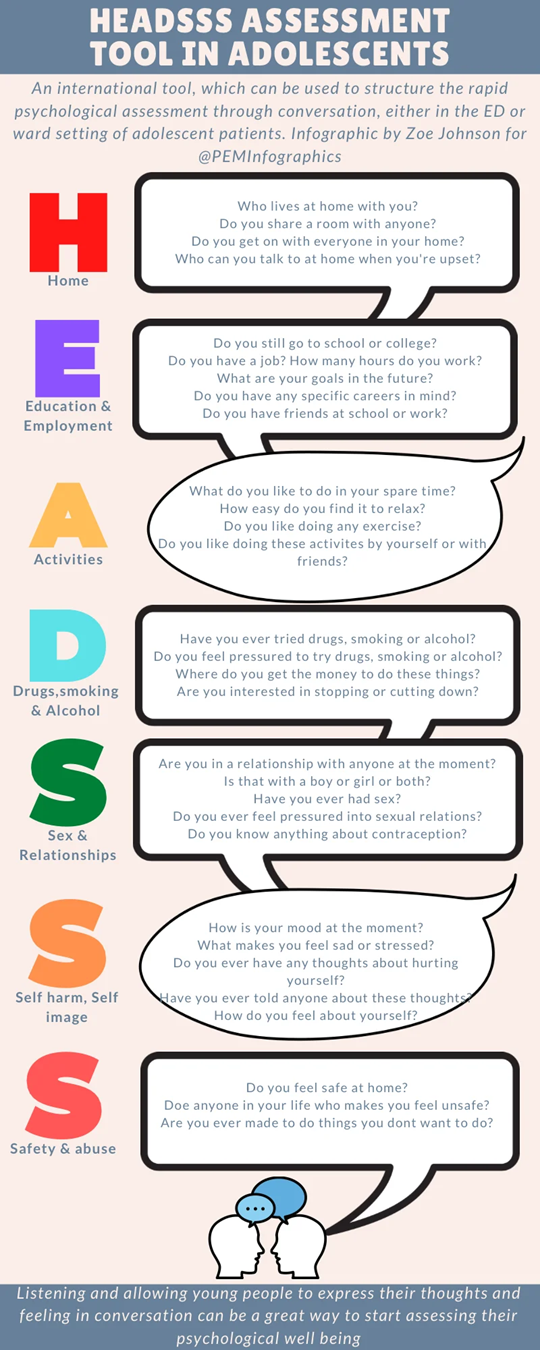
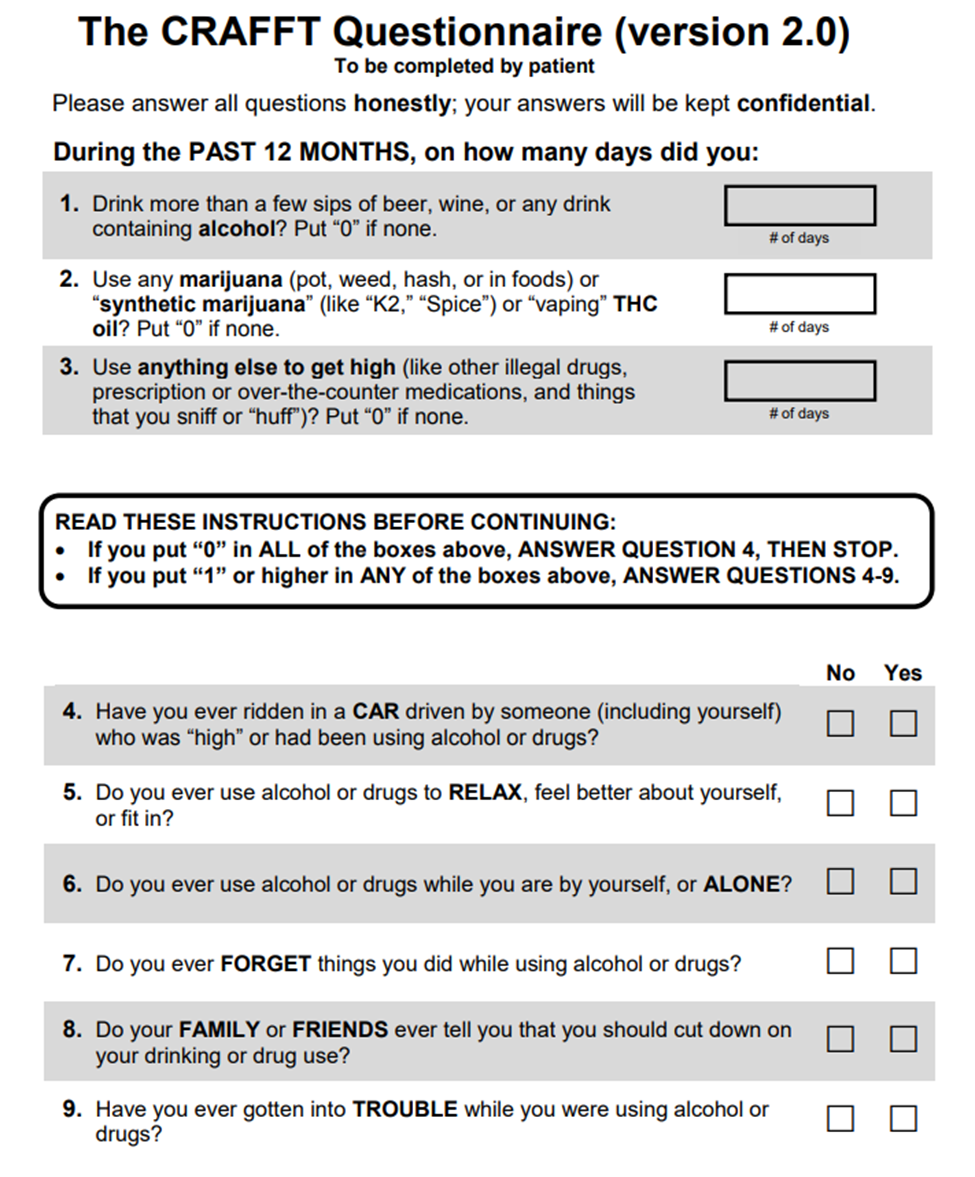
The HEADDS assessment, results of alcohol and urine drug screen and CRAFFT assessment (if performed) will be documented in a pediatric co-management team progress note in the patient’s electronic medical record.record when consulted. For those patients remaining in the ICU for entire hospital course, alcohol and substance misuse screening and interventions will be performed and documented as indicated by the trauma service.
Performance Improvement:
Per American College of Surgeons (ACS) Standards, a minimum of 80% of trauma patients with a hospital stay of >24 hours must be screened for alcohol misuse and a minimum of 80% of patients screening positive must receive an intervention.
Documentation of SBIRT will be done in the trauma registry database.
Any patients that had missed screenings or interventions will be reviewed in the trauma performance improvement process.
References:
1.
2.
3.
4.